Início " Serviços
Material :
Material :
Material :
Material :
Material :
Material :
Material :
Material :
Material :
Material :
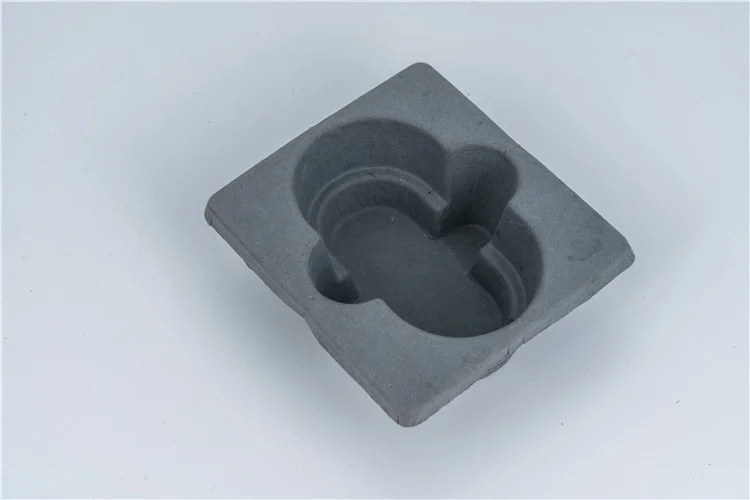
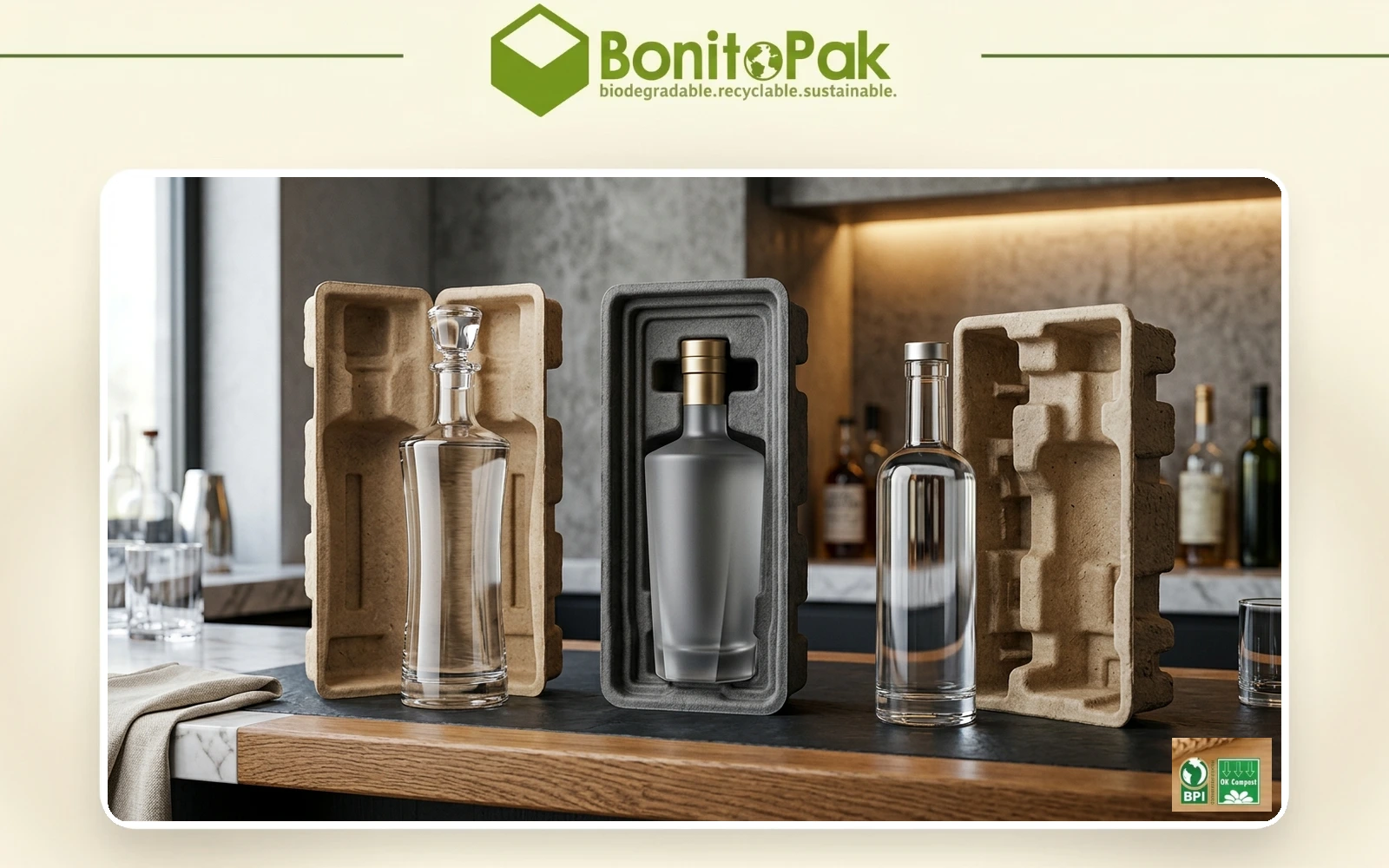
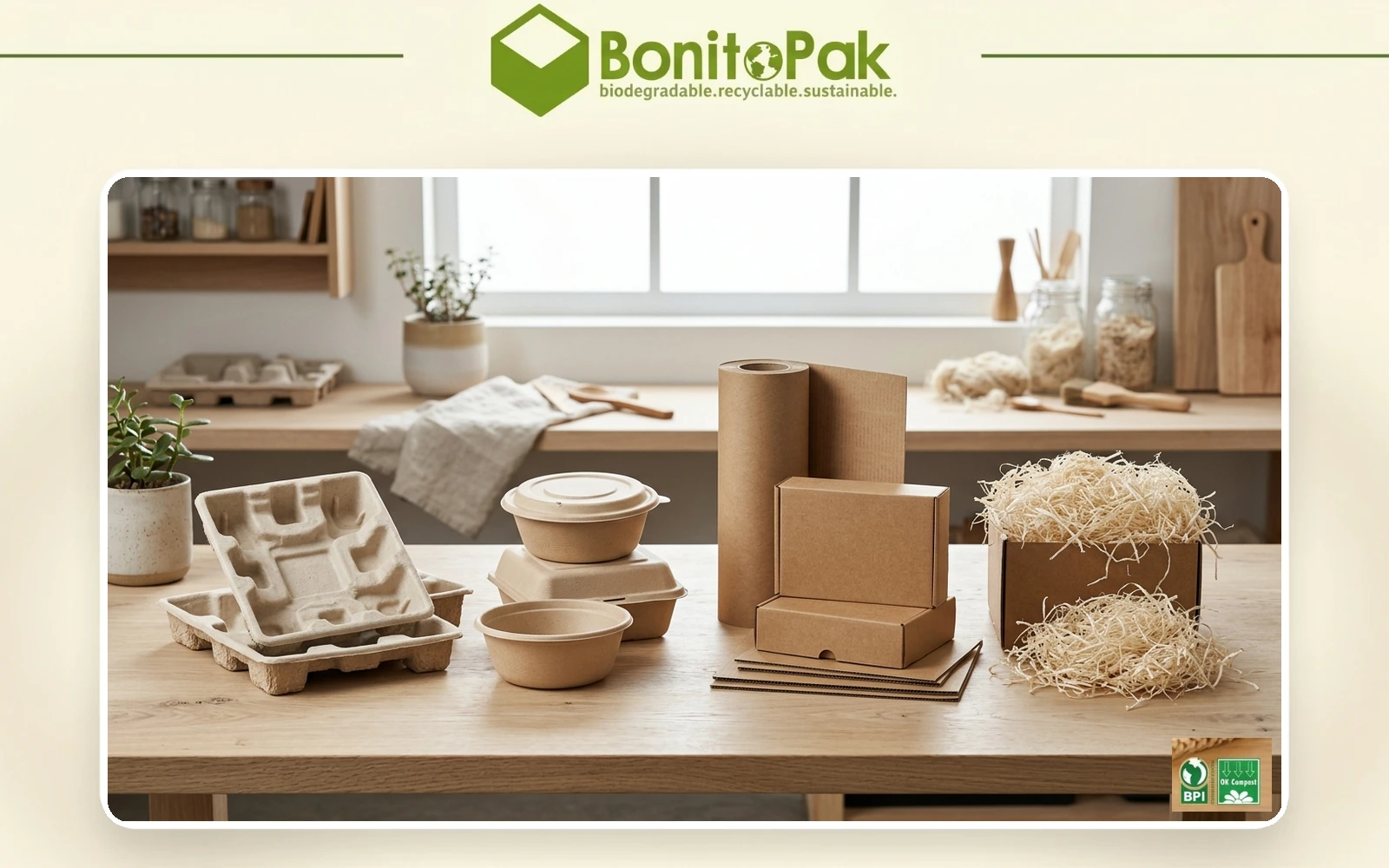
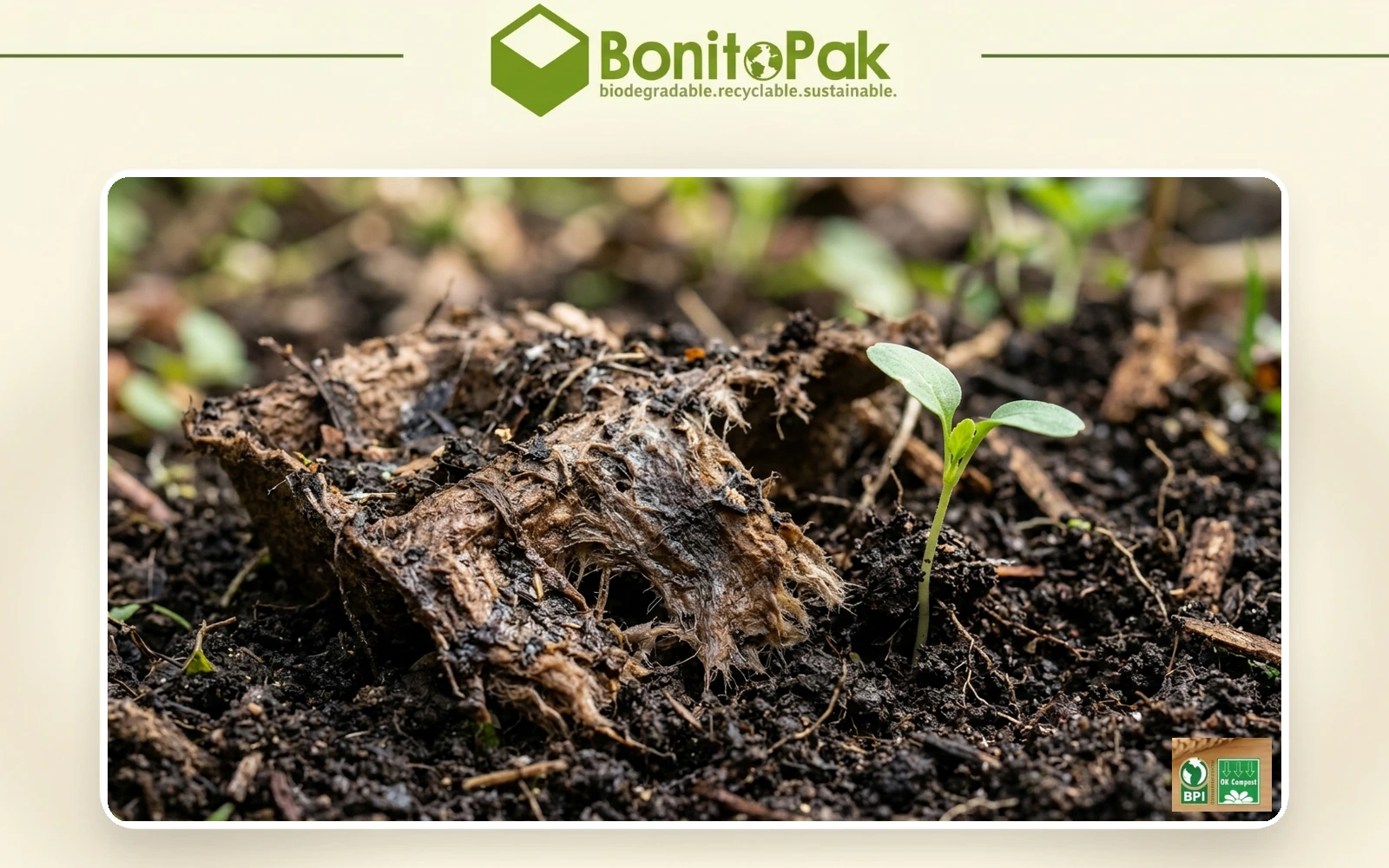
O processo de prensagem úmida usa materiais biodegradáveis, como bagaço, bambu e papel reciclado, oferecendo acabamentos suaves, proteção, amortecimento e embalagens ecológicas que economizam espaço.
Os produtos de celulose moldada substituem o plástico e a espuma, oferecendo opções recicláveis e biodegradáveis. Formas personalizadas, cores e superfícies ecologicamente corretas estão disponíveis. Oferecemos embalagens econômicas e sustentáveis com prototipagem e fabricação próprias.
Nossos utensílios de mesa de fibra vegetal, feitos de bagaço, palha e bambu, são biodegradáveis, compostáveis, à prova d'água, resistentes a óleo e seguros para micro-ondas. Certificados, recicláveis e empilháveis para uso ecológico.
As bandejas de polpa de papel para prensagem a seco, fabricadas com materiais reciclados 100%, oferecem uma alternativa econômica e ecologicamente correta ao plástico. Elas oferecem amortecimento, resistência à temperatura e capacidade de empilhamento, economizando até 20% de espaço.
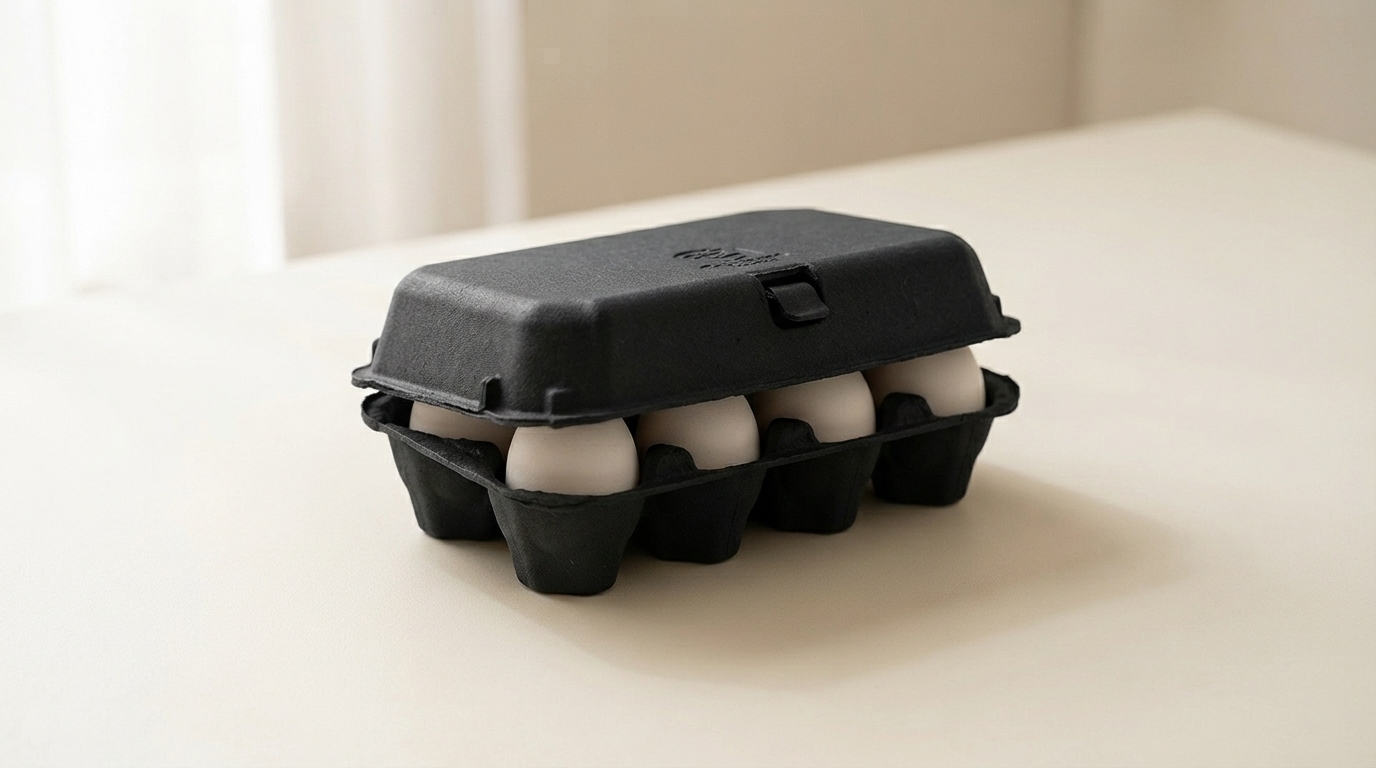
A Bonitopak oferece celulose moldada em seis cores, incluindo branco, natural e preto, com precisão de cor 95%. Métodos ecologicamente corretos garantem um branqueamento seguro. O natural e o branco são melhores para alimentos; os outros são adequados para embalagens de bandejas.
Buyers searching for vintage egg cartons are usually looking for a specific physical shape rather than a printed graphic, and suppliers who treat the request as a print job get it wrong.
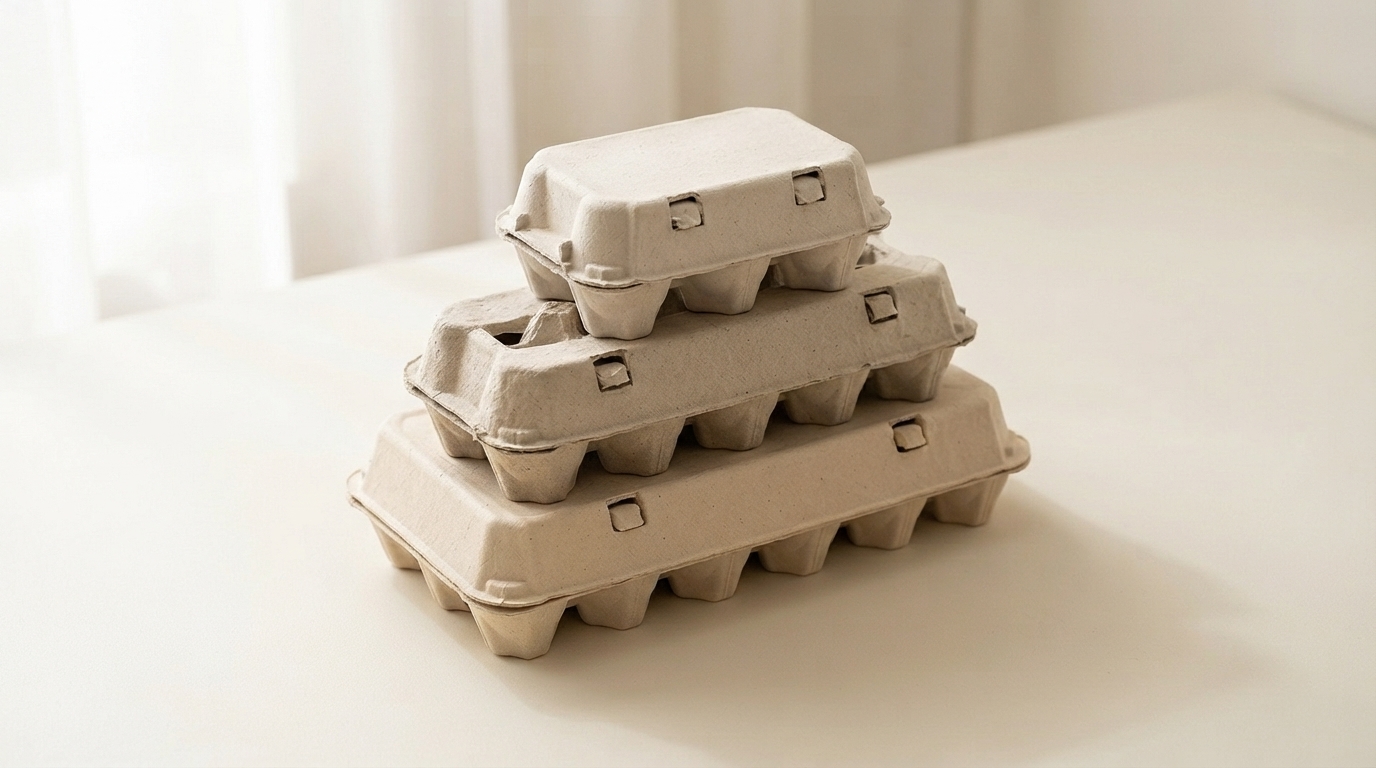
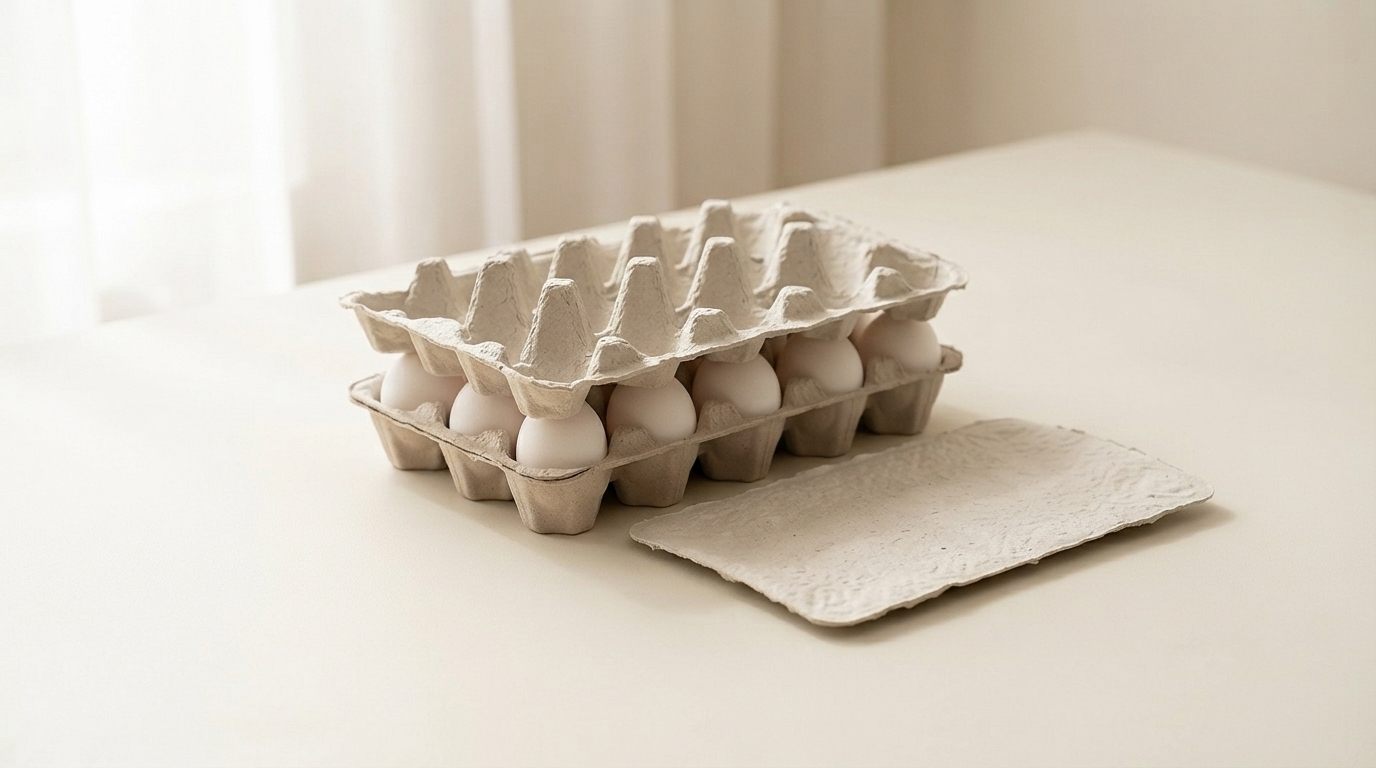
Egg cartons made through the middle of the twentieth century had a flat top. The lid was a squared panel with straight sides, folding down onto a base with a single deep hinge. Domed and contoured lids came later, driven by material savings and by automatic packing equipment that needed a self locating shape.
The flat top is the vintage carton. Print style contributes, but a domed modern carton with a retro typeface still looks modern, because the silhouette is what the eye reads first.
Our vintage molds reproduce the flat top geometry, including the squared shoulder where the lid meets the base and the deeper single fold hinge that lets the lid lay fully back.
The flat top has a practical advantage that has nothing to do with nostalgia. It is the best print surface in egg packaging.
A domed lid curves in two directions, which means printed artwork distorts toward the edges and registration is harder to hold. A flat panel prints like a sheet. Fine detail holds, straight lines stay straight, and edge to edge coverage is achievable.
For a producer who wants their farm name reproduced properly rather than approximately, the flat top is the correct specification regardless of whether they care about the retro association. Several of our customers order it purely for the print quality.
The panel on a twelve cell vintage carton runs roughly 320 square centimeters of usable flat area, which is generous enough for a full illustrated design rather than a logo and a line of text.
A single deep fold hinge is more fragile than the multiple shallow creases used on modern cartons, and it needs more fiber to survive repeated opening.
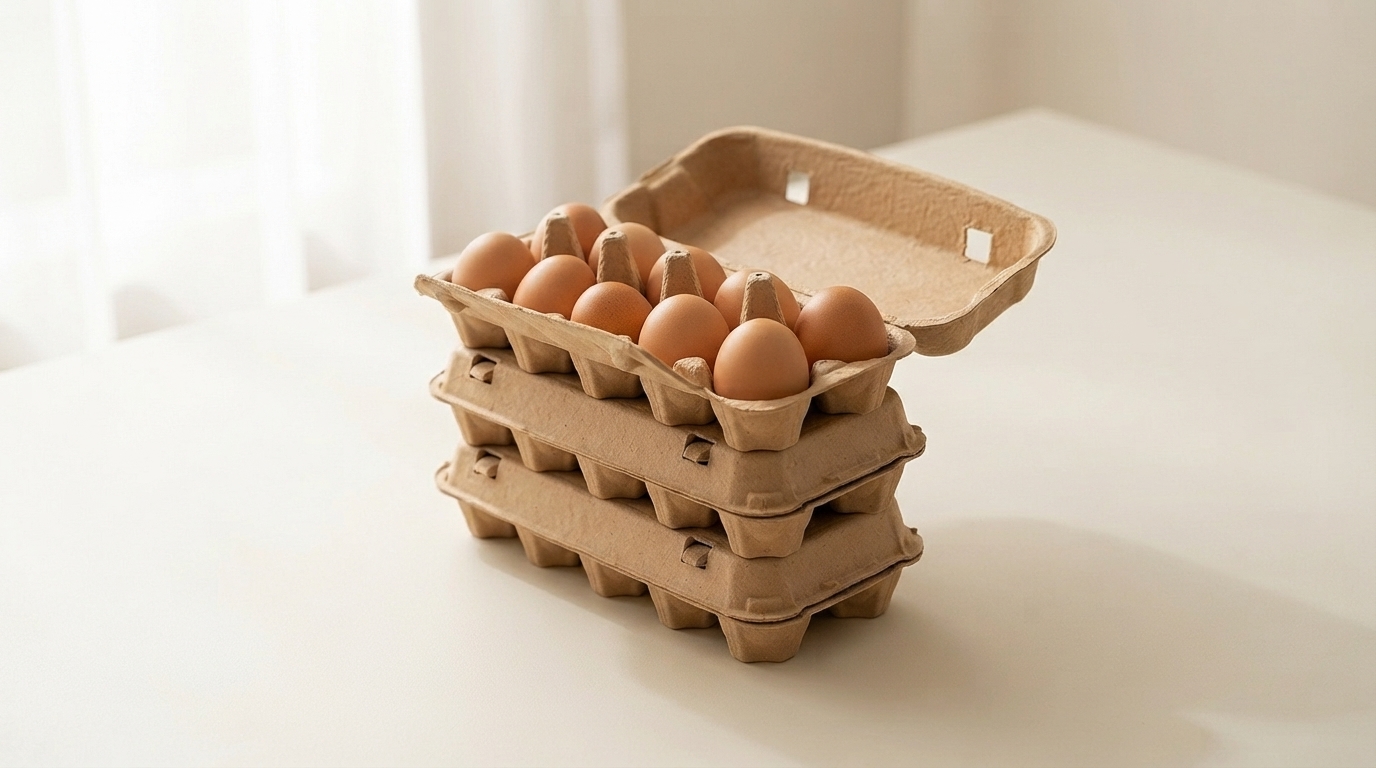
We compensate by running additional wall thickness through the hinge zone, which adds a small amount of material per carton. The payoff is a lid that lays fully flat when opened, presenting the eggs as a display rather than propping the lid at an angle.
At a farmers market that difference is worth the extra grams. A carton that opens flat on a table shows twelve eggs to a passing customer. A carton with a lid standing up hides half of them.
Buyers should note that the deep hinge is the wear point on this format. Cartons opened and closed repeatedly for display, then sold, will show hinge fatigue. Producers who display eggs loose and pack at the point of sale avoid the issue entirely.
Bright saturated color undermines the vintage effect. The shades that work are muted.
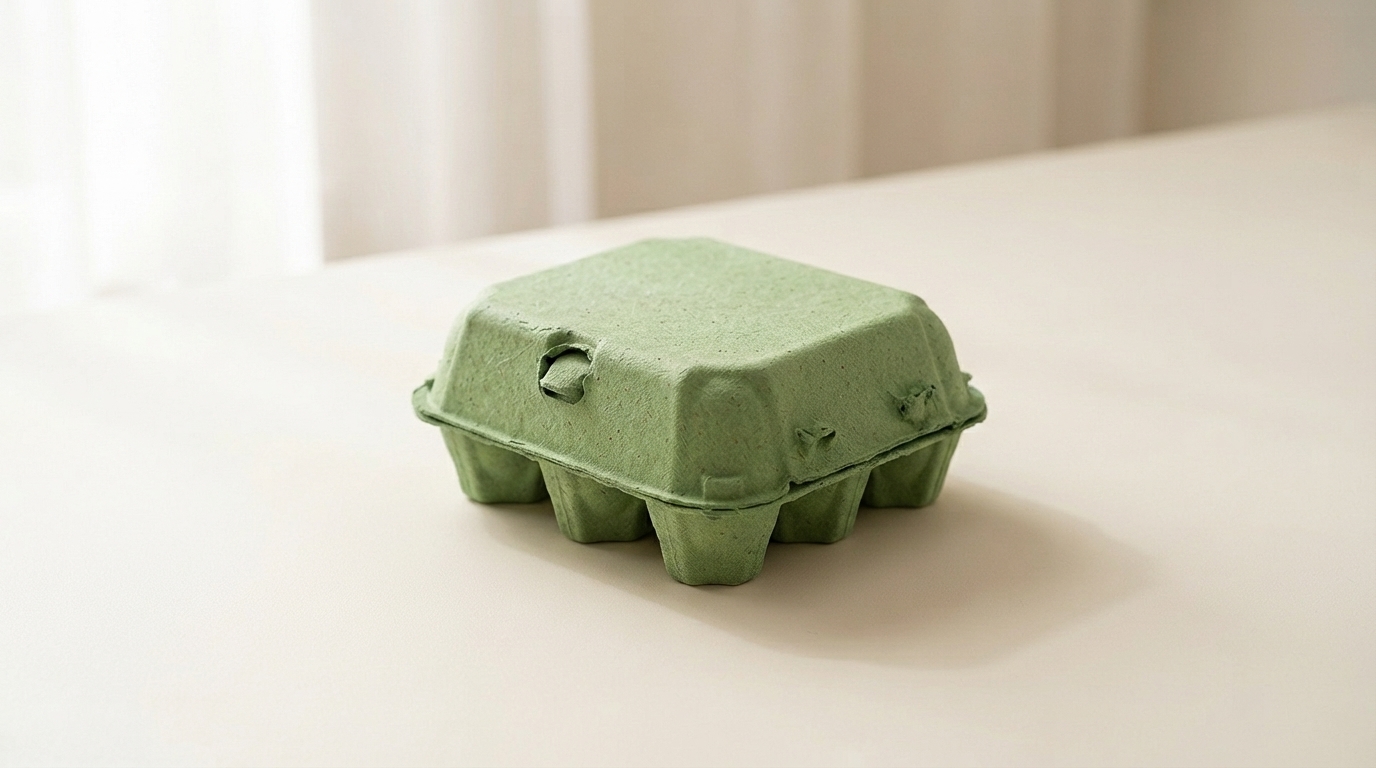
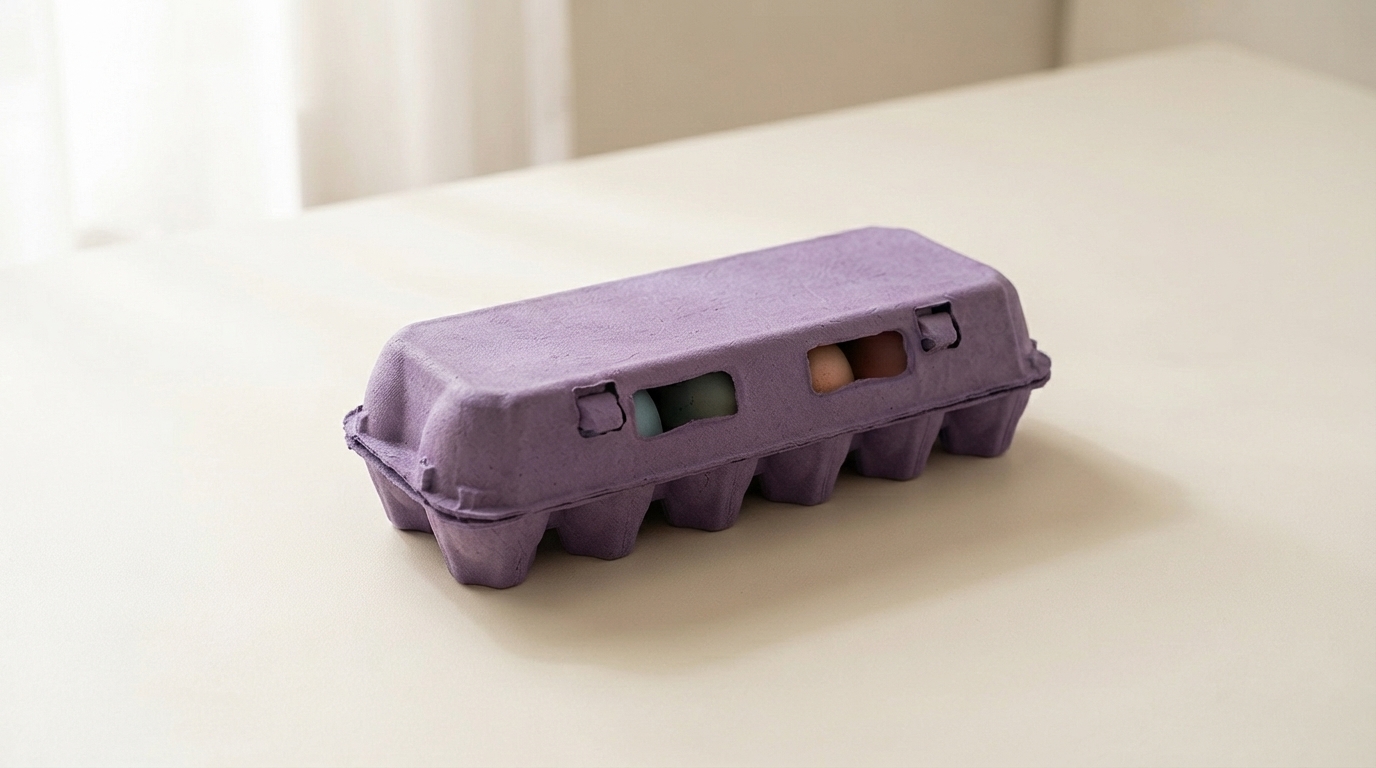
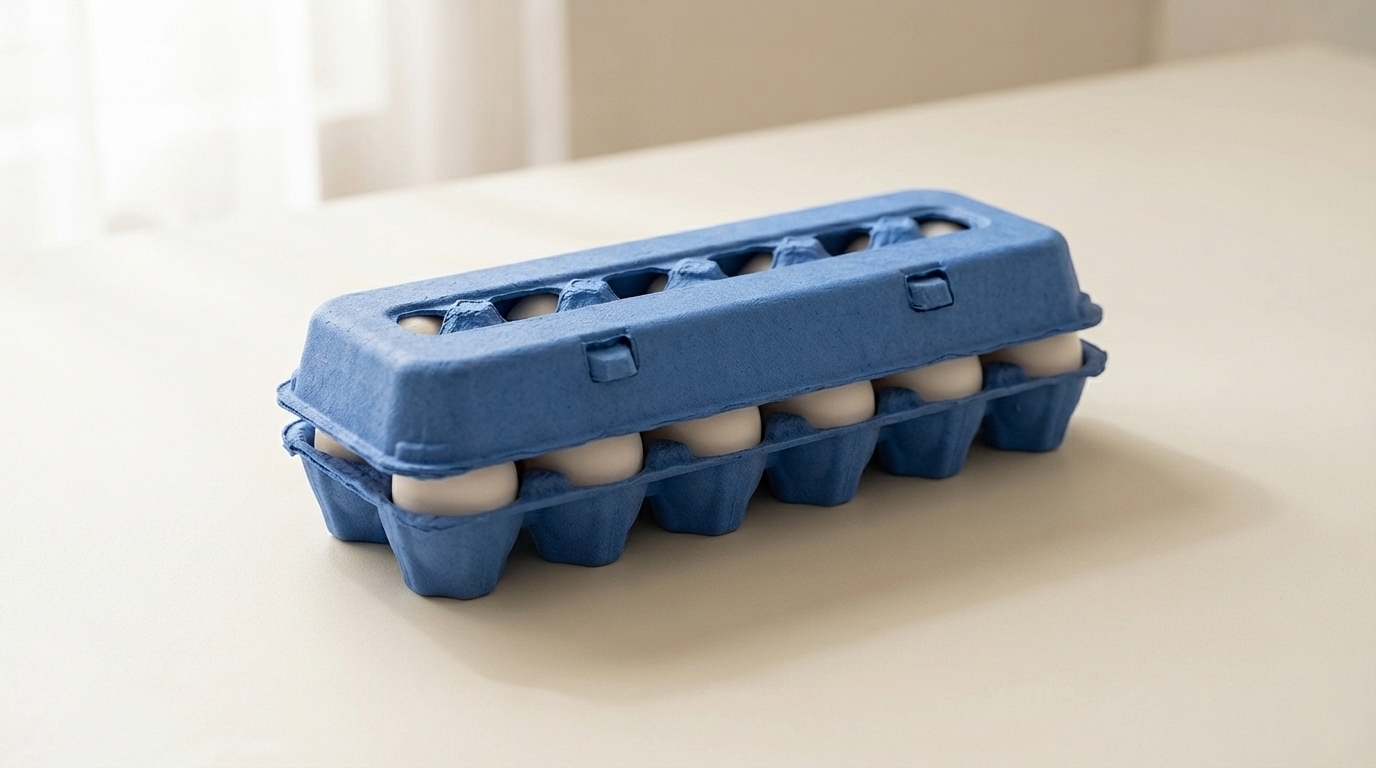
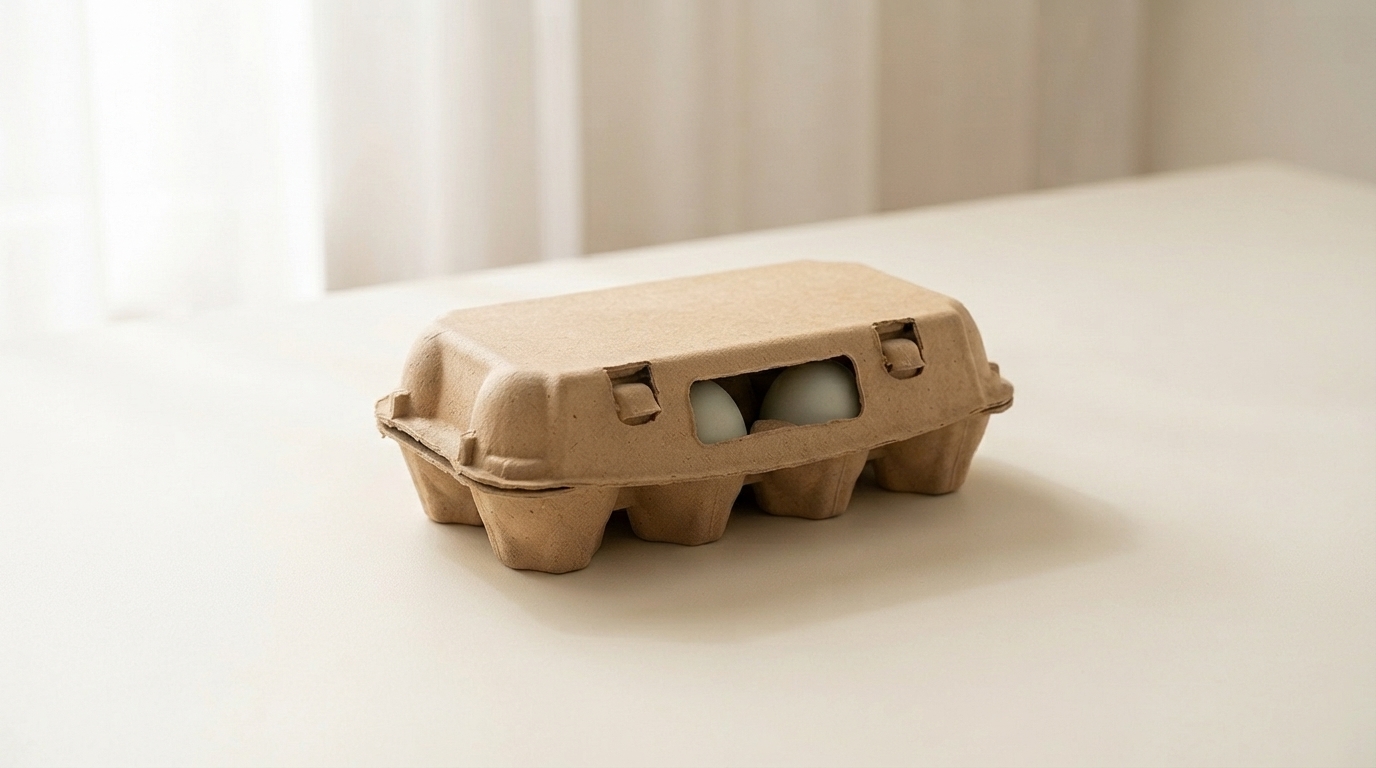
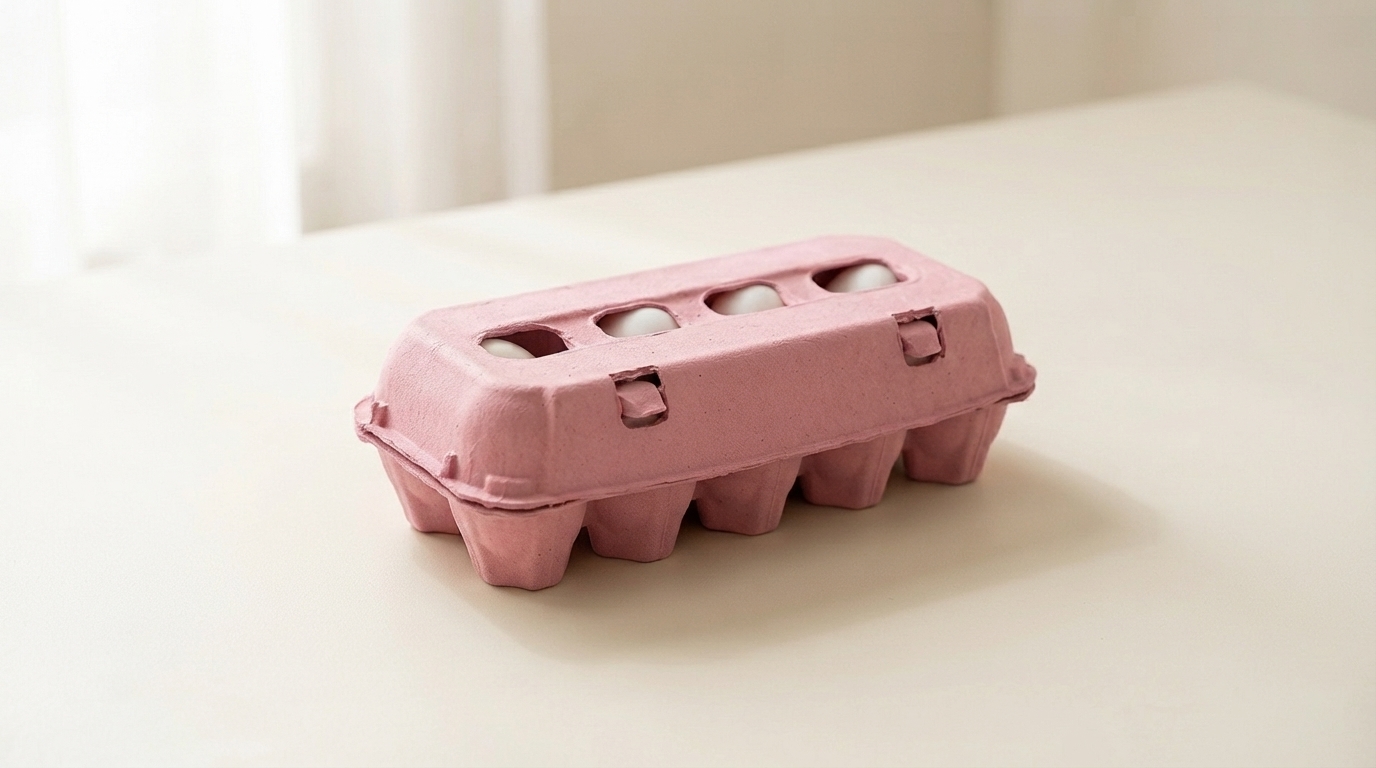
Natural pulp is the most authentic, since it is what the originals were, and it needs no pigment at all. Beyond that, muted greens, faded blues, and warm off-whites read as period. Bright pink and vivid purple do not, however well they perform on modern formats.
Print color follows the same logic. Single color printing in a dark ink on natural pulp is close to how these cartons were actually produced, since multi-color printing on egg cartons was uncommon until much later. A one color design also costs less to print, which is a rare case where the authentic choice is also the cheaper one.
Vintage cartons have a secondary market that surprises most producers.
Food stylists and photographers buy them as props, since a flat top carton signals farm and heritage in a single frame. Restaurants use them for table presentation. Craft and education buyers use them for the shape rather than the function.
These are low volume buyers, but they order consistently and they do not negotiate on price, since the carton is a small line item against a larger production. Producers with an online storefront often find prop sales cover a meaningful share of their minimum order.
Vintage is a positioning choice rather than a functional one. A producer choosing it is trading efficiency for identity.
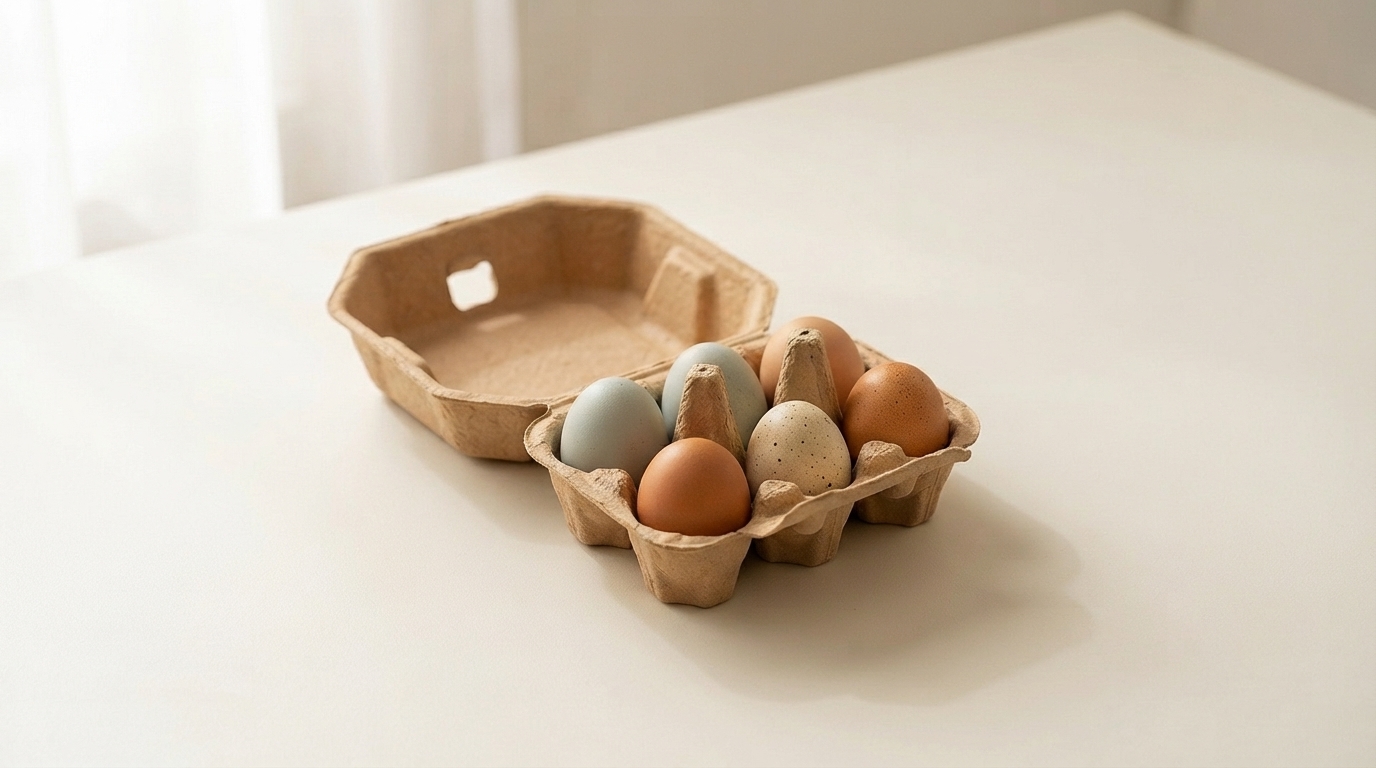
The pragmatic setup runs a dozen egg carton in modern profile for volume and wholesale accounts, with vintage reserved for direct sales where the customer sees the pack. A 6 egg carton in vintage profile works well for premium and gift lines.
Producers wanting distinctiveness through shape rather than period style should compare octagon egg cartons. Those combining vintage profile with a brand shade should read caixas de ovos coloridas for the pigment detail first.
Buyers searching for vintage egg cartons are usually looking for a specific physical shape rather than a printed graphic, and suppliers who treat the request as a print job get it wrong.
Egg cartons made through the middle of the twentieth century had a flat top. The lid was a squared panel with straight sides, folding down onto a base with a single deep hinge. Domed and contoured lids came later, driven by material savings and by automatic packing equipment that needed a self locating shape.
The flat top is the vintage carton. Print style contributes, but a domed modern carton with a retro typeface still looks modern, because the silhouette is what the eye reads first.
Our vintage molds reproduce the flat top geometry, including the squared shoulder where the lid meets the base and the deeper single fold hinge that lets the lid lay fully back.
The flat top has a practical advantage that has nothing to do with nostalgia. It is the best print surface in egg packaging.
A domed lid curves in two directions, which means printed artwork distorts toward the edges and registration is harder to hold. A flat panel prints like a sheet. Fine detail holds, straight lines stay straight, and edge to edge coverage is achievable.
For a producer who wants their farm name reproduced properly rather than approximately, the flat top is the correct specification regardless of whether they care about the retro association. Several of our customers order it purely for the print quality.
The panel on a twelve cell vintage carton runs roughly 320 square centimeters of usable flat area, which is generous enough for a full illustrated design rather than a logo and a line of text.
A single deep fold hinge is more fragile than the multiple shallow creases used on modern cartons, and it needs more fiber to survive repeated opening.
We compensate by running additional wall thickness through the hinge zone, which adds a small amount of material per carton. The payoff is a lid that lays fully flat when opened, presenting the eggs as a display rather than propping the lid at an angle.
At a farmers market that difference is worth the extra grams. A carton that opens flat on a table shows twelve eggs to a passing customer. A carton with a lid standing up hides half of them.
Buyers should note that the deep hinge is the wear point on this format. Cartons opened and closed repeatedly for display, then sold, will show hinge fatigue. Producers who display eggs loose and pack at the point of sale avoid the issue entirely.
Bright saturated color undermines the vintage effect. The shades that work are muted.
Natural pulp is the most authentic, since it is what the originals were, and it needs no pigment at all. Beyond that, muted greens, faded blues, and warm off-whites read as period. Bright pink and vivid purple do not, however well they perform on modern formats.
Print color follows the same logic. Single color printing in a dark ink on natural pulp is close to how these cartons were actually produced, since multi-color printing on egg cartons was uncommon until much later. A one color design also costs less to print, which is a rare case where the authentic choice is also the cheaper one.
Vintage cartons have a secondary market that surprises most producers.
Food stylists and photographers buy them as props, since a flat top carton signals farm and heritage in a single frame. Restaurants use them for table presentation. Craft and education buyers use them for the shape rather than the function.
These are low volume buyers, but they order consistently and they do not negotiate on price, since the carton is a small line item against a larger production. Producers with an online storefront often find prop sales cover a meaningful share of their minimum order.
Vintage is a positioning choice rather than a functional one. A producer choosing it is trading efficiency for identity.
The pragmatic setup runs a dozen egg carton in modern profile for volume and wholesale accounts, with vintage reserved for direct sales where the customer sees the pack. A 6 egg carton in vintage profile works well for premium and gift lines.
Producers wanting distinctiveness through shape rather than period style should compare octagon egg cartons. Those combining vintage profile with a brand shade should read caixas de ovos coloridas for the pigment detail first.
Respondemos em 24 horas, oferecendo comunicação rápida e clara, soluções personalizadas e serviço eficiente para economizar tempo e custos.
Nosso projeto, engenharia e fabricação internos garantem um ferramental rápido, com amostras prontas em 7 dias e moldes de produção em 8 dias.
Nossos engenheiros qualificados de P&D são excelentes em design, prototipagem e ferramental, oferecendo soluções completas de embalagem com blisters, latas e caixas impressas.
A equipe treinada realiza inspeções 100%, verificações aleatórias e controle de qualidade, garantindo altos padrões, reduzindo rejeições e economizando custos.
Oferecemos uma programação de pedidos razoável e coordenamos com os clientes para resolver os problemas prontamente, garantindo as melhores soluções.
Nossa experiente equipe de pós-venda garante uma comunicação tranquila, solucionando problemas com substituições, remessas e entregas, com o objetivo de zerar as reclamações.
Por Leo Chan | Redator, BonitoPak | Mais de 20 anos na área de embalagens de polpa moldada Publicado: 16
Por Leo Chan | Redator, BonitoPak | Mais de 20 anos na área de embalagens de polpa moldada Publicado: 15
Por Leo Chan | Redator, BonitoPak | Mais de 20 anos na área de embalagens de polpa moldada Publicado: 14