...

Products

Explore our wide range of high-quality, eco-friendly packaging solutions designed to meet the unique needs of various industries. From custom designs to sustainable materials, find the perfect packaging option for your product requirements.
gg Carton

Material :

Material type
Packaging :
Packaging type
Process :
Process list
Color :
Color Gray
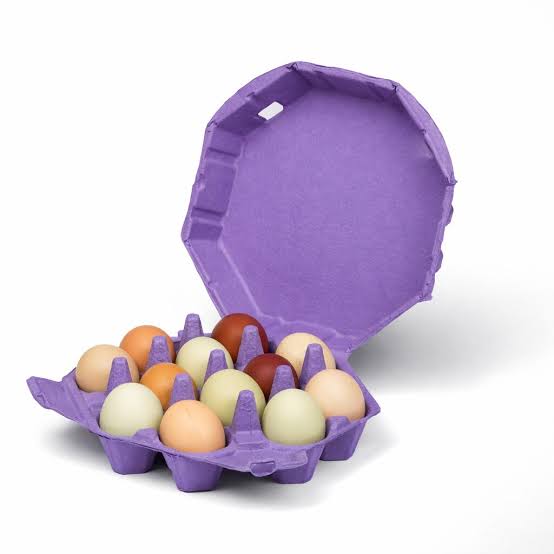
Octagon egg cartons in molded pulp with the eight sided lid open showing eggs inside

Material :

Material type
Packaging :
Packaging type
Process :
Process list
Color :
Color Gray
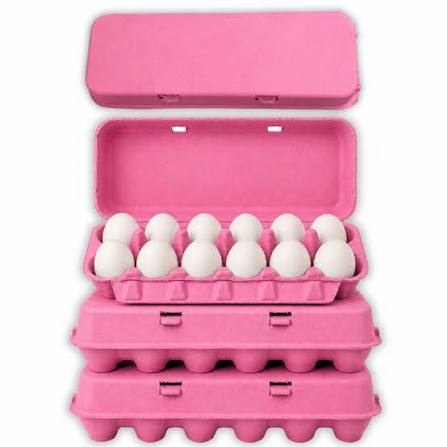
Pink egg cartons in molded pulp holding white eggs with the lid open

Material :

Material type
Packaging :
Packaging type
Process :
Process list
Color :
Color Gray
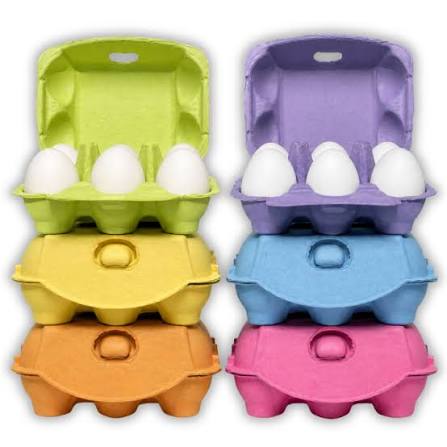
Colored egg cartons in six pulp shades stacked showing pink, blue, green, purple, yellow, and natural

Material :

Material type
Packaging :
Packaging type
Process :
Process list
Color :
Color Gray

Material :

Material type
Packaging :
Packaging type
Process :
Process list
Color :
Color Gray

Material :

Material type
Packaging :
Packaging type
Process :
Process list
Color :
Color Gray

Material :

Material type
Packaging :
Packaging type
Process :
Process list
Color :
Color Gray
egg cartons stacked on a pallet showing reinforced lid profile

Material :

Material type
Packaging :
Packaging type
Process :
Process list
Color :
Color Gray
Dozen egg carton in molded pulp open to show twelve brown eggs seated in cells

Material :

Material type
Packaging :
Packaging type
Process :
Process list
Color :
Color Gray

Material :

Material type
Packaging :
Packaging type
Process :
Process list
Color :
Color Gray

Our Product Categories

Discover Bonitopak’s diverse range of packaging solutions, including molded pulp trays, food packaging, custom designs, and sustainable options. Each category is crafted for durability, functionality, and environmental responsibility, tailored to meet your specific needs.

Vintage describes a mold profile, not a decoration

Buyers searching for vintage egg cartons are usually looking for a specific physical shape rather than a printed graphic, and suppliers who treat the request as a print job get it wrong.

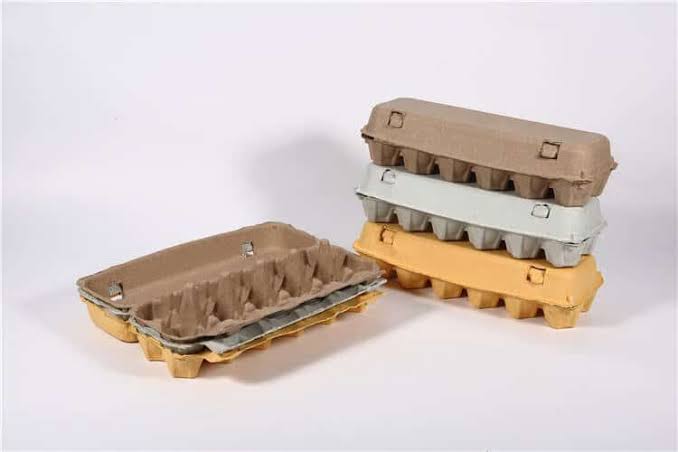
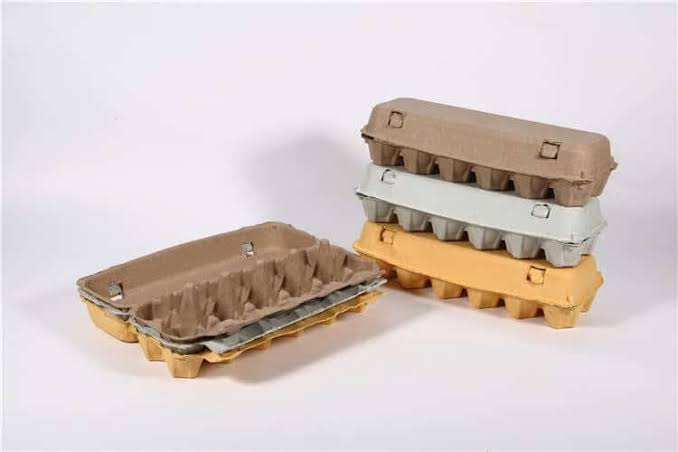
Egg cartons made through the middle of the twentieth century had a flat top. The lid was a squared panel with straight sides, folding down onto a base with a single deep hinge. Domed and contoured lids came later, driven by material savings and by automatic packing equipment that needed a self locating shape.

The flat top is the vintage carton. Print style contributes, but a domed modern carton with a retro typeface still looks modern, because the silhouette is what the eye reads first.

Our vintage molds reproduce the flat top geometry, including the squared shoulder where the lid meets the base and the deeper single fold hinge that lets the lid lay fully back.

Why the flat panel matters commercially

The flat top has a practical advantage that has nothing to do with nostalgia. It is the best print surface in egg packaging.

A domed lid curves in two directions, which means printed artwork distorts toward the edges and registration is harder to hold. A flat panel prints like a sheet. Fine detail holds, straight lines stay straight, and edge to edge coverage is achievable.

For a producer who wants their farm name reproduced properly rather than approximately, the flat top is the correct specification regardless of whether they care about the retro association. Several of our customers order it purely for the print quality.

The panel on a twelve cell vintage carton runs roughly 320 square centimeters of usable flat area, which is generous enough for a full illustrated design rather than a logo and a line of text.

The hinge behaves differently

A single deep fold hinge is more fragile than the multiple shallow creases used on modern cartons, and it needs more fiber to survive repeated opening.

We compensate by running additional wall thickness through the hinge zone, which adds a small amount of material per carton. The payoff is a lid that lays fully flat when opened, presenting the eggs as a display rather than propping the lid at an angle.

At a farmers market that difference is worth the extra grams. A carton that opens flat on a table shows twelve eggs to a passing customer. A carton with a lid standing up hides half of them.

Buyers should note that the deep hinge is the wear point on this format. Cartons opened and closed repeatedly for display, then sold, will show hinge fatigue. Producers who display eggs loose and pack at the point of sale avoid the issue entirely.

Color choices that read as period

Bright saturated color undermines the vintage effect. The shades that work are muted.

Natural pulp is the most authentic, since it is what the originals were, and it needs no pigment at all. Beyond that, muted greens, faded blues, and warm off-whites read as period. Bright pink and vivid purple do not, however well they perform on modern formats.

Print color follows the same logic. Single color printing in a dark ink on natural pulp is close to how these cartons were actually produced, since multi-color printing on egg cartons was uncommon until much later. A one color design also costs less to print, which is a rare case where the authentic choice is also the cheaper one.

Uses beyond selling eggs

Vintage cartons have a secondary market that surprises most producers.

Food stylists and photographers buy them as props, since a flat top carton signals farm and heritage in a single frame. Restaurants use them for table presentation. Craft and education buyers use them for the shape rather than the function.

These are low volume buyers, but they order consistently and they do not negotiate on price, since the carton is a small line item against a larger production. Producers with an online storefront often find prop sales cover a meaningful share of their minimum order.

Where it sits against the rest of the range

Vintage is a positioning choice rather than a functional one. A producer choosing it is trading efficiency for identity.

The pragmatic setup runs a dozen egg carton in modern profile for volume and wholesale accounts, with vintage reserved for direct sales where the customer sees the pack. A 6 egg carton in vintage profile works well for premium and gift lines.

Producers wanting distinctiveness through shape rather than period style should compare octagon egg cartons. Those combining vintage profile with a brand shade should read colored egg cartons for the pigment detail first.

Vintage describes a mold profile, not a decoration

Buyers searching for vintage egg cartons are usually looking for a specific physical shape rather than a printed graphic, and suppliers who treat the request as a print job get it wrong.

Egg cartons made through the middle of the twentieth century had a flat top. The lid was a squared panel with straight sides, folding down onto a base with a single deep hinge. Domed and contoured lids came later, driven by material savings and by automatic packing equipment that needed a self locating shape.

The flat top is the vintage carton. Print style contributes, but a domed modern carton with a retro typeface still looks modern, because the silhouette is what the eye reads first.

Our vintage molds reproduce the flat top geometry, including the squared shoulder where the lid meets the base and the deeper single fold hinge that lets the lid lay fully back.

Why the flat panel matters commercially

The flat top has a practical advantage that has nothing to do with nostalgia. It is the best print surface in egg packaging.

A domed lid curves in two directions, which means printed artwork distorts toward the edges and registration is harder to hold. A flat panel prints like a sheet. Fine detail holds, straight lines stay straight, and edge to edge coverage is achievable.

For a producer who wants their farm name reproduced properly rather than approximately, the flat top is the correct specification regardless of whether they care about the retro association. Several of our customers order it purely for the print quality.

The panel on a twelve cell vintage carton runs roughly 320 square centimeters of usable flat area, which is generous enough for a full illustrated design rather than a logo and a line of text.

The hinge behaves differently

A single deep fold hinge is more fragile than the multiple shallow creases used on modern cartons, and it needs more fiber to survive repeated opening.

We compensate by running additional wall thickness through the hinge zone, which adds a small amount of material per carton. The payoff is a lid that lays fully flat when opened, presenting the eggs as a display rather than propping the lid at an angle.

At a farmers market that difference is worth the extra grams. A carton that opens flat on a table shows twelve eggs to a passing customer. A carton with a lid standing up hides half of them.

Buyers should note that the deep hinge is the wear point on this format. Cartons opened and closed repeatedly for display, then sold, will show hinge fatigue. Producers who display eggs loose and pack at the point of sale avoid the issue entirely.

Color choices that read as period

Bright saturated color undermines the vintage effect. The shades that work are muted.

Natural pulp is the most authentic, since it is what the originals were, and it needs no pigment at all. Beyond that, muted greens, faded blues, and warm off-whites read as period. Bright pink and vivid purple do not, however well they perform on modern formats.

Print color follows the same logic. Single color printing in a dark ink on natural pulp is close to how these cartons were actually produced, since multi-color printing on egg cartons was uncommon until much later. A one color design also costs less to print, which is a rare case where the authentic choice is also the cheaper one.

Uses beyond selling eggs

Vintage cartons have a secondary market that surprises most producers.

Food stylists and photographers buy them as props, since a flat top carton signals farm and heritage in a single frame. Restaurants use them for table presentation. Craft and education buyers use them for the shape rather than the function.

These are low volume buyers, but they order consistently and they do not negotiate on price, since the carton is a small line item against a larger production. Producers with an online storefront often find prop sales cover a meaningful share of their minimum order.

Where it sits against the rest of the range

Vintage is a positioning choice rather than a functional one. A producer choosing it is trading efficiency for identity.

The pragmatic setup runs a dozen egg carton in modern profile for volume and wholesale accounts, with vintage reserved for direct sales where the customer sees the pack. A 6 egg carton in vintage profile works well for premium and gift lines.

Producers wanting distinctiveness through shape rather than period style should compare octagon egg cartons. Those combining vintage profile with a brand shade should read colored egg cartons for the pigment detail first.

Industry Expertise at BonitoPak

Having produced millions of parts, BonitoPak holds deep knowledge in numerous applications. We excel particularly in industries requiring precise and intricate component fabrication. Trust us to deliver expertise and quality, no matter the complexity.
Ready to Elevate Your Project?

Bring Your Designs to Life with BonitoPak

Experience precision engineering with BonitoPak. From detailed prototypes to high-volume production, we’re here to turn your concepts into reality. Contact us today to discuss your project needs!

Why Choose BonitoPak?

At Bonitopak, we offer customizable, eco-friendly packaging solutions with expert support, sustainable practices, and guaranteed quality. Our innovative designs and efficient production ensure your packaging stands out while reducing environmental impact.

Quick Solutions

We respond within 24 hours, offering fast, clear communication, tailored solutions, and efficient service to save time and costs.

Swift Adaptability

Our in-house design, engineering, and manufacturing ensure rapid tooling, with samples ready in 7 days and production molds in 8 days.

Expert Innovators

Our skilled R&D engineers excel in designing, prototyping, and tooling, offering complete packaging solutions with blister, tin can, and printed boxes.

Efficient Optimization

Trained staff conduct 100% inspections, random checks, and quality control, ensuring high standards, reducing rejects, and saving costs.

Prompt Delivery

We provide reasonable order scheduling and coordinate with clients to resolve issues promptly, ensuring the best solutions.

Excellent Support

Our experienced after-sales team ensures smooth communication, solving issues with replacements, shipping, and delivery, aiming for zero complaints.

Related Articles and Insights

Stay informed with the latest updates on sustainable packaging trends, industry insights, and expert tips through our blog. Explore innovative ideas and solutions to enhance your packaging knowledge.

By Leo Chan | Writer, BonitoPak | 20+ years in molded pulp packaging Odor in

By Leo Chan | Writer, BonitoPak | 20+ years in molded pulp packaging Federal food

By Leo Chan | Writer, BonitoPak | 20+ years in molded pulp packaging MOSH and

Frequently Asked Questions

Molded Pulp Vintage Egg Cartons

  • Will the deep hinge crack if customers reuse the carton?

    With repeated opening over weeks, eventually yes. The deep single fold concentrates flex in one line, which is the trade for a lid that lays flat. Modern multi-crease hinges last longer through reuse cycles. If your customers routinely return cartons for refilling, the modern profile is the more practical specification.

  • Do vintage cartons fit modern refrigerator door shelves?

    The twelve cell runs slightly shallower than a modern domed carton at around 68 mm tall against 75 mm, so it fits comfortably where a modern one does. Length is the same. Buyers switching between profiles do not usually need to change anything downstream.

  • Can I print a full color illustration on the lid?

    Yes, and the flat panel is the reason. Multi-color flexographic work holds registration on a flat surface in a way it cannot on a dome. Bear in mind that pulp texture softens fine detail regardless of print quality, so illustrations with heavy line work reproduce better than photographic images.

  • Does the flat top stack as well as a domed lid?

    Better, in fact. A flat surface bears directly on the base of the carton above with no contour to slide against, so stacks stay square. What the flat top loses is the arch strength a dome provides, which we compensate for with rib structure underneath the panel. Net top load performance is comparable.

  • Are vintage cartons actually old, or reproductions?

    They are newly manufactured to a historic profile. Genuinely old cartons are not food safe, since fiber packaging absorbs whatever it has been stored with and has no traceable material history. Our vintage cartons are produced from the same recycled pulp as the rest of the range, on molds cut to reproduce the flat top geometry

en_USEnglish
Fill This Detailed Form