...

Produkte

Entdecken Sie unser breites Angebot an hochwertigen, umweltfreundlichen Verpackungslösungen, die auf die besonderen Anforderungen verschiedener Branchen zugeschnitten sind. Von kundenspezifischen Designs bis hin zu nachhaltigen Materialien - finden Sie die perfekte Verpackungsoption für Ihre Produktanforderungen.

Material :

Art des Materials
Verpackung:
Art der Verpackung
Prozess :
Prozess-Liste
Farbe :
Farbe Gray
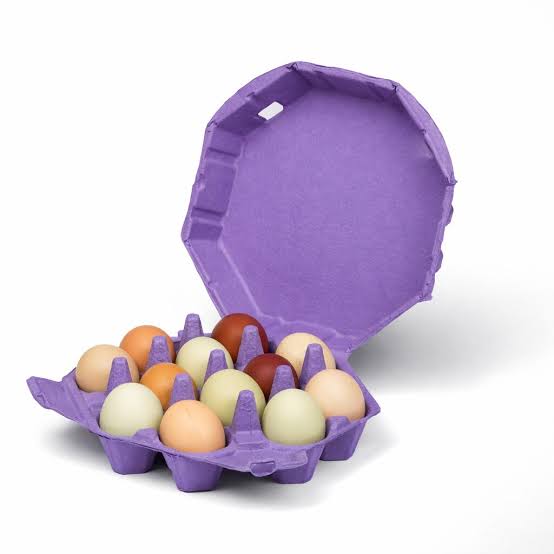
Achteckige Eierkartons aus geformtem Zellstoff, deren achtseitiger Deckel geöffnet ist und den Blick auf die darin befindlichen Eier freigibt

Material :

Art des Materials
Verpackung:
Art der Verpackung
Prozess :
Prozess-Liste
Farbe :
Farbe Gray
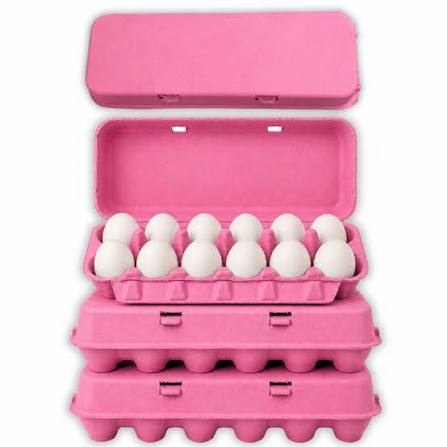
Rosa Eierkartons aus geformtem Zellstoff, in denen weiße Eier liegen, mit geöffnetem Deckel

Material :

Art des Materials
Verpackung:
Art der Verpackung
Prozess :
Prozess-Liste
Farbe :
Farbe Gray
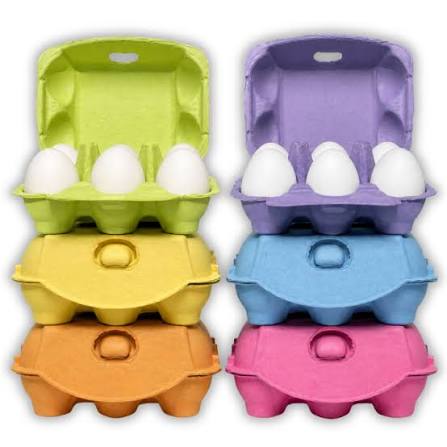
Farbige Eierkartons in sechs Zellstofftönen, gestapelt in den Farben Rosa, Blau, Grün, Violett, Gelb und Natur

Material :

Art des Materials
Verpackung:
Art der Verpackung
Prozess :
Prozess-Liste
Farbe :
Farbe Gray

Material :

Art des Materials
Verpackung:
Art der Verpackung
Prozess :
Prozess-Liste
Farbe :
Farbe Gray

Material :

Art des Materials
Verpackung:
Art der Verpackung
Prozess :
Prozess-Liste
Farbe :
Farbe Gray

Material :

Art des Materials
Verpackung:
Art der Verpackung
Prozess :
Prozess-Liste
Farbe :
Farbe Gray
egg cartons stacked on a pallet showing reinforced lid profile

Material :

Art des Materials
Verpackung:
Art der Verpackung
Prozess :
Prozess-Liste
Farbe :
Farbe Gray
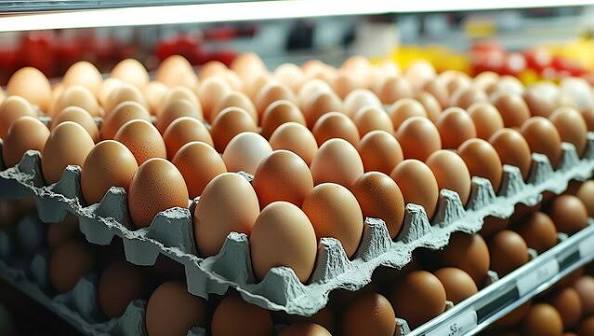
Dozen egg carton in molded pulp open to show twelve brown eggs seated in cells

Material :

Art des Materials
Verpackung:
Art der Verpackung
Prozess :
Prozess-Liste
Farbe :
Farbe Gray

Material :

Art des Materials
Verpackung:
Art der Verpackung
Prozess :
Prozess-Liste
Farbe :
Farbe Gray

Unsere Produktkategorien

Entdecken Sie das vielfältige Angebot an Verpackungslösungen von Bonitopak, darunter geformte Zellstoffschalen, Lebensmittelverpackungen, kundenspezifische Designs und nachhaltige Optionen. Jede Kategorie ist auf Langlebigkeit, Funktionalität und Umweltverträglichkeit ausgelegt und auf Ihre spezifischen Anforderungen zugeschnitten.

Vintage describes a mold profile, not a decoration

Buyers searching for vintage egg cartons are usually looking for a specific physical shape rather than a printed graphic, and suppliers who treat the request as a print job get it wrong.

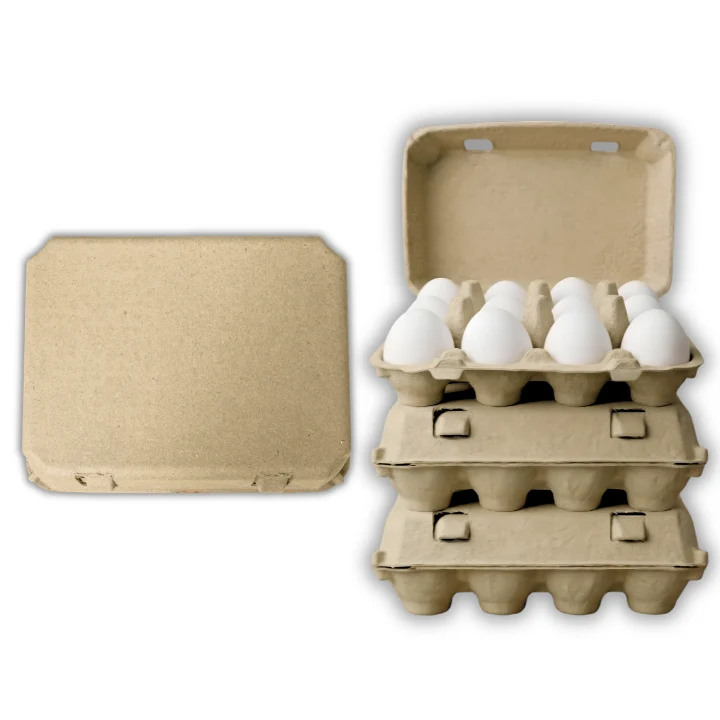
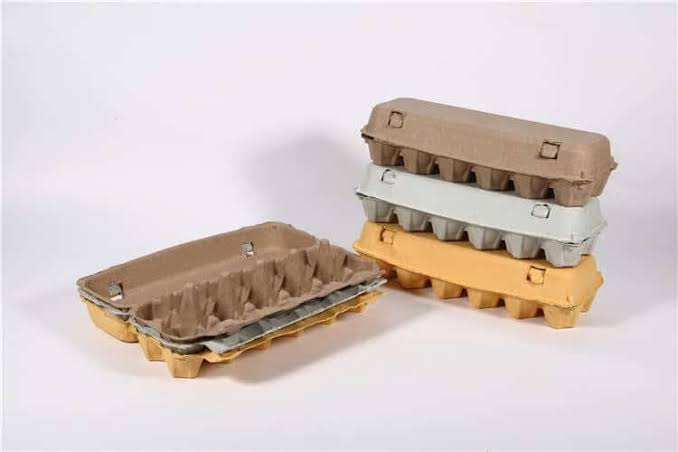
Egg cartons made through the middle of the twentieth century had a flat top. The lid was a squared panel with straight sides, folding down onto a base with a single deep hinge. Domed and contoured lids came later, driven by material savings and by automatic packing equipment that needed a self locating shape.

The flat top is the vintage carton. Print style contributes, but a domed modern carton with a retro typeface still looks modern, because the silhouette is what the eye reads first.

Our vintage molds reproduce the flat top geometry, including the squared shoulder where the lid meets the base and the deeper single fold hinge that lets the lid lay fully back.

Why the flat panel matters commercially

The flat top has a practical advantage that has nothing to do with nostalgia. It is the best print surface in egg packaging.

A domed lid curves in two directions, which means printed artwork distorts toward the edges and registration is harder to hold. A flat panel prints like a sheet. Fine detail holds, straight lines stay straight, and edge to edge coverage is achievable.

For a producer who wants their farm name reproduced properly rather than approximately, the flat top is the correct specification regardless of whether they care about the retro association. Several of our customers order it purely for the print quality.

The panel on a twelve cell vintage carton runs roughly 320 square centimeters of usable flat area, which is generous enough for a full illustrated design rather than a logo and a line of text.

The hinge behaves differently

A single deep fold hinge is more fragile than the multiple shallow creases used on modern cartons, and it needs more fiber to survive repeated opening.

We compensate by running additional wall thickness through the hinge zone, which adds a small amount of material per carton. The payoff is a lid that lays fully flat when opened, presenting the eggs as a display rather than propping the lid at an angle.

At a farmers market that difference is worth the extra grams. A carton that opens flat on a table shows twelve eggs to a passing customer. A carton with a lid standing up hides half of them.

Buyers should note that the deep hinge is the wear point on this format. Cartons opened and closed repeatedly for display, then sold, will show hinge fatigue. Producers who display eggs loose and pack at the point of sale avoid the issue entirely.

Color choices that read as period

Bright saturated color undermines the vintage effect. The shades that work are muted.

Natural pulp is the most authentic, since it is what the originals were, and it needs no pigment at all. Beyond that, muted greens, faded blues, and warm off-whites read as period. Bright pink and vivid purple do not, however well they perform on modern formats.

Print color follows the same logic. Single color printing in a dark ink on natural pulp is close to how these cartons were actually produced, since multi-color printing on egg cartons was uncommon until much later. A one color design also costs less to print, which is a rare case where the authentic choice is also the cheaper one.

Uses beyond selling eggs

Vintage cartons have a secondary market that surprises most producers.

Food stylists and photographers buy them as props, since a flat top carton signals farm and heritage in a single frame. Restaurants use them for table presentation. Craft and education buyers use them for the shape rather than the function.

These are low volume buyers, but they order consistently and they do not negotiate on price, since the carton is a small line item against a larger production. Producers with an online storefront often find prop sales cover a meaningful share of their minimum order.

Where it sits against the rest of the range

Vintage is a positioning choice rather than a functional one. A producer choosing it is trading efficiency for identity.

The pragmatic setup runs a dozen egg carton in modern profile for volume and wholesale accounts, with vintage reserved for direct sales where the customer sees the pack. A 6 egg carton in vintage profile works well for premium and gift lines.

Producers wanting distinctiveness through shape rather than period style should compare octagon egg cartons. Those combining vintage profile with a brand shade should read farbige Eierkartons for the pigment detail first.

Vintage describes a mold profile, not a decoration

Buyers searching for vintage egg cartons are usually looking for a specific physical shape rather than a printed graphic, and suppliers who treat the request as a print job get it wrong.

Egg cartons made through the middle of the twentieth century had a flat top. The lid was a squared panel with straight sides, folding down onto a base with a single deep hinge. Domed and contoured lids came later, driven by material savings and by automatic packing equipment that needed a self locating shape.

The flat top is the vintage carton. Print style contributes, but a domed modern carton with a retro typeface still looks modern, because the silhouette is what the eye reads first.

Our vintage molds reproduce the flat top geometry, including the squared shoulder where the lid meets the base and the deeper single fold hinge that lets the lid lay fully back.

Why the flat panel matters commercially

The flat top has a practical advantage that has nothing to do with nostalgia. It is the best print surface in egg packaging.

A domed lid curves in two directions, which means printed artwork distorts toward the edges and registration is harder to hold. A flat panel prints like a sheet. Fine detail holds, straight lines stay straight, and edge to edge coverage is achievable.

For a producer who wants their farm name reproduced properly rather than approximately, the flat top is the correct specification regardless of whether they care about the retro association. Several of our customers order it purely for the print quality.

The panel on a twelve cell vintage carton runs roughly 320 square centimeters of usable flat area, which is generous enough for a full illustrated design rather than a logo and a line of text.

The hinge behaves differently

A single deep fold hinge is more fragile than the multiple shallow creases used on modern cartons, and it needs more fiber to survive repeated opening.

We compensate by running additional wall thickness through the hinge zone, which adds a small amount of material per carton. The payoff is a lid that lays fully flat when opened, presenting the eggs as a display rather than propping the lid at an angle.

At a farmers market that difference is worth the extra grams. A carton that opens flat on a table shows twelve eggs to a passing customer. A carton with a lid standing up hides half of them.

Buyers should note that the deep hinge is the wear point on this format. Cartons opened and closed repeatedly for display, then sold, will show hinge fatigue. Producers who display eggs loose and pack at the point of sale avoid the issue entirely.

Color choices that read as period

Bright saturated color undermines the vintage effect. The shades that work are muted.

Natural pulp is the most authentic, since it is what the originals were, and it needs no pigment at all. Beyond that, muted greens, faded blues, and warm off-whites read as period. Bright pink and vivid purple do not, however well they perform on modern formats.

Print color follows the same logic. Single color printing in a dark ink on natural pulp is close to how these cartons were actually produced, since multi-color printing on egg cartons was uncommon until much later. A one color design also costs less to print, which is a rare case where the authentic choice is also the cheaper one.

Uses beyond selling eggs

Vintage cartons have a secondary market that surprises most producers.

Food stylists and photographers buy them as props, since a flat top carton signals farm and heritage in a single frame. Restaurants use them for table presentation. Craft and education buyers use them for the shape rather than the function.

These are low volume buyers, but they order consistently and they do not negotiate on price, since the carton is a small line item against a larger production. Producers with an online storefront often find prop sales cover a meaningful share of their minimum order.

Where it sits against the rest of the range

Vintage is a positioning choice rather than a functional one. A producer choosing it is trading efficiency for identity.

The pragmatic setup runs a dozen egg carton in modern profile for volume and wholesale accounts, with vintage reserved for direct sales where the customer sees the pack. A 6 egg carton in vintage profile works well for premium and gift lines.

Producers wanting distinctiveness through shape rather than period style should compare octagon egg cartons. Those combining vintage profile with a brand shade should read farbige Eierkartons for the pigment detail first.

Branchenkenntnisse bei BonitoPak

Durch die Herstellung von Millionen von Teilen verfügt BonitoPak über umfassende Kenntnisse in zahlreichen Anwendungen. Wir zeichnen uns besonders in Branchen aus, die eine präzise und komplizierte Komponentenfertigung erfordern. Vertrauen Sie darauf, dass wir unabhängig von der Komplexität Fachwissen und Qualität liefern.
Sind Sie bereit, Ihr Projekt aufzuwerten?

Erwecken Sie Ihre Entwürfe mit BonitoPak zum Leben

Erleben Sie Präzisionstechnik mit BonitoPak. Von detaillierten Prototypen bis hin zur Großserienproduktion - wir sind da, um Ihre Konzepte in die Realität umzusetzen. Kontaktieren Sie uns noch heute, um Ihre Projektanforderungen zu besprechen!

Warum BonitoPak wählen?

Wir von Bonitopak bieten maßgeschneiderte, umweltfreundliche Verpackungslösungen mit fachkundiger Unterstützung, nachhaltigen Verfahren und garantierter Qualität. Unsere innovativen Designs und unsere effiziente Produktion sorgen dafür, dass Ihre Verpackungen auffallen und gleichzeitig die Umweltbelastung reduzieren.

Schnelle Lösungen

Wir reagieren innerhalb von 24 Stunden und bieten schnelle, klare Kommunikation, maßgeschneiderte Lösungen und effizienten Service, um Zeit und Kosten zu sparen.

Rasche Anpassungsfähigkeit

Unsere hauseigene Konstruktion, Entwicklung und Fertigung gewährleistet eine schnelle Werkzeugherstellung, wobei Muster innerhalb von 7 Tagen und Produktionsformen innerhalb von 8 Tagen fertiggestellt werden.

Experten-Innovatoren

Unsere erfahrenen F&E-Ingenieure zeichnen sich durch Design, Prototyping und Werkzeugbau aus und bieten komplette Verpackungslösungen mit Blister-, Blechdosen- und bedruckten Schachteln an.

Effiziente Optimierung

Geschulte Mitarbeiter führen 100%-Inspektionen, Stichproben und Qualitätskontrollen durch, um hohe Standards zu gewährleisten, Ausschuss zu reduzieren und Kosten zu sparen.

Prompte Lieferung

Wir sorgen für eine vernünftige Auftragsplanung und stimmen uns mit unseren Kunden ab, um Probleme umgehend zu lösen und die besten Lösungen zu gewährleisten.

Ausgezeichnete Unterstützung

Unser erfahrenes After-Sales-Team sorgt für eine reibungslose Kommunikation und löst Probleme mit Ersatz, Versand und Lieferung, mit dem Ziel, Reklamationen zu vermeiden.

Verwandte Artikel und Einblicke

Bleiben Sie auf dem Laufenden mit den neuesten Informationen über nachhaltige Verpackungstrends, Einblicke in die Branche und Expertentipps in unserem Blog. Entdecken Sie innovative Ideen und Lösungen, um Ihr Verpackungswissen zu erweitern.

Von Leo Chan | Autor, BonitoPak | Über 20 Jahre Erfahrung im Bereich Verpackungen aus Formmasse Veröffentlicht: 24

Von Leo Chan | Autor bei BonitoPak | Über 20 Jahre Erfahrung im Bereich Verpackungen aus Formmasse Veröffentlicht am: 22

Von Leo Chan | Autor, BonitoPak | Über 20 Jahre Erfahrung im Bereich Verpackungen aus Formmasse Veröffentlicht: 21

Häufig gestellte Fragen

Vintage-Eierkartons aus geformtem Zellstoff

  • Will the deep hinge crack if customers reuse the carton?

    With repeated opening over weeks, eventually yes. The deep single fold concentrates flex in one line, which is the trade for a lid that lays flat. Modern multi-crease hinges last longer through reuse cycles. If your customers routinely return cartons for refilling, the modern profile is the more practical specification.

  • Do vintage cartons fit modern refrigerator door shelves?

    The twelve cell runs slightly shallower than a modern domed carton at around 68 mm tall against 75 mm, so it fits comfortably where a modern one does. Length is the same. Buyers switching between profiles do not usually need to change anything downstream.

  • Can I print a full color illustration on the lid?

    Yes, and the flat panel is the reason. Multi-color flexographic work holds registration on a flat surface in a way it cannot on a dome. Bear in mind that pulp texture softens fine detail regardless of print quality, so illustrations with heavy line work reproduce better than photographic images.

  • Does the flat top stack as well as a domed lid?

    Better, in fact. A flat surface bears directly on the base of the carton above with no contour to slide against, so stacks stay square. What the flat top loses is the arch strength a dome provides, which we compensate for with rib structure underneath the panel. Net top load performance is comparable.

  • Are vintage cartons actually old, or reproductions?

    They are newly manufactured to a historic profile. Genuinely old cartons are not food safe, since fiber packaging absorbs whatever it has been stored with and has no traceable material history. Our vintage cartons are produced from the same recycled pulp as the rest of the range, on molds cut to reproduce the flat top geometry

de_DEGerman
Füllen Sie dieses detaillierte Formular aus