As caixas de ovos coloridas são produzidas por meio de dois métodos muito diferentes, e essa diferença determina praticamente tudo sobre o desempenho da caixa final.
O revestimento de superfície aplica o pigmento após a formação e a secagem da embalagem de papelão, seja por pulverização ou por impressão. É barato, permite mudanças rápidas de cor e produz resultados brilhantes. Além disso, fica sobre a fibra. Se você esfregar uma caixa revestida contra a borda de uma prateleira, a polpa natural fica visível. O revestimento também adiciona uma camada que pode não se decompor na mesma velocidade que a fibra por baixo, o que compromete o motivo pelo qual a maioria dos compradores escolheu a polpa.
Na pigmentação a úmido, o pigmento é incorporado à pasta de celulose antes mesmo que o molde entre em contato com ela. A cor é distribuída por toda a fibra, de modo que uma borda rasgada apresenta o mesmo tom da superfície. Nada pode se desgastar, pois não há camada que possa ser removida.
A Bonitopak aplica as cores na parte úmida. É por isso que nossas embalagens coloridas custam mais do que um produto equivalente com revestimento e continuam com boa aparência mesmo após um ciclo de transporte.
Como o pigmento afeta a compostabilidade
A dúvida mais frequente dos compradores é se a cor compromete a alegação ambiental. É uma pergunta pertinente, e a resposta depende inteiramente da escolha do pigmento.
Os pigmentos destinados a embalagens compostáveis devem se decompor sem deixar metais pesados ou resíduos persistentes no composto final. Isso descarta várias composições químicas tradicionais de corantes, especialmente alguns tons históricos de vermelho e amarelo. Isso resulta em uma paleta mais restrita, o que é uma das razões pelas quais as gamas de cores da celulose são menores do que as do plástico.
Dentro dessa restrição, uma embalagem de papelão pigmentado se decompõe praticamente no mesmo prazo que uma embalagem natural. A fibra é a mesma, a quantidade de pigmento é muito pequena em termos de massa e não há filme nem revestimento que interfira no processo.
Os compradores devem perguntar a qualquer fornecedor de celulose colorida qual sistema de pigmentos ele utiliza e se esse sistema é aprovado para embalagens compostáveis. Um fornecedor que não souber responder provavelmente utiliza revestimento superficial.
A consistência entre lotes é o verdadeiro desafio da produção
Acertar a cor uma única vez é simples. É na capacidade de manter a mesma cor ao longo de uma relação de fornecimento de doze meses que os fornecedores se diferenciam.
A polpa reciclada não é uma matéria-prima uniforme. A cor de base da fibra recebida varia de acordo com o fluxo de resíduos, a época do ano e o fornecedor. Uma dosagem de pigmento que produz a tonalidade desejada em um lote claro resultará em um tom mais escuro em um lote cinza.
O controle se baseia na medição, e não na receita. O brilho da polpa base é verificado antes da dosagem; a quantidade de pigmento é ajustada de acordo com essa leitura; e as amostras formadas são comparadas a um padrão físico mantido em arquivo, e não a uma amostra de cor exibida na tela. Os registros de cada lote permitem que um pedido repetido seja ajustado de acordo com o original, e não com a especificação nominal.
Os compradores que administram uma linha de marca devem solicitar uma amostra de referência na primeira produção e citá-la em todos os pedidos subsequentes. Essa é a única maneira confiável de manter a tonalidade ao longo do tempo.
Onde a cor justifica seu custo
A cor aumenta o custo. Vale a pena entender em que aspectos isso se compensa.
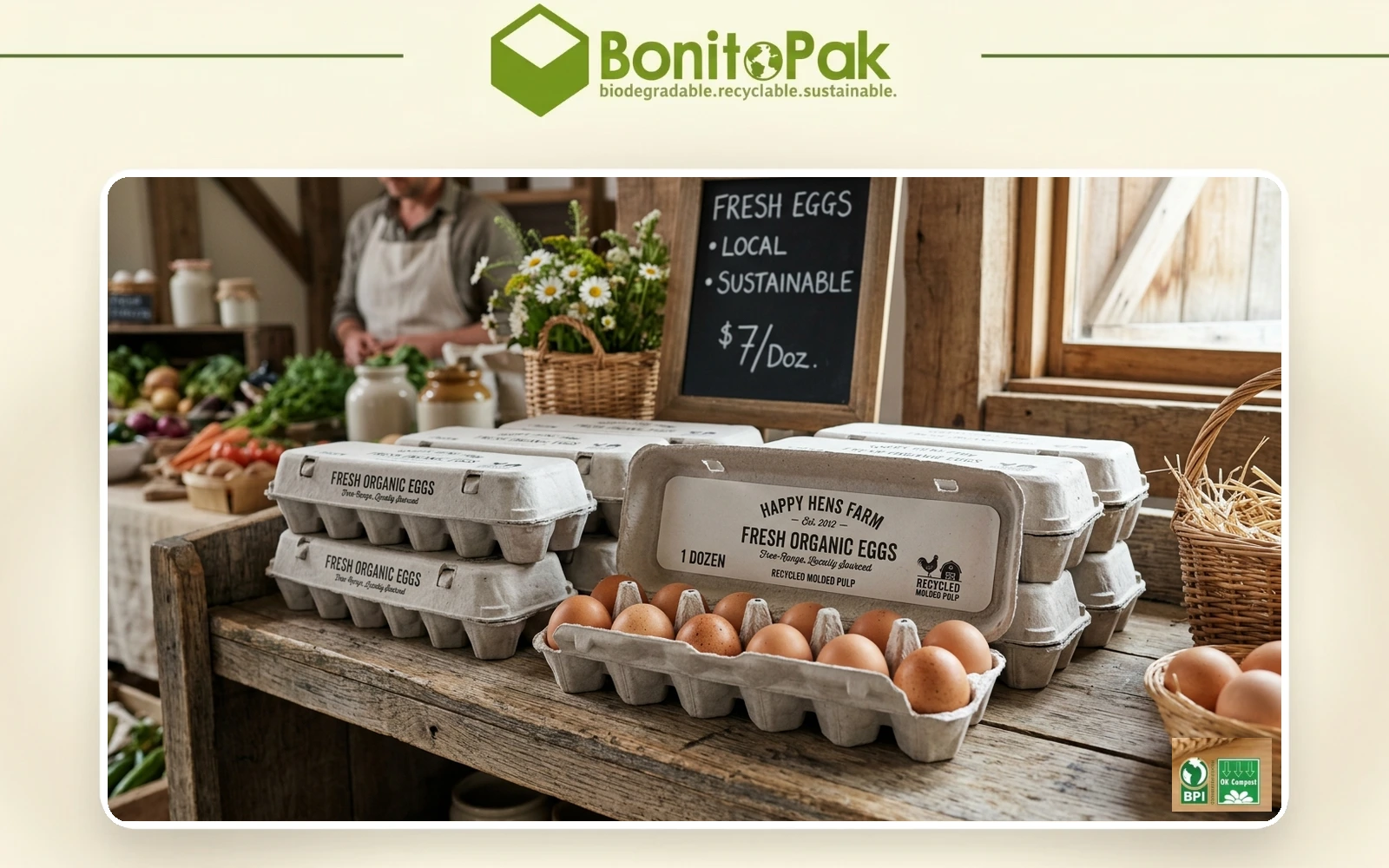
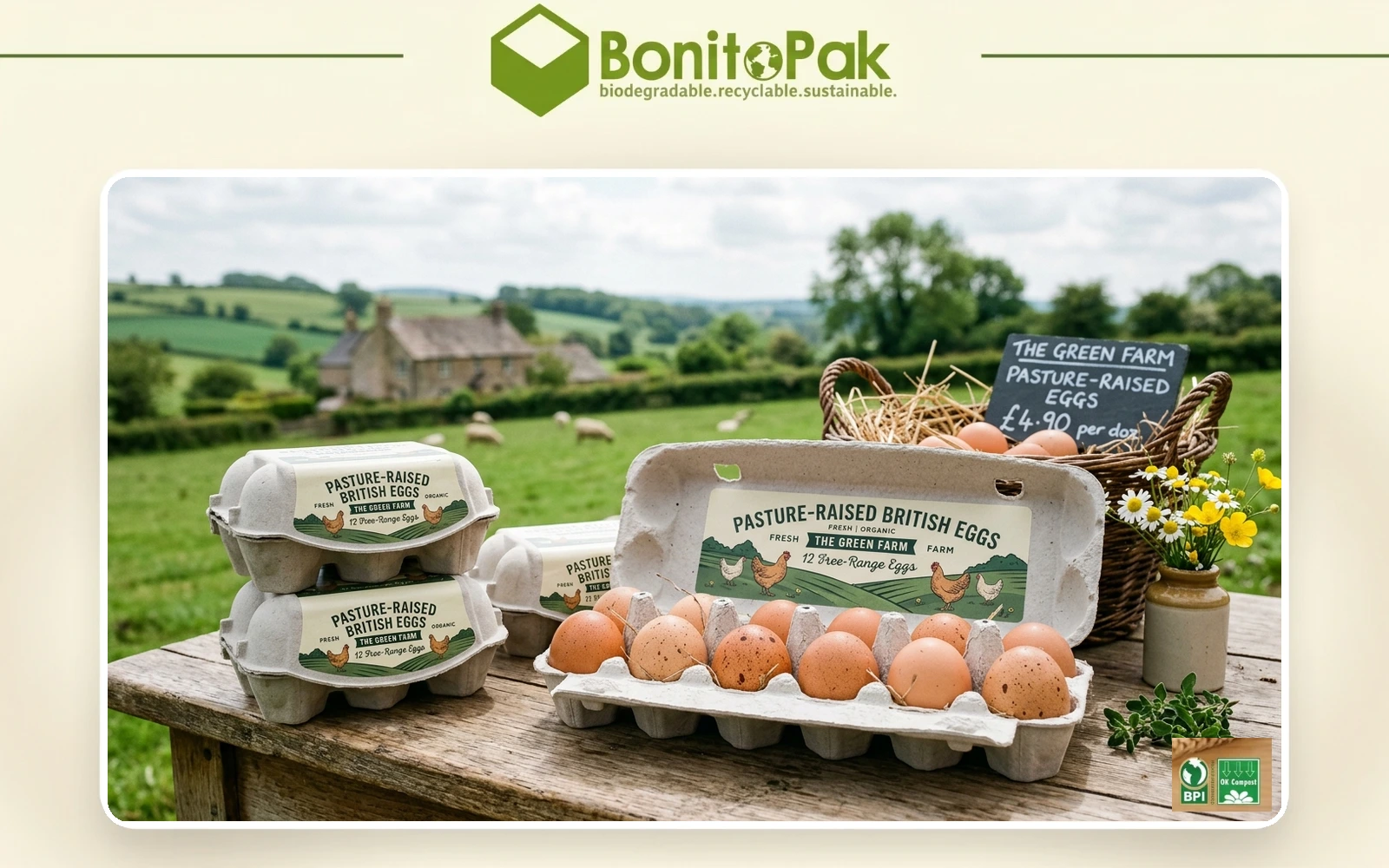
Em uma barraca de fazenda ou em uma mesa de feira, uma embalagem colorida diferencia um produtor de todos os outros que vendem o mesmo produto em embalagens de papelão cinza. Essa diferença visual tem mais impacto do que qualquer rótulo, pois chama a atenção antes mesmo que o consumidor esteja perto o suficiente para ler qualquer coisa.
No varejo, a cor funciona como um indicador de tipo de criação. Os fabricantes costumam usar tons diferentes para distinguir animais criados em liberdade daqueles criados em pastagem, ou produtos convencionais dos orgânicos, o que permite que o consumidor encontre o produto de sempre sem precisar ler a embalagem.
Nos canais de presentes e produtos sazonais, a cor é o produto. Presentes de Páscoa, cestas de fim de ano e brindes corporativos com a marca da empresa são comprados com base na aparência.
Onde a cor raramente compensa é nas embalagens comerciais de produtos de consumo básico. Se os ovos passam por uma estação de classificação antes de chegarem a um varejista que aplica sua própria rotulagem, a caixa fica invisível, e a polpa natural é a escolha certa.
Especificação de cor em um intervalo
Os compradores que realizam várias contagens de células em uma única cor de marca precisam se planejar para isso, pois cada molde representa um ciclo de produção separado e há um risco real de variação de tonalidade entre os moldes.
A abordagem mais confiável é produzir todos os moldes na mesma cor, a partir do mesmo lote de pigmento, sempre que os volumes permitirem; ou, quando isso não for possível, fazer com que cada molde corresponda a um padrão físico de referência mantido. Encomendar um caixa de ovos para uma dúzia e um Caixa de 6 ovos A aplicação da mesma tonalidade com seis meses de intervalo, sem manter um padrão, geralmente resulta em uma diferença visível.
Os compradores que buscam um único tom devem verificar caixas de ovos cor-de-rosa para obter detalhes específicos sobre a tonalidade. Quem quiser combinar cores com um formato característico deve dar uma olhada em caixas de ovos octogonais ou caixas de ovos retrô.
As caixas de ovos coloridas são produzidas por meio de dois métodos muito diferentes, e essa diferença determina praticamente tudo sobre o desempenho da caixa final.
O revestimento de superfície aplica o pigmento após a formação e a secagem da embalagem de papelão, seja por pulverização ou por impressão. É barato, permite mudanças rápidas de cor e produz resultados brilhantes. Além disso, fica sobre a fibra. Se você esfregar uma caixa revestida contra a borda de uma prateleira, a polpa natural fica visível. O revestimento também adiciona uma camada que pode não se decompor na mesma velocidade que a fibra por baixo, o que compromete o motivo pelo qual a maioria dos compradores escolheu a polpa.
Na pigmentação a úmido, o pigmento é incorporado à pasta de celulose antes mesmo que o molde entre em contato com ela. A cor é distribuída por toda a fibra, de modo que uma borda rasgada apresenta o mesmo tom da superfície. Nada pode se desgastar, pois não há camada que possa ser removida.
A Bonitopak aplica as cores na parte úmida. É por isso que nossas embalagens coloridas custam mais do que um produto equivalente com revestimento e continuam com boa aparência mesmo após um ciclo de transporte.
Como o pigmento afeta a compostabilidade
A dúvida mais frequente dos compradores é se a cor compromete a alegação ambiental. É uma pergunta pertinente, e a resposta depende inteiramente da escolha do pigmento.
Os pigmentos destinados a embalagens compostáveis devem se decompor sem deixar metais pesados ou resíduos persistentes no composto final. Isso descarta várias composições químicas tradicionais de corantes, especialmente alguns tons históricos de vermelho e amarelo. Isso resulta em uma paleta mais restrita, o que é uma das razões pelas quais as gamas de cores da celulose são menores do que as do plástico.
Dentro dessa restrição, uma embalagem de papelão pigmentado se decompõe praticamente no mesmo prazo que uma embalagem natural. A fibra é a mesma, a quantidade de pigmento é muito pequena em termos de massa e não há filme nem revestimento que interfira no processo.
Os compradores devem perguntar a qualquer fornecedor de celulose colorida qual sistema de pigmentos ele utiliza e se esse sistema é aprovado para embalagens compostáveis. Um fornecedor que não souber responder provavelmente utiliza revestimento superficial.
A consistência entre lotes é o verdadeiro desafio da produção
Acertar a cor uma única vez é simples. É na capacidade de manter a mesma cor ao longo de uma relação de fornecimento de doze meses que os fornecedores se diferenciam.
A polpa reciclada não é uma matéria-prima uniforme. A cor de base da fibra recebida varia de acordo com o fluxo de resíduos, a época do ano e o fornecedor. Uma dosagem de pigmento que produz a tonalidade desejada em um lote claro resultará em um tom mais escuro em um lote cinza.
O controle se baseia na medição, e não na receita. O brilho da polpa base é verificado antes da dosagem; a quantidade de pigmento é ajustada de acordo com essa leitura; e as amostras formadas são comparadas a um padrão físico mantido em arquivo, e não a uma amostra de cor exibida na tela. Os registros de cada lote permitem que um pedido repetido seja ajustado de acordo com o original, e não com a especificação nominal.
Os compradores que administram uma linha de marca devem solicitar uma amostra de referência na primeira produção e citá-la em todos os pedidos subsequentes. Essa é a única maneira confiável de manter a tonalidade ao longo do tempo.
Onde a cor justifica seu custo
A cor aumenta o custo. Vale a pena entender em que aspectos isso se compensa.
Em uma barraca de fazenda ou em uma mesa de feira, uma embalagem colorida diferencia um produtor de todos os outros que vendem o mesmo produto em embalagens de papelão cinza. Essa diferença visual tem mais impacto do que qualquer rótulo, pois chama a atenção antes mesmo que o consumidor esteja perto o suficiente para ler qualquer coisa.
No varejo, a cor funciona como um indicador de tipo de criação. Os fabricantes costumam usar tons diferentes para distinguir animais criados em liberdade daqueles criados em pastagem, ou produtos convencionais dos orgânicos, o que permite que o consumidor encontre o produto de sempre sem precisar ler a embalagem.
Nos canais de presentes e produtos sazonais, a cor é o produto. Presentes de Páscoa, cestas de fim de ano e brindes corporativos com a marca da empresa são comprados com base na aparência.
Onde a cor raramente compensa é nas embalagens comerciais de produtos de consumo básico. Se os ovos passam por uma estação de classificação antes de chegarem a um varejista que aplica sua própria rotulagem, a caixa fica invisível, e a polpa natural é a escolha certa.
Especificação de cor em um intervalo
Os compradores que realizam várias contagens de células em uma única cor de marca precisam se planejar para isso, pois cada molde representa um ciclo de produção separado e há um risco real de variação de tonalidade entre os moldes.
A abordagem mais confiável é produzir todos os moldes na mesma cor, a partir do mesmo lote de pigmento, sempre que os volumes permitirem; ou, quando isso não for possível, fazer com que cada molde corresponda a um padrão físico de referência mantido. Encomendar um caixa de ovos para uma dúzia e um Caixa de 6 ovos A aplicação da mesma tonalidade com seis meses de intervalo, sem manter um padrão, geralmente resulta em uma diferença visível.
Os compradores que buscam um único tom devem verificar caixas de ovos cor-de-rosa para obter detalhes específicos sobre a tonalidade. Quem quiser combinar cores com um formato característico deve dar uma olhada em caixas de ovos octogonais ou caixas de ovos retrô.