Fibra de palha

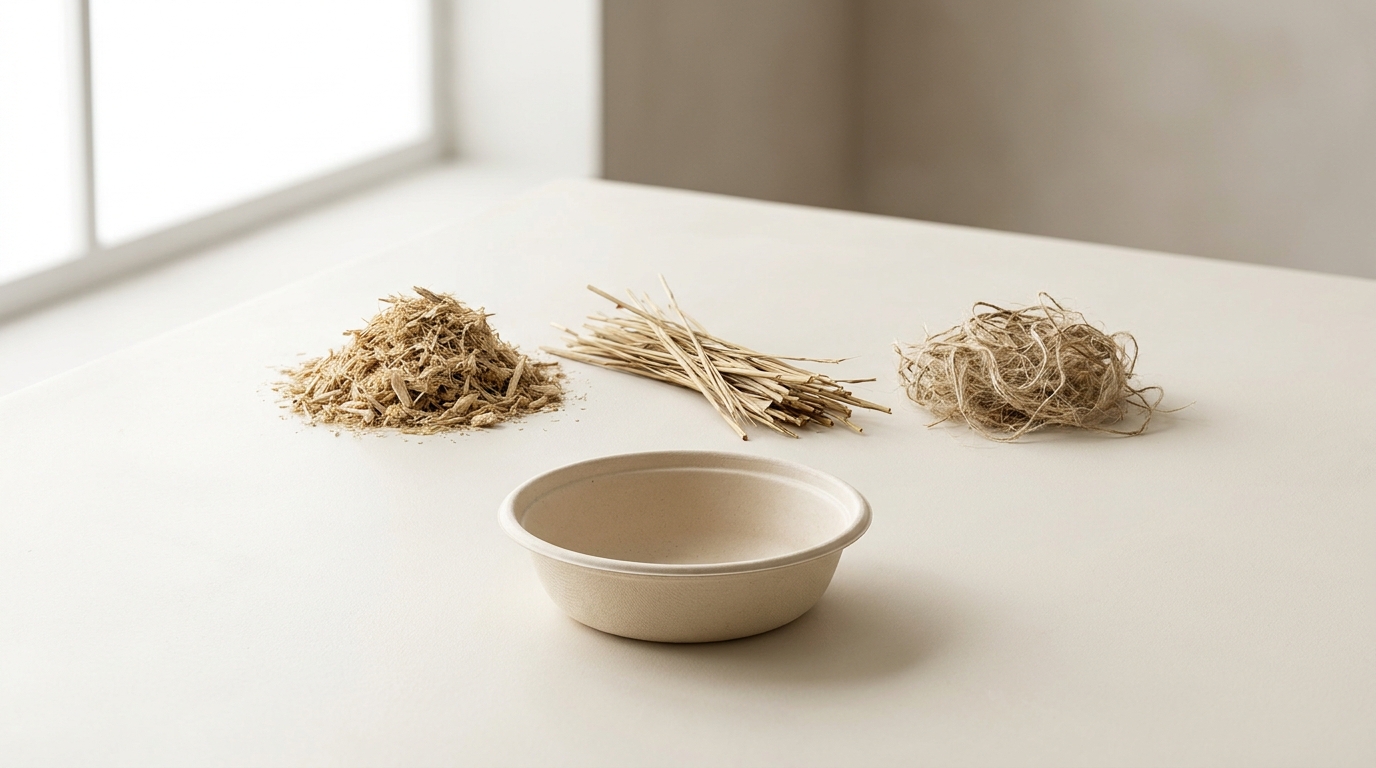
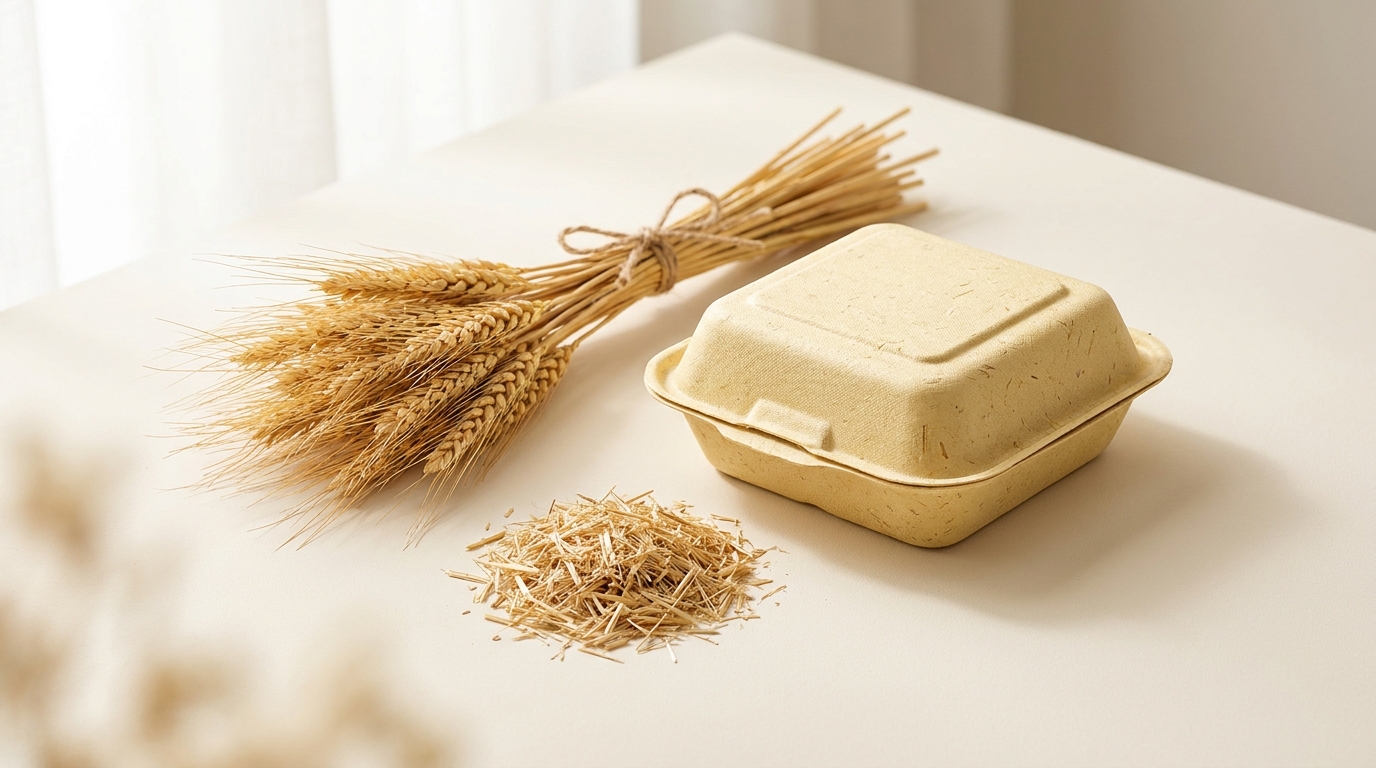
Straw fiber is made from the stalks left after grain harvest, material that in many regions is still burned in the field because there is nothing else to do with it. Using it for packaging turns a disposal problem into an input. The fiber runs 1.0 to 1.5 mm, forms a pale gold part with a lightly textured surface, and renews annually rather than over the decades a tree needs.

Why straw fiber works as a packaging material

  • Annual renewal cycle. Wheat and rice are harvested every year. A softwood plantation runs 25 to 40 years before harvest. On renewability per year, no wood fiber comes close.
  • Diverts open field burning. Straw disposal by burning is a significant regional air quality problem across several major grain-growing areas. Diverting it into packaging has a measurable environmental argument behind it.
  • No competition with food production. The grain is already harvested. The straw is residue, so using it does not displace food crops or farmland.
  • Pale gold natural tone. Lighter and warmer than recycled fiber, which gives a finished part that reads as agricultural rather than as waste paper.
  • Low cost at volume. Residue pricing rather than commodity fiber pricing, where collection logistics are established.
  • Good formability. Mid-short fibers flow into mold detail cleanly and drain predictably on the forming screen.

The technical complication worth naming is silica. Rice straw in particular carries a high silica content, which is abrasive on processing equipment and interferes with fiber bonding if it is not managed. Straw pulping therefore needs process control that wood pulping does not, and suppliers who treat straw as a drop-in substitute for wood fiber tend to produce inconsistent parts.

Wheat straw carries less silica than rice straw, which is why wheat is the more common input where both are available. We select and blend on that basis rather than taking whatever residue is cheapest.

Specification table

Especificação Detalhes
Nome do material Fibra de palha
Tipo de material Agricultural residue cellulose
Fonte de fibra Wheat straw, rice straw
Average Fiber Length 1.0 to 1.5 mm
Renewal Cycle Annual
Silica Content Present; higher in rice than wheat straw
Natural Color Pale gold
Acabamento da superfície Lightly textured, matte
Relative Strength Médio
Typical Wall Thickness 1.0 to 4.0 mm
Compatibilidade de processos Wet pressing, dry pressing, transfer molding
Tipos de polpa moldada Type 1, Type 2, Type 4
Compostabilidade Meets the chemistry basis for EN 13432 and ASTM D6400 uncoated
Reciclabilidade Accepted in most paper streams uncoated
Food Contact Confirm against your market requirement
Opções de cores Natural gold; takes pigment on a pale base
Supply Pattern Seasonal at harvest, stocked for year-round production
Relative Cost Baixa

Where straw fiber is the right specification

Volume parts with a sustainability requirement. This is the material’s natural home. It costs close to recycled fiber, looks considerably better, and carries a stronger environmental argument than either recycled or virgin wood.

Brands reporting on agricultural circularity. Field-burning diversion is a specific, defensible claim rather than a general eco statement, which is exactly what procurement teams need when they have to substantiate a packaging decision.

Food service and produce trays. The pale gold tone and the agricultural origin sit naturally alongside food, and the formability supports the shallow trays these applications use.

Replacing expanded polystyrene in retail-facing packaging. Where OCC-based pulp is too coarse to put in front of a customer, straw fiber does the same protective job and looks intentional.

Straw stops being the answer in two situations. Anything carrying serious compression needs the longer fibers in papel kraft compostável ou fibra de bambu. Anything needing a true white finish or direct food contact clearance needs celulose branqueada.

The closest material in the range is fibra vegetal natural, which blends several agricultural sources rather than committing to straw specifically. Choose straw when you want a single declared origin for a sustainability claim; choose the blend when you want supply resilience.

Perguntas frequentes (FAQs)

Is straw fiber weaker than wood fiber?
Yes, and the reason is fiber length. Straw runs 1.0 to 1.5 mm against 2.5 to 4.5 mm for softwood kraft, so it builds a less interconnected bonded network. In practice this governs only load-critical parts. For trays, inserts, and general protective packaging, geometry carries the performance and the difference does not decide the design.
Two things. It is abrasive, so it wears processing equipment faster than wood pulping does, which is a cost that shows up in the supplier’s operation rather than in the part. And it interferes with fiber-to-fiber bonding, which reduces strength if the pulping process does not manage it. Suppliers who have not solved this produce straw parts with inconsistent compression performance.
Some straw is used for animal bedding, soil incorporation, and energy, and some is simply burned. Volumes are large enough in major grain regions that packaging demand sits well within what is currently disposed of rather than competing with established uses. The claim worth making is field-burning diversion rather than that no alternative use exists.
Yes, and the pale gold base takes pigment better than gray-brown recycled fiber does. Light tints reproduce more predictably because there is less base color to work against. The base tone does warm the result slightly, so a cool shade on straw will read marginally warmer than the same pigment on bleached pulp.
Harvest is seasonal, so the input arrives in a concentrated period and is stocked for continuous production. The risk to manage is a poor harvest year rather than the normal seasonal cycle. For large recurring orders we plan material availability against your schedule at quotation rather than assuming supply.
Nome do material

Fibra de palha

Tipo de material

Fibra natural de origem vegetal

Compatibilidade de processos

Materiais de embalagem Bonitopak

Nossas soluções de embalagem são fabricadas com materiais sustentáveis, como fibra de cana-de-açúcar, bambu e polpa de papel reciclado, oferecendo opções ecológicas e biodegradáveis para uma ampla gama de produtos.

O papel kraft compostável é a fibra mais resistente que produzimos. Fabricado a partir de matéria-prima virgem

A polpa colorida não é uma fibra separada. Trata-se de qualquer uma das nossas

A polpa branqueada é o material a ser especificado quando a peça precisa

O termo “fibra vegetal natural” abrange as fontes de celulose não derivadas da madeira que incorporamos à nossa mistura, fora da

O papel ondulado, como material de polpa moldada, refere-se a caixas de papelão recicladas que foram transformadas em polpa novamente

A fibra de palha é produzida a partir dos caules que sobram após a colheita dos grãos, material

Nossas categorias de produtos

Descubra a gama diversificada de soluções de embalagem da Bonitopak, incluindo bandejas de polpa moldada, embalagens para alimentos, designs personalizados e opções sustentáveis. Cada categoria é criada para oferecer durabilidade, funcionalidade e responsabilidade ambiental, adaptada para atender às suas necessidades específicas.
Pronto para elevar seu projeto?

Dê vida aos seus projetos com o BonitoPak

Experimente a engenharia de precisão com a BonitoPak. De protótipos detalhados à produção de alto volume, estamos aqui para transformar seus conceitos em realidade. Entre em contato conosco hoje mesmo para discutir as necessidades do seu projeto!

Artigos e insights relacionados

Mantenha-se informado com as últimas atualizações sobre tendências de embalagens sustentáveis, percepções do setor e dicas de especialistas em nosso blog. Explore ideias e soluções inovadoras para aprimorar seu conhecimento sobre embalagens.

By Leo Chan, Senior Packaging Consultant, BonitoPak. Last updated: November 2026.A 12 egg carton holds

By Leo Chan, Senior Packaging Consultant, BonitoPak. Last updated: November 2026.Quail egg cartons are molded

By Leo Chan, Senior Packaging Consultant, BonitoPak. Last updated: November 2026.A molded pulp cup carrier

Preencha este formulário detalhado