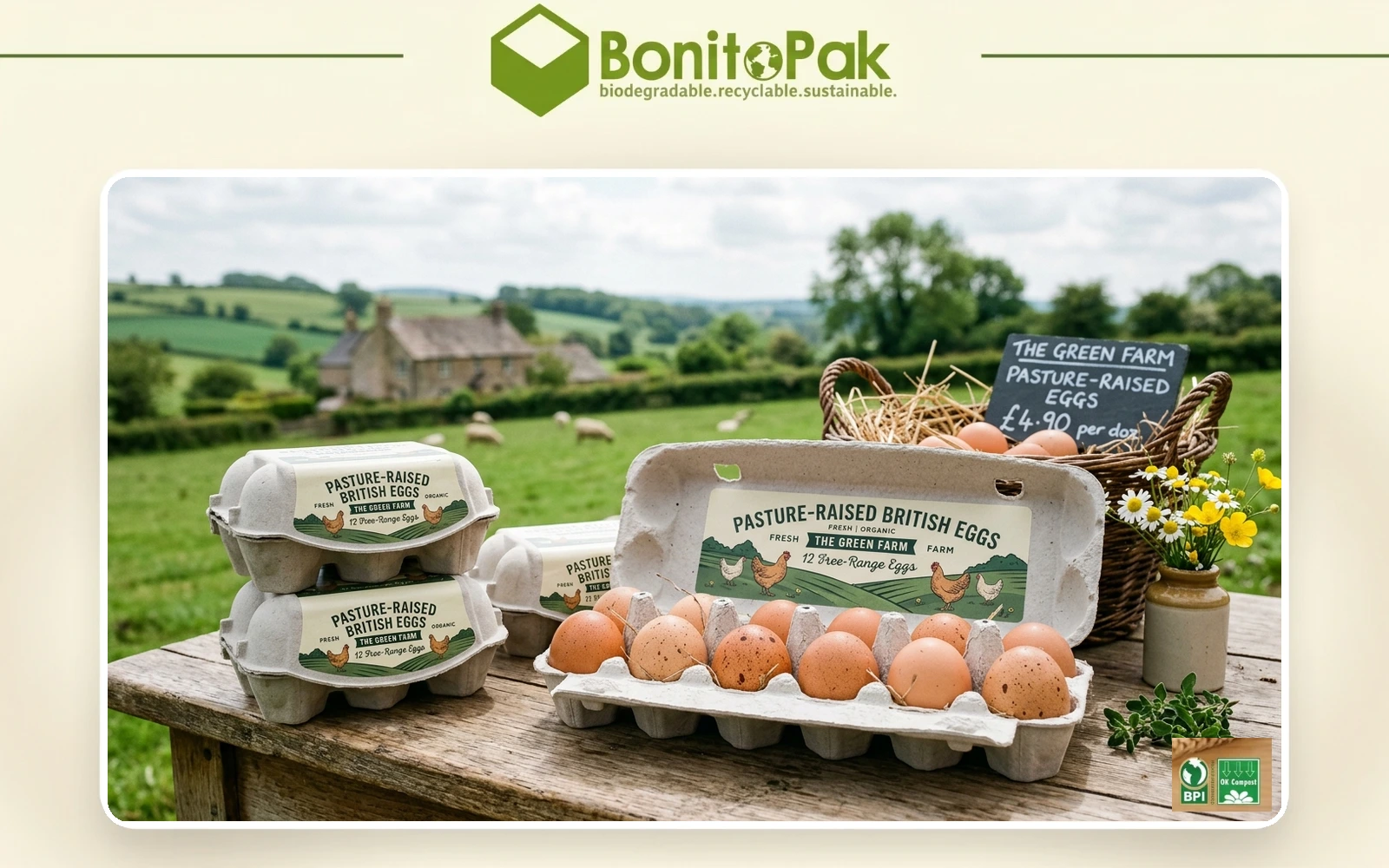
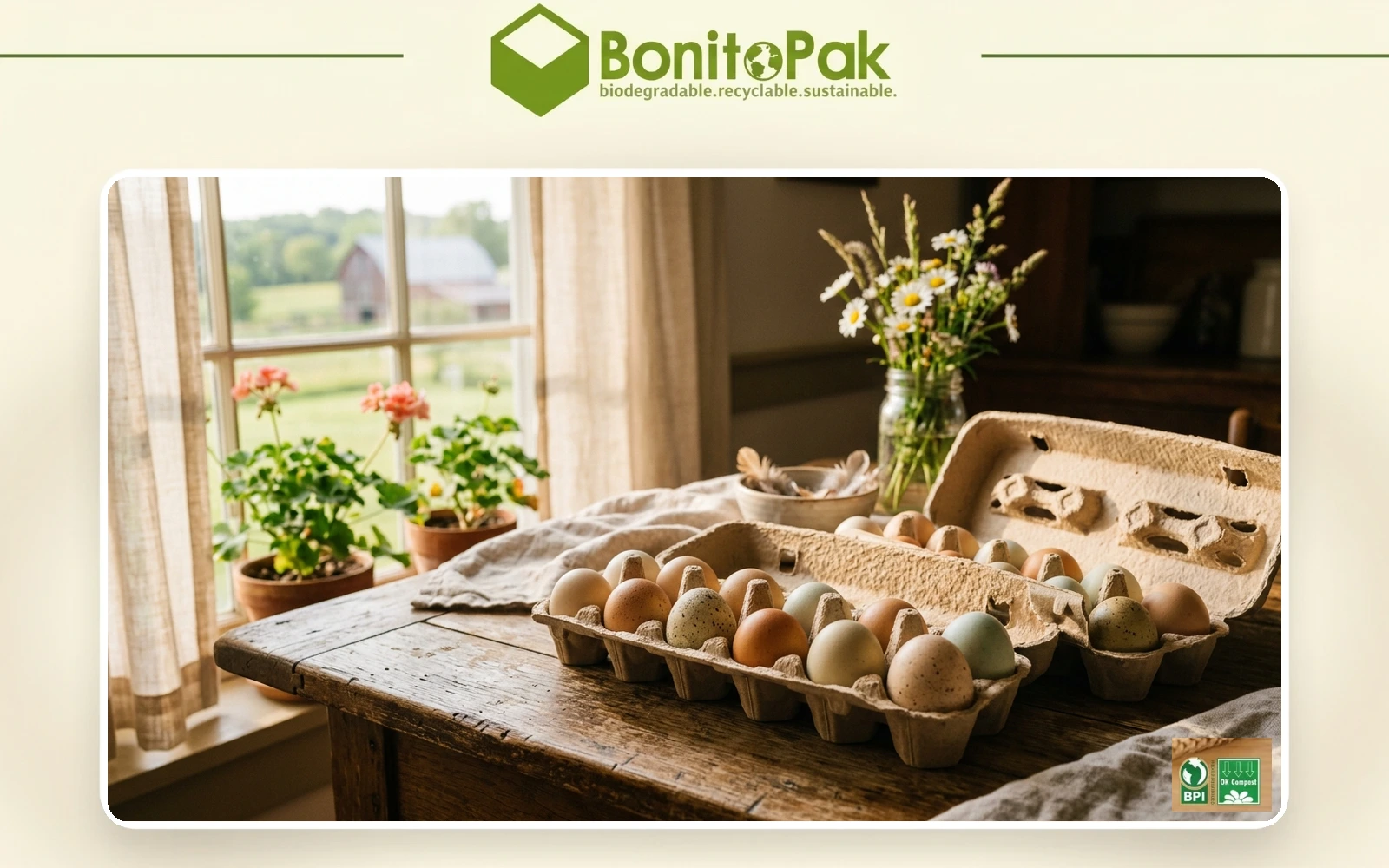
Las cajas de huevos de colores se fabrican mediante dos métodos muy distintos, y esa diferencia determina prácticamente todas las características del producto final.
El recubrimiento superficial consiste en aplicar pigmento una vez que el cartón se ha moldeado y secado, ya sea mediante pulverización o impresión. Es económico, permite cambios rápidos de color y ofrece resultados brillantes. Además, se deposita sobre la fibra. Si se raspa un cartón recubierto contra el borde de una estantería, se ve la pulpa natural. El recubrimiento también añade una capa que puede que no se descomponga al mismo ritmo que la fibra que hay debajo, lo que socava la razón por la que la mayoría de los compradores eligen la pulpa.
En la pigmentación en fase húmeda, el pigmento se mezcla con la pasta de papel antes de que el molde entre en contacto con ella. El color se distribuye por toda la fibra, por lo que un borde rasgado presenta el mismo tono que la superficie. No hay riesgo de que se desgaste, ya que no hay ninguna capa que pueda desprenderse.
Los colores de Bonitopak se aplican en la parte húmeda. Por eso nuestros cartones de colores son más caros que sus equivalentes estucados y por eso siguen teniendo buen aspecto tras un ciclo de transporte.
Cómo influye el pigmento en la compostabilidad
La duda que plantean con más frecuencia los compradores es si el color afecta a la declaración medioambiental. Es una pregunta razonable y la respuesta depende totalmente de la selección de los pigmentos.
Los pigmentos destinados a envases que vayan a ser compostados deben descomponerse sin dejar metales pesados ni residuos persistentes en el compost resultante. Esto descarta varias composiciones químicas tradicionales de colorantes, en particular algunos rojos y amarillos clásicos. El resultado es una paleta más limitada, lo que constituye una de las razones por las que la gama de colores de la pulpa es más reducida que la del plástico.
Dentro de esos límites, un cartón de pulpa pigmentada se descompone en un plazo prácticamente idéntico al de uno natural. La fibra es la misma, la cantidad de pigmento es muy pequeña en relación con la masa y no hay ninguna película ni recubrimiento que interfiera.
Los compradores deberían preguntar a cualquier proveedor de pasta de papel de color qué sistema de pigmentos utiliza y si está homologado para envases compostables. Si un proveedor no puede responder a estas preguntas, es probable que utilice un recubrimiento superficial.
La uniformidad entre lotes es el verdadero reto de la producción
Acertar con un color una sola vez es sencillo. Lo que distingue a unos proveedores de otros es su capacidad para mantener ese mismo color a lo largo de una relación de suministro de doce meses.
La pasta de papel reciclada no es una materia prima homogénea. El color de base de la fibra entrante varía en función del tipo de residuos, de la temporada y del proveedor. Una dosis de pigmento que produzca el tono deseado en un lote claro dará como resultado un tono más oscuro en uno gris.
El control se basa en la medición, más que en una fórmula. Se comprueba el brillo de la pasta base antes de la dosificación, se ajusta la cantidad de pigmento en función de esa lectura y las muestras moldeadas se comparan con un patrón físico conservado, en lugar de con una muestra de color en una pantalla. Los registros de cada lote permiten que un pedido repetido se ajuste al original, en lugar de a la especificación nominal.
Los compradores que comercialicen una línea de marca propia deben solicitar una muestra de referencia en la primera producción e indicarla en cada nuevo pedido. Es la única forma fiable de mantener el tono a lo largo del tiempo.
Donde el color justifica su precio
El color supone un coste adicional. Vale la pena analizar en qué aspectos se amortiza ese gasto.
En un puesto de productos agrícolas o en un mercado, una caja de cartón de colores distingue a un productor de todos los demás que venden el mismo producto en envases de cartón gris. Esa diferencia visual tiene más impacto que cualquier etiqueta, ya que llama la atención antes de que el comprador se acerque lo suficiente como para leer nada.
En el sector minorista, el color sirve para indicar el tipo de cría. Los fabricantes suelen utilizar distintos tonos para diferenciar los productos de cría en libertad de los criados en pastos, o los convencionales de los ecológicos, lo que permite al comprador encontrar su producto habitual sin necesidad de leer el envase.
En los canales de regalos y artículos de temporada, el color es el producto. Los productos de Pascua, las cestas navideñas y los regalos corporativos de marca se compran por su aspecto.
Un ámbito en el que el color rara vez resulta rentable es el del embalaje comercial de productos básicos. Si los huevos pasan por una estación de clasificación antes de llegar a un minorista que les aplica su propio etiquetado, la caja queda oculta, por lo que lo más adecuado es optar por la pulpa natural.
Especificar un color en un rango
Los compradores que realicen varios recuentos celulares en un mismo color de marca deben tenerlo en cuenta, ya que cada molde supone un ciclo de producción independiente y existe un riesgo real de que se produzcan variaciones de tono entre los distintos moldes.
El método más fiable consiste en fabricar todos los moldes en el mismo color a partir del mismo lote de pigmento, siempre que los volúmenes lo permitan, o bien, cuando esto no sea posible, hacer coincidir cada molde con un patrón físico de referencia conservado. Realizar un pedido de un caja de una docena de huevos y un 6 cajas de huevos Si se aplica el mismo tono con seis meses de diferencia y sin mantener el mismo nivel de intensidad, normalmente se apreciará una diferencia visible.
Los compradores que busquen un solo tono deberían echar un vistazo a cajas de huevos de color rosa para conocer los detalles específicos de cada tono. Quienes deseen combinar el color con una forma distintiva deberían echar un vistazo a cajas de huevos octogonales o cajas de huevos antiguas.
Las cajas de huevos de colores se fabrican mediante dos métodos muy distintos, y esa diferencia determina prácticamente todas las características del producto final.
El recubrimiento superficial consiste en aplicar pigmento una vez que el cartón se ha moldeado y secado, ya sea mediante pulverización o impresión. Es económico, permite cambios rápidos de color y ofrece resultados brillantes. Además, se deposita sobre la fibra. Si se raspa un cartón recubierto contra el borde de una estantería, se ve la pulpa natural. El recubrimiento también añade una capa que puede que no se descomponga al mismo ritmo que la fibra que hay debajo, lo que socava la razón por la que la mayoría de los compradores eligen la pulpa.
En la pigmentación en fase húmeda, el pigmento se mezcla con la pasta de papel antes de que el molde entre en contacto con ella. El color se distribuye por toda la fibra, por lo que un borde rasgado presenta el mismo tono que la superficie. No hay riesgo de que se desgaste, ya que no hay ninguna capa que pueda desprenderse.
Los colores de Bonitopak se aplican en la parte húmeda. Por eso nuestros cartones de colores son más caros que sus equivalentes estucados y por eso siguen teniendo buen aspecto tras un ciclo de transporte.
Cómo influye el pigmento en la compostabilidad
La duda que plantean con más frecuencia los compradores es si el color afecta a la declaración medioambiental. Es una pregunta razonable y la respuesta depende totalmente de la selección de los pigmentos.
Los pigmentos destinados a envases que vayan a ser compostados deben descomponerse sin dejar metales pesados ni residuos persistentes en el compost resultante. Esto descarta varias composiciones químicas tradicionales de colorantes, en particular algunos rojos y amarillos clásicos. El resultado es una paleta más limitada, lo que constituye una de las razones por las que la gama de colores de la pulpa es más reducida que la del plástico.
Dentro de esos límites, un cartón de pulpa pigmentada se descompone en un plazo prácticamente idéntico al de uno natural. La fibra es la misma, la cantidad de pigmento es muy pequeña en relación con la masa y no hay ninguna película ni recubrimiento que interfiera.
Los compradores deberían preguntar a cualquier proveedor de pasta de papel de color qué sistema de pigmentos utiliza y si está homologado para envases compostables. Si un proveedor no puede responder a estas preguntas, es probable que utilice un recubrimiento superficial.
La uniformidad entre lotes es el verdadero reto de la producción
Acertar con un color una sola vez es sencillo. Lo que distingue a unos proveedores de otros es su capacidad para mantener ese mismo color a lo largo de una relación de suministro de doce meses.
La pasta de papel reciclada no es una materia prima homogénea. El color de base de la fibra entrante varía en función del tipo de residuos, de la temporada y del proveedor. Una dosis de pigmento que produzca el tono deseado en un lote claro dará como resultado un tono más oscuro en uno gris.
El control se basa en la medición, más que en una fórmula. Se comprueba el brillo de la pasta base antes de la dosificación, se ajusta la cantidad de pigmento en función de esa lectura y las muestras moldeadas se comparan con un patrón físico conservado, en lugar de con una muestra de color en una pantalla. Los registros de cada lote permiten que un pedido repetido se ajuste al original, en lugar de a la especificación nominal.
Los compradores que comercialicen una línea de marca propia deben solicitar una muestra de referencia en la primera producción e indicarla en cada nuevo pedido. Es la única forma fiable de mantener el tono a lo largo del tiempo.
Donde el color justifica su precio
El color supone un coste adicional. Vale la pena analizar en qué aspectos se amortiza ese gasto.
En un puesto de productos agrícolas o en un mercado, una caja de cartón de colores distingue a un productor de todos los demás que venden el mismo producto en envases de cartón gris. Esa diferencia visual tiene más impacto que cualquier etiqueta, ya que llama la atención antes de que el comprador se acerque lo suficiente como para leer nada.
En el sector minorista, el color sirve para indicar el tipo de cría. Los fabricantes suelen utilizar distintos tonos para diferenciar los productos de cría en libertad de los criados en pastos, o los convencionales de los ecológicos, lo que permite al comprador encontrar su producto habitual sin necesidad de leer el envase.
En los canales de regalos y artículos de temporada, el color es el producto. Los productos de Pascua, las cestas navideñas y los regalos corporativos de marca se compran por su aspecto.
Un ámbito en el que el color rara vez resulta rentable es el del embalaje comercial de productos básicos. Si los huevos pasan por una estación de clasificación antes de llegar a un minorista que les aplica su propio etiquetado, la caja queda oculta, por lo que lo más adecuado es optar por la pulpa natural.
Especificar un color en un rango
Los compradores que realicen varios recuentos celulares en un mismo color de marca deben tenerlo en cuenta, ya que cada molde supone un ciclo de producción independiente y existe un riesgo real de que se produzcan variaciones de tono entre los distintos moldes.
El método más fiable consiste en fabricar todos los moldes en el mismo color a partir del mismo lote de pigmento, siempre que los volúmenes lo permitan, o bien, cuando esto no sea posible, hacer coincidir cada molde con un patrón físico de referencia conservado. Realizar un pedido de un caja de una docena de huevos y un 6 cajas de huevos Si se aplica el mismo tono con seis meses de diferencia y sin mantener el mismo nivel de intensidad, normalmente se apreciará una diferencia visible.
Los compradores que busquen un solo tono deberían echar un vistazo a cajas de huevos de color rosa para conocer los detalles específicos de cada tono. Quienes deseen combinar el color con una forma distintiva deberían echar un vistazo a cajas de huevos octogonales o cajas de huevos antiguas.