Colored egg cartons are produced by two very different methods, and the difference determines almost everything about how the finished carton performs.
Surface coating applies pigment after the carton is formed and dried, either by spray or by print. It is cheap, it allows fast color changes, and it produces bright results. It also sits on top of the fiber. Scuff a coated carton against a shelf edge and the natural pulp shows through. Coating also adds a layer that may not compost at the same rate as the fiber underneath, which undermines the reason most buyers chose pulp.
Wet end pigmentation blends the pigment into the pulp slurry before the mold ever touches it. The color is distributed through the fiber, so a torn edge shows the same shade as the face. Nothing can scuff off because there is no layer to remove.
Bonitopak colors at the wet end. That is why our colored cartons cost more than a coated equivalent and why they still look correct after a shipping cycle.
What pigment does to compostability
The concern buyers raise most often is whether color compromises the environmental claim. It is a fair question and the answer depends entirely on pigment selection.
Pigments intended for packaging that will compost have to break down without leaving heavy metals or persistent residue in the finished compost. That rules out several traditional colorant chemistries, particularly some historic reds and yellows. It leaves a narrower palette, which is one reason pulp color ranges are smaller than plastic ones.
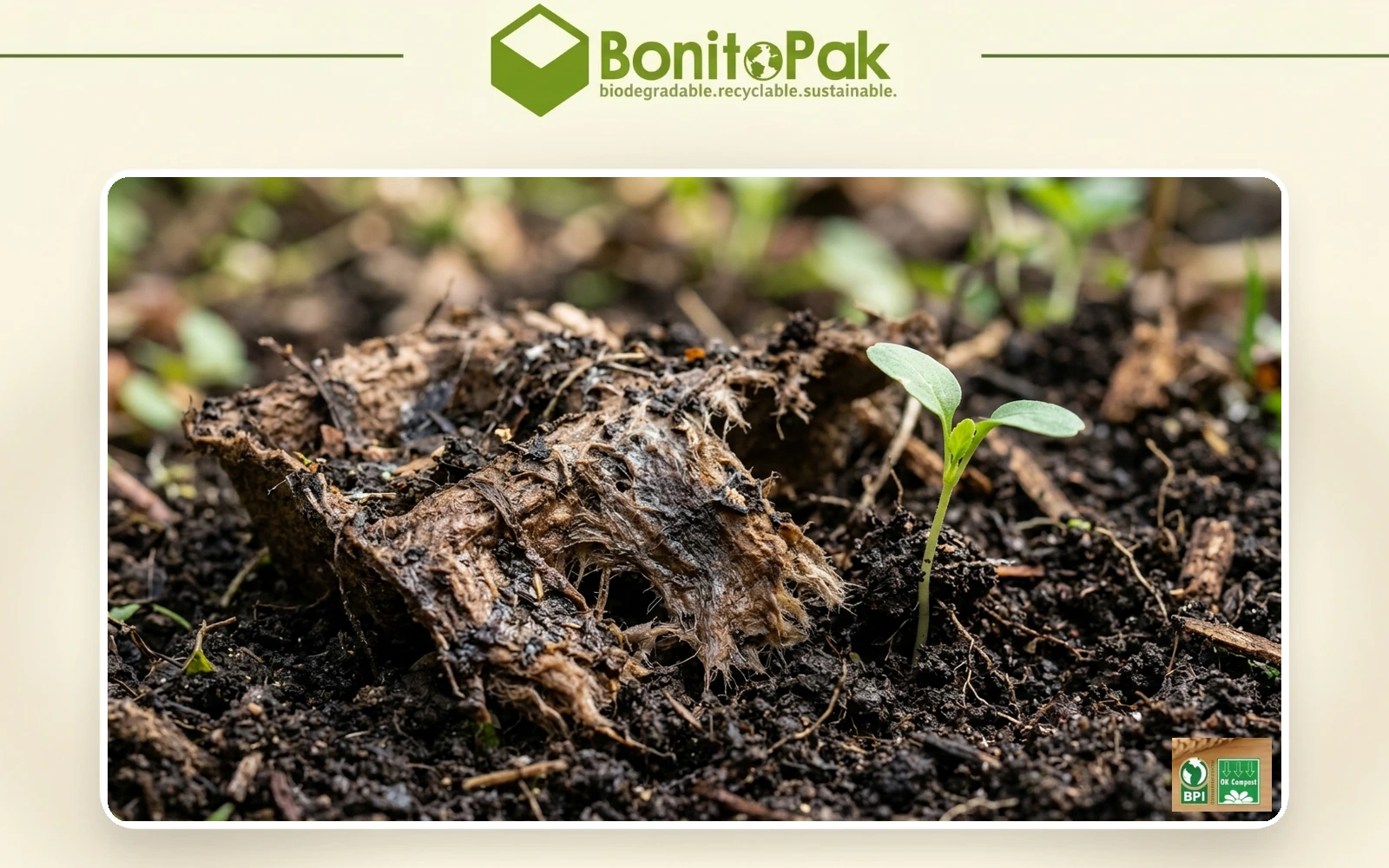
Working inside that constraint, a pigmented pulp carton composts on essentially the same timeline as a natural one. The fiber is the same, the quantity of pigment is very small by mass, and there is no film or coating to interfere.
Buyers should ask any colored pulp supplier which pigment system they use and whether it is rated for compostable packaging. A supplier who cannot answer is probably surface coating.
Batch consistency is the real production challenge
Getting a color right once is straightforward. Getting the same color across a twelve month supply relationship is where suppliers separate.
Recycled pulp is not a consistent starting point. Incoming fiber varies in base color depending on the waste stream, seasonally and by supplier. A pigment dose that produces the target shade on a light batch will produce something darker on a gray one.
The control is measurement rather than recipe. Base pulp brightness is checked before dosing, the pigment quantity is adjusted against that reading, and formed samples are compared to a retained physical standard rather than to a color chip on a screen. Records for each batch let a repeat order be matched to the original rather than to the nominal specification.
Buyers running a branded line should request a retained sample at first production and reference it on every reorder. It is the only reliable way to hold a shade over time.
Where color earns its cost
Color adds cost. It is worth understanding where it pays that back.
At a farm stand or market table, a colored carton separates one producer from every other producer selling the same product in gray pulp. That visual difference does more work than any label, because it registers before the shopper is close enough to read anything.
In retail, color functions as a range signal. Producers commonly use different shades to distinguish free range from pasture raised, or standard from organic, which lets a shopper find their usual product without reading the pack.
In gift and seasonal channels, color is the product. Easter, holiday hampers, and branded corporate gifts are bought on appearance.
Where color rarely pays back is commodity commercial packing. If eggs are going through a grading station to a retailer who applies their own labeling, the carton is invisible and natural pulp is the right call.
Specifying color across a range
Buyers running several cell counts in one brand color need to plan for it, because each mold is a separate production run and shade drift between molds is a genuine risk.
The reliable approach is to run all molds in the same color from the same pigment batch where volumes allow, or to match every mold to one retained physical standard where they cannot. Ordering a dozen egg carton and a 6 egg carton in the same shade six months apart without a retained standard will usually produce a visible difference.
Buyers focused on a single shade should see pink egg cartons for the shade specific detail. Those pairing color with a distinctive shape should look at octagon egg cartons oder vintage egg cartons.
Colored egg cartons are produced by two very different methods, and the difference determines almost everything about how the finished carton performs.
Surface coating applies pigment after the carton is formed and dried, either by spray or by print. It is cheap, it allows fast color changes, and it produces bright results. It also sits on top of the fiber. Scuff a coated carton against a shelf edge and the natural pulp shows through. Coating also adds a layer that may not compost at the same rate as the fiber underneath, which undermines the reason most buyers chose pulp.
Wet end pigmentation blends the pigment into the pulp slurry before the mold ever touches it. The color is distributed through the fiber, so a torn edge shows the same shade as the face. Nothing can scuff off because there is no layer to remove.
Bonitopak colors at the wet end. That is why our colored cartons cost more than a coated equivalent and why they still look correct after a shipping cycle.
What pigment does to compostability
The concern buyers raise most often is whether color compromises the environmental claim. It is a fair question and the answer depends entirely on pigment selection.
Pigments intended for packaging that will compost have to break down without leaving heavy metals or persistent residue in the finished compost. That rules out several traditional colorant chemistries, particularly some historic reds and yellows. It leaves a narrower palette, which is one reason pulp color ranges are smaller than plastic ones.
Working inside that constraint, a pigmented pulp carton composts on essentially the same timeline as a natural one. The fiber is the same, the quantity of pigment is very small by mass, and there is no film or coating to interfere.
Buyers should ask any colored pulp supplier which pigment system they use and whether it is rated for compostable packaging. A supplier who cannot answer is probably surface coating.
Batch consistency is the real production challenge
Getting a color right once is straightforward. Getting the same color across a twelve month supply relationship is where suppliers separate.
Recycled pulp is not a consistent starting point. Incoming fiber varies in base color depending on the waste stream, seasonally and by supplier. A pigment dose that produces the target shade on a light batch will produce something darker on a gray one.
The control is measurement rather than recipe. Base pulp brightness is checked before dosing, the pigment quantity is adjusted against that reading, and formed samples are compared to a retained physical standard rather than to a color chip on a screen. Records for each batch let a repeat order be matched to the original rather than to the nominal specification.
Buyers running a branded line should request a retained sample at first production and reference it on every reorder. It is the only reliable way to hold a shade over time.
Where color earns its cost
Color adds cost. It is worth understanding where it pays that back.
At a farm stand or market table, a colored carton separates one producer from every other producer selling the same product in gray pulp. That visual difference does more work than any label, because it registers before the shopper is close enough to read anything.
In retail, color functions as a range signal. Producers commonly use different shades to distinguish free range from pasture raised, or standard from organic, which lets a shopper find their usual product without reading the pack.
In gift and seasonal channels, color is the product. Easter, holiday hampers, and branded corporate gifts are bought on appearance.
Where color rarely pays back is commodity commercial packing. If eggs are going through a grading station to a retailer who applies their own labeling, the carton is invisible and natural pulp is the right call.
Specifying color across a range
Buyers running several cell counts in one brand color need to plan for it, because each mold is a separate production run and shade drift between molds is a genuine risk.
The reliable approach is to run all molds in the same color from the same pigment batch where volumes allow, or to match every mold to one retained physical standard where they cannot. Ordering a dozen egg carton and a 6 egg carton in the same shade six months apart without a retained standard will usually produce a visible difference.
Buyers focused on a single shade should see pink egg cartons for the shade specific detail. Those pairing color with a distinctive shape should look at octagon egg cartons oder vintage egg cartons.