Goose, Turkey and Bantam Egg Cartons

  • Three distinct cell geometries, one for each bird, not one compromise mold
  • Goose: deep wide cells for eggs up to 200 g, in 2, 4, and 6 counts
  • Turkey: intermediate cells between chicken jumbo and goose, in 6 and 12 counts
  • Bantam: shallow narrow cells for eggs around 30 g, in 6, 12, and 18 counts
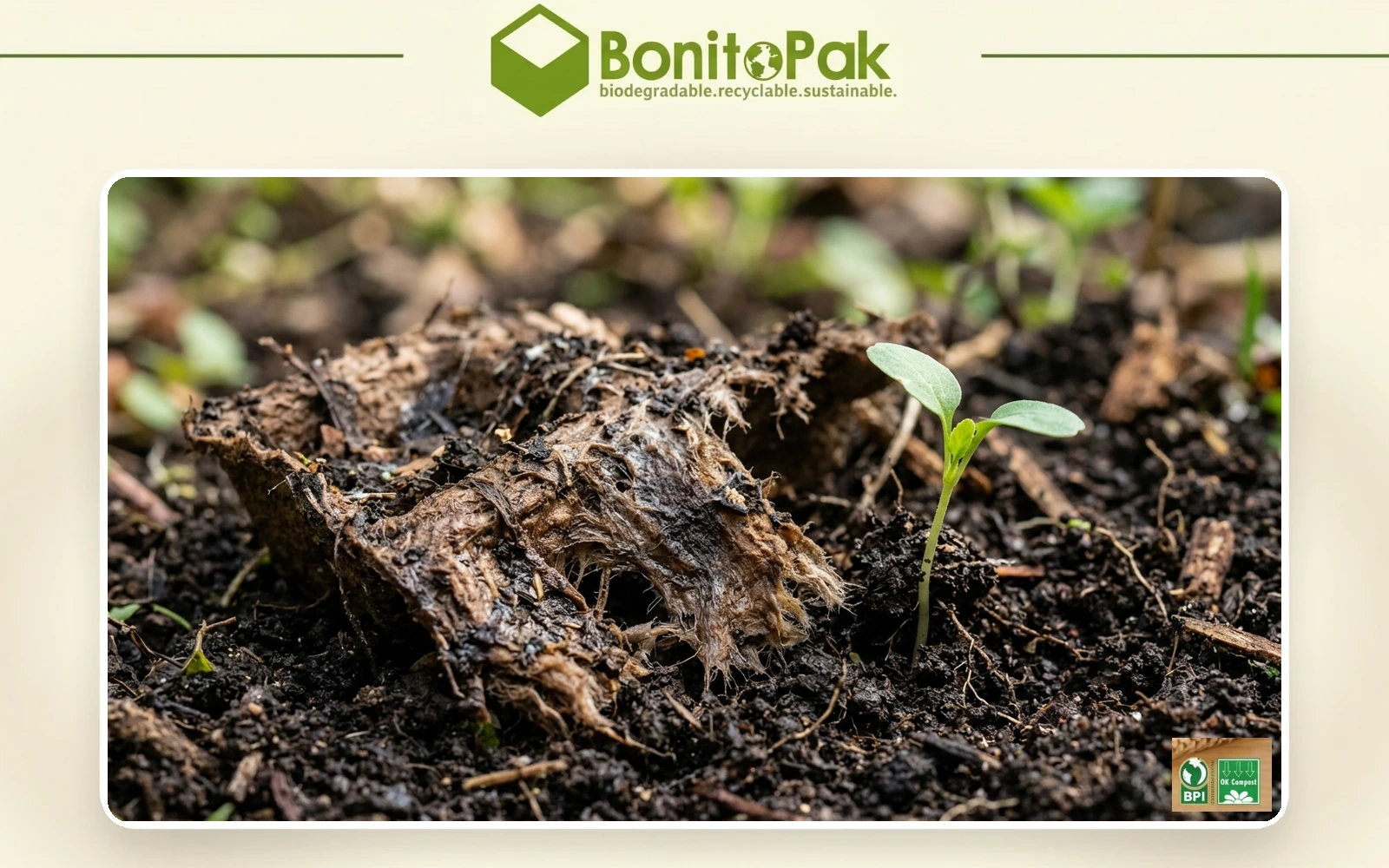
  • Formed from 100% recycled paper pulp, biodegradable and home compostable
  • Low minimum orders, because specialty flocks produce specialty volumes
  • Natural pulp plus six stock colors; custom shade matching available

Öffentliche Schimmelpilze

Verpackungslösungen

3D-Entwurf

Kundenspezifische Form

Goose egg cartons, turkey cartons and bantam cartons in molded pulp side by side showing size differences

Beschreibung des Produkts

Spezifikation Einzelheiten
Markenname BonitoPak
Modellnummer EC-GO / EC-TU / EC-BA series
Produktname Goose, Turkey and Bantam Egg Cartons
Material Recycelter Papierzellstoff
Papierart Post-consumer recycled paper
Technik Molded pulp forming (wet-pressed)
Goose Cell Count 2, 4, or 6 cells
Goose Egg Range 140 to 200 g, Embden and Toulouse
Turkey Cell Count 6 or 12 cells
Turkey Egg Range 75 to 95 g
Bantam Cell Count 6, 12, or 18 cells
Bantam Egg Range 25 to 35 g, Silkie, Serama, Sebright
Farbe Natural pulp; six stock colors; custom color matching
Form & Stil Top-fold clamshell with front locking tab
Logo-Druck Embossed, debossed, or flexographic print
Industrielle Nutzung Specialty poultry, heritage breeders, farm direct, gourmet retail
Anmeldung Retail specialty egg packs, breeder sales, hatching egg transport
Größe OEM and custom dimensions accepted
Vorteile Biodegradable, home compostable, nestable, plastic free
Verpackung Bulk nested in export cartons; custom packing accepted
Individuelle Bestellung Angenommen
MOQ Low minimums on stock molds; confirm with sales

Galerie der Goose, Turkey and Bantam Egg Cartons Teile

Diese Galerie zeigt die außergewöhnliche Qualität und die Liebe zum Detail, die wir bei jedem Projekt zeigen. Von komplexen Entwürfen bis hin zu makellosen Oberflächen spiegelt jedes Bild unser Engagement für hervorragende Leistungen in Goose, Turkey and Bantam Egg Cartons .

40%

Kosten- und Zeitersparnis

Erleben Sie führende Verpackungslösungen, die Ihre Kosten und Ihren Zeitaufwand optimieren, für effiziente Prozesse sorgen und Ihren ROI maximieren.

50%

Mehr Nachhaltigkeit

Erzielen Sie umweltfreundliche Verpackungen mit nachhaltigen Materialien, reduzieren Sie den Abfall und fördern Sie die Umweltverantwortung für Ihre Produktlinien.

25%

Steigerung des Umsatzes

Steigern Sie die Attraktivität Ihrer Produkte in den Regalen mit innovativen Designs, die die Sichtbarkeit und den Absatz sowohl im Einzelhandel als auch auf dem Online-Markt steigern.

100%

Zuverlässiger

Vertrauen Sie auf das Qualitätsbewusstsein von BonitoPak, das sicherstellt, dass jedes Produkt unseren hohen Standards entspricht und einen beständigen, zuverlässigen Service bietet.

Three birds, three problems, one page

These three are grouped because they share a commercial situation, not because they share a carton. Each needs its own mold, and the reasons are worth taking separately.

What they have in common is that they are produced by small flocks in quantities no large converter will tool for. That is why specialty keepers end up packing in whatever chicken carton fits least badly, and why it is worth stocking molds that actually fit.

Goose: the size problem

A goose egg from an Embden or Toulouse weighs between 140 and 200 grams. That is roughly three large chicken eggs in one shell.

No chicken carton holds one. The egg does not fit the cell at any depth, and attempts to pack geese in chicken cartons usually end with the eggs laid loose in the carton with the dividers crushed down, which protects nothing.

The goose mold uses cells roughly twice the diameter of a chicken cell and considerably deeper. The footprint is large enough that a six count goose carton approaches the size of an eighteen count chicken carton.

Counts run low because production is low. A goose lays seasonally, typically 20 to 50 eggs a year against 250 or more for a laying hen. Two and four count cartons are the realistic retail formats, and six is usually the maximum worth stocking.

Goose shells are thick and strong, so the protection requirement is lower than the size requirement. The mold exists because the egg needs somewhere to sit, not because it is fragile.

Turkey: the awkward middle

Turkey eggs sit between chicken jumbo and goose, around 75 to 95 grams, which puts them in the worst position of the three.

They are too large for a chicken carton, including a deep bed jumbo mold, where the lid closes on the shell. They are far too small for a goose cell, where they roll freely and knock against the walls.

The turkey mold is dimensioned specifically for that gap. Cells are deeper and wider than our deep bed chicken spec but well short of goose.

Turkey eggs also have a distinctly more pointed profile than chicken, with a noticeably tapered narrow end, which means they seat lower at the point. The cell profile accounts for that taper rather than assuming a chicken-shaped oval.

Most turkey egg demand is for hatching rather than eating, since turkey eggs are rarely sold as food at scale. Breeders shipping fertile eggs are the main buyers, and immobilization matters more to them than cushioning.

Bantam: the small end

Bantam eggs run around 25 to 35 grams, roughly half a standard chicken egg, from Silkie, Serama, Sebright and other true bantam breeds.

They face the same problem as quail, one step up. In a chicken cell a bantam egg sits at the bottom of a cup far wider than it is, with nothing holding it. It rolls, contacts its neighbors, and chips.

The bantam mold uses shallower, narrower cells that hold the egg at its widest point. Counts run higher than the other two because bantam hens lay reasonably well, so 12 and 18 counts are both practical.

Bantam eggs are sold mostly to specialty and novelty retail, and to breeders. Silkie eggs in particular carry a following in several Asian markets where they are valued above standard chicken eggs.

Seasonality changes how you should order

Goose and turkey both lay seasonally, concentrated in spring, against a laying hen that produces most of the year. That turns carton buying into an annual decision rather than a rolling one.

Producers in these categories should order their full season’s requirement ahead of the laying period rather than reordering through it, because a mid-season stockout cannot be solved quickly when production and sea freight both sit in the path. Bantams lay more evenly and do not carry the same constraint.

Why these molds are hard to find

Tooling economics. A mold costs the same to cut whether it will run ten thousand cartons or ten million, so converters tool for volume. Goose, turkey, and bantam together are a rounding error against commercial chicken production.

The result is a market served badly. Specialty keepers in these three categories are used to compromising, and a correctly sized carton is a genuine differentiator for a producer selling at a farmers market where every other stall is using repurposed packaging.

We hold stock molds for all three specifically so small flocks can order realistic quantities without funding tooling.

Related formats

Producers running quail should go to molded pulp quail egg cartons, which is a separate geometry again and not interchangeable with bantam despite the similar egg size.

Duck sits between turkey and chicken in most dimensions and has its own mold at molded pulp duck egg cartons.

Keepers running a standard flock alongside specialty birds should see the molded pulp chicken egg carton page for the grade and cell depth detail. For small gift and sampler counts across any bird, the molded pulp 4 egg carton is cut deep enough to take most specialty sizes below goose.

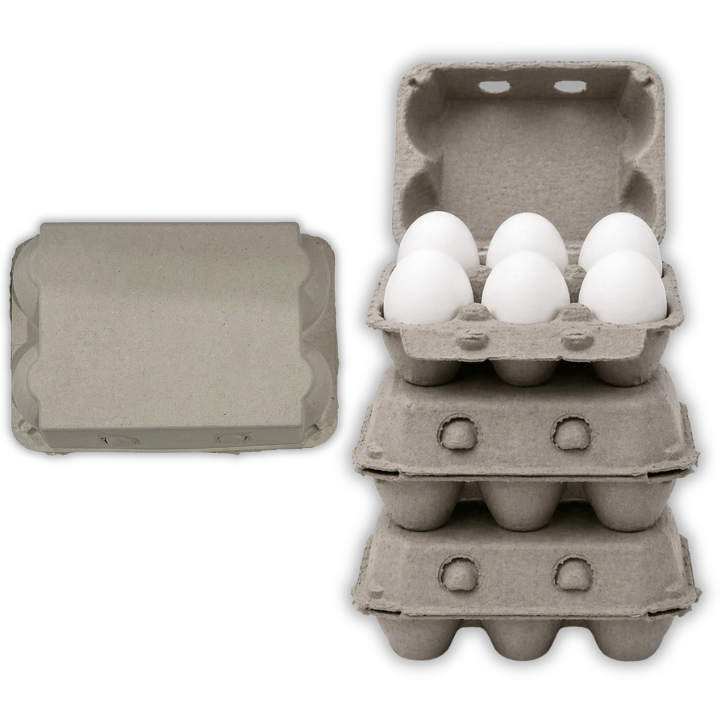
Three birds, three problems, one page

These three are grouped because they share a commercial situation, not because they share a carton. Each needs its own mold, and the reasons are worth taking separately.

What they have in common is that they are produced by small flocks in quantities no large converter will tool for. That is why specialty keepers end up packing in whatever chicken carton fits least badly, and why it is worth stocking molds that actually fit.

Goose: the size problem

A goose egg from an Embden or Toulouse weighs between 140 and 200 grams. That is roughly three large chicken eggs in one shell.

No chicken carton holds one. The egg does not fit the cell at any depth, and attempts to pack geese in chicken cartons usually end with the eggs laid loose in the carton with the dividers crushed down, which protects nothing.

The goose mold uses cells roughly twice the diameter of a chicken cell and considerably deeper. The footprint is large enough that a six count goose carton approaches the size of an eighteen count chicken carton.

Counts run low because production is low. A goose lays seasonally, typically 20 to 50 eggs a year against 250 or more for a laying hen. Two and four count cartons are the realistic retail formats, and six is usually the maximum worth stocking.

Goose shells are thick and strong, so the protection requirement is lower than the size requirement. The mold exists because the egg needs somewhere to sit, not because it is fragile.

Turkey: the awkward middle

Turkey eggs sit between chicken jumbo and goose, around 75 to 95 grams, which puts them in the worst position of the three.

They are too large for a chicken carton, including a deep bed jumbo mold, where the lid closes on the shell. They are far too small for a goose cell, where they roll freely and knock against the walls.

The turkey mold is dimensioned specifically for that gap. Cells are deeper and wider than our deep bed chicken spec but well short of goose.

Turkey eggs also have a distinctly more pointed profile than chicken, with a noticeably tapered narrow end, which means they seat lower at the point. The cell profile accounts for that taper rather than assuming a chicken-shaped oval.

Most turkey egg demand is for hatching rather than eating, since turkey eggs are rarely sold as food at scale. Breeders shipping fertile eggs are the main buyers, and immobilization matters more to them than cushioning.

Bantam: the small end

Bantam eggs run around 25 to 35 grams, roughly half a standard chicken egg, from Silkie, Serama, Sebright and other true bantam breeds.

They face the same problem as quail, one step up. In a chicken cell a bantam egg sits at the bottom of a cup far wider than it is, with nothing holding it. It rolls, contacts its neighbors, and chips.

The bantam mold uses shallower, narrower cells that hold the egg at its widest point. Counts run higher than the other two because bantam hens lay reasonably well, so 12 and 18 counts are both practical.

Bantam eggs are sold mostly to specialty and novelty retail, and to breeders. Silkie eggs in particular carry a following in several Asian markets where they are valued above standard chicken eggs.

Seasonality changes how you should order

Goose and turkey both lay seasonally, concentrated in spring, against a laying hen that produces most of the year. That turns carton buying into an annual decision rather than a rolling one.

Producers in these categories should order their full season’s requirement ahead of the laying period rather than reordering through it, because a mid-season stockout cannot be solved quickly when production and sea freight both sit in the path. Bantams lay more evenly and do not carry the same constraint.

Why these molds are hard to find

Tooling economics. A mold costs the same to cut whether it will run ten thousand cartons or ten million, so converters tool for volume. Goose, turkey, and bantam together are a rounding error against commercial chicken production.

The result is a market served badly. Specialty keepers in these three categories are used to compromising, and a correctly sized carton is a genuine differentiator for a producer selling at a farmers market where every other stall is using repurposed packaging.

We hold stock molds for all three specifically so small flocks can order realistic quantities without funding tooling.

Related formats

Producers running quail should go to molded pulp quail egg cartons, which is a separate geometry again and not interchangeable with bantam despite the similar egg size.

Duck sits between turkey and chicken in most dimensions and has its own mold at molded pulp duck egg cartons.

Keepers running a standard flock alongside specialty birds should see the molded pulp chicken egg carton page for the grade and cell depth detail. For small gift and sampler counts across any bird, the molded pulp 4 egg carton is cut deep enough to take most specialty sizes below goose.

Materialien für Goose, Turkey and Bantam Egg Cartons Teile

Führende Unternehmen und Ingenieure verlassen sich auf BonitoPak, wenn es um schnelle Iterationen und langlebige, hochwertige Teile geht. Ob für die Herstellung von Prototypen oder für die Serienproduktion, unsere breite Palette an Materialien stellt sicher, dass wir die einzigartigen Anforderungen eines jeden Unternehmens erfüllen. Goose, Turkey and Bantam Egg Cartons Projekt mit Präzision und Schnelligkeit.

Kompostierbares Kraftpapier ist die festeste Faser, die wir herstellen. Hergestellt aus Frischfaser

Farbiger Zellstoff ist keine eigenständige Faser. Es handelt sich dabei um einen unserer

Gebleichter Zellstoff ist das zu spezifizierende Material, wenn das Bauteil

Der Begriff „natürliche Pflanzenfasern“ umfasst die nicht aus Holz stammenden Zellulosequellen, die wir außerhalb der

Wellpappe als Formmasse bezeichnet wiederverwertete Kartons, die zu Zellstoff zerkleinert wurden

Strohfasern werden aus den nach der Getreideernte übrig gebliebenen Stängeln hergestellt, Material

Individuell Umweltfreundlich Zuverlässig

Maßgeschneiderte, umweltfreundliche Verpackung auf höchstem Niveau

Vollständig anpassbar

Passen Sie Ihre Verpackungen mit maßgeschneiderten Stilen, Größen, Farben und Veredelungen an Ihre spezifischen Bedürfnisse an.

Unterstützung durch Experten

Bonitopak bietet fachkundige Design- und Logistikberatung, um die Verpackungseffizienz zu maximieren und den ROI zu steigern.

Öko-Lösungen

Entscheiden Sie sich für nachhaltige, umweltfreundliche Verpackungen, um die Umweltbelastung zu reduzieren und die grünen Ziele Ihrer Marke zu unterstützen.

Qualitätssicherung

Bonitopak garantiert bei jeder Verpackungslösung einen erstklassigen Service und ein hervorragendes Produkt.

Häufig gestellte Fragen

Goose, Turkey and Bantam Egg Cartons

  • Do you make a combined carton for mixed specialty eggs?

    No, and we would advise against one. A carton with cells of several sizes wastes space on every cell that is not filled, and it only works if a producer reliably has one of each bird on hand at packing time, which almost nobody does. Separate cartons per bird is the practical answer.

  • Why do goose cartons cost more per egg than chicken cartons?

    Fiber quantity and freight. A goose cell uses several times the material of a chicken cell, and the larger footprint means far fewer cartons per container. Against goose egg pricing, which is substantially above chicken, the packaging cost per egg sold remains proportionate.

  • Are turkey eggs actually sold for eating?

    Rarely at commercial scale, and the economics explain why. A turkey hen lays far fewer eggs than a laying hen and the bird is worth more as meat, so the eggs are usually set for hatching rather than sold. Most of our turkey carton demand comes from breeders shipping fertile eggs.

  • How do I pack a flock that lays goose and chicken eggs together?

    Separately, and there is no way around it. The size gap is too large for any single mold to bridge without failing one bird or the other. Producers running both keep two carton lines, which is normal in mixed specialty operations and costs less than the breakage from compromising.

  • Can a bantam egg use a quail carton instead?

    No, and the mismatch runs the other way from what people expect. A bantam egg at 25 to 35 grams is two to three times the weight of a quail egg, so it will not seat in a quail cell at all. Bantam needs its own geometry, sitting between quail and standard chicken.

Biologisch abbaubar Ergebnis

0 Tage

7 Tage

14 Tage

30 Tage

Spezialisierte Industrien

Durch die Herstellung von Millionen von Teilen verfügt BonitoPak über umfassende Kenntnisse in zahlreichen Anwendungen. Wir zeichnen uns besonders in Branchen aus, die eine präzise und komplizierte Komponentenfertigung erfordern. Vertrauen Sie darauf, dass wir unabhängig von der Komplexität Fachwissen und Qualität liefern.

OEM- und ODM-Verpackungslösungen

Bonitopak bietet sowohl kundenspezifische (OEM) als auch vorgefertigte (ODM) Verpackungslösungen an. Ganz gleich, ob Sie vollständig maßgeschneiderte Designs oder gebrauchsfertige Verpackungen benötigen, wir bieten hochwertige, effiziente und flexible Optionen, um die Anforderungen Ihrer Marke zu erfüllen.

OEM-Dienste

OEM-Verpackungslösungen ermöglichen es Ihnen, vollständig maßgeschneiderte Produkte zu entwerfen und herzustellen, die Ihren spezifischen Anforderungen entsprechen. Wir von Bonitopak bieten umfassende Unterstützung während des gesamten Design-, Prototyping- und Fertigungsprozesses, damit Ihre Verpackung die einzigartige Identität Ihrer Marke widerspiegelt. Unsere Präzisionsfertigungskapazitäten garantieren eine hochwertige und konsistente Produktion, unabhängig von der Komplexität des Designs. Mit unserem End-to-End-Service kümmern wir uns um alles, vom Konzept bis zur Auslieferung, und helfen Ihnen, Ihren Verpackungsbedarf zu optimieren.

ODM-Dienste

ODM-Verpackungslösungen bieten vorgefertigte Produkte, die auf die Anforderungen Ihrer Marke zugeschnitten werden können. Mit dem innovativen Design-Know-how und dem effizienten Produktionsprozess von Bonitopak können Sie aus einer breiten Palette von gebrauchsfertigen Verpackungsoptionen wählen. Wir bieten flexible Anpassungsmöglichkeiten, die es Ihnen ermöglichen, Ihr Markenzeichen hinzuzufügen und aus verschiedenen Veredelungen, Farben und Größen zu wählen. Diese Lösung spart Zeit und Kosten und gewährleistet gleichzeitig eine hochwertige Verpackung, die Ihren Markenstandards entspricht.
Sind Sie bereit, Ihr Projekt aufzuwerten?

Erwecken Sie Ihre Entwürfe mit BonitoPak zum Leben

Erleben Sie Präzisionstechnik mit BonitoPak. Von detaillierten Prototypen bis hin zur Großserienproduktion - wir sind da, um Ihre Konzepte in die Realität umzusetzen. Kontaktieren Sie uns noch heute, um Ihre Projektanforderungen zu besprechen!

Unsere Produktkategorien

Entdecken Sie das vielfältige Angebot an Verpackungslösungen von Bonitopak, darunter geformte Zellstoffschalen, Lebensmittelverpackungen, kundenspezifische Designs und nachhaltige Optionen. Jede Kategorie ist auf Langlebigkeit, Funktionalität und Umweltverträglichkeit ausgelegt und auf Ihre spezifischen Anforderungen zugeschnitten.

Three birds, three problems, one page

These three are grouped because they share a commercial situation, not because they share a carton. Each needs its own mold, and the reasons are worth taking separately.

What they have in common is that they are produced by small flocks in quantities no large converter will tool for. That is why specialty keepers end up packing in whatever chicken carton fits least badly, and why it is worth stocking molds that actually fit.

Goose: the size problem

A goose egg from an Embden or Toulouse weighs between 140 and 200 grams. That is roughly three large chicken eggs in one shell.

No chicken carton holds one. The egg does not fit the cell at any depth, and attempts to pack geese in chicken cartons usually end with the eggs laid loose in the carton with the dividers crushed down, which protects nothing.

The goose mold uses cells roughly twice the diameter of a chicken cell and considerably deeper. The footprint is large enough that a six count goose carton approaches the size of an eighteen count chicken carton.

Counts run low because production is low. A goose lays seasonally, typically 20 to 50 eggs a year against 250 or more for a laying hen. Two and four count cartons are the realistic retail formats, and six is usually the maximum worth stocking.

Goose shells are thick and strong, so the protection requirement is lower than the size requirement. The mold exists because the egg needs somewhere to sit, not because it is fragile.

Turkey: the awkward middle

Turkey eggs sit between chicken jumbo and goose, around 75 to 95 grams, which puts them in the worst position of the three.

They are too large for a chicken carton, including a deep bed jumbo mold, where the lid closes on the shell. They are far too small for a goose cell, where they roll freely and knock against the walls.

The turkey mold is dimensioned specifically for that gap. Cells are deeper and wider than our deep bed chicken spec but well short of goose.

Turkey eggs also have a distinctly more pointed profile than chicken, with a noticeably tapered narrow end, which means they seat lower at the point. The cell profile accounts for that taper rather than assuming a chicken-shaped oval.

Most turkey egg demand is for hatching rather than eating, since turkey eggs are rarely sold as food at scale. Breeders shipping fertile eggs are the main buyers, and immobilization matters more to them than cushioning.

Bantam: the small end

Bantam eggs run around 25 to 35 grams, roughly half a standard chicken egg, from Silkie, Serama, Sebright and other true bantam breeds.

They face the same problem as quail, one step up. In a chicken cell a bantam egg sits at the bottom of a cup far wider than it is, with nothing holding it. It rolls, contacts its neighbors, and chips.

The bantam mold uses shallower, narrower cells that hold the egg at its widest point. Counts run higher than the other two because bantam hens lay reasonably well, so 12 and 18 counts are both practical.

Bantam eggs are sold mostly to specialty and novelty retail, and to breeders. Silkie eggs in particular carry a following in several Asian markets where they are valued above standard chicken eggs.

Seasonality changes how you should order

Goose and turkey both lay seasonally, concentrated in spring, against a laying hen that produces most of the year. That turns carton buying into an annual decision rather than a rolling one.

Producers in these categories should order their full season’s requirement ahead of the laying period rather than reordering through it, because a mid-season stockout cannot be solved quickly when production and sea freight both sit in the path. Bantams lay more evenly and do not carry the same constraint.

Why these molds are hard to find

Tooling economics. A mold costs the same to cut whether it will run ten thousand cartons or ten million, so converters tool for volume. Goose, turkey, and bantam together are a rounding error against commercial chicken production.

The result is a market served badly. Specialty keepers in these three categories are used to compromising, and a correctly sized carton is a genuine differentiator for a producer selling at a farmers market where every other stall is using repurposed packaging.

We hold stock molds for all three specifically so small flocks can order realistic quantities without funding tooling.

Related formats

Producers running quail should go to molded pulp quail egg cartons, which is a separate geometry again and not interchangeable with bantam despite the similar egg size.

Duck sits between turkey and chicken in most dimensions and has its own mold at molded pulp duck egg cartons.

Keepers running a standard flock alongside specialty birds should see the molded pulp chicken egg carton page for the grade and cell depth detail. For small gift and sampler counts across any bird, the molded pulp 4 egg carton is cut deep enough to take most specialty sizes below goose.

Verwandte Artikel und Einblicke

Bleiben Sie auf dem Laufenden mit den neuesten Informationen über nachhaltige Verpackungstrends, Einblicke in die Branche und Expertentipps in unserem Blog. Entdecken Sie innovative Ideen und Lösungen, um Ihr Verpackungswissen zu erweitern.

Von Leo Chan | Autor, BonitoPak | Über 20 Jahre Erfahrung im Bereich Verpackungen aus Formzellstoff Wodka ist

Von Leo Chan | Autor, BonitoPak | Über 20 Jahre Erfahrung im Bereich Formzellstoffverpackungen Fast jede

Von Leo Chan | Autor, BonitoPak | Über 20 Jahre Erfahrung im Bereich Verpackungen aus Formzellstoff Hier suchen

Häufig gestellte Fragen

Goose, Turkey and Bantam Egg Cartons

  • Do you make a combined carton for mixed specialty eggs?

    No, and we would advise against one. A carton with cells of several sizes wastes space on every cell that is not filled, and it only works if a producer reliably has one of each bird on hand at packing time, which almost nobody does. Separate cartons per bird is the practical answer.

  • Why do goose cartons cost more per egg than chicken cartons?

    Fiber quantity and freight. A goose cell uses several times the material of a chicken cell, and the larger footprint means far fewer cartons per container. Against goose egg pricing, which is substantially above chicken, the packaging cost per egg sold remains proportionate.

  • Are turkey eggs actually sold for eating?

    Rarely at commercial scale, and the economics explain why. A turkey hen lays far fewer eggs than a laying hen and the bird is worth more as meat, so the eggs are usually set for hatching rather than sold. Most of our turkey carton demand comes from breeders shipping fertile eggs.

  • How do I pack a flock that lays goose and chicken eggs together?

    Separately, and there is no way around it. The size gap is too large for any single mold to bridge without failing one bird or the other. Producers running both keep two carton lines, which is normal in mixed specialty operations and costs less than the breakage from compromising.

  • Can a bantam egg use a quail carton instead?

    No, and the mismatch runs the other way from what people expect. A bantam egg at 25 to 35 grams is two to three times the weight of a quail egg, so it will not seat in a quail cell at all. Bantam needs its own geometry, sitting between quail and standard chicken.

Füllen Sie dieses detaillierte Formular aus