Goose, Turkey and Bantam Egg Cartons

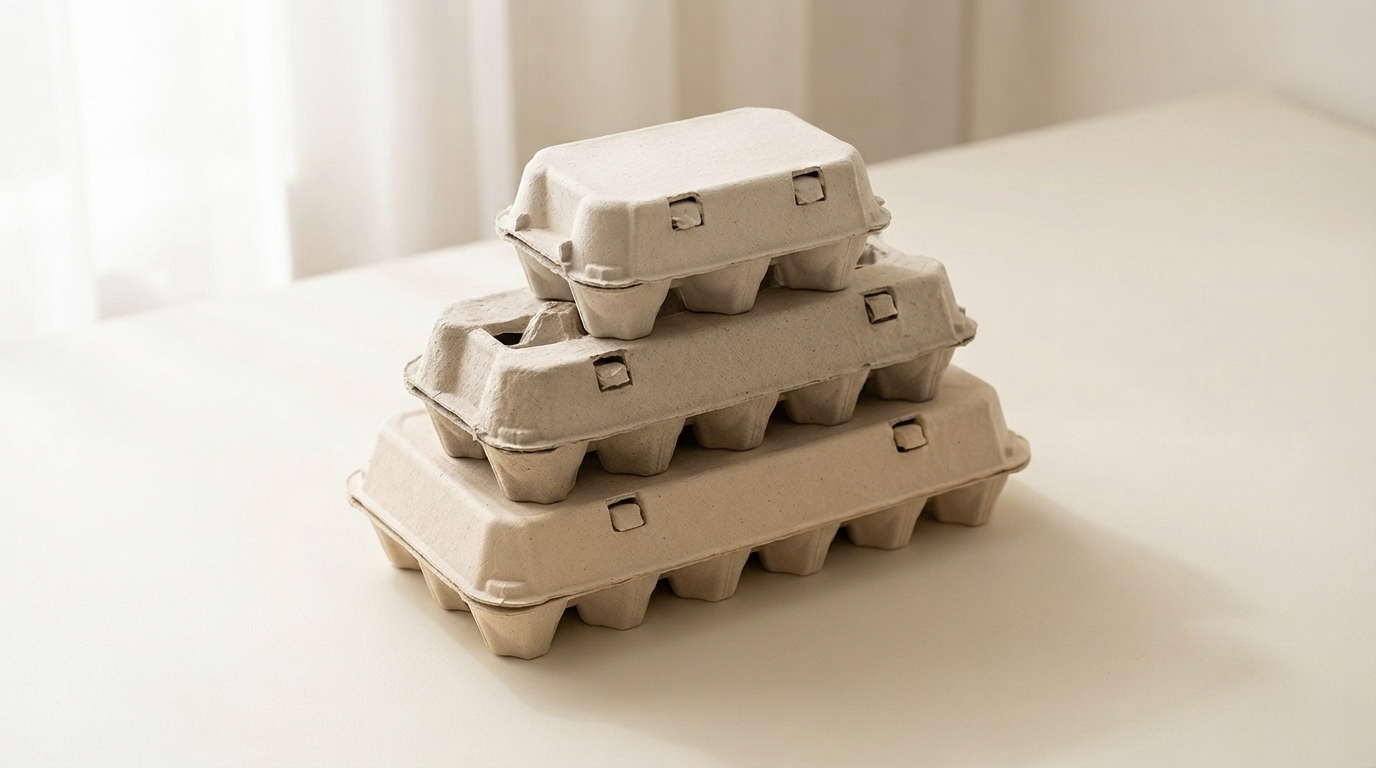
  • Three distinct cell geometries, one for each bird, not one compromise mold
  • Goose: deep wide cells for eggs up to 200 g, in 2, 4, and 6 counts
  • Turkey: intermediate cells between chicken jumbo and goose, in 6 and 12 counts
  • Bantam: shallow narrow cells for eggs around 30 g, in 6, 12, and 18 counts
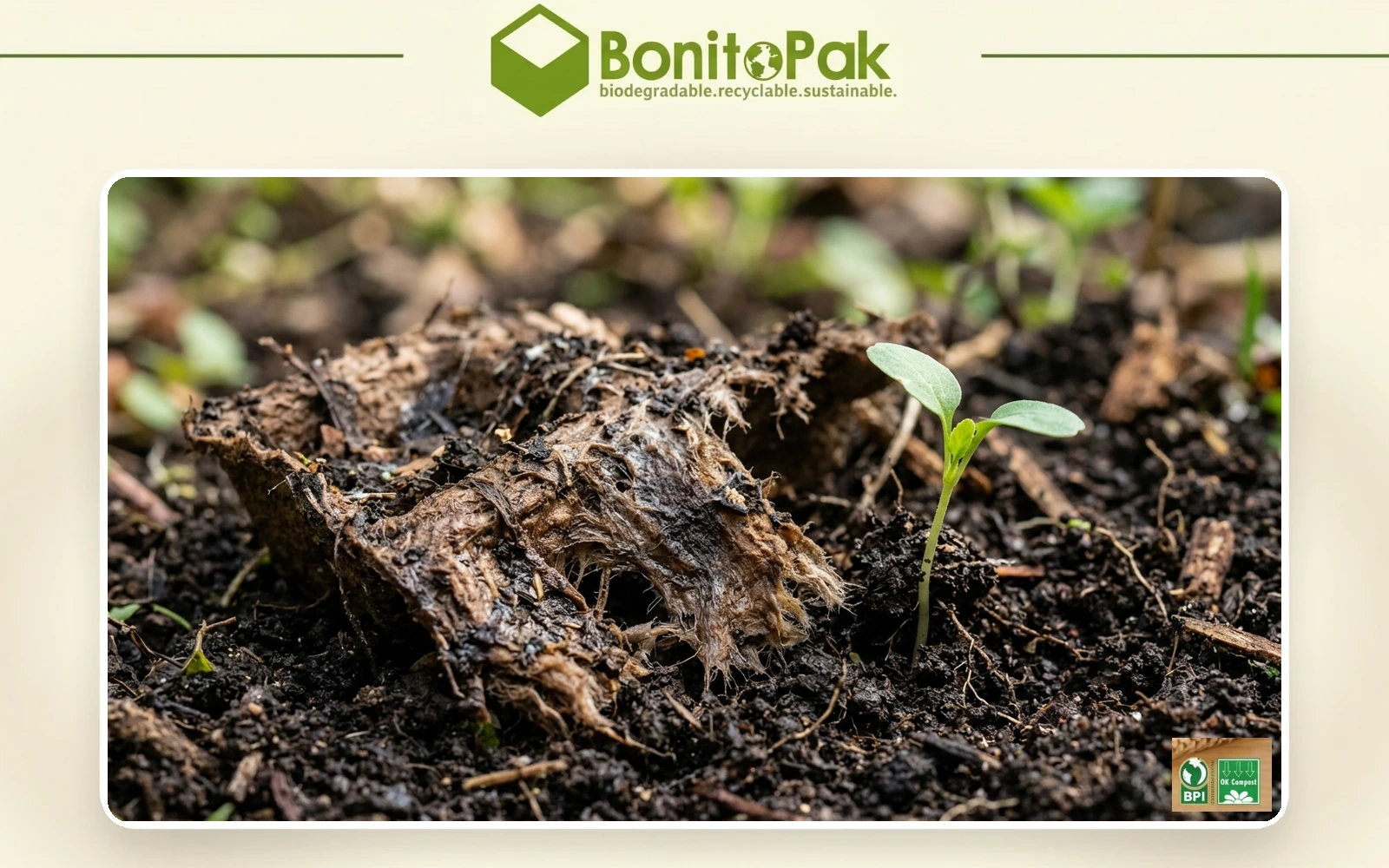
  • Fabricado com polpa de papel reciclado 100%, biodegradável e compostável em casa
  • Low minimum orders, because specialty flocks produce specialty volumes
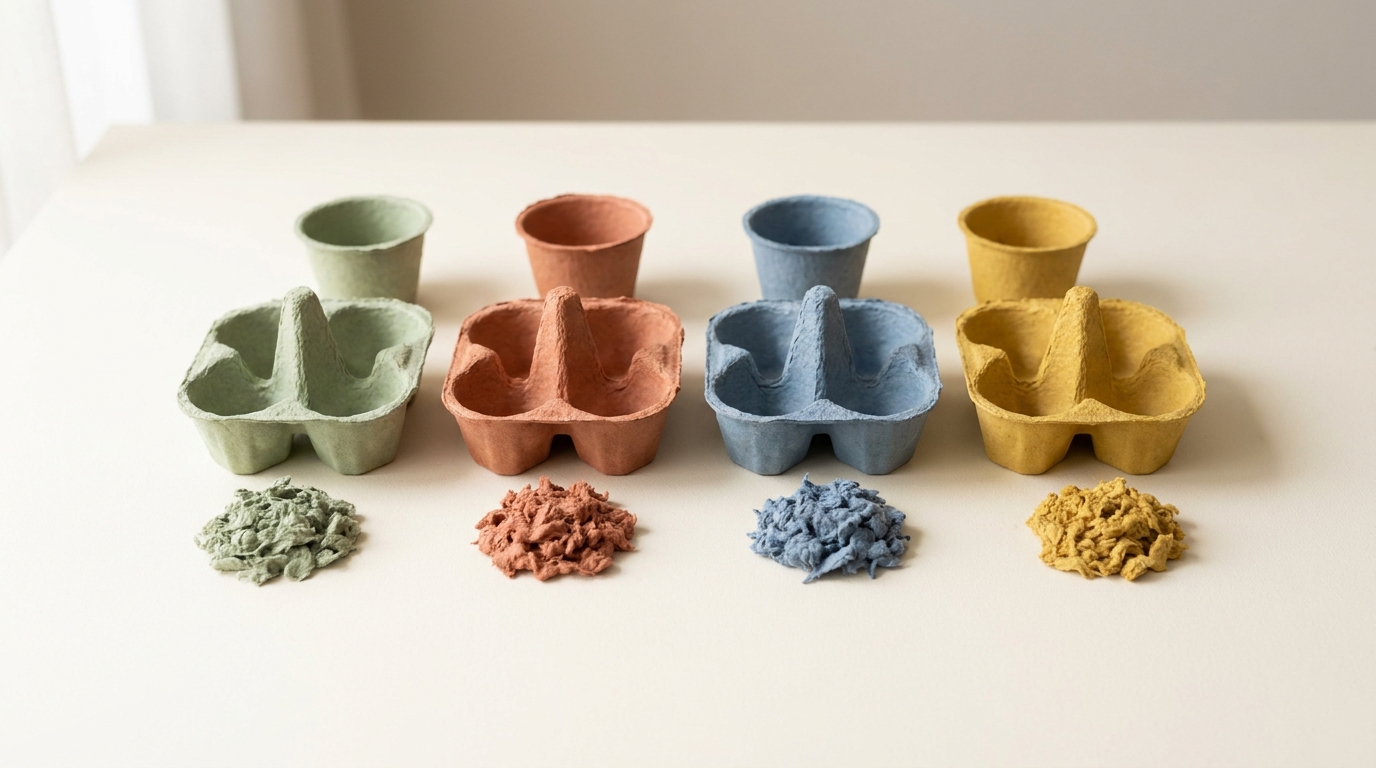
  • Polpa natural mais seis cores padrão; disponibilizamos a combinação personalizada de tons

Molde público

Soluções de embalagem

Design 3D

Molde personalizado

Descrição do produto

Especificação Detalhes
Nome da marca BonitoPak
Número do modelo EC-GO / EC-TU / EC-BA series
Nome do produto Goose, Turkey and Bantam Egg Cartons
Material Polpa de papel reciclado
Tipo de papel Papel reciclado pós-consumo
Técnica Moldagem de polpa (prensagem a úmido)
Goose Cell Count 2, 4, or 6 cells
Goose Egg Range 140 to 200 g, Embden and Toulouse
Turkey Cell Count 6 or 12 cells
Turkey Egg Range 75 to 95 g
Bantam Cell Count 6, 12, or 18 cells
Bantam Egg Range 25 to 35 g, Silkie, Serama, Sebright
Cor Polpa natural; seis cores padrão; combinação de cores personalizada
Forma e estilo Top-fold clamshell with front locking tab
Impressão do logotipo Estampagem em relevo, em baixo-relevo ou flexográfica
Uso industrial Specialty poultry, heritage breeders, farm direct, gourmet retail
Aplicativo Retail specialty egg packs, breeder sales, hatching egg transport
Tamanho Aceitamos dimensões OEM e personalizadas
Vantagens Biodegradable, home compostable, nestable, plastic free
Embalagem A granel, acondicionado em caixas de exportação; aceita-se embalagem personalizada
Pedido personalizado Aceito
MOQ Low minimums on stock molds; confirm with sales

Galeria de Goose, Turkey and Bantam Egg Cartons peças

Esta galeria mostra a qualidade excepcional e a atenção aos detalhes que oferecemos em cada projeto. De designs complexos a acabamentos impecáveis, cada imagem reflete nosso compromisso com a excelência em Goose, Turkey and Bantam Egg Cartons .

40%

Economia de tempo e custo

Experimente as principais soluções de embalagem que otimizam seus custos e tempo, proporcionando processos eficientes e maximizando seu ROI.

50%

Mais sustentável

Obtenha embalagens ecologicamente corretas com materiais sustentáveis, reduzindo o desperdício e promovendo a responsabilidade ambiental em todas as suas linhas de produtos.

25%

Aumento nas vendas

Aumente o apelo do seu produto nas prateleiras com designs inovadores que aumentam a visibilidade e as vendas nos mercados de varejo e on-line.

100%

Mais confiável

Confie no compromisso da BonitoPak com a qualidade, garantindo que cada produto atenda aos nossos altos padrões com um serviço consistente e confiável.

Three birds, three problems, one page

These three are grouped because they share a commercial situation, not because they share a carton. Each needs its own mold, and the reasons are worth taking separately.

What they have in common is that they are produced by small flocks in quantities no large converter will tool for. That is why specialty keepers end up packing in whatever chicken carton fits least badly, and why it is worth stocking molds that actually fit.

Goose: the size problem

A goose egg from an Embden or Toulouse weighs between 140 and 200 grams. That is roughly three large chicken eggs in one shell.

No chicken carton holds one. The egg does not fit the cell at any depth, and attempts to pack geese in chicken cartons usually end with the eggs laid loose in the carton with the dividers crushed down, which protects nothing.

The goose mold uses cells roughly twice the diameter of a chicken cell and considerably deeper. The footprint is large enough that a six count goose carton approaches the size of an eighteen count chicken carton.

Counts run low because production is low. A goose lays seasonally, typically 20 to 50 eggs a year against 250 or more for a laying hen. Two and four count cartons are the realistic retail formats, and six is usually the maximum worth stocking.

Goose shells are thick and strong, so the protection requirement is lower than the size requirement. The mold exists because the egg needs somewhere to sit, not because it is fragile.

Turkey: the awkward middle

Turkey eggs sit between chicken jumbo and goose, around 75 to 95 grams, which puts them in the worst position of the three.

They are too large for a chicken carton, including a deep bed jumbo mold, where the lid closes on the shell. They are far too small for a goose cell, where they roll freely and knock against the walls.

The turkey mold is dimensioned specifically for that gap. Cells are deeper and wider than our deep bed chicken spec but well short of goose.

Turkey eggs also have a distinctly more pointed profile than chicken, with a noticeably tapered narrow end, which means they seat lower at the point. The cell profile accounts for that taper rather than assuming a chicken-shaped oval.

Most turkey egg demand is for hatching rather than eating, since turkey eggs are rarely sold as food at scale. Breeders shipping fertile eggs are the main buyers, and immobilization matters more to them than cushioning.

Bantam: the small end

Bantam eggs run around 25 to 35 grams, roughly half a standard chicken egg, from Silkie, Serama, Sebright and other true bantam breeds.

They face the same problem as quail, one step up. In a chicken cell a bantam egg sits at the bottom of a cup far wider than it is, with nothing holding it. It rolls, contacts its neighbors, and chips.

The bantam mold uses shallower, narrower cells that hold the egg at its widest point. Counts run higher than the other two because bantam hens lay reasonably well, so 12 and 18 counts are both practical.

Bantam eggs are sold mostly to specialty and novelty retail, and to breeders. Silkie eggs in particular carry a following in several Asian markets where they are valued above standard chicken eggs.

Seasonality changes how you should order

Goose and turkey both lay seasonally, concentrated in spring, against a laying hen that produces most of the year. That turns carton buying into an annual decision rather than a rolling one.

Producers in these categories should order their full season’s requirement ahead of the laying period rather than reordering through it, because a mid-season stockout cannot be solved quickly when production and sea freight both sit in the path. Bantams lay more evenly and do not carry the same constraint.

Why these molds are hard to find

Tooling economics. A mold costs the same to cut whether it will run ten thousand cartons or ten million, so converters tool for volume. Goose, turkey, and bantam together are a rounding error against commercial chicken production.

The result is a market served badly. Specialty keepers in these three categories are used to compromising, and a correctly sized carton is a genuine differentiator for a producer selling at a farmers market where every other stall is using repurposed packaging.

We hold stock molds for all three specifically so small flocks can order realistic quantities without funding tooling.

Related formats

Producers running quail should go to molded pulp quail egg cartons, which is a separate geometry again and not interchangeable with bantam despite the similar egg size.

Duck sits between turkey and chicken in most dimensions and has its own mold at molded pulp duck egg cartons.

Keepers running a standard flock alongside specialty birds should see the molded pulp chicken egg carton page for the grade and cell depth detail. For small gift and sampler counts across any bird, the molded pulp 4 egg carton is cut deep enough to take most specialty sizes below goose.

Three birds, three problems, one page

These three are grouped because they share a commercial situation, not because they share a carton. Each needs its own mold, and the reasons are worth taking separately.

What they have in common is that they are produced by small flocks in quantities no large converter will tool for. That is why specialty keepers end up packing in whatever chicken carton fits least badly, and why it is worth stocking molds that actually fit.

Goose: the size problem

A goose egg from an Embden or Toulouse weighs between 140 and 200 grams. That is roughly three large chicken eggs in one shell.

No chicken carton holds one. The egg does not fit the cell at any depth, and attempts to pack geese in chicken cartons usually end with the eggs laid loose in the carton with the dividers crushed down, which protects nothing.

The goose mold uses cells roughly twice the diameter of a chicken cell and considerably deeper. The footprint is large enough that a six count goose carton approaches the size of an eighteen count chicken carton.

Counts run low because production is low. A goose lays seasonally, typically 20 to 50 eggs a year against 250 or more for a laying hen. Two and four count cartons are the realistic retail formats, and six is usually the maximum worth stocking.

Goose shells are thick and strong, so the protection requirement is lower than the size requirement. The mold exists because the egg needs somewhere to sit, not because it is fragile.

Turkey: the awkward middle

Turkey eggs sit between chicken jumbo and goose, around 75 to 95 grams, which puts them in the worst position of the three.

They are too large for a chicken carton, including a deep bed jumbo mold, where the lid closes on the shell. They are far too small for a goose cell, where they roll freely and knock against the walls.

The turkey mold is dimensioned specifically for that gap. Cells are deeper and wider than our deep bed chicken spec but well short of goose.

Turkey eggs also have a distinctly more pointed profile than chicken, with a noticeably tapered narrow end, which means they seat lower at the point. The cell profile accounts for that taper rather than assuming a chicken-shaped oval.

Most turkey egg demand is for hatching rather than eating, since turkey eggs are rarely sold as food at scale. Breeders shipping fertile eggs are the main buyers, and immobilization matters more to them than cushioning.

Bantam: the small end

Bantam eggs run around 25 to 35 grams, roughly half a standard chicken egg, from Silkie, Serama, Sebright and other true bantam breeds.

They face the same problem as quail, one step up. In a chicken cell a bantam egg sits at the bottom of a cup far wider than it is, with nothing holding it. It rolls, contacts its neighbors, and chips.

The bantam mold uses shallower, narrower cells that hold the egg at its widest point. Counts run higher than the other two because bantam hens lay reasonably well, so 12 and 18 counts are both practical.

Bantam eggs are sold mostly to specialty and novelty retail, and to breeders. Silkie eggs in particular carry a following in several Asian markets where they are valued above standard chicken eggs.

Seasonality changes how you should order

Goose and turkey both lay seasonally, concentrated in spring, against a laying hen that produces most of the year. That turns carton buying into an annual decision rather than a rolling one.

Producers in these categories should order their full season’s requirement ahead of the laying period rather than reordering through it, because a mid-season stockout cannot be solved quickly when production and sea freight both sit in the path. Bantams lay more evenly and do not carry the same constraint.

Why these molds are hard to find

Tooling economics. A mold costs the same to cut whether it will run ten thousand cartons or ten million, so converters tool for volume. Goose, turkey, and bantam together are a rounding error against commercial chicken production.

The result is a market served badly. Specialty keepers in these three categories are used to compromising, and a correctly sized carton is a genuine differentiator for a producer selling at a farmers market where every other stall is using repurposed packaging.

We hold stock molds for all three specifically so small flocks can order realistic quantities without funding tooling.

Related formats

Producers running quail should go to molded pulp quail egg cartons, which is a separate geometry again and not interchangeable with bantam despite the similar egg size.

Duck sits between turkey and chicken in most dimensions and has its own mold at molded pulp duck egg cartons.

Keepers running a standard flock alongside specialty birds should see the molded pulp chicken egg carton page for the grade and cell depth detail. For small gift and sampler counts across any bird, the molded pulp 4 egg carton is cut deep enough to take most specialty sizes below goose.
Materiais para Goose, Turkey and Bantam Egg Cartons Peças

Empresas e engenheiros líderes confiam no BonitoPak para iterações rápidas e peças duráveis e de alta qualidade. Seja para prototipagem ou produção em escala real, nossa ampla gama de materiais garante que atendamos aos requisitos exclusivos de qualquer Goose, Turkey and Bantam Egg Cartons projeto com precisão e rapidez.

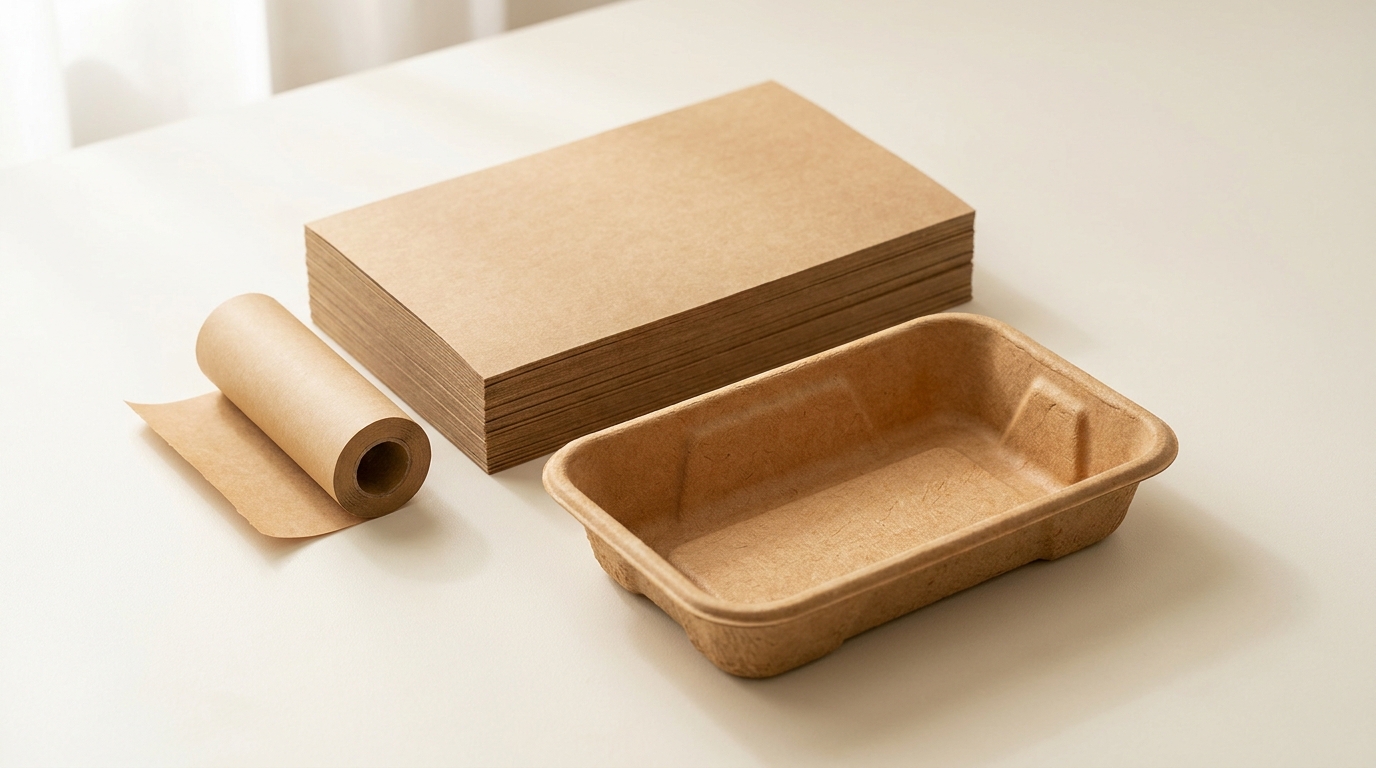
Compostable kraft paper is the strongest fiber we form. Made from virgin

Colored pulp is not a separate fiber. It is any of our

Bleached pulp is the material to specify when the part has to

Natural plant fiber covers the non-wood cellulose sources we blend outside the

Corrugated paper as a molded pulp material means recovered cardboard boxes repulped

Straw fiber is made from the stalks left after grain harvest, material

Personalizado, ecológico e confiável

Excelência em embalagens personalizadas e ecologicamente corretas

Totalmente personalizável

Personalize sua embalagem com estilos, tamanhos, cores e acabamentos sob medida para atender a necessidades específicas.

Suporte especializado

A Bonitopak oferece consultoria especializada em design e logística para maximizar a eficiência da embalagem e aumentar o ROI.

Soluções ecológicas

Escolha embalagens sustentáveis e ecologicamente corretas para reduzir o impacto ambiental e apoiar as metas ecológicas de sua marca.

Garantia de qualidade

A Bonitopak garante serviço de alta qualidade e excelência de produto em cada solução de embalagem.

Perguntas frequentes (FAQ)

Goose, Turkey and Bantam Egg Cartons

  • Do you make a combined carton for mixed specialty eggs?

    No, and we would advise against one. A carton with cells of several sizes wastes space on every cell that is not filled, and it only works if a producer reliably has one of each bird on hand at packing time, which almost nobody does. Separate cartons per bird is the practical answer.

  • Why do goose cartons cost more per egg than chicken cartons?

    Fiber quantity and freight. A goose cell uses several times the material of a chicken cell, and the larger footprint means far fewer cartons per container. Against goose egg pricing, which is substantially above chicken, the packaging cost per egg sold remains proportionate.

  • Are turkey eggs actually sold for eating?

    Rarely at commercial scale, and the economics explain why. A turkey hen lays far fewer eggs than a laying hen and the bird is worth more as meat, so the eggs are usually set for hatching rather than sold. Most of our turkey carton demand comes from breeders shipping fertile eggs.

  • How do I pack a flock that lays goose and chicken eggs together?

    Separately, and there is no way around it. The size gap is too large for any single mold to bridge without failing one bird or the other. Producers running both keep two carton lines, which is normal in mixed specialty operations and costs less than the breakage from compromising.

  • Can a bantam egg use a quail carton instead?

    No, and the mismatch runs the other way from what people expect. A bantam egg at 25 to 35 grams is two to three times the weight of a quail egg, so it will not seat in a quail cell at all. Bantam needs its own geometry, sitting between quail and standard chicken.

Resultado biodegradável

0 dias

7 dias

14 dias

30 dias

Setores especializados

Tendo produzido milhões de peças, a BonitoPak possui profundo conhecimento em diversas aplicações. Nós nos destacamos especialmente em setores que exigem a fabricação de componentes precisos e intrincados. Confie em nós para oferecer experiência e qualidade, independentemente da complexidade.

Soluções de embalagem OEM e ODM

A Bonitopak oferece soluções de embalagem personalizadas (OEM) e pré-projetadas (ODM). Independentemente de você precisar de designs totalmente personalizados ou de embalagens prontas para uso, fornecemos opções de alta qualidade, eficientes e flexíveis para atender às necessidades da sua marca.

Serviços OEM

As soluções de embalagem OEM permitem que você crie produtos totalmente personalizados, projetados e fabricados para atender às suas necessidades específicas. Na Bonitopak, oferecemos suporte abrangente durante todo o processo de design, prototipagem e fabricação, garantindo que sua embalagem reflita a identidade exclusiva de sua marca. Nossos recursos de fabricação de precisão garantem uma produção consistente e de alta qualidade, independentemente da complexidade do projeto. Com serviço de ponta a ponta, cuidamos de tudo, desde o conceito até a entrega, ajudando-o a otimizar suas necessidades de embalagem.

Serviços ODM

As soluções de embalagem ODM oferecem produtos pré-projetados que podem ser adaptados aos requisitos de sua marca. Com a experiência em design inovador e o processo de produção eficiente da Bonitopak, você pode escolher entre uma ampla gama de opções de embalagens prontas para uso. Oferecemos personalização flexível, permitindo que você adicione sua marca e selecione entre vários acabamentos, cores e tamanhos. Essa solução economiza tempo e custos e, ao mesmo tempo, garante embalagens de alta qualidade que atendem aos padrões de sua marca.
Pronto para elevar seu projeto?

Dê vida aos seus projetos com o BonitoPak

Experimente a engenharia de precisão com a BonitoPak. De protótipos detalhados à produção de alto volume, estamos aqui para transformar seus conceitos em realidade. Entre em contato conosco hoje mesmo para discutir as necessidades do seu projeto!

Nossas categorias de produtos

Descubra a gama diversificada de soluções de embalagem da Bonitopak, incluindo bandejas de polpa moldada, embalagens para alimentos, designs personalizados e opções sustentáveis. Cada categoria é criada para oferecer durabilidade, funcionalidade e responsabilidade ambiental, adaptada para atender às suas necessidades específicas.

Three birds, three problems, one page

These three are grouped because they share a commercial situation, not because they share a carton. Each needs its own mold, and the reasons are worth taking separately.

What they have in common is that they are produced by small flocks in quantities no large converter will tool for. That is why specialty keepers end up packing in whatever chicken carton fits least badly, and why it is worth stocking molds that actually fit.

Goose: the size problem

A goose egg from an Embden or Toulouse weighs between 140 and 200 grams. That is roughly three large chicken eggs in one shell.

No chicken carton holds one. The egg does not fit the cell at any depth, and attempts to pack geese in chicken cartons usually end with the eggs laid loose in the carton with the dividers crushed down, which protects nothing.

The goose mold uses cells roughly twice the diameter of a chicken cell and considerably deeper. The footprint is large enough that a six count goose carton approaches the size of an eighteen count chicken carton.

Counts run low because production is low. A goose lays seasonally, typically 20 to 50 eggs a year against 250 or more for a laying hen. Two and four count cartons are the realistic retail formats, and six is usually the maximum worth stocking.

Goose shells are thick and strong, so the protection requirement is lower than the size requirement. The mold exists because the egg needs somewhere to sit, not because it is fragile.

Turkey: the awkward middle

Turkey eggs sit between chicken jumbo and goose, around 75 to 95 grams, which puts them in the worst position of the three.

They are too large for a chicken carton, including a deep bed jumbo mold, where the lid closes on the shell. They are far too small for a goose cell, where they roll freely and knock against the walls.

The turkey mold is dimensioned specifically for that gap. Cells are deeper and wider than our deep bed chicken spec but well short of goose.

Turkey eggs also have a distinctly more pointed profile than chicken, with a noticeably tapered narrow end, which means they seat lower at the point. The cell profile accounts for that taper rather than assuming a chicken-shaped oval.

Most turkey egg demand is for hatching rather than eating, since turkey eggs are rarely sold as food at scale. Breeders shipping fertile eggs are the main buyers, and immobilization matters more to them than cushioning.

Bantam: the small end

Bantam eggs run around 25 to 35 grams, roughly half a standard chicken egg, from Silkie, Serama, Sebright and other true bantam breeds.

They face the same problem as quail, one step up. In a chicken cell a bantam egg sits at the bottom of a cup far wider than it is, with nothing holding it. It rolls, contacts its neighbors, and chips.

The bantam mold uses shallower, narrower cells that hold the egg at its widest point. Counts run higher than the other two because bantam hens lay reasonably well, so 12 and 18 counts are both practical.

Bantam eggs are sold mostly to specialty and novelty retail, and to breeders. Silkie eggs in particular carry a following in several Asian markets where they are valued above standard chicken eggs.

Seasonality changes how you should order

Goose and turkey both lay seasonally, concentrated in spring, against a laying hen that produces most of the year. That turns carton buying into an annual decision rather than a rolling one.

Producers in these categories should order their full season’s requirement ahead of the laying period rather than reordering through it, because a mid-season stockout cannot be solved quickly when production and sea freight both sit in the path. Bantams lay more evenly and do not carry the same constraint.

Why these molds are hard to find

Tooling economics. A mold costs the same to cut whether it will run ten thousand cartons or ten million, so converters tool for volume. Goose, turkey, and bantam together are a rounding error against commercial chicken production.

The result is a market served badly. Specialty keepers in these three categories are used to compromising, and a correctly sized carton is a genuine differentiator for a producer selling at a farmers market where every other stall is using repurposed packaging.

We hold stock molds for all three specifically so small flocks can order realistic quantities without funding tooling.

Related formats

Producers running quail should go to molded pulp quail egg cartons, which is a separate geometry again and not interchangeable with bantam despite the similar egg size.

Duck sits between turkey and chicken in most dimensions and has its own mold at molded pulp duck egg cartons.

Keepers running a standard flock alongside specialty birds should see the molded pulp chicken egg carton page for the grade and cell depth detail. For small gift and sampler counts across any bird, the molded pulp 4 egg carton is cut deep enough to take most specialty sizes below goose.
Three birds, three problems, one page

These three are grouped because they share a commercial situation, not because they share a carton. Each needs its own mold, and the reasons are worth taking separately.

What they have in common is that they are produced by small flocks in quantities no large converter will tool for. That is why specialty keepers end up packing in whatever chicken carton fits least badly, and why it is worth stocking molds that actually fit.

Goose: the size problem

A goose egg from an Embden or Toulouse weighs between 140 and 200 grams. That is roughly three large chicken eggs in one shell.

No chicken carton holds one. The egg does not fit the cell at any depth, and attempts to pack geese in chicken cartons usually end with the eggs laid loose in the carton with the dividers crushed down, which protects nothing.

The goose mold uses cells roughly twice the diameter of a chicken cell and considerably deeper. The footprint is large enough that a six count goose carton approaches the size of an eighteen count chicken carton.

Counts run low because production is low. A goose lays seasonally, typically 20 to 50 eggs a year against 250 or more for a laying hen. Two and four count cartons are the realistic retail formats, and six is usually the maximum worth stocking.

Goose shells are thick and strong, so the protection requirement is lower than the size requirement. The mold exists because the egg needs somewhere to sit, not because it is fragile.

Turkey: the awkward middle

Turkey eggs sit between chicken jumbo and goose, around 75 to 95 grams, which puts them in the worst position of the three.

They are too large for a chicken carton, including a deep bed jumbo mold, where the lid closes on the shell. They are far too small for a goose cell, where they roll freely and knock against the walls.

The turkey mold is dimensioned specifically for that gap. Cells are deeper and wider than our deep bed chicken spec but well short of goose.

Turkey eggs also have a distinctly more pointed profile than chicken, with a noticeably tapered narrow end, which means they seat lower at the point. The cell profile accounts for that taper rather than assuming a chicken-shaped oval.

Most turkey egg demand is for hatching rather than eating, since turkey eggs are rarely sold as food at scale. Breeders shipping fertile eggs are the main buyers, and immobilization matters more to them than cushioning.

Bantam: the small end

Bantam eggs run around 25 to 35 grams, roughly half a standard chicken egg, from Silkie, Serama, Sebright and other true bantam breeds.

They face the same problem as quail, one step up. In a chicken cell a bantam egg sits at the bottom of a cup far wider than it is, with nothing holding it. It rolls, contacts its neighbors, and chips.

The bantam mold uses shallower, narrower cells that hold the egg at its widest point. Counts run higher than the other two because bantam hens lay reasonably well, so 12 and 18 counts are both practical.

Bantam eggs are sold mostly to specialty and novelty retail, and to breeders. Silkie eggs in particular carry a following in several Asian markets where they are valued above standard chicken eggs.

Seasonality changes how you should order

Goose and turkey both lay seasonally, concentrated in spring, against a laying hen that produces most of the year. That turns carton buying into an annual decision rather than a rolling one.

Producers in these categories should order their full season’s requirement ahead of the laying period rather than reordering through it, because a mid-season stockout cannot be solved quickly when production and sea freight both sit in the path. Bantams lay more evenly and do not carry the same constraint.

Why these molds are hard to find

Tooling economics. A mold costs the same to cut whether it will run ten thousand cartons or ten million, so converters tool for volume. Goose, turkey, and bantam together are a rounding error against commercial chicken production.

The result is a market served badly. Specialty keepers in these three categories are used to compromising, and a correctly sized carton is a genuine differentiator for a producer selling at a farmers market where every other stall is using repurposed packaging.

We hold stock molds for all three specifically so small flocks can order realistic quantities without funding tooling.

Related formats

Producers running quail should go to molded pulp quail egg cartons, which is a separate geometry again and not interchangeable with bantam despite the similar egg size.

Duck sits between turkey and chicken in most dimensions and has its own mold at molded pulp duck egg cartons.

Keepers running a standard flock alongside specialty birds should see the molded pulp chicken egg carton page for the grade and cell depth detail. For small gift and sampler counts across any bird, the molded pulp 4 egg carton is cut deep enough to take most specialty sizes below goose.
Artigos e insights relacionados

Mantenha-se informado com as últimas atualizações sobre tendências de embalagens sustentáveis, percepções do setor e dicas de especialistas em nosso blog. Explore ideias e soluções inovadoras para aprimorar seu conhecimento sobre embalagens.

Por Leo Chan | Redator, BonitoPak | Mais de 20 anos na área de embalagens de polpa moldada. A vodca é

Por Leo Chan | Redator, BonitoPak | Mais de 20 anos na área de embalagens de polpa moldada Quase todas as

Por Leo Chan | Redator, BonitoPak | Mais de 20 anos na área de embalagens de polpa moldada Pesquisar isto

Perguntas frequentes (FAQ)

Goose, Turkey and Bantam Egg Cartons

  • Do you make a combined carton for mixed specialty eggs?

    No, and we would advise against one. A carton with cells of several sizes wastes space on every cell that is not filled, and it only works if a producer reliably has one of each bird on hand at packing time, which almost nobody does. Separate cartons per bird is the practical answer.

  • Why do goose cartons cost more per egg than chicken cartons?

    Fiber quantity and freight. A goose cell uses several times the material of a chicken cell, and the larger footprint means far fewer cartons per container. Against goose egg pricing, which is substantially above chicken, the packaging cost per egg sold remains proportionate.

  • Are turkey eggs actually sold for eating?

    Rarely at commercial scale, and the economics explain why. A turkey hen lays far fewer eggs than a laying hen and the bird is worth more as meat, so the eggs are usually set for hatching rather than sold. Most of our turkey carton demand comes from breeders shipping fertile eggs.

  • How do I pack a flock that lays goose and chicken eggs together?

    Separately, and there is no way around it. The size gap is too large for any single mold to bridge without failing one bird or the other. Producers running both keep two carton lines, which is normal in mixed specialty operations and costs less than the breakage from compromising.

  • Can a bantam egg use a quail carton instead?

    No, and the mismatch runs the other way from what people expect. A bantam egg at 25 to 35 grams is two to three times the weight of a quail egg, so it will not seat in a quail cell at all. Bantam needs its own geometry, sitting between quail and standard chicken.

Preencha este formulário detalhado