Goose, Turkey and Bantam Egg Cartons

  • Three distinct cell geometries, one for each bird, not one compromise mold
  • Goose: deep wide cells for eggs up to 200 g, in 2, 4, and 6 counts
  • Turkey: intermediate cells between chicken jumbo and goose, in 6 and 12 counts
  • Bantam: shallow narrow cells for eggs around 30 g, in 6, 12, and 18 counts
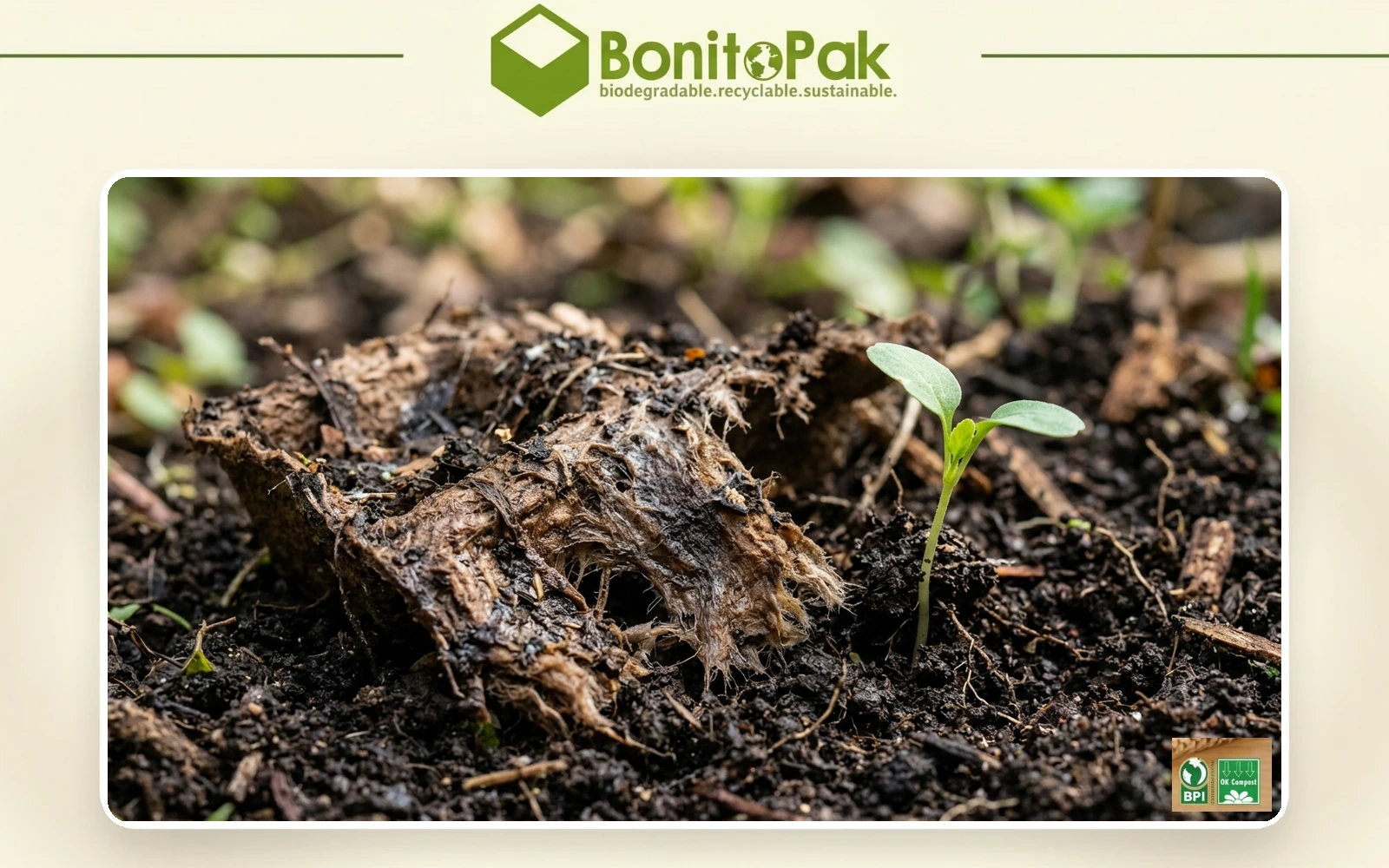
  • Formed from 100% recycled paper pulp, biodegradable and home compostable
  • Low minimum orders, because specialty flocks produce specialty volumes
  • Natural pulp plus six stock colors; custom shade matching available

Moule public

Solutions d'emballage

Conception en 3D

Moule personnalisé

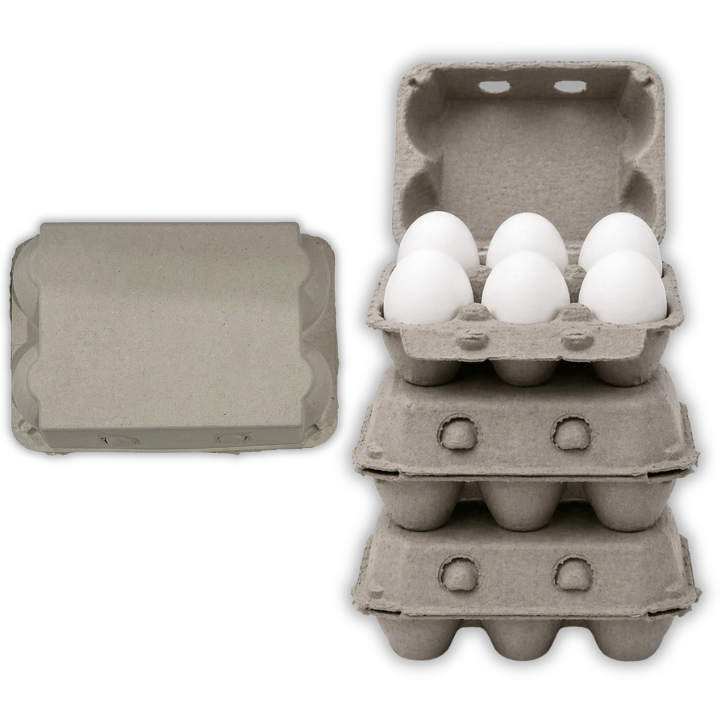
Goose egg cartons, turkey cartons and bantam cartons in molded pulp side by side showing size differences

Description du produit

Spécifications Détails
Nom de la marque BonitoPak
Numéro de modèle EC-GO / EC-TU / EC-BA series
Nom du produit Goose, Turkey and Bantam Egg Cartons
Matériau Pâte à papier recyclée
Type de papier Post-consumer recycled paper
Technique Molded pulp forming (wet-pressed)
Goose Cell Count 2, 4, or 6 cells
Goose Egg Range 140 to 200 g, Embden and Toulouse
Turkey Cell Count 6 or 12 cells
Turkey Egg Range 75 to 95 g
Bantam Cell Count 6, 12, or 18 cells
Bantam Egg Range 25 to 35 g, Silkie, Serama, Sebright
Couleur Natural pulp; six stock colors; custom color matching
Forme et style Top-fold clamshell with front locking tab
Impression de logos Embossed, debossed, or flexographic print
Utilisation industrielle Specialty poultry, heritage breeders, farm direct, gourmet retail
Application Retail specialty egg packs, breeder sales, hatching egg transport
Taille OEM and custom dimensions accepted
Avantages Biodegradable, home compostable, nestable, plastic free
Emballage Bulk nested in export cartons; custom packing accepted
Commande personnalisée Accepté
MOQ Low minimums on stock molds; confirm with sales

Galerie de Goose, Turkey and Bantam Egg Cartons pièces

Cette galerie présente la qualité exceptionnelle et l'attention portée aux détails que nous apportons à chaque projet. Des conceptions complexes aux finitions impeccables, chaque image reflète notre engagement en faveur de l'excellence dans les domaines suivants Goose, Turkey and Bantam Egg Cartons .

40%

Gain de temps et d'argent

Faites l'expérience de solutions d'emballage de pointe qui optimisent vos coûts et votre temps, en fournissant des processus efficaces et en maximisant votre retour sur investissement.

50%

Plus durable

Réalisez des emballages respectueux de l'environnement avec des matériaux durables, en réduisant les déchets et en promouvant la responsabilité environnementale dans toutes vos gammes de produits.

25%

Augmentation des ventes

Améliorez l'attrait de votre produit en rayon grâce à des designs innovants qui augmentent la visibilité et les ventes sur les marchés de détail et en ligne.

100%

Plus fiable

Faites confiance à l'engagement de BonitoPak en matière de qualité, en vous assurant que chaque produit répond à nos normes élevées avec un service constant et fiable.

Three birds, three problems, one page

These three are grouped because they share a commercial situation, not because they share a carton. Each needs its own mold, and the reasons are worth taking separately.

What they have in common is that they are produced by small flocks in quantities no large converter will tool for. That is why specialty keepers end up packing in whatever chicken carton fits least badly, and why it is worth stocking molds that actually fit.

Goose: the size problem

A goose egg from an Embden or Toulouse weighs between 140 and 200 grams. That is roughly three large chicken eggs in one shell.

No chicken carton holds one. The egg does not fit the cell at any depth, and attempts to pack geese in chicken cartons usually end with the eggs laid loose in the carton with the dividers crushed down, which protects nothing.

The goose mold uses cells roughly twice the diameter of a chicken cell and considerably deeper. The footprint is large enough that a six count goose carton approaches the size of an eighteen count chicken carton.

Counts run low because production is low. A goose lays seasonally, typically 20 to 50 eggs a year against 250 or more for a laying hen. Two and four count cartons are the realistic retail formats, and six is usually the maximum worth stocking.

Goose shells are thick and strong, so the protection requirement is lower than the size requirement. The mold exists because the egg needs somewhere to sit, not because it is fragile.

Turkey: the awkward middle

Turkey eggs sit between chicken jumbo and goose, around 75 to 95 grams, which puts them in the worst position of the three.

They are too large for a chicken carton, including a deep bed jumbo mold, where the lid closes on the shell. They are far too small for a goose cell, where they roll freely and knock against the walls.

The turkey mold is dimensioned specifically for that gap. Cells are deeper and wider than our deep bed chicken spec but well short of goose.

Turkey eggs also have a distinctly more pointed profile than chicken, with a noticeably tapered narrow end, which means they seat lower at the point. The cell profile accounts for that taper rather than assuming a chicken-shaped oval.

Most turkey egg demand is for hatching rather than eating, since turkey eggs are rarely sold as food at scale. Breeders shipping fertile eggs are the main buyers, and immobilization matters more to them than cushioning.

Bantam: the small end

Bantam eggs run around 25 to 35 grams, roughly half a standard chicken egg, from Silkie, Serama, Sebright and other true bantam breeds.

They face the same problem as quail, one step up. In a chicken cell a bantam egg sits at the bottom of a cup far wider than it is, with nothing holding it. It rolls, contacts its neighbors, and chips.

The bantam mold uses shallower, narrower cells that hold the egg at its widest point. Counts run higher than the other two because bantam hens lay reasonably well, so 12 and 18 counts are both practical.

Bantam eggs are sold mostly to specialty and novelty retail, and to breeders. Silkie eggs in particular carry a following in several Asian markets where they are valued above standard chicken eggs.

Seasonality changes how you should order

Goose and turkey both lay seasonally, concentrated in spring, against a laying hen that produces most of the year. That turns carton buying into an annual decision rather than a rolling one.

Producers in these categories should order their full season’s requirement ahead of the laying period rather than reordering through it, because a mid-season stockout cannot be solved quickly when production and sea freight both sit in the path. Bantams lay more evenly and do not carry the same constraint.

Why these molds are hard to find

Tooling economics. A mold costs the same to cut whether it will run ten thousand cartons or ten million, so converters tool for volume. Goose, turkey, and bantam together are a rounding error against commercial chicken production.

The result is a market served badly. Specialty keepers in these three categories are used to compromising, and a correctly sized carton is a genuine differentiator for a producer selling at a farmers market where every other stall is using repurposed packaging.

We hold stock molds for all three specifically so small flocks can order realistic quantities without funding tooling.

Related formats

Producers running quail should go to molded pulp quail egg cartons, which is a separate geometry again and not interchangeable with bantam despite the similar egg size.

Duck sits between turkey and chicken in most dimensions and has its own mold at molded pulp duck egg cartons.

Keepers running a standard flock alongside specialty birds should see the molded pulp chicken egg carton page for the grade and cell depth detail. For small gift and sampler counts across any bird, the molded pulp 4 egg carton is cut deep enough to take most specialty sizes below goose.

Three birds, three problems, one page

These three are grouped because they share a commercial situation, not because they share a carton. Each needs its own mold, and the reasons are worth taking separately.

What they have in common is that they are produced by small flocks in quantities no large converter will tool for. That is why specialty keepers end up packing in whatever chicken carton fits least badly, and why it is worth stocking molds that actually fit.

Goose: the size problem

A goose egg from an Embden or Toulouse weighs between 140 and 200 grams. That is roughly three large chicken eggs in one shell.

No chicken carton holds one. The egg does not fit the cell at any depth, and attempts to pack geese in chicken cartons usually end with the eggs laid loose in the carton with the dividers crushed down, which protects nothing.

The goose mold uses cells roughly twice the diameter of a chicken cell and considerably deeper. The footprint is large enough that a six count goose carton approaches the size of an eighteen count chicken carton.

Counts run low because production is low. A goose lays seasonally, typically 20 to 50 eggs a year against 250 or more for a laying hen. Two and four count cartons are the realistic retail formats, and six is usually the maximum worth stocking.

Goose shells are thick and strong, so the protection requirement is lower than the size requirement. The mold exists because the egg needs somewhere to sit, not because it is fragile.

Turkey: the awkward middle

Turkey eggs sit between chicken jumbo and goose, around 75 to 95 grams, which puts them in the worst position of the three.

They are too large for a chicken carton, including a deep bed jumbo mold, where the lid closes on the shell. They are far too small for a goose cell, where they roll freely and knock against the walls.

The turkey mold is dimensioned specifically for that gap. Cells are deeper and wider than our deep bed chicken spec but well short of goose.

Turkey eggs also have a distinctly more pointed profile than chicken, with a noticeably tapered narrow end, which means they seat lower at the point. The cell profile accounts for that taper rather than assuming a chicken-shaped oval.

Most turkey egg demand is for hatching rather than eating, since turkey eggs are rarely sold as food at scale. Breeders shipping fertile eggs are the main buyers, and immobilization matters more to them than cushioning.

Bantam: the small end

Bantam eggs run around 25 to 35 grams, roughly half a standard chicken egg, from Silkie, Serama, Sebright and other true bantam breeds.

They face the same problem as quail, one step up. In a chicken cell a bantam egg sits at the bottom of a cup far wider than it is, with nothing holding it. It rolls, contacts its neighbors, and chips.

The bantam mold uses shallower, narrower cells that hold the egg at its widest point. Counts run higher than the other two because bantam hens lay reasonably well, so 12 and 18 counts are both practical.

Bantam eggs are sold mostly to specialty and novelty retail, and to breeders. Silkie eggs in particular carry a following in several Asian markets where they are valued above standard chicken eggs.

Seasonality changes how you should order

Goose and turkey both lay seasonally, concentrated in spring, against a laying hen that produces most of the year. That turns carton buying into an annual decision rather than a rolling one.

Producers in these categories should order their full season’s requirement ahead of the laying period rather than reordering through it, because a mid-season stockout cannot be solved quickly when production and sea freight both sit in the path. Bantams lay more evenly and do not carry the same constraint.

Why these molds are hard to find

Tooling economics. A mold costs the same to cut whether it will run ten thousand cartons or ten million, so converters tool for volume. Goose, turkey, and bantam together are a rounding error against commercial chicken production.

The result is a market served badly. Specialty keepers in these three categories are used to compromising, and a correctly sized carton is a genuine differentiator for a producer selling at a farmers market where every other stall is using repurposed packaging.

We hold stock molds for all three specifically so small flocks can order realistic quantities without funding tooling.

Related formats

Producers running quail should go to molded pulp quail egg cartons, which is a separate geometry again and not interchangeable with bantam despite the similar egg size.

Duck sits between turkey and chicken in most dimensions and has its own mold at molded pulp duck egg cartons.

Keepers running a standard flock alongside specialty birds should see the molded pulp chicken egg carton page for the grade and cell depth detail. For small gift and sampler counts across any bird, the molded pulp 4 egg carton is cut deep enough to take most specialty sizes below goose.

Matériaux pour Goose, Turkey and Bantam Egg Cartons Pièces détachées

Des entreprises et des ingénieurs de premier plan font confiance à BonitoPak pour des itérations rapides et des pièces durables et de haute qualité. Qu'il s'agisse de prototypage ou de production à grande échelle, notre large gamme de matériaux nous permet de répondre aux exigences uniques de n'importe quelle entreprise. Goose, Turkey and Bantam Egg Cartons avec précision et rapidité.

Compostable kraft paper is the strongest fiber we form. Made from virgin

Colored pulp is not a separate fiber. It is any of our

Bleached pulp is the material to specify when the part has to

Natural plant fiber covers the non-wood cellulose sources we blend outside the

Corrugated paper as a molded pulp material means recovered cardboard boxes repulped

Straw fiber is made from the stalks left after grain harvest, material

Personnalisé Écologique Fiable

Excellence en matière d'emballage personnalisé et respectueux de l'environnement

Entièrement personnalisable

Personnalisez votre emballage avec des styles, des tailles, des couleurs et des finitions sur mesure pour répondre à des besoins spécifiques.

Soutien des experts

Bonitopak fournit des conseils experts en matière de conception et de logistique afin de maximiser l'efficacité de l'emballage et d'augmenter le retour sur investissement.

Solutions écologiques

Choisissez des emballages durables et écologiques pour réduire l'impact sur l'environnement et soutenir les objectifs écologiques de votre marque.

Assurance qualité

Bonitopak garantit un service de qualité supérieure et l'excellence du produit pour chaque solution d'emballage.

Questions fréquemment posées

Goose, Turkey and Bantam Egg Cartons

  • Do you make a combined carton for mixed specialty eggs?

    No, and we would advise against one. A carton with cells of several sizes wastes space on every cell that is not filled, and it only works if a producer reliably has one of each bird on hand at packing time, which almost nobody does. Separate cartons per bird is the practical answer.

  • Why do goose cartons cost more per egg than chicken cartons?

    Fiber quantity and freight. A goose cell uses several times the material of a chicken cell, and the larger footprint means far fewer cartons per container. Against goose egg pricing, which is substantially above chicken, the packaging cost per egg sold remains proportionate.

  • Are turkey eggs actually sold for eating?

    Rarely at commercial scale, and the economics explain why. A turkey hen lays far fewer eggs than a laying hen and the bird is worth more as meat, so the eggs are usually set for hatching rather than sold. Most of our turkey carton demand comes from breeders shipping fertile eggs.

  • How do I pack a flock that lays goose and chicken eggs together?

    Separately, and there is no way around it. The size gap is too large for any single mold to bridge without failing one bird or the other. Producers running both keep two carton lines, which is normal in mixed specialty operations and costs less than the breakage from compromising.

  • Can a bantam egg use a quail carton instead?

    No, and the mismatch runs the other way from what people expect. A bantam egg at 25 to 35 grams is two to three times the weight of a quail egg, so it will not seat in a quail cell at all. Bantam needs its own geometry, sitting between quail and standard chicken.

Biodégradable Résultat

0 jours

7 jours

14 jours

30 jours

Industries spécialisées

Ayant produit des millions de pièces, BonitoPak possède une connaissance approfondie de nombreuses applications. Nous excellons particulièrement dans les industries qui exigent la fabrication de composants précis et complexes. Faites-nous confiance pour vous apporter expertise et qualité, quelle que soit la complexité.

Solutions d'emballage OEM et ODM

Bonitopak propose des solutions d'emballage sur mesure (OEM) et préconçues (ODM). Que vous ayez besoin d'un design entièrement personnalisé ou d'un emballage prêt à l'emploi, nous vous proposons des options de haute qualité, efficaces et flexibles pour répondre aux besoins de votre marque.

Services OEM

Les solutions d'emballage OEM vous permettent de créer des produits entièrement personnalisés, conçus et fabriqués pour répondre à vos besoins spécifiques. Chez Bonitopak, nous offrons un soutien complet tout au long du processus de conception, de prototypage et de fabrication, afin que votre emballage reflète l'identité unique de votre marque. Nos capacités de fabrication de précision garantissent une production de haute qualité et cohérente, quelle que soit la complexité de la conception. Avec un service complet, nous nous occupons de tout, de la conception à la livraison, pour vous aider à rationaliser vos besoins en matière d'emballage.

Services ODM

Les solutions d'emballage ODM offrent des produits préconçus qui peuvent être adaptés aux exigences de votre marque. Grâce à l'expertise de Bonitopak en matière de conception innovante et à son processus de production efficace, vous pouvez choisir parmi une large gamme d'options d'emballage prêtes à l'emploi. Nous offrons une personnalisation flexible, vous permettant d'ajouter votre marque et de choisir parmi différentes finitions, couleurs et tailles. Cette solution permet d'économiser du temps et de l'argent tout en garantissant un emballage de haute qualité qui répond aux normes de votre marque.
Prêt à élever votre projet ?

Donnez vie à vos dessins avec BonitoPak

Faites l'expérience de l'ingénierie de précision avec BonitoPak. Des prototypes détaillés à la production en grande quantité, nous sommes là pour transformer vos concepts en réalité. Contactez-nous dès aujourd'hui pour discuter des besoins de votre projet !

Nos catégories de produits

Découvrez la gamme diversifiée de solutions d'emballage de Bonitopak, y compris les plateaux de pulpe moulée, les emballages alimentaires, les conceptions personnalisées et les options durables. Chaque catégorie est conçue dans un souci de durabilité, de fonctionnalité et de responsabilité environnementale, afin de répondre à vos besoins spécifiques.

Three birds, three problems, one page

These three are grouped because they share a commercial situation, not because they share a carton. Each needs its own mold, and the reasons are worth taking separately.

What they have in common is that they are produced by small flocks in quantities no large converter will tool for. That is why specialty keepers end up packing in whatever chicken carton fits least badly, and why it is worth stocking molds that actually fit.

Goose: the size problem

A goose egg from an Embden or Toulouse weighs between 140 and 200 grams. That is roughly three large chicken eggs in one shell.

No chicken carton holds one. The egg does not fit the cell at any depth, and attempts to pack geese in chicken cartons usually end with the eggs laid loose in the carton with the dividers crushed down, which protects nothing.

The goose mold uses cells roughly twice the diameter of a chicken cell and considerably deeper. The footprint is large enough that a six count goose carton approaches the size of an eighteen count chicken carton.

Counts run low because production is low. A goose lays seasonally, typically 20 to 50 eggs a year against 250 or more for a laying hen. Two and four count cartons are the realistic retail formats, and six is usually the maximum worth stocking.

Goose shells are thick and strong, so the protection requirement is lower than the size requirement. The mold exists because the egg needs somewhere to sit, not because it is fragile.

Turkey: the awkward middle

Turkey eggs sit between chicken jumbo and goose, around 75 to 95 grams, which puts them in the worst position of the three.

They are too large for a chicken carton, including a deep bed jumbo mold, where the lid closes on the shell. They are far too small for a goose cell, where they roll freely and knock against the walls.

The turkey mold is dimensioned specifically for that gap. Cells are deeper and wider than our deep bed chicken spec but well short of goose.

Turkey eggs also have a distinctly more pointed profile than chicken, with a noticeably tapered narrow end, which means they seat lower at the point. The cell profile accounts for that taper rather than assuming a chicken-shaped oval.

Most turkey egg demand is for hatching rather than eating, since turkey eggs are rarely sold as food at scale. Breeders shipping fertile eggs are the main buyers, and immobilization matters more to them than cushioning.

Bantam: the small end

Bantam eggs run around 25 to 35 grams, roughly half a standard chicken egg, from Silkie, Serama, Sebright and other true bantam breeds.

They face the same problem as quail, one step up. In a chicken cell a bantam egg sits at the bottom of a cup far wider than it is, with nothing holding it. It rolls, contacts its neighbors, and chips.

The bantam mold uses shallower, narrower cells that hold the egg at its widest point. Counts run higher than the other two because bantam hens lay reasonably well, so 12 and 18 counts are both practical.

Bantam eggs are sold mostly to specialty and novelty retail, and to breeders. Silkie eggs in particular carry a following in several Asian markets where they are valued above standard chicken eggs.

Seasonality changes how you should order

Goose and turkey both lay seasonally, concentrated in spring, against a laying hen that produces most of the year. That turns carton buying into an annual decision rather than a rolling one.

Producers in these categories should order their full season’s requirement ahead of the laying period rather than reordering through it, because a mid-season stockout cannot be solved quickly when production and sea freight both sit in the path. Bantams lay more evenly and do not carry the same constraint.

Why these molds are hard to find

Tooling economics. A mold costs the same to cut whether it will run ten thousand cartons or ten million, so converters tool for volume. Goose, turkey, and bantam together are a rounding error against commercial chicken production.

The result is a market served badly. Specialty keepers in these three categories are used to compromising, and a correctly sized carton is a genuine differentiator for a producer selling at a farmers market where every other stall is using repurposed packaging.

We hold stock molds for all three specifically so small flocks can order realistic quantities without funding tooling.

Related formats

Producers running quail should go to molded pulp quail egg cartons, which is a separate geometry again and not interchangeable with bantam despite the similar egg size.

Duck sits between turkey and chicken in most dimensions and has its own mold at molded pulp duck egg cartons.

Keepers running a standard flock alongside specialty birds should see the molded pulp chicken egg carton page for the grade and cell depth detail. For small gift and sampler counts across any bird, the molded pulp 4 egg carton is cut deep enough to take most specialty sizes below goose.

Articles et réflexions connexes

Restez informé des dernières mises à jour sur les tendances en matière d'emballage durable, les perspectives du secteur et les conseils d'experts grâce à notre blog. Explorez des idées et des solutions innovantes pour améliorer vos connaissances en matière d'emballage.

Par Leo Chan | Rédacteur, BonitoPak | Plus de 20 ans d'expérience dans le domaine des emballages en pâte moulée. La vodka, c'est

Par Leo Chan | Rédacteur, BonitoPak | Plus de 20 ans d'expérience dans le domaine des emballages en pâte moulée Presque tous les

Par Leo Chan | Rédacteur, BonitoPak | Plus de 20 ans d'expérience dans le domaine des emballages en pâte moulée Rechercher ceci

Questions fréquemment posées

Goose, Turkey and Bantam Egg Cartons

  • Do you make a combined carton for mixed specialty eggs?

    No, and we would advise against one. A carton with cells of several sizes wastes space on every cell that is not filled, and it only works if a producer reliably has one of each bird on hand at packing time, which almost nobody does. Separate cartons per bird is the practical answer.

  • Why do goose cartons cost more per egg than chicken cartons?

    Fiber quantity and freight. A goose cell uses several times the material of a chicken cell, and the larger footprint means far fewer cartons per container. Against goose egg pricing, which is substantially above chicken, the packaging cost per egg sold remains proportionate.

  • Are turkey eggs actually sold for eating?

    Rarely at commercial scale, and the economics explain why. A turkey hen lays far fewer eggs than a laying hen and the bird is worth more as meat, so the eggs are usually set for hatching rather than sold. Most of our turkey carton demand comes from breeders shipping fertile eggs.

  • How do I pack a flock that lays goose and chicken eggs together?

    Separately, and there is no way around it. The size gap is too large for any single mold to bridge without failing one bird or the other. Producers running both keep two carton lines, which is normal in mixed specialty operations and costs less than the breakage from compromising.

  • Can a bantam egg use a quail carton instead?

    No, and the mismatch runs the other way from what people expect. A bantam egg at 25 to 35 grams is two to three times the weight of a quail egg, so it will not seat in a quail cell at all. Bantam needs its own geometry, sitting between quail and standard chicken.

Remplir ce formulaire détaillé