Produits

Découvrez notre large gamme de solutions d'emballage écologiques de haute qualité, conçues pour répondre aux besoins uniques de diverses industries. Des conceptions personnalisées aux matériaux durables, trouvez l'option d'emballage parfaite pour les besoins de votre produit.

Matériau :

Papier recyclé
Emballage :
Boîte à œufs
Processus :
Presse humide
Couleur :
Multicolor

Matériau :

Papier recyclé
Emballage :
Boîte à œufs
Processus :
Presse humide
Couleur :
Naturel

Matériau :

Papier recyclé
Emballage :
Quail Egg Carton
Processus :
Presse humide
Couleur :
Naturel

Matériau :

Type de matériau
Emballage :
Type d'emballage
Processus :
Liste des processus
Couleur :
Couleur Gris
egg cartons stacked on a pallet showing reinforced lid profile

Matériau :

Type de matériau
Emballage :
Type d'emballage
Processus :
Liste des processus
Couleur :
Couleur Gris

Matériau :

Type de matériau
Emballage :
Type d'emballage
Processus :
Liste des processus
Couleur :
Couleur Gris

Matériau :

Type de matériau
Emballage :
Type d'emballage
Processus :
Liste des processus
Couleur :
Couleur Gris
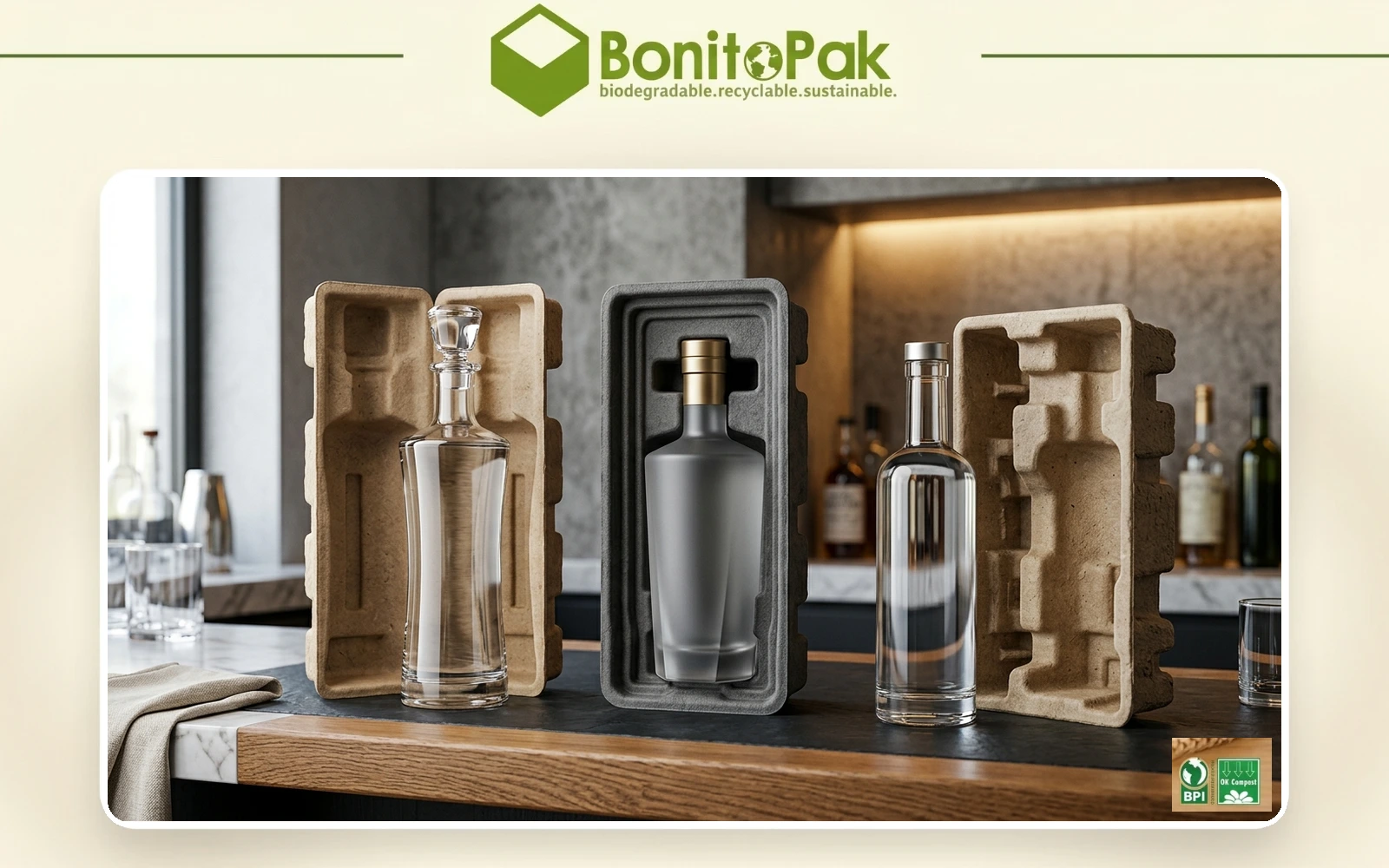
Inserts d'expédition de vin en pâte à papier moulée sur mesure

Matériau :

Type de matériau
Emballage :
Type d'emballage
Processus :
Liste des processus
Couleur :
Couleur Gris

Matériau :

Type de matériau
Emballage :
Type d'emballage
Processus :
Liste des processus
Couleur :
Couleur Gris

Matériau :

Type de matériau
Emballage :
Type d'emballage
Processus :
Liste des processus
Couleur :
Couleur Gris

Nos catégories de produits

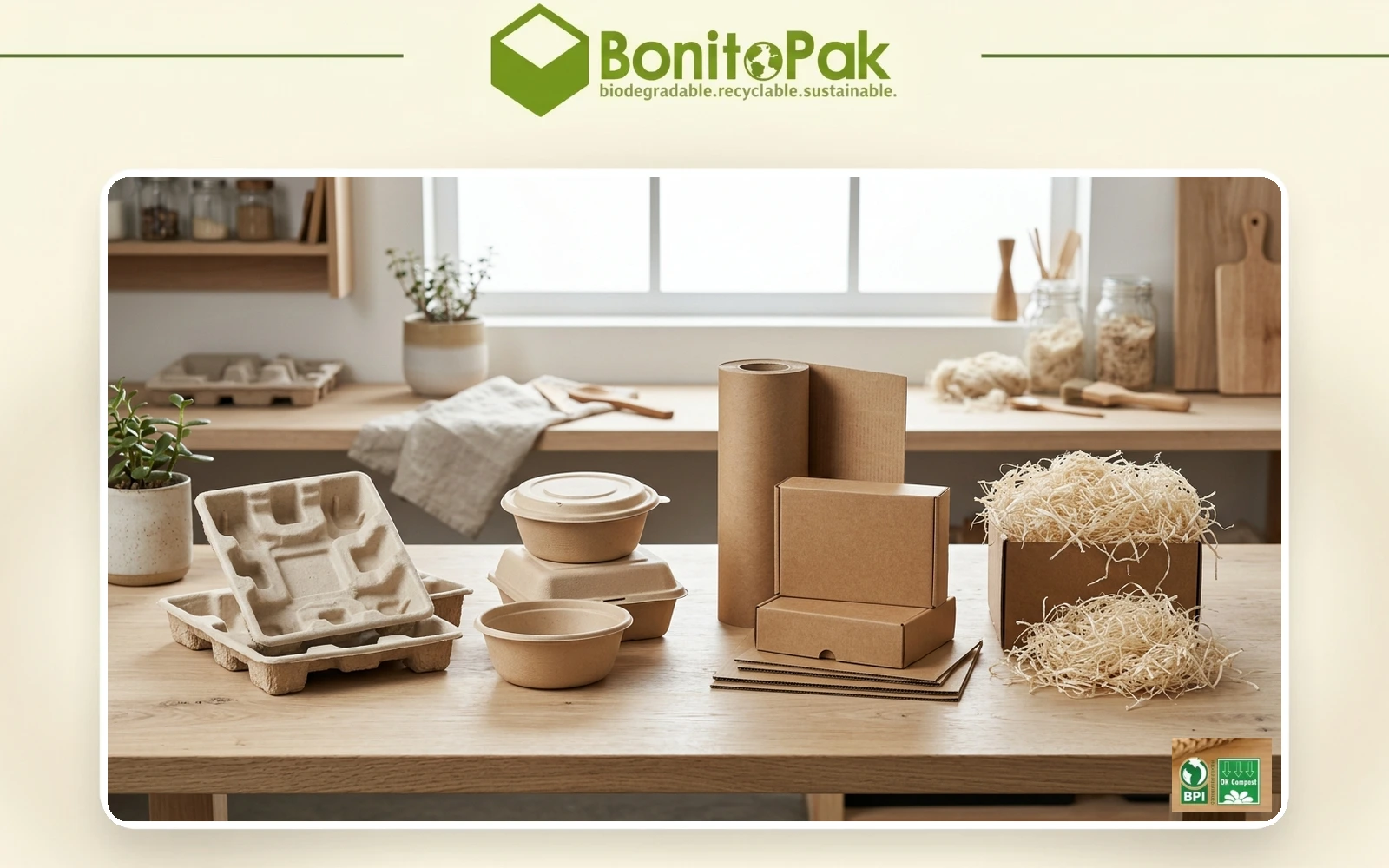
Découvrez la gamme diversifiée de solutions d'emballage de Bonitopak, y compris les plateaux de pulpe moulée, les emballages alimentaires, les conceptions personnalisées et les options durables. Chaque catégorie est conçue dans un souci de durabilité, de fonctionnalité et de responsabilité environnementale, afin de répondre à vos besoins spécifiques.

Two ways to color a pulp carton, and only one of them lasts

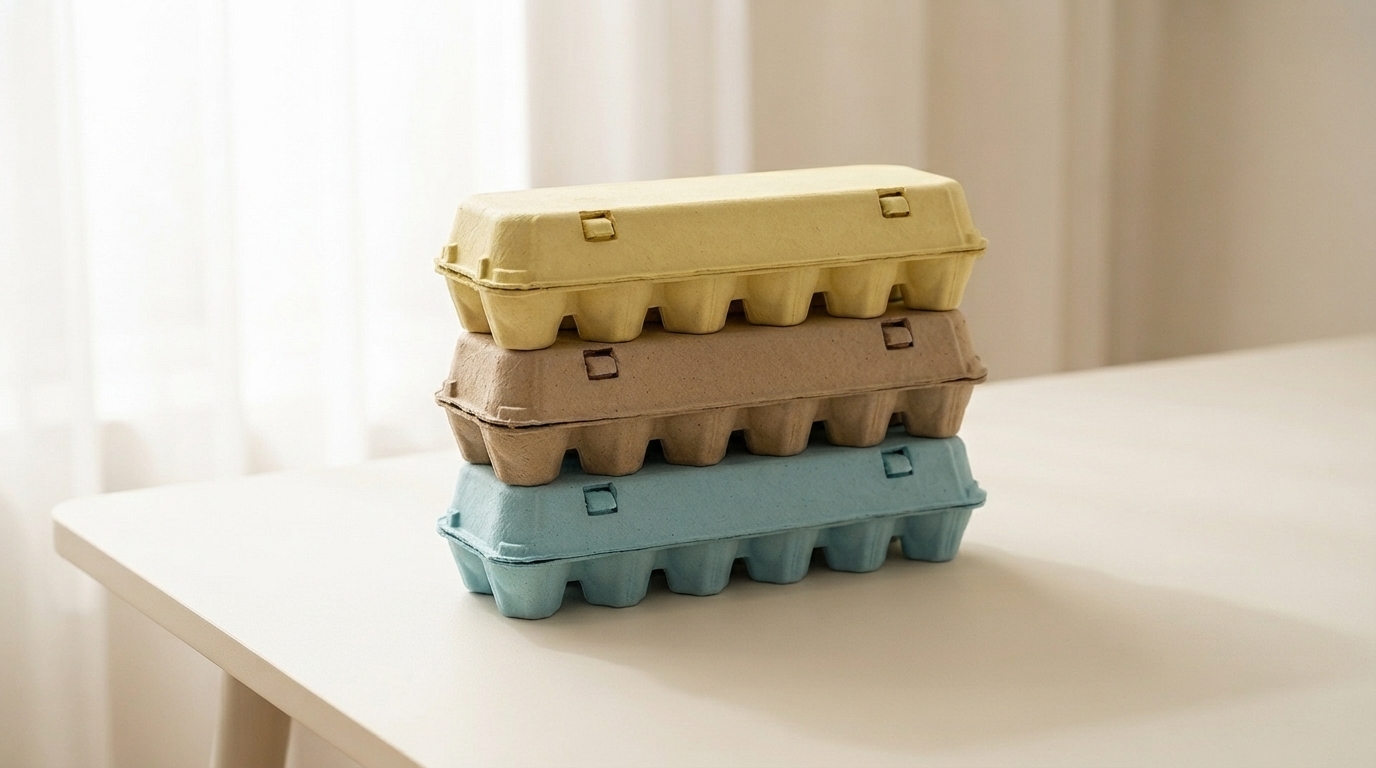
Colored egg cartons are produced by two very different methods, and the difference determines almost everything about how the finished carton performs.

Surface coating applies pigment after the carton is formed and dried, either by spray or by print. It is cheap, it allows fast color changes, and it produces bright results. It also sits on top of the fiber. Scuff a coated carton against a shelf edge and the natural pulp shows through. Coating also adds a layer that may not compost at the same rate as the fiber underneath, which undermines the reason most buyers chose pulp.

Wet end pigmentation blends the pigment into the pulp slurry before the mold ever touches it. The color is distributed through the fiber, so a torn edge shows the same shade as the face. Nothing can scuff off because there is no layer to remove.

Bonitopak colors at the wet end. That is why our colored cartons cost more than a coated equivalent and why they still look correct after a shipping cycle.

What pigment does to compostability

The concern buyers raise most often is whether color compromises the environmental claim. It is a fair question and the answer depends entirely on pigment selection.

Pigments intended for packaging that will compost have to break down without leaving heavy metals or persistent residue in the finished compost. That rules out several traditional colorant chemistries, particularly some historic reds and yellows. It leaves a narrower palette, which is one reason pulp color ranges are smaller than plastic ones.

Working inside that constraint, a pigmented pulp carton composts on essentially the same timeline as a natural one. The fiber is the same, the quantity of pigment is very small by mass, and there is no film or coating to interfere.

Buyers should ask any colored pulp supplier which pigment system they use and whether it is rated for compostable packaging. A supplier who cannot answer is probably surface coating.

Batch consistency is the real production challenge

Getting a color right once is straightforward. Getting the same color across a twelve month supply relationship is where suppliers separate.

Recycled pulp is not a consistent starting point. Incoming fiber varies in base color depending on the waste stream, seasonally and by supplier. A pigment dose that produces the target shade on a light batch will produce something darker on a gray one.

The control is measurement rather than recipe. Base pulp brightness is checked before dosing, the pigment quantity is adjusted against that reading, and formed samples are compared to a retained physical standard rather than to a color chip on a screen. Records for each batch let a repeat order be matched to the original rather than to the nominal specification.

Buyers running a branded line should request a retained sample at first production and reference it on every reorder. It is the only reliable way to hold a shade over time.

Where color earns its cost

Color adds cost. It is worth understanding where it pays that back.

At a farm stand or market table, a colored carton separates one producer from every other producer selling the same product in gray pulp. That visual difference does more work than any label, because it registers before the shopper is close enough to read anything.

In retail, color functions as a range signal. Producers commonly use different shades to distinguish free range from pasture raised, or standard from organic, which lets a shopper find their usual product without reading the pack.

In gift and seasonal channels, color is the product. Easter, holiday hampers, and branded corporate gifts are bought on appearance.

Where color rarely pays back is commodity commercial packing. If eggs are going through a grading station to a retailer who applies their own labeling, the carton is invisible and natural pulp is the right call.

Specifying color across a range

Buyers running several cell counts in one brand color need to plan for it, because each mold is a separate production run and shade drift between molds is a genuine risk.

The reliable approach is to run all molds in the same color from the same pigment batch where volumes allow, or to match every mold to one retained physical standard where they cannot. Ordering a dozen egg carton and a 6 egg carton in the same shade six months apart without a retained standard will usually produce a visible difference.

Buyers focused on a single shade should see pink egg cartons for the shade specific detail. Those pairing color with a distinctive shape should look at octagon egg cartons ou vintage egg cartons.
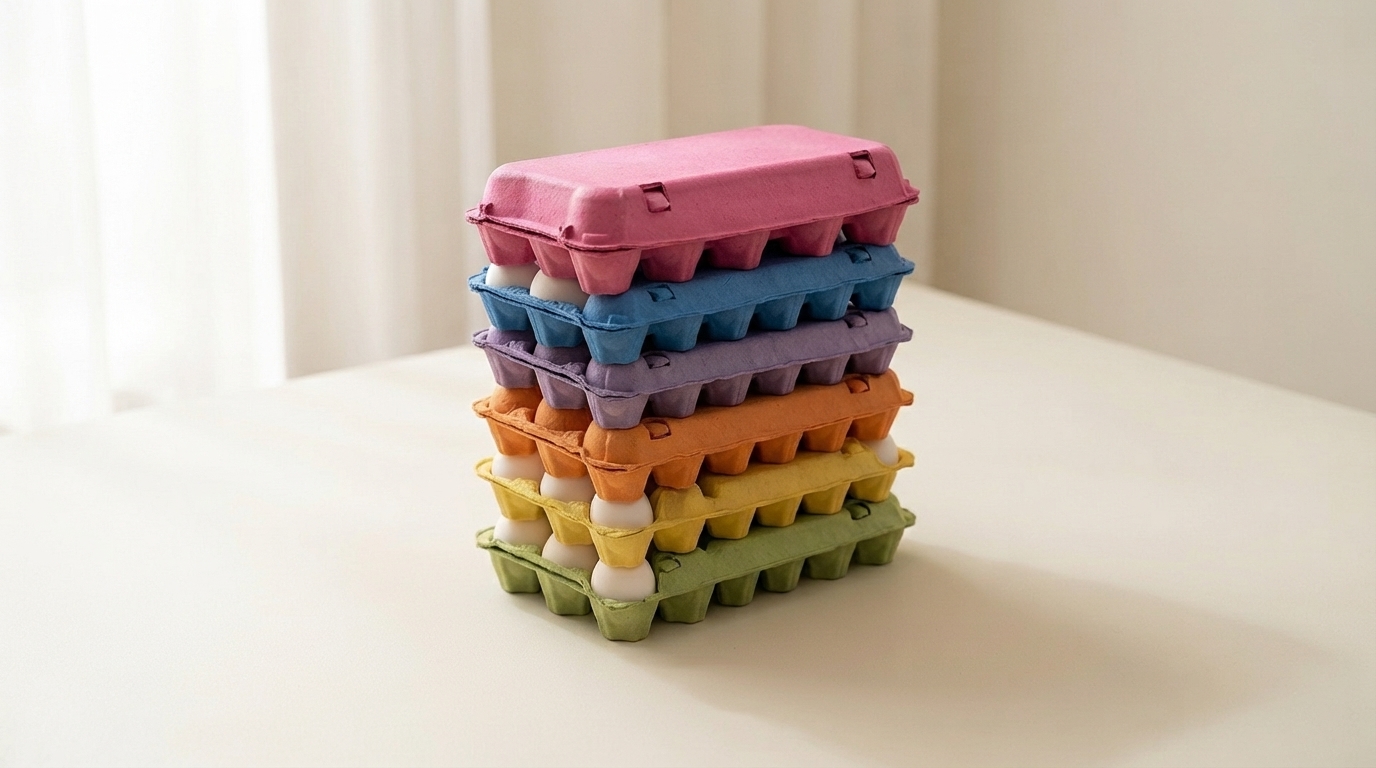
Colored egg cartons are produced by two very different methods, and the difference determines almost everything about how the finished carton performs.

Surface coating applies pigment after the carton is formed and dried, either by spray or by print. It is cheap, it allows fast color changes, and it produces bright results. It also sits on top of the fiber. Scuff a coated carton against a shelf edge and the natural pulp shows through. Coating also adds a layer that may not compost at the same rate as the fiber underneath, which undermines the reason most buyers chose pulp.

Wet end pigmentation blends the pigment into the pulp slurry before the mold ever touches it. The color is distributed through the fiber, so a torn edge shows the same shade as the face. Nothing can scuff off because there is no layer to remove.

Bonitopak colors at the wet end. That is why our colored cartons cost more than a coated equivalent and why they still look correct after a shipping cycle.

What pigment does to compostability

The concern buyers raise most often is whether color compromises the environmental claim. It is a fair question and the answer depends entirely on pigment selection.

Pigments intended for packaging that will compost have to break down without leaving heavy metals or persistent residue in the finished compost. That rules out several traditional colorant chemistries, particularly some historic reds and yellows. It leaves a narrower palette, which is one reason pulp color ranges are smaller than plastic ones.

Working inside that constraint, a pigmented pulp carton composts on essentially the same timeline as a natural one. The fiber is the same, the quantity of pigment is very small by mass, and there is no film or coating to interfere.

Buyers should ask any colored pulp supplier which pigment system they use and whether it is rated for compostable packaging. A supplier who cannot answer is probably surface coating.

Batch consistency is the real production challenge

Getting a color right once is straightforward. Getting the same color across a twelve month supply relationship is where suppliers separate.

Recycled pulp is not a consistent starting point. Incoming fiber varies in base color depending on the waste stream, seasonally and by supplier. A pigment dose that produces the target shade on a light batch will produce something darker on a gray one.

The control is measurement rather than recipe. Base pulp brightness is checked before dosing, the pigment quantity is adjusted against that reading, and formed samples are compared to a retained physical standard rather than to a color chip on a screen. Records for each batch let a repeat order be matched to the original rather than to the nominal specification.

Buyers running a branded line should request a retained sample at first production and reference it on every reorder. It is the only reliable way to hold a shade over time.

Where color earns its cost

Color adds cost. It is worth understanding where it pays that back.

At a farm stand or market table, a colored carton separates one producer from every other producer selling the same product in gray pulp. That visual difference does more work than any label, because it registers before the shopper is close enough to read anything.

In retail, color functions as a range signal. Producers commonly use different shades to distinguish free range from pasture raised, or standard from organic, which lets a shopper find their usual product without reading the pack.

In gift and seasonal channels, color is the product. Easter, holiday hampers, and branded corporate gifts are bought on appearance.

Where color rarely pays back is commodity commercial packing. If eggs are going through a grading station to a retailer who applies their own labeling, the carton is invisible and natural pulp is the right call.

Specifying color across a range

Buyers running several cell counts in one brand color need to plan for it, because each mold is a separate production run and shade drift between molds is a genuine risk.

The reliable approach is to run all molds in the same color from the same pigment batch where volumes allow, or to match every mold to one retained physical standard where they cannot. Ordering a dozen egg carton and a 6 egg carton in the same shade six months apart without a retained standard will usually produce a visible difference.

Buyers focused on a single shade should see pink egg cartons for the shade specific detail. Those pairing color with a distinctive shape should look at octagon egg cartons ou vintage egg cartons.
Two ways to color a pulp carton, and only one of them lasts

Colored egg cartons are produced by two very different methods, and the difference determines almost everything about how the finished carton performs.

Surface coating applies pigment after the carton is formed and dried, either by spray or by print. It is cheap, it allows fast color changes, and it produces bright results. It also sits on top of the fiber. Scuff a coated carton against a shelf edge and the natural pulp shows through. Coating also adds a layer that may not compost at the same rate as the fiber underneath, which undermines the reason most buyers chose pulp.

Wet end pigmentation blends the pigment into the pulp slurry before the mold ever touches it. The color is distributed through the fiber, so a torn edge shows the same shade as the face. Nothing can scuff off because there is no layer to remove.

Bonitopak colors at the wet end. That is why our colored cartons cost more than a coated equivalent and why they still look correct after a shipping cycle.

What pigment does to compostability

The concern buyers raise most often is whether color compromises the environmental claim. It is a fair question and the answer depends entirely on pigment selection.

Pigments intended for packaging that will compost have to break down without leaving heavy metals or persistent residue in the finished compost. That rules out several traditional colorant chemistries, particularly some historic reds and yellows. It leaves a narrower palette, which is one reason pulp color ranges are smaller than plastic ones.

Working inside that constraint, a pigmented pulp carton composts on essentially the same timeline as a natural one. The fiber is the same, the quantity of pigment is very small by mass, and there is no film or coating to interfere.

Buyers should ask any colored pulp supplier which pigment system they use and whether it is rated for compostable packaging. A supplier who cannot answer is probably surface coating.

Batch consistency is the real production challenge

Getting a color right once is straightforward. Getting the same color across a twelve month supply relationship is where suppliers separate.

Recycled pulp is not a consistent starting point. Incoming fiber varies in base color depending on the waste stream, seasonally and by supplier. A pigment dose that produces the target shade on a light batch will produce something darker on a gray one.

The control is measurement rather than recipe. Base pulp brightness is checked before dosing, the pigment quantity is adjusted against that reading, and formed samples are compared to a retained physical standard rather than to a color chip on a screen. Records for each batch let a repeat order be matched to the original rather than to the nominal specification.

Buyers running a branded line should request a retained sample at first production and reference it on every reorder. It is the only reliable way to hold a shade over time.

Where color earns its cost

Color adds cost. It is worth understanding where it pays that back.

At a farm stand or market table, a colored carton separates one producer from every other producer selling the same product in gray pulp. That visual difference does more work than any label, because it registers before the shopper is close enough to read anything.

In retail, color functions as a range signal. Producers commonly use different shades to distinguish free range from pasture raised, or standard from organic, which lets a shopper find their usual product without reading the pack.

In gift and seasonal channels, color is the product. Easter, holiday hampers, and branded corporate gifts are bought on appearance.

Where color rarely pays back is commodity commercial packing. If eggs are going through a grading station to a retailer who applies their own labeling, the carton is invisible and natural pulp is the right call.

Specifying color across a range

Buyers running several cell counts in one brand color need to plan for it, because each mold is a separate production run and shade drift between molds is a genuine risk.

The reliable approach is to run all molds in the same color from the same pigment batch where volumes allow, or to match every mold to one retained physical standard where they cannot. Ordering a dozen egg carton and a 6 egg carton in the same shade six months apart without a retained standard will usually produce a visible difference.

Buyers focused on a single shade should see pink egg cartons for the shade specific detail. Those pairing color with a distinctive shape should look at octagon egg cartons ou vintage egg cartons.
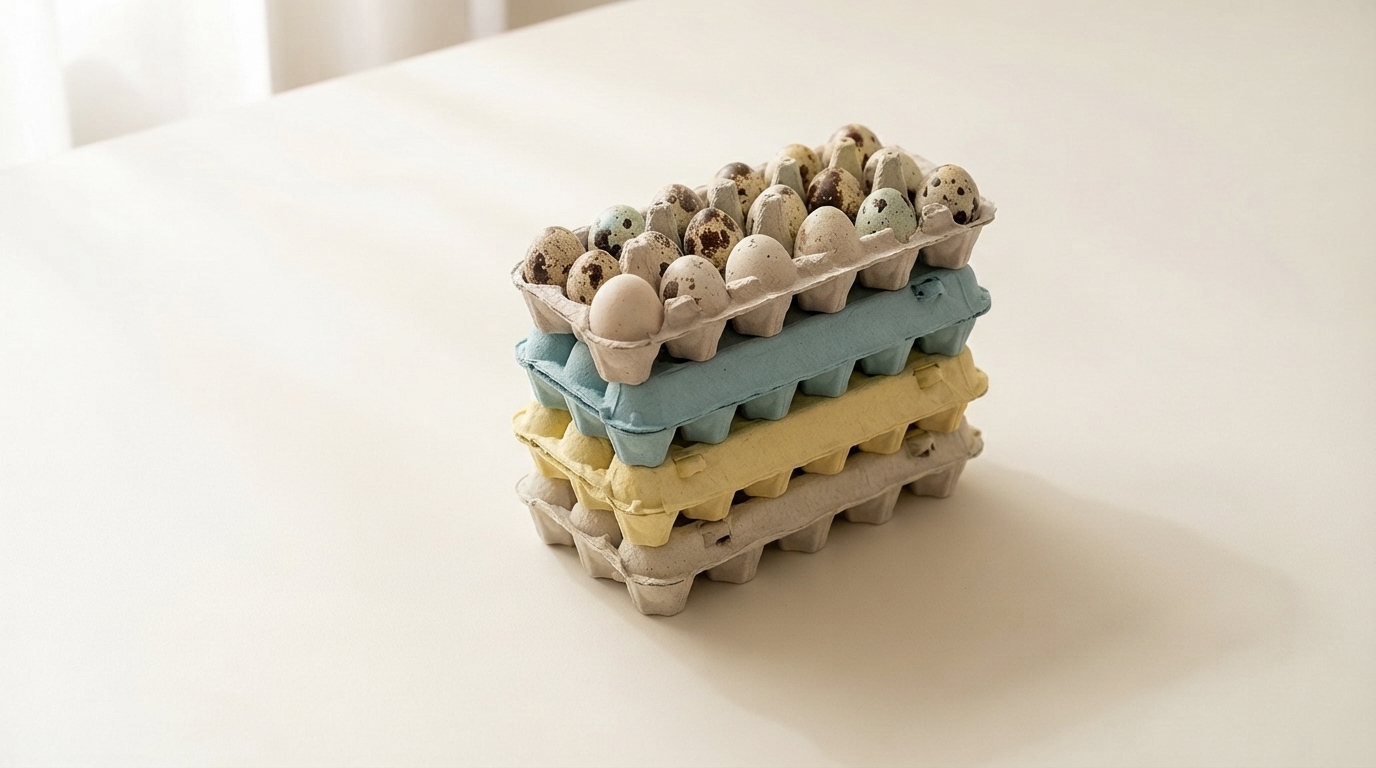
Colored egg cartons are produced by two very different methods, and the difference determines almost everything about how the finished carton performs.

Surface coating applies pigment after the carton is formed and dried, either by spray or by print. It is cheap, it allows fast color changes, and it produces bright results. It also sits on top of the fiber. Scuff a coated carton against a shelf edge and the natural pulp shows through. Coating also adds a layer that may not compost at the same rate as the fiber underneath, which undermines the reason most buyers chose pulp.

Wet end pigmentation blends the pigment into the pulp slurry before the mold ever touches it. The color is distributed through the fiber, so a torn edge shows the same shade as the face. Nothing can scuff off because there is no layer to remove.

Bonitopak colors at the wet end. That is why our colored cartons cost more than a coated equivalent and why they still look correct after a shipping cycle.

What pigment does to compostability

The concern buyers raise most often is whether color compromises the environmental claim. It is a fair question and the answer depends entirely on pigment selection.

Pigments intended for packaging that will compost have to break down without leaving heavy metals or persistent residue in the finished compost. That rules out several traditional colorant chemistries, particularly some historic reds and yellows. It leaves a narrower palette, which is one reason pulp color ranges are smaller than plastic ones.

Working inside that constraint, a pigmented pulp carton composts on essentially the same timeline as a natural one. The fiber is the same, the quantity of pigment is very small by mass, and there is no film or coating to interfere.

Buyers should ask any colored pulp supplier which pigment system they use and whether it is rated for compostable packaging. A supplier who cannot answer is probably surface coating.

Batch consistency is the real production challenge

Getting a color right once is straightforward. Getting the same color across a twelve month supply relationship is where suppliers separate.

Recycled pulp is not a consistent starting point. Incoming fiber varies in base color depending on the waste stream, seasonally and by supplier. A pigment dose that produces the target shade on a light batch will produce something darker on a gray one.

The control is measurement rather than recipe. Base pulp brightness is checked before dosing, the pigment quantity is adjusted against that reading, and formed samples are compared to a retained physical standard rather than to a color chip on a screen. Records for each batch let a repeat order be matched to the original rather than to the nominal specification.

Buyers running a branded line should request a retained sample at first production and reference it on every reorder. It is the only reliable way to hold a shade over time.

Where color earns its cost

Color adds cost. It is worth understanding where it pays that back.

At a farm stand or market table, a colored carton separates one producer from every other producer selling the same product in gray pulp. That visual difference does more work than any label, because it registers before the shopper is close enough to read anything.

In retail, color functions as a range signal. Producers commonly use different shades to distinguish free range from pasture raised, or standard from organic, which lets a shopper find their usual product without reading the pack.

In gift and seasonal channels, color is the product. Easter, holiday hampers, and branded corporate gifts are bought on appearance.

Where color rarely pays back is commodity commercial packing. If eggs are going through a grading station to a retailer who applies their own labeling, the carton is invisible and natural pulp is the right call.

Specifying color across a range

Buyers running several cell counts in one brand color need to plan for it, because each mold is a separate production run and shade drift between molds is a genuine risk.

The reliable approach is to run all molds in the same color from the same pigment batch where volumes allow, or to match every mold to one retained physical standard where they cannot. Ordering a dozen egg carton and a 6 egg carton in the same shade six months apart without a retained standard will usually produce a visible difference.

Buyers focused on a single shade should see pink egg cartons for the shade specific detail. Those pairing color with a distinctive shape should look at octagon egg cartons ou vintage egg cartons.

L'expertise industrielle chez BonitoPak

Ayant produit des millions de pièces, BonitoPak possède une connaissance approfondie de nombreuses applications. Nous excellons particulièrement dans les industries qui exigent la fabrication de composants précis et complexes. Faites-nous confiance pour vous apporter expertise et qualité, quelle que soit la complexité.
Prêt à élever votre projet ?

Donnez vie à vos dessins avec BonitoPak

Faites l'expérience de l'ingénierie de précision avec BonitoPak. Des prototypes détaillés à la production en grande quantité, nous sommes là pour transformer vos concepts en réalité. Contactez-nous dès aujourd'hui pour discuter des besoins de votre projet !

Pourquoi choisir BonitoPak ?

Chez Bonitopak, nous proposons des solutions d'emballage personnalisables et respectueuses de l'environnement, avec l'aide d'experts, des pratiques durables et une qualité garantie. Nos conceptions innovantes et notre production efficace permettent à vos emballages de se démarquer tout en réduisant l'impact sur l'environnement.

Solutions rapides

Nous répondons dans les 24 heures, offrant une communication rapide et claire, des solutions sur mesure et un service efficace pour économiser du temps et de l'argent.

Adaptabilité rapide

Nos services internes de conception, d'ingénierie et de fabrication garantissent un outillage rapide, avec des échantillons prêts en 7 jours et des moules de production en 8 jours.

Experts innovateurs

Nos ingénieurs R&D qualifiés excellent dans la conception, le prototypage et l'outillage, offrant des solutions d'emballage complètes avec des blisters, des boîtes en fer-blanc et des boîtes imprimées.

Optimisation efficace

Le personnel formé effectue des inspections 100%, des contrôles aléatoires et des contrôles de qualité, ce qui permet de garantir des normes élevées, de réduire les rejets et d'économiser des coûts.

Livraison rapide

Nous proposons une programmation raisonnable des commandes et nous coordonnons avec les clients pour résoudre rapidement les problèmes, afin de garantir les meilleures solutions.

Excellent soutien

Notre équipe expérimentée de service après-vente assure une communication fluide et résout les problèmes de remplacement, d'expédition et de livraison, avec pour objectif zéro réclamation.

Articles et réflexions connexes

Restez informé des dernières mises à jour sur les tendances en matière d'emballage durable, les perspectives du secteur et les conseils d'experts grâce à notre blog. Explorez des idées et des solutions innovantes pour améliorer vos connaissances en matière d'emballage.

Par Leo Chan | Rédacteur, BonitoPak | Plus de 20 ans d'expérience dans le domaine des emballages en pâte moulée. La vodka, c'est

Par Leo Chan | Rédacteur, BonitoPak | Plus de 20 ans d'expérience dans le domaine des emballages en pâte moulée Presque tous les

Par Leo Chan | Rédacteur, BonitoPak | Plus de 20 ans d'expérience dans le domaine des emballages en pâte moulée Rechercher ceci

Questions fréquemment posées

Boîtes à œufs moulées en pâte à papier colorée

  • Can I get a color card before ordering?

    Yes, and we recommend it. Screen renderings of pulp color are unreliable because fiber texture affects perceived shade. We send physical color chips of the six stock shades, and for custom work we produce a formed sample in the actual carton geometry, since a flat chip and a molded surface read differently.

  • Does the pigment transfer onto the eggshells?

    No. The pigment is bound within the fiber structure, not sitting loose on the surface, and dry pulp does not transfer color under normal handling. A carton that marks the eggs would indicate a surface coated product with poor adhesion, which is one of the practical arguments for wet end coloring.

  • Why do colored cartons cost more than natural?

    Three reasons. The pigment itself is an added material cost. Wet end color changes require the system to be flushed between shades, which is downtime. And colored runs cannot absorb variable incoming fiber the way natural production can, so more batches get rejected on shade. Stock colors cost less than custom because we run them continuously and avoid most of the changeover.

  • Can you match my exact brand color?

    We can get close, and we produce a physical match sample before any full run so you can approve or adjust. Exact matching to a printed Pantone reference is not achievable in pigmented fiber, because pulp scatters light differently than coated paper does. Brands with a strict color standard usually approve a designated pulp equivalent rather than insisting on the ink reference.

  • Will colored cartons fade in sunlight?

    Slowly, and mostly at a farm stand rather than in a cold case. Pulp pigments are less lightfast than printing inks because the palette is limited to compostable chemistries. Cartons held in direct sun for weeks will lighten, particularly in the blue and purple range. Retail cold cases and covered market stalls are not a problem.

Remplir ce formulaire détaillé