Boîtes à œufs de canard

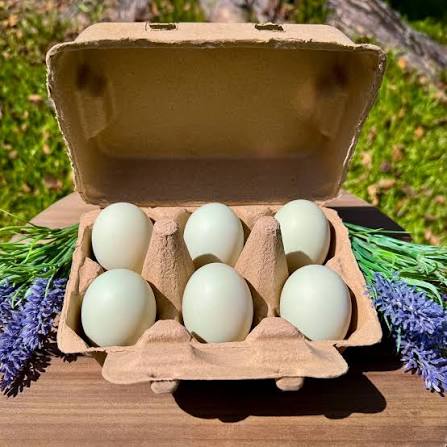
  • Cell bed cut to duck egg proportions, roughly 5 mm deeper and wider than a chicken cell
  • Available in 4, 6, and 12 cell layouts on a correspondingly larger footprint
  • Formed from 100% recycled paper pulp, biodegradable and home compostable
  • Lid clears the shell on Pekin, Khaki Campbell, Runner, and most Muscovy eggs
  • Taller clamshell profile stops the lid pressing on the pointed end
  • Natural pulp plus six stock colors; custom shade matching available
  • OEM and ODM sizing accepted; stock molds available without tooling charge

Moule public

Solutions d'emballage

Conception en 3D

Moule personnalisé

Description du produit

Spécifications Détails
Nom de la marque BonitoPak
Numéro de modèle EC-D04 / EC-D06 / EC-D12
Nom du produit Duck Egg Cartons / Deep Cell Pulp Carton
Matériau Pâte à papier recyclée
Type de papier Post-consumer recycled paper
Technique Molded pulp forming (wet-pressed)
Cell Count 4, 6, or 12 cells
Egg Size Range Pekin, Khaki Campbell, Runner, most Muscovy
Cell Depth Approximately 50 mm, deeper than the chicken standard
Outer Dimensions 6 cell: 195 x 118 x 85 mm; 12 cell: 330 x 118 x 85 mm
Unit Weight 24 to 66 g depending on cell count
Couleur Natural pulp; six stock colors; custom color matching
Forme et style Top-fold clamshell with front locking tab
Impression de logos Embossed, debossed, or flexographic print
Utilisation industrielle Duck farms, specialty poultry, gourmet retail, farm direct
Application Retail duck egg packs, farm stand sales, hatching egg transport
Taille OEM and custom dimensions accepted
Avantages Biodegradable, home compostable, nestable, plastic free
Emballage Bulk nested in export cartons; custom packing accepted
Commande personnalisée Accepté
MOQ Confirm with sales; stock molds carry a lower minimum than custom tooling

Galerie de Boîtes à œufs de canard pièces

Cette galerie présente la qualité exceptionnelle et l'attention portée aux détails que nous apportons à chaque projet. Des conceptions complexes aux finitions impeccables, chaque image reflète notre engagement en faveur de l'excellence dans les domaines suivants Boîtes à œufs de canard .

40%

Gain de temps et d'argent

Faites l'expérience de solutions d'emballage de pointe qui optimisent vos coûts et votre temps, en fournissant des processus efficaces et en maximisant votre retour sur investissement.

50%

Plus durable

Réalisez des emballages respectueux de l'environnement avec des matériaux durables, en réduisant les déchets et en promouvant la responsabilité environnementale dans toutes vos gammes de produits.

25%

Augmentation des ventes

Améliorez l'attrait de votre produit en rayon grâce à des designs innovants qui augmentent la visibilité et les ventes sur les marchés de détail et en ligne.

100%

Plus fiable

Faites confiance à l'engagement de BonitoPak en matière de qualité, en vous assurant que chaque produit répond à nos normes élevées avec un service constant et fiable.

A duck egg is a different solid

The assumption that duck eggs are simply bigger chicken eggs is where most duck packaging goes wrong.

A Pekin duck egg weighs around 70 to 80 grams against roughly 57 for a large chicken egg. That weight difference is the part buyers notice. The shape difference is the part that breaks cartons.

Duck eggs are proportionally longer and more sharply pointed at the narrow end. Where a chicken egg is an oval that seats evenly into a conical cell, a duck egg sits lower at the point and higher at the broad end, which means it occupies more vertical space than its weight predicts. Drop one into a chicken cell rated for jumbo and the broad end still stands proud.

The shell is also thicker, around 0.4 mm against roughly 0.35 for chicken, with a tougher membrane underneath. Duck eggs survive handling that chips a chicken egg. What they do not survive is sustained lid pressure, because a thicker shell under constant point load cracks rather than flexes.

What we changed in the mold

Three dimensions, all of them in the same direction.

Cell depth increased to around 50 mm so the broad end seats below the lid line. Cell diameter widened to match the greater girth. And the clamshell profile itself is taller, which is why a duck carton looks visibly chunkier than a chicken carton of the same cell count.

The spacing between cells also opened slightly. Duck eggs sitting at chicken spacing touch at their widest point, and shell to shell contact in transit is what produces the hairline chips that show up as weeping eggs days later.

The Muscovy question

Muscovy eggs are the edge case worth naming honestly.

Most Muscovy eggs fit our standard duck mold. Some do not. Muscovy hens produce a noticeably variable egg, and birds at the larger end of the breed lay eggs that sit high even in a duck cell.

Producers running Muscovy exclusively should send us sample eggs before ordering. We will seat them in a production carton and tell you plainly whether the lid clears. If it does not, custom tooling is the honest answer rather than selling you a carton that almost fits.

Runner and Khaki Campbell eggs sit comfortably inside the standard mold. Pekin, which produces the majority of commercial duck eggs, is what the mold was dimensioned around.

Why duck producers pay more attention to packaging

Duck eggs sell at a premium, often two to three times the price of chicken eggs per unit in specialty retail. That changes the packaging calculation in two ways.

The cost of a better carton is a smaller fraction of the sale price, so there is room to specify properly rather than at the floor.

And the cost of a breakage is higher. A cracked duck egg loses more revenue than a cracked chicken egg, which means the deep cell that prevents it pays for itself across fewer saved eggs than the same logic would require in commodity chicken packing.

Duck buyers are also disproportionately baking customers, who buy for the higher fat and protein content in the yolk. They are repeat purchasers who notice when a producer’s eggs arrive intact every time.

Weight changes the handling math

A dozen duck eggs weighs close to 900 grams against roughly 680 for a dozen large chicken eggs. That extra third shows up in two places buyers do not anticipate.

Stacked on a pallet, a column of filled duck cartons loads the bottom carton considerably harder than the same column of chicken. Reduce stack height rather than assuming the carton compensates.

At the point of sale it matters too. A full dozen duck eggs is heavy enough that shoppers notice, which is part of why six count outsells twelve in almost every duck market we supply.

Counts that work for duck

Duck flocks are smaller than chicken flocks and lay less consistently, which pushes the count down.

Six is the most common retail format, and it is what most duck producers settle on. Four works for premium and gift sales, and crosses over with the molded pulp 4 egg carton which is already cut to a depth that accepts duck.

Twelve exists but moves slowly in most markets, because a dozen duck eggs is a serious purchase at duck pricing. Producers who do run twelves usually sell into restaurants rather than retail.

Producers running mixed flocks should read the molded pulp chicken egg carton page for the grade detail, and note that chicken eggs sit loose in a duck cell. Loose is safe, but a duck carton holding chicken eggs looks half empty, which is a presentation problem rather than a protection one.

For goose, turkey, and bantam, which need different geometry again, see molded pulp goose, turkey and bantam egg cartons. For color options across the range, start at molded pulp colored egg cartons.

A duck egg is a different solid

The assumption that duck eggs are simply bigger chicken eggs is where most duck packaging goes wrong.

A Pekin duck egg weighs around 70 to 80 grams against roughly 57 for a large chicken egg. That weight difference is the part buyers notice. The shape difference is the part that breaks cartons.

Duck eggs are proportionally longer and more sharply pointed at the narrow end. Where a chicken egg is an oval that seats evenly into a conical cell, a duck egg sits lower at the point and higher at the broad end, which means it occupies more vertical space than its weight predicts. Drop one into a chicken cell rated for jumbo and the broad end still stands proud.

The shell is also thicker, around 0.4 mm against roughly 0.35 for chicken, with a tougher membrane underneath. Duck eggs survive handling that chips a chicken egg. What they do not survive is sustained lid pressure, because a thicker shell under constant point load cracks rather than flexes.

What we changed in the mold

Three dimensions, all of them in the same direction.

Cell depth increased to around 50 mm so the broad end seats below the lid line. Cell diameter widened to match the greater girth. And the clamshell profile itself is taller, which is why a duck carton looks visibly chunkier than a chicken carton of the same cell count.

The spacing between cells also opened slightly. Duck eggs sitting at chicken spacing touch at their widest point, and shell to shell contact in transit is what produces the hairline chips that show up as weeping eggs days later.

The Muscovy question

Muscovy eggs are the edge case worth naming honestly.

Most Muscovy eggs fit our standard duck mold. Some do not. Muscovy hens produce a noticeably variable egg, and birds at the larger end of the breed lay eggs that sit high even in a duck cell.

Producers running Muscovy exclusively should send us sample eggs before ordering. We will seat them in a production carton and tell you plainly whether the lid clears. If it does not, custom tooling is the honest answer rather than selling you a carton that almost fits.

Runner and Khaki Campbell eggs sit comfortably inside the standard mold. Pekin, which produces the majority of commercial duck eggs, is what the mold was dimensioned around.

Why duck producers pay more attention to packaging

Duck eggs sell at a premium, often two to three times the price of chicken eggs per unit in specialty retail. That changes the packaging calculation in two ways.

The cost of a better carton is a smaller fraction of the sale price, so there is room to specify properly rather than at the floor.

And the cost of a breakage is higher. A cracked duck egg loses more revenue than a cracked chicken egg, which means the deep cell that prevents it pays for itself across fewer saved eggs than the same logic would require in commodity chicken packing.

Duck buyers are also disproportionately baking customers, who buy for the higher fat and protein content in the yolk. They are repeat purchasers who notice when a producer’s eggs arrive intact every time.

Weight changes the handling math

A dozen duck eggs weighs close to 900 grams against roughly 680 for a dozen large chicken eggs. That extra third shows up in two places buyers do not anticipate.

Stacked on a pallet, a column of filled duck cartons loads the bottom carton considerably harder than the same column of chicken. Reduce stack height rather than assuming the carton compensates.

At the point of sale it matters too. A full dozen duck eggs is heavy enough that shoppers notice, which is part of why six count outsells twelve in almost every duck market we supply.

Counts that work for duck

Duck flocks are smaller than chicken flocks and lay less consistently, which pushes the count down.

Six is the most common retail format, and it is what most duck producers settle on. Four works for premium and gift sales, and crosses over with the molded pulp 4 egg carton which is already cut to a depth that accepts duck.

Twelve exists but moves slowly in most markets, because a dozen duck eggs is a serious purchase at duck pricing. Producers who do run twelves usually sell into restaurants rather than retail.

Producers running mixed flocks should read the molded pulp chicken egg carton page for the grade detail, and note that chicken eggs sit loose in a duck cell. Loose is safe, but a duck carton holding chicken eggs looks half empty, which is a presentation problem rather than a protection one.

For goose, turkey, and bantam, which need different geometry again, see molded pulp goose, turkey and bantam egg cartons. For color options across the range, start at molded pulp colored egg cartons.

Matériaux pour Boîtes à œufs de canard Pièces détachées

Des entreprises et des ingénieurs de premier plan font confiance à BonitoPak pour des itérations rapides et des pièces durables et de haute qualité. Qu'il s'agisse de prototypage ou de production à grande échelle, notre large gamme de matériaux nous permet de répondre aux exigences uniques de n'importe quelle entreprise. Boîtes à œufs de canard avec précision et rapidité.

Compostable kraft paper is the strongest fiber we form. Made from virgin

Colored pulp is not a separate fiber. It is any of our

Bleached pulp is the material to specify when the part has to

Natural plant fiber covers the non-wood cellulose sources we blend outside the

Corrugated paper as a molded pulp material means recovered cardboard boxes repulped

Straw fiber is made from the stalks left after grain harvest, material

Personnalisé Écologique Fiable

Excellence en matière d'emballage personnalisé et respectueux de l'environnement

Entièrement personnalisable

Personnalisez votre emballage avec des styles, des tailles, des couleurs et des finitions sur mesure pour répondre à des besoins spécifiques.

Soutien des experts

Bonitopak fournit des conseils experts en matière de conception et de logistique afin de maximiser l'efficacité de l'emballage et d'augmenter le retour sur investissement.

Solutions écologiques

Choisissez des emballages durables et écologiques pour réduire l'impact sur l'environnement et soutenir les objectifs écologiques de votre marque.

Assurance qualité

Bonitopak garantit un service de qualité supérieure et l'excellence du produit pour chaque solution d'emballage.

Questions fréquemment posées

Boîtes à œufs de canard

  • Can I use duck cartons for chicken eggs to simplify my stock?

    You can, and the eggs will be safe, since a smaller egg in a deeper cell is protected rather than at risk. What you lose is presentation, because chicken eggs sit low and the carton reads as underfilled. Producers running both birds usually find the appearance penalty outweighs the simplicity of one SKU.

  • Do duck eggs need more ventilation than chicken eggs in packaging?

    No, and pulp handles both identically. Duck eggs have a slightly less porous shell than chicken, which is part of why they keep marginally longer unwashed. What matters is that the packaging neither traps condensation nor dries the shell, and fiber does neither because it regulates moisture rather than sealing it.

  • How do I know whether my Muscovy eggs will fit before ordering?

    Send us a few eggs, or send accurate measurements of your largest regular egg at both length and maximum girth. Length alone is not enough, since girth is what decides whether the egg seats or perches. We seat samples in a production carton and give you a direct answer rather than an estimate.

  • Are duck egg cartons more expensive than chicken?

    Per carton, yes, because deeper and wider cells use more fiber and the larger footprint nests slightly less efficiently per container. Per egg sold, the difference is small against duck egg pricing. Buyers comparing the two on carton cost alone are measuring against the wrong denominator.

  • Will a duck carton work for shipping hatching eggs?

     Inside an outer box with void fill, yes, and the deep cell is an advantage because it immobilizes the egg. Movement and rotation damage the air cell, which kills hatch rate well before the shell is at risk. We make no hatch rate claims, since outcomes depend on transit time and handling far beyond the packaging.

Biodégradable Résultat

0 jours

7 jours

14 jours

30 jours

Industries spécialisées

Ayant produit des millions de pièces, BonitoPak possède une connaissance approfondie de nombreuses applications. Nous excellons particulièrement dans les industries qui exigent la fabrication de composants précis et complexes. Faites-nous confiance pour vous apporter expertise et qualité, quelle que soit la complexité.

Solutions d'emballage OEM et ODM

Bonitopak propose des solutions d'emballage sur mesure (OEM) et préconçues (ODM). Que vous ayez besoin d'un design entièrement personnalisé ou d'un emballage prêt à l'emploi, nous vous proposons des options de haute qualité, efficaces et flexibles pour répondre aux besoins de votre marque.

Services OEM

Les solutions d'emballage OEM vous permettent de créer des produits entièrement personnalisés, conçus et fabriqués pour répondre à vos besoins spécifiques. Chez Bonitopak, nous offrons un soutien complet tout au long du processus de conception, de prototypage et de fabrication, afin que votre emballage reflète l'identité unique de votre marque. Nos capacités de fabrication de précision garantissent une production de haute qualité et cohérente, quelle que soit la complexité de la conception. Avec un service complet, nous nous occupons de tout, de la conception à la livraison, pour vous aider à rationaliser vos besoins en matière d'emballage.

Services ODM

Les solutions d'emballage ODM offrent des produits préconçus qui peuvent être adaptés aux exigences de votre marque. Grâce à l'expertise de Bonitopak en matière de conception innovante et à son processus de production efficace, vous pouvez choisir parmi une large gamme d'options d'emballage prêtes à l'emploi. Nous offrons une personnalisation flexible, vous permettant d'ajouter votre marque et de choisir parmi différentes finitions, couleurs et tailles. Cette solution permet d'économiser du temps et de l'argent tout en garantissant un emballage de haute qualité qui répond aux normes de votre marque.
Prêt à élever votre projet ?

Donnez vie à vos dessins avec BonitoPak

Faites l'expérience de l'ingénierie de précision avec BonitoPak. Des prototypes détaillés à la production en grande quantité, nous sommes là pour transformer vos concepts en réalité. Contactez-nous dès aujourd'hui pour discuter des besoins de votre projet !

Nos catégories de produits

Découvrez la gamme diversifiée de solutions d'emballage de Bonitopak, y compris les plateaux de pulpe moulée, les emballages alimentaires, les conceptions personnalisées et les options durables. Chaque catégorie est conçue dans un souci de durabilité, de fonctionnalité et de responsabilité environnementale, afin de répondre à vos besoins spécifiques.

A duck egg is a different solid

The assumption that duck eggs are simply bigger chicken eggs is where most duck packaging goes wrong.

A Pekin duck egg weighs around 70 to 80 grams against roughly 57 for a large chicken egg. That weight difference is the part buyers notice. The shape difference is the part that breaks cartons.

Duck eggs are proportionally longer and more sharply pointed at the narrow end. Where a chicken egg is an oval that seats evenly into a conical cell, a duck egg sits lower at the point and higher at the broad end, which means it occupies more vertical space than its weight predicts. Drop one into a chicken cell rated for jumbo and the broad end still stands proud.

The shell is also thicker, around 0.4 mm against roughly 0.35 for chicken, with a tougher membrane underneath. Duck eggs survive handling that chips a chicken egg. What they do not survive is sustained lid pressure, because a thicker shell under constant point load cracks rather than flexes.

What we changed in the mold

Three dimensions, all of them in the same direction.

Cell depth increased to around 50 mm so the broad end seats below the lid line. Cell diameter widened to match the greater girth. And the clamshell profile itself is taller, which is why a duck carton looks visibly chunkier than a chicken carton of the same cell count.

The spacing between cells also opened slightly. Duck eggs sitting at chicken spacing touch at their widest point, and shell to shell contact in transit is what produces the hairline chips that show up as weeping eggs days later.

The Muscovy question

Muscovy eggs are the edge case worth naming honestly.

Most Muscovy eggs fit our standard duck mold. Some do not. Muscovy hens produce a noticeably variable egg, and birds at the larger end of the breed lay eggs that sit high even in a duck cell.

Producers running Muscovy exclusively should send us sample eggs before ordering. We will seat them in a production carton and tell you plainly whether the lid clears. If it does not, custom tooling is the honest answer rather than selling you a carton that almost fits.

Runner and Khaki Campbell eggs sit comfortably inside the standard mold. Pekin, which produces the majority of commercial duck eggs, is what the mold was dimensioned around.

Why duck producers pay more attention to packaging

Duck eggs sell at a premium, often two to three times the price of chicken eggs per unit in specialty retail. That changes the packaging calculation in two ways.

The cost of a better carton is a smaller fraction of the sale price, so there is room to specify properly rather than at the floor.

And the cost of a breakage is higher. A cracked duck egg loses more revenue than a cracked chicken egg, which means the deep cell that prevents it pays for itself across fewer saved eggs than the same logic would require in commodity chicken packing.

Duck buyers are also disproportionately baking customers, who buy for the higher fat and protein content in the yolk. They are repeat purchasers who notice when a producer’s eggs arrive intact every time.

Weight changes the handling math

A dozen duck eggs weighs close to 900 grams against roughly 680 for a dozen large chicken eggs. That extra third shows up in two places buyers do not anticipate.

Stacked on a pallet, a column of filled duck cartons loads the bottom carton considerably harder than the same column of chicken. Reduce stack height rather than assuming the carton compensates.

At the point of sale it matters too. A full dozen duck eggs is heavy enough that shoppers notice, which is part of why six count outsells twelve in almost every duck market we supply.

Counts that work for duck

Duck flocks are smaller than chicken flocks and lay less consistently, which pushes the count down.

Six is the most common retail format, and it is what most duck producers settle on. Four works for premium and gift sales, and crosses over with the molded pulp 4 egg carton which is already cut to a depth that accepts duck.

Twelve exists but moves slowly in most markets, because a dozen duck eggs is a serious purchase at duck pricing. Producers who do run twelves usually sell into restaurants rather than retail.

Producers running mixed flocks should read the molded pulp chicken egg carton page for the grade detail, and note that chicken eggs sit loose in a duck cell. Loose is safe, but a duck carton holding chicken eggs looks half empty, which is a presentation problem rather than a protection one.

For goose, turkey, and bantam, which need different geometry again, see molded pulp goose, turkey and bantam egg cartons. For color options across the range, start at molded pulp colored egg cartons.

Articles et réflexions connexes

Restez informé des dernières mises à jour sur les tendances en matière d'emballage durable, les perspectives du secteur et les conseils d'experts grâce à notre blog. Explorez des idées et des solutions innovantes pour améliorer vos connaissances en matière d'emballage.

Par Leo Chan | Rédacteur, BonitoPak | Plus de 20 ans d'expérience dans le domaine des emballages en pâte moulée. La vodka, c'est

Par Leo Chan | Rédacteur, BonitoPak | Plus de 20 ans d'expérience dans le domaine des emballages en pâte moulée Presque tous les

Par Leo Chan | Rédacteur, BonitoPak | Plus de 20 ans d'expérience dans le domaine des emballages en pâte moulée Rechercher ceci

Questions fréquemment posées

Boîtes à œufs de canard

  • Can I use duck cartons for chicken eggs to simplify my stock?

    You can, and the eggs will be safe, since a smaller egg in a deeper cell is protected rather than at risk. What you lose is presentation, because chicken eggs sit low and the carton reads as underfilled. Producers running both birds usually find the appearance penalty outweighs the simplicity of one SKU.

  • Do duck eggs need more ventilation than chicken eggs in packaging?

    No, and pulp handles both identically. Duck eggs have a slightly less porous shell than chicken, which is part of why they keep marginally longer unwashed. What matters is that the packaging neither traps condensation nor dries the shell, and fiber does neither because it regulates moisture rather than sealing it.

  • How do I know whether my Muscovy eggs will fit before ordering?

    Send us a few eggs, or send accurate measurements of your largest regular egg at both length and maximum girth. Length alone is not enough, since girth is what decides whether the egg seats or perches. We seat samples in a production carton and give you a direct answer rather than an estimate.

  • Are duck egg cartons more expensive than chicken?

    Per carton, yes, because deeper and wider cells use more fiber and the larger footprint nests slightly less efficiently per container. Per egg sold, the difference is small against duck egg pricing. Buyers comparing the two on carton cost alone are measuring against the wrong denominator.

  • Will a duck carton work for shipping hatching eggs?

     Inside an outer box with void fill, yes, and the deep cell is an advantage because it immobilizes the egg. Movement and rotation damage the air cell, which kills hatch rate well before the shell is at risk. We make no hatch rate claims, since outcomes depend on transit time and handling far beyond the packaging.

Remplir ce formulaire détaillé