Cajas de huevos de pato

  • Cell bed cut to duck egg proportions, roughly 5 mm deeper and wider than a chicken cell
  • Available in 4, 6, and 12 cell layouts on a correspondingly larger footprint
  • Fabricado con pasta de papel reciclada 100%, biodegradable y compostable en casa
  • Lid clears the shell on Pekin, Khaki Campbell, Runner, and most Muscovy eggs
  • Taller clamshell profile stops the lid pressing on the pointed end
  • Natural pulp plus six stock colors; custom shade matching available
  • OEM and ODM sizing accepted; stock molds available without tooling charge

Molde público

Soluciones de envasado

Diseño 3D

Molde a medida

Descripción del producto

Especificación Detalles
Marca BonitoPak
Número de modelo EC-D04 / EC-D06 / EC-D12
Nombre del producto Duck Egg Cartons / Deep Cell Pulp Carton
Material Pasta de papel reciclada
Tipo de papel Papel reciclado postconsumo
Técnica Fabricación de pulpa moldeada (prensada en húmedo)
Recuento celular 4, 6, or 12 cells
Rango de tamaños de los huevos Pekin, Khaki Campbell, Runner, most Muscovy
Cell Depth Approximately 50 mm, deeper than the chicken standard
Dimensiones exteriores 6 cell: 195 x 118 x 85 mm; 12 cell: 330 x 118 x 85 mm
Peso unitario 24 to 66 g depending on cell count
Color Papel de pulpa natural; seis colores de serie; personalización de colores
Forma y estilo Top-fold clamshell with front locking tab
Impresión de logotipos Impresión en relieve, en hueco o flexográfica
Uso industrial Duck farms, specialty poultry, gourmet retail, farm direct
Aplicación Retail duck egg packs, farm stand sales, hatching egg transport
Talla Se aceptan dimensiones OEM y a medida
Ventajas Biodegradable, compostable en casa, apilable, sin plástico
Embalaje A granel, empaquetado en cajas de cartón para exportación; se aceptan embalajes a medida
Pedido a medida Aceptado
MOQ Consúltalo con el departamento de ventas; los moldes en stock tienen un pedido mínimo inferior al de las herramientas a medida.

Galería de Cajas de huevos de pato piezas

Esta galería muestra la excepcional calidad y atención al detalle que ofrecemos en cada proyecto. Desde diseños complejos hasta acabados impecables, cada imagen refleja nuestro compromiso con la excelencia en Cajas de huevos de pato .

40%

Ahorro de tiempo y dinero

Experimente soluciones de envasado líderes que optimizan sus costes y tiempo, proporcionando procesos eficientes y maximizando su ROI.

50%

Más sostenible

Consiga envases ecológicos con materiales sostenibles, reduciendo los residuos y fomentando la responsabilidad medioambiental en todas sus líneas de productos.

25%

Aumento de las ventas

Aumente el atractivo de su producto en las estanterías con diseños innovadores que impulsen la visibilidad y las ventas tanto en los mercados minoristas como en línea.

100%

Más fiable

Confíe en el compromiso de BonitoPak con la calidad, garantizando que cada producto cumple nuestros elevados estándares con un servicio constante y fiable.

A duck egg is a different solid

The assumption that duck eggs are simply bigger chicken eggs is where most duck packaging goes wrong.

A Pekin duck egg weighs around 70 to 80 grams against roughly 57 for a large chicken egg. That weight difference is the part buyers notice. The shape difference is the part that breaks cartons.

Duck eggs are proportionally longer and more sharply pointed at the narrow end. Where a chicken egg is an oval that seats evenly into a conical cell, a duck egg sits lower at the point and higher at the broad end, which means it occupies more vertical space than its weight predicts. Drop one into a chicken cell rated for jumbo and the broad end still stands proud.

The shell is also thicker, around 0.4 mm against roughly 0.35 for chicken, with a tougher membrane underneath. Duck eggs survive handling that chips a chicken egg. What they do not survive is sustained lid pressure, because a thicker shell under constant point load cracks rather than flexes.

What we changed in the mold

Three dimensions, all of them in the same direction.

Cell depth increased to around 50 mm so the broad end seats below the lid line. Cell diameter widened to match the greater girth. And the clamshell profile itself is taller, which is why a duck carton looks visibly chunkier than a chicken carton of the same cell count.

The spacing between cells also opened slightly. Duck eggs sitting at chicken spacing touch at their widest point, and shell to shell contact in transit is what produces the hairline chips that show up as weeping eggs days later.

The Muscovy question

Muscovy eggs are the edge case worth naming honestly.

Most Muscovy eggs fit our standard duck mold. Some do not. Muscovy hens produce a noticeably variable egg, and birds at the larger end of the breed lay eggs that sit high even in a duck cell.

Producers running Muscovy exclusively should send us sample eggs before ordering. We will seat them in a production carton and tell you plainly whether the lid clears. If it does not, custom tooling is the honest answer rather than selling you a carton that almost fits.

Runner and Khaki Campbell eggs sit comfortably inside the standard mold. Pekin, which produces the majority of commercial duck eggs, is what the mold was dimensioned around.

Why duck producers pay more attention to packaging

Duck eggs sell at a premium, often two to three times the price of chicken eggs per unit in specialty retail. That changes the packaging calculation in two ways.

The cost of a better carton is a smaller fraction of the sale price, so there is room to specify properly rather than at the floor.

And the cost of a breakage is higher. A cracked duck egg loses more revenue than a cracked chicken egg, which means the deep cell that prevents it pays for itself across fewer saved eggs than the same logic would require in commodity chicken packing.

Duck buyers are also disproportionately baking customers, who buy for the higher fat and protein content in the yolk. They are repeat purchasers who notice when a producer’s eggs arrive intact every time.

Weight changes the handling math

A dozen duck eggs weighs close to 900 grams against roughly 680 for a dozen large chicken eggs. That extra third shows up in two places buyers do not anticipate.

Stacked on a pallet, a column of filled duck cartons loads the bottom carton considerably harder than the same column of chicken. Reduce stack height rather than assuming the carton compensates.

At the point of sale it matters too. A full dozen duck eggs is heavy enough that shoppers notice, which is part of why six count outsells twelve in almost every duck market we supply.

Counts that work for duck

Duck flocks are smaller than chicken flocks and lay less consistently, which pushes the count down.

Six is the most common retail format, and it is what most duck producers settle on. Four works for premium and gift sales, and crosses over with the molded pulp 4 egg carton which is already cut to a depth that accepts duck.

Twelve exists but moves slowly in most markets, because a dozen duck eggs is a serious purchase at duck pricing. Producers who do run twelves usually sell into restaurants rather than retail.

Producers running mixed flocks should read the molded pulp chicken egg carton page for the grade detail, and note that chicken eggs sit loose in a duck cell. Loose is safe, but a duck carton holding chicken eggs looks half empty, which is a presentation problem rather than a protection one.

For goose, turkey, and bantam, which need different geometry again, see molded pulp goose, turkey and bantam egg cartons. For color options across the range, start at cajas de huevos de pulpa moldeada de colores.

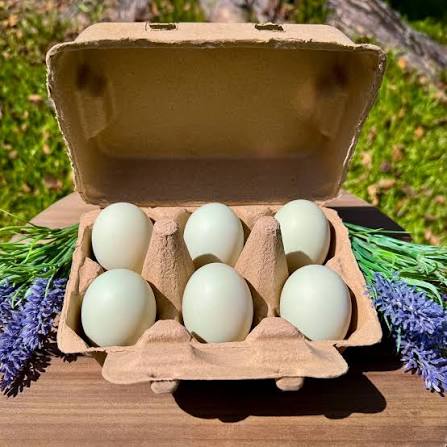
A duck egg is a different solid

The assumption that duck eggs are simply bigger chicken eggs is where most duck packaging goes wrong.

A Pekin duck egg weighs around 70 to 80 grams against roughly 57 for a large chicken egg. That weight difference is the part buyers notice. The shape difference is the part that breaks cartons.

Duck eggs are proportionally longer and more sharply pointed at the narrow end. Where a chicken egg is an oval that seats evenly into a conical cell, a duck egg sits lower at the point and higher at the broad end, which means it occupies more vertical space than its weight predicts. Drop one into a chicken cell rated for jumbo and the broad end still stands proud.

The shell is also thicker, around 0.4 mm against roughly 0.35 for chicken, with a tougher membrane underneath. Duck eggs survive handling that chips a chicken egg. What they do not survive is sustained lid pressure, because a thicker shell under constant point load cracks rather than flexes.

What we changed in the mold

Three dimensions, all of them in the same direction.

Cell depth increased to around 50 mm so the broad end seats below the lid line. Cell diameter widened to match the greater girth. And the clamshell profile itself is taller, which is why a duck carton looks visibly chunkier than a chicken carton of the same cell count.

The spacing between cells also opened slightly. Duck eggs sitting at chicken spacing touch at their widest point, and shell to shell contact in transit is what produces the hairline chips that show up as weeping eggs days later.

The Muscovy question

Muscovy eggs are the edge case worth naming honestly.

Most Muscovy eggs fit our standard duck mold. Some do not. Muscovy hens produce a noticeably variable egg, and birds at the larger end of the breed lay eggs that sit high even in a duck cell.

Producers running Muscovy exclusively should send us sample eggs before ordering. We will seat them in a production carton and tell you plainly whether the lid clears. If it does not, custom tooling is the honest answer rather than selling you a carton that almost fits.

Runner and Khaki Campbell eggs sit comfortably inside the standard mold. Pekin, which produces the majority of commercial duck eggs, is what the mold was dimensioned around.

Why duck producers pay more attention to packaging

Duck eggs sell at a premium, often two to three times the price of chicken eggs per unit in specialty retail. That changes the packaging calculation in two ways.

The cost of a better carton is a smaller fraction of the sale price, so there is room to specify properly rather than at the floor.

And the cost of a breakage is higher. A cracked duck egg loses more revenue than a cracked chicken egg, which means the deep cell that prevents it pays for itself across fewer saved eggs than the same logic would require in commodity chicken packing.

Duck buyers are also disproportionately baking customers, who buy for the higher fat and protein content in the yolk. They are repeat purchasers who notice when a producer’s eggs arrive intact every time.

Weight changes the handling math

A dozen duck eggs weighs close to 900 grams against roughly 680 for a dozen large chicken eggs. That extra third shows up in two places buyers do not anticipate.

Stacked on a pallet, a column of filled duck cartons loads the bottom carton considerably harder than the same column of chicken. Reduce stack height rather than assuming the carton compensates.

At the point of sale it matters too. A full dozen duck eggs is heavy enough that shoppers notice, which is part of why six count outsells twelve in almost every duck market we supply.

Counts that work for duck

Duck flocks are smaller than chicken flocks and lay less consistently, which pushes the count down.

Six is the most common retail format, and it is what most duck producers settle on. Four works for premium and gift sales, and crosses over with the molded pulp 4 egg carton which is already cut to a depth that accepts duck.

Twelve exists but moves slowly in most markets, because a dozen duck eggs is a serious purchase at duck pricing. Producers who do run twelves usually sell into restaurants rather than retail.

Producers running mixed flocks should read the molded pulp chicken egg carton page for the grade detail, and note that chicken eggs sit loose in a duck cell. Loose is safe, but a duck carton holding chicken eggs looks half empty, which is a presentation problem rather than a protection one.

For goose, turkey, and bantam, which need different geometry again, see molded pulp goose, turkey and bantam egg cartons. For color options across the range, start at cajas de huevos de pulpa moldeada de colores.

Materiales para Cajas de huevos de pato Piezas

Las principales empresas e ingenieros confían en BonitoPak para obtener iteraciones rápidas y piezas duraderas de alta calidad. Tanto si se trata de prototipos como de producción a gran escala, nuestra amplia gama de materiales garantiza que cumplimos los requisitos exclusivos de cualquier empresa. Cajas de huevos de pato proyecto con precisión y rapidez.

El papel kraft compostable es la fibra más resistente que fabricamos. Está elaborado a partir de materia prima virgen

La pulpa de color no es una fibra independiente. Se trata de cualquiera de nuestras

La pasta blanqueada es el material que hay que especificar cuando la pieza tiene que

El término «fibra vegetal natural» engloba las fuentes de celulosa no madereras que incorporamos a nuestra mezcla, aparte de la

El papel ondulado, como material de pulpa moldeada, se refiere a las cajas de cartón recuperadas que se han vuelto a convertir en pulpa.

La fibra de paja se obtiene de los tallos que quedan tras la cosecha de cereales, un material

Personalizado Respetuoso con el medio ambiente Fiable

Excelencia en envases personalizados y ecológicos

Totalmente personalizable

Personalice sus envases con estilos, tamaños, colores y acabados a medida para satisfacer necesidades específicas.

Asistencia experta

Bonitopak ofrece asesoramiento experto en diseño y logística para maximizar la eficiencia de los envases y aumentar la rentabilidad de la inversión.

Soluciones ecológicas

Elija envases sostenibles y ecológicos para reducir el impacto ambiental y apoyar los objetivos ecológicos de su marca.

Garantía de calidad

Bonitopak garantiza un servicio de máxima calidad y la excelencia del producto con cada solución de envasado.

Preguntas frecuentes

Cajas de huevos de pato

  • Can I use duck cartons for chicken eggs to simplify my stock?

    You can, and the eggs will be safe, since a smaller egg in a deeper cell is protected rather than at risk. What you lose is presentation, because chicken eggs sit low and the carton reads as underfilled. Producers running both birds usually find the appearance penalty outweighs the simplicity of one SKU.

  • Do duck eggs need more ventilation than chicken eggs in packaging?

    No, and pulp handles both identically. Duck eggs have a slightly less porous shell than chicken, which is part of why they keep marginally longer unwashed. What matters is that the packaging neither traps condensation nor dries the shell, and fiber does neither because it regulates moisture rather than sealing it.

  • How do I know whether my Muscovy eggs will fit before ordering?

    Send us a few eggs, or send accurate measurements of your largest regular egg at both length and maximum girth. Length alone is not enough, since girth is what decides whether the egg seats or perches. We seat samples in a production carton and give you a direct answer rather than an estimate.

  • Are duck egg cartons more expensive than chicken?

    Per carton, yes, because deeper and wider cells use more fiber and the larger footprint nests slightly less efficiently per container. Per egg sold, the difference is small against duck egg pricing. Buyers comparing the two on carton cost alone are measuring against the wrong denominator.

  • Will a duck carton work for shipping hatching eggs?

     Inside an outer box with void fill, yes, and the deep cell is an advantage because it immobilizes the egg. Movement and rotation damage the air cell, which kills hatch rate well before the shell is at risk. We make no hatch rate claims, since outcomes depend on transit time and handling far beyond the packaging.

Biodegradable Resultado

0 días

7 días

14 días

30 días

Industrias especializadas

Tras haber fabricado millones de piezas, BonitoPak posee profundos conocimientos en numerosas aplicaciones. Destacamos especialmente en sectores que requieren la fabricación de componentes precisos e intrincados. Confíe en nuestra experiencia y calidad, sea cual sea la complejidad.

Soluciones de envasado OEM y ODM

Bonitopak ofrece soluciones de envasado personalizadas (OEM) y prediseñadas (ODM). Tanto si necesita diseños totalmente a medida como envases listos para usar, le ofrecemos opciones de alta calidad, eficientes y flexibles para satisfacer las necesidades de su marca.

Servicios OEM

Las soluciones de envasado OEM le permiten crear productos totalmente personalizados, diseñados y fabricados para satisfacer sus requisitos específicos. En Bonitopak, le ofrecemos un apoyo integral a lo largo de todo el proceso de diseño, creación de prototipos y fabricación, garantizando que su envase refleje la identidad única de su marca. Nuestra capacidad de fabricación de precisión garantiza una producción coherente y de alta calidad, independientemente de la complejidad del diseño. Con un servicio integral, nos encargamos de todo, desde el concepto hasta la entrega, ayudándole a racionalizar sus necesidades de envasado.

Servicios ODM

Las soluciones de envasado ODM ofrecen productos prediseñados que pueden adaptarse a los requisitos de su marca. Con la innovadora experiencia en diseño y el eficiente proceso de producción de Bonitopak, puede elegir entre una amplia gama de opciones de envases listos para usar. Ofrecemos una personalización flexible, que le permite añadir su marca y seleccionar entre varios acabados, colores y tamaños. Esta solución ahorra tiempo y costes, al tiempo que garantiza un envase de alta calidad que cumple los estándares de su marca.
¿Listo para elevar su proyecto?

Dé vida a sus diseños con BonitoPak

Experimente la ingeniería de precisión con BonitoPak. Desde prototipos detallados hasta la producción de grandes volúmenes, estamos aquí para convertir sus conceptos en realidad. Póngase en contacto con nosotros hoy mismo para hablar de las necesidades de su proyecto.

Nuestras categorías de productos

Descubra la variada gama de soluciones de envasado de Bonitopak, que incluye bandejas de pulpa moldeada, envases alimentarios, diseños personalizados y opciones sostenibles. Cada categoría está diseñada para ofrecer durabilidad, funcionalidad y responsabilidad medioambiental, y se adapta a sus necesidades específicas.

A duck egg is a different solid

The assumption that duck eggs are simply bigger chicken eggs is where most duck packaging goes wrong.

A Pekin duck egg weighs around 70 to 80 grams against roughly 57 for a large chicken egg. That weight difference is the part buyers notice. The shape difference is the part that breaks cartons.

Duck eggs are proportionally longer and more sharply pointed at the narrow end. Where a chicken egg is an oval that seats evenly into a conical cell, a duck egg sits lower at the point and higher at the broad end, which means it occupies more vertical space than its weight predicts. Drop one into a chicken cell rated for jumbo and the broad end still stands proud.

The shell is also thicker, around 0.4 mm against roughly 0.35 for chicken, with a tougher membrane underneath. Duck eggs survive handling that chips a chicken egg. What they do not survive is sustained lid pressure, because a thicker shell under constant point load cracks rather than flexes.

What we changed in the mold

Three dimensions, all of them in the same direction.

Cell depth increased to around 50 mm so the broad end seats below the lid line. Cell diameter widened to match the greater girth. And the clamshell profile itself is taller, which is why a duck carton looks visibly chunkier than a chicken carton of the same cell count.

The spacing between cells also opened slightly. Duck eggs sitting at chicken spacing touch at their widest point, and shell to shell contact in transit is what produces the hairline chips that show up as weeping eggs days later.

The Muscovy question

Muscovy eggs are the edge case worth naming honestly.

Most Muscovy eggs fit our standard duck mold. Some do not. Muscovy hens produce a noticeably variable egg, and birds at the larger end of the breed lay eggs that sit high even in a duck cell.

Producers running Muscovy exclusively should send us sample eggs before ordering. We will seat them in a production carton and tell you plainly whether the lid clears. If it does not, custom tooling is the honest answer rather than selling you a carton that almost fits.

Runner and Khaki Campbell eggs sit comfortably inside the standard mold. Pekin, which produces the majority of commercial duck eggs, is what the mold was dimensioned around.

Why duck producers pay more attention to packaging

Duck eggs sell at a premium, often two to three times the price of chicken eggs per unit in specialty retail. That changes the packaging calculation in two ways.

The cost of a better carton is a smaller fraction of the sale price, so there is room to specify properly rather than at the floor.

And the cost of a breakage is higher. A cracked duck egg loses more revenue than a cracked chicken egg, which means the deep cell that prevents it pays for itself across fewer saved eggs than the same logic would require in commodity chicken packing.

Duck buyers are also disproportionately baking customers, who buy for the higher fat and protein content in the yolk. They are repeat purchasers who notice when a producer’s eggs arrive intact every time.

Weight changes the handling math

A dozen duck eggs weighs close to 900 grams against roughly 680 for a dozen large chicken eggs. That extra third shows up in two places buyers do not anticipate.

Stacked on a pallet, a column of filled duck cartons loads the bottom carton considerably harder than the same column of chicken. Reduce stack height rather than assuming the carton compensates.

At the point of sale it matters too. A full dozen duck eggs is heavy enough that shoppers notice, which is part of why six count outsells twelve in almost every duck market we supply.

Counts that work for duck

Duck flocks are smaller than chicken flocks and lay less consistently, which pushes the count down.

Six is the most common retail format, and it is what most duck producers settle on. Four works for premium and gift sales, and crosses over with the molded pulp 4 egg carton which is already cut to a depth that accepts duck.

Twelve exists but moves slowly in most markets, because a dozen duck eggs is a serious purchase at duck pricing. Producers who do run twelves usually sell into restaurants rather than retail.

Producers running mixed flocks should read the molded pulp chicken egg carton page for the grade detail, and note that chicken eggs sit loose in a duck cell. Loose is safe, but a duck carton holding chicken eggs looks half empty, which is a presentation problem rather than a protection one.

For goose, turkey, and bantam, which need different geometry again, see molded pulp goose, turkey and bantam egg cartons. For color options across the range, start at cajas de huevos de pulpa moldeada de colores.

Artículos relacionados

Manténgase informado con las últimas actualizaciones sobre tendencias en envases sostenibles, perspectivas del sector y consejos de expertos a través de nuestro blog. Explore ideas y soluciones innovadoras para mejorar sus conocimientos sobre envasado.

Por Leo Chan | Redactor, BonitoPak | Más de 20 años de experiencia en envases de pulpa moldeada. El vodka es

Por Leo Chan | Redactor, BonitoPak | Más de 20 años de experiencia en embalajes de pulpa moldeada. Casi todos los

Por Leo Chan | Redactor, BonitoPak | Más de 20 años de experiencia en embalajes de pulpa moldeada. Buscar esto

Preguntas frecuentes

Cajas de huevos de pato

  • Can I use duck cartons for chicken eggs to simplify my stock?

    You can, and the eggs will be safe, since a smaller egg in a deeper cell is protected rather than at risk. What you lose is presentation, because chicken eggs sit low and the carton reads as underfilled. Producers running both birds usually find the appearance penalty outweighs the simplicity of one SKU.

  • Do duck eggs need more ventilation than chicken eggs in packaging?

    No, and pulp handles both identically. Duck eggs have a slightly less porous shell than chicken, which is part of why they keep marginally longer unwashed. What matters is that the packaging neither traps condensation nor dries the shell, and fiber does neither because it regulates moisture rather than sealing it.

  • How do I know whether my Muscovy eggs will fit before ordering?

    Send us a few eggs, or send accurate measurements of your largest regular egg at both length and maximum girth. Length alone is not enough, since girth is what decides whether the egg seats or perches. We seat samples in a production carton and give you a direct answer rather than an estimate.

  • Are duck egg cartons more expensive than chicken?

    Per carton, yes, because deeper and wider cells use more fiber and the larger footprint nests slightly less efficiently per container. Per egg sold, the difference is small against duck egg pricing. Buyers comparing the two on carton cost alone are measuring against the wrong denominator.

  • Will a duck carton work for shipping hatching eggs?

     Inside an outer box with void fill, yes, and the deep cell is an advantage because it immobilizes the egg. Movement and rotation damage the air cell, which kills hatch rate well before the shell is at risk. We make no hatch rate claims, since outcomes depend on transit time and handling far beyond the packaging.

Rellene este formulario detallado