ストローファイバー

Straw fiber is made from the stalks left after grain harvest, material that in many regions is still burned in the field because there is nothing else to do with it. Using it for packaging turns a disposal problem into an input. The fiber runs 1.0 to 1.5 mm, forms a pale gold part with a lightly textured surface, and renews annually rather than over the decades a tree needs.

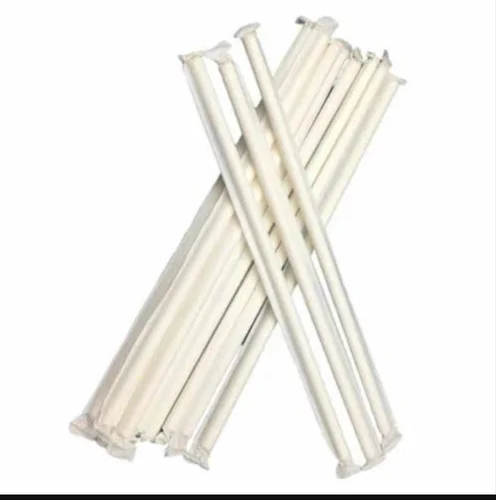
Why straw fiber works as a packaging material

  • Annual renewal cycle. Wheat and rice are harvested every year. A softwood plantation runs 25 to 40 years before harvest. On renewability per year, no wood fiber comes close.
  • Diverts open field burning. Straw disposal by burning is a significant regional air quality problem across several major grain-growing areas. Diverting it into packaging has a measurable environmental argument behind it.
  • No competition with food production. The grain is already harvested. The straw is residue, so using it does not displace food crops or farmland.
  • Pale gold natural tone. Lighter and warmer than recycled fiber, which gives a finished part that reads as agricultural rather than as waste paper.
  • Low cost at volume. Residue pricing rather than commodity fiber pricing, where collection logistics are established.
  • Good formability. Mid-short fibers flow into mold detail cleanly and drain predictably on the forming screen.

The technical complication worth naming is silica. Rice straw in particular carries a high silica content, which is abrasive on processing equipment and interferes with fiber bonding if it is not managed. Straw pulping therefore needs process control that wood pulping does not, and suppliers who treat straw as a drop-in substitute for wood fiber tend to produce inconsistent parts.

Wheat straw carries less silica than rice straw, which is why wheat is the more common input where both are available. We select and blend on that basis rather than taking whatever residue is cheapest.

Specification table

仕様 詳細
材料名 ストローファイバー
素材タイプ Agricultural residue cellulose
繊維源 Wheat straw, rice straw
Average Fiber Length 1.0 to 1.5 mm
Renewal Cycle Annual
Silica Content Present; higher in rice than wheat straw
Natural Color Pale gold
表面仕上げ Lightly textured, matte
Relative Strength ミディアム
Typical Wall Thickness 1.0 to 4.0 mm
プロセスの互換性 Wet pressing, dry pressing, transfer molding
成形パルプの種類 Type 1, Type 2, Type 4
堆肥化可能性 Meets the chemistry basis for EN 13432 and ASTM D6400 uncoated
リサイクル性 Accepted in most paper streams uncoated
食品との接触 Confirm against your market requirement
カラーオプション Natural gold; takes pigment on a pale base
Supply Pattern Seasonal at harvest, stocked for year-round production
相対コスト 低い

Where straw fiber is the right specification

Volume parts with a sustainability requirement. This is the material’s natural home. It costs close to recycled fiber, looks considerably better, and carries a stronger environmental argument than either recycled or virgin wood.

Brands reporting on agricultural circularity. Field-burning diversion is a specific, defensible claim rather than a general eco statement, which is exactly what procurement teams need when they have to substantiate a packaging decision.

Food service and produce trays. The pale gold tone and the agricultural origin sit naturally alongside food, and the formability supports the shallow trays these applications use.

Replacing expanded polystyrene in retail-facing packaging. Where OCC-based pulp is too coarse to put in front of a customer, straw fiber does the same protective job and looks intentional.

Straw stops being the answer in two situations. Anything carrying serious compression needs the longer fibers in 堆肥化クラフト紙 または 竹繊維. Anything needing a true white finish or direct food contact clearance needs 晒しパルプ.

The closest material in the range is 天然植物繊維, which blends several agricultural sources rather than committing to straw specifically. Choose straw when you want a single declared origin for a sustainability claim; choose the blend when you want supply resilience.

よくある質問 (FAQ)

Is straw fiber weaker than wood fiber?
Yes, and the reason is fiber length. Straw runs 1.0 to 1.5 mm against 2.5 to 4.5 mm for softwood kraft, so it builds a less interconnected bonded network. In practice this governs only load-critical parts. For trays, inserts, and general protective packaging, geometry carries the performance and the difference does not decide the design.
Two things. It is abrasive, so it wears processing equipment faster than wood pulping does, which is a cost that shows up in the supplier’s operation rather than in the part. And it interferes with fiber-to-fiber bonding, which reduces strength if the pulping process does not manage it. Suppliers who have not solved this produce straw parts with inconsistent compression performance.
Some straw is used for animal bedding, soil incorporation, and energy, and some is simply burned. Volumes are large enough in major grain regions that packaging demand sits well within what is currently disposed of rather than competing with established uses. The claim worth making is field-burning diversion rather than that no alternative use exists.
Yes, and the pale gold base takes pigment better than gray-brown recycled fiber does. Light tints reproduce more predictably because there is less base color to work against. The base tone does warm the result slightly, so a cool shade on straw will read marginally warmer than the same pigment on bleached pulp.
Harvest is seasonal, so the input arrives in a concentrated period and is stocked for continuous production. The risk to manage is a poor harvest year rather than the normal seasonal cycle. For large recurring orders we plan material availability against your schedule at quotation rather than assuming supply.
材料名

ストローファイバー

素材タイプ

天然植物性繊維

プロセスの互換性

ボニトパック包装資材

当社のパッケージング・ソリューションは、サトウキビ繊維、竹、再生紙パルプなどの持続可能な素材から作られており、さまざまな製品に環境に優しく生分解性のオプションを提供しています。

生分解性クラフト紙は、当社が製造する繊維製品の中で最も強度が高いものです。バージン

着色パルプは、独立した繊維ではありません。これは、当社の

部品が以下の条件を満たす必要がある場合は、漂白パルプを指定する必要があります。

天然植物繊維とは、当社がブレンドに用いる、木材以外のセルロース源を指します。

成形パルプ材料としての段ボール紙とは、回収された段ボール箱を再パルプ化したものを指す。

わら繊維は、穀物の収穫後に残る茎から作られる素材です。

製品カテゴリー

成型パルプトレイ、食品包装、カスタムデザイン、持続可能なオプションなど、Bonitopakの多様なパッケージングソリューションをご覧ください。各カテゴリーは、耐久性、機能性、環境への責任を考慮し、お客様の特定のニーズに合わせて作られています。
あなたのプロジェクトを向上させる準備はできていますか?

BonitoPakでデザインに命を吹き込もう

BonitoPakで精密なエンジニアリングを体験してください。詳細なプロトタイプから大量生産まで、お客様のコンセプトを現実にします。今すぐお問い合わせください!

関連記事と洞察

持続可能なパッケージングのトレンド、業界の洞察、専門家のヒントに関する最新情報をブログでお届けします。革新的なアイデアやソリューションを探求し、パッケージングの知識を深めましょう。

レオ・チャン | BonitoPak ライター | 成形パルプ包装業界で20年以上の経験を持つ ウォッカとは

レオ・チャン | BonitoPak ライター | 成形パルプ包装業界で20年以上の経験 ほぼすべての

レオ・チャン | BonitoPak ライター | 成形パルプ包装分野で20年以上の経験 検索

詳細フォーム