再生紙パルプ

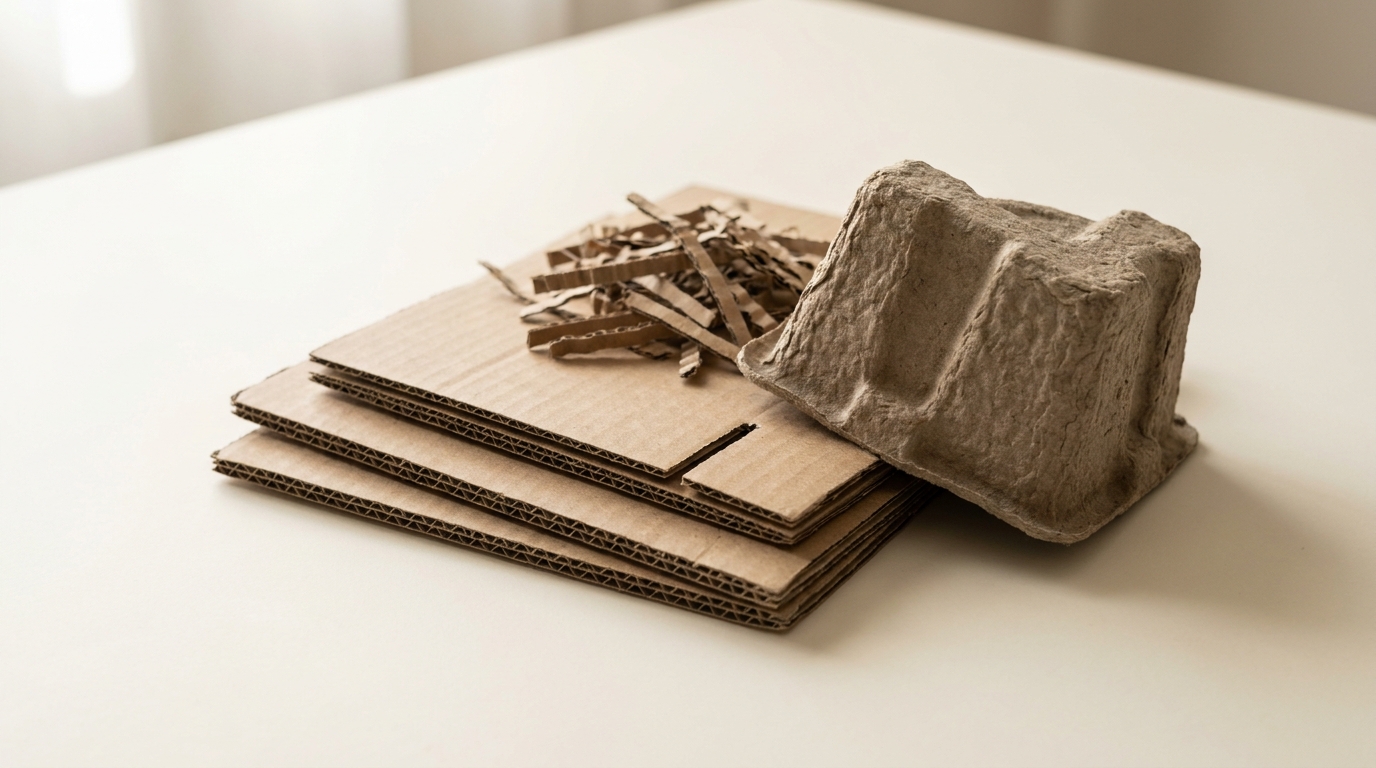
Recycled paper pulp is the most used molded pulp material in the world, and egg packaging is the reason. Made from 100% post-consumer recovered paper, its fibers have already been through several use cycles, which leaves them short at 0.8 to 1.5 mm. Short fiber is usually described as a weakness. In molded pulp it is an advantage: it flows into mold detail, drains predictably on the forming screen, and produces the most dimensionally consistent parts at the lowest cost in the range.

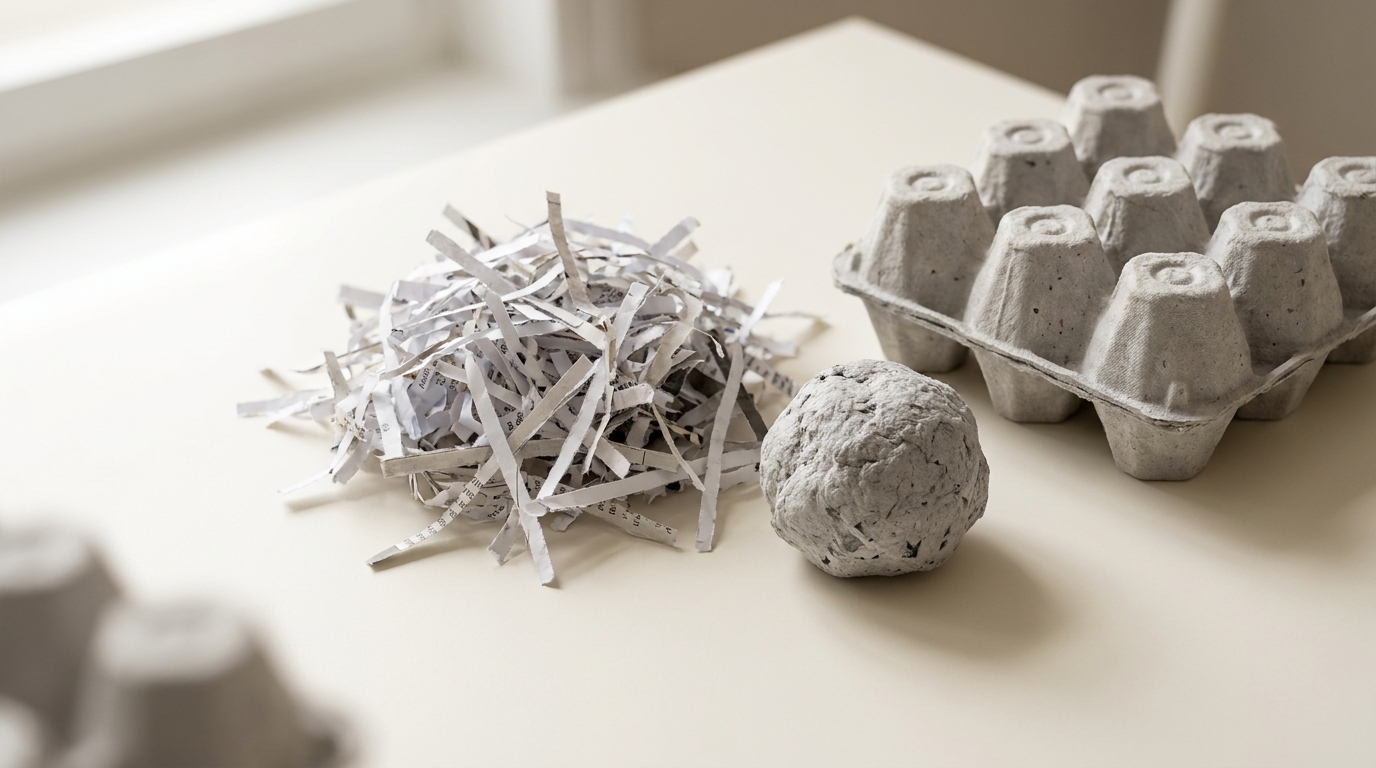
Why short fiber is the right answer more often than buyers expect

  • Flows into detail. Short fibers conform to ribs, cones, and fine features that long fibers bridge over. For parts with intricate internal geometry, this beats raw strength.
  • Drains predictably. Consistent drainage on the forming screen is what dimensional consistency actually depends on, and it is why egg cartons from this material fit grading equipment run after run.
  • Lowest cost in the range. Recovered paper is collected at scale and priced as a commodity. No other input competes on cost.
  • The strongest circularity claim available. 100% post-consumer content is the clearest recycled-content statement a packaging buyer can report.
  • Extends fiber life. Molded pulp is often the last useful application for fibers too short for paper machines. The material does real work at the end of the chain rather than diverting fiber from better uses.
  • Proven at enormous scale. This is the oldest continuously produced molded pulp material, with over a century of production behind the process.

The characteristic gray-brown color comes from mixed recovered stock rather than from any pigment, and it varies with the incoming waste stream. For the applications this material suits, that variation is irrelevant. For anything appearance-critical, it is the reason to choose a different base.

The honest limitation is strength. Each repulping cycle shortens fibers and reduces bonding, so recycled pulp sits at the lower end of the strength range. Parts compensate through geometry rather than through fiber: ribs, cones, and curves carry load that a flat wall cannot, which is why a well-designed recycled part outperforms a poorly designed virgin one.

Specification table

仕様 詳細
材料名 再生紙パルプ
素材タイプ 100% post-consumer recovered paper
繊維源 Mixed recovered paper and newsprint
Average Fiber Length 0.8 to 1.5 mm
リサイクル・コンテンツ 100% post-consumer
Natural Color Gray-brown, varies with input stream
表面仕上げ Fine texture, good detail reproduction
Relative Strength Medium; lowest in the BonitoPak range
Dimensional Consistency 高い
Typical Wall Thickness 1.0 to 4.0 mm
プロセスの互換性 Wet pressing, dry pressing, transfer molding
成形パルプの種類 Type 1, Type 2, Type 4
堆肥化可能性 Meets the chemistry basis for EN 13432 and ASTM D6400 uncoated
リサイクル性 Varies by municipality; fibers near end of life
食品との接触 Not recommended for direct contact; standard for egg packaging
カラーオプション Natural; takes dark pigment well, pale tints least predictably
相対コスト 最低

Where recycled paper pulp dominates

Egg packaging. Cartons and trays are the single largest molded pulp application worldwide and this is the material behind almost all of it. Detail reproduction, dimensional consistency, moisture regulation, and cost all align with what egg packaging needs. See 成形パルプ製の卵パック そして molded pulp egg trays.

High volume protective inserts. Where a part ships in millions and is discarded at receiving, cost per unit governs and this material wins on it.

Parts with complex internal geometry. Counterintuitively, the cheapest fiber reproduces intricate features best, because short fibers conform where long ones bridge.

Buyers reporting post-consumer recycled content. A 100% PCR claim is simple to substantiate and increasingly appears as a procurement requirement rather than a preference.

Where recycled pulp is the wrong call: direct food contact, which needs 晒しパルプ; load-critical structural parts, which need 堆肥化クラフト紙; and anything needing a pale or precisely reproduced color, which needs 晒しパルプ as a base. For color work generally, see カラーパルプ.

The nearest alternative is 段ボール紙, which draws from recovered board specifically rather than mixed paper. OCC gives more strength and a browner tone; mixed recycled gives finer detail.

よくある質問 (FAQ)

Why is recycled paper pulp used for egg cartons rather than a stronger fiber?
Because egg packaging needs detail reproduction and dimensional consistency more than tensile strength, and short fibers deliver both. The load in a stacked carton travels through the cone structure between cells rather than through the wall material, so geometry carries the performance. Using a stronger fiber would add cost without improving the thing that actually matters.
Q: Can molded pulp made from recycled paper be recycled again? A: It depends on your municipality rather than on the product. The fibers have been through several cycles already and are near the end of their usable length for repulping, so some paper streams accept them and others direct them to compost. Composting works reliably in all cases, since the material is untreated cellulose with no coating or adhesive.
Yes, and the difference matters for reporting. Post-consumer means the paper reached an end user and was recovered after use. Recycled content can also include pre-consumer or post-industrial material such as mill trim, which never reached a customer. Post-consumer is the stronger claim, which is why we state it specifically.
Yes, with the incoming waste stream, which shifts seasonally and regionally. For protective and egg packaging applications this is normal and nobody specifies against it. For a part where appearance is specified, we either pigment to a shade dark enough to cover the variation or recommend a paler base material.
For secondary packaging where a sealed product sits inside, it is used routinely. For direct food contact, most markets restrict it because recovered fiber carries whatever was in the original paper, including inks and adhesives. Eggs are the common exception, since the shell is the contact surface and the carton is treated as secondary packaging in most jurisdictions.
材料名

再生紙パルプ

素材タイプ

リサイクル素材

プロセスの互換性

ボニトパック包装資材

当社のパッケージング・ソリューションは、サトウキビ繊維、竹、再生紙パルプなどの持続可能な素材から作られており、さまざまな製品に環境に優しく生分解性のオプションを提供しています。

生分解性クラフト紙は、当社が製造する繊維製品の中で最も強度が高いものです。バージン

着色パルプは、独立した繊維ではありません。これは、当社の

部品が以下の条件を満たす必要がある場合は、漂白パルプを指定する必要があります。

天然植物繊維とは、当社がブレンドに用いる、木材以外のセルロース源を指します。

成形パルプ材料としての段ボール紙とは、回収された段ボール箱を再パルプ化したものを指す。

わら繊維は、穀物の収穫後に残る茎から作られる素材です。

製品カテゴリー

成型パルプトレイ、食品包装、カスタムデザイン、持続可能なオプションなど、Bonitopakの多様なパッケージングソリューションをご覧ください。各カテゴリーは、耐久性、機能性、環境への責任を考慮し、お客様の特定のニーズに合わせて作られています。
あなたのプロジェクトを向上させる準備はできていますか?

BonitoPakでデザインに命を吹き込もう

BonitoPakで精密なエンジニアリングを体験してください。詳細なプロトタイプから大量生産まで、お客様のコンセプトを現実にします。今すぐお問い合わせください!

関連記事と洞察

持続可能なパッケージングのトレンド、業界の洞察、専門家のヒントに関する最新情報をブログでお届けします。革新的なアイデアやソリューションを探求し、パッケージングの知識を深めましょう。

レオ・チャン | BonitoPak 創業者 | 成形パルプ製造業界で20年以上の経験 最終更新日:

レオ・チャン | BonitoPak 創業者 | 成形パルプ製造業界で20年以上の経験 最終更新日:

レオ・チャン | BonitoPak 創業者 | 成形パルプ製造業界で20年以上の経験 最終更新日:

詳細フォーム