Pasta de papel reciclada

Recycled paper pulp is the most used molded pulp material in the world, and egg packaging is the reason. Made from 100% post-consumer recovered paper, its fibers have already been through several use cycles, which leaves them short at 0.8 to 1.5 mm. Short fiber is usually described as a weakness. In molded pulp it is an advantage: it flows into mold detail, drains predictably on the forming screen, and produces the most dimensionally consistent parts at the lowest cost in the range.

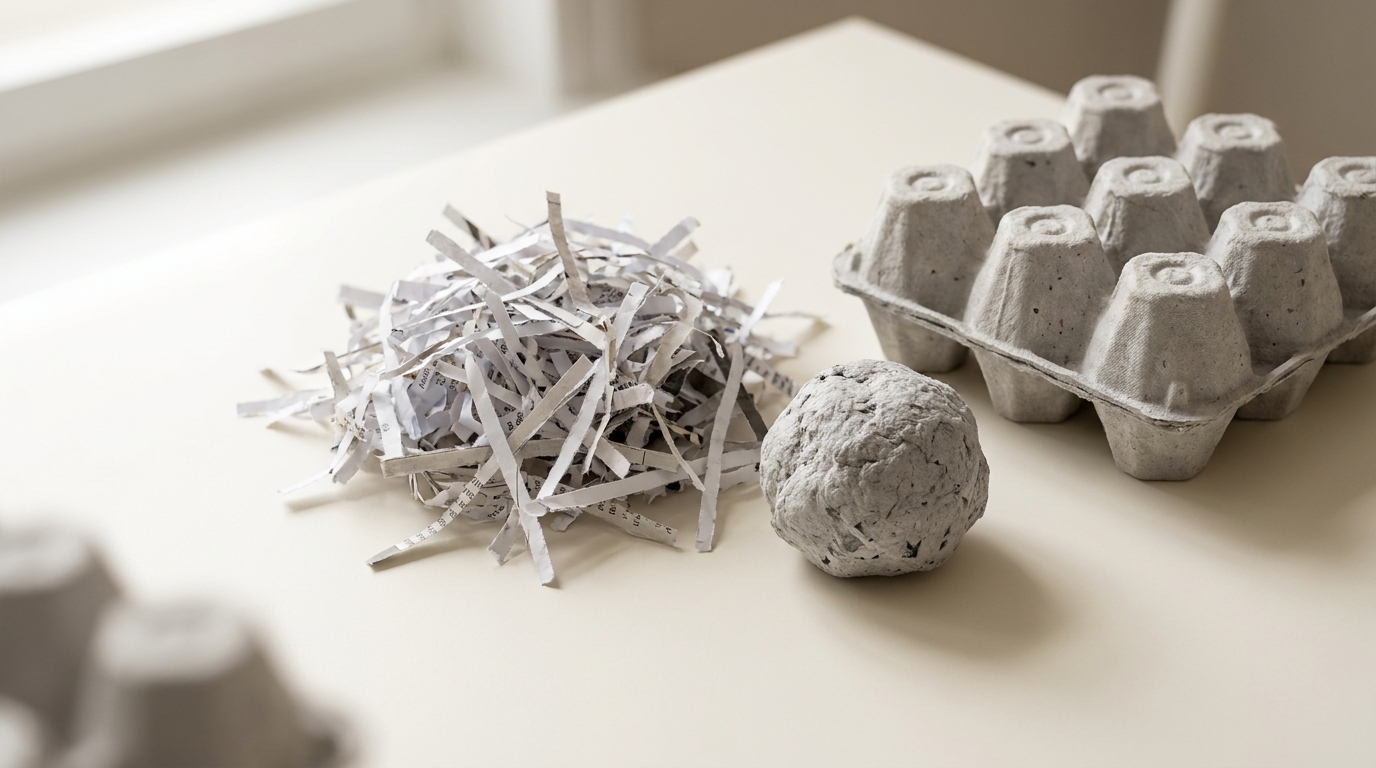
Why short fiber is the right answer more often than buyers expect

  • Flows into detail. Short fibers conform to ribs, cones, and fine features that long fibers bridge over. For parts with intricate internal geometry, this beats raw strength.
  • Drains predictably. Consistent drainage on the forming screen is what dimensional consistency actually depends on, and it is why egg cartons from this material fit grading equipment run after run.
  • Lowest cost in the range. Recovered paper is collected at scale and priced as a commodity. No other input competes on cost.
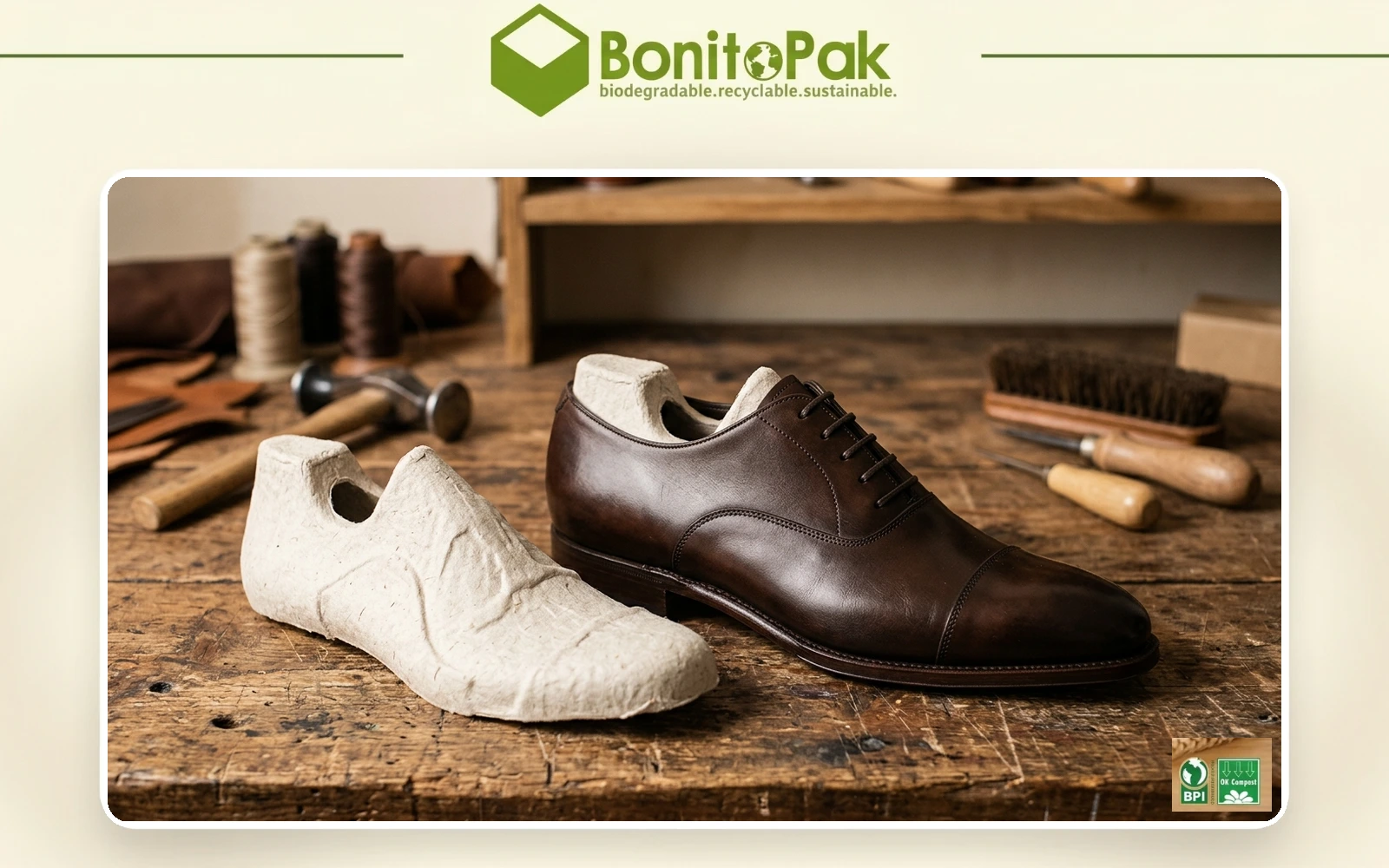
  • The strongest circularity claim available. 100% post-consumer content is the clearest recycled-content statement a packaging buyer can report.
  • Extends fiber life. Molded pulp is often the last useful application for fibers too short for paper machines. The material does real work at the end of the chain rather than diverting fiber from better uses.
  • Proven at enormous scale. This is the oldest continuously produced molded pulp material, with over a century of production behind the process.

The characteristic gray-brown color comes from mixed recovered stock rather than from any pigment, and it varies with the incoming waste stream. For the applications this material suits, that variation is irrelevant. For anything appearance-critical, it is the reason to choose a different base.

The honest limitation is strength. Each repulping cycle shortens fibers and reduces bonding, so recycled pulp sits at the lower end of the strength range. Parts compensate through geometry rather than through fiber: ribs, cones, and curves carry load that a flat wall cannot, which is why a well-designed recycled part outperforms a poorly designed virgin one.

Specification table

Especificación Detalles
Nombre del material Pasta de papel reciclada
Tipo de material 100% post-consumer recovered paper
Fuente de fibra Mixed recovered paper and newsprint
Average Fiber Length 0.8 to 1.5 mm
Recycled Content 100% post-consumer
Natural Color Gray-brown, varies with input stream
Acabado superficial Fine texture, good detail reproduction
Relative Strength Medium; lowest in the BonitoPak range
Dimensional Consistency Alta
Typical Wall Thickness 1.0 to 4.0 mm
Compatibilidad de procesos Wet pressing, dry pressing, transfer molding
Tipos de pasta moldeada Type 1, Type 2, Type 4
Compostabilidad Meets the chemistry basis for EN 13432 and ASTM D6400 uncoated
Reciclabilidad Varies by municipality; fibers near end of life
Food Contact Not recommended for direct contact; standard for egg packaging
Opciones de color Natural; takes dark pigment well, pale tints least predictably
Relative Cost Mínimo

Where recycled paper pulp dominates

Egg packaging. Cartons and trays are the single largest molded pulp application worldwide and this is the material behind almost all of it. Detail reproduction, dimensional consistency, moisture regulation, and cost all align with what egg packaging needs. See cajas de huevos de pulpa moldeada y molded pulp egg trays.

High volume protective inserts. Where a part ships in millions and is discarded at receiving, cost per unit governs and this material wins on it.

Parts with complex internal geometry. Counterintuitively, the cheapest fiber reproduces intricate features best, because short fibers conform where long ones bridge.

Buyers reporting post-consumer recycled content. A 100% PCR claim is simple to substantiate and increasingly appears as a procurement requirement rather than a preference.

Where recycled pulp is the wrong call: direct food contact, which needs pasta blanqueada; load-critical structural parts, which need papel kraft compostable; and anything needing a pale or precisely reproduced color, which needs pasta blanqueada as a base. For color work generally, see pulpa coloreada.

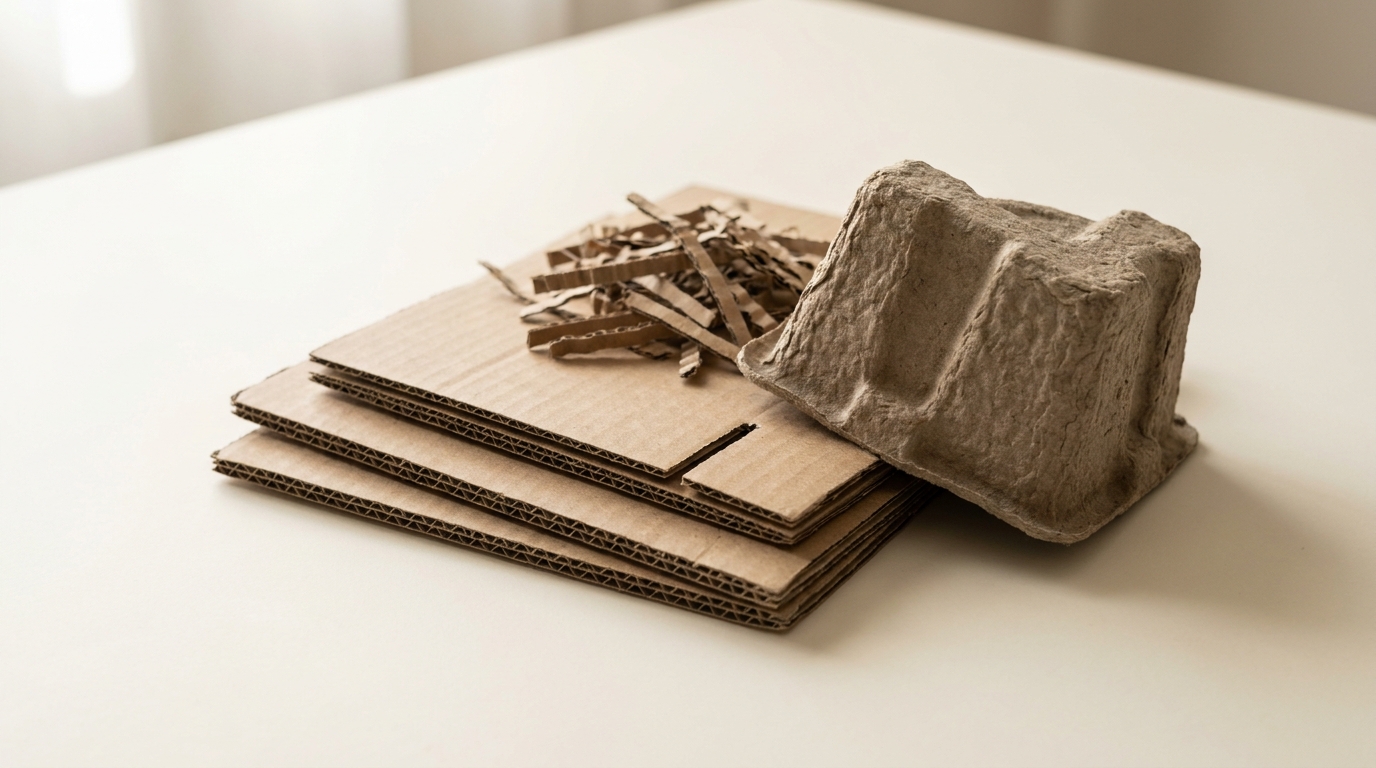
The nearest alternative is papel corrugado, which draws from recovered board specifically rather than mixed paper. OCC gives more strength and a browner tone; mixed recycled gives finer detail.

Preguntas más frecuentes (FAQ)

Why is recycled paper pulp used for egg cartons rather than a stronger fiber?
Because egg packaging needs detail reproduction and dimensional consistency more than tensile strength, and short fibers deliver both. The load in a stacked carton travels through the cone structure between cells rather than through the wall material, so geometry carries the performance. Using a stronger fiber would add cost without improving the thing that actually matters.
Q: Can molded pulp made from recycled paper be recycled again? A: It depends on your municipality rather than on the product. The fibers have been through several cycles already and are near the end of their usable length for repulping, so some paper streams accept them and others direct them to compost. Composting works reliably in all cases, since the material is untreated cellulose with no coating or adhesive.
Yes, and the difference matters for reporting. Post-consumer means the paper reached an end user and was recovered after use. Recycled content can also include pre-consumer or post-industrial material such as mill trim, which never reached a customer. Post-consumer is the stronger claim, which is why we state it specifically.
Yes, with the incoming waste stream, which shifts seasonally and regionally. For protective and egg packaging applications this is normal and nobody specifies against it. For a part where appearance is specified, we either pigment to a shade dark enough to cover the variation or recommend a paler base material.
For secondary packaging where a sealed product sits inside, it is used routinely. For direct food contact, most markets restrict it because recovered fiber carries whatever was in the original paper, including inks and adhesives. Eggs are the common exception, since the shell is the contact surface and the carton is treated as secondary packaging in most jurisdictions.
Nombre del material

Pasta de papel reciclada

Tipo de material

Material reciclado

Compatibilidad de procesos

Materiales de envasado Bonitopak

Nuestras soluciones de envasado están fabricadas con materiales sostenibles como fibra de caña de azúcar, bambú y pasta de papel reciclado, y ofrecen opciones ecológicas y biodegradables para una amplia gama de productos.

El papel kraft compostable es la fibra más resistente que fabricamos. Está elaborado a partir de materia prima virgen

La pulpa de color no es una fibra independiente. Se trata de cualquiera de nuestras

La pasta blanqueada es el material que hay que especificar cuando la pieza tiene que

El término «fibra vegetal natural» engloba las fuentes de celulosa no madereras que incorporamos a nuestra mezcla, aparte de la

El papel ondulado, como material de pulpa moldeada, se refiere a las cajas de cartón recuperadas que se han vuelto a convertir en pulpa.

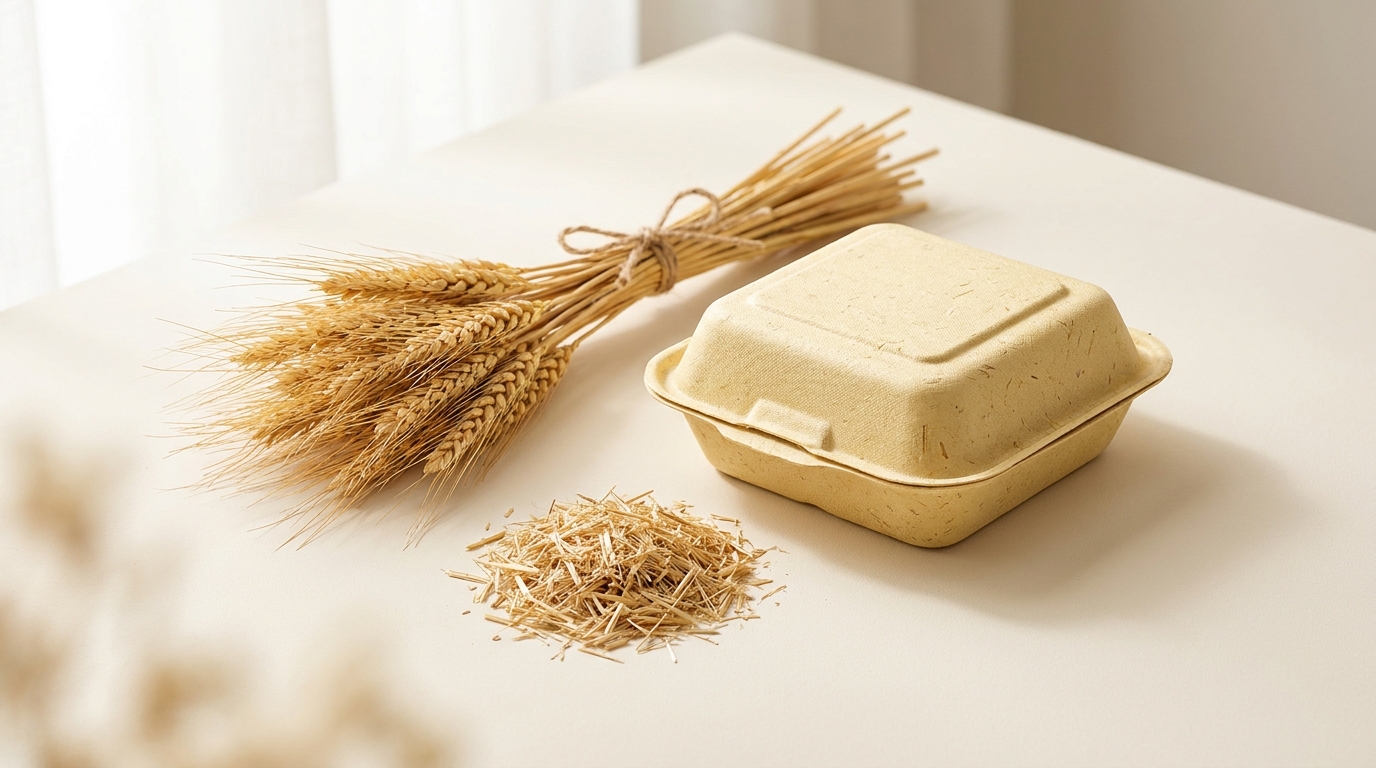
La fibra de paja se obtiene de los tallos que quedan tras la cosecha de cereales, un material

Nuestras categorías de productos

Descubra la variada gama de soluciones de envasado de Bonitopak, que incluye bandejas de pulpa moldeada, envases alimentarios, diseños personalizados y opciones sostenibles. Cada categoría está diseñada para ofrecer durabilidad, funcionalidad y responsabilidad medioambiental, y se adapta a sus necesidades específicas.
¿Listo para elevar su proyecto?

Dé vida a sus diseños con BonitoPak

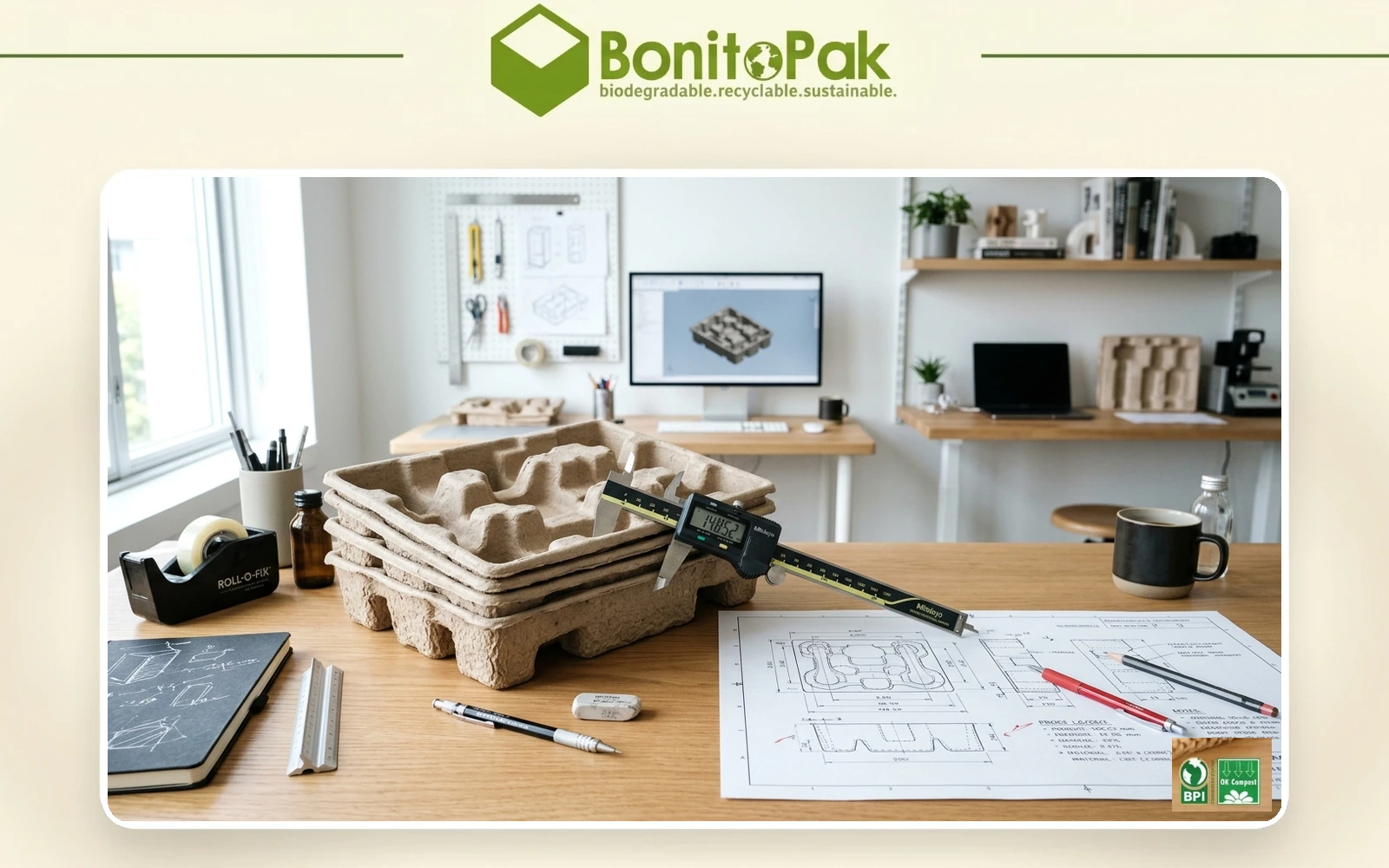
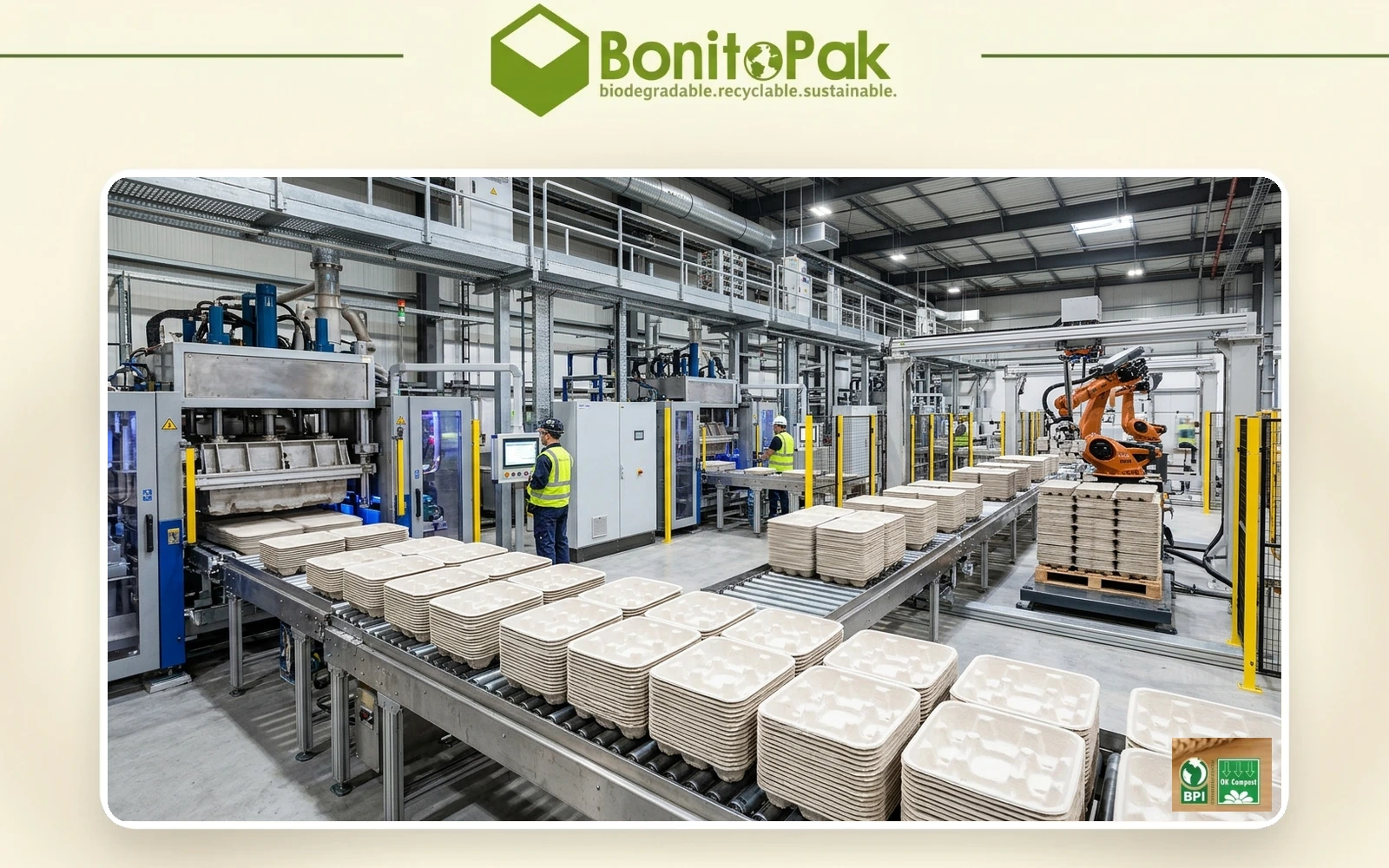
Experimente la ingeniería de precisión con BonitoPak. Desde prototipos detallados hasta la producción de grandes volúmenes, estamos aquí para convertir sus conceptos en realidad. Póngase en contacto con nosotros hoy mismo para hablar de las necesidades de su proyecto.

Artículos relacionados

Manténgase informado con las últimas actualizaciones sobre tendencias en envases sostenibles, perspectivas del sector y consejos de expertos a través de nuestro blog. Explore ideas y soluciones innovadoras para mejorar sus conocimientos sobre envasado.

Por Leo Chan | Fundador de BonitoPak | Más de 20 años de experiencia en la fabricación de pulpa moldeada. Última actualización:

Por Leo Chan | Fundador de BonitoPak | Más de 20 años de experiencia en la fabricación de pulpa moldeada. Última actualización:

Por Leo Chan | Fundador de BonitoPak | Más de 20 años de experiencia en la fabricación de pulpa moldeada. Última actualización:

Rellene este formulario detallado