Fibra de bambu

Bamboo fiber comes from a grass rather than a tree, and that single fact is why it sits apart in our range. It reaches harvest maturity in three to five years against 25 to 40 for a softwood plantation, regrows from the existing root system without replanting, and yields fibers at 1.5 to 3.0 mm that approach softwood strength. It is the one material that does not force a trade between structural performance and a fast renewal cycle.

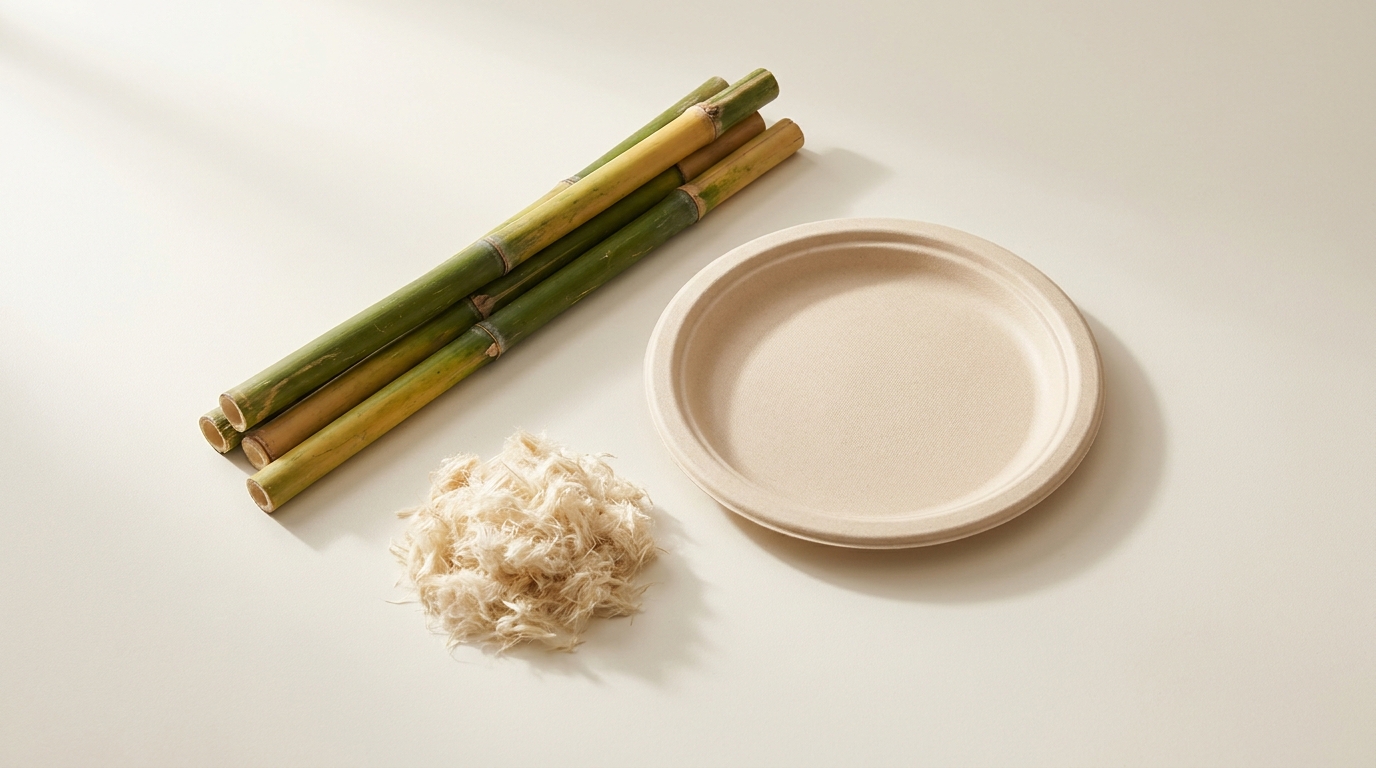
Why bamboo fiber resolves the usual trade-off

  • Near-softwood fiber length. At 1.5 to 3.0 mm, bamboo fiber builds a bonded network close to what softwood kraft achieves, and well above any agricultural residue.
  • Three to five year harvest cycle. A managed grove is cut on rotation and regrows from the same rhizome system. No replanting, no soil disturbance between harvests.
  • Regrows from the root, not from seed. Harvesting a culm does not kill the plant. The root network stays intact and continues sequestering carbon between cuts.
  • Naturally pale. Forms lighter than wood and considerably lighter than recycled fiber, so a clean-looking part is achievable without a bleaching stage.
  • High tensile strength per unit weight. The same property that makes bamboo a structural material in construction carries through into formed fiber parts.
  • No competition with food crops. Bamboo grows on land often unsuitable for agriculture, including degraded slopes where it also stabilizes soil.

The processing consideration is that bamboo is dense and silica-bearing, so it needs more energy to pulp than wood and more process control than a soft agricultural residue. Suppliers who treat it as a drop-in wood substitute get inconsistent fiber separation and variable part strength.

The second consideration is honest sourcing. Bamboo’s environmental credentials depend on the grove being managed rather than wild-cut, and on processing chemistry being controlled. Bamboo is not automatically sustainable because it grows quickly. The management practice is what makes the claim true.

Specification table

Especificação Detalhes
Nome do material Fibra de bambu
Tipo de material Bamboo culm cellulose
Fonte de fibra Managed bamboo groves
Average Fiber Length 1.5 to 3.0 mm
Harvest Cycle 3 to 5 years
Regeneration From existing rhizome; no replanting required
Natural Color Pale natural
Acabamento da superfície Fine, smooth
Relative Strength Very high; second only to softwood kraft
Typical Wall Thickness 0.8 to 4.0 mm
Compatibilidade de processos Wet pressing, dry pressing, thermoformed fiber
Tipos de polpa moldada Type 2, Type 3, Type 4
Compostabilidade Meets the chemistry basis for EN 13432 and ASTM D6400 uncoated
Reciclabilidade Accepted in paper streams uncoated
Food Contact Use bleached variant; confirm for your market
Opções de cores Natural pale; takes pigment cleanly
Processing Energy Higher than wood; dense and silica-bearing
Relative Cost Medium-high

Where bamboo fiber is the right specification

Parts needing strength and a sustainability narrative. This is the combination bamboo exists to serve. Where kraft delivers strength but reads as conventional virgin wood, and where straw delivers the story but not the structural performance, bamboo does both.

Premium retail packaging. The naturally pale finish and fine surface suit parts that a customer sees and handles, without the processing cost of bleaching.

Brands with explicit deforestation policies. Procurement policies that restrict or exclude wood fiber can usually accommodate bamboo, because it is a grass harvested on rotation rather than a felled tree.

Type 3 thermoformed parts. Bamboo supports the smooth, densified finish that cure-in-the-mold tooling produces, alongside polpa de madeira e celulose branqueada.

Where bamboo is the wrong call: cost-driven volume parts, where polpa de papel reciclado ou fibra de palha do the job for considerably less, and parts where absolute maximum tear strength governs, where papel kraft compostável still leads.

Buyers comparing bamboo against virgin wood are usually weighing a slightly lower strength ceiling against a renewal cycle roughly eight times faster. Which matters more depends on whether the binding constraint is the part’s performance or the customer’s reporting.

Perguntas frequentes (FAQs)

Is bamboo actually more sustainable than wood for packaging?
On renewal rate, clearly: three to five years against 25 to 40, with regrowth from the existing root system and no replanting. On the full picture it depends on management and processing. Bamboo needs more energy to pulp than wood, and wild-cut bamboo from unmanaged stands carries real ecological cost. The material has a strong case when the grove is managed and the processing is controlled, and a weak one when neither is verified.
Close, and below it. Bamboo fibers run 1.5 to 3.0 mm against 2.5 to 4.5 mm for softwood kraft, so the bonded network is slightly less interconnected and tear resistance is correspondingly lower. For most packaging the gap does not govern the design. For edge protectors and heavy cradles carrying serious compression, kraft is still the specification.
This claim circulates widely and does not survive the pulping process. Bamboo plants contain a compound sometimes described as antibacterial, but chemical pulping removes it along with the lignin. A finished molded bamboo part should not be marketed as antimicrobial. We would rather tell you that than let the claim go on a pack and fail a substantiation challenge.
Collection and processing. Straw is a residue already aggregated at harvest, so it arrives cheaply. Bamboo is a primary crop that has to be cut, transported, and pulped, and it is dense enough to need more energy to separate into fibers. You are paying for the strength advantage, which straw cannot match.
Yes, through bleaching, which produces the material described on our bleached pulp page using bamboo as the fiber source. Bamboo bleaches to a clean white and retains more strength through the process than many wood pulps do. Unbleached bamboo is already pale enough for most applications, so bleaching is usually specified for food contact rather than for appearance alone.
Nome do material

Fibra de bambu

Tipo de material

Fibra sustentável à base de plantas

Compatibilidade de processos

Materiais de embalagem Bonitopak

Nossas soluções de embalagem são fabricadas com materiais sustentáveis, como fibra de cana-de-açúcar, bambu e polpa de papel reciclado, oferecendo opções ecológicas e biodegradáveis para uma ampla gama de produtos.

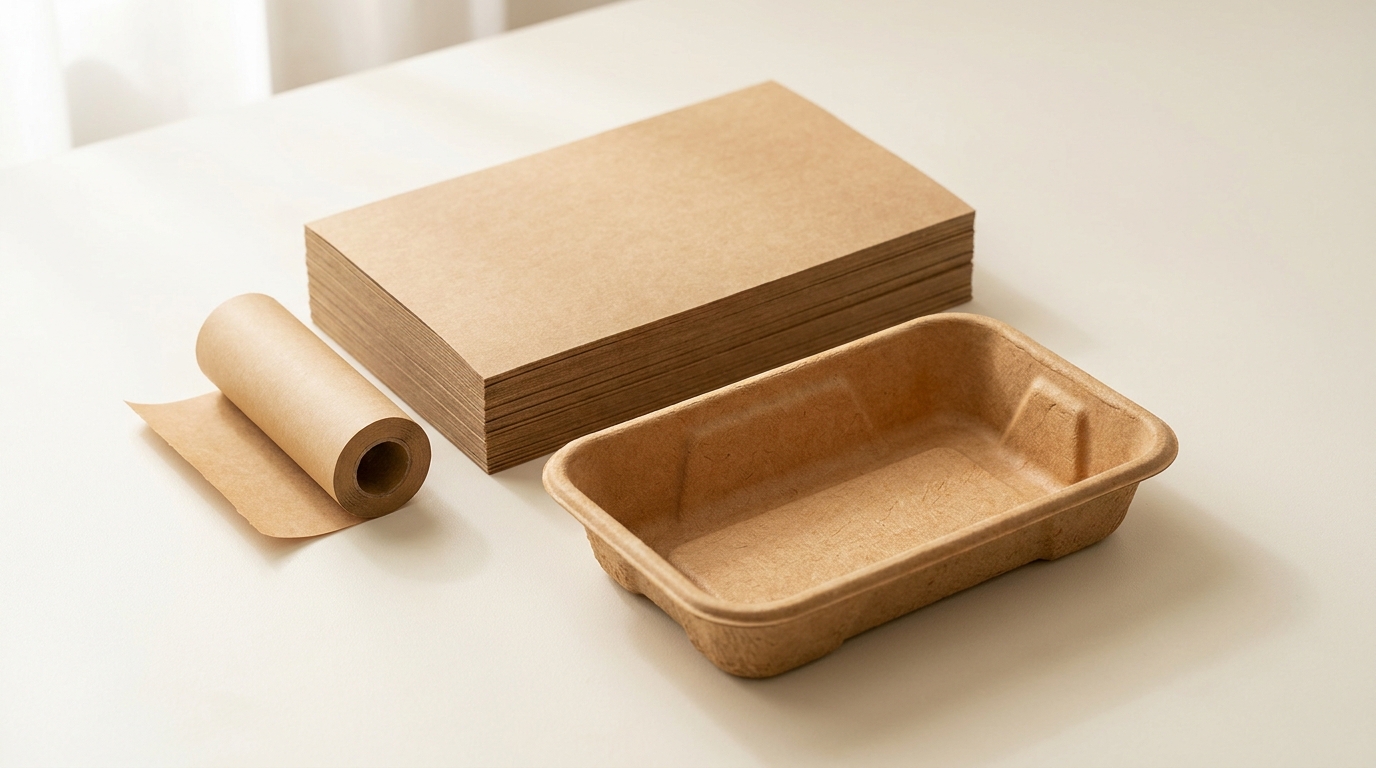
O papel kraft compostável é a fibra mais resistente que produzimos. Fabricado a partir de matéria-prima virgem

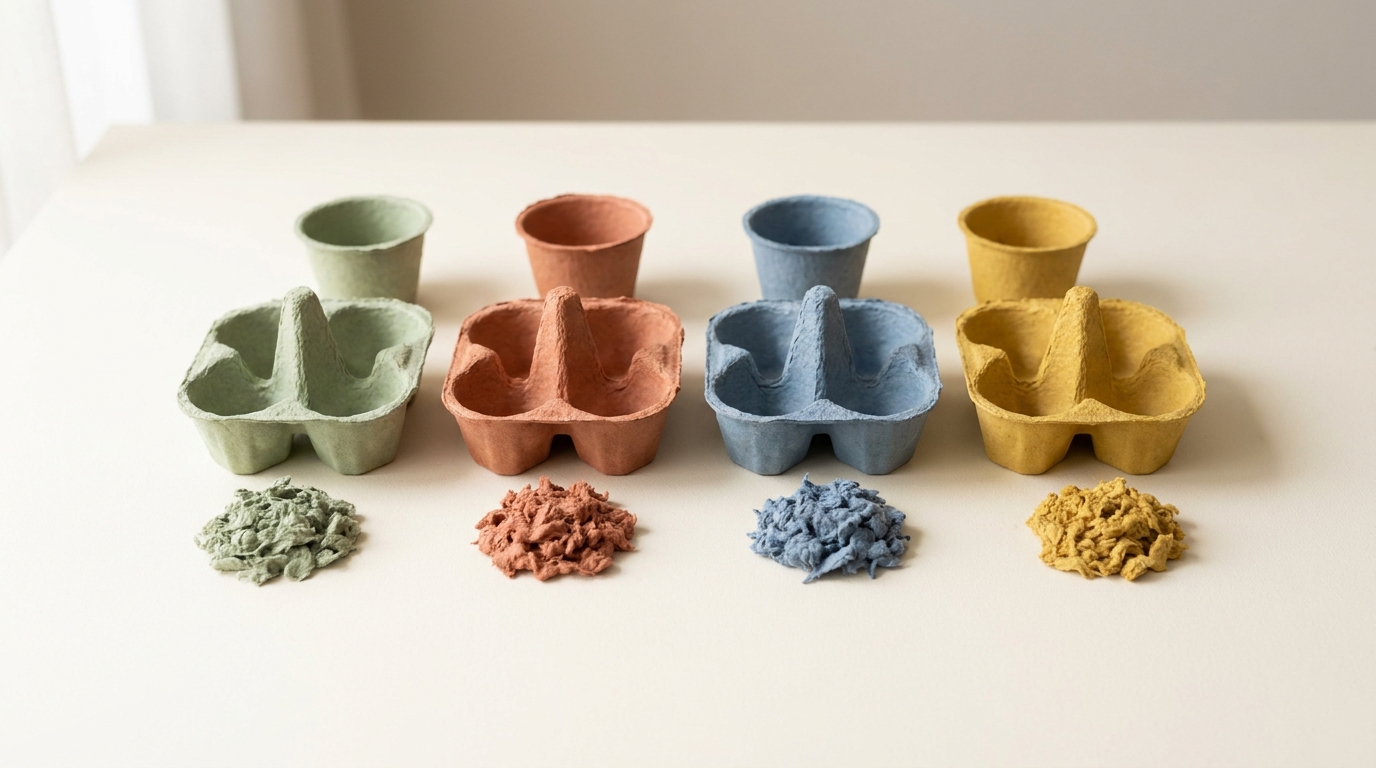
A polpa colorida não é uma fibra separada. Trata-se de qualquer uma das nossas

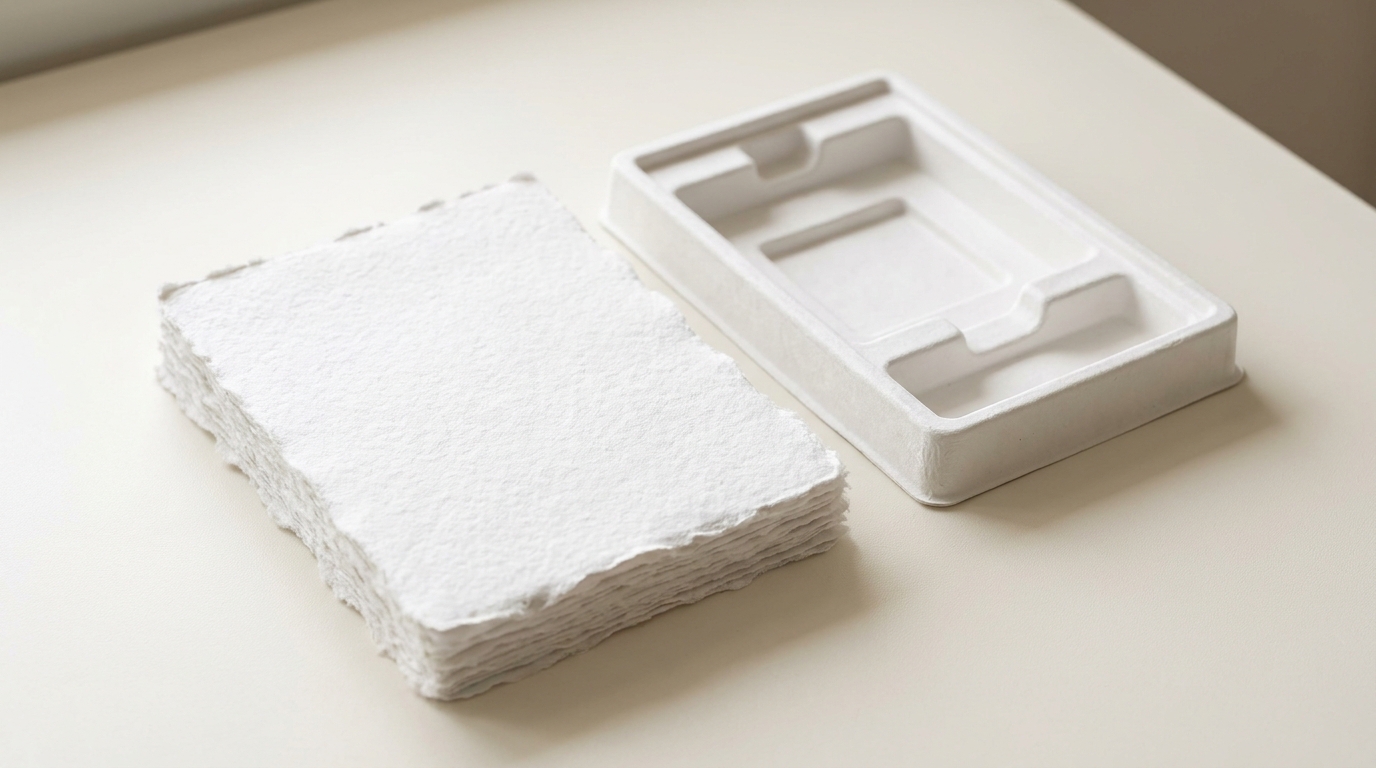
A polpa branqueada é o material a ser especificado quando a peça precisa

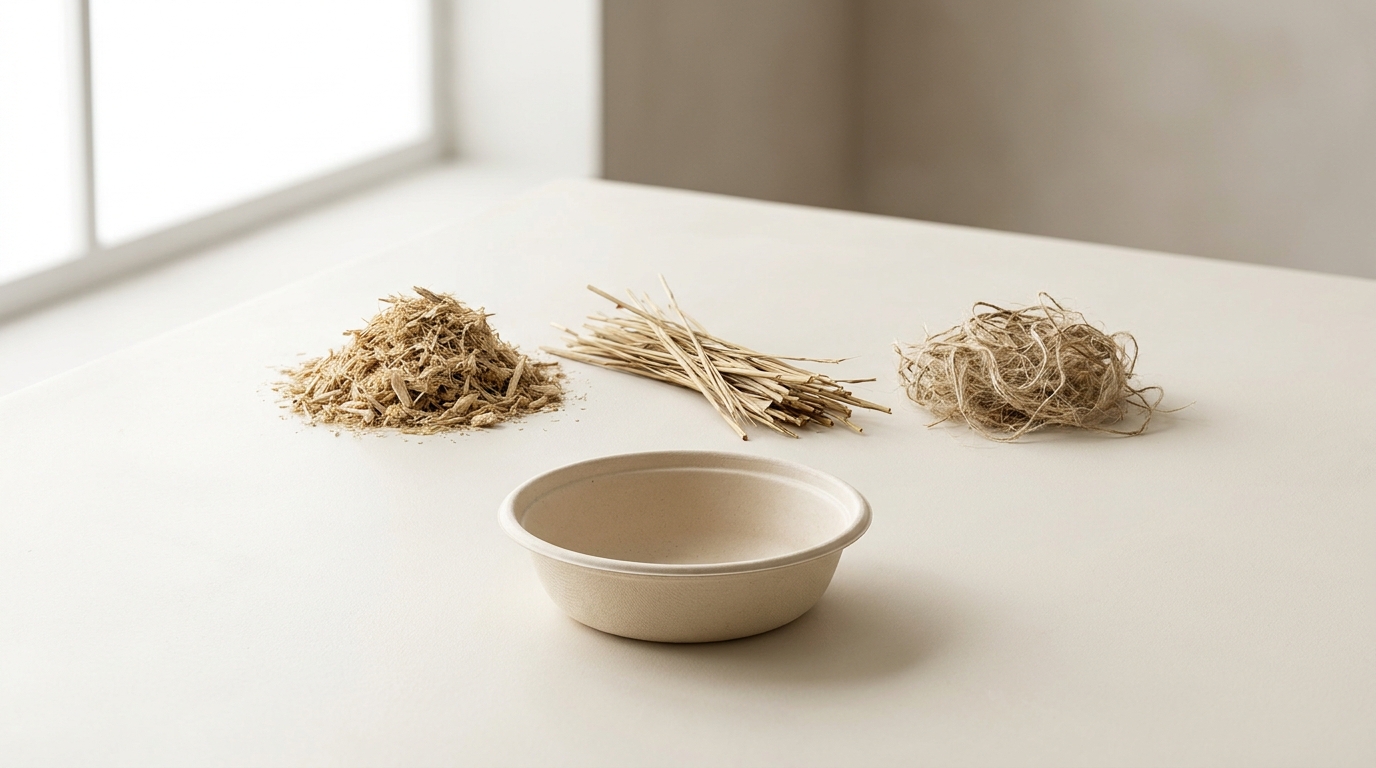
O termo “fibra vegetal natural” abrange as fontes de celulose não derivadas da madeira que incorporamos à nossa mistura, fora da

O papel ondulado, como material de polpa moldada, refere-se a caixas de papelão recicladas que foram transformadas em polpa novamente

A fibra de palha é produzida a partir dos caules que sobram após a colheita dos grãos, material

Nossas categorias de produtos

Descubra a gama diversificada de soluções de embalagem da Bonitopak, incluindo bandejas de polpa moldada, embalagens para alimentos, designs personalizados e opções sustentáveis. Cada categoria é criada para oferecer durabilidade, funcionalidade e responsabilidade ambiental, adaptada para atender às suas necessidades específicas.
Pronto para elevar seu projeto?

Dê vida aos seus projetos com o BonitoPak

Experimente a engenharia de precisão com a BonitoPak. De protótipos detalhados à produção de alto volume, estamos aqui para transformar seus conceitos em realidade. Entre em contato conosco hoje mesmo para discutir as necessidades do seu projeto!

Artigos e insights relacionados

Mantenha-se informado com as últimas atualizações sobre tendências de embalagens sustentáveis, percepções do setor e dicas de especialistas em nosso blog. Explore ideias e soluções inovadoras para aprimorar seu conhecimento sobre embalagens.

Por Leo Chan | Fundador da BonitoPak | Mais de 20 anos de experiência na fabricação de polpa moldada Última atualização:

Por Leo Chan | Fundador da BonitoPak | Mais de 20 anos de experiência na fabricação de polpa moldada Última atualização:

Por Leo Chan | Fundador da BonitoPak | Mais de 20 anos de experiência na fabricação de polpa moldada Última atualização:

Preencha este formulário detalhado