 Aller au contenu

Introduction
Are you looking to optimize your pulp production process and scale your output with minimal downtime? Choosing the right pulp production machine can be the difference between inconsistent quality, high operational costs, and a thriving, efficient plant.
Whether you’re producing pulp for molded food packaging, eco‑friendly trays, or specialty applications, understanding the right technology, capacity, and workflow integration is critical. This guide walks you through everything you need to know — from machine types to maintenance best practices.
Before we begin, if you’re interested in how pulp is used downstream in packaging applications, check out our guide on fibre moulée pour emballage alimentaire — a key use case for high‑quality pulp.
Section 1: What Is a Pulp Production Machine?
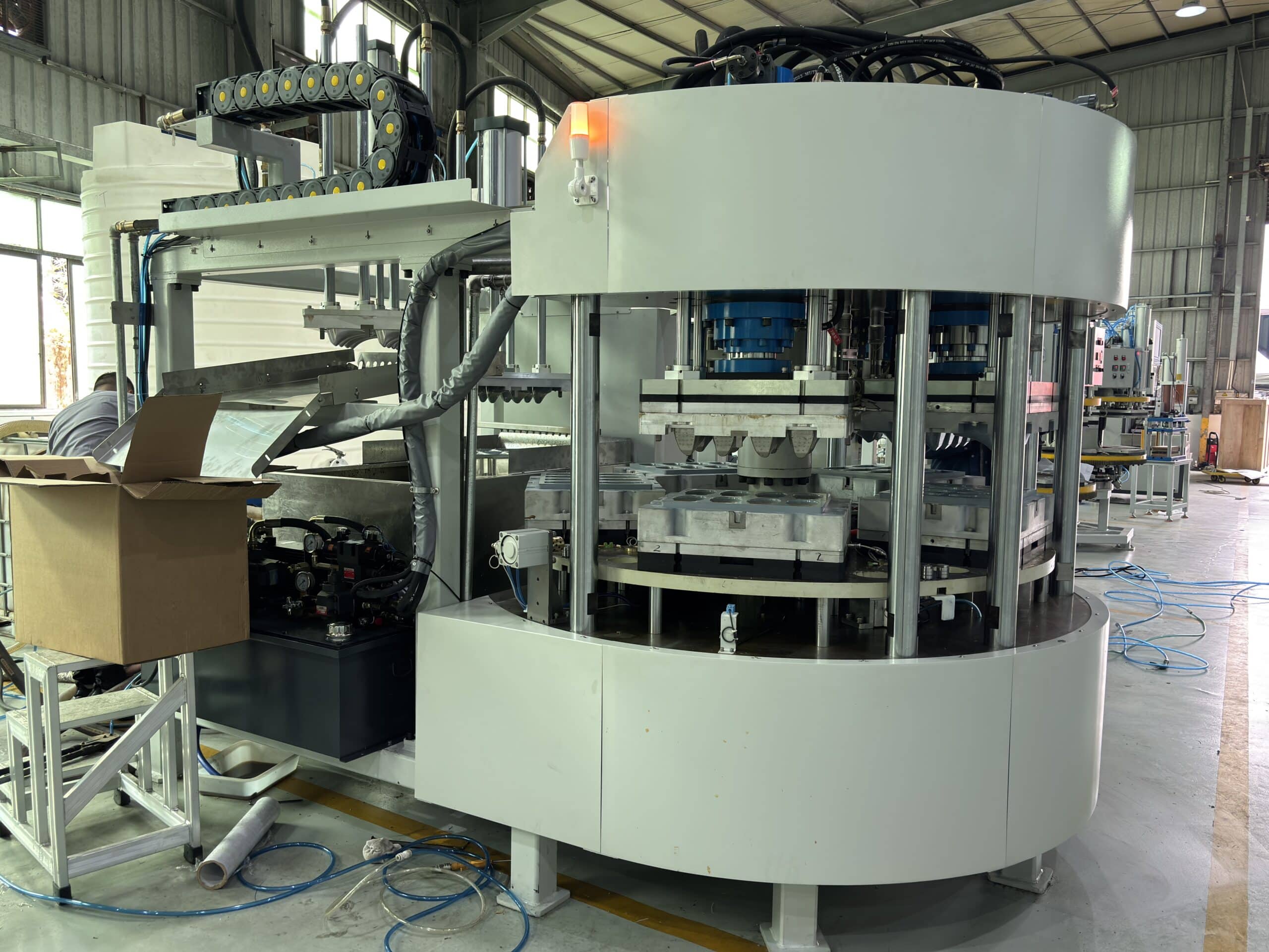
A pulp production machine is industrial equipment designed to convert raw cellulosic materials (such as wood chips, agricultural residues, or waste paper) into pulp — the fibrous material used to manufacture paper, molded products, trays, and packaging.
This machine performs one or more of the following:
- Fiber extraction and refinement
- Washing and screening
- Chemical treatment (if required)
- Pulp cleaning and formation
High‑quality pulp is essential for consistent product performance — especially when making biodegradable or eco‑friendly packaging like the biodegradable molded pulp tray for electronics, which demands precise fiber quality.
Section 2: Types of Pulp Production Machines
1. Mechanical Pulping Machines
These use physical force to break fibers apart. While they produce high yields, the pulp may have lower strength — acceptable for products like newspapers or rough packaging sheets.
2. Chemical Pulping Machines
Chemical pulping dissolves lignin and separates fibers cleanly. The result is higher‑strength pulp that’s ideal for molded packaging used in food or electronics applications.
For example, when manufacturing protective packaging for electronic goods, such as our eco packaging for electronics, chemical pulping delivers superior structural performance.
3. Semi‑Chemical Pulping Machines
Offering a middle ground between mechanical and chemical methods, these machines boost strength while maintaining decent yields. Semi‑chemical pulp works well for packaging products that require moderate durability.
Section 3: Key Features to Evaluate in a Pulp Production Machine
When selecting a pulp production machine, focus on the following:
Capacity and Throughput
- Match machine size to your production goals.
- A mismatch leads to either under‑utilization or bottlenecks.
- Plan around your expected annual volume and peak demand.
Efficacité énergétique
Energy use is one of the biggest ongoing costs. Machines with heat recovery, optimized power trains, and smart control systems reduce utility expenses and downtime.
Automation and Sensors
Advanced control systems can:
- Maintain consistent pulp quality
- Monitor fiber length and moisture
- Alert for abnormal conditions
Automation reduces dependency on manual inspection and improves long‑term reliability.
Maintenance Requirements
Cherchez :
- Machines with easy‑access components
- Self‑diagnostic features
- Scheduled service support from the manufacturer
Lower maintenance means less downtime and increased throughput.
Section 4: Step‑by‑Step Guide to Selecting Your Machine
Step 1: Define Your Input Materials
Are you planning to use:
- Bois vierge ?
- Papier recyclé ?
- Fibres agricoles ?
Chaque matériau nécessite des équipements de manutention et de prétraitement légèrement différents.
Étape 2 : Clarifier le produit final
Des produits différents exigent des qualités de fibres différentes :
- Haute résistance pour les plateaux moulés
- Une pâte plus tendre pour un carton léger
- Résistance et rendement équilibrés pour les emballages souples
Par exemple, si vous envisagez de produire des emballages alimentaires, la pâte à papier doit être de qualité alimentaire et conforme aux normes de sécurité. fibre moulée pour emballage alimentaire.
Étape 3 : Évaluer l'échelle de production
Adaptez la capacité de votre machine à vos objectifs opérationnels. Faire fonctionner une petite machine à une capacité de 100% peut ne pas répondre à la demande du marché - ou une grande machine peut être sous-utilisée.
Étape 4 : Planifier l'expansion
Choisissez des configurations évolutives dans lesquelles de futurs modules peuvent augmenter la capacité sans qu'il soit nécessaire de procéder à une refonte complète.
Section 5 : Installation et intégration
Préparation du site
Avant l'installation :
- Assurer le soutien structurel des machines lourdes
- Préparer les systèmes électriques, d'alimentation en eau et d'évacuation des eaux usées
- Attribuer de l'espace pour l'entreposage des matières premières et le stockage de la pâte finie
Calendrier d'installation
Un processus d'installation et de mise en service typique s'étend de 4-12 semaines, en fonction de :
- Complexité de la machine
- Préparation du site
- Permis locaux
Formation et intégration
Formez votre équipe technique et opérationnelle dès le début. Les opérateurs doivent comprendre :
- Contrôles des machines
- Procédures de sécurité
- Maintenance préventive
- Dépannage des problèmes courants
Section 6 : Meilleures pratiques opérationnelles
Maintenir une qualité d'entrée constante
Les variations des matières premières affectent considérablement la qualité de la pâte. Dans la mesure du possible, il convient de normaliser les matières premières.
Contrôler les paramètres clés
Poursuivre :
- Distribution de la longueur des fibres
- Teneur en eau
- Température
- Dosage chimique
Les machines modernes fournissent des tableaux de bord et des alertes pour aider à optimiser les performances.
Maintenance programmée
Mettre en œuvre des contrôles de routine pour :
- Pièces d'usure
- Paliers
- Moteurs
- Courroies et joints
La maintenance proactive prolonge la durée de vie et prévient les pannes coûteuses.
Section 7 : Dépannage courant
Faible rendement
Cause: Blockages, improper settings, or worn parts
Solution: Check screens, refine settings, or replace worn rotors.
Inconsistent Pulp Quality
Cause: Fluctuating raw material quality or incorrect chemical balance
Solution: Standardize feedstock and calibrate dosing systems.
Excessive Machine Noise
Cause: Misalignment or lubrication issues
Solution: Inspect bearings and lubrication pathways immediately.
Section 8: Sustainability and Market Trend
Consumers are increasingly demanding eco‑friendly packaging — especially in food and electronics. Sustainability isn’t just a buzzword anymore — it’s a differentiator.
For example:
- Biodegradable molded pulp trays for electronics meet end‑of‑life expectations without compromising protection.
- Eco packaging for electronics reduces plastic use and appeals to conscious buyers.
Investing in a modern, efficient pulp production machine positions your business to capitalize on these market trends — while lowering energy usage and operating costs.
Section FAQ
Q1: How long does a pulp production machine last?
A: With proper maintenance, these machines can operate reliably for 10–20+ years.
Q2: How much does a pulp production machine cost?
A: Costs vary widely based on capacity, automation level, and technology — from moderate‑level units to highly automated industrial systems.
Q3: Can I use the same machine for multiple fiber types?
A: Yes — many machines are adaptable, but you’ll need to adjust settings and possibly add preprocessing equipment.
Q4: Is training required to run the machine?
A: Absolutely — operator training ensures safety and consistent quality.
Conclusion
Choisir le bon pulp production machine can redefine your manufacturing efficiency, product quality, and bottom‑line performance. Your investment today determines how well you can serve packaging, food, and electronics markets tomorrow.
From machine type and automation to energy efficiency and maintenance strategy — each decision shapes your success.
Curious how pulp is ultimately used in emballages biodégradables? Explore our article on what are non‑toxic Nespresso capsules — another example of how pulp materials are reshaping sustainable products across industries.



 French
  English
  German
  Spanish
  Russian
  Japanese
  Portuguese
  Arabic