Par Leo Chan, consultant senior en emballage chez BonitoPak
Green egg cartons tell shoppers something about how your eggs were produced, even before they read the label. In egg aisles, green is the color most buyers link with organic, free range and pasture raised. That makes green useful if the claim is true, and risky if it is not.
Our molded pulp green cartons come in pale sage, mid green and deep forest. The pigment is blended into the pulp, so the color runs through the fiber with no surface coating. We make them in 4, 6, 10, 12, 18 and 20 cell counts.
This guide explains what each green shade signals, what the USDA says about organic claims on packaging and how to choose a shade that fits your farm. We are a carton maker, not a certifier, so check your claims with your certifier or state office.
Why Does Green Signal Organic and Free Range?
Shoppers read green packaging as a clue about how a product was made. In eggs, that clue has become tied to organic, free range and pasture raised, because food brands have used green for those ideas for years.
For a farm that holds those credentials, green does real work. It sets your position before the buyer reads a word. For a farm that does not, green can suggest more than your eggs can back up.
We tell customers the same thing we tell you here. Use green if your claim is true and stated. Choose another shade if it is not. We supply the carton either way, but the claim is your responsibility.
Which Green Shade Should You Choose?
We make three shade groups. They send different signals, so pick by the message you want.
| Ombre | Regarde | What it signals | Contraste d'impression |
|---|---|---|---|
| Sauge pâle | Muted, gray green | Calm, premium, understated | Black or cream |
| Vert moyen | Clear, classic green | The strongest organic style signal | Test white and black |
| Forêt profonde | Dark, close to navy | Premium, strong emboss | Blanc |
Pale sage is the safest green for farms that want the tone without a loud claim. It sits well beside natural pulp in a mixed range. Mid green is what most buyers picture when they ask for green. Deep forest reads more like navy than green, and it holds embossed detail well.
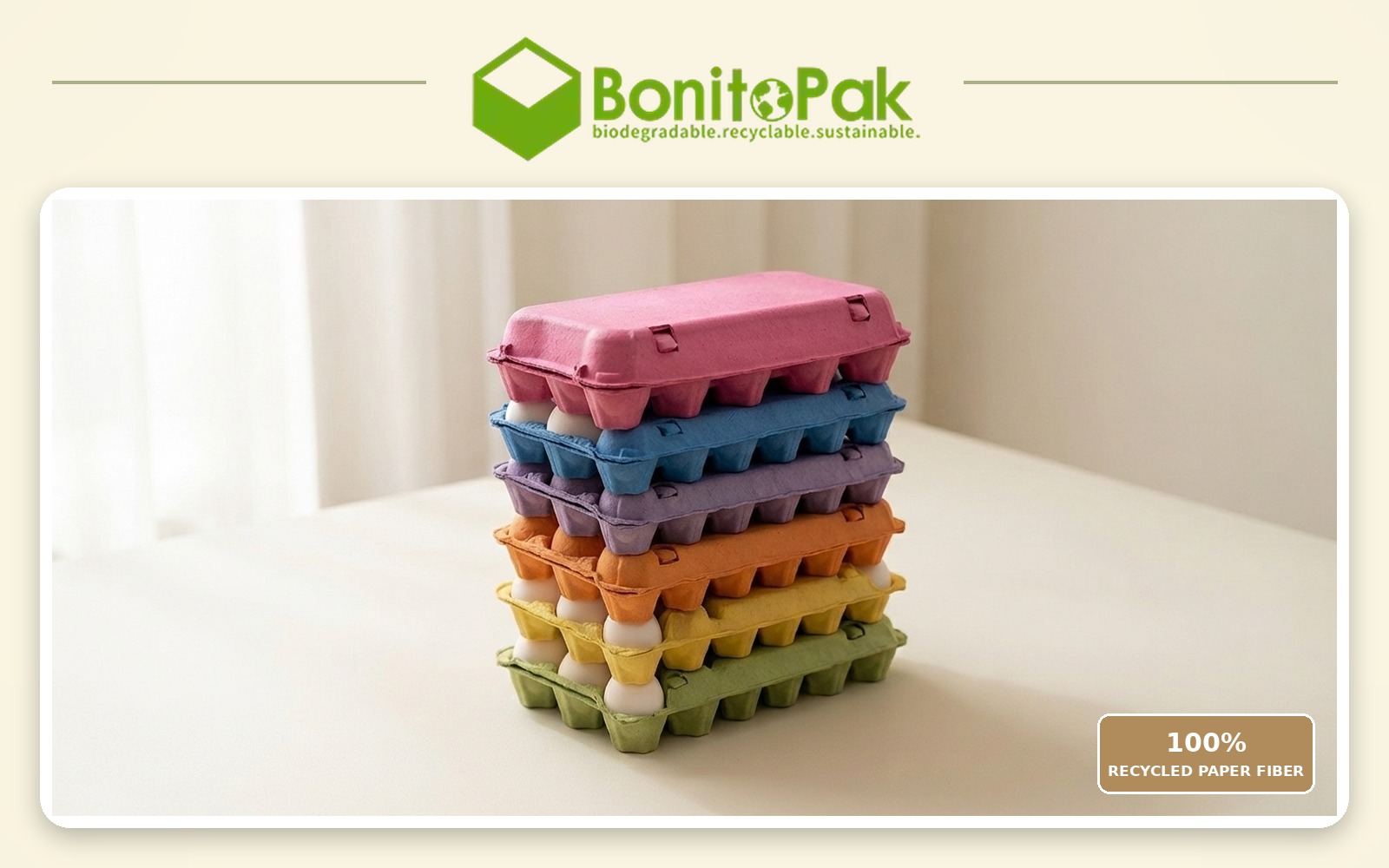
Our spec says lightfastness is good across the green range, and forest is the most stable. You can see all six stock shades on our boîtes à œufs colorées page.
What Does the USDA Say About Organic Claims?
The USDA is clear about words and seals. If you are not certified, you must not make an organic claim on the front of the package or use the USDA organic seal anywhere on it (USDA Agricultural Marketing Service, Labeling Organic Products).
The same page adds three points:
- A product that claims organic status will usually need certification.
- Organic product labels must be reviewed and approved by a USDA accredited certifying agent before use.
- Small producers with organic sales under $5,000 a year do not need certification, but they may not display the USDA organic seal.
The USDA page covers organic claims in words and on the seal. It does not say that a green carton is a claim by itself. Still, green with leaf images and vague words can read as an organic promise. If you are not certified, keep the design plain and the words exact.
What Is a Safe Green Carton and What Is Risky?
Think of it as three layers: color, images and words. Color alone is the weakest signal. Images and words make it stronger. Problems start when all three point to a claim you cannot support.
| Conception | Risk level | Pourquoi ? |
|---|---|---|
| Sage carton, farm name, plain label | Faible | Tone without a claim |
| Mid green carton, leaf logo, “farm fresh” | Moyen | Style suggests natural, words stay vague |
| Forest carton, leaf images, “natural organic style” | Haut | Images and words point to organic |
| Any green carton with a certified organic label | Faible | The claim is true and stated |
This table is our advice, not legal advice. A Maryland extension fact sheet adds a general rule. It says labels may not be misleading and producers must be able to document production claims (Service de vulgarisation de l'Université du Maryland, « Vente d'œufs en coquille aux détaillants »). Keep proof on file for every claim you print.
What Should You Print on a Green Carton?
Print your farm name, your required label text and one clear message. Choose ink by shade. Our spec gives strong contrast with white on forest, and black or cream on sage.
Required text varies by state and sales channel. The Maryland fact sheet lists safe handling wording in a box, the packer name and address, a packer registration number, a lot designation, the word “eggs” and the grade and size. Check your own state rules before you print.
You can emboss, deboss or use flexographic print. Embossing on forest reads sharply, and the cost sits in the mold, not in each run. Our service personnalisé can help you plan artwork.
Which Farms Choose Green?
Our product page lists organic producers, pasture raised brands, farm direct sellers and specialty grocery as main users. It also lists seasonal ranges. Green is a natural choice for spring and for farm brands built around outdoor flocks.
If your farm is certified, green carries your story for you. If you are still working toward it, sage or natural pulp is a calmer start. You can always move to mid green when your certificate arrives.
For more on branding choices, see our guide to Boîtes à œufs vierges ou imprimées.
Which Cell Count Should You Choose in Green?
Pick by how you sell. A dozen egg carton suits regular buyers. A 6 boîtes à œufs suits premium and specialty lines. Green is also made in 4, 10, 18 and 20 cells.
Test the cell fit with your own eggs, since breeds lay different sizes. Our empty cartons are light and they nest, so a stock of green cartons does not take much space.
How Do You Build a Green Brand Story?
A green carton opens a conversation, but the story behind it has to be true. Here is a simple way to build one.
- Write down what is true. List your real practices, such as how your hens live, what they eat and where you farm.
- Pick one message. Choose the one thing you want shoppers to remember. Too many messages blur together.
- Say it on the carton. Use a short line that matches your facts, such as your farm name and location.
- Back it up. If you make a claim, keep the records to support it. This protects your brand and your customers.
- Keep it consistent. Use the same green, the same logo and the same tone across all packs.
A green carton is a signal, not proof. It tells shoppers to look closer. Your label and your honesty do the rest.
How Do You Pair Green With Natural Details?
Green looks best when the rest of the pack feels natural and calm. A few easy pairings:
- Cream or white print. Clean white type on mid green looks sharp and easy to read.
- Simple line art. A small hen, leaf or barn drawing fits the mood without clutter.
- Natural pulp accents. Pair green cartons with a natural pulp tray or divider in the same display.
- Kraft style paper. A plain paper label or band adds a hand made feel.
Avoid very bright neon tones next to deep forest green. Mixed intensities can look unplanned. Stay in one family of greens, from pale sage to deep forest.
What Mistakes Should You Avoid With Green?
- Implying a claim you cannot prove. Green may suggest “organic” to some shoppers. Only use that word if you meet the USDA rules.
- Picking a shade that hides the eggs. Brown eggs in deep forest can look dull. Test them together.
- Printing in low contrast. Dark text on deep green is hard to read. Use light ink on dark shades.
- Ignoring required text. Our guide on étiquettes et tampons pour boîtes à œufs covers what most cartons must show.
- Skipping samples. Green can look different in sun, shade and store light. Check a sample in the spot where it will sit.
If you want to compare green with the other stock shades, visit our boîtes à œufs colorées page. For a quote on a custom shade, our service personnalisé is the place to start.
Which Questions Do Customers Ask About Green Cartons?
Green packs bring questions, so have short, honest answers ready.
- “Does green mean organic?” No. Only products that meet the USDA organic rules may use that word. A green carton is a color choice.
- “Is the carton recycled?” Our cartons are formed from recycled paper fiber, with pigment blended into the pulp.
- “Will the color come off?” The pigment runs through the fiber, so there is no surface coating to scratch.
- “Can I match my brand green?” We can match a shade to a sample. Send a swatch with your request.
A short card on your table or a line on your website covers most of these. It shows you know your product and respect your customers.
What Should You Check Before You Place a Green Order?
A short checklist keeps the first run on track.
- Choose pale sage, mid green or deep forest from a real sample.
- Check that your eggs fit the cell size and count.
- Decide what is embossed, debossed or printed.
- Confirm that your claims match your real practices.
- Ask our team for current minimums and lead times.
Stock molds carry a lower minimum than custom tooling. That makes a stock green carton a safe way to test the look before you invest in a custom design.
How Do You Order Green Egg Cartons?
Start with a stock shade and a sample. Stock green carries a lower minimum than a custom shade.
- Pick your cell count.
- Choose sage, mid green or forest.
- Decide on emboss, deboss or print.
- Check that your label words match your real certifications.
- Demandez un échantillon et testez-le avec vos œufs.
- Veuillez vérifier les quantités minimales et les délais de livraison actuels auprès de notre équipe.
Send your details to leo@bonitopak.com. We keep shade standards on file, so a reorder matches. You can also browse the gamme de boîtes à œufs en pâte moulée.
Questions fréquemment posées
Q: What does a green egg carton mean?
A: Many shoppers link green with organic, free range and pasture raised. That signal is strongest in mid green and weakest in pale sage.
Q: Can I use green egg cartons if my eggs are not organic?
A: Yes, but keep your words exact. If you are not certified, you must not make an organic claim on the front of the package or use the USDA seal (USDA AMS).
Q: Which green shade is the safest?
A: Pale sage is the calmest. It gives a green tone without a strong organic signal.
Q: What shades of green do you make?
A: We make pale sage, mid green and deep forest, and we match custom shades to a sample. The pigment runs through the pulp, with no surface coating.
Q: Do green cartons fade?
A: Our spec lists good lightfastness across the green range, with forest the most stable. Keep cartons out of direct sun when you can.