...

Molded Pulp Egg Cartons

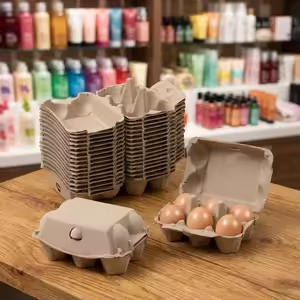
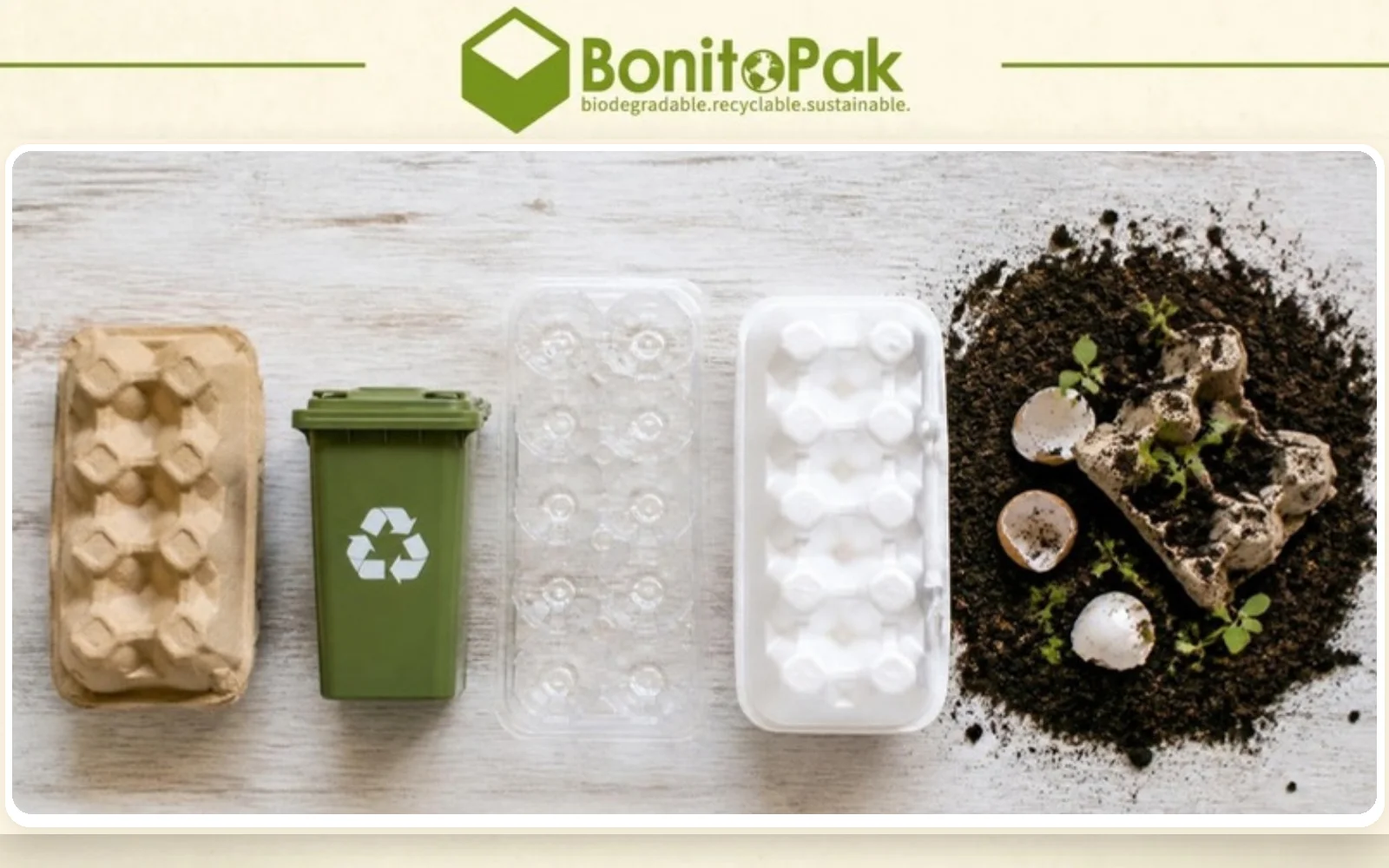
Every egg you sell arrives in something. Our molded pulp egg cartons are formed from 100% recycled paper fiber into cartons that protect the eggs, carry your brand, and break down in a home compost pile when the customer is finished with them. No plastic, no foam, no coating.

Here is what the range gives you:

  • Every count you need. Four, six, ten, twelve, eighteen, and twenty cell layouts running on molds we already own, so most orders skip the tooling charge entirely.
  • Cut for the bird, not just the count. Chicken cells shaped to the USDA weight grades and quail cells cut to true quail diameter, because a small egg in a large cup is an egg that chips.
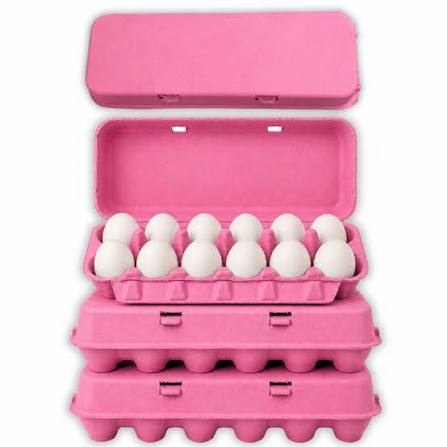
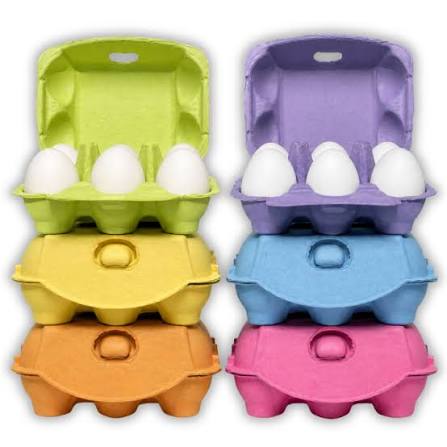
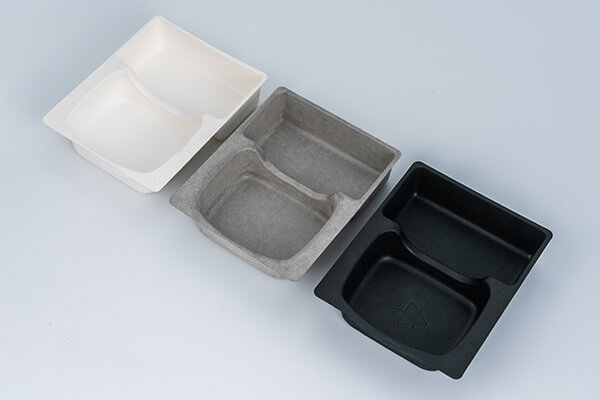
  • Color that runs through the fiber. Pigment blended into the pulp before forming, not sprayed on after. Scuff the carton and the color underneath is the same.
  • Your brand pressed into the mold. Embossed and debossed lids cost nothing per unit once the tool exists, and there is no ink to scuff or label to peel in a cold room.
  • Freight that works in your favor. Cartons nest flat, so a container carries far more units than the same order in rigid plastic clamshells.

Unsere Produktkategorien

Entdecken Sie das vielfältige Angebot an Verpackungslösungen von Bonitopak, darunter geformte Zellstoffschalen, Lebensmittelverpackungen, kundenspezifische Designs und nachhaltige Optionen. Jede Kategorie ist auf Langlebigkeit, Funktionalität und Umweltverträglichkeit ausgelegt und auf Ihre spezifischen Anforderungen zugeschnitten.

The format that has to work with everything

A twelve count has a harder job than any other size in the range. It has to fit a supermarket shelf, run through a packer’s line, survive a distributor’s pallet, and still open cleanly in a customer’s kitchen. Get one of those wrong and the whole order comes back.

That is why the twelve count is where specification discipline matters most. The other sizes tolerate a few millimeters of variance. This one does not.

2×6 against 3×4, and why packers care

Twelve cells come in two standard footprints, and they are not interchangeable.

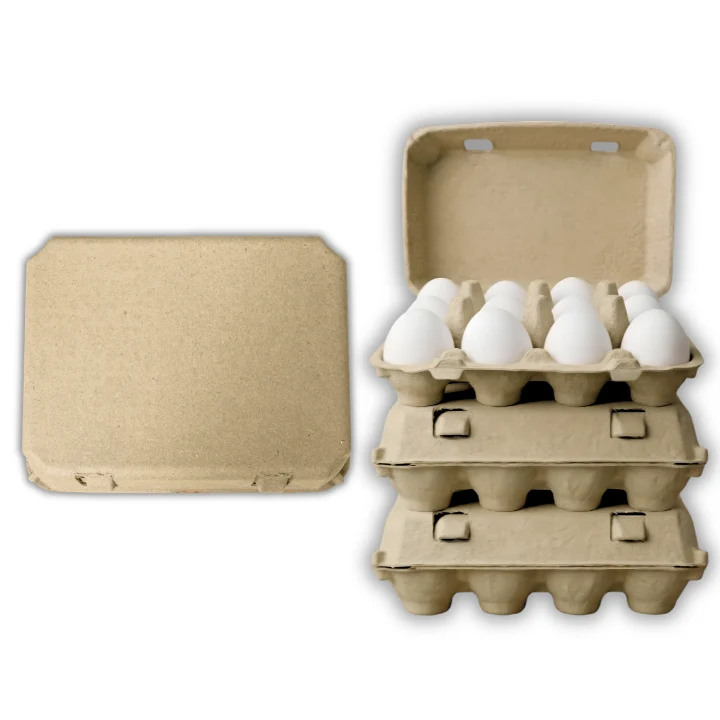
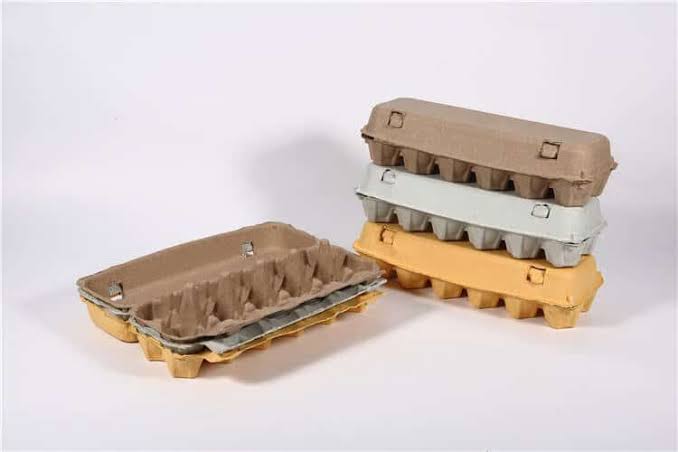
The 2×6 long format is the shape most people picture. It measures roughly 300 mm end to end and fits the shelf channels most grocery chains built their cold cases around. It also matches the infeed width on the majority of automatic packing lines, which is the reason it dominates commercial supply.

The 3×4 compact format runs shorter and wider at roughly 205 x 150 mm. It uses less linear shelf space, stacks into a tighter pallet cube, and gives a squarer lid panel that suits a centered logo. Farm direct sellers and specialty retailers often prefer it. Automatic lines generally do not, unless the machine was specified for it.

Choosing between them is a distribution decision before it is a design decision. If the eggs are going through a grading station, the packer’s line dictates the answer. If they are going to a market table, the choice is open.

Load path through the rib structure

Stack a pallet of filled dozen cartons twelve high and the bottom layer carries real weight. A filled twelve count runs close to 700 grams, so a twelve high column puts several kilograms on the base carton before anyone adds a second pallet.

Molded pulp handles this through geometry rather than material thickness. The cone that separates each pair of cells rises to meet the lid, so when the lid closes, those cones become vertical columns transferring load from the carton above straight to the base. The eggs sit in the gaps between the load path, not in it.

This is the single clearest advantage pulp holds over folded cardboard at the same weight. Cardboard carries load through its outer walls and buckles when they fail. Pulp carries it through an internal frame that stays engaged even when a corner is knocked.

Label panel real estate and what has to fit on it

US retail egg cartons carry more mandatory text than most buyers expect. Grade shield, size class, packing plant code, Julian date, handling statement, and nutrition panel all have to appear, and several must meet minimum type sizes.

The 2×6 lid gives roughly 315 square centimeters of flat panel, which is enough to place all of it and still leave the center third for brand identity. The 3×4 lid gives slightly less total area but a better proportioned block for a logo.

Buyers who plan to print should map the mandatory elements first and treat the remaining space as the brand area. Working the other way around is how designs come back from compliance review.

Embossing works alongside print rather than instead of it. A common setup runs the brand mark embossed into the mold and the regulatory text flexo printed, which keeps the identity permanent and lets the variable data change between runs.

Cold chain behavior

Egg cartons live in humidity. A retail cold case sits around 4 degrees Celsius with high relative humidity, and cartons often move between that and a warmer back room several times.

Molded pulp absorbs moisture, which is a genuine property of the material rather than a defect. Fiber density is what controls it. A carton pressed to the correct density picks up moisture slowly enough that it holds structural rigidity through normal retail cycles and releases it again without warping. Under-pressed pulp goes soft at the hinge, which is where field failures usually appear first.

This is a manufacturing control point, not a design choice, and it is worth asking any supplier how they measure it.

Fitting the twelve count into a range

The dozen is the volume seller in almost every catalog, but it works best supported on both sides. Producers pair it with the 6 egg carton for premium and low volume lines, and the 18 egg carton for value packs where the shopper is buying on price per egg.

Buyers packing eggs from a mixed or specialty flock should read the chicken egg carton page for the grade and cell depth detail, since egg size class drives the fit more than carton footprint does.

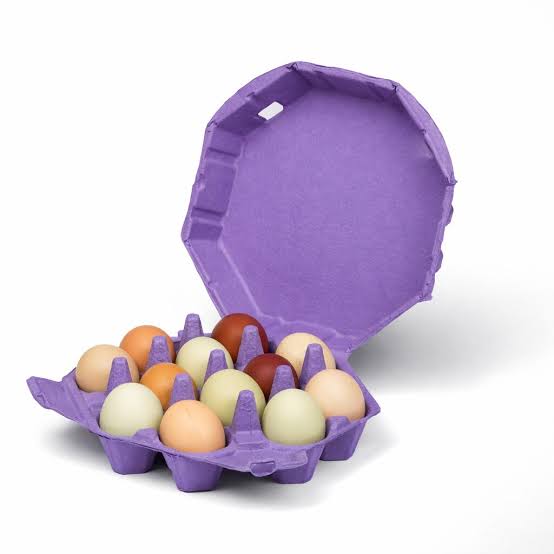
For twelve counts sold into gift or premium channels, the octagon egg cartons format gives the same capacity in a shape that reads differently on a shelf.

The format that has to work with everything

A twelve count has a harder job than any other size in the range. It has to fit a supermarket shelf, run through a packer’s line, survive a distributor’s pallet, and still open cleanly in a customer’s kitchen. Get one of those wrong and the whole order comes back.

That is why the twelve count is where specification discipline matters most. The other sizes tolerate a few millimeters of variance. This one does not.

2×6 against 3×4, and why packers care

Twelve cells come in two standard footprints, and they are not interchangeable.

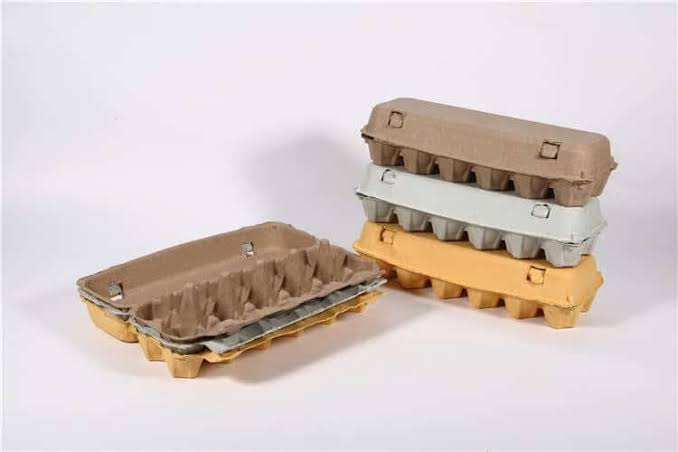
The 2×6 long format is the shape most people picture. It measures roughly 300 mm end to end and fits the shelf channels most grocery chains built their cold cases around. It also matches the infeed width on the majority of automatic packing lines, which is the reason it dominates commercial supply.

The 3×4 compact format runs shorter and wider at roughly 205 x 150 mm. It uses less linear shelf space, stacks into a tighter pallet cube, and gives a squarer lid panel that suits a centered logo. Farm direct sellers and specialty retailers often prefer it. Automatic lines generally do not, unless the machine was specified for it.

Choosing between them is a distribution decision before it is a design decision. If the eggs are going through a grading station, the packer’s line dictates the answer. If they are going to a market table, the choice is open.

Load path through the rib structure

Stack a pallet of filled dozen cartons twelve high and the bottom layer carries real weight. A filled twelve count runs close to 700 grams, so a twelve high column puts several kilograms on the base carton before anyone adds a second pallet.

Molded pulp handles this through geometry rather than material thickness. The cone that separates each pair of cells rises to meet the lid, so when the lid closes, those cones become vertical columns transferring load from the carton above straight to the base. The eggs sit in the gaps between the load path, not in it.

This is the single clearest advantage pulp holds over folded cardboard at the same weight. Cardboard carries load through its outer walls and buckles when they fail. Pulp carries it through an internal frame that stays engaged even when a corner is knocked.

Label panel real estate and what has to fit on it

US retail egg cartons carry more mandatory text than most buyers expect. Grade shield, size class, packing plant code, Julian date, handling statement, and nutrition panel all have to appear, and several must meet minimum type sizes.

The 2×6 lid gives roughly 315 square centimeters of flat panel, which is enough to place all of it and still leave the center third for brand identity. The 3×4 lid gives slightly less total area but a better proportioned block for a logo.

Buyers who plan to print should map the mandatory elements first and treat the remaining space as the brand area. Working the other way around is how designs come back from compliance review.

Embossing works alongside print rather than instead of it. A common setup runs the brand mark embossed into the mold and the regulatory text flexo printed, which keeps the identity permanent and lets the variable data change between runs.

Cold chain behavior

Egg cartons live in humidity. A retail cold case sits around 4 degrees Celsius with high relative humidity, and cartons often move between that and a warmer back room several times.

Molded pulp absorbs moisture, which is a genuine property of the material rather than a defect. Fiber density is what controls it. A carton pressed to the correct density picks up moisture slowly enough that it holds structural rigidity through normal retail cycles and releases it again without warping. Under-pressed pulp goes soft at the hinge, which is where field failures usually appear first.

This is a manufacturing control point, not a design choice, and it is worth asking any supplier how they measure it.

Fitting the twelve count into a range

The dozen is the volume seller in almost every catalog, but it works best supported on both sides. Producers pair it with the 6 egg carton for premium and low volume lines, and the 18 egg carton for value packs where the shopper is buying on price per egg.

Buyers packing eggs from a mixed or specialty flock should read the chicken egg carton page for the grade and cell depth detail, since egg size class drives the fit more than carton footprint does.

For twelve counts sold into gift or premium channels, the octagon egg cartons format gives the same capacity in a shape that reads differently on a shelf.

Branchenkenntnisse bei BonitoPak

Durch die Herstellung von Millionen von Teilen verfügt BonitoPak über umfassende Kenntnisse in zahlreichen Anwendungen. Wir zeichnen uns besonders in Branchen aus, die eine präzise und komplizierte Komponentenfertigung erfordern. Vertrauen Sie darauf, dass wir unabhängig von der Komplexität Fachwissen und Qualität liefern.
Sind Sie bereit, Ihr Projekt aufzuwerten?

Erwecken Sie Ihre Entwürfe mit BonitoPak zum Leben

Erleben Sie Präzisionstechnik mit BonitoPak. Von detaillierten Prototypen bis hin zur Großserienproduktion - wir sind da, um Ihre Konzepte in die Realität umzusetzen. Kontaktieren Sie uns noch heute, um Ihre Projektanforderungen zu besprechen!

Warum BonitoPak wählen?

Wir von Bonitopak bieten maßgeschneiderte, umweltfreundliche Verpackungslösungen mit fachkundiger Unterstützung, nachhaltigen Verfahren und garantierter Qualität. Unsere innovativen Designs und unsere effiziente Produktion sorgen dafür, dass Ihre Verpackungen auffallen und gleichzeitig die Umweltbelastung reduzieren.

Schnelle Lösungen

Wir reagieren innerhalb von 24 Stunden und bieten schnelle, klare Kommunikation, maßgeschneiderte Lösungen und effizienten Service, um Zeit und Kosten zu sparen.

Rasche Anpassungsfähigkeit

Unsere hauseigene Konstruktion, Entwicklung und Fertigung gewährleistet eine schnelle Werkzeugherstellung, wobei Muster innerhalb von 7 Tagen und Produktionsformen innerhalb von 8 Tagen fertiggestellt werden.

Experten-Innovatoren

Unsere erfahrenen F&E-Ingenieure zeichnen sich durch Design, Prototyping und Werkzeugbau aus und bieten komplette Verpackungslösungen mit Blister-, Blechdosen- und bedruckten Schachteln an.

Effiziente Optimierung

Geschulte Mitarbeiter führen 100%-Inspektionen, Stichproben und Qualitätskontrollen durch, um hohe Standards zu gewährleisten, Ausschuss zu reduzieren und Kosten zu sparen.

Prompte Lieferung

Wir sorgen für eine vernünftige Auftragsplanung und stimmen uns mit unseren Kunden ab, um Probleme umgehend zu lösen und die besten Lösungen zu gewährleisten.

Ausgezeichnete Unterstützung

Unser erfahrenes After-Sales-Team sorgt für eine reibungslose Kommunikation und löst Probleme mit Ersatz, Versand und Lieferung, mit dem Ziel, Reklamationen zu vermeiden.

Verwandte Artikel und Einblicke

Bleiben Sie auf dem Laufenden mit den neuesten Informationen über nachhaltige Verpackungstrends, Einblicke in die Branche und Expertentipps in unserem Blog. Entdecken Sie innovative Ideen und Lösungen, um Ihr Verpackungswissen zu erweitern.

Von Leo Chan | Autor, BonitoPak | Über 20 Jahre Erfahrung im Bereich Formzellstoffverpackungen Veröffentlicht: 16

Von Leo Chan | Autor, BonitoPak | Über 20 Jahre Erfahrung im Bereich Formzellstoffverpackungen Veröffentlicht: 15

Von Leo Chan | Autor, BonitoPak | Über 20 Jahre Erfahrung im Bereich Formzellstoffverpackungen Veröffentlicht: 14

de_DEGerman
Füllen Sie dieses detaillierte Formular aus