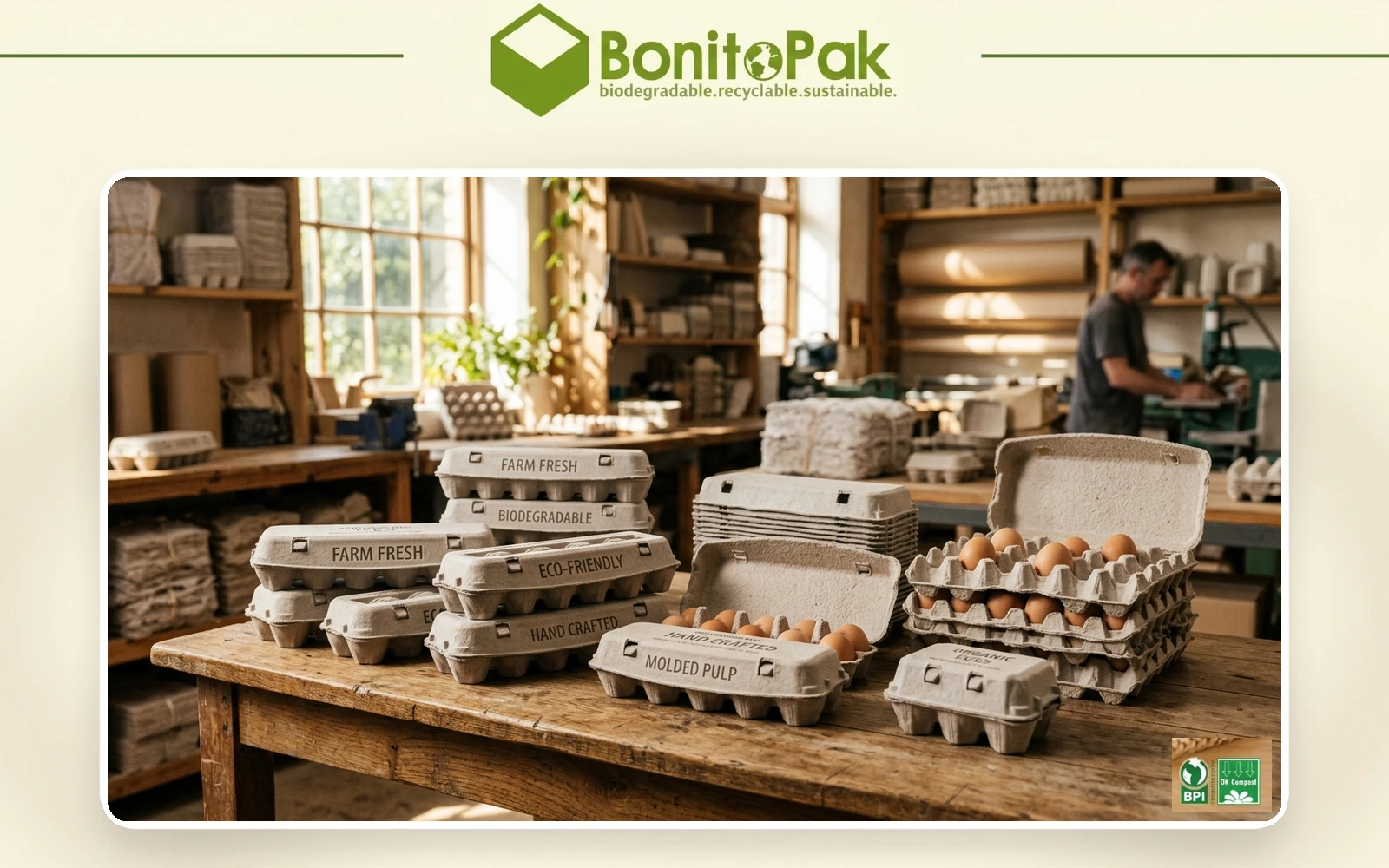
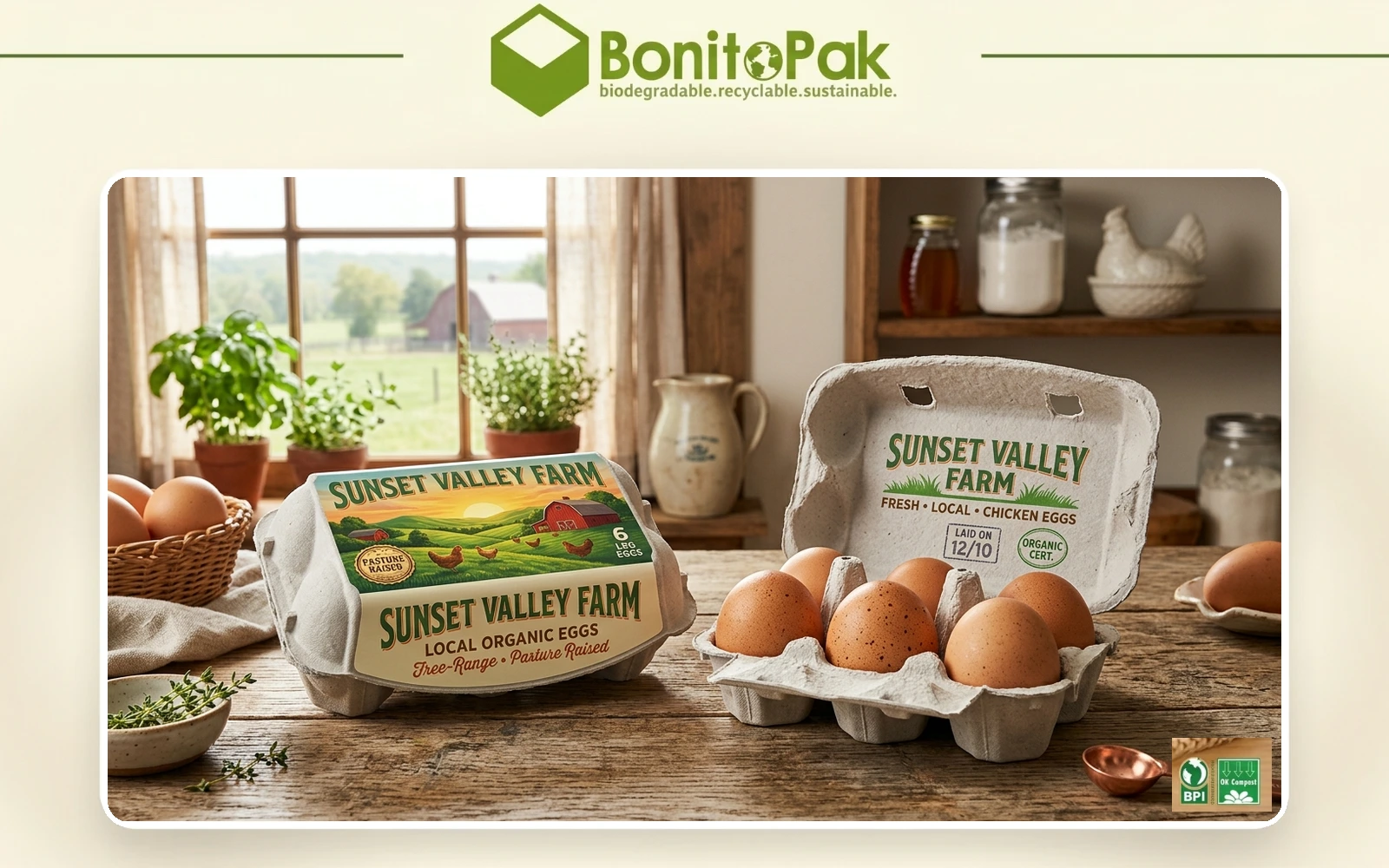
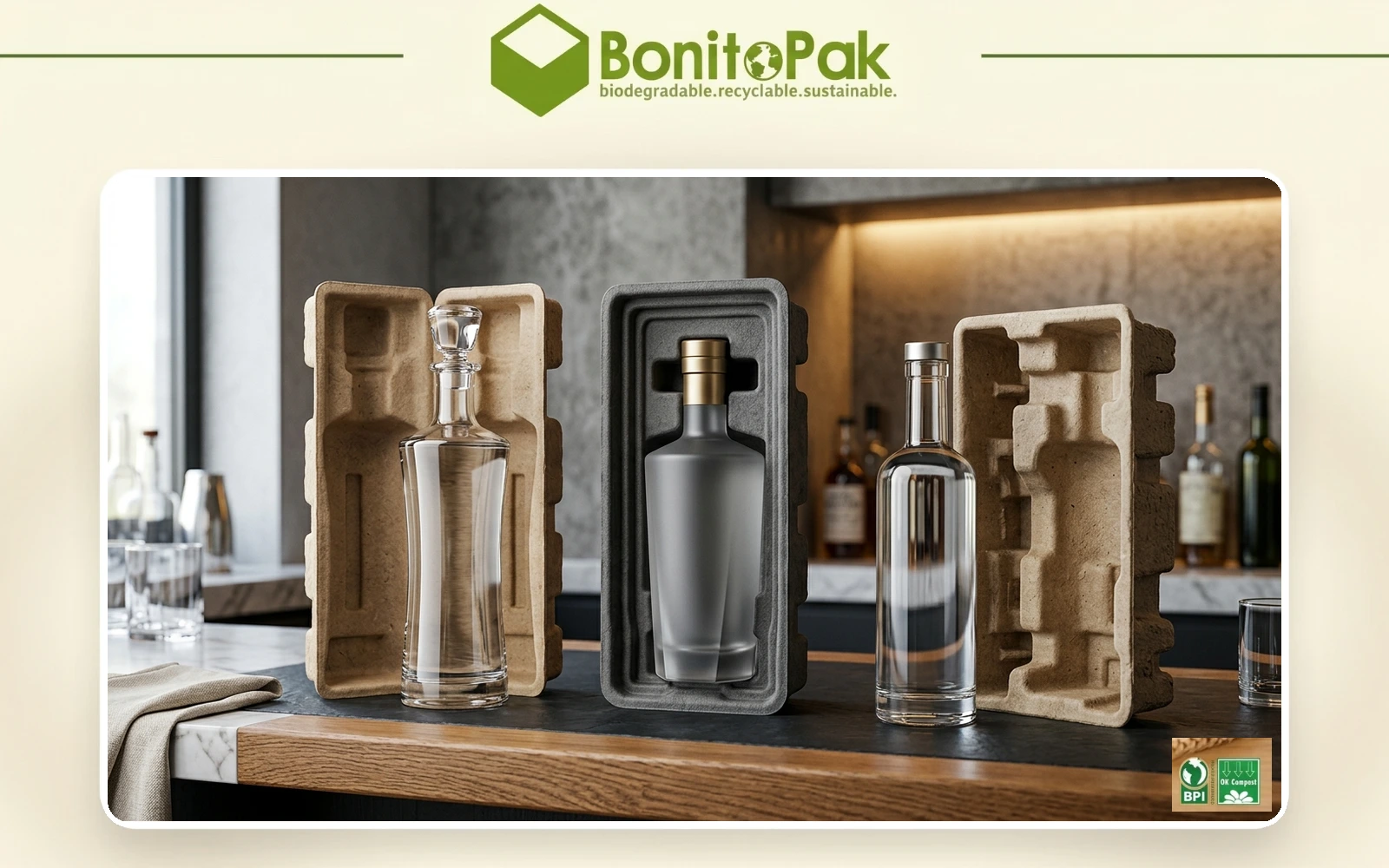
Molded Pulp 6 Egg Carton

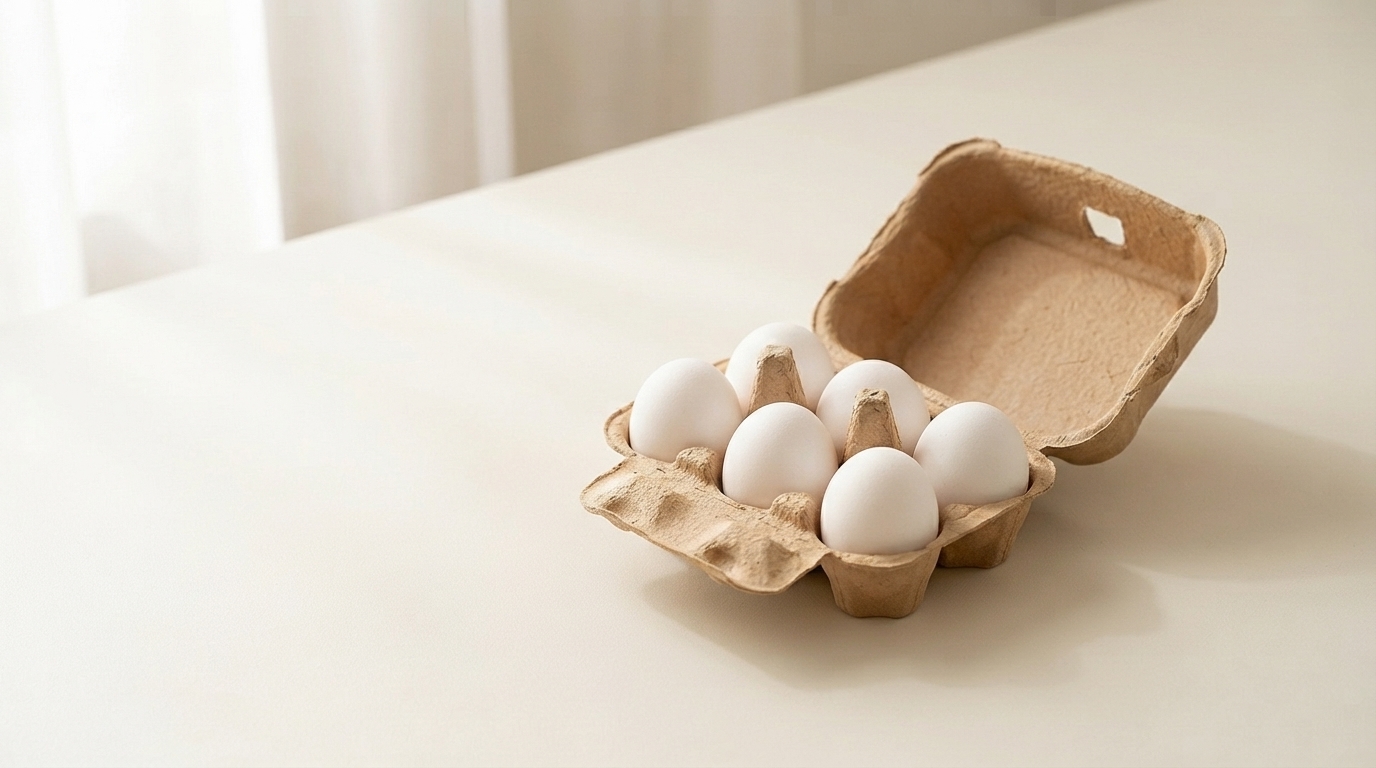
The BonitoPak molded pulp 6 egg carton is a half dozen pack with a deep six cell bed, sized for standard through jumbo chicken eggs.

  • Six cell 2×3 bed formed from 100% recycled paper pulp, biodegradable and home compostable
  • Cell depth holds standard, large, extra large, and jumbo eggs without lid pressure
  • Flat lid panel takes embossed, debossed, or printed branding across the full top face
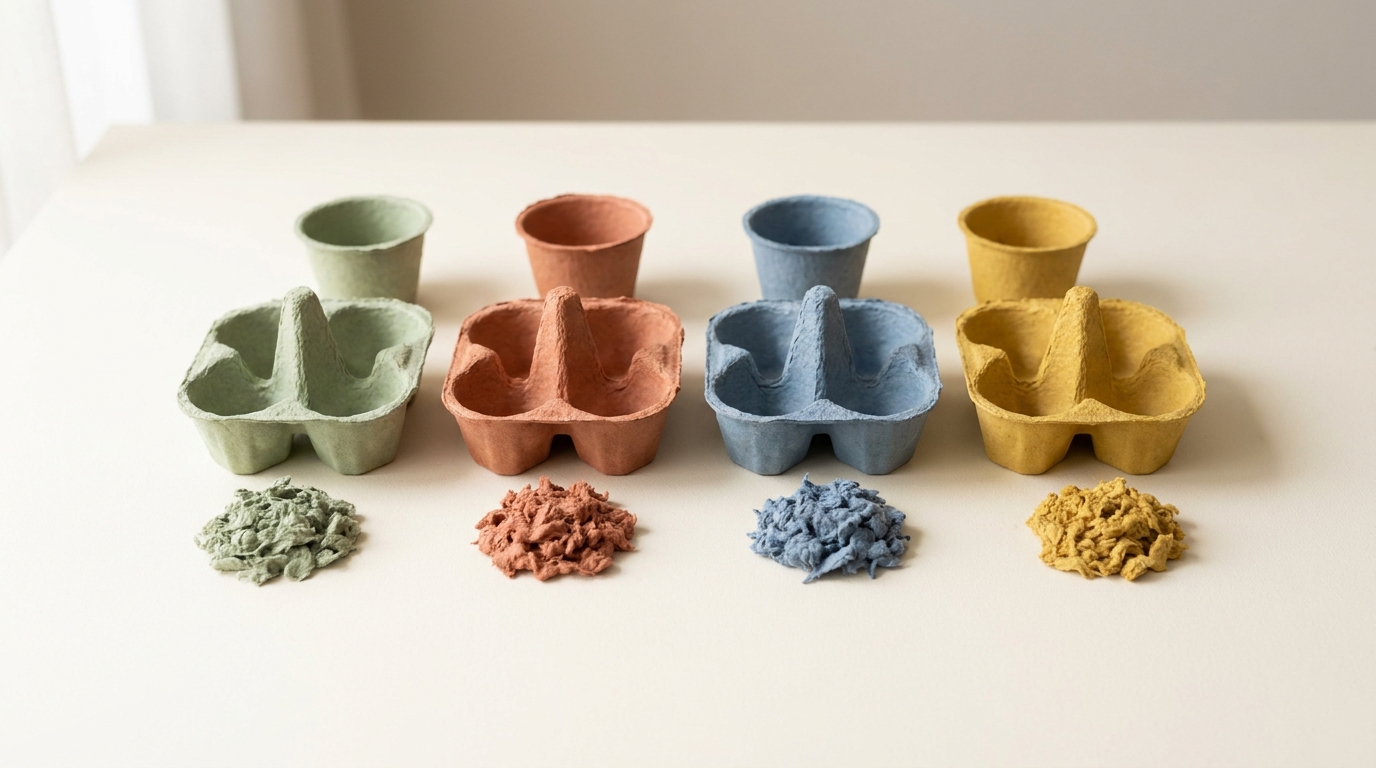
  • Available in natural pulp plus six stock colors, with custom shade matching on request
  • Nests flat for shipping, cutting inbound freight against clamshell plastic alternatives
  • Locking front tab holds shut through transit without tape or shrink wrap
  • OEM and ODM sizing accepted; blank stock molds and custom tooling both available

Molde público

Soluções de embalagem

Design 3D

Molde personalizado

Descrição do produto

Specification Table

Especificação Detalhes
Nome da marca BonitoPak
Número do modelo EC-06
Nome do produto 6 Egg Carton / Half Dozen Pulp Carton
Material Polpa de papel reciclado
Tipo de papel Papel reciclado pós-consumo
Técnica Moldagem de polpa (prensagem a úmido)
Contagem de células 6 cells, 2×3 layout
Faixa de tamanho dos ovos Ovos de galinha, do tamanho padrão ao jumbo
Dimensões externas 175 x 105 x 75 mm (6.9 x 4.1 x 3.0 in)
Peso unitário 28 to 34 g
Cor Polpa natural; seis cores padrão; combinação de cores personalizada
Forma e estilo Top-fold clamshell with front locking tab
Impressão do logotipo Estampagem em relevo, em baixo-relevo ou flexográfica
Uso industrial Poultry farms, farm stands, retail grocery, gift packing
Aplicativo Half dozen retail packs, specialty and premium egg lines
Tamanho Aceitamos dimensões OEM e personalizadas
Vantagens Biodegradable, home compostable, nestable, plastic free
Embalagem A granel, acondicionado em caixas de exportação; aceita-se embalagem personalizada
Pedido personalizado Aceito
MOQ Confirm with sales; stock molds carry a lower minimum than custom tooling

Galeria de Molded Pulp 6 Egg Carton peças

Esta galeria mostra a qualidade excepcional e a atenção aos detalhes que oferecemos em cada projeto. De designs complexos a acabamentos impecáveis, cada imagem reflete nosso compromisso com a excelência em Molded Pulp 6 Egg Carton .

40%

Economia de tempo e custo

Experimente as principais soluções de embalagem que otimizam seus custos e tempo, proporcionando processos eficientes e maximizando seu ROI.

50%

Mais sustentável

Obtenha embalagens ecologicamente corretas com materiais sustentáveis, reduzindo o desperdício e promovendo a responsabilidade ambiental em todas as suas linhas de produtos.

25%

Aumento nas vendas

Aumente o apelo do seu produto nas prateleiras com designs inovadores que aumentam a visibilidade e as vendas nos mercados de varejo e on-line.

100%

Mais confiável

Confie no compromisso da BonitoPak com a qualidade, garantindo que cada produto atenda aos nossos altos padrões com um serviço consistente e confiável.

Why the half dozen format sells differently

A 6 egg carton is not a twelve count cut in half. It serves a buyer with a different problem.

Small flock keepers rarely produce enough volume to fill dozens consistently. A backyard operation running fifteen hens through a molt might collect four dozen in a good week and two in a bad one. Packing in sixes lets them sell every egg they have instead of holding stock back to complete a dozen. That is the practical reason half dozen packs move so well at farm stands and roadside stalls.

The second buyer is the premium producer. Duck eggs, heritage breed eggs, and pasture raised lines carry a price that makes a full dozen feel expensive at the shelf. Splitting to six keeps the ticket price inside what a shopper will try on impulse. Producers who switch a premium line from twelve to six routinely see faster turns even though the price per egg goes up.

Cell depth is the spec that matters most

Most complaints about half dozen cartons trace back to one thing: the lid pressing on the eggs.

A carton molded for standard eggs has a cell bed around 45 mm deep. Drop a jumbo egg into it and roughly 8 mm of shell sits proud of the rim. Close the lid and that shell takes the load every time the carton is stacked, handled, or knocked in transit. Hairline cracks follow, usually invisible at packing and obvious to the customer at home.

Bonitopak molds the six cell bed deep enough to seat jumbo eggs below the lid line. That single dimension is why the same carton works across a flock that lays inconsistent sizes, which describes almost every small and mid-size operation. Buyers running a mixed flock do not have to sort by grade before packing.

What the 2×3 layout does for handling

Six cells can be laid out two ways. A 2×3 bed produces a short rectangular carton close to a paperback book. A 1×6 bed produces a long narrow one.

The 2×3 wins on almost every practical measure. It sits stable on a shelf without tipping. It fits a standard shipping case in clean multiples. Riders on a market table can stack it three high without the pile leaning. The long format only makes sense for a specific display fixture, which is rare outside of specialty grocers.

Wall geometry does the rest of the work. The ribs between cells are formed as continuous arches rather than flat dividers, so vertical load travels down the rib structure to the base instead of through the eggs. That is standard molded pulp practice and it is why paper cartons survive stacking that would crush a folded cardboard box of the same weight.

The print surface is larger than buyers expect

The top face of a half dozen carton gives roughly 180 square centimeters of flat panel. That is enough for a farm name, a logo, a lot code, and the nutrition or handling text most jurisdictions require.

Embossing and debossing work directly into the mold, so the branding is part of the carton rather than a layer applied to it. There is no ink to scuff, no label to peel in a cold room, and no added cost per unit once the tool exists. For a producer selling at markets, an embossed lid reads as a serious operation in a way a sticker does not.

Flexographic printing is the alternative when a design needs more than one element or a color that differs from the carton body. Print runs need higher volume to be economical, so most small producers start with embossing and move to print as they scale.

Freight math on nested cartons

Molded pulp cartons nest. A stack of 100 half dozen cartons compresses to a fraction of the height of 100 assembled plastic clamshells, because the pulp form collapses into itself while a rigid clamshell does not.

The effect on landed cost is significant on a full container. More units per cubic meter means fewer containers for the same order, and ocean freight is priced on volume long before it is priced on weight for a product this light. Buyers comparing pulp against foam or plastic on unit price alone often miss that the freight line moves the total in pulp’s favor.

Cartons also arrive dry and ready. There is no assembly step, no folding, and no glue, so packing crews handle one motion per carton instead of three.

Where the half dozen sits in a full range

Most producers do not run one size. A working range usually pairs the caixa de ovos para uma dúzia as the volume seller with the half dozen for premium and specialty lines, then adds a 4 caixas de ovos for gift packs and samplers.

Producers building a branded line usually specify the whole range in one shade, which is covered on the caixas de ovos coloridas page. Producers running ducks or bantams should check cell diameter before ordering, since those eggs sit differently in a bed cut for chickens. The same applies in reverse to quail egg cartons, which use a completely different cell geometry.

Why the half dozen format sells differently

A 6 egg carton is not a twelve count cut in half. It serves a buyer with a different problem.

Small flock keepers rarely produce enough volume to fill dozens consistently. A backyard operation running fifteen hens through a molt might collect four dozen in a good week and two in a bad one. Packing in sixes lets them sell every egg they have instead of holding stock back to complete a dozen. That is the practical reason half dozen packs move so well at farm stands and roadside stalls.

The second buyer is the premium producer. Duck eggs, heritage breed eggs, and pasture raised lines carry a price that makes a full dozen feel expensive at the shelf. Splitting to six keeps the ticket price inside what a shopper will try on impulse. Producers who switch a premium line from twelve to six routinely see faster turns even though the price per egg goes up.

Cell depth is the spec that matters most

Most complaints about half dozen cartons trace back to one thing: the lid pressing on the eggs.

A carton molded for standard eggs has a cell bed around 45 mm deep. Drop a jumbo egg into it and roughly 8 mm of shell sits proud of the rim. Close the lid and that shell takes the load every time the carton is stacked, handled, or knocked in transit. Hairline cracks follow, usually invisible at packing and obvious to the customer at home.

Bonitopak molds the six cell bed deep enough to seat jumbo eggs below the lid line. That single dimension is why the same carton works across a flock that lays inconsistent sizes, which describes almost every small and mid-size operation. Buyers running a mixed flock do not have to sort by grade before packing.

What the 2×3 layout does for handling

Six cells can be laid out two ways. A 2×3 bed produces a short rectangular carton close to a paperback book. A 1×6 bed produces a long narrow one.

The 2×3 wins on almost every practical measure. It sits stable on a shelf without tipping. It fits a standard shipping case in clean multiples. Riders on a market table can stack it three high without the pile leaning. The long format only makes sense for a specific display fixture, which is rare outside of specialty grocers.

Wall geometry does the rest of the work. The ribs between cells are formed as continuous arches rather than flat dividers, so vertical load travels down the rib structure to the base instead of through the eggs. That is standard molded pulp practice and it is why paper cartons survive stacking that would crush a folded cardboard box of the same weight.

The print surface is larger than buyers expect

The top face of a half dozen carton gives roughly 180 square centimeters of flat panel. That is enough for a farm name, a logo, a lot code, and the nutrition or handling text most jurisdictions require.

Embossing and debossing work directly into the mold, so the branding is part of the carton rather than a layer applied to it. There is no ink to scuff, no label to peel in a cold room, and no added cost per unit once the tool exists. For a producer selling at markets, an embossed lid reads as a serious operation in a way a sticker does not.

Flexographic printing is the alternative when a design needs more than one element or a color that differs from the carton body. Print runs need higher volume to be economical, so most small producers start with embossing and move to print as they scale.

Freight math on nested cartons

Molded pulp cartons nest. A stack of 100 half dozen cartons compresses to a fraction of the height of 100 assembled plastic clamshells, because the pulp form collapses into itself while a rigid clamshell does not.

The effect on landed cost is significant on a full container. More units per cubic meter means fewer containers for the same order, and ocean freight is priced on volume long before it is priced on weight for a product this light. Buyers comparing pulp against foam or plastic on unit price alone often miss that the freight line moves the total in pulp’s favor.

Cartons also arrive dry and ready. There is no assembly step, no folding, and no glue, so packing crews handle one motion per carton instead of three.

Where the half dozen sits in a full range

Most producers do not run one size. A working range usually pairs the caixa de ovos para uma dúzia as the volume seller with the half dozen for premium and specialty lines, then adds a 4 caixas de ovos for gift packs and samplers.

Producers building a branded line usually specify the whole range in one shade, which is covered on the caixas de ovos coloridas page. Producers running ducks or bantams should check cell diameter before ordering, since those eggs sit differently in a bed cut for chickens. The same applies in reverse to quail egg cartons, which use a completely different cell geometry.
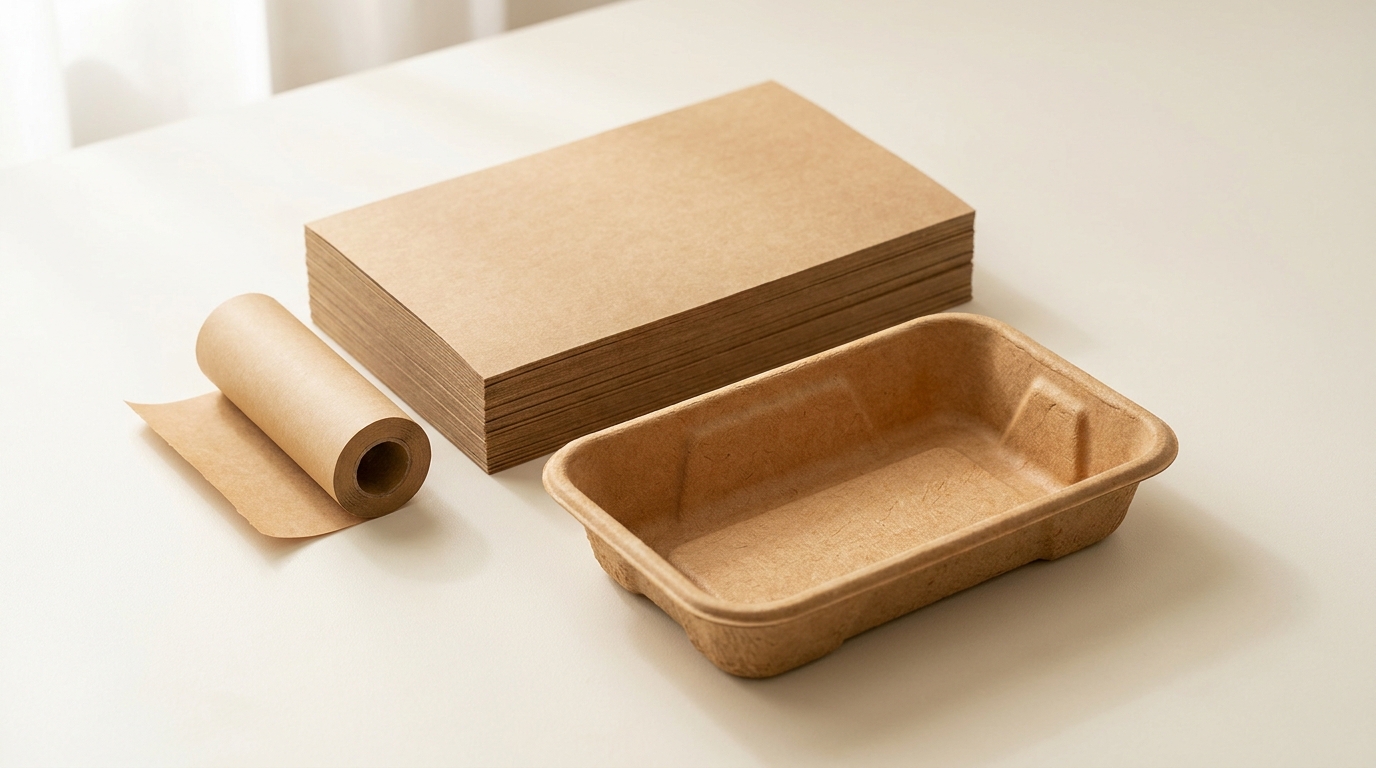
Materiais para Molded Pulp 6 Egg Carton Peças

Empresas e engenheiros líderes confiam no BonitoPak para iterações rápidas e peças duráveis e de alta qualidade. Seja para prototipagem ou produção em escala real, nossa ampla gama de materiais garante que atendamos aos requisitos exclusivos de qualquer Molded Pulp 6 Egg Carton projeto com precisão e rapidez.

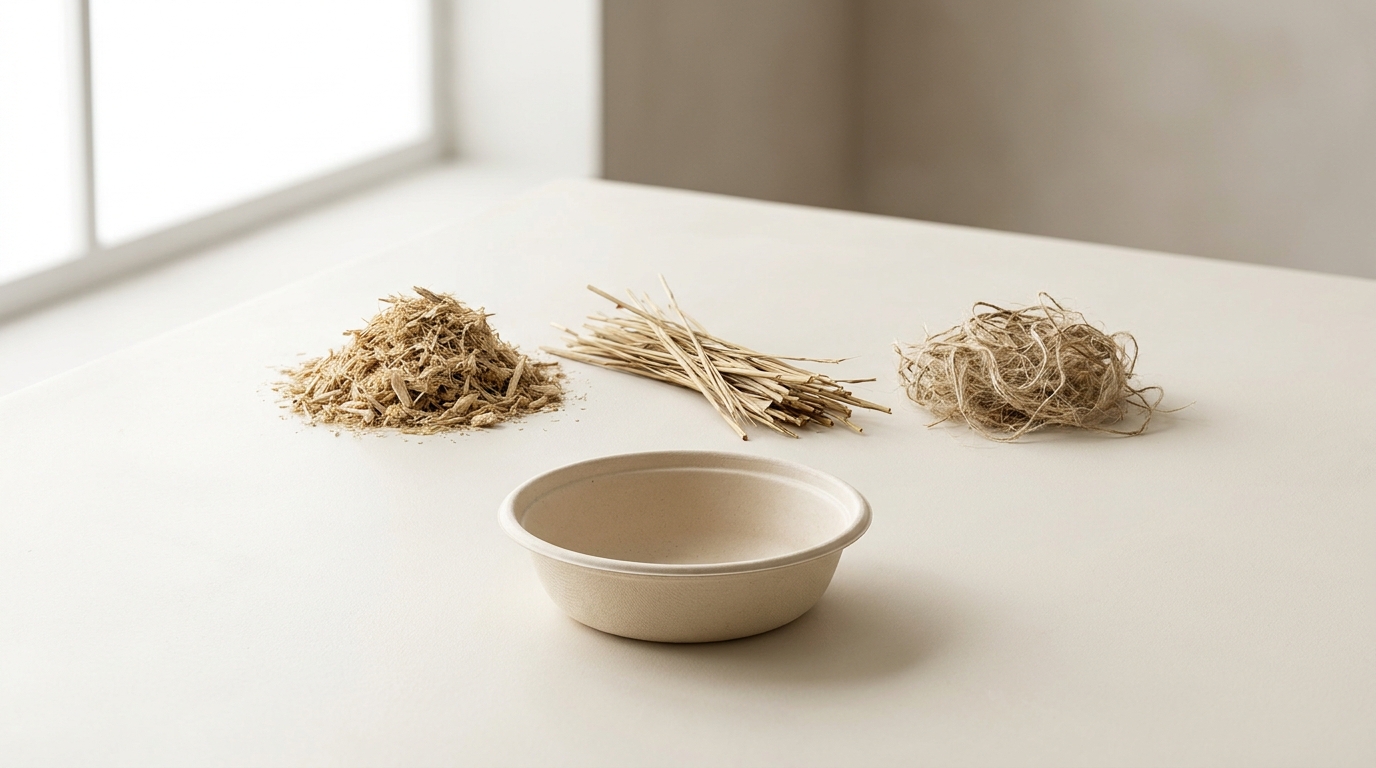
Compostable kraft paper is the strongest fiber we form. Made from virgin

Colored pulp is not a separate fiber. It is any of our

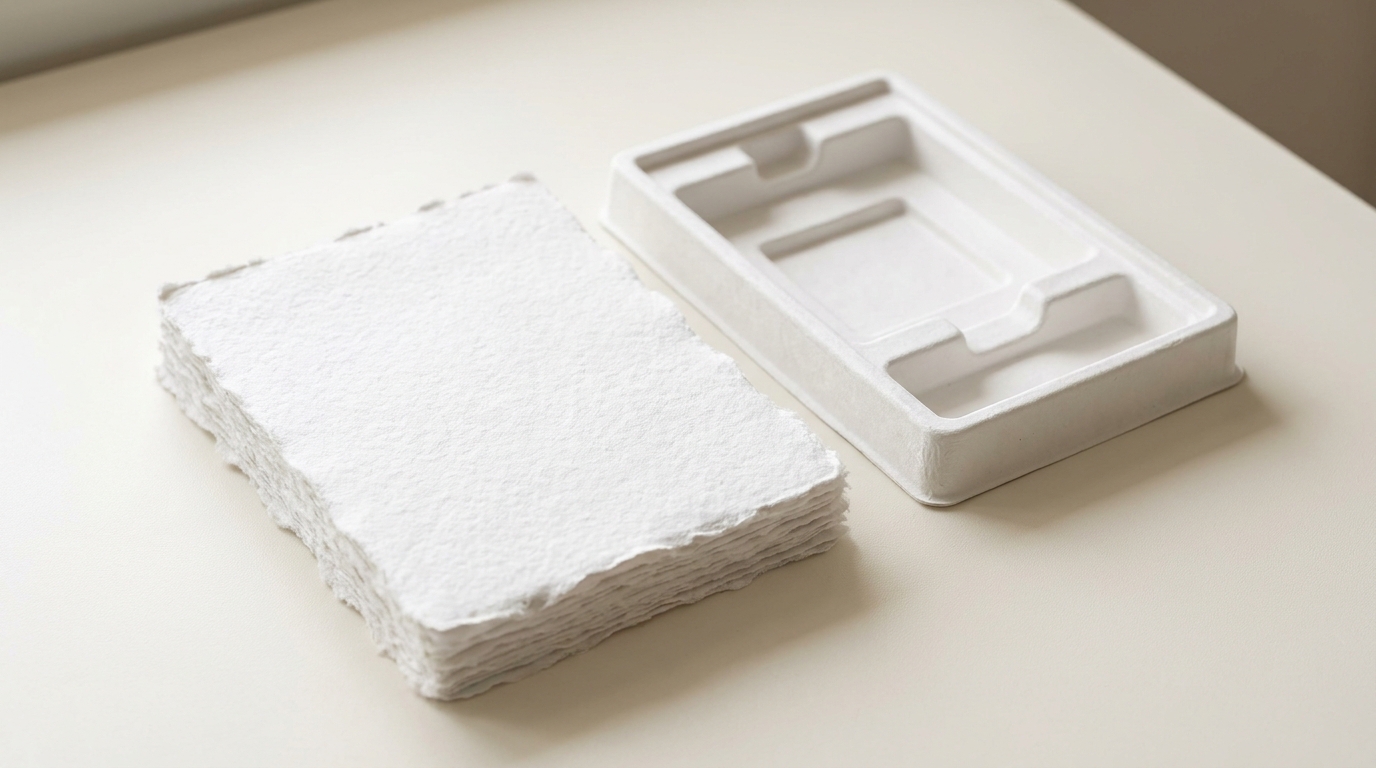
Bleached pulp is the material to specify when the part has to

Natural plant fiber covers the non-wood cellulose sources we blend outside the

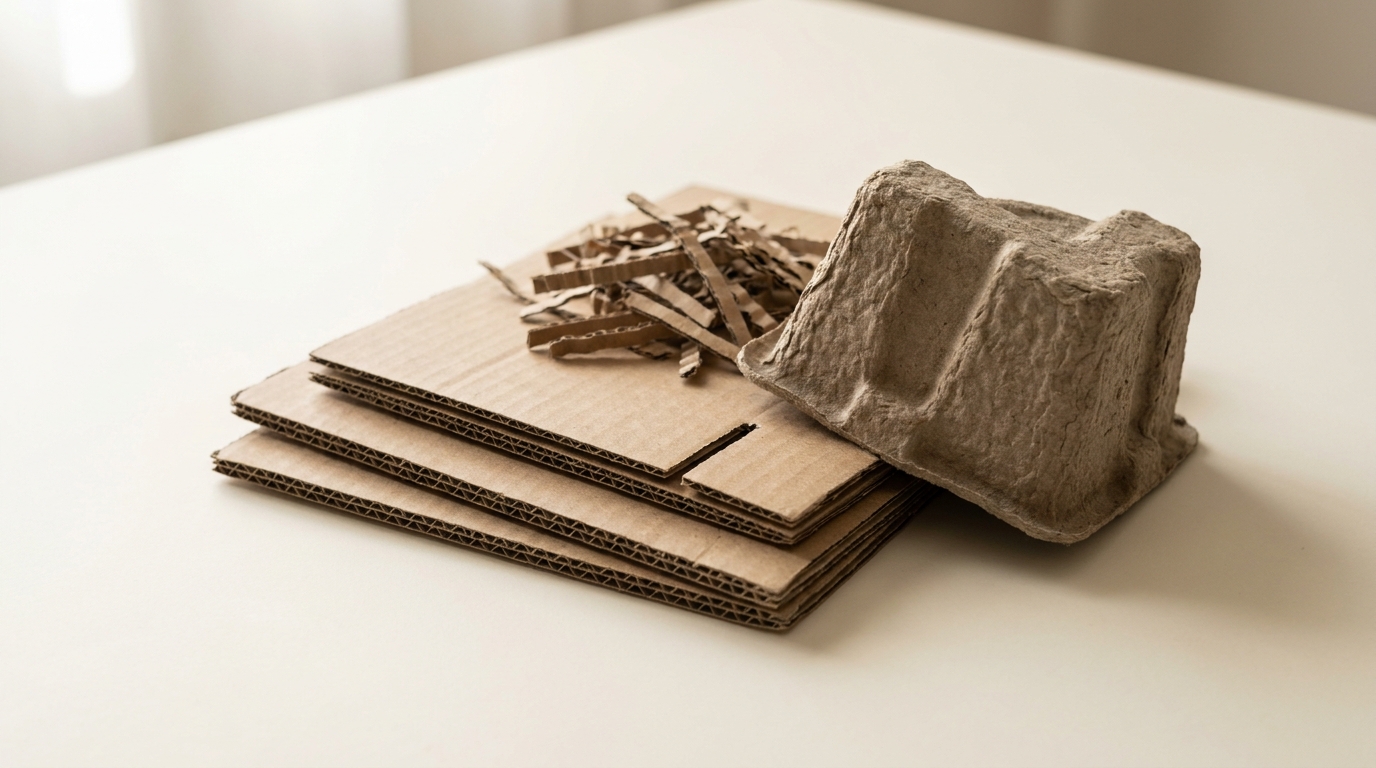
Corrugated paper as a molded pulp material means recovered cardboard boxes repulped

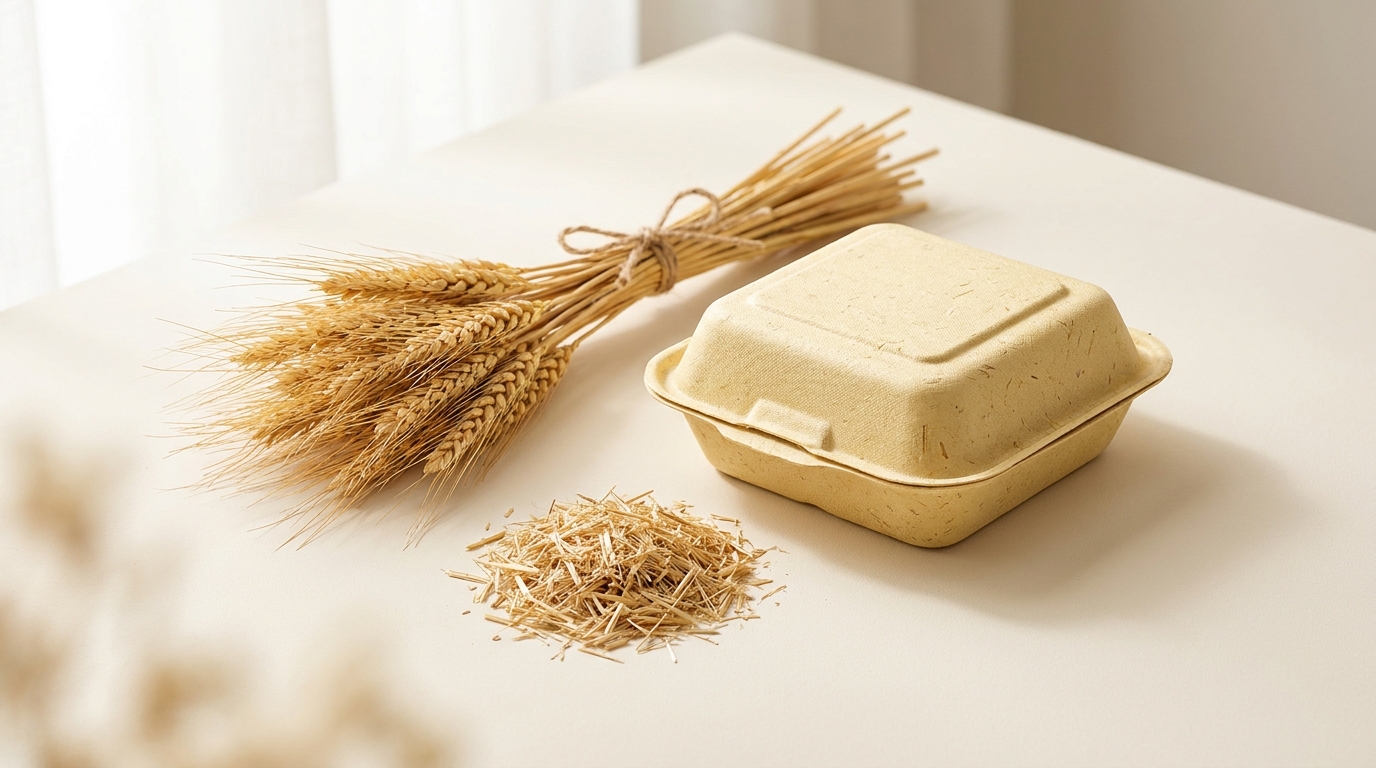
Straw fiber is made from the stalks left after grain harvest, material

Personalizado, ecológico e confiável

Excelência em embalagens personalizadas e ecologicamente corretas

Totalmente personalizável

Personalize sua embalagem com estilos, tamanhos, cores e acabamentos sob medida para atender a necessidades específicas.

Suporte especializado

A Bonitopak oferece consultoria especializada em design e logística para maximizar a eficiência da embalagem e aumentar o ROI.

Soluções ecológicas

Escolha embalagens sustentáveis e ecologicamente corretas para reduzir o impacto ambiental e apoiar as metas ecológicas de sua marca.

Garantia de qualidade

A Bonitopak garante serviço de alta qualidade e excelência de produto em cada solução de embalagem.

Perguntas frequentes (FAQ)

6 perguntas frequentes sobre bandejas para ovos

  • Com quanto tempo de antecedência devo fazer o pedido para um prazo sazonal?

    Mais do que a maioria dos compradores imagina, e o motivo está na aprovação, e não na produção. A aprovação da tonalidade de uma cor personalizada, a revisão da arte final de uma tiragem impressa e o tempo de trânsito do frete marítimo ocorrem antes da data em que você precisa receber as caixas. Os pedidos sazonais que dão errado quase sempre falham no ciclo de aprovação, e não na fabricação.

  • Com quanto tempo de antecedência devo fazer o pedido para cumprir um prazo sazonal?

    Mais do que a maioria dos compradores imagina, e o motivo está na aprovação, e não na produção. A aprovação da tonalidade de uma cor personalizada, a revisão da arte final de uma tiragem impressa e o tempo de trânsito do frete marítimo ocorrem antes da data em que você precisa receber as caixas. Os pedidos sazonais que dão errado quase sempre falham no ciclo de aprovação, e não na fabricação.

  • Essas embalagens atendem aos requisitos para contato com alimentos?

    Como os ovos ficam dentro de suas próprias cascas, as caixas de ovos são geralmente consideradas embalagens de contato secundário com alimentos, e não de contato direto, na maioria das jurisdições. Os requisitos ainda variam de acordo com o mercado, especialmente na UE, e os compradores devem verificar quais normas se aplicam no local onde vendem. Fornecemos declarações de composição do material mediante solicitação, para que sua equipe de conformidade possa avaliá-las em relação às normas locais.

  • Posso solicitar mais de uma contagem de células em uma única remessa?

    Sim, e a maioria dos compradores faz isso. Cargas mistas são cotadas por linha e consolidadas em um único contêiner, o que geralmente sai mais barato do que remessas separadas. O que muda é o cronograma de produção, já que cada molde é operado separadamente; portanto, um pedido misto pode ter um prazo de entrega um pouco mais longo do que um pedido de formato único com o mesmo volume total.

  • Qual é a diferença entre uma caixa de ovos de polpa moldada e uma de fibra moldada?

    Nada significativo. Os dois termos descrevem o mesmo processo e o mesmo material, e os compradores os utilizam de forma intercambiável, dependendo da região e do setor. A fibra moldada é mais comum em embalagens eletrônicas e industriais, enquanto a polpa moldada é mais comum nos setores de alimentos e agricultura. Ambos se referem à fibra que é puxada sobre um molde sob vácuo e prensada para assumir a forma desejada.

Resultado biodegradável

0 dias

7 dias

14 dias

30 dias

Setores especializados

Tendo produzido milhões de peças, a BonitoPak possui profundo conhecimento em diversas aplicações. Nós nos destacamos especialmente em setores que exigem a fabricação de componentes precisos e intrincados. Confie em nós para oferecer experiência e qualidade, independentemente da complexidade.

Soluções de embalagem OEM e ODM

A Bonitopak oferece soluções de embalagem personalizadas (OEM) e pré-projetadas (ODM). Independentemente de você precisar de designs totalmente personalizados ou de embalagens prontas para uso, fornecemos opções de alta qualidade, eficientes e flexíveis para atender às necessidades da sua marca.

Serviços OEM

As soluções de embalagem OEM permitem que você crie produtos totalmente personalizados, projetados e fabricados para atender às suas necessidades específicas. Na Bonitopak, oferecemos suporte abrangente durante todo o processo de design, prototipagem e fabricação, garantindo que sua embalagem reflita a identidade exclusiva de sua marca. Nossos recursos de fabricação de precisão garantem uma produção consistente e de alta qualidade, independentemente da complexidade do projeto. Com serviço de ponta a ponta, cuidamos de tudo, desde o conceito até a entrega, ajudando-o a otimizar suas necessidades de embalagem.

Serviços ODM

As soluções de embalagem ODM oferecem produtos pré-projetados que podem ser adaptados aos requisitos de sua marca. Com a experiência em design inovador e o processo de produção eficiente da Bonitopak, você pode escolher entre uma ampla gama de opções de embalagens prontas para uso. Oferecemos personalização flexível, permitindo que você adicione sua marca e selecione entre vários acabamentos, cores e tamanhos. Essa solução economiza tempo e custos e, ao mesmo tempo, garante embalagens de alta qualidade que atendem aos padrões de sua marca.
Pronto para elevar seu projeto?

Dê vida aos seus projetos com o BonitoPak

Experimente a engenharia de precisão com a BonitoPak. De protótipos detalhados à produção de alto volume, estamos aqui para transformar seus conceitos em realidade. Entre em contato conosco hoje mesmo para discutir as necessidades do seu projeto!

Nossas categorias de produtos

Descubra a gama diversificada de soluções de embalagem da Bonitopak, incluindo bandejas de polpa moldada, embalagens para alimentos, designs personalizados e opções sustentáveis. Cada categoria é criada para oferecer durabilidade, funcionalidade e responsabilidade ambiental, adaptada para atender às suas necessidades específicas.

Why the half dozen format sells differently

A 6 egg carton is not a twelve count cut in half. It serves a buyer with a different problem.

Small flock keepers rarely produce enough volume to fill dozens consistently. A backyard operation running fifteen hens through a molt might collect four dozen in a good week and two in a bad one. Packing in sixes lets them sell every egg they have instead of holding stock back to complete a dozen. That is the practical reason half dozen packs move so well at farm stands and roadside stalls.

The second buyer is the premium producer. Duck eggs, heritage breed eggs, and pasture raised lines carry a price that makes a full dozen feel expensive at the shelf. Splitting to six keeps the ticket price inside what a shopper will try on impulse. Producers who switch a premium line from twelve to six routinely see faster turns even though the price per egg goes up.

Cell depth is the spec that matters most

Most complaints about half dozen cartons trace back to one thing: the lid pressing on the eggs.

A carton molded for standard eggs has a cell bed around 45 mm deep. Drop a jumbo egg into it and roughly 8 mm of shell sits proud of the rim. Close the lid and that shell takes the load every time the carton is stacked, handled, or knocked in transit. Hairline cracks follow, usually invisible at packing and obvious to the customer at home.

Bonitopak molds the six cell bed deep enough to seat jumbo eggs below the lid line. That single dimension is why the same carton works across a flock that lays inconsistent sizes, which describes almost every small and mid-size operation. Buyers running a mixed flock do not have to sort by grade before packing.

What the 2×3 layout does for handling

Six cells can be laid out two ways. A 2×3 bed produces a short rectangular carton close to a paperback book. A 1×6 bed produces a long narrow one.

The 2×3 wins on almost every practical measure. It sits stable on a shelf without tipping. It fits a standard shipping case in clean multiples. Riders on a market table can stack it three high without the pile leaning. The long format only makes sense for a specific display fixture, which is rare outside of specialty grocers.

Wall geometry does the rest of the work. The ribs between cells are formed as continuous arches rather than flat dividers, so vertical load travels down the rib structure to the base instead of through the eggs. That is standard molded pulp practice and it is why paper cartons survive stacking that would crush a folded cardboard box of the same weight.

The print surface is larger than buyers expect

The top face of a half dozen carton gives roughly 180 square centimeters of flat panel. That is enough for a farm name, a logo, a lot code, and the nutrition or handling text most jurisdictions require.

Embossing and debossing work directly into the mold, so the branding is part of the carton rather than a layer applied to it. There is no ink to scuff, no label to peel in a cold room, and no added cost per unit once the tool exists. For a producer selling at markets, an embossed lid reads as a serious operation in a way a sticker does not.

Flexographic printing is the alternative when a design needs more than one element or a color that differs from the carton body. Print runs need higher volume to be economical, so most small producers start with embossing and move to print as they scale.

Freight math on nested cartons

Molded pulp cartons nest. A stack of 100 half dozen cartons compresses to a fraction of the height of 100 assembled plastic clamshells, because the pulp form collapses into itself while a rigid clamshell does not.

The effect on landed cost is significant on a full container. More units per cubic meter means fewer containers for the same order, and ocean freight is priced on volume long before it is priced on weight for a product this light. Buyers comparing pulp against foam or plastic on unit price alone often miss that the freight line moves the total in pulp’s favor.

Cartons also arrive dry and ready. There is no assembly step, no folding, and no glue, so packing crews handle one motion per carton instead of three.

Where the half dozen sits in a full range

Most producers do not run one size. A working range usually pairs the caixa de ovos para uma dúzia as the volume seller with the half dozen for premium and specialty lines, then adds a 4 caixas de ovos for gift packs and samplers.

Producers building a branded line usually specify the whole range in one shade, which is covered on the caixas de ovos coloridas page. Producers running ducks or bantams should check cell diameter before ordering, since those eggs sit differently in a bed cut for chickens. The same applies in reverse to quail egg cartons, which use a completely different cell geometry.
Why the half dozen format sells differently

A 6 egg carton is not a twelve count cut in half. It serves a buyer with a different problem.

Small flock keepers rarely produce enough volume to fill dozens consistently. A backyard operation running fifteen hens through a molt might collect four dozen in a good week and two in a bad one. Packing in sixes lets them sell every egg they have instead of holding stock back to complete a dozen. That is the practical reason half dozen packs move so well at farm stands and roadside stalls.

The second buyer is the premium producer. Duck eggs, heritage breed eggs, and pasture raised lines carry a price that makes a full dozen feel expensive at the shelf. Splitting to six keeps the ticket price inside what a shopper will try on impulse. Producers who switch a premium line from twelve to six routinely see faster turns even though the price per egg goes up.

Cell depth is the spec that matters most

Most complaints about half dozen cartons trace back to one thing: the lid pressing on the eggs.

A carton molded for standard eggs has a cell bed around 45 mm deep. Drop a jumbo egg into it and roughly 8 mm of shell sits proud of the rim. Close the lid and that shell takes the load every time the carton is stacked, handled, or knocked in transit. Hairline cracks follow, usually invisible at packing and obvious to the customer at home.

Bonitopak molds the six cell bed deep enough to seat jumbo eggs below the lid line. That single dimension is why the same carton works across a flock that lays inconsistent sizes, which describes almost every small and mid-size operation. Buyers running a mixed flock do not have to sort by grade before packing.

What the 2×3 layout does for handling

Six cells can be laid out two ways. A 2×3 bed produces a short rectangular carton close to a paperback book. A 1×6 bed produces a long narrow one.

The 2×3 wins on almost every practical measure. It sits stable on a shelf without tipping. It fits a standard shipping case in clean multiples. Riders on a market table can stack it three high without the pile leaning. The long format only makes sense for a specific display fixture, which is rare outside of specialty grocers.

Wall geometry does the rest of the work. The ribs between cells are formed as continuous arches rather than flat dividers, so vertical load travels down the rib structure to the base instead of through the eggs. That is standard molded pulp practice and it is why paper cartons survive stacking that would crush a folded cardboard box of the same weight.

The print surface is larger than buyers expect

The top face of a half dozen carton gives roughly 180 square centimeters of flat panel. That is enough for a farm name, a logo, a lot code, and the nutrition or handling text most jurisdictions require.

Embossing and debossing work directly into the mold, so the branding is part of the carton rather than a layer applied to it. There is no ink to scuff, no label to peel in a cold room, and no added cost per unit once the tool exists. For a producer selling at markets, an embossed lid reads as a serious operation in a way a sticker does not.

Flexographic printing is the alternative when a design needs more than one element or a color that differs from the carton body. Print runs need higher volume to be economical, so most small producers start with embossing and move to print as they scale.

Freight math on nested cartons

Molded pulp cartons nest. A stack of 100 half dozen cartons compresses to a fraction of the height of 100 assembled plastic clamshells, because the pulp form collapses into itself while a rigid clamshell does not.

The effect on landed cost is significant on a full container. More units per cubic meter means fewer containers for the same order, and ocean freight is priced on volume long before it is priced on weight for a product this light. Buyers comparing pulp against foam or plastic on unit price alone often miss that the freight line moves the total in pulp’s favor.

Cartons also arrive dry and ready. There is no assembly step, no folding, and no glue, so packing crews handle one motion per carton instead of three.

Where the half dozen sits in a full range

Most producers do not run one size. A working range usually pairs the caixa de ovos para uma dúzia as the volume seller with the half dozen for premium and specialty lines, then adds a 4 caixas de ovos for gift packs and samplers.

Producers building a branded line usually specify the whole range in one shade, which is covered on the caixas de ovos coloridas page. Producers running ducks or bantams should check cell diameter before ordering, since those eggs sit differently in a bed cut for chickens. The same applies in reverse to quail egg cartons, which use a completely different cell geometry.
Artigos e insights relacionados

Mantenha-se informado com as últimas atualizações sobre tendências de embalagens sustentáveis, percepções do setor e dicas de especialistas em nosso blog. Explore ideias e soluções inovadoras para aprimorar seu conhecimento sobre embalagens.

Vietnam has become a serious alternative for buyers who want molded fiber packaging from outside

Searching for custom printed egg cartons turns up two very different kinds of company, and

Por Leo Chan | Redator, BonitoPak | Mais de 20 anos na área de embalagens de polpa moldada. A vodca é

Perguntas frequentes (FAQ)

6 perguntas frequentes sobre bandejas para ovos

  • Com quanto tempo de antecedência devo fazer o pedido para um prazo sazonal?

    Mais do que a maioria dos compradores imagina, e o motivo está na aprovação, e não na produção. A aprovação da tonalidade de uma cor personalizada, a revisão da arte final de uma tiragem impressa e o tempo de trânsito do frete marítimo ocorrem antes da data em que você precisa receber as caixas. Os pedidos sazonais que dão errado quase sempre falham no ciclo de aprovação, e não na fabricação.

  • Com quanto tempo de antecedência devo fazer o pedido para cumprir um prazo sazonal?

    Mais do que a maioria dos compradores imagina, e o motivo está na aprovação, e não na produção. A aprovação da tonalidade de uma cor personalizada, a revisão da arte final de uma tiragem impressa e o tempo de trânsito do frete marítimo ocorrem antes da data em que você precisa receber as caixas. Os pedidos sazonais que dão errado quase sempre falham no ciclo de aprovação, e não na fabricação.

  • Essas embalagens atendem aos requisitos para contato com alimentos?

    Como os ovos ficam dentro de suas próprias cascas, as caixas de ovos são geralmente consideradas embalagens de contato secundário com alimentos, e não de contato direto, na maioria das jurisdições. Os requisitos ainda variam de acordo com o mercado, especialmente na UE, e os compradores devem verificar quais normas se aplicam no local onde vendem. Fornecemos declarações de composição do material mediante solicitação, para que sua equipe de conformidade possa avaliá-las em relação às normas locais.

  • Posso solicitar mais de uma contagem de células em uma única remessa?

    Sim, e a maioria dos compradores faz isso. Cargas mistas são cotadas por linha e consolidadas em um único contêiner, o que geralmente sai mais barato do que remessas separadas. O que muda é o cronograma de produção, já que cada molde é operado separadamente; portanto, um pedido misto pode ter um prazo de entrega um pouco mais longo do que um pedido de formato único com o mesmo volume total.

  • Qual é a diferença entre uma caixa de ovos de polpa moldada e uma de fibra moldada?

    Nada significativo. Os dois termos descrevem o mesmo processo e o mesmo material, e os compradores os utilizam de forma intercambiável, dependendo da região e do setor. A fibra moldada é mais comum em embalagens eletrônicas e industriais, enquanto a polpa moldada é mais comum nos setores de alimentos e agricultura. Ambos se referem à fibra que é puxada sobre um molde sob vácuo e prensada para assumir a forma desejada.

Preencha este formulário detalhado