Molded Pulp 18 Egg Carton

The BonitoPak molded pulp 18 egg carton is a value pack format with a reinforced center rib, built for pallet stacking and high turn retail.

  • Eighteen cell 3×6 bed with a reinforced center rib for span support
  • Fabricado com polpa de papel reciclado 100%, biodegradável e compostável em casa
  • Twin locking tabs hold the wider lid flat under stacking load
  • Sized to standard US value pack shelf channels
  • Rated for deeper pallet stacks than a comparable twelve count
  • Polpa natural mais seis cores padrão; disponibilizamos a combinação personalizada de tons
  • OEM and ODM sizing accepted; blank and printed both supplied

Molde público

Soluções de embalagem

Design 3D

Molde personalizado

egg cartons stacked on a pallet showing reinforced lid profile

Descrição do produto

EspecificaçãoDetalhes
Nome da marcaBonitoPak
Número do modeloEC-18
Nome do produto18 Egg Carton / 18 Count Value Pack Carton
MaterialPolpa de papel reciclado
Tipo de papelPapel reciclado pós-consumo
TécnicaMoldagem de polpa (prensagem a úmido)
Contagem de células18 cells, 3×6 layout
Faixa de tamanho dos ovosOvos de galinha, do tamanho padrão ao jumbo
Dimensões externas305 x 155 x 75 mm (12.0 x 6.1 x 3.0 in)
Peso unitário68 to 80 g
CorPolpa natural; seis cores padrão; combinação de cores personalizada
Forma e estiloTop-fold clamshell with twin front locking tabs
Impressão do logotipoEstampagem em relevo, em baixo-relevo ou flexográfica
Uso industrialGrading stations, warehouse clubs, value retail, food service
AplicativoValue packs, club store formats, high volume households
TamanhoAceitamos dimensões OEM e personalizadas
VantagensBiodegradable, home compostable, nestable, plastic free
EmbalagemA granel, acondicionado em caixas de exportação; aceita-se embalagem personalizada
Pedido personalizadoAceito
MOQConfirm with sales; stock molds carry a lower minimum than custom tooling

Galeria de Molded Pulp 18 Egg Carton peças

Esta galeria mostra a qualidade excepcional e a atenção aos detalhes que oferecemos em cada projeto. De designs complexos a acabamentos impecáveis, cada imagem reflete nosso compromisso com a excelência em Molded Pulp 18 Egg Carton .

40%

Economia de tempo e custo

Experimente as principais soluções de embalagem que otimizam seus custos e tempo, proporcionando processos eficientes e maximizando seu ROI.

50%

Mais sustentável

Obtenha embalagens ecologicamente corretas com materiais sustentáveis, reduzindo o desperdício e promovendo a responsabilidade ambiental em todas as suas linhas de produtos.

25%

Aumento nas vendas

Aumente o apelo do seu produto nas prateleiras com designs inovadores que aumentam a visibilidade e as vendas nos mercados de varejo e on-line.

100%

Mais confiável

Confie no compromisso da BonitoPak com a qualidade, garantindo que cada produto atenda aos nossos altos padrões com um serviço consistente e confiável.

An eighteen count is an engineering problem, not a bigger dozen

Add six cells to a twelve count and something has to change structurally. That is the part buyers miss when they assume an 18 egg carton is simply a longer version of the standard.

The issue is span. A twelve count lid bridges roughly 105 mm across its short axis. An eighteen count bridges 155 mm. Half again as much unsupported width, carrying the same or greater stacking load, on the same fiber thickness. Without a change to the geometry, the lid bows in the middle and the load transfers onto the center row of eggs.

Our eighteen count solves this with a reinforced rib running the length of the lid center, plus deeper cone geometry on the middle row. The rib turns a wide flat panel into two narrower spans, which is the same principle a floor joist uses. It is invisible once the carton is filled and it is the reason the format survives deep pallet stacks.

Why eighteen counts grew

The eighteen count exists because of how American households actually buy eggs.

Value pack formats sit in a specific gap. A dozen runs out quickly in a family of four. A thirty count flat is more than most home refrigerators can shelve and does not reclose properly once opened. Eighteen fits the door shelf on most US refrigerators, reclosd cleanly, and prices below two dozens bought separately.

Warehouse clubs pushed the format first, and mainstream grocery followed. For a producer, it means one more SKU that sells on price per egg rather than on brand, which changes the packaging brief. Value pack buyers are less responsive to premium finishes and more responsive to a carton that arrives intact.

Twin tabs and why a single closure fails

A wider lid needs two closure points.

Single tab closures work up to roughly 120 mm of lid width. Past that, the lid corners lift because the tab holds the center while the ends stay free. Once a corner lifts, the carton no longer stacks square, and a leaning stack is how pallets collapse.

The twin tab arrangement on our eighteen count places closures inboard of each end, so the lid is held at two points that divide the free span into thirds. The carton sits flat, stacks square, and the closure force per tab drops, which also makes it easier to open by hand.

Stacking and pallet math

Filled, this format runs close to 1.1 kilograms. A standard export pallet configuration puts real compressive load on the bottom layer, and the arithmetic gets serious fast in a deep stack.

Pulp cartons handle this better than most buyers expect because the load path is internal. The cone columns between cells engage as soon as the lid closes, so the carton behaves like a small frame structure rather than a box. Testing on molded pulp egg cartons routinely shows top load figures well above what the same weight of folded board achieves.

That said, top load performance is a function of forming pressure and fiber density, not of the format itself. If you are comparing suppliers on an eighteen count, ask for the top load figure and the test method rather than accepting a general durability claim.

Where the format struggles

Two honest limitations are worth stating.

Printing an eighteen count costs more per unit than a twelve, simply because the panel is larger and the print area scales with it. Value pack economics are tight, so many producers run these blank or embossed only and put the branding on a wrap or a label instead.

Second, eighteen counts do not nest quite as efficiently as smaller formats, because the reinforcing rib interrupts the nesting profile. The difference is small, in the range of a millimeter or two per carton, but on a full container it is real. We factor it into loading calculations at quotation rather than quoting a generic figure.

Case fit and how retailers order it

Eighteen counts are almost always sold by the case rather than by the carton, and case configuration is worth settling before tooling. Most US distributors work in cases of eight or twelve, since those numbers divide cleanly onto a standard pallet footprint without overhang. A configuration that leaves cartons hanging past the pallet edge will be rejected at receiving regardless of how well the packaging performs, so we confirm case dimensions against your pallet standard at quotation.

Building the range around it

Producers rarely run an eighteen count alone. It works as the value anchor beneath a caixa de ovos para uma dúzia doing the volume, with a Caixa de 6 ovos carrying the premium line above both.

Buyers packing across grades should read the chicken egg carton page, since the size class question decides cell depth for all three formats at once. Anyone specifying color across a full range should start at caixas de ovos coloridas, where shade consistency between molds is covered in detail.

An eighteen count is an engineering problem, not a bigger dozen

Add six cells to a twelve count and something has to change structurally. That is the part buyers miss when they assume an 18 egg carton is simply a longer version of the standard.

The issue is span. A twelve count lid bridges roughly 105 mm across its short axis. An eighteen count bridges 155 mm. Half again as much unsupported width, carrying the same or greater stacking load, on the same fiber thickness. Without a change to the geometry, the lid bows in the middle and the load transfers onto the center row of eggs.

Our eighteen count solves this with a reinforced rib running the length of the lid center, plus deeper cone geometry on the middle row. The rib turns a wide flat panel into two narrower spans, which is the same principle a floor joist uses. It is invisible once the carton is filled and it is the reason the format survives deep pallet stacks.

Why eighteen counts grew

The eighteen count exists because of how American households actually buy eggs.

Value pack formats sit in a specific gap. A dozen runs out quickly in a family of four. A thirty count flat is more than most home refrigerators can shelve and does not reclose properly once opened. Eighteen fits the door shelf on most US refrigerators, reclosd cleanly, and prices below two dozens bought separately.

Warehouse clubs pushed the format first, and mainstream grocery followed. For a producer, it means one more SKU that sells on price per egg rather than on brand, which changes the packaging brief. Value pack buyers are less responsive to premium finishes and more responsive to a carton that arrives intact.

Twin tabs and why a single closure fails

A wider lid needs two closure points.

Single tab closures work up to roughly 120 mm of lid width. Past that, the lid corners lift because the tab holds the center while the ends stay free. Once a corner lifts, the carton no longer stacks square, and a leaning stack is how pallets collapse.

The twin tab arrangement on our eighteen count places closures inboard of each end, so the lid is held at two points that divide the free span into thirds. The carton sits flat, stacks square, and the closure force per tab drops, which also makes it easier to open by hand.

Stacking and pallet math

Filled, this format runs close to 1.1 kilograms. A standard export pallet configuration puts real compressive load on the bottom layer, and the arithmetic gets serious fast in a deep stack.

Pulp cartons handle this better than most buyers expect because the load path is internal. The cone columns between cells engage as soon as the lid closes, so the carton behaves like a small frame structure rather than a box. Testing on molded pulp egg cartons routinely shows top load figures well above what the same weight of folded board achieves.

That said, top load performance is a function of forming pressure and fiber density, not of the format itself. If you are comparing suppliers on an eighteen count, ask for the top load figure and the test method rather than accepting a general durability claim.

Where the format struggles

Two honest limitations are worth stating.

Printing an eighteen count costs more per unit than a twelve, simply because the panel is larger and the print area scales with it. Value pack economics are tight, so many producers run these blank or embossed only and put the branding on a wrap or a label instead.

Second, eighteen counts do not nest quite as efficiently as smaller formats, because the reinforcing rib interrupts the nesting profile. The difference is small, in the range of a millimeter or two per carton, but on a full container it is real. We factor it into loading calculations at quotation rather than quoting a generic figure.

Case fit and how retailers order it

Eighteen counts are almost always sold by the case rather than by the carton, and case configuration is worth settling before tooling. Most US distributors work in cases of eight or twelve, since those numbers divide cleanly onto a standard pallet footprint without overhang. A configuration that leaves cartons hanging past the pallet edge will be rejected at receiving regardless of how well the packaging performs, so we confirm case dimensions against your pallet standard at quotation.

Building the range around it

Producers rarely run an eighteen count alone. It works as the value anchor beneath a caixa de ovos para uma dúzia doing the volume, with a Caixa de 6 ovos carrying the premium line above both.

Buyers packing across grades should read the chicken egg carton page, since the size class question decides cell depth for all three formats at once. Anyone specifying color across a full range should start at caixas de ovos coloridas, where shade consistency between molds is covered in detail.
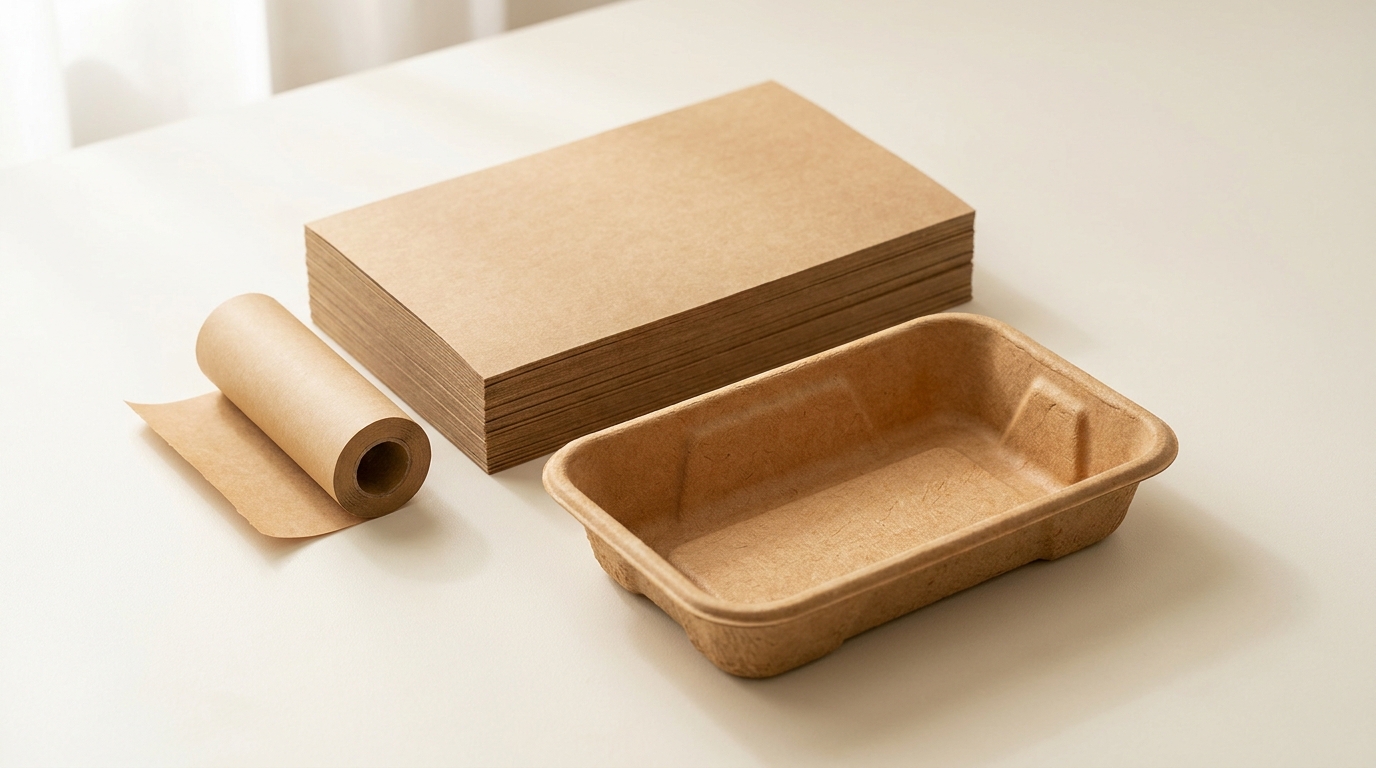
Materiais para Molded Pulp 18 Egg Carton Peças

Empresas e engenheiros líderes confiam no BonitoPak para iterações rápidas e peças duráveis e de alta qualidade. Seja para prototipagem ou produção em escala real, nossa ampla gama de materiais garante que atendamos aos requisitos exclusivos de qualquer Molded Pulp 18 Egg Carton projeto com precisão e rapidez.

Compostable kraft paper is the strongest fiber we form. Made from virgin

Colored pulp is not a separate fiber. It is any of our

Bleached pulp is the material to specify when the part has to

Natural plant fiber covers the non-wood cellulose sources we blend outside the

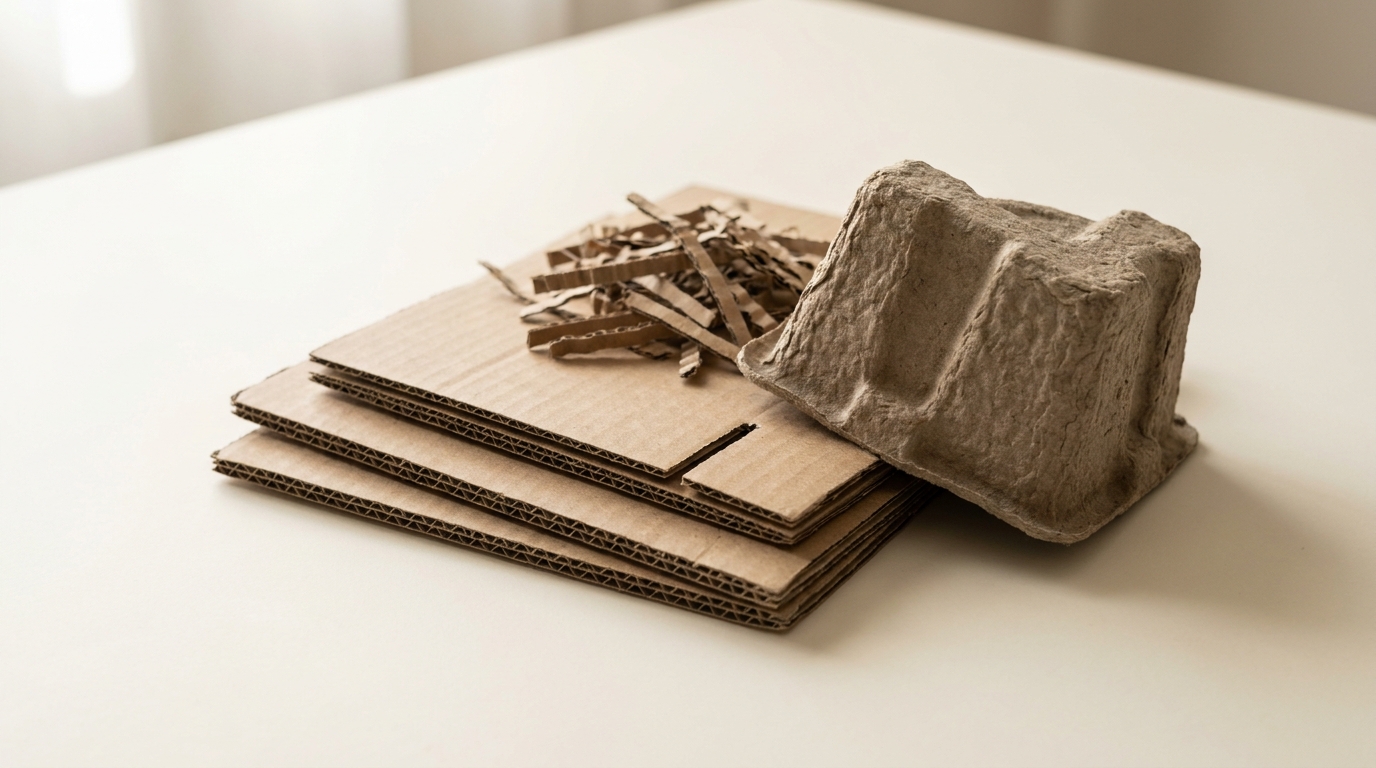
Corrugated paper as a molded pulp material means recovered cardboard boxes repulped

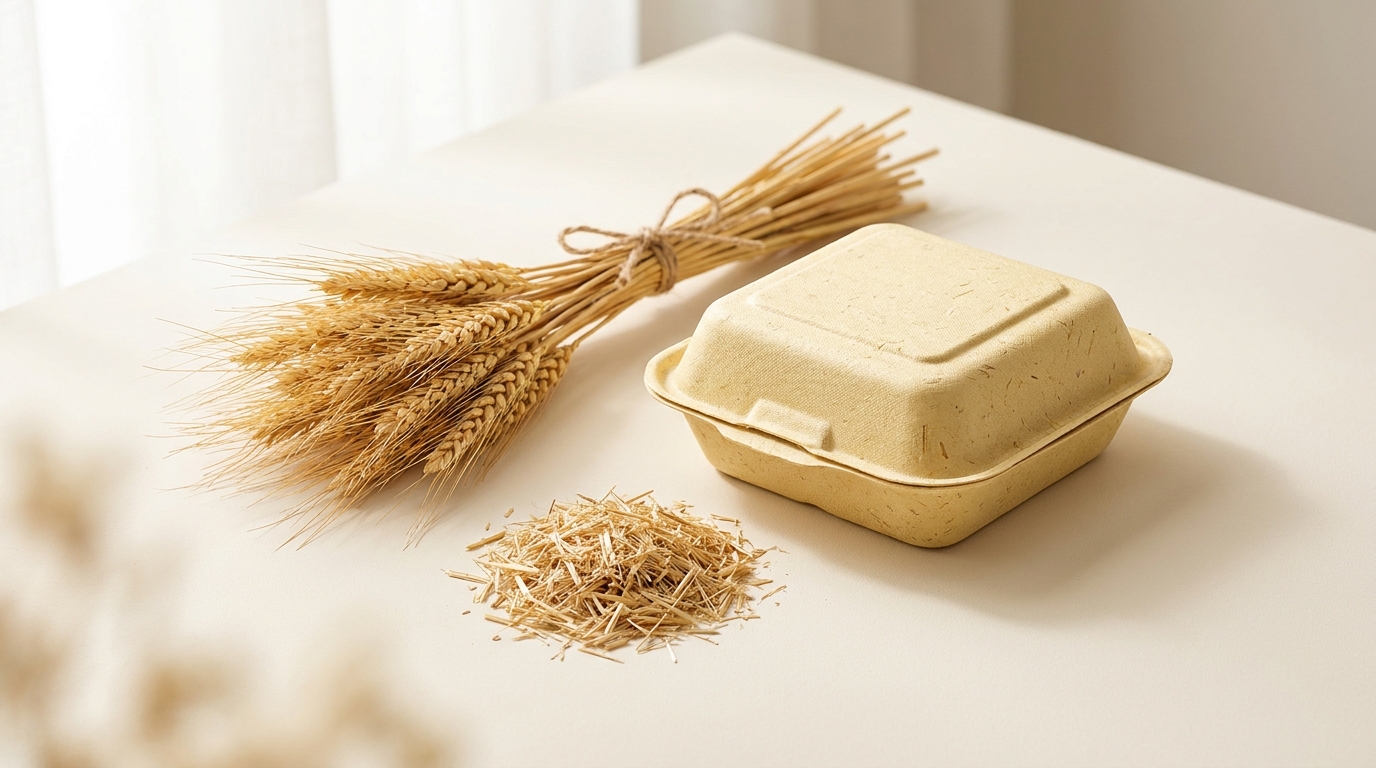
Straw fiber is made from the stalks left after grain harvest, material

Personalizado, ecológico e confiável

Excelência em embalagens personalizadas e ecologicamente corretas

Totalmente personalizável

Personalize sua embalagem com estilos, tamanhos, cores e acabamentos sob medida para atender a necessidades específicas.

Suporte especializado

A Bonitopak oferece consultoria especializada em design e logística para maximizar a eficiência da embalagem e aumentar o ROI.

Soluções ecológicas

Escolha embalagens sustentáveis e ecologicamente corretas para reduzir o impacto ambiental e apoiar as metas ecológicas de sua marca.

Garantia de qualidade

A Bonitopak garante serviço de alta qualidade e excelência de produto em cada solução de embalagem.

Perguntas frequentes (FAQ)

Molded Pulp 18 Egg Carton

  • Is this carton accepted in curbside recycling?

    It depends on the municipality rather than the product. Molded pulp egg cartons are made from short recycled fibers that have already been through several cycles, so some paper streams accept them and others direct them to compost. The carton composts in a home pile regardless. We advise printing a disposal instruction that matches your primary market.

  • How do you test top load strength?

    Compression testing on a filled carton under progressive load until deformation, reported as the load at first structural failure. The figure only means something alongside the test method, the conditioning humidity, and whether the carton was tested filled or empty. We report all four, and we recommend asking any supplier for the same.

  • Can you produce this format with a flat top instead of a domed lid?

     A flat top gives a better print surface and stacks marginally tighter, but it needs the reinforcing rib to be deeper to compensate for the lost arch strength. We tool flat top eighteen counts as a custom mold rather than stock, so allow additional lead time.

  • Why does the eighteen count cost more per egg to package than a dozen?

    It uses more material per egg than you might expect, because the reinforcing structure adds fiber that a twelve count does not need. It also prints at a higher cost per unit and nests slightly less efficiently. The packaging cost per egg is usually modest but it is not lower than a dozen, which surprises buyers who assume bulk always wins.

  • Will an 18 egg carton fit a standard refrigerator door shelf?

    In most US refrigerators, yes, which is a large part of why the format sells. The carton runs about 305 mm long and 155 mm wide, which clears typical door bin dimensions. Compact and apartment sized refrigerators are the exception, and buyers targeting urban markets sometimes prefer two dozens for that reason.

Resultado biodegradável

0 dias

7 dias

14 dias

30 dias

Setores especializados

Tendo produzido milhões de peças, a BonitoPak possui profundo conhecimento em diversas aplicações. Nós nos destacamos especialmente em setores que exigem a fabricação de componentes precisos e intrincados. Confie em nós para oferecer experiência e qualidade, independentemente da complexidade.

Soluções de embalagem OEM e ODM

A Bonitopak oferece soluções de embalagem personalizadas (OEM) e pré-projetadas (ODM). Independentemente de você precisar de designs totalmente personalizados ou de embalagens prontas para uso, fornecemos opções de alta qualidade, eficientes e flexíveis para atender às necessidades da sua marca.

Serviços OEM

As soluções de embalagem OEM permitem que você crie produtos totalmente personalizados, projetados e fabricados para atender às suas necessidades específicas. Na Bonitopak, oferecemos suporte abrangente durante todo o processo de design, prototipagem e fabricação, garantindo que sua embalagem reflita a identidade exclusiva de sua marca. Nossos recursos de fabricação de precisão garantem uma produção consistente e de alta qualidade, independentemente da complexidade do projeto. Com serviço de ponta a ponta, cuidamos de tudo, desde o conceito até a entrega, ajudando-o a otimizar suas necessidades de embalagem.

Serviços ODM

As soluções de embalagem ODM oferecem produtos pré-projetados que podem ser adaptados aos requisitos de sua marca. Com a experiência em design inovador e o processo de produção eficiente da Bonitopak, você pode escolher entre uma ampla gama de opções de embalagens prontas para uso. Oferecemos personalização flexível, permitindo que você adicione sua marca e selecione entre vários acabamentos, cores e tamanhos. Essa solução economiza tempo e custos e, ao mesmo tempo, garante embalagens de alta qualidade que atendem aos padrões de sua marca.
Pronto para elevar seu projeto?

Dê vida aos seus projetos com o BonitoPak

Experimente a engenharia de precisão com a BonitoPak. De protótipos detalhados à produção de alto volume, estamos aqui para transformar seus conceitos em realidade. Entre em contato conosco hoje mesmo para discutir as necessidades do seu projeto!

Nossas categorias de produtos

Descubra a gama diversificada de soluções de embalagem da Bonitopak, incluindo bandejas de polpa moldada, embalagens para alimentos, designs personalizados e opções sustentáveis. Cada categoria é criada para oferecer durabilidade, funcionalidade e responsabilidade ambiental, adaptada para atender às suas necessidades específicas.

An eighteen count is an engineering problem, not a bigger dozen

Add six cells to a twelve count and something has to change structurally. That is the part buyers miss when they assume an 18 egg carton is simply a longer version of the standard.

The issue is span. A twelve count lid bridges roughly 105 mm across its short axis. An eighteen count bridges 155 mm. Half again as much unsupported width, carrying the same or greater stacking load, on the same fiber thickness. Without a change to the geometry, the lid bows in the middle and the load transfers onto the center row of eggs.

Our eighteen count solves this with a reinforced rib running the length of the lid center, plus deeper cone geometry on the middle row. The rib turns a wide flat panel into two narrower spans, which is the same principle a floor joist uses. It is invisible once the carton is filled and it is the reason the format survives deep pallet stacks.

Why eighteen counts grew

The eighteen count exists because of how American households actually buy eggs.

Value pack formats sit in a specific gap. A dozen runs out quickly in a family of four. A thirty count flat is more than most home refrigerators can shelve and does not reclose properly once opened. Eighteen fits the door shelf on most US refrigerators, reclosd cleanly, and prices below two dozens bought separately.

Warehouse clubs pushed the format first, and mainstream grocery followed. For a producer, it means one more SKU that sells on price per egg rather than on brand, which changes the packaging brief. Value pack buyers are less responsive to premium finishes and more responsive to a carton that arrives intact.

Twin tabs and why a single closure fails

A wider lid needs two closure points.

Single tab closures work up to roughly 120 mm of lid width. Past that, the lid corners lift because the tab holds the center while the ends stay free. Once a corner lifts, the carton no longer stacks square, and a leaning stack is how pallets collapse.

The twin tab arrangement on our eighteen count places closures inboard of each end, so the lid is held at two points that divide the free span into thirds. The carton sits flat, stacks square, and the closure force per tab drops, which also makes it easier to open by hand.

Stacking and pallet math

Filled, this format runs close to 1.1 kilograms. A standard export pallet configuration puts real compressive load on the bottom layer, and the arithmetic gets serious fast in a deep stack.

Pulp cartons handle this better than most buyers expect because the load path is internal. The cone columns between cells engage as soon as the lid closes, so the carton behaves like a small frame structure rather than a box. Testing on molded pulp egg cartons routinely shows top load figures well above what the same weight of folded board achieves.

That said, top load performance is a function of forming pressure and fiber density, not of the format itself. If you are comparing suppliers on an eighteen count, ask for the top load figure and the test method rather than accepting a general durability claim.

Where the format struggles

Two honest limitations are worth stating.

Printing an eighteen count costs more per unit than a twelve, simply because the panel is larger and the print area scales with it. Value pack economics are tight, so many producers run these blank or embossed only and put the branding on a wrap or a label instead.

Second, eighteen counts do not nest quite as efficiently as smaller formats, because the reinforcing rib interrupts the nesting profile. The difference is small, in the range of a millimeter or two per carton, but on a full container it is real. We factor it into loading calculations at quotation rather than quoting a generic figure.

Case fit and how retailers order it

Eighteen counts are almost always sold by the case rather than by the carton, and case configuration is worth settling before tooling. Most US distributors work in cases of eight or twelve, since those numbers divide cleanly onto a standard pallet footprint without overhang. A configuration that leaves cartons hanging past the pallet edge will be rejected at receiving regardless of how well the packaging performs, so we confirm case dimensions against your pallet standard at quotation.

Building the range around it

Producers rarely run an eighteen count alone. It works as the value anchor beneath a caixa de ovos para uma dúzia doing the volume, with a Caixa de 6 ovos carrying the premium line above both.

Buyers packing across grades should read the chicken egg carton page, since the size class question decides cell depth for all three formats at once. Anyone specifying color across a full range should start at caixas de ovos coloridas, where shade consistency between molds is covered in detail.

An eighteen count is an engineering problem, not a bigger dozen

Add six cells to a twelve count and something has to change structurally. That is the part buyers miss when they assume an 18 egg carton is simply a longer version of the standard.

The issue is span. A twelve count lid bridges roughly 105 mm across its short axis. An eighteen count bridges 155 mm. Half again as much unsupported width, carrying the same or greater stacking load, on the same fiber thickness. Without a change to the geometry, the lid bows in the middle and the load transfers onto the center row of eggs.

Our eighteen count solves this with a reinforced rib running the length of the lid center, plus deeper cone geometry on the middle row. The rib turns a wide flat panel into two narrower spans, which is the same principle a floor joist uses. It is invisible once the carton is filled and it is the reason the format survives deep pallet stacks.

Why eighteen counts grew

The eighteen count exists because of how American households actually buy eggs.

Value pack formats sit in a specific gap. A dozen runs out quickly in a family of four. A thirty count flat is more than most home refrigerators can shelve and does not reclose properly once opened. Eighteen fits the door shelf on most US refrigerators, reclosd cleanly, and prices below two dozens bought separately.

Warehouse clubs pushed the format first, and mainstream grocery followed. For a producer, it means one more SKU that sells on price per egg rather than on brand, which changes the packaging brief. Value pack buyers are less responsive to premium finishes and more responsive to a carton that arrives intact.

Twin tabs and why a single closure fails

A wider lid needs two closure points.

Single tab closures work up to roughly 120 mm of lid width. Past that, the lid corners lift because the tab holds the center while the ends stay free. Once a corner lifts, the carton no longer stacks square, and a leaning stack is how pallets collapse.

The twin tab arrangement on our eighteen count places closures inboard of each end, so the lid is held at two points that divide the free span into thirds. The carton sits flat, stacks square, and the closure force per tab drops, which also makes it easier to open by hand.

Stacking and pallet math

Filled, this format runs close to 1.1 kilograms. A standard export pallet configuration puts real compressive load on the bottom layer, and the arithmetic gets serious fast in a deep stack.

Pulp cartons handle this better than most buyers expect because the load path is internal. The cone columns between cells engage as soon as the lid closes, so the carton behaves like a small frame structure rather than a box. Testing on molded pulp egg cartons routinely shows top load figures well above what the same weight of folded board achieves.

That said, top load performance is a function of forming pressure and fiber density, not of the format itself. If you are comparing suppliers on an eighteen count, ask for the top load figure and the test method rather than accepting a general durability claim.

Where the format struggles

Two honest limitations are worth stating.

Printing an eighteen count costs more per unit than a twelve, simply because the panel is larger and the print area scales with it. Value pack economics are tight, so many producers run these blank or embossed only and put the branding on a wrap or a label instead.

Second, eighteen counts do not nest quite as efficiently as smaller formats, because the reinforcing rib interrupts the nesting profile. The difference is small, in the range of a millimeter or two per carton, but on a full container it is real. We factor it into loading calculations at quotation rather than quoting a generic figure.

Case fit and how retailers order it

Eighteen counts are almost always sold by the case rather than by the carton, and case configuration is worth settling before tooling. Most US distributors work in cases of eight or twelve, since those numbers divide cleanly onto a standard pallet footprint without overhang. A configuration that leaves cartons hanging past the pallet edge will be rejected at receiving regardless of how well the packaging performs, so we confirm case dimensions against your pallet standard at quotation.

Building the range around it

Producers rarely run an eighteen count alone. It works as the value anchor beneath a caixa de ovos para uma dúzia doing the volume, with a Caixa de 6 ovos carrying the premium line above both.

Buyers packing across grades should read the chicken egg carton page, since the size class question decides cell depth for all three formats at once. Anyone specifying color across a full range should start at caixas de ovos coloridas, where shade consistency between molds is covered in detail.
Artigos e insights relacionados

Mantenha-se informado com as últimas atualizações sobre tendências de embalagens sustentáveis, percepções do setor e dicas de especialistas em nosso blog. Explore ideias e soluções inovadoras para aprimorar seu conhecimento sobre embalagens.

Por Leo Chan | Redator, BonitoPak | Mais de 20 anos na área de embalagens de polpa moldada. A vodca é

Por Leo Chan | Redator, BonitoPak | Mais de 20 anos na área de embalagens de polpa moldada Quase todas as

Por Leo Chan | Redator, BonitoPak | Mais de 20 anos na área de embalagens de polpa moldada Pesquisar isto

Perguntas frequentes (FAQ)

Molded Pulp 18 Egg Carton

  • Is this carton accepted in curbside recycling?

    It depends on the municipality rather than the product. Molded pulp egg cartons are made from short recycled fibers that have already been through several cycles, so some paper streams accept them and others direct them to compost. The carton composts in a home pile regardless. We advise printing a disposal instruction that matches your primary market.

  • How do you test top load strength?

    Compression testing on a filled carton under progressive load until deformation, reported as the load at first structural failure. The figure only means something alongside the test method, the conditioning humidity, and whether the carton was tested filled or empty. We report all four, and we recommend asking any supplier for the same.

  • Can you produce this format with a flat top instead of a domed lid?

     A flat top gives a better print surface and stacks marginally tighter, but it needs the reinforcing rib to be deeper to compensate for the lost arch strength. We tool flat top eighteen counts as a custom mold rather than stock, so allow additional lead time.

  • Why does the eighteen count cost more per egg to package than a dozen?

    It uses more material per egg than you might expect, because the reinforcing structure adds fiber that a twelve count does not need. It also prints at a higher cost per unit and nests slightly less efficiently. The packaging cost per egg is usually modest but it is not lower than a dozen, which surprises buyers who assume bulk always wins.

  • Will an 18 egg carton fit a standard refrigerator door shelf?

    In most US refrigerators, yes, which is a large part of why the format sells. The carton runs about 305 mm long and 155 mm wide, which clears typical door bin dimensions. Compact and apartment sized refrigerators are the exception, and buyers targeting urban markets sometimes prefer two dozens for that reason.

Preencha este formulário detalhado