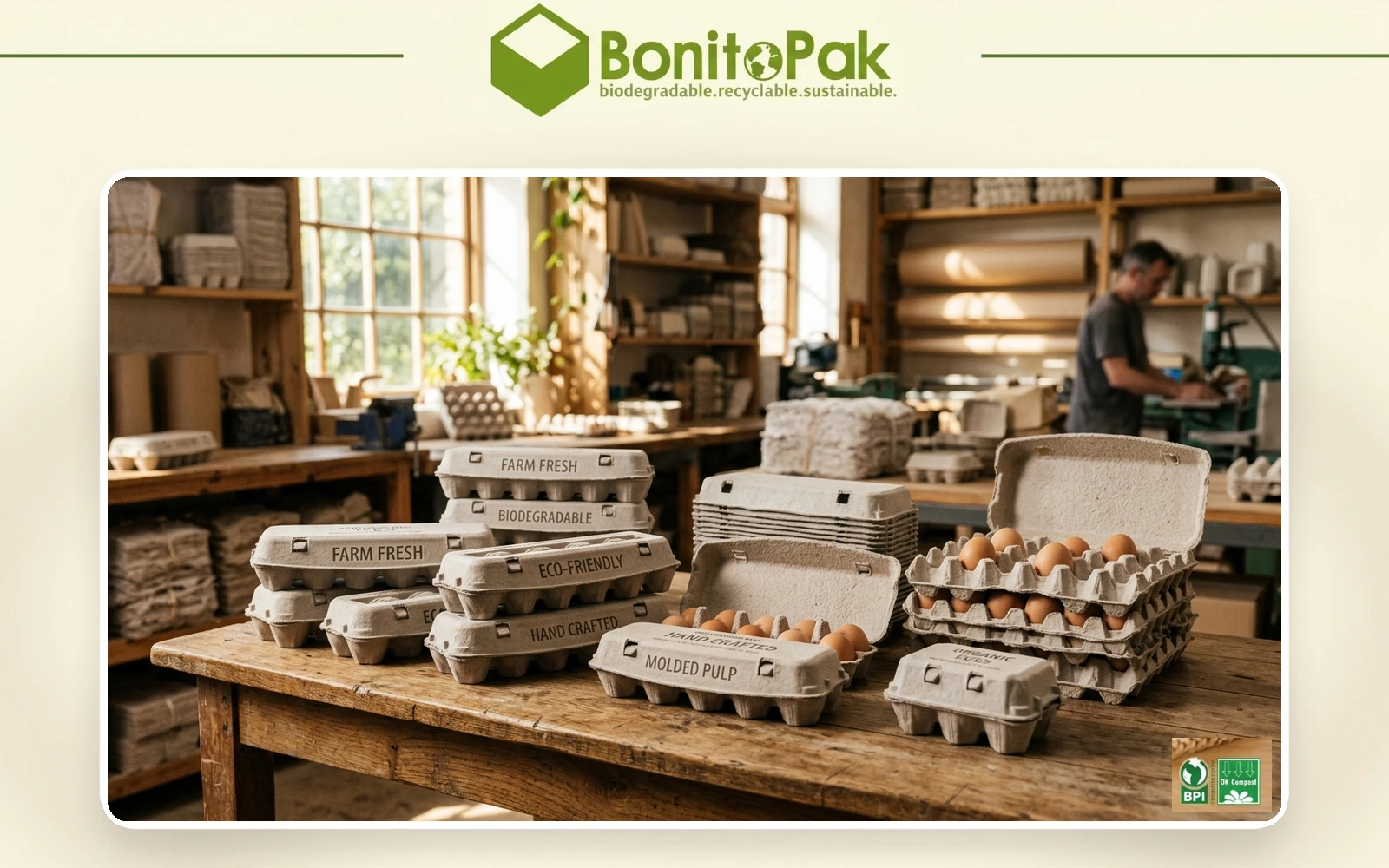
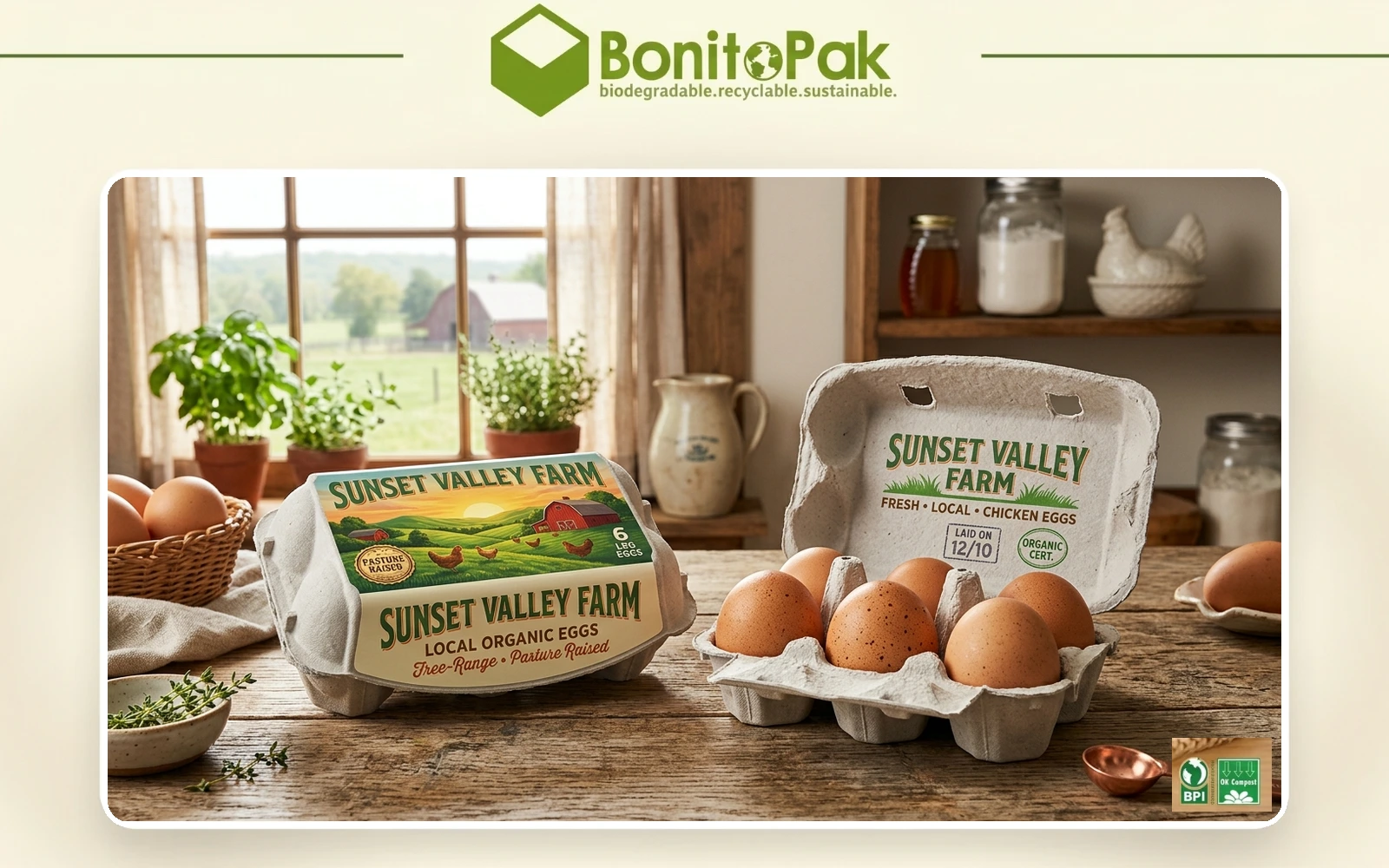
成形パルプ製 6個入り卵パック

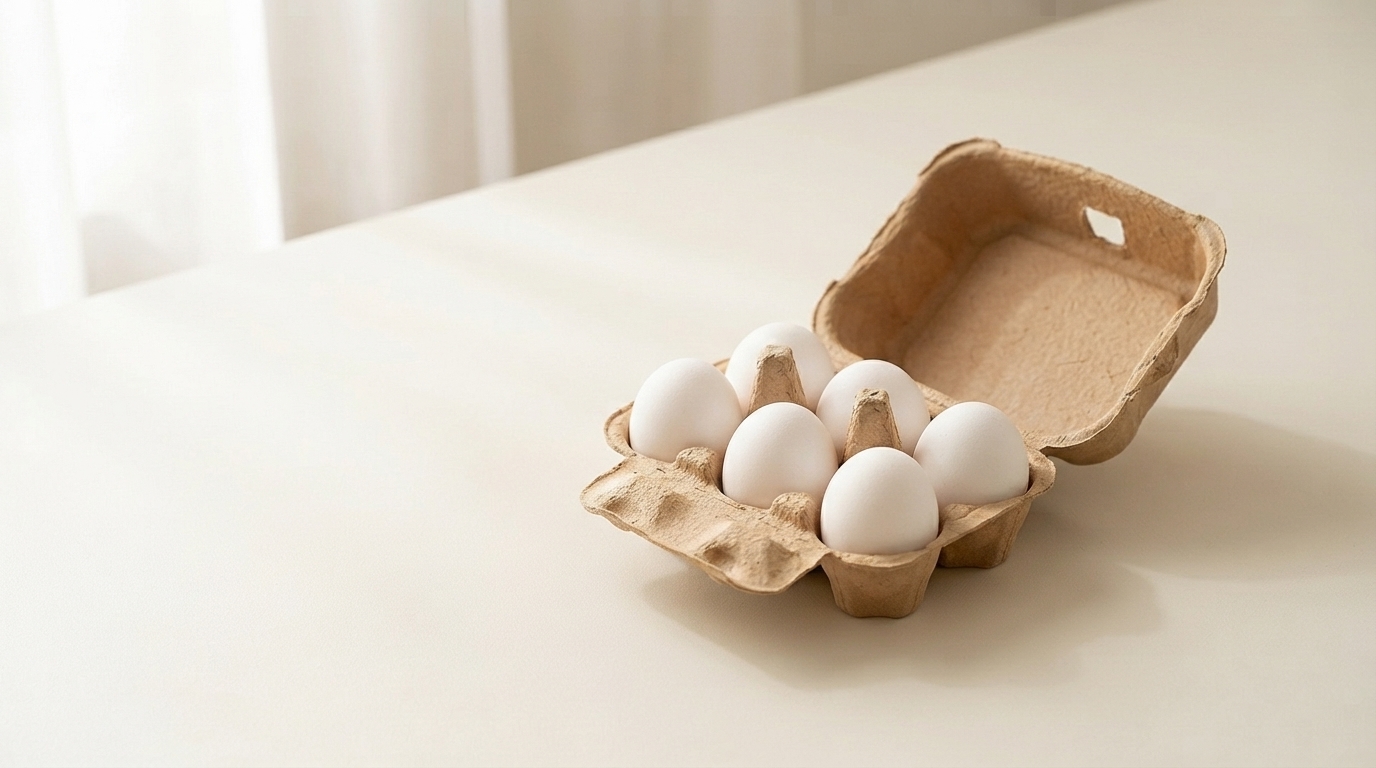
The BonitoPak molded pulp 6 egg carton is a half dozen pack with a deep six cell bed, sized for standard through jumbo chicken eggs.

  • Six cell 2×3 bed formed from 100% recycled paper pulp, biodegradable and home compostable
  • Cell depth holds standard, large, extra large, and jumbo eggs without lid pressure
  • Flat lid panel takes embossed, debossed, or printed branding across the full top face
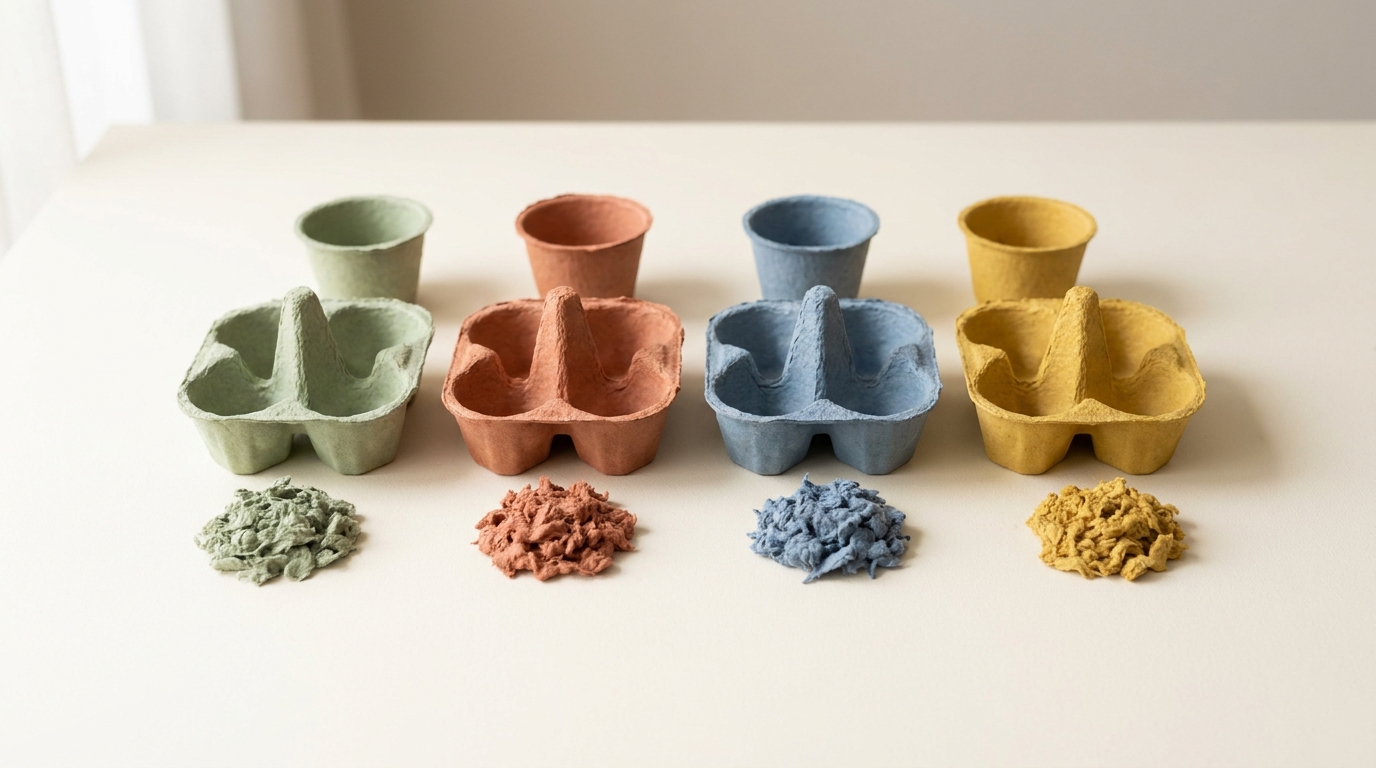
  • Available in natural pulp plus six stock colors, with custom shade matching on request
  • Nests flat for shipping, cutting inbound freight against clamshell plastic alternatives
  • Locking front tab holds shut through transit without tape or shrink wrap
  • OEM and ODM sizing accepted; blank stock molds and custom tooling both available

公共金型

パッケージング・ソリューション

3Dデザイン

カスタマイズされた型

商品説明

Specification Table

仕様 詳細
ブランド名 ボニートパック
モデル番号 EC-06
製品名 6 Egg Carton / Half Dozen Pulp Carton
素材 古紙パルプ
紙の種類 使用済み再生紙
テクニック 成形パルプ成形(湿式プレス法)
細胞数 6 cells, 2×3 layout
卵のサイズ範囲 標準サイズからジャンボサイズの鶏卵
外形寸法 175 x 105 x 75 mm (6.9 x 4.1 x 3.0 in)
単位重量 28 to 34 g
カラー 天然パルプ、6色の標準色、カスタムカラー対応
形とスタイル Top-fold clamshell with front locking tab
ロゴ印刷 エンボス加工、デボス加工、またはフレキソ印刷
工業用 Poultry farms, farm stands, retail grocery, gift packing
申し込み Half dozen retail packs, specialty and premium egg lines
サイズ OEM対応および特注サイズも承ります
メリット 生分解性、家庭用コンポスト対応、積み重ね可能、プラスチック不使用
パッケージング 輸出用カートンにまとめて詰め込み;特注梱包も承ります
カスタムオーダー 受理済み
MOQ 営業担当に確認してください。既製の金型は、特注金型よりも最小発注数量が少なくなっています。

ギャラリー 成形パルプ製 6個入り卵パック 部品

このギャラリーは、私たちがすべてのプロジェクトで提供する卓越した品質と細部へのこだわりを紹介しています。複雑なデザインから完璧な仕上げまで、どの画像も私たちの卓越性へのこだわりを反映しています。 成形パルプ製 6個入り卵パック .

40%

コストと時間の節約

お客様のコストと時間を最適化し、効率的なプロセスを実現し、ROIを最大化する最先端のパッケージングソリューションをご体験ください。

50%

より持続可能な

持続可能な素材で環境に優しいパッケージを実現し、廃棄物を削減し、製品ライン全体で環境への責任を推進します。

25%

売上の増加

小売市場でもオンライン市場でも、視認性と売上を高める革新的なデザインで、商品の棚へのアピールを強化しましょう。

100%

より高い信頼性

BonitoPakの品質へのコミットメントを信頼し、すべての製品が一貫した信頼できるサービスで当社の高い基準を満たすことを保証します。

Why the half dozen format sells differently

A 6 egg carton is not a twelve count cut in half. It serves a buyer with a different problem.

Small flock keepers rarely produce enough volume to fill dozens consistently. A backyard operation running fifteen hens through a molt might collect four dozen in a good week and two in a bad one. Packing in sixes lets them sell every egg they have instead of holding stock back to complete a dozen. That is the practical reason half dozen packs move so well at farm stands and roadside stalls.

The second buyer is the premium producer. Duck eggs, heritage breed eggs, and pasture raised lines carry a price that makes a full dozen feel expensive at the shelf. Splitting to six keeps the ticket price inside what a shopper will try on impulse. Producers who switch a premium line from twelve to six routinely see faster turns even though the price per egg goes up.

Cell depth is the spec that matters most

Most complaints about half dozen cartons trace back to one thing: the lid pressing on the eggs.

A carton molded for standard eggs has a cell bed around 45 mm deep. Drop a jumbo egg into it and roughly 8 mm of shell sits proud of the rim. Close the lid and that shell takes the load every time the carton is stacked, handled, or knocked in transit. Hairline cracks follow, usually invisible at packing and obvious to the customer at home.

Bonitopak molds the six cell bed deep enough to seat jumbo eggs below the lid line. That single dimension is why the same carton works across a flock that lays inconsistent sizes, which describes almost every small and mid-size operation. Buyers running a mixed flock do not have to sort by grade before packing.

What the 2×3 layout does for handling

Six cells can be laid out two ways. A 2×3 bed produces a short rectangular carton close to a paperback book. A 1×6 bed produces a long narrow one.

The 2×3 wins on almost every practical measure. It sits stable on a shelf without tipping. It fits a standard shipping case in clean multiples. Riders on a market table can stack it three high without the pile leaning. The long format only makes sense for a specific display fixture, which is rare outside of specialty grocers.

Wall geometry does the rest of the work. The ribs between cells are formed as continuous arches rather than flat dividers, so vertical load travels down the rib structure to the base instead of through the eggs. That is standard molded pulp practice and it is why paper cartons survive stacking that would crush a folded cardboard box of the same weight.

The print surface is larger than buyers expect

The top face of a half dozen carton gives roughly 180 square centimeters of flat panel. That is enough for a farm name, a logo, a lot code, and the nutrition or handling text most jurisdictions require.

Embossing and debossing work directly into the mold, so the branding is part of the carton rather than a layer applied to it. There is no ink to scuff, no label to peel in a cold room, and no added cost per unit once the tool exists. For a producer selling at markets, an embossed lid reads as a serious operation in a way a sticker does not.

Flexographic printing is the alternative when a design needs more than one element or a color that differs from the carton body. Print runs need higher volume to be economical, so most small producers start with embossing and move to print as they scale.

Freight math on nested cartons

Molded pulp cartons nest. A stack of 100 half dozen cartons compresses to a fraction of the height of 100 assembled plastic clamshells, because the pulp form collapses into itself while a rigid clamshell does not.

The effect on landed cost is significant on a full container. More units per cubic meter means fewer containers for the same order, and ocean freight is priced on volume long before it is priced on weight for a product this light. Buyers comparing pulp against foam or plastic on unit price alone often miss that the freight line moves the total in pulp’s favor.

Cartons also arrive dry and ready. There is no assembly step, no folding, and no glue, so packing crews handle one motion per carton instead of three.

Where the half dozen sits in a full range

Most producers do not run one size. A working range usually pairs the 1ダース入りの卵パック as the volume seller with the half dozen for premium and specialty lines, then adds a 卵パック4個分 for gift packs and samplers.

Producers building a branded line usually specify the whole range in one shade, which is covered on the カラー卵パック page. Producers running ducks or bantams should check cell diameter before ordering, since those eggs sit differently in a bed cut for chickens. The same applies in reverse to ウズラの卵のパック, which use a completely different cell geometry.

Why the half dozen format sells differently

A 6 egg carton is not a twelve count cut in half. It serves a buyer with a different problem.

Small flock keepers rarely produce enough volume to fill dozens consistently. A backyard operation running fifteen hens through a molt might collect four dozen in a good week and two in a bad one. Packing in sixes lets them sell every egg they have instead of holding stock back to complete a dozen. That is the practical reason half dozen packs move so well at farm stands and roadside stalls.

The second buyer is the premium producer. Duck eggs, heritage breed eggs, and pasture raised lines carry a price that makes a full dozen feel expensive at the shelf. Splitting to six keeps the ticket price inside what a shopper will try on impulse. Producers who switch a premium line from twelve to six routinely see faster turns even though the price per egg goes up.

Cell depth is the spec that matters most

Most complaints about half dozen cartons trace back to one thing: the lid pressing on the eggs.

A carton molded for standard eggs has a cell bed around 45 mm deep. Drop a jumbo egg into it and roughly 8 mm of shell sits proud of the rim. Close the lid and that shell takes the load every time the carton is stacked, handled, or knocked in transit. Hairline cracks follow, usually invisible at packing and obvious to the customer at home.

Bonitopak molds the six cell bed deep enough to seat jumbo eggs below the lid line. That single dimension is why the same carton works across a flock that lays inconsistent sizes, which describes almost every small and mid-size operation. Buyers running a mixed flock do not have to sort by grade before packing.

What the 2×3 layout does for handling

Six cells can be laid out two ways. A 2×3 bed produces a short rectangular carton close to a paperback book. A 1×6 bed produces a long narrow one.

The 2×3 wins on almost every practical measure. It sits stable on a shelf without tipping. It fits a standard shipping case in clean multiples. Riders on a market table can stack it three high without the pile leaning. The long format only makes sense for a specific display fixture, which is rare outside of specialty grocers.

Wall geometry does the rest of the work. The ribs between cells are formed as continuous arches rather than flat dividers, so vertical load travels down the rib structure to the base instead of through the eggs. That is standard molded pulp practice and it is why paper cartons survive stacking that would crush a folded cardboard box of the same weight.

The print surface is larger than buyers expect

The top face of a half dozen carton gives roughly 180 square centimeters of flat panel. That is enough for a farm name, a logo, a lot code, and the nutrition or handling text most jurisdictions require.

Embossing and debossing work directly into the mold, so the branding is part of the carton rather than a layer applied to it. There is no ink to scuff, no label to peel in a cold room, and no added cost per unit once the tool exists. For a producer selling at markets, an embossed lid reads as a serious operation in a way a sticker does not.

Flexographic printing is the alternative when a design needs more than one element or a color that differs from the carton body. Print runs need higher volume to be economical, so most small producers start with embossing and move to print as they scale.

Freight math on nested cartons

Molded pulp cartons nest. A stack of 100 half dozen cartons compresses to a fraction of the height of 100 assembled plastic clamshells, because the pulp form collapses into itself while a rigid clamshell does not.

The effect on landed cost is significant on a full container. More units per cubic meter means fewer containers for the same order, and ocean freight is priced on volume long before it is priced on weight for a product this light. Buyers comparing pulp against foam or plastic on unit price alone often miss that the freight line moves the total in pulp’s favor.

Cartons also arrive dry and ready. There is no assembly step, no folding, and no glue, so packing crews handle one motion per carton instead of three.

Where the half dozen sits in a full range

Most producers do not run one size. A working range usually pairs the 1ダース入りの卵パック as the volume seller with the half dozen for premium and specialty lines, then adds a 卵パック4個分 for gift packs and samplers.

Producers building a branded line usually specify the whole range in one shade, which is covered on the カラー卵パック page. Producers running ducks or bantams should check cell diameter before ordering, since those eggs sit differently in a bed cut for chickens. The same applies in reverse to ウズラの卵のパック, which use a completely different cell geometry.
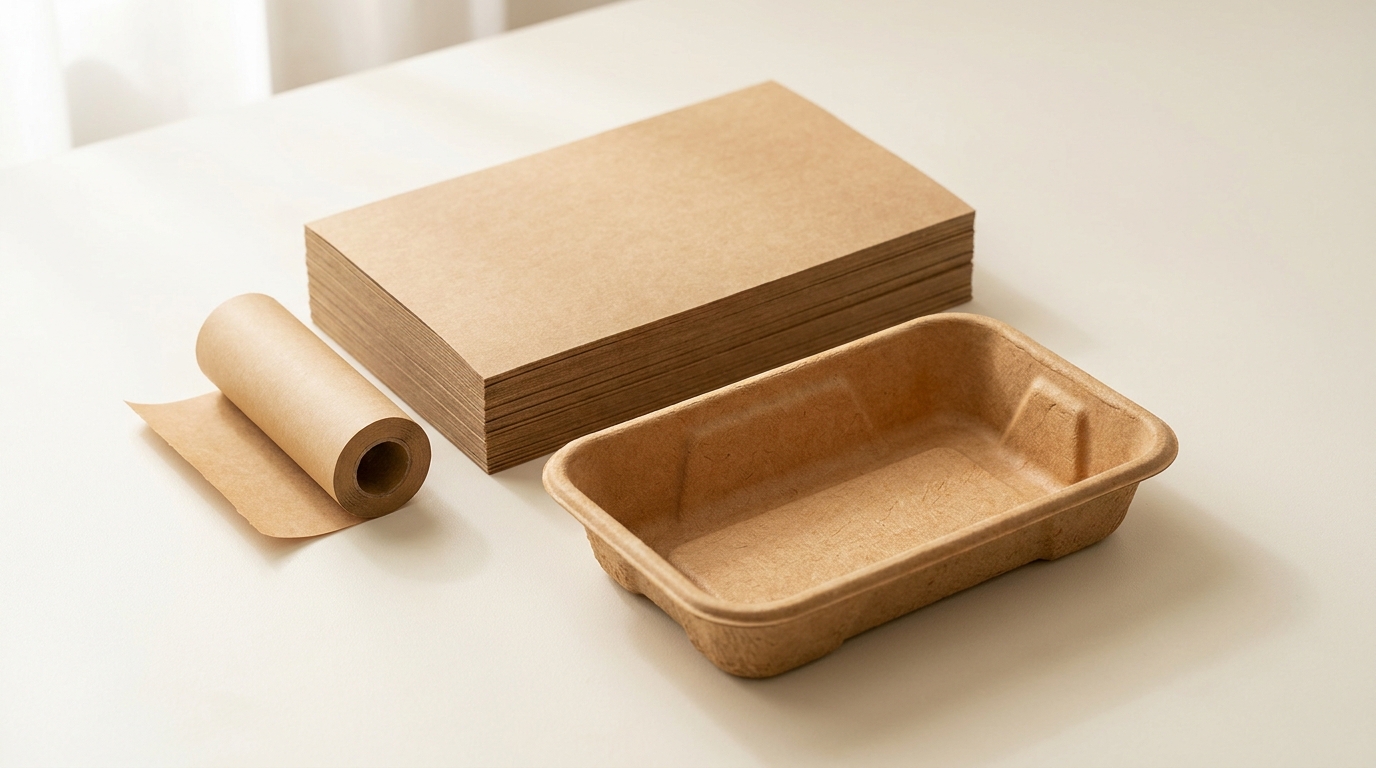
材料 成形パルプ製 6個入り卵パック 部品

BonitoPakは、一流企業やエンジニアから、迅速な試作と耐久性のある高品質な部品として信頼を得ています。プロトタイピングであれ、本格的な生産であれ、当社の幅広い材料は、どのようなものでもユニークな要件を満たすことを保証します。 成形パルプ製 6個入り卵パック プロジェクトを正確かつ迅速に実行する。

生分解性クラフト紙は、当社が製造する繊維製品の中で最も強度が高いものです。バージン

着色パルプは、独立した繊維ではありません。これは、当社の

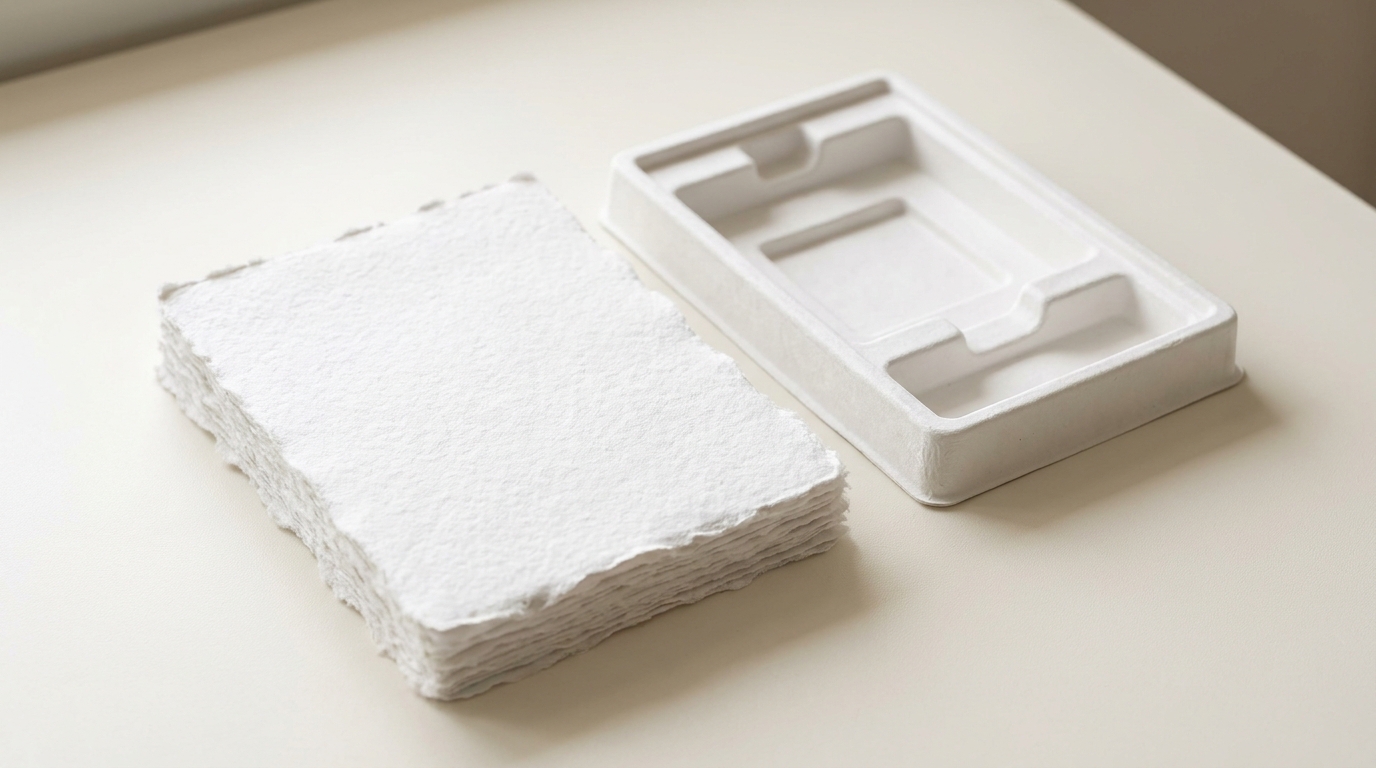
部品が以下の条件を満たす必要がある場合は、漂白パルプを指定する必要があります。

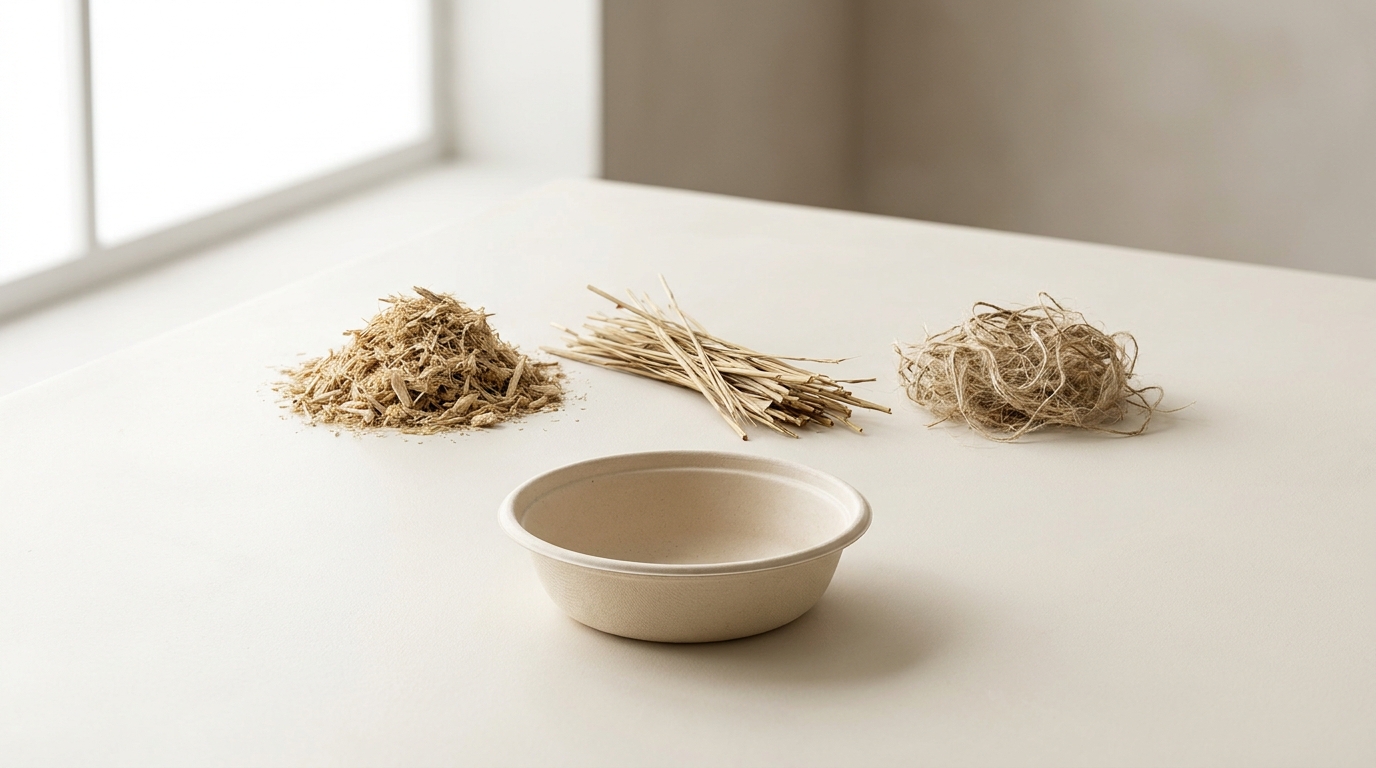
天然植物繊維とは、当社がブレンドに用いる、木材以外のセルロース源を指します。

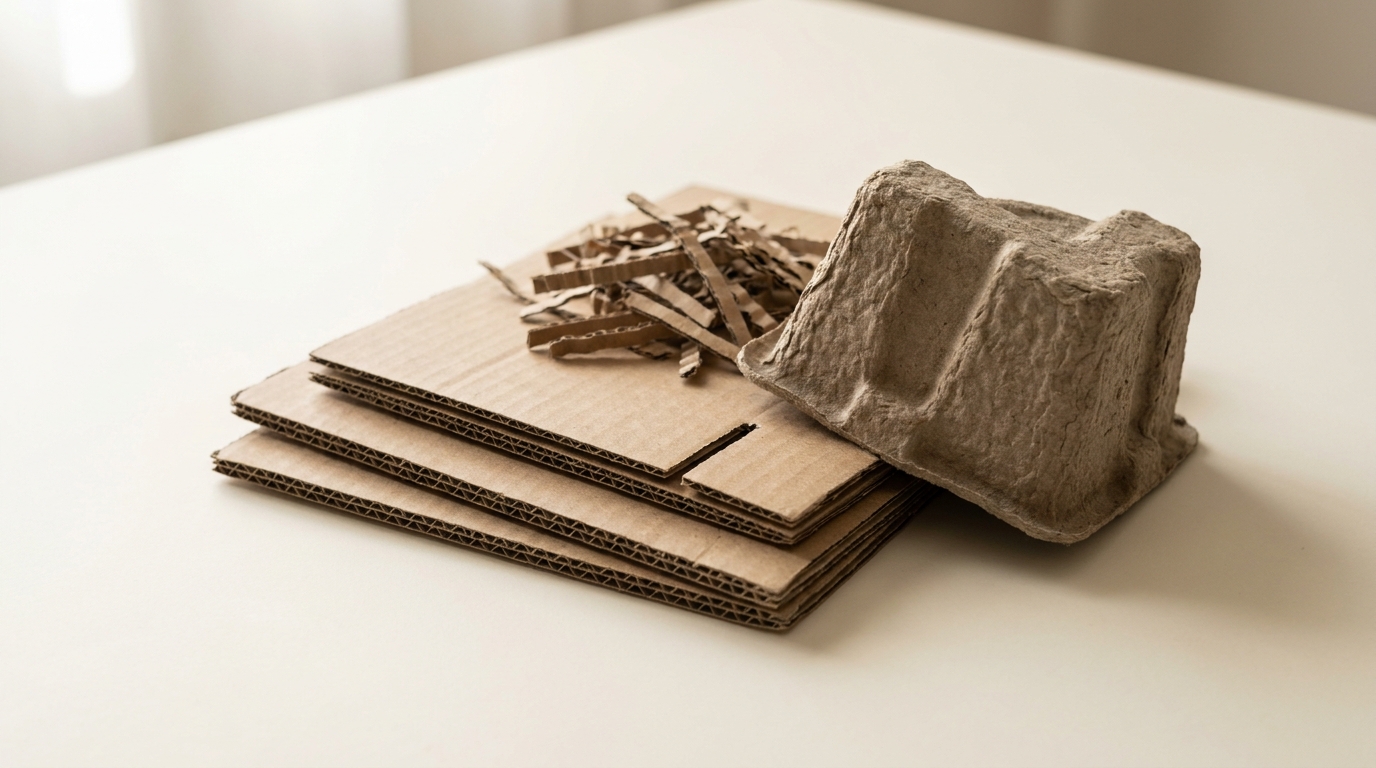
成形パルプ材料としての段ボール紙とは、回収された段ボール箱を再パルプ化したものを指す。

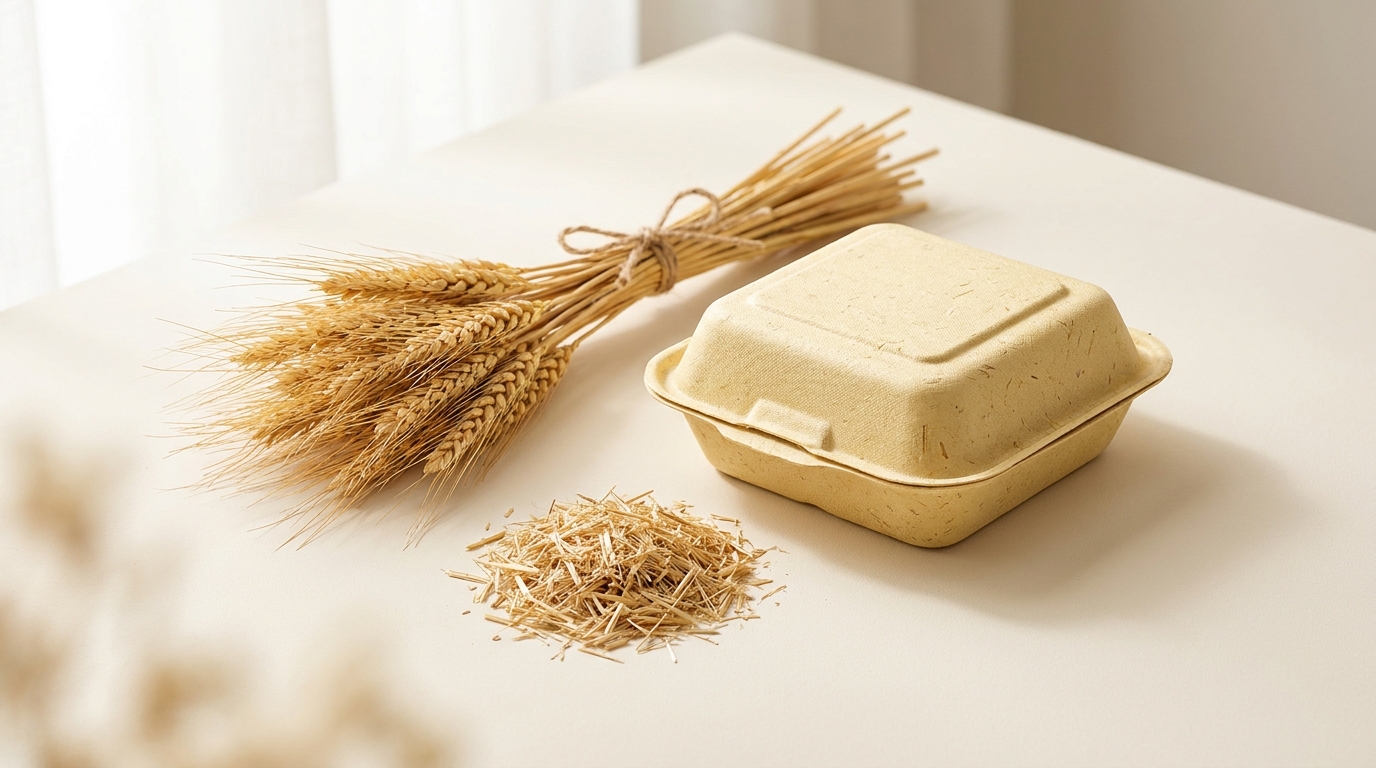
わら繊維は、穀物の収穫後に残る茎から作られる素材です。

カスタム エコフレンドリー 信頼性

環境に優しいカスタム包装

フルカスタマイズ

特定のニーズに合わせて、スタイル、サイズ、色、仕上げをカスタマイズできます。

エキスパート・サポート

ボニトパックはパッケージング効率を最大化し、ROIを高めるために、専門的なデザインとロジスティクスのアドバイスを提供します。

エコ・ソリューション

環境への影響を減らし、ブランドのグリーン目標をサポートするために、持続可能で環境に優しいパッケージを選びましょう。

品質保証

ボニトパックはすべてのパッケージング・ソリューションにおいて、最高品質のサービスと卓越した製品を保証します。

よくある質問

卵トレイ6個に関するよくある質問

  • 季節限定の締め切りに向けて、どれくらい前から注文すべきですか?

    多くのバイヤーが予想するよりも時間がかかりますが、その理由は生産工程ではなく、承認プロセスにあります。カスタムカラーの色見本承認、印刷物の校正、海上輸送など、これらすべてが、段ボール箱を実際に手元に用意する必要がある期日よりも前に発生する工程です。季節限定の注文が失敗する場合、その原因はほぼ例外なく製造工程ではなく、承認プロセスにあります。.

  • 季節限定の締め切りに向けて、どれくらい前から注文すべきですか?

    多くのバイヤーが予想するよりも時間がかかりますが、その理由は生産工程ではなく、承認プロセスにあります。カスタムカラーの色見本承認、印刷物の校正、海上輸送など、これらすべてが、段ボール箱を実際に手元に用意する必要がある期日よりも前に発生する工程です。季節限定の注文が失敗する場合、その原因はほぼ例外なく製造工程ではなく、承認プロセスにあります。.

  • これらの段ボール箱は、食品接触に関する要件を満たしていますか?

    卵は殻の中に収まっているため、ほとんどの管轄区域において、卵パックは食品と直接接触する包装ではなく、二次的な包装として扱われています。ただし、要件は市場によって異なり、特にEUではその傾向が顕著であるため、購入者は販売先でどのような規定が適用されるかを確認する必要があります。弊社ではご要望に応じて材料宣言書を提供いたしますので、貴社のコンプライアンス担当チームが現地の規制に照らして評価を行うことができます。.

  • 1回の発送で複数のセルカウントを注文することはできますか?

    はい、ほとんどのバイヤーはそうしています。混載注文は行単位で見積もられ、1つのコンテナにまとめられるため、通常、個別の出荷よりも安くなります。ただし、各金型は個別に稼働するため、生産スケジュールが異なります。そのため、同じ総量であっても、混載注文は単一の形式の注文に比べてリードタイムが若干長くなる場合があります。.

  • 成形パルプ製の卵パックと成形繊維製の卵パックの違いは何ですか?

    特に意味の違いはありません。この2つの用語は同じ工程と同じ素材を指しており、購入者も地域や業界によってこれらを同じ意味で使い分けています。「モールドファイバー」は電子機器や工業用梱包材でより一般的であり、「モールドパルプ」は食品や農業分野でより一般的です。どちらも、真空下で金型に引き出された繊維をプレスして成形したものを指します。.

生分解性の結果

0日

7日

14日

30日

専門産業

数百万個の部品を製造してきたBonitoPakは、数多くの用途において深い知識を有しています。特に精密で複雑な部品加工を必要とする業界を得意としています。どのような複雑さであっても、専門知識と品質を提供する私たちを信頼してください。

OEMおよびODMパッケージング・ソリューション

Bonitopakはカスタム(OEM)とプレデザイン(ODM)の両方のパッケージングソリューションを提供しています。完全にオーダーメイドのデザインが必要な場合でも、すぐに使用できるパッケージが必要な場合でも、お客様のブランドのニーズを満たすために、高品質で効率的かつ柔軟なオプションを提供します。

OEMサービス

OEMパッケージング・ソリューションは、お客様の特定の要件を満たすように設計・製造された完全なカスタマイズ製品を作成することができます。ボニトパックでは、デザイン、プロトタイピング、製造プロセスを通して包括的なサポートを提供し、お客様のパッケージがブランドのユニークなアイデンティティを反映することを保証します。当社の精密製造能力は、デザインの複雑さにかかわらず、高品質で一貫した製造を保証します。エンド・ツー・エンドのサービスにより、コンセプトから納品まですべてを処理し、お客様のパッケージング・ニーズの合理化を支援します。

ODMサービス

ODMパッケージング・ソリューションは、お客様のブランド要件に合わせたデザイン済みの製品を提供します。Bonitopakの革新的なデザインの専門知識と効率的な生産プロセスにより、すぐに使用できる幅広いパッケージングオプションから選択することができます。当社は柔軟なカスタマイズを提供し、お客様のブランドを追加したり、さまざまな仕上げ、色、サイズから選択することができます。このソリューションにより、お客様のブランド基準を満たす高品質のパッケージングを確保しながら、時間とコストを節約することができます。
あなたのプロジェクトを向上させる準備はできていますか?

BonitoPakでデザインに命を吹き込もう

BonitoPakで精密なエンジニアリングを体験してください。詳細なプロトタイプから大量生産まで、お客様のコンセプトを現実にします。今すぐお問い合わせください!

製品カテゴリー

成型パルプトレイ、食品包装、カスタムデザイン、持続可能なオプションなど、Bonitopakの多様なパッケージングソリューションをご覧ください。各カテゴリーは、耐久性、機能性、環境への責任を考慮し、お客様の特定のニーズに合わせて作られています。

Why the half dozen format sells differently

A 6 egg carton is not a twelve count cut in half. It serves a buyer with a different problem.

Small flock keepers rarely produce enough volume to fill dozens consistently. A backyard operation running fifteen hens through a molt might collect four dozen in a good week and two in a bad one. Packing in sixes lets them sell every egg they have instead of holding stock back to complete a dozen. That is the practical reason half dozen packs move so well at farm stands and roadside stalls.

The second buyer is the premium producer. Duck eggs, heritage breed eggs, and pasture raised lines carry a price that makes a full dozen feel expensive at the shelf. Splitting to six keeps the ticket price inside what a shopper will try on impulse. Producers who switch a premium line from twelve to six routinely see faster turns even though the price per egg goes up.

Cell depth is the spec that matters most

Most complaints about half dozen cartons trace back to one thing: the lid pressing on the eggs.

A carton molded for standard eggs has a cell bed around 45 mm deep. Drop a jumbo egg into it and roughly 8 mm of shell sits proud of the rim. Close the lid and that shell takes the load every time the carton is stacked, handled, or knocked in transit. Hairline cracks follow, usually invisible at packing and obvious to the customer at home.

Bonitopak molds the six cell bed deep enough to seat jumbo eggs below the lid line. That single dimension is why the same carton works across a flock that lays inconsistent sizes, which describes almost every small and mid-size operation. Buyers running a mixed flock do not have to sort by grade before packing.

What the 2×3 layout does for handling

Six cells can be laid out two ways. A 2×3 bed produces a short rectangular carton close to a paperback book. A 1×6 bed produces a long narrow one.

The 2×3 wins on almost every practical measure. It sits stable on a shelf without tipping. It fits a standard shipping case in clean multiples. Riders on a market table can stack it three high without the pile leaning. The long format only makes sense for a specific display fixture, which is rare outside of specialty grocers.

Wall geometry does the rest of the work. The ribs between cells are formed as continuous arches rather than flat dividers, so vertical load travels down the rib structure to the base instead of through the eggs. That is standard molded pulp practice and it is why paper cartons survive stacking that would crush a folded cardboard box of the same weight.

The print surface is larger than buyers expect

The top face of a half dozen carton gives roughly 180 square centimeters of flat panel. That is enough for a farm name, a logo, a lot code, and the nutrition or handling text most jurisdictions require.

Embossing and debossing work directly into the mold, so the branding is part of the carton rather than a layer applied to it. There is no ink to scuff, no label to peel in a cold room, and no added cost per unit once the tool exists. For a producer selling at markets, an embossed lid reads as a serious operation in a way a sticker does not.

Flexographic printing is the alternative when a design needs more than one element or a color that differs from the carton body. Print runs need higher volume to be economical, so most small producers start with embossing and move to print as they scale.

Freight math on nested cartons

Molded pulp cartons nest. A stack of 100 half dozen cartons compresses to a fraction of the height of 100 assembled plastic clamshells, because the pulp form collapses into itself while a rigid clamshell does not.

The effect on landed cost is significant on a full container. More units per cubic meter means fewer containers for the same order, and ocean freight is priced on volume long before it is priced on weight for a product this light. Buyers comparing pulp against foam or plastic on unit price alone often miss that the freight line moves the total in pulp’s favor.

Cartons also arrive dry and ready. There is no assembly step, no folding, and no glue, so packing crews handle one motion per carton instead of three.

Where the half dozen sits in a full range

Most producers do not run one size. A working range usually pairs the 1ダース入りの卵パック as the volume seller with the half dozen for premium and specialty lines, then adds a 卵パック4個分 for gift packs and samplers.

Producers building a branded line usually specify the whole range in one shade, which is covered on the カラー卵パック page. Producers running ducks or bantams should check cell diameter before ordering, since those eggs sit differently in a bed cut for chickens. The same applies in reverse to ウズラの卵のパック, which use a completely different cell geometry.
Why the half dozen format sells differently

A 6 egg carton is not a twelve count cut in half. It serves a buyer with a different problem.

Small flock keepers rarely produce enough volume to fill dozens consistently. A backyard operation running fifteen hens through a molt might collect four dozen in a good week and two in a bad one. Packing in sixes lets them sell every egg they have instead of holding stock back to complete a dozen. That is the practical reason half dozen packs move so well at farm stands and roadside stalls.

The second buyer is the premium producer. Duck eggs, heritage breed eggs, and pasture raised lines carry a price that makes a full dozen feel expensive at the shelf. Splitting to six keeps the ticket price inside what a shopper will try on impulse. Producers who switch a premium line from twelve to six routinely see faster turns even though the price per egg goes up.

Cell depth is the spec that matters most

Most complaints about half dozen cartons trace back to one thing: the lid pressing on the eggs.

A carton molded for standard eggs has a cell bed around 45 mm deep. Drop a jumbo egg into it and roughly 8 mm of shell sits proud of the rim. Close the lid and that shell takes the load every time the carton is stacked, handled, or knocked in transit. Hairline cracks follow, usually invisible at packing and obvious to the customer at home.

Bonitopak molds the six cell bed deep enough to seat jumbo eggs below the lid line. That single dimension is why the same carton works across a flock that lays inconsistent sizes, which describes almost every small and mid-size operation. Buyers running a mixed flock do not have to sort by grade before packing.

What the 2×3 layout does for handling

Six cells can be laid out two ways. A 2×3 bed produces a short rectangular carton close to a paperback book. A 1×6 bed produces a long narrow one.

The 2×3 wins on almost every practical measure. It sits stable on a shelf without tipping. It fits a standard shipping case in clean multiples. Riders on a market table can stack it three high without the pile leaning. The long format only makes sense for a specific display fixture, which is rare outside of specialty grocers.

Wall geometry does the rest of the work. The ribs between cells are formed as continuous arches rather than flat dividers, so vertical load travels down the rib structure to the base instead of through the eggs. That is standard molded pulp practice and it is why paper cartons survive stacking that would crush a folded cardboard box of the same weight.

The print surface is larger than buyers expect

The top face of a half dozen carton gives roughly 180 square centimeters of flat panel. That is enough for a farm name, a logo, a lot code, and the nutrition or handling text most jurisdictions require.

Embossing and debossing work directly into the mold, so the branding is part of the carton rather than a layer applied to it. There is no ink to scuff, no label to peel in a cold room, and no added cost per unit once the tool exists. For a producer selling at markets, an embossed lid reads as a serious operation in a way a sticker does not.

Flexographic printing is the alternative when a design needs more than one element or a color that differs from the carton body. Print runs need higher volume to be economical, so most small producers start with embossing and move to print as they scale.

Freight math on nested cartons

Molded pulp cartons nest. A stack of 100 half dozen cartons compresses to a fraction of the height of 100 assembled plastic clamshells, because the pulp form collapses into itself while a rigid clamshell does not.

The effect on landed cost is significant on a full container. More units per cubic meter means fewer containers for the same order, and ocean freight is priced on volume long before it is priced on weight for a product this light. Buyers comparing pulp against foam or plastic on unit price alone often miss that the freight line moves the total in pulp’s favor.

Cartons also arrive dry and ready. There is no assembly step, no folding, and no glue, so packing crews handle one motion per carton instead of three.

Where the half dozen sits in a full range

Most producers do not run one size. A working range usually pairs the 1ダース入りの卵パック as the volume seller with the half dozen for premium and specialty lines, then adds a 卵パック4個分 for gift packs and samplers.

Producers building a branded line usually specify the whole range in one shade, which is covered on the カラー卵パック page. Producers running ducks or bantams should check cell diameter before ordering, since those eggs sit differently in a bed cut for chickens. The same applies in reverse to ウズラの卵のパック, which use a completely different cell geometry.
関連記事と洞察

持続可能なパッケージングのトレンド、業界の洞察、専門家のヒントに関する最新情報をブログでお届けします。革新的なアイデアやソリューションを探求し、パッケージングの知識を深めましょう。

Vietnam has become a serious alternative for buyers who want molded fiber packaging from outside

Searching for custom printed egg cartons turns up two very different kinds of company, and

レオ・チャン | BonitoPak ライター | 成形パルプ包装業界で20年以上の経験を持つ ウォッカとは

よくある質問

卵トレイ6個に関するよくある質問

  • 季節限定の締め切りに向けて、どれくらい前から注文すべきですか?

    多くのバイヤーが予想するよりも時間がかかりますが、その理由は生産工程ではなく、承認プロセスにあります。カスタムカラーの色見本承認、印刷物の校正、海上輸送など、これらすべてが、段ボール箱を実際に手元に用意する必要がある期日よりも前に発生する工程です。季節限定の注文が失敗する場合、その原因はほぼ例外なく製造工程ではなく、承認プロセスにあります。.

  • 季節限定の締め切りに向けて、どれくらい前から注文すべきですか?

    多くのバイヤーが予想するよりも時間がかかりますが、その理由は生産工程ではなく、承認プロセスにあります。カスタムカラーの色見本承認、印刷物の校正、海上輸送など、これらすべてが、段ボール箱を実際に手元に用意する必要がある期日よりも前に発生する工程です。季節限定の注文が失敗する場合、その原因はほぼ例外なく製造工程ではなく、承認プロセスにあります。.

  • これらの段ボール箱は、食品接触に関する要件を満たしていますか?

    卵は殻の中に収まっているため、ほとんどの管轄区域において、卵パックは食品と直接接触する包装ではなく、二次的な包装として扱われています。ただし、要件は市場によって異なり、特にEUではその傾向が顕著であるため、購入者は販売先でどのような規定が適用されるかを確認する必要があります。弊社ではご要望に応じて材料宣言書を提供いたしますので、貴社のコンプライアンス担当チームが現地の規制に照らして評価を行うことができます。.

  • 1回の発送で複数のセルカウントを注文することはできますか?

    はい、ほとんどのバイヤーはそうしています。混載注文は行単位で見積もられ、1つのコンテナにまとめられるため、通常、個別の出荷よりも安くなります。ただし、各金型は個別に稼働するため、生産スケジュールが異なります。そのため、同じ総量であっても、混載注文は単一の形式の注文に比べてリードタイムが若干長くなる場合があります。.

  • 成形パルプ製の卵パックと成形繊維製の卵パックの違いは何ですか?

    特に意味の違いはありません。この2つの用語は同じ工程と同じ素材を指しており、購入者も地域や業界によってこれらを同じ意味で使い分けています。「モールドファイバー」は電子機器や工業用梱包材でより一般的であり、「モールドパルプ」は食品や農業分野でより一般的です。どちらも、真空下で金型に引き出された繊維をプレスして成形したものを指します。.

詳細フォーム