カラーパルプ

Colored pulp is not a separate fiber. It is any of our base materials with pigment blended into the slurry before the mold ever touches it, so the color runs through the full depth of the fiber wall. Scuff the surface and the color underneath is identical. That is the difference between pigmented pulp and coated pulp, and it is why a colored part still looks correct after a shipping cycle.

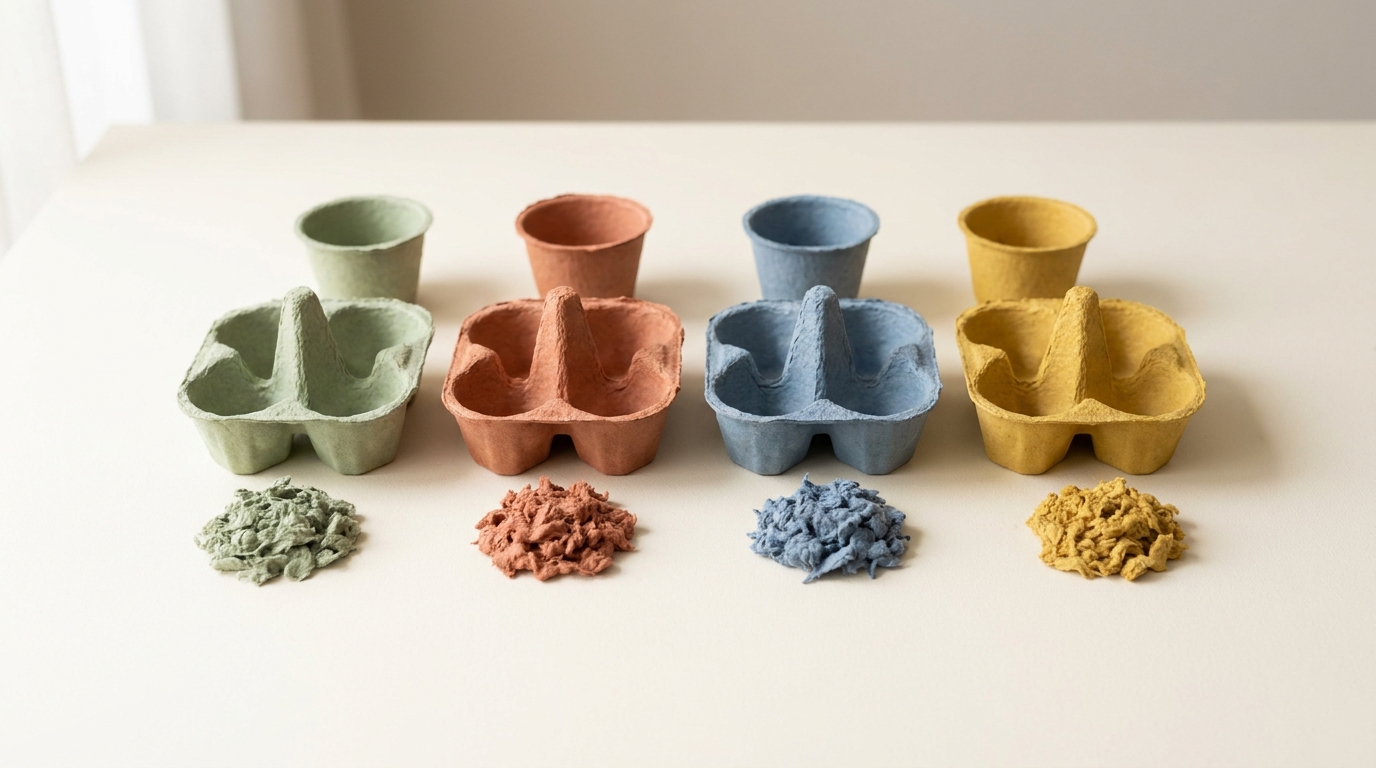
Why wet end pigmentation beats surface coating

  • The color is the material. Pigment is dispersed through the slurry, so a torn edge shows the same shade as the face. There is no layer to scuff, chip, or peel.
  • Compostability is unchanged. Pigments are selected to meet the same breakdown requirements as the fiber, and they are present in very small quantity by mass. No coating is introduced.
  • No transfer onto contents. Bound pigment does not rub off. Surface-coated parts with weak adhesion can mark the product they hold.
  • Six stock shades held in production. Running continuously, which means lower minimums and no changeover premium compared with a custom match.
  • Custom matching against a physical sample. We produce a formed sample in your actual part geometry for approval, because a flat chip and a molded surface read differently.
  • Darker shades sharpen embossing. Embossed detail reads through shadow rather than contrast, and darker pigment holds shadow more cleanly at the edge of the mark.

The constraint worth understanding is the palette. Pigments used in compostable packaging have to break down without leaving heavy metals or persistent residue, which rules out several traditional colorant chemistries, particularly in the red and yellow ranges. The result is a narrower palette than plastic offers. Within it, the range covers most brand requirements.

The second constraint is the base. Recycled fiber arrives gray-brown and varies batch to batch with the waste stream. Every pigment works against that moving base. Dark shades overwhelm it and reproduce consistently. Light tints show it, which is why pale pink and pale lavender are the hardest shades in the range to hold across reorders and why a retained physical standard matters for them.

仕様表

仕様 詳細
材料名 カラーパルプ
素材タイプ Base fiber with slurry-blended pigment
Base Fiber Options Recycled, bleached, bamboo, straw, wood, plant fiber
Coloring Method Wet end pigmentation, not surface coating
Color Penetration Full fiber wall depth
Stock Shades Six held in continuous production
カスタムカラー パントーン番号または実物見本との照合
Color Accuracy Approved against a retained physical standard
Lightfastness Dark shades highest; pale tints lowest
表面仕上げ ベースファイバーに沿って
強さ Follows base fiber; pigment does not affect it
プロセスの互換性 湿式プレス、乾式プレス、トランスファー成形
成形パルプの種類 Type 2, Type 3, Type 4
堆肥化可能性 Unchanged from base fiber
食品との接触 Pigment selection must be confirmed for the specific market
相対コスト Base fiber cost plus pigment and changeover

Holding a color across a supply relationship

Getting a shade right once is straightforward. Getting the same shade twelve months later is where suppliers separate, and the control is measurement rather than recipe.

Base pulp brightness is read before pigment dosing, and the dose is adjusted against that reading rather than against a fixed formula. Formed samples are compared against a retained physical standard, not against a color chip on a screen, because fiber texture changes how a shade reads. Batch records let a reorder be matched to the original rather than to the nominal specification.

Any buyer building a brand on a specific color should approve and retain a physical standard at first production. It is the single most useful step available, and it is the difference between cartons that look identical on a shelf and cartons that visibly differ by run.

Lightfastness varies by shade and is worth planning around. Blue and purple pigments rated for compostable use are the least lightfast group, because the chemistries that give strong color without heavy metals are inherently more UV-sensitive. Dark shades hold up longest. In refrigerated retail or indoor display none of this is visible. For outdoor market selling, specify toward the darker end or keep stock covered between days.

Colored pulp runs on any base in our range, so the fiber decision comes first and the color decision second. For the strength and finish characteristics of each base, start at the 成形パルプ製包装材 hub, or compare 再生紙パルプ against 天然植物繊維, which are the two most commonly pigmented bases. Colored pulp applies across the product range. For egg packaging specifically, see molded pulp colored egg cartons. For the whitest possible base before pigmenting, see 晒しパルプ, which gives the cleanest and most predictable color reproduction of any base in the range.

よくある質問 (FAQ)

Does adding pigment affect the strength of the part?
No measurably. Pigment is present in very small quantity by mass and does not interfere with fiber bonding, which is what carries load. A colored part and a natural part formed from the same furnish at the same wall thickness perform the same in compression. Strength follows the base fiber you select, not the color.
Pulp scatters light differently from coated paper, so an ink reference and a fiber surface cannot produce the same visual result even with identical pigment. We get close and send a formed physical sample for approval. Brands with a strict standard generally approve a designated pulp equivalent alongside their print reference rather than requiring the two to match.
Yes, through custom matching. It carries a higher minimum than stock shades because the slurry has to be batched specifically and the line flushed when changing color, both of which are downtime. Send a Pantone reference or a physical sample and we produce a match sample before committing to a full run.
The pigment selection decides it, and the requirement varies by market and by food type. Pigments rated for food contact packaging exist across most of the palette, but not all of them. Tell us the market and the application at quotation and we will confirm which shades are available for it rather than assuming the whole range is.
In dark warehouse storage, no. Fading is driven by ultraviolet exposure rather than by time, so stock kept covered holds its shade indefinitely for practical purposes. What causes visible fading is sustained direct sunlight, which affects pale tints first and dark shades last.
材料名

カラーパルプ

素材タイプ

カスタム・カラー成形パルプ

プロセスの互換性

ボニトパック包装資材

当社のパッケージング・ソリューションは、サトウキビ繊維、竹、再生紙パルプなどの持続可能な素材から作られており、さまざまな製品に環境に優しく生分解性のオプションを提供しています。

生分解性クラフト紙は、当社が製造する繊維製品の中で最も強度が高いものです。バージン

着色パルプは、独立した繊維ではありません。これは、当社の

部品が以下の条件を満たす必要がある場合は、漂白パルプを指定する必要があります。

天然植物繊維とは、当社がブレンドに用いる、木材以外のセルロース源を指します。

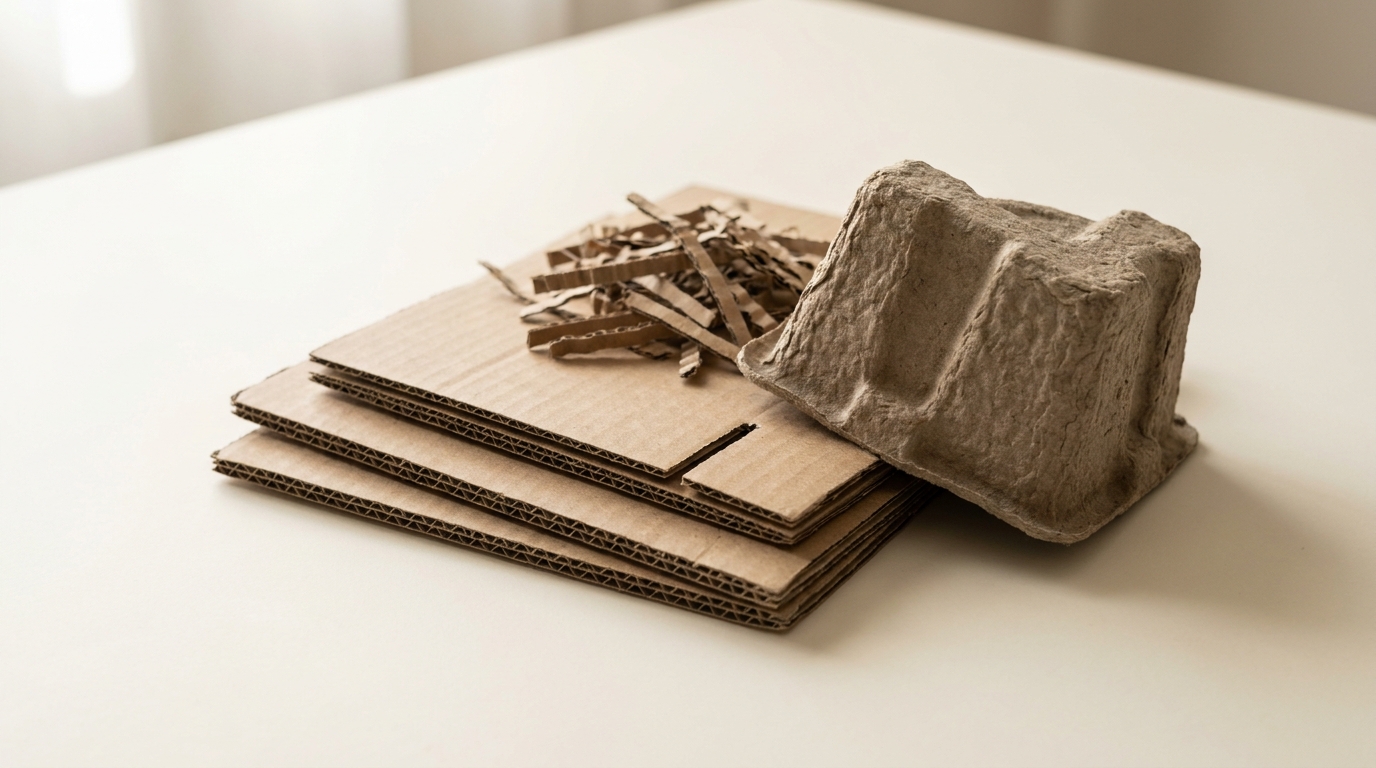
成形パルプ材料としての段ボール紙とは、回収された段ボール箱を再パルプ化したものを指す。

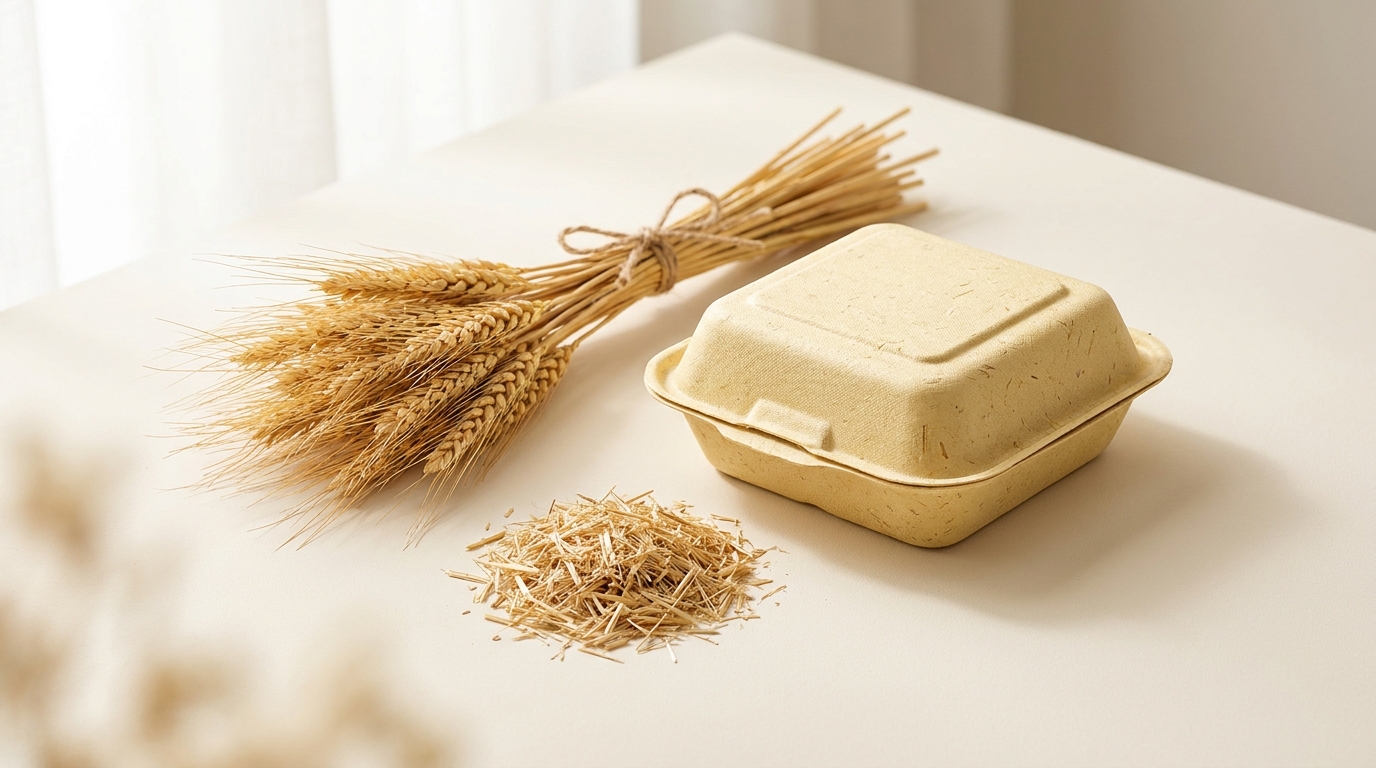
わら繊維は、穀物の収穫後に残る茎から作られる素材です。

製品カテゴリー

成型パルプトレイ、食品包装、カスタムデザイン、持続可能なオプションなど、Bonitopakの多様なパッケージングソリューションをご覧ください。各カテゴリーは、耐久性、機能性、環境への責任を考慮し、お客様の特定のニーズに合わせて作られています。
あなたのプロジェクトを向上させる準備はできていますか?

BonitoPakでデザインに命を吹き込もう

BonitoPakで精密なエンジニアリングを体験してください。詳細なプロトタイプから大量生産まで、お客様のコンセプトを現実にします。今すぐお問い合わせください!

関連記事と洞察

持続可能なパッケージングのトレンド、業界の洞察、専門家のヒントに関する最新情報をブログでお届けします。革新的なアイデアやソリューションを探求し、パッケージングの知識を深めましょう。

By Leo Chan, Senior Packaging Consultant · November 14, 2026 Molded fiber food containers are

By Leo Chan, Senior Packaging Consultant · November 14, 2026 Yes, egg cartons are compostable

By Leo Chan, Senior Packaging Consultant · November 14, 2026 The molded pulp packaging market

詳細フォーム