 Ir para o conteúdo
Por Leo Chan | Redator, BonitoPak | Mais de 20 anos na área de embalagens de polpa moldada
Plain pulp egg cartons are both. A carton made only from paper or plant fiber can go into a curbside paper bin or a compost pile, and it does fine in either place. The catch is the word “plain.” Plastic windows, coatings, and a soaking of raw egg all change which bin is right. They also change what a brand can legally print on the lid.
I’ve quoted cartons for a lot of US farms and egg brands, and some version of this question comes up on nearly every call. So this guide covers both sides. Shoppers get a clear answer on which bin to use. Brands get a clear view of what they can claim.
The Quick Answer by Carton Condition
The material alone doesn’t decide it. The condition of the carton matters just as much. Here’s how it usually breaks down.
| Carton condition | Recycle it? | Compost it? |
| Clean, plain molded fiber | Yes, where your program takes paper | Yes, at home or in a commercial facility |
| A few shell bits or dry spots | Usually yes, after you shake it out | Sim |
| Soaked with raw egg or moldy | No, food residue spoils paper bales | Sim |
| Fiber carton with a plastic window or sleeve | Only after you remove the plastic | Only after you remove the plastic |
| Wax or plastic-coated fiber | Check your local program | Only if it carries a compost certification |
| Clear plastic (PET) or foam | Not with paper | Não |
If you remember one thing, make it this. Clean fiber goes with paper recycling. Dirty fiber goes to compost. Anything plastic comes off first.
What Molded Pulp Is Made Of
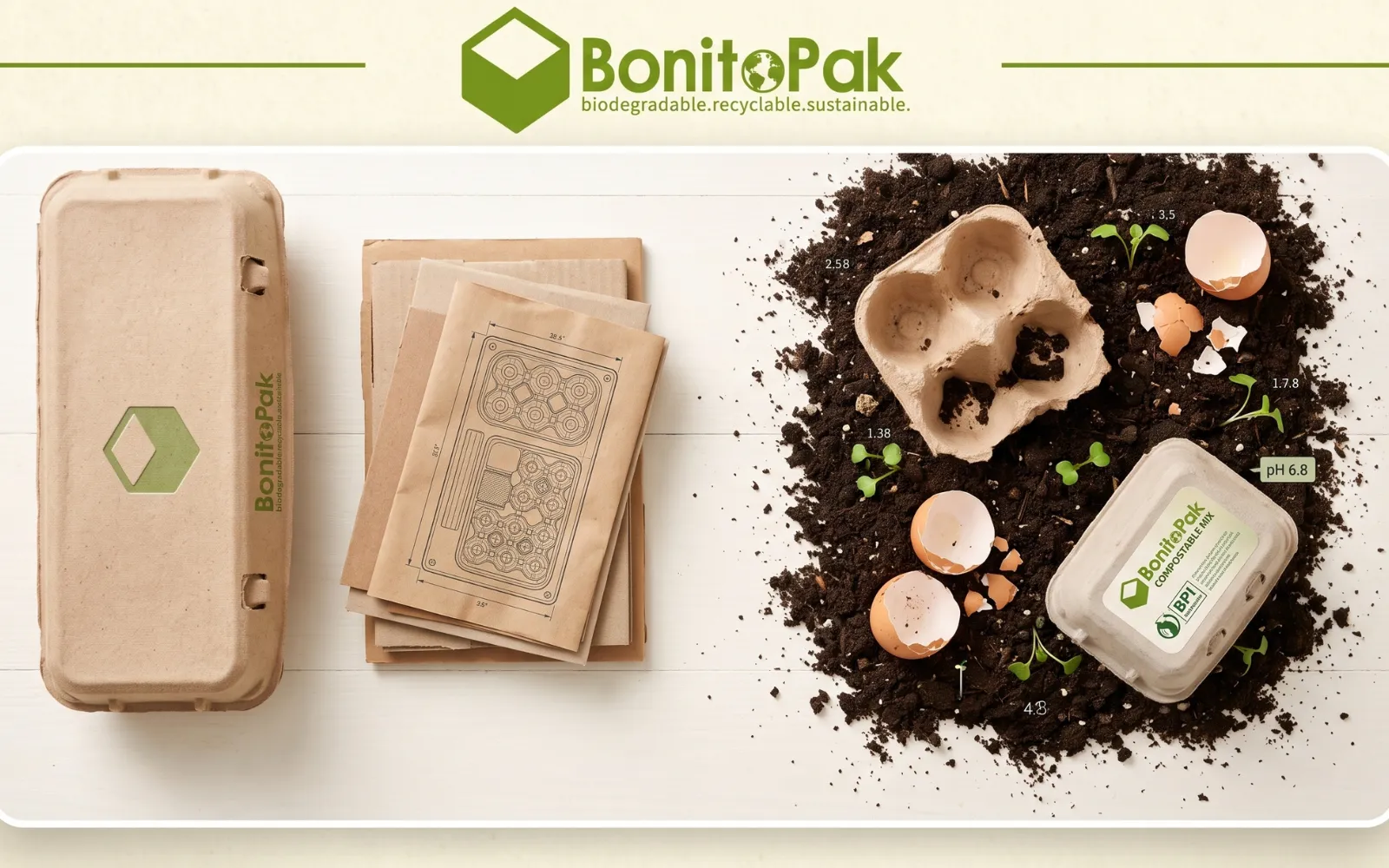
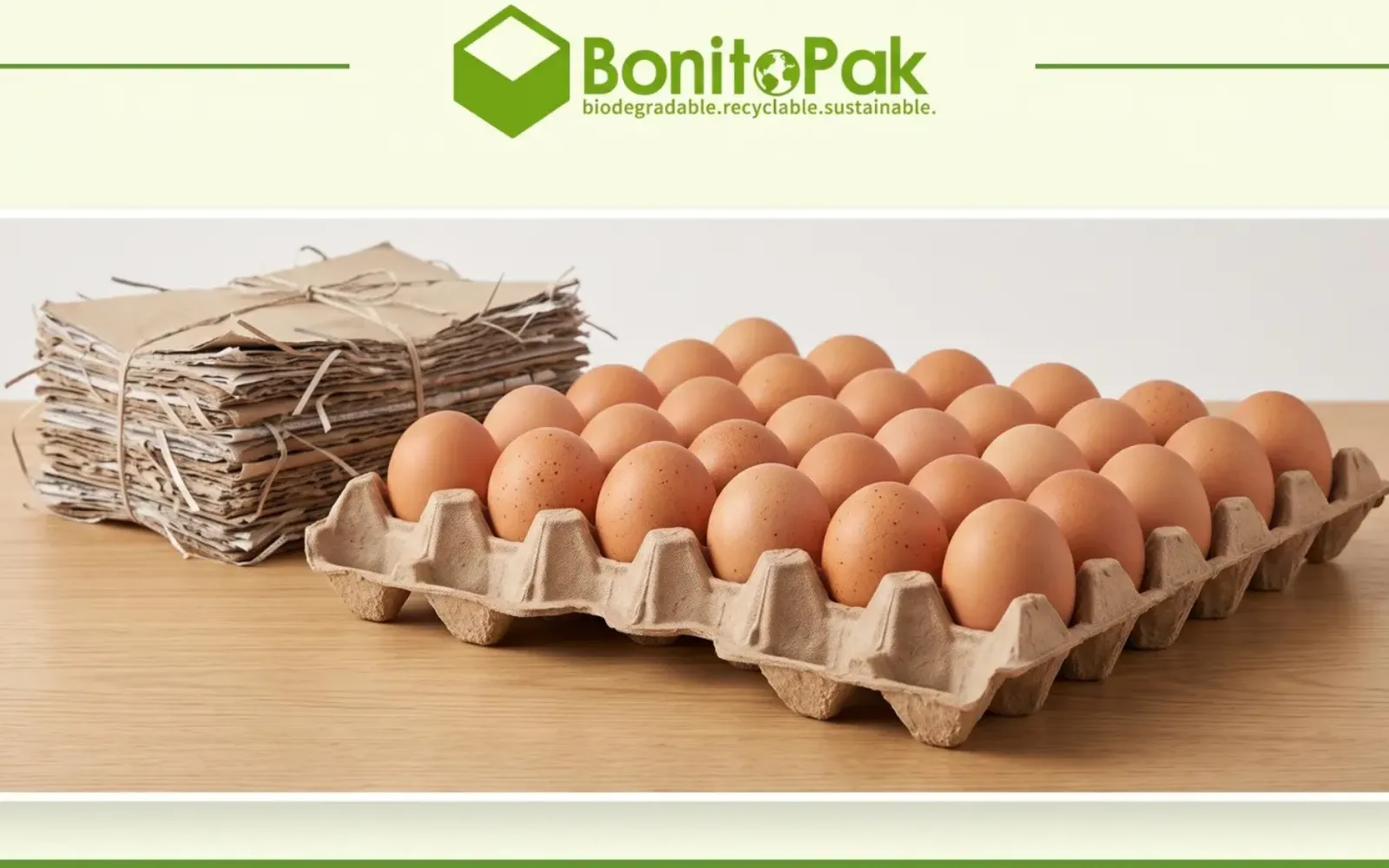
Most egg cartons in American stores are polpa moldada, which people also call molded fiber. The recipe is short. Fiber and water are mixed into a slurry, pulled onto a shaped mesh screen by vacuum, and then dried into a rigid form.
The fiber usually comes from recycled newsprint and cardboard. Some cartons use sugarcane bagasse or bamboo instead. We run all three at our plant in Dongguan, and a plain carton made from any of them can be recycled or composted.
A plain fiber carton has no glue, no plastic layer, and no binder holding it together. The fibers lock to each other as they dry. That simple build is the reason it can go down two different paths.
Why These Cartons Can Be Recycled
To a recycling facility, a molded fiber egg carton is just another form of paper. It gets baled with mixed paper, sent to a mill, and broken back down into pulp. Many US city and county recycling guides list fiber egg cartons as a standard curbside item.
People who search “are egg cartons recyclable” usually want a simple yes or no. For clean fiber cartons, the answer is yes in most places.
There is one quirk worth knowing. Paper fibers get shorter every time they’re recycled, and egg cartons are often made from fiber that has already been through several loops. Mills still take them. They simply blend that short fiber with longer fiber when they make new paper.
When the Recycling Bin Is the Wrong Choice
Food residue is the main deal breaker. A carton soaked by a broken egg can contaminate the paper around it in the bale. Wet or moldy cartons cause the same trouble. In those cases, compost is the better route.
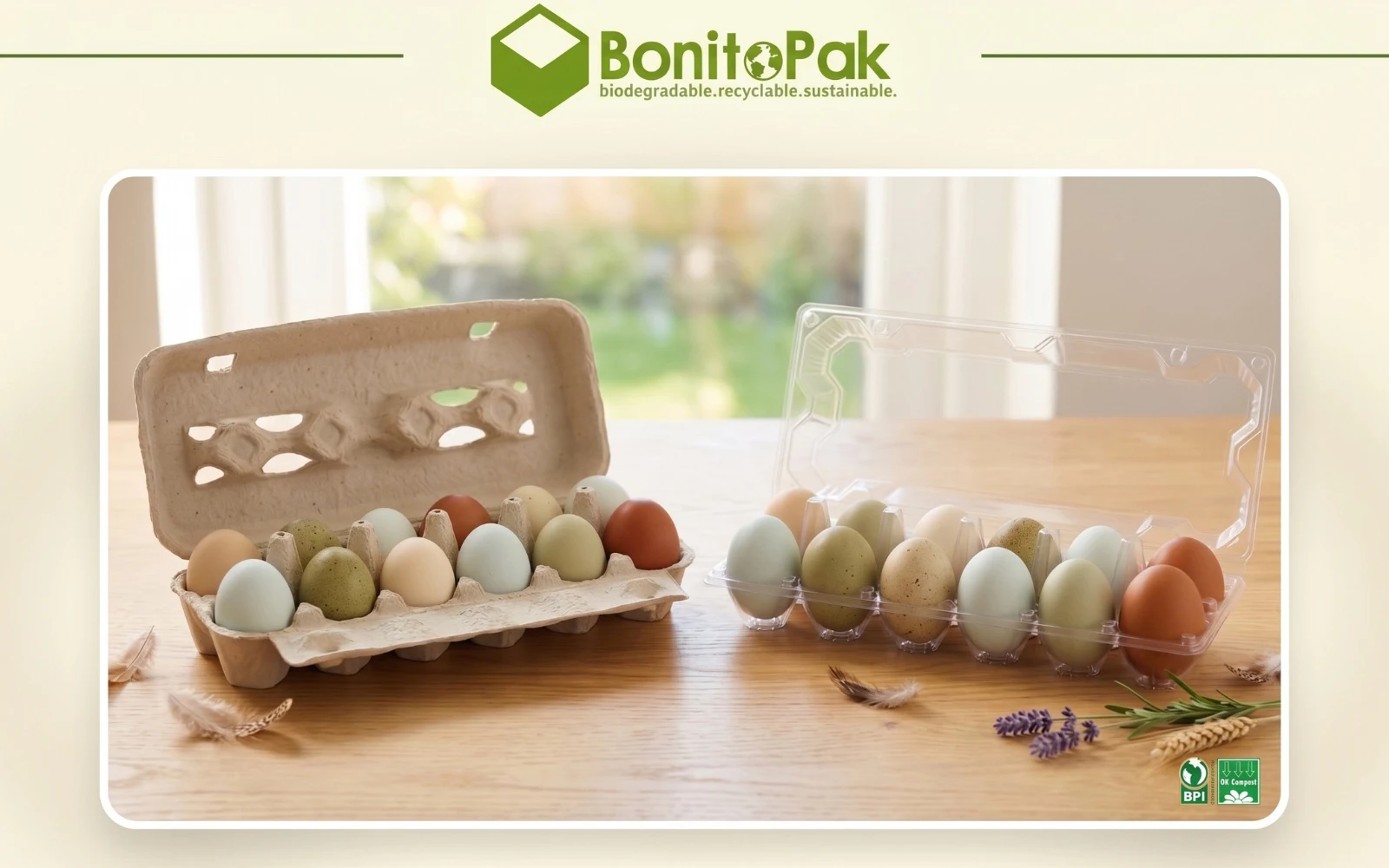
Plastic parts are the other issue. Some cartons have a clear plastic window, a shrink sleeve, or a plastic label. Pull those off before the carton goes anywhere.
Rules also vary from town to town. Your local program’s accepted list always has the final word.
Why These Cartons Can Be Composted
Molded fiber is mostly cellulose, and compost microbes break cellulose down readily. In a backyard pile, egg cartons count as a “brown.” That’s the carbon-rich material that balances wet “greens” like food scraps and grass clippings.
If you want the full journey from field to finished soil, our piece on the lifecycle of compostable egg cartons walks through it step by step.
Are Egg Cartons Compostable in a Backyard Pile?
Yes, and a few habits make them break down faster:
- Tear the carton into small pieces so microbes have more surface to work on.
- Soak the pieces for a minute if your pile runs dry, since dry fiber breaks down slowly.
- Mix them in with greens rather than leaving a thick layer on top.
- Add crushed eggshells too, because they can go into the same pile.
- Skip cartons with plastic windows unless you remove the plastic first.
Torn, damp pieces in an active pile disappear far faster than a whole carton tossed on a cold heap.
Commercial Composting Access Is Still Limited
City composting is growing, but it isn’t available everywhere. BioCycle’s 2023 national survey found 14.9 million US households with access to municipal food waste collection, which is about 12% of homes. Only 27 programs in that survey reported accepting molded fiber containers.
A 2025 study by the Sustainable Packaging Coalition found that 18.1% of the population it sampled could use programs that take food waste plus some compostable packaging. So for most American households, compostable egg cartons end up in a backyard pile or the paper bin rather than a city green cart.
Compostable Is Not the Same as Biodegradable
These two words get mixed up a lot. “Compostable” means the material turns into usable compost in about the same time as the other material in the pile. “Biodegradable” is looser.
The Federal Trade Commission’s Green Guides say an unqualified biodegradable claim needs proof that the item breaks down within about a year after normal disposal. Items headed to a landfill usually won’t, so brands shouldn’t make that claim for them.
Colors, Inks, and Coatings
Plain gray fiber is the easy case. Many brands want more than gray, though, so here’s how the common extras affect disposal.
Polpa colorida
Color in a molded fiber carton is usually mixed into the slurry, not painted on the surface. Our caixas de ovos coloridas are made this way and carry the same BPI and OK Compost certifications as our natural ones. With any colored carton, ask the supplier whether the certification covers that exact color.
Coatings and PFAS
Egg cartons don’t need grease resistance, so most have no coating at all. That matters because some fiber food packaging has used fluorinated chemicals, known as PFAS, for grease proofing.
The Biodegradable Products Institute (BPI) has required certified items to contain no intentionally added fluorinated chemicals since January 1, 2020. Each item also needs a lab result below 100 ppm total organic fluorine. If you buy fiber cartons, ask your supplier for that test report.
Labels and Printing
Paper labels and standard printing are usually fine for both bins. Embossed logos are even simpler, since they add no ink at all. Plastic labels and sleeves should come off before disposal.
What Brands Can Legally Claim
If you sell eggs, disposal advice isn’t the only issue. The words on your carton are a marketing claim, and the FTC Green Guides set the ground rules.
- Recyclable: An unqualified claim is acceptable when recycling facilities are available to at least 60% of the consumers or communities where the product is sold.
- Compostable: A claim should carry a qualifier if the item can’t be composted safely and in a timely way at home. It also needs one if it depends on municipal facilities that most consumers can’t reach.
- Certifications: BPI certification tests against ASTM D6400 or D6868 for commercial composting. OK Compost certification uses the European standard EN 13432.
California adds its own rules for recycling symbols and compostable labels. Its packaging law, SB 54, also requires all single-use packaging sold in the state to be recyclable or compostable by 2032. A fiber carton lines up well with that direction, but check California’s specific labeling rules before you print.
A practical approach is to tell the consumer exactly what to do, such as “Recycle with paper, or tear up and compost at home.” Keep it short and accurate.
Our guide to egg carton labels and USDA and FDA requirements covers the rest of the lid, from the safe handling statement to net contents. This article is general information rather than legal advice, so have your compliance advisor review final wording.
Recycle or Compost: Which Is Better?
Both beat the trash. Recycling keeps fiber in use for new paper products. Composting returns the material to the soil and handles the cartons that recycling can’t take.
A simple order of choices works for most households:
- Clean carton, and your program takes paper: Recycle it.
- Soiled carton, or you compost at home: Compost it.
- Plastic parts attached: Remove them, then recycle or compost the fiber.
- No recycling or composting access: Use the trash as a last resort.
Farms often want to reuse cartons. Check your state’s rules before you put eggs you sell into used ones.
Choosing the Right Carton From the Start
The easiest carton to dispose of is the one designed for it. That means plain fiber, color mixed into the pulp, embossed branding where it works, and no plastic parts. Pulp egg cartons built that way give your customers two good options instead of one confusing one.
Em BonitoPak, we make molded fiber egg cartons from recycled paper, sugarcane bagasse, and bamboo fiber. They’re BPI and OK Compost certified, with custom tooling from 1,000 pieces. You can browse our molded pulp egg cartons or send us your format for a quote.
Perguntas frequentes
Q: Are egg cartons recyclable in every US city?
No program accepts everything, but clean molded fiber cartons are accepted in most curbside paper streams. Plastic and foam cartons are accepted far less often. Your city or county recycling guide has the final say on what belongs in your bin.
Q: Are egg cartons compostable if they are colored?
Usually, yes. Most colored fiber cartons get their color from pigment mixed into the pulp rather than a surface coating. Look for a BPI or OK Compost mark, or ask the supplier whether the certification covers that specific color.
Q: How long does a fiber egg carton take to break down in compost?
It depends on your pile. Torn, damp pieces in an active, warm pile break down much faster than a whole dry carton on a cold heap. Tearing, soaking, and mixing the pieces with greens all speed up the process.
Q: Do molded fiber egg cartons contain PFAS?
Egg cartons rarely need grease resistance, so most have no coating. For certainty, ask your supplier for a total organic fluorine test. BPI-certified items must test below 100 ppm and contain no intentionally added fluorinated chemicals.
Q: Can I compost egg cartons together with eggshells?
Yes. Both break down in a home compost pile. Crush the shells and tear the carton into small pieces first. The carton adds carbon, the shells add minerals, and neither causes problems in a well-balanced pile.

 Portuguese
  English
  German
  Spanish
  French
  Russian
  Japanese
  Arabic