 Ir para o conteúdo
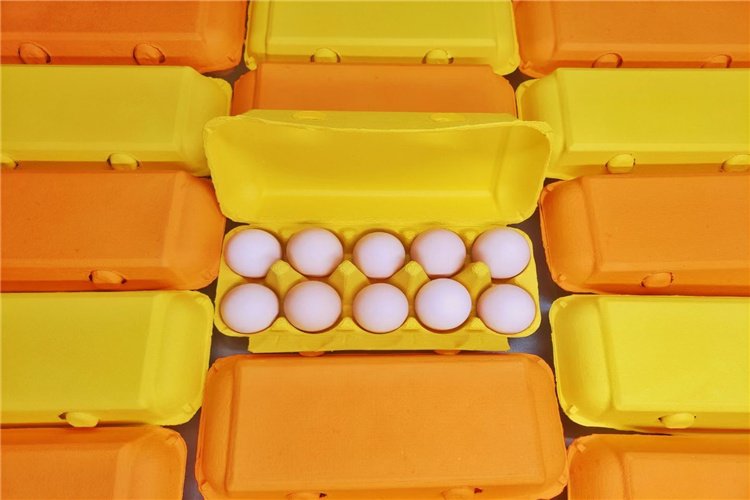
Why the Half-Dozen Format Has Grown So Fast
Ten years ago, a 6-count egg carton was a curiosity. You found them at farmers markets, not grocery stores. That has shifted significantly.
Specialty egg producers, heritage breed farms, and direct-to-consumer operations have pushed the 6-count into the mainstream. The format matches how premium eggs are actually bought and sold.
A first-time buyer at a market stall considering heritage breed eggs at two or three times the commodity price needs a lower entry point. A 6-count at a fair price is an easier commitment than a 12-count at double the cost. Many specialty operations report that 6-count sales convert first-time buyers into repeat customers more reliably than 12-count formats.
The format is also practical for small flocks. A backyard operation with 10 to 20 hens producing 8 to 16 eggs per day does not always have the volume to fill 12-count cartons consistently. A 6-count gives more packing flexibility day to day.
What Makes a Good 6 Egg Tray?
Cell Geometry
This is the piece most buyers skip over and regret later. A 6 cell tray has six pockets. Each pocket has an interior diameter, a depth, and a wall taper. Those three dimensions determine whether the egg sits securely or rattles in transit.
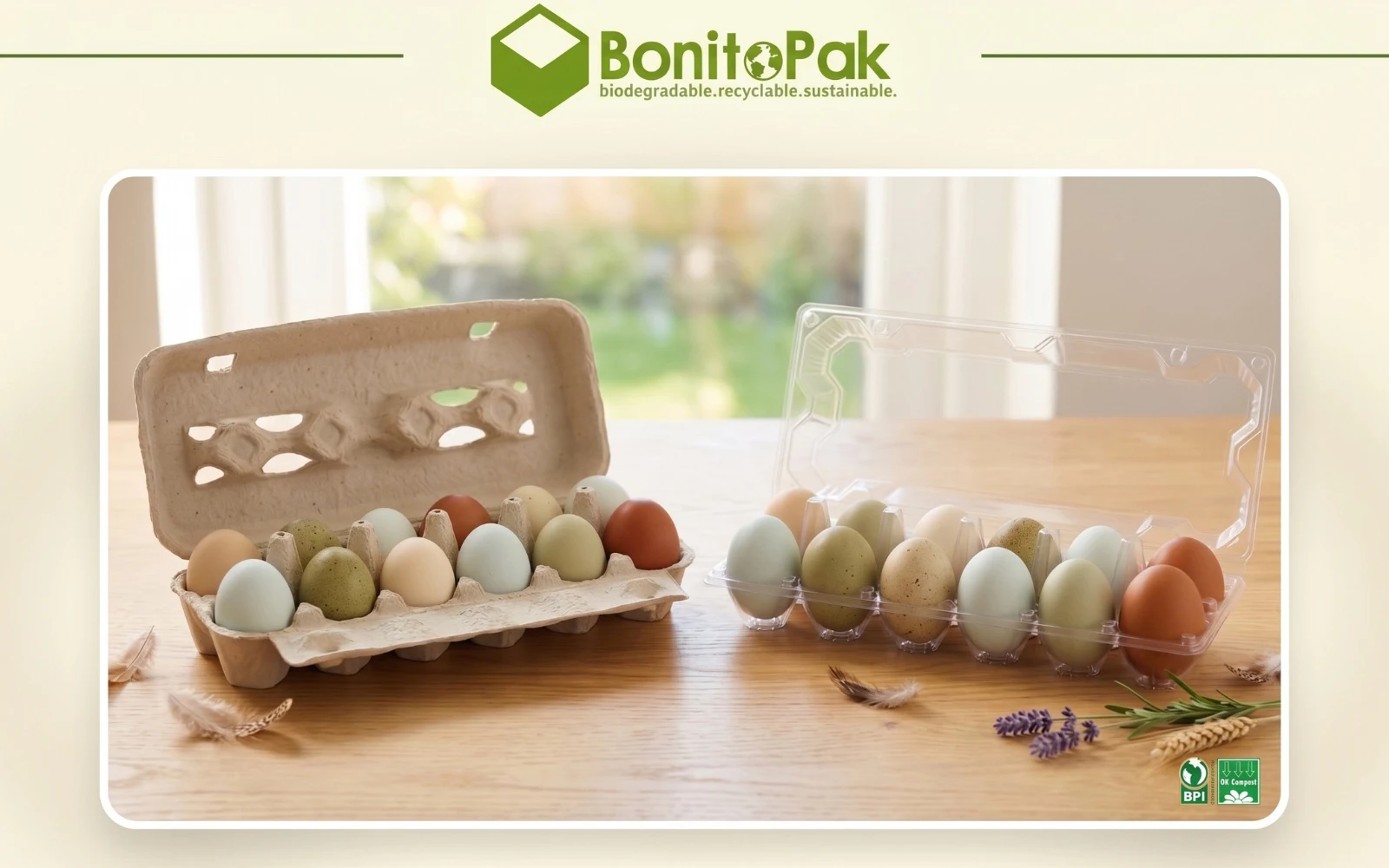
A standard large chicken egg sits well in a cell designed for that grade. A jumbo egg from an older layer, or any egg from a duck, sits poorly in a standard large-grade cell. The lid either will not close or closes by pressing down on the shell.
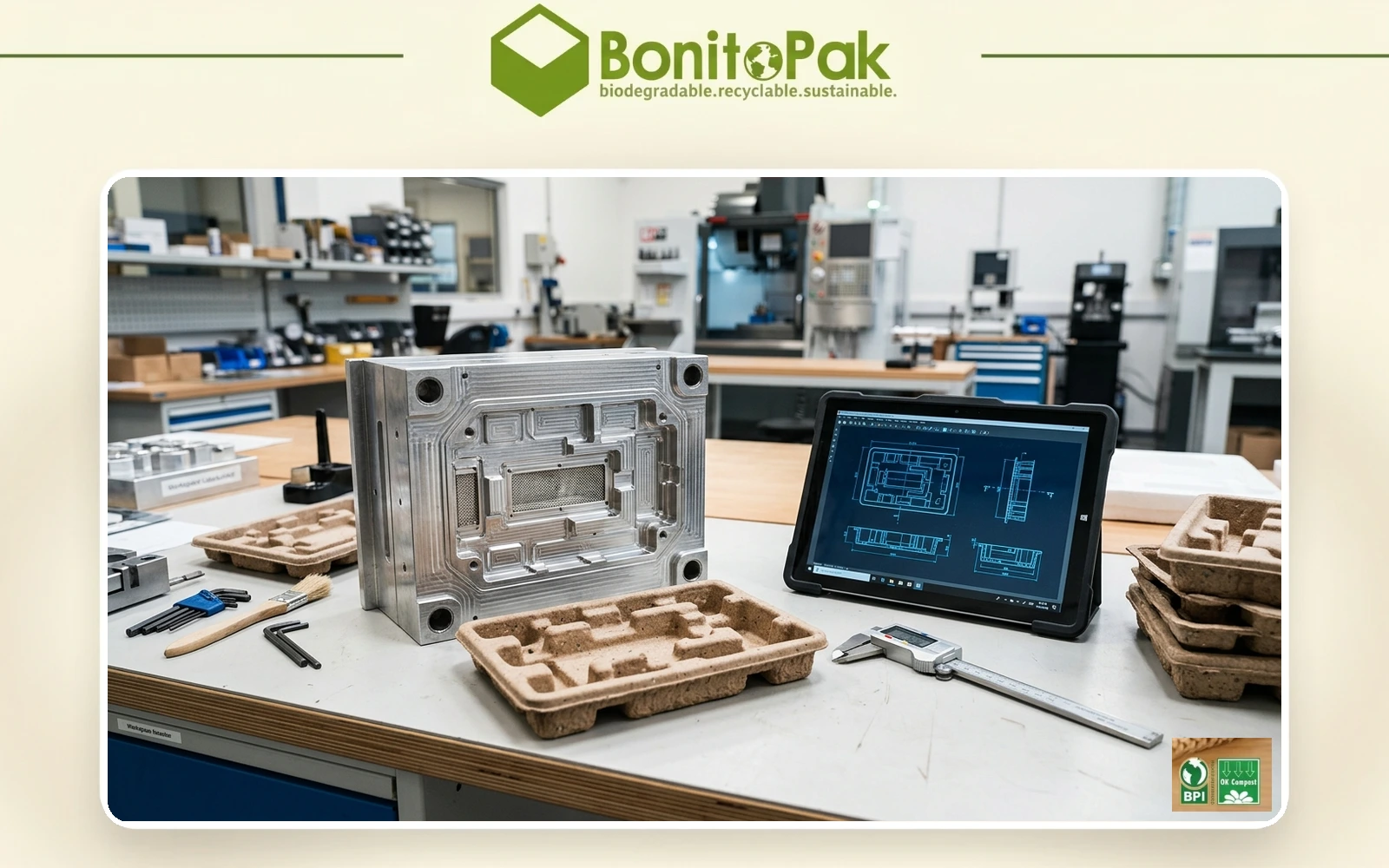
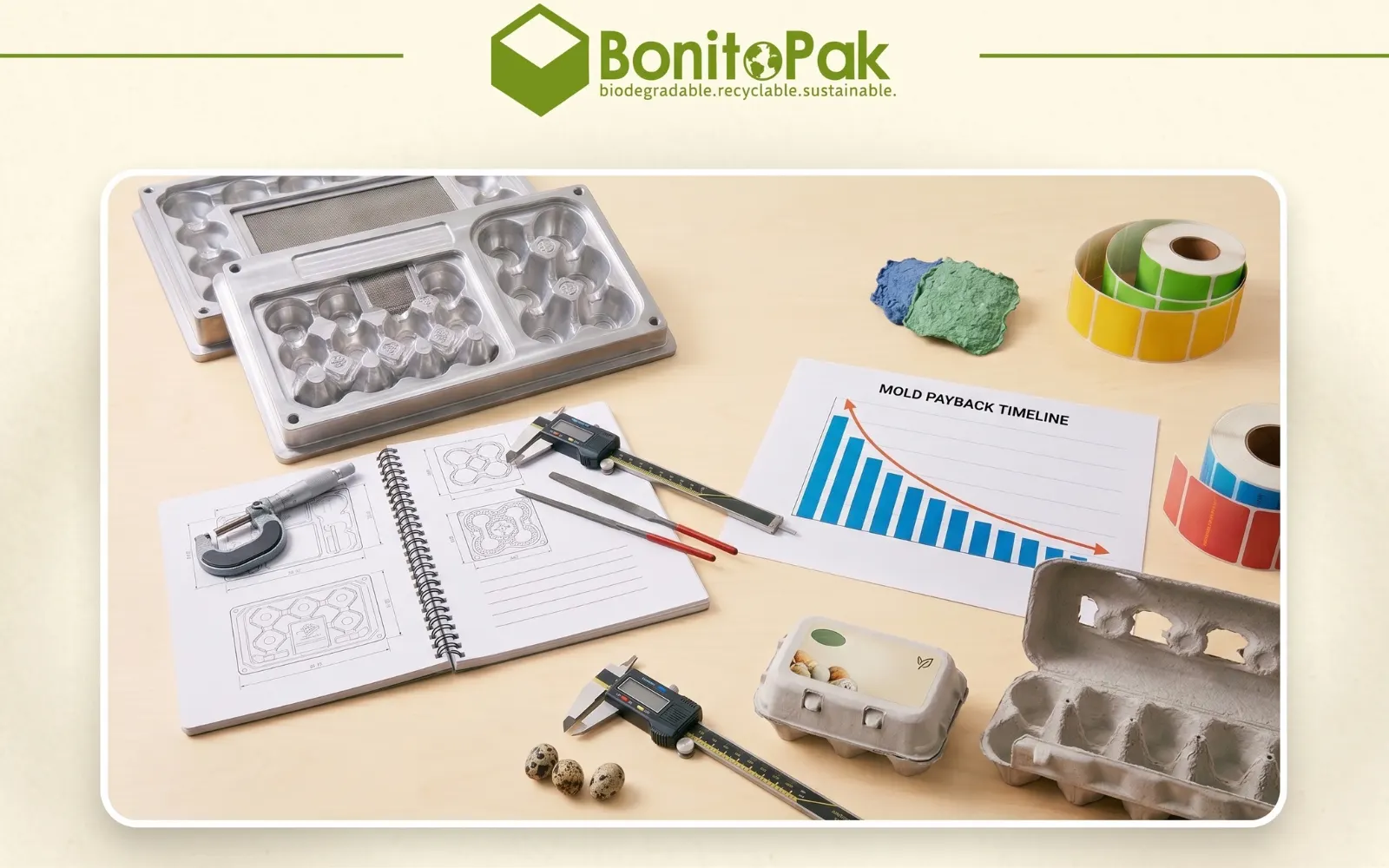
Custom cell geometry from a manufacturer who cuts molds per project solves this. Send physical egg samples. The cell is designed around your actual eggs.
Wall Thickness and Process
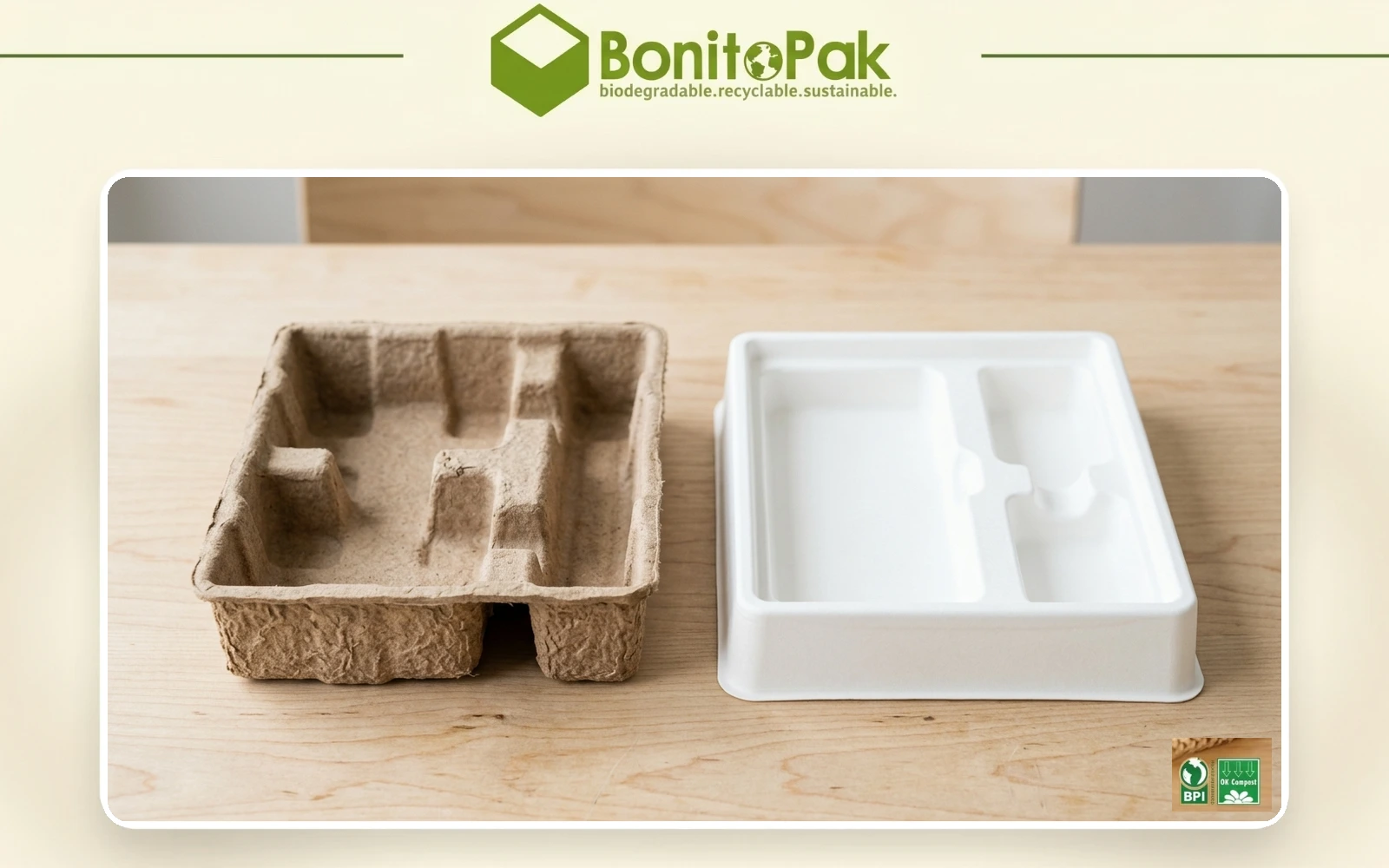
Wet press 6 egg trays run 0.7 to 1.2mm wall with smooth surface on both faces. This is the retail and premium format, giving sharp emboss definition and accurate color take.
Dry press 6 egg trays run 2.5 to 3.0mm wall. Stronger for farm gate and market use where the carton takes more handling. Lower cost per unit but less suited to premium retail presentation.
Lid Closure Behavior
A 6 egg tray that does not close flat is a problem. Eggs shift in transit if the lid has any gap. Lid fit is determined by tooling and cell geometry together. Test with your heaviest layer before approving a production mold.
6 egg tray specification comparison:
| Especificação | Prensa úmida | Prensa seca |
| Wall thickness | 0.7 to 1.2mm | 2.5 to 3.0mm |
| Qualidade da superfície | Smooth both faces | One smooth, one textured |
| Emboss definition | Sharp, clean edges | Moderate definition |
| Cell geometry | Custom per egg grade and bird type | Custom per egg grade and bird type |
| Fiber options | Bagasse, bamboo, recycled paper | Recycled paper standard; bagasse available |
| Color systems | White, natural, black, orange, gray, blue | Gray standard; colors on request |
| Temperature range | -30 to 120 degrees C | -30 to 120 degrees C |
| Melhor aplicativo | Retail, farmers market, DTC, premium brand | Farm gate, wholesale, cost-driven operations |
| MOQ from Bonitopak | 1,000 pieces | 1,000 pieces |
Branding a 6 Egg Tray Effectively
A 6-count carton lid gives roughly 80 to 100 square centimeters of embossable or printable area. That is enough for a farm name, a logo, a certification mark, and a tagline without the lid looking crowded.
Emboss and deboss cut the logo directly into the tooling. The mark appears in the fiber itself with no ink and no laminate. It does not peel or smear. It looks the same six months into a production run as on day one.
In-pulp color adds the brand layer. Black lid with natural base. White lid with an embossed farm logo. Natural cream with a debossed farm name. The combination of color and emboss is the most durable and most effective branding approach available on a molded pulp 6 egg tray.
6 Egg Trays for Heritage Breed and Specialty Bird Operations
Heritage breeds like Orpington, Marans, Brahma, and Dominique frequently lay eggs that run XL to jumbo. Standard cartons leave the lid open. Duck, quail, and other specialty birds need completely different cell geometry.
The only reliable solution is custom cell geometry. For a 6-count carton, tooling cost is modest. MOQ starts at 1,000 pieces from Bonitopak. At typical specialty egg pricing, 1,000 cartons is a practical starting run for a small farm selling at market or through a subscription.
How 6-Count Compares to Other Retail Egg Counts
| Count | Best Application | Buyer Entry Point | Format |
| 6 count | First-time buyers, premium, DTC, farmers markets | Low, most accessible | Retail carton with lid |
| 12 count | Restaurant supply, loyal volume buyers, retail | Standard retail entry | Retail carton with lid |
| 15 count | Wholesale retail, convenience stores | Mid-volume retail | Retail carton with lid |
| 18 count | Farm sales, subscription, club retail | Higher commitment format | Retail carton with lid |
| 30 count | Wholesale, distribution, farm-to-packer | Distribution only, no consumer | Open flat, no lid |
How to Order a Custom 6 Egg Tray
Send physical egg samples including the largest eggs your heaviest layers produce, or send measurements: equatorial diameter and weight range. Specify wet press or dry press. Specify fiber and color preference with a Pantone reference. Note any emboss artwork or print requirement and your destination market.
3D drawings come back in 2 days. Sample mold in 7 days. Production mold in 8 days after approval. All inquiries get a response within 24 hours.
Perguntas frequentes
What is a 6 egg tray?
A 6 egg tray, also called a half-dozen egg carton or 6-count egg carton, is a molded pulp tray with six individual cells that each hold one egg. It is the most common format for specialty, heritage breed, and direct-to-consumer egg sales because the lower count reduces the entry price point for first-time buyers. Cell geometry must match the egg grade for the lid to close properly and eggs to sit without movement in transit. Molded pulp versions are fully compostable and can carry emboss branding, in-pulp color, and water-based print.
Will a standard 6 egg carton fit duck or jumbo eggs?
Usually not. Standard 6 egg cartons are cut for large-grade chicken eggs with an equatorial diameter of roughly 55 to 63mm. Jumbo chicken eggs and most duck eggs run 65 to 75mm or larger. The lid will not close flat on a standard cell with these eggs. A production mold that does not match your egg grade creates a packaging failure before a single carton reaches the buyer. Custom cell geometry matched to your egg grade is the correct solution. Send physical egg samples to a custom carton manufacturer and the cell is designed around your actual eggs.
What material is best for a 6 egg tray?
Molded pulp is the preferred material for specialty 6 egg trays. Wet press molded pulp gives a smooth surface on both faces, sharp emboss definition, wall thickness of 0.7 to 1.2mm, and full compostability under BPI and OK Compost certification. Dry press molded pulp is thicker at 2.5 to 3.0mm, more durable for farm gate use, and lower cost per unit. Both are made from natural plant fiber with no plastic, resin, or adhesive, and both compost at end of life. For retail and premium presentation, wet press is the right choice. For farm gate and wholesale, dry press handles the job at a lower per-unit cost.
Can I put my farm logo on a 6 egg tray?
Yes. Emboss or deboss cuts the logo directly into the tooling so it appears in the fiber itself with no ink and no added material. This requires no per-unit material cost after tooling, does not peel or smear in moisture or refrigeration, and survives the handling a carton takes through packing and retail. Water-based and soy ink print is also available for color branding elements, farm name, and certification marks. The combination of in-pulp color plus embossed logo is the most durable and visually effective approach for a 6 egg molded pulp carton.
What is the MOQ for custom 6 egg trays?
MOQ starts at 1,000 pieces on most custom 6 egg tray lines from Bonitopak. Sample mold is delivered in 7 days for geometry and color confirmation. Production mold follows in 8 days after sample approval. 3D drawings are returned in 2 days from receiving your specification or physical egg samples. Some specialized formats with complex structural features are set at 5,000 pieces minimum.
Are 6 egg trays compostable?
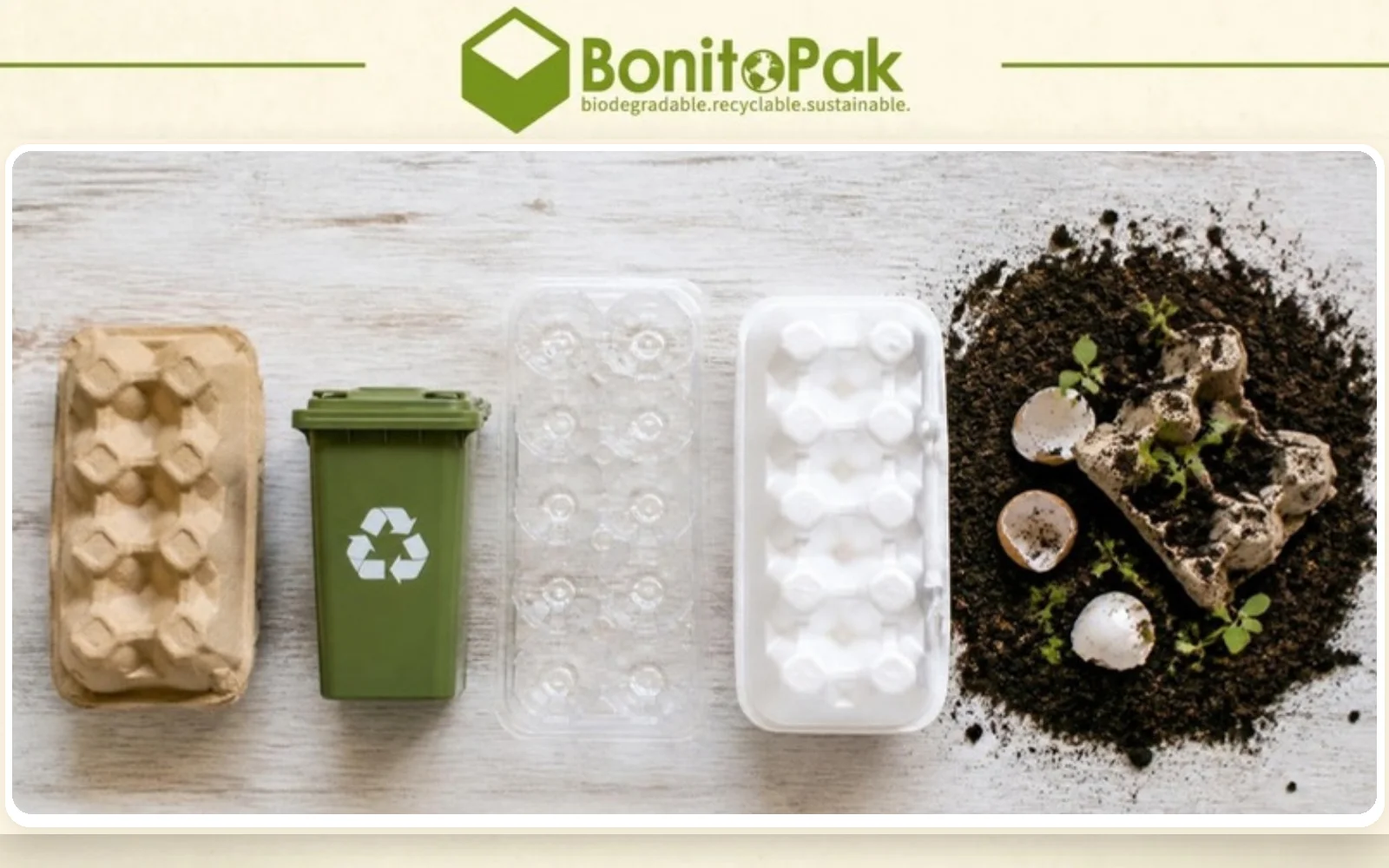
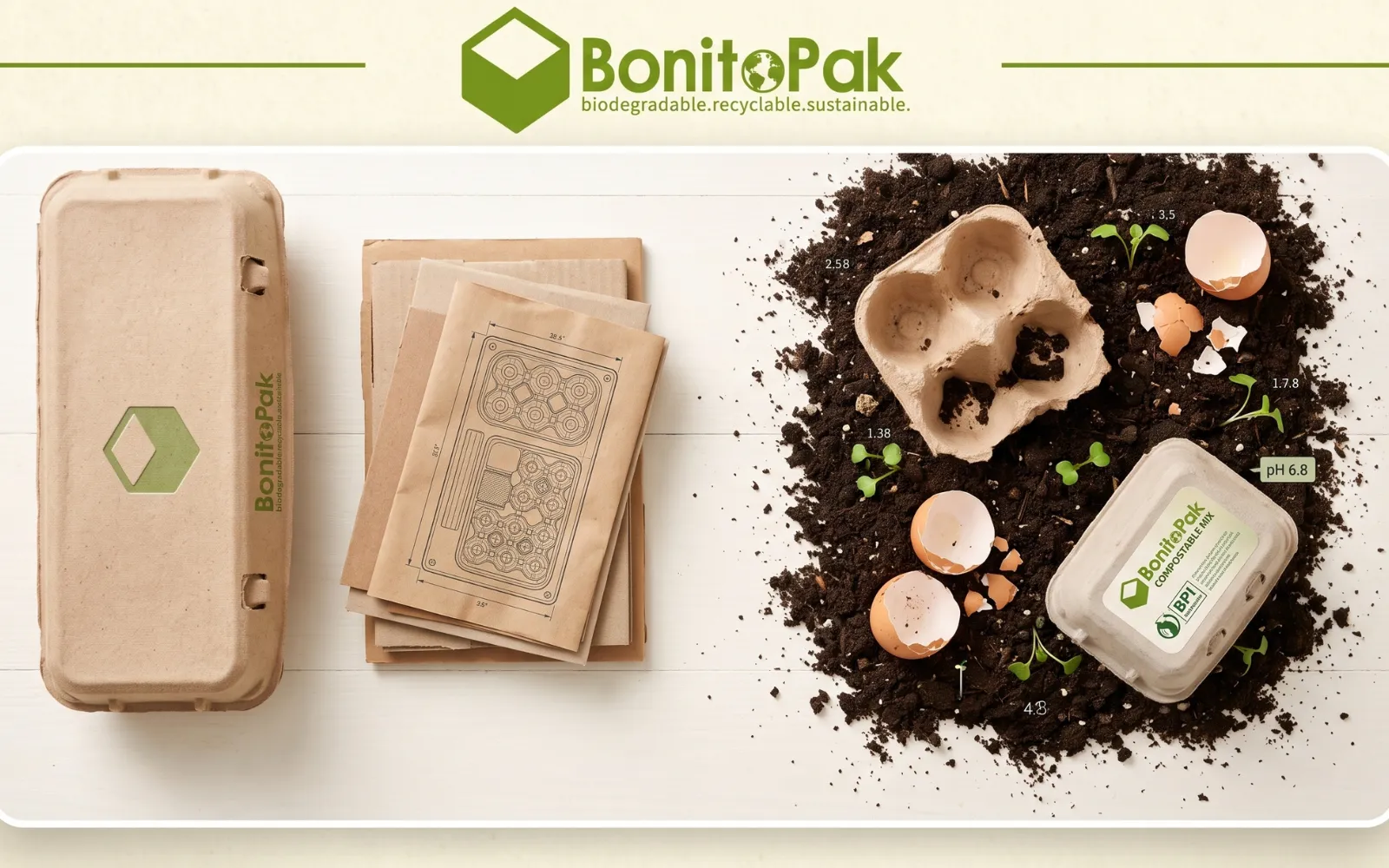
Molded pulp 6 egg trays from Bonitopak are certified compostable. The food grade line holds BPI certification under ASTM D6400 for North American markets and OK Compost certification from TUV Austria under EN 13432 for European markets. The certified line biodegrades within 90 days under industrial composting conditions. In-pulp color and emboss branding do not affect this certification because neither adds a non-fiber synthetic material. For direct food contact, white or natural fiber is the correct specification.
Ready to Order Custom 6 Egg Trays?
Send your egg grade, color requirement, annual volume, and destination market. 3D drawings in 2 days. Sample mold in 7 days. Bonitopak responds to all inquiries within 24 hours.
See the full egg tray range at egg-tray or contact Bonitopak to start your 6 egg tray specification.

 Portuguese
  English
  German
  Spanish
  French
  Russian
  Japanese
  Arabic