Startseite " Dienstleistungen " Seite 3
Material :
Material :
Material :
Material :
Material :
Material :
Material :
Material :
Material :
Material :
Für das Nasspressverfahren werden biologisch abbaubare Materialien wie Bagasse, Bambus und Recyclingpapier verwendet, die eine glatte Oberfläche, Schutz, Polsterung und eine platzsparende, umweltfreundliche Verpackung bieten.
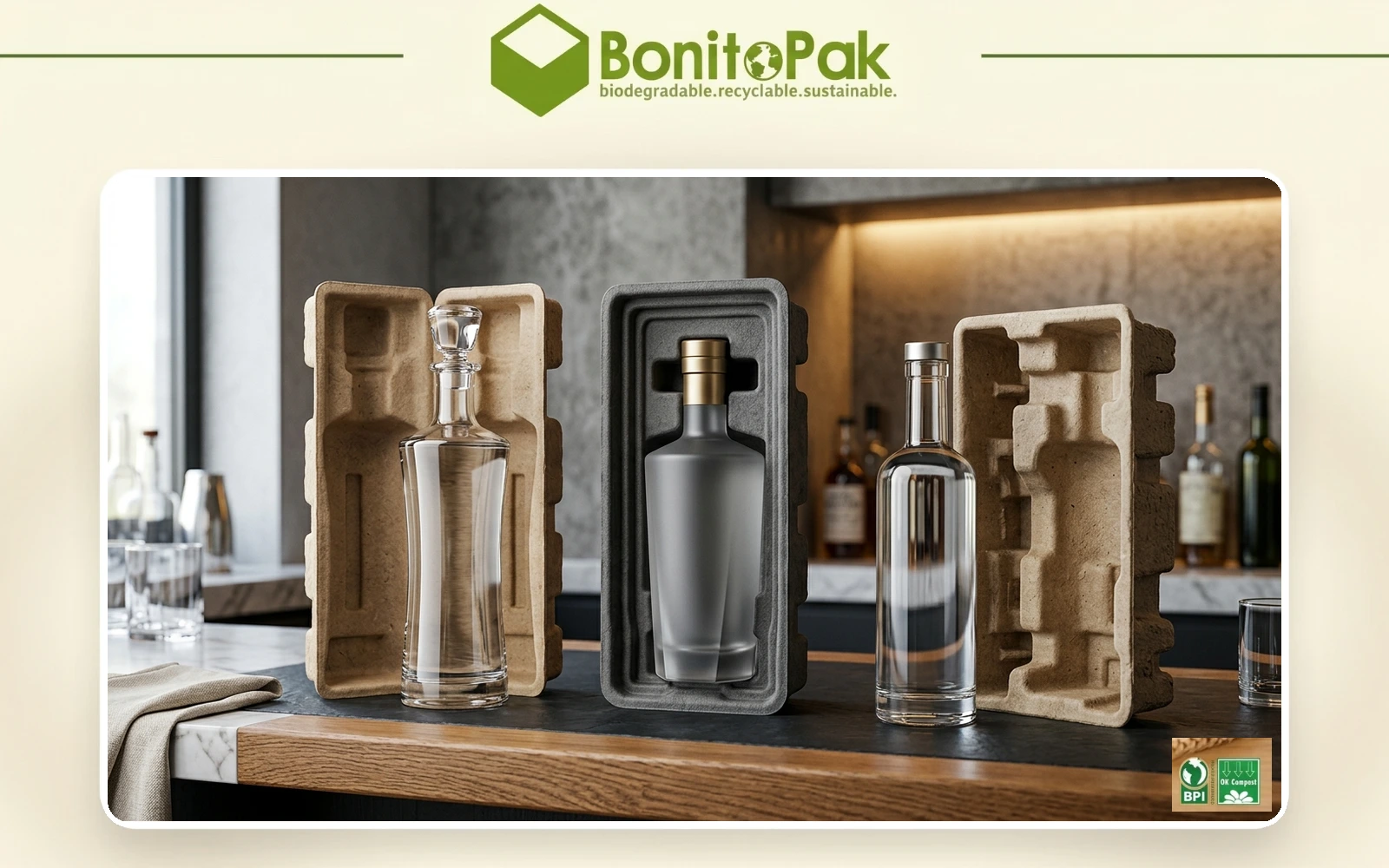
Geformte Zellstoffprodukte ersetzen Kunststoff und Schaumstoff und bieten recycelbare, biologisch abbaubare Optionen. Kundenspezifische Formen, Farben und umweltfreundliche Oberflächen sind erhältlich. Wir bieten erschwingliche, nachhaltige Verpackungen mit hauseigener Prototypenerstellung und Produktion.
Unser Pflanzenfaser-Geschirr aus Bagasse, Stroh und Bambus ist biologisch abbaubar, kompostierbar, wasserfest, ölbeständig und mikrowellengeeignet. Zertifiziert, recycelbar und stapelbar für umweltfreundlichen Gebrauch.
Trockengepresste Zellstoffschalen aus 100% recyceltem Material sind eine umweltfreundliche und kostengünstige Alternative zu Kunststoff. Sie bieten Polsterung, Temperaturbeständigkeit und Stapelbarkeit und sparen bis zu 20% Platz.
Bonitopak bietet geformten Zellstoff in sechs Farben an, darunter Weiß, Natur und Schwarz, mit der Farbgenauigkeit 95%. Umweltfreundliche Methoden gewährleisten eine sichere Bleiche. Die Farben Natur und Weiß eignen sich am besten für Lebensmittel, die anderen für Schalenverpackungen.
Egg trays fail when eggs are supported at isolated contact points instead of along their natural curvature. Poorly designed molds create stress concentrations that increase cracking during stacking and transport.
This mold uses controlled cradle geometry and consistent depth to distribute load evenly across each egg. When combined with stable nesting design, this significantly improves tray performance without increasing material usage.
Cavity geometry is developed based on egg size standards, stacking height, and transport conditions. Draft angles and flange dimensions are tuned to support smooth de-nesting and reduce line stoppages on automated equipment.
Tool layouts are created using 3D CAD, allowing optimization for cavity count, sheet utilization, and cycle time. Surface polishing and edge radiusing improve plastic flow and reduce stress marks, particularly when running recycled PET.
It is important to note that rPET variability can affect clarity and thickness consistency. In most cases, these issues are addressed through forming parameter adjustments rather than tooling changes.
Can this mold be customized for different egg sizes or tray counts?
Yes. Cavity dimensions and layout are customized based on egg size standards and packaging requirements.
What plastic materials can be used with this mold?
The mold is suitable for PET, rPET, and PS, depending on regulatory and cost considerations.
How does the mold affect tray nesting and de-nesting?
Draft angles and flange geometry are designed to control nesting depth and support reliable de-nesting on automated lines.
Is this mold suitable for recycled PET?
Yes, but forming parameters may need adjustment due to rPET sheet variability.
What is the typical tooling lead time?
Lead time depends on cavity count and complexity and begins after design approval.
If you are planning or upgrading plastic egg tray production and need tooling designed for stable output and real production conditions, request a quotation or technical review to confirm fit for your forming line.

Egg trays fail when eggs are supported at isolated contact points instead of along their natural curvature. Poorly designed molds create stress concentrations that increase cracking during stacking and transport.
This mold uses controlled cradle geometry and consistent depth to distribute load evenly across each egg. When combined with stable nesting design, this significantly improves tray performance without increasing material usage.
Cavity geometry is developed based on egg size standards, stacking height, and transport conditions. Draft angles and flange dimensions are tuned to support smooth de-nesting and reduce line stoppages on automated equipment.
Tool layouts are created using 3D CAD, allowing optimization for cavity count, sheet utilization, and cycle time. Surface polishing and edge radiusing improve plastic flow and reduce stress marks, particularly when running recycled PET.
It is important to note that rPET variability can affect clarity and thickness consistency. In most cases, these issues are addressed through forming parameter adjustments rather than tooling changes.
Can this mold be customized for different egg sizes or tray counts?
Yes. Cavity dimensions and layout are customized based on egg size standards and packaging requirements.
What plastic materials can be used with this mold?
The mold is suitable for PET, rPET, and PS, depending on regulatory and cost considerations.
How does the mold affect tray nesting and de-nesting?
Draft angles and flange geometry are designed to control nesting depth and support reliable de-nesting on automated lines.
Is this mold suitable for recycled PET?
Yes, but forming parameters may need adjustment due to rPET sheet variability.
What is the typical tooling lead time?
Lead time depends on cavity count and complexity and begins after design approval.
If you are planning or upgrading plastic egg tray production and need tooling designed for stable output and real production conditions, request a quotation or technical review to confirm fit for your forming line.
Wir reagieren innerhalb von 24 Stunden und bieten schnelle, klare Kommunikation, maßgeschneiderte Lösungen und effizienten Service, um Zeit und Kosten zu sparen.
Unsere hauseigene Konstruktion, Entwicklung und Fertigung gewährleistet eine schnelle Werkzeugherstellung, wobei Muster innerhalb von 7 Tagen und Produktionsformen innerhalb von 8 Tagen fertiggestellt werden.
Unsere erfahrenen F&E-Ingenieure zeichnen sich durch Design, Prototyping und Werkzeugbau aus und bieten komplette Verpackungslösungen mit Blister-, Blechdosen- und bedruckten Schachteln an.
Geschulte Mitarbeiter führen 100%-Inspektionen, Stichproben und Qualitätskontrollen durch, um hohe Standards zu gewährleisten, Ausschuss zu reduzieren und Kosten zu sparen.
Wir sorgen für eine vernünftige Auftragsplanung und stimmen uns mit unseren Kunden ab, um Probleme umgehend zu lösen und die besten Lösungen zu gewährleisten.
Unser erfahrenes After-Sales-Team sorgt für eine reibungslose Kommunikation und löst Probleme mit Ersatz, Versand und Lieferung, mit dem Ziel, Reklamationen zu vermeiden.
Vietnam has become a serious alternative for buyers who want molded fiber packaging from outside
Searching for custom printed egg cartons turns up two very different kinds of company, and
Von Leo Chan | Autor, BonitoPak | Über 20 Jahre Erfahrung im Bereich Verpackungen aus Formzellstoff Wodka ist