 Zum Inhalt wechseln
Von Leo Chan | Autor, BonitoPak | Über 20 Jahre Erfahrung im Bereich Verpackungen aus Formzellstoff
Veröffentlicht: 16. August 2026 | Zuletzt überprüft: 16. August 2026
Standarddosen mit 12 oz und 16 oz haben beide einen Korpusdurchmesser von 66 mm und unterscheiden sich lediglich in der Höhe, sodass eine Trägerzelle für beide passt. Schlanke Dosen mit ca. 57 mm und besonders schlanke Dosen mit ca. 53 mm sind schmaler und erfordern separate Werkzeuge. Der Korpusdurchmesser, nicht das Volumen, entscheidet über die Passgenauigkeit der Trägerzelle.
Die meisten Probleme bei der Dimensionierung von Halterungen entstehen durch die falsche Fragestellung. Einkäufer fragen nach einer Halterung für 12-Unzen-Dosen, doch das Volumen sagt einem Halterungshersteller so gut wie nichts Aussagekräftiges. Zwei Dosen mit dem gleichen Fassungsvermögen von 355 ml können sich im Durchmesser um 9 mm unterscheiden – und genau das ist der Unterschied zwischen einem festen Halt und Dosen, die durch die Halterung rutschen.
Diese Größentabelle für Getränkedosen gibt die Maße an, auf die es tatsächlich ankommt, erläutert das in der Branche verwendete Kodierungssystem und zeigt auf, in welchen Fällen ein Werkzeugsatz mehrere Formate abdeckt und in welchen nicht.
Das Codesystem – entschlüsselt
Die Angaben zu „Can“-Spezifikationen sind in einem imperialen Bruchzahlensystem verfasst, das wie ein metrisches Maß aussieht, es aber nicht ist. Das bringt fast jeden, der neu in dieser Kategorie ist, aus dem Konzept.
Ein dreistelliger Code wie 211 bedeutet, dass die erste Ziffer ganze Zoll angibt und die folgenden beiden Ziffern Sechzehntel Zoll. 211 entspricht also 2 und 11 Sechzehntel, was 2,6875 Zoll oder etwa 66 mm entspricht. Eine vollständige Angabe wie 211 × 413 gibt zuerst den Durchmesser und dann die Höhe an; 413 entspricht also 4 und 13 Sechzehntel Zoll, was ungefähr 122 mm entspricht.
Endcodes funktionieren auf dieselbe Weise. Ein 202-Ende misst 2 und 2 Sechzehntel Zoll, also etwa 2,125 Zoll oder 54 mm. Das ist schmaler als der Körper, da die Dose oben verjüngt ist, bevor der Deckel aufgesetzt wird. Der Abstand zwischen dem Durchmesser des Dosenkörpers und dem Durchmesser des Deckels beträgt je nach Dose in der Regel 2 bis 4 mm.
Diese Verjüngung ist für Transportunternehmen von unmittelbarer Bedeutung. Ein Transportunternehmen, das die Dose im oberen Bereich aufnimmt, hat es mit einem konischen Abschnitt statt mit einer geraden Wand zu tun, und das Verjüngungsprofil variiert je nach Dosenhersteller selbst bei gleicher Nenngröße.
Größentabelle für Handytaschen: Die Formate, die Ihnen begegnen werden
| Format | Körperdurchmesser | Höhe | Band | Ende |
|---|---|---|---|---|
| 12 oz Standard | 66 mm (211) | 122 bis 123 mm | 355 ml | 202 |
| 16 oz Tallboy | 66 mm (211) | 153 bis 157 mm | 473 ml | 202 |
| 12 oz, elegant | 57 mm | 156 mm | 355 ml | 202 |
| 16 oz, elegant | 57 mm | 181 mm | 473 ml | 202 |
| 250 ml, schlanke Flasche | 53 mm | 134 mm | 250 ml | 200 |
| 330 ml (europäische Maßeinheit) | 66 mm (211) | 115 mm | 330 ml | 202 |
| 7,5 oz Mini | 66 mm (211) | 89 mm | 222 ml | 202 |
Die Zahlen wurden aus veröffentlichten Quellen zusammengestellt Maßangaben für Getränkedosen und mit folgenden Daten abgeglichen Größenangaben für Aluminiumdosen. Betrachten Sie diese Werte als Richtwerte. Da Toleranzen und Halsprofile je nach Dosenhersteller variieren, ist das Datenblatt Ihres eigenen Dosenlieferanten die maßgebliche Quelle für jedes Projekt.
Die eine Erkenntnis, die alles vereinfacht
Schauen Sie sich lieber die Spalte „Durchmesser“ als die Spalte „Volumen“ an. Standarddosen mit 12 oz und 16 oz haben einen identischen Durchmesser von 66 mm. Nur die Höhe unterscheidet sich.
Diese Tatsache allein bedeutet, dass eine einzige Trägerzellengeometrie für beide Formate geeignet ist. Ein 12-oz-Dosenhalter und ein 16-oz-Dosenhalter sind aus Sicht der Werkzeugherstellung ein und dasselbe Teil. Die höhere Dose ragt einfach weiter unterhalb des Trägers hervor.
Außerdem wird darin die in dieser Kategorie verwendete SKU-Struktur erläutert. Die Lieferanten bieten Standard- und schlanke Varianten in Packungen zu vier und sechs Stück an, anstatt für jedes Volumen einen separaten Artikel anzubieten, da nicht das Volumen, sondern die Durchmesserfamilien ausschlaggebend für die Werkzeugherstellung sind. Vier SKUs decken den überwiegenden Großteil des Marktes ab.
- Die Standard-Familie mit einem Durchmesser von 66 mm umfasst die Formate 12 oz, 16 oz, 330 ml sowie Mini-Formate.
- Die „Sleek“-Serie mit einer Breite von 57 mm umfasst die Modelle „Sleek 12 oz“ und „Sleek 16 oz“.
- Mit 53 mm ist „Slim“ ein dritter Durchmesser und erfordert eigene Werkzeuge.
„Schlank“ und „schmal“ sind nicht dasselbe
Diese beiden Begriffe werden im allgemeinen Sprachgebrauch synonym verwendet, haben jedoch technisch gesehen unterschiedliche Bedeutungen. Eine Verwechslung dieser Begriffe ist der häufigste Grund dafür, dass ein Träger nicht passt.
| Elegant | Schlank | |
|---|---|---|
| Körperdurchmesser | Etwa 57 mm | Etwa 53 mm |
| Ende | 202, wie Standard | Oft 200 |
| Typisches Volumen | 355 bis 473 ml | 250 ml |
| Beschaffung | Einfach | 200er-Enden sind in Nordamerika schwerer zu beschaffen |
| Werkzeuge für Trägermaterialien | Unabhängig von den regulären | Unabhängig von beiden |
Die Quellen weichen bei diesen Zahlen geringfügig voneinander ab: Die Angaben für „sleek“ reichen von 2,24 bis 2,25 Zoll und für „slim“ von 2,05 bis 2,12 Zoll. Diese Spanne ist absolut gesehen gering, für einen Hersteller jedoch von Bedeutung – ein weiterer Grund, sich lieber auf die Zeichnung Ihres Dosenlieferanten zu stützen als auf eine veröffentlichte Tabelle.
Die Abmessungen der Slim-Dosen spielen nicht nur für den Hersteller eine Rolle. Da das 200-End in Nordamerika weniger verbreitet ist, muss eine Marke, die sich für die Slim-Variante entscheidet, eine eingeschränktere Auswahl an Dosen und den dazugehörigen Werkzeugen in Kauf nehmen.
Messen Sie Ihre eigenen Dosen, bevor Sie bestellen
Falls Sie kein Datenblatt zur Hand haben, lassen sich die Maße ganz einfach nehmen – das dauert nur zehn Minuten, während man durch nicht passende Werkzeuge Wochen an Zeit verliert.
Verwenden Sie einen Messschieber anstelle eines Lineals. Ein Millimeter Abweichung bei einer Trägerzelle entscheidet darüber, ob die Dose haftet oder verrutscht, und ein Lineal reicht dafür nicht aus. Messen Sie mindestens zehn Dosen aus verschiedenen Produktionschargen statt nur einer, da Sie die Spezifikationen für den gesamten Bereich festlegen, in dem Ihre Produktionslinie tatsächlich betrieben wird, und nicht nur für ein einzelnes Muster.
- Körperdurchmesser: die breiteste Stelle der geraden Wand unterhalb der Halsverjüngung.
- Gesamthöhe: vom Sockel bis zur Oberkante des Falzdeckels.
- Beginn der Verjüngung am Hals: Höhe ab der Basis, an der sich die Wand zu verjüngen beginnt.
- Enddurchmesser: gemessen über den Deckel selbst.
Notieren Sie den größten und den kleinsten Wert, den Sie finden, anstatt einen Durchschnittswert zu ermitteln. Ein Transportbehälter muss die breiteste Dose der Charge aufnehmen können und dennoch Platz für die schmalste bieten – diese Spanne ist die Toleranz, die Ihr Lieferant bei der Konstruktion berücksichtigen muss. Sollte die Spanne ungewöhnlich groß sein, sollten Sie dies mit Ihrem Dosenlieferanten besprechen, bevor es zu einem Problem für den Transportbehälter wird.
Ein praktischer Hinweis zum Unterschied zwischen leeren und vollen Dosen: Messen Sie nach Möglichkeit gefüllte und verschlossene Dosen, da der Innendruck in einer kohlensäurehaltigen Dose das Profil im Vergleich zu einer leeren Hülle leicht verändert. Der Unterschied ist zwar gering, aber ein 12-Unzen-Dosenhalter sitzt so passgenau, dass er diesen Unterschied erkennen kann.
Warum man Zellen nicht einfach dazu bringen kann, großzügig zu sein
Eine berechtigte Frage von Käufern lautet, warum ein Träger nicht etwas größer dimensioniert werden kann, um mehrere Durchmesser gleichzeitig aufzunehmen.
Die Antwort lautet, dass die Haltekraft bei einem Faserträger eher mechanischer als elastischer Natur ist. Ein flexibler Kunststoffring wird über die Dose gespannt und drückt gegen diese, sodass er Abweichungen ausgleicht. Geformte Fasern dehnen sich nicht. Sie halten die Dose fest, weil die Zellwand eng am Dosenkörper anliegt und Reibung sowie die Geometrie den Rest erledigen.
Wenn man ein paar Millimeter Spielraum einbaut, passieren drei Dinge: Die Dosen drehen sich in den Zellen, wodurch sich die Verpackung bei der Handhabung lockert. Die Last wird ungleichmäßig verteilt, sodass sich die Belastung auf die Zellen konzentriert, die gerade greifen. Und unter vertikaler Belastung kann sich die Verpackung vollständig lösen. Ein für 66 mm ausgelegter Träger, der mit schlanken 57-mm-Dosen beladen ist, ist kein lockerer Sitz. Es ist ein Versagen.
Die Körpergröße spielt aus verschiedenen Gründen eine Rolle
Der Durchmesser entscheidet darüber, ob der Träger funktioniert. Die Höhe bestimmt, wie sich der Rucksack verhält, sobald er funktioniert.
Schwerpunkt
Ein 16-oz-Dosenhalter fasst Dosen, die bei gleichem Durchmesser über 30 mm höher sind als ein 12-oz-Pack und im gefüllten Zustand schwerer. Da er oben getragen wird, erhöht diese zusätzliche Höhe die Hebelwirkung auf den Halter beim Schwingen und Abstellen. Derselbe Halter, der sich bei 12-oz-Dosen als bequem erweist, kann sich bei einem vollen Sixpack „Tallboys“ nur noch bedingt gut anfühlen.
Ein schicker Dosenhalter passt auch an einen höheren Rucksack
Eine schlanke 16-Unzen-Dose ist etwa 181 mm hoch und damit deutlich höher als ein „Tallboy“ mit identischem Volumen und einer Höhe von 157 mm, da der schmalere Korpus an Höhe gewinnen muss, um die gleiche Flüssigkeitsmenge aufzunehmen. Ein Hersteller von schlanken Dosen arbeitet daher an einer höheren und schmaleren Verpackung, was sowohl die Stabilitätsberechnung als auch den Zelldurchmesser beeinflusst.
Auswirkungen auf Regale und Gehäuse
Schmalere Dosen lassen sich auf derselben Grundfläche pro Karton in größerer Stückzahl unterbringen, was Teil ihrer wirtschaftlichen Attraktivität ist. Wenn das Design der Transportträger die Breite um die Verpackung herum vergrößert, geht ein Teil dieser Packdichte wieder verloren. Es empfiehlt sich, die Wandstärke der Transportträger vor der Werkzeugherstellung und nicht erst danach mit Ihren Kartonabmessungen abzugleichen, und dieselbe Verschachtelungslogik, die für gestapelte geformte Zellstoffschalen Das gilt auch hier.
Was wir an unserer eigenen Fertigungslinie sehen
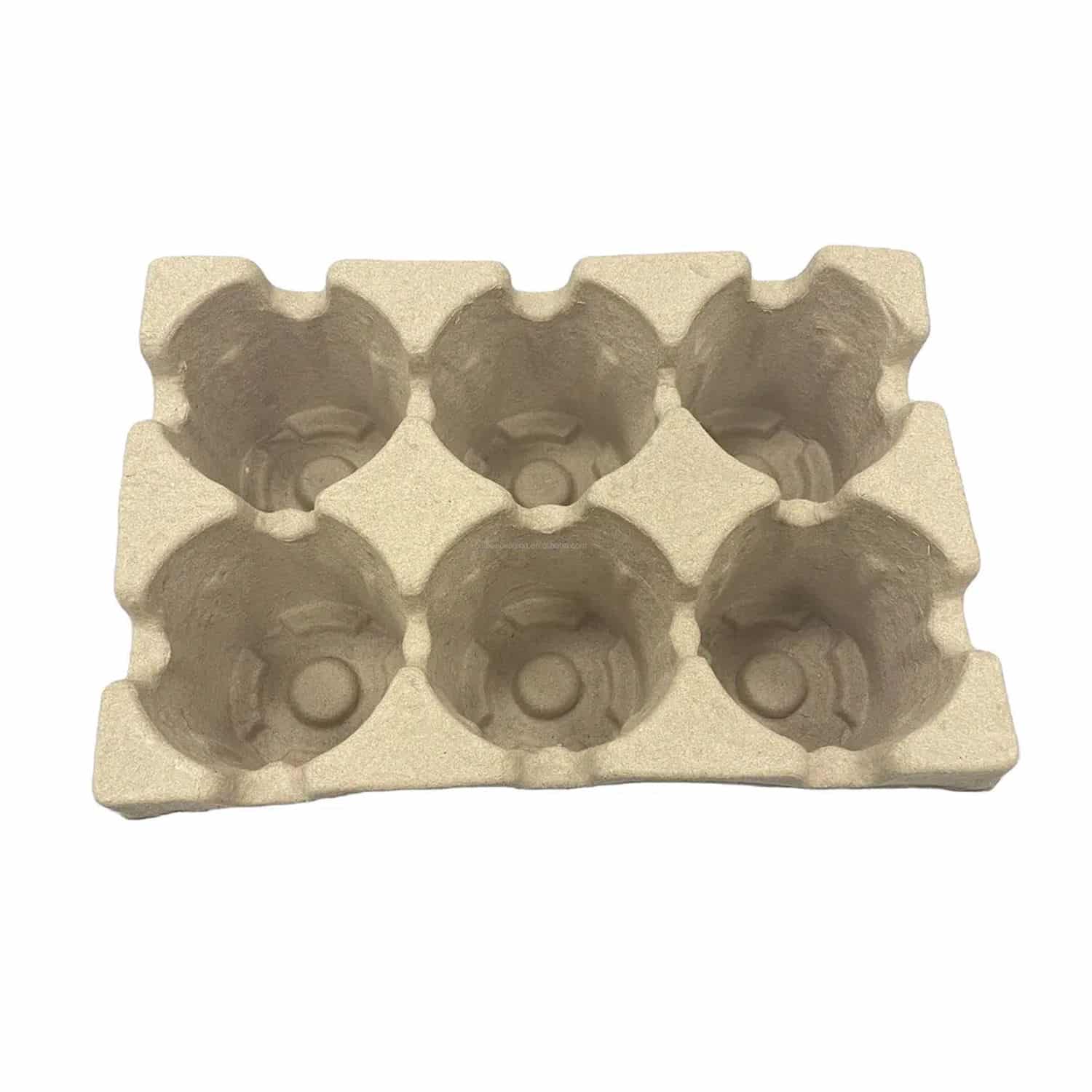
Da wir die Werkzeuge projektbezogen in unserem Werk in Chashan Town, Dongguan, fertigen, tauchen bei jeder Anfrage eines Trägers Fragen zur Zellgeometrie auf. Hier einige häufig wiederkehrende Punkte.
Vier Messungen klären fast jede Frage zur Passform
Durchmesser des Kanisters an der breitesten Stelle, Gesamthöhe, Endcode und die Höhe, ab der sich der Hals zu verjüngen beginnt. Dieser letzte Wert ist derjenige, den Kunden selten parat haben, und derjenige, der den größten Einfluss auf einen Greifer hat, der nahe der Oberseite der Dose angreift. Wenn ein Träger die Dose an der Verjüngung statt an der geraden Wand erfasst, führen bereits geringe Unterschiede im Halsprofil der verschiedenen Dosenlieferanten zu Passformunterschieden.
Schicken Sie vor der Herstellung der Fertigungswerkzeuge Dosen statt Zeichnungen.
In den Zeichnungen sind die Nennmaße angegeben. Bei den tatsächlichen Dosen gibt es Fertigungstoleranzen, und da der Träger so eng sitzt, spielen diese Toleranzen eine Rolle. Wir fertigen Musterformen in etwa sieben Tagen an, damit die Passgenauigkeit an den tatsächlichen Dosen überprüft werden kann, bevor etwa acht Tage später eine Serienform gefertigt wird. Eine Änderung der Zellgeometrie nach Fertigstellung einer Serienform erfordert neue Werkzeuge und lässt sich nicht durch eine einfache Anpassung bewerkstelligen.
Die Wandstärke richtet sich nach der Belastung, nicht nach dem Durchmesser
Wir geben Wandstärken von etwa 0,8 bis 3 mm an. Ein Behälter hält seinen gesamten Inhalt unter Zugspannung am Rand fest, während er mit einer Hand geschwungen wird, sodass sich die Belastung an den Zellkanten und um etwaige Grifföffnungen herum konzentriert. Das ist eine strukturelle Aufgabe, die eher unserer Verpackungen aus Zellstoff für Industrie- und Schutzzwecke als auf ein Tablett. Unser Trockenpressanlage verdichtet die Fasern, um Steifigkeit und präzise Geometrie zu gewährleisten, während die Nasspressanlage sorgt für eine glattere Oberfläche an der Stelle, an der das Paket dem Kunden präsentiert wird.
Material und Farbe werden nicht erst nach der Geometrie festgelegt, sondern bereits parallel dazu. Wir verwenden sechs Farbsysteme, die eine Pantone-Genauigkeit von über 95 Prozent erreichen. Die verfügbaren Optionen sind auf unserer kundenspezifisch geformte Zellstoffverpackungen Seite. Die Aspekte dieser Entscheidung, die sich auf Rohstoffe und Additive beziehen, werden in unserem Artikel zum Thema Aus welchem Material bestehen Träger?, und die Mindestbestellmenge beträgt 1.000 Stück.
Das in die Praxis umsetzen
Orientieren Sie sich eher an Durchmesserfamilien als an Volumina. Stellen Sie fest, ob Ihre Dosen 66 mm, 57 mm oder 53 mm groß sind – damit ist die Frage nach den Werkzeugen bereits beantwortet. Das Volumen gibt Aufschluss über Höhe und Gewicht, was sich zwar auf die Handhabung und das Stapeln auswirkt, aber nicht darauf, ob der Träger die Dosen greifen kann.
Lassen Sie sich die vier Maße von Ihrem Dosenlieferanten schriftlich bestätigen, einschließlich der Höhe, an der die Verjüngung des Dosenhalses beginnt, und senden Sie physische Dosen zur Passformprüfung ein, bevor Sie sich für eine Produktionsform entscheiden. Wenn Sie mehr als eine Durchmesserfamilie produzieren, sollten Sie mit separaten Werkzeugen für jede Familie rechnen und nicht mit einer Kompromisslösung, die für keine der beiden richtig passt.
Unter BonitoPak Wir überprüfen die Passgenauigkeit des Trägers an den tatsächlichen Dosen bereits in der Phase der Musterform, anstatt uns auf Nennmaße zu verlassen, da die Fertigungstoleranz den Unterschied zwischen einem Träger, der fest sitzt, und einem, der sich unter Belastung löst, ausmacht. Das Mitschicken von Dosen zusammen mit Ihrer Spezifikation ist der schnellste Weg zu einem Träger, der bereits beim ersten Produktionslauf einwandfrei funktioniert.
Über den Autor
Leo Chan ist der Gründer von BonitoPak und verfügt über mehr als 20 Jahre Erfahrung im Bereich der Verpackungen aus Formzellstoff. Er hat mit über 500 Marken zusammengearbeitet und diese bei der Umstellung von Kunststoff- und Schaumstoffverpackungen auf faserbasierte Verpackungsformate begleitet. BonitoPak stellt in seinem Werk in Chashan Town, Dongguan, Guangdong, Verpackungen aus geformtem Zellstoff her und betreibt dort sowohl Nasspress- als auch Trockenpressanlagen mit sechs Zellstoffsystemen sowie einer hauseigenen Formkonstruktion und Werkzeugfertigung. Die hier aufgeführten Passformhinweise beziehen sich auf die Werkzeugausführung dieser Produktionslinie sowie auf veröffentlichte Maßangaben für Getränkedosen, die stets mit den Spezifikationen Ihres eigenen Dosenlieferanten abgeglichen werden sollten.
Häufig gestellte Fragen
F: Kann ein Halter sowohl 12-oz- als auch 16-oz-Dosen aufnehmen?
A: Ja, sofern es sich bei beiden um Standard-211-Gehäuse handelt. Sie haben denselben Durchmesser von 66 mm und unterscheiden sich lediglich in der Höhe, sodass die Zellen identisch eingespannt werden. Höhere Dosen ragen weiter über den Träger hinaus, was sich eher auf die Stapelbarkeit als auf den Sitz auswirkt.
F: Was bedeutet „211 × 413“ eigentlich?
A: Es handelt sich um Zoll plus Sechzehntel. Die 211 hat einen Durchmesser von 2 und 11/16 Zoll, was ungefähr 66 mm entspricht. Die 413 ist 4 und 13/16 Zoll hoch, was ungefähr 122 mm entspricht. Damit ist eine Standarddose mit 12 Unzen gemeint.
F: Warum kann ich die Zellen nicht einfach etwas vergrößern, damit alles hineinpasst?
A: Weil der Halt von einem festen Sitz abhängt. Bei einer zu großen Zelle können sich die Dosen unter Belastung drehen und herausfallen. Fasermaterial ist kaum elastisch und kann sich daher nicht dehnen, um dies auszugleichen, wie es bei einem flexiblen Kunststoffring der Fall ist.
F: Sind die Abmessungen von „sleek“ und „slim“ identisch?
A: Nein, und die Begriffe werden uneinheitlich verwendet. „Sleek“ hat in der Regel einen Durchmesser von etwa 57 mm und benötigt einen Standard-202-Aufsatz. „Slim“ ist mit etwa 53 mm schmaler und erfordert oft einen 200-Aufsatz. Lassen Sie sich beide Angaben von Ihrem Dosenlieferanten bestätigen.
F: Welche Maße soll ich einem Transportdienstleister übermitteln?
A: Durchmesser des Korpus an der breitesten Stelle, Gesamthöhe, Endcode und die Höhe, ab der sich der Hals verjüngt. Anhand dieser vier Angaben kann ein Lieferant die Passgenauigkeit überprüfen, bevor Werkzeuge angefertigt werden.



 German
  English
  Spanish
  French
  Russian
  Japanese
  Portuguese
  Arabic