By Leo Chan | Writer, BonitoPak | 20+ years in molded pulp packaging
Almost every guide to sustainable packaging materials is a list with adjectives attached. Bamboo is renewable. Mycelium is innovative. Seaweed film is compostable. All true, and none of it tells a buyer whether the material will actually end up recycled, what it will cost in producer fees, or whether it will survive a pallet.
Eco friendly packaging materials are only as sustainable as the disposal route your customer can actually reach. That is the uncomfortable part most content skips, and it is the organising idea here. Each material below is scored against four tests that decide real-world outcomes, with the data behind each one.
The Four-Test Scorecard
Test 1: Real recycling access. Not technical recyclability. Whether households where you sell can actually put it in a bin. The US benchmark is the How2Recycle “Widely Recyclable” threshold, which means acceptance by at least 60% of American programs.
Test 2: Real composting access. Certification says a material can compost. It does not say a facility near your customer takes it. BioCycle’s 2023 national survey found municipal food waste collection reaching roughly 12% of US households, with relatively few programs accepting molded fiber containers. The Sustainable Packaging Coalition’s 2025 research found 18.1% of its sampled population could use programs accepting food waste plus some compostable packaging.
Test 3: Regulatory fee exposure. Extended producer responsibility is now a cost line. California’s SB 54 regulations took effect May 1, 2026, targeting a 25% cut in single-use plastic packaging and 100% recyclable or compostable covered packaging by 2032, with fees set by material category and adjusted for recyclability.
Test 4: Performance. A material that fails a drop test is not sustainable, because the replacement product has a footprint too.
Fiber-Based Materials
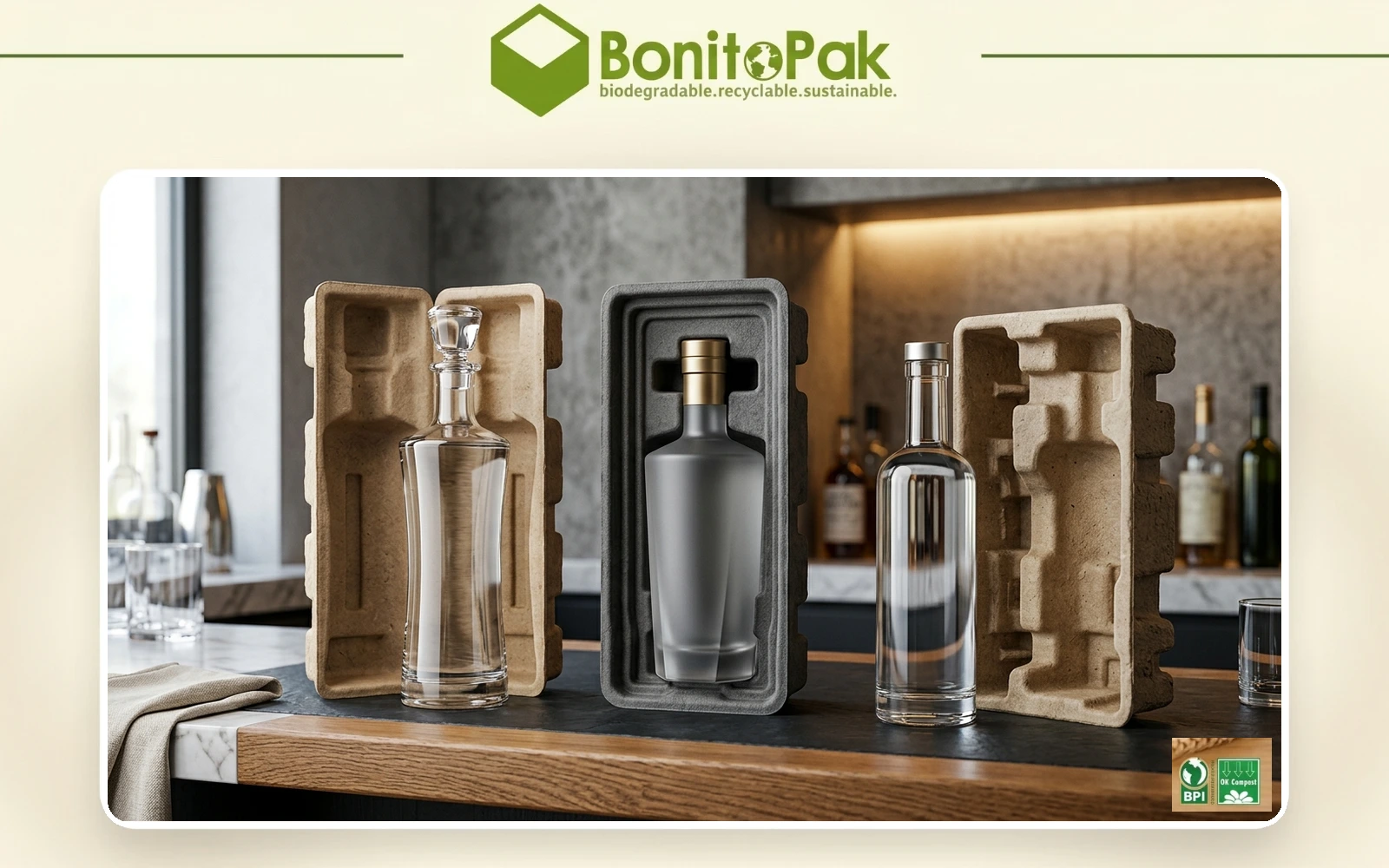
Molded Fiber
Cellulose pulped with water and vacuum-formed in a mold. Sources include recycled paper, sugarcane bagasse, bamboo and wood pulp.
|
Test |
Score |
|---|---|
|
Recycling access |
Strong. Recycles with paper, which most US households can reach |
|
Composting access |
Good where plain and uncoated, limited by facility acceptance |
|
Fee exposure |
Low. Fiber generally sits in lower EPR bands than plastic |
|
Performance |
Strong for cushioning and protection, absorbs moisture |
Honest limitation: fiber absorbs moisture and softens in genuinely wet conditions. It is opaque, so it cannot show the product.
Why it scores well: paper is the stream with real infrastructure behind it. AF&PA reported US paper recycling at 61% to 65% in 2025 and cardboard at 70% to 75%, with mills consuming 31.4 million tons of recovered paper. Nothing in the compostable category comes close to that access.
Corrugated and Kraft Paper
|
Test |
Score |
|---|---|
|
Recycling access |
Strongest of any material, at 70% to 75% for cardboard |
|
Composting access |
Good if uncoated |
|
Fee exposure |
Low |
|
Performance |
Strong in dry conditions, poor when wet |
The workhorse. Unglamorous and the best-recycled material in commercial packaging.
Bagasse
Sugarcane residue left after juice extraction. An agricultural by-product, so it competes with neither food production nor forestry.
|
Test |
Score |
|---|---|
|
Recycling access |
Recycles with paper where accepted |
|
Composting access |
Good, often certified |
|
Fee exposure |
Low |
|
Performance |
Strong, lighter base colour than recycled fiber |
Worth knowing: bagasse reaches white or saturated colour with less processing than grey recycled fiber, which makes it the cheaper route to a premium look.
Bamboo
Fast-growing and renewable. Scores like bagasse, with strong fiber and a pale surface, at a higher cost than recycled paper.
Bioplastics
The biodegradable packaging materials category, and the one where claims and outcomes diverge most.
PLA, Polylactic Acid
Made from fermented plant starch, usually corn.
|
Test |
Score |
|---|---|
|
Recycling access |
Poor. Not accepted in most plastic streams and contaminates PET recycling |
|
Composting access |
Industrial only, so limited by the 12% to 18% access figures above |
|
Fee exposure |
Moderate to high, depending on how programs classify it |
|
Performance |
Good clarity and rigidity, poor heat resistance |
The honest problem. PLA is compostable in industrial conditions and effectively inert in a landfill. With industrial composting reaching a small minority of households, most PLA packaging ends up where its main advantage does not apply. Our comparison of bagasse, PLA and paper tableware covers this in more depth.
Where it genuinely works: closed-loop settings such as stadiums, campuses and events that run their own composting.
PHA and Starch Blends
Newer bioplastics with better marine degradation profiles than PLA in some grades. Costs more, less available, and the same composting access problem applies.
Recycled Plastics
rPET
Recycled polyethylene terephthalate. Pragmatic rather than idealistic, and often the right answer where transparency or moisture resistance is non-negotiable.
|
Test |
Score |
|---|---|
|
Recycling access |
Good for bottles, patchy for thermoforms |
|
Composting access |
None |
|
Fee exposure |
Moderate, improving with recycled content |
|
Performance |
Excellent clarity, moisture and shape retention |
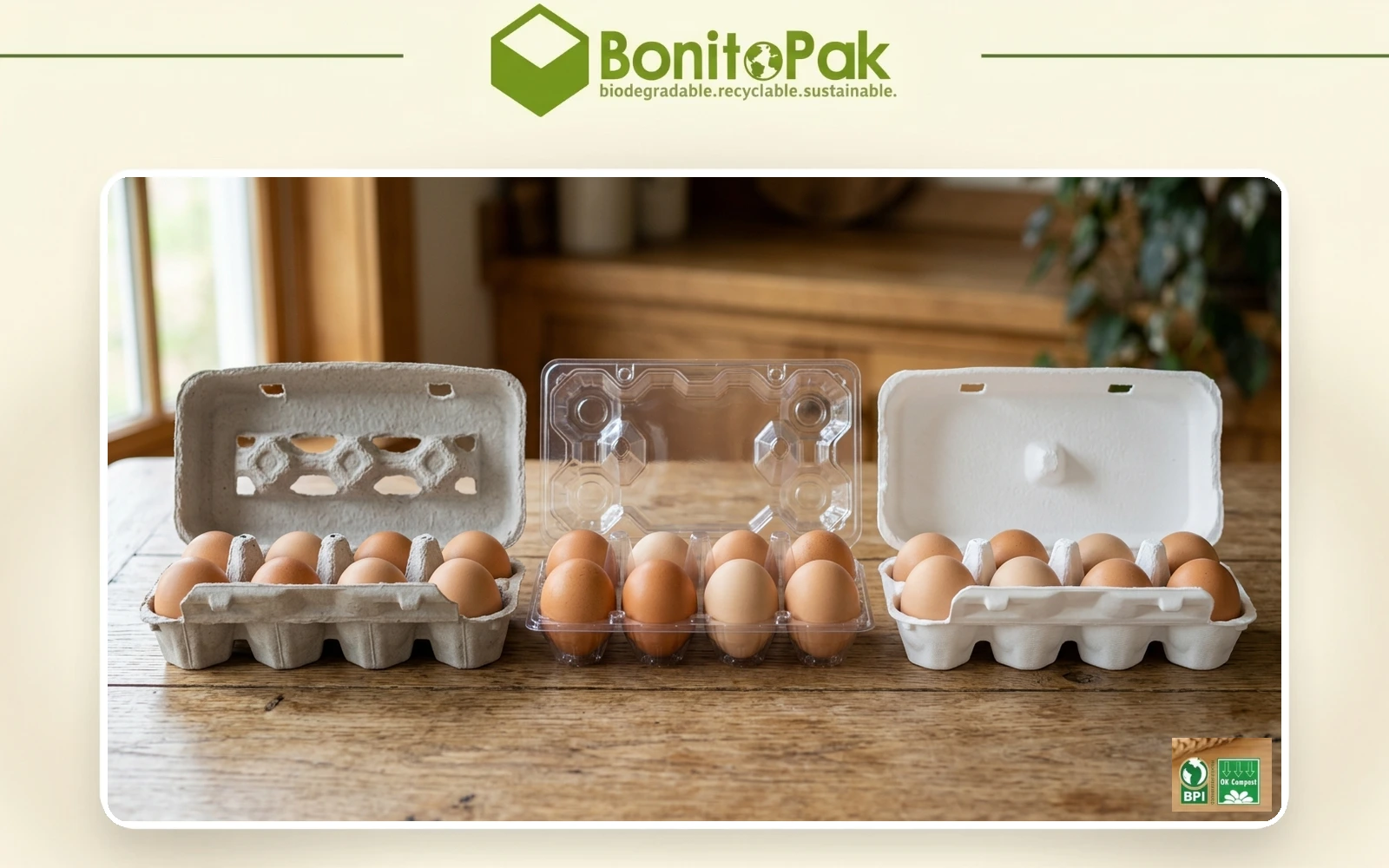
The thermoform caveat. Trays and clamshells recycle less reliably than bottles because sorting equipment detects bottles better. NAPCOR reported US PET thermoform recycling more than tripling from 2011 to 2023 to 130 million pounds, while The Recycling Partnership noted only around 30% of North American reclaimers can process thermoforms in commingled bottle bales, with a target of 60% nationwide thermoform acceptance by 2027.
Recycled HDPE
Durable and widely recycled in rigid formats. Used in can carrier handles among other applications.
Emerging Materials
Covered honestly, which means noting that most are not yet commercially viable at scale.
Mushroom Mycelium
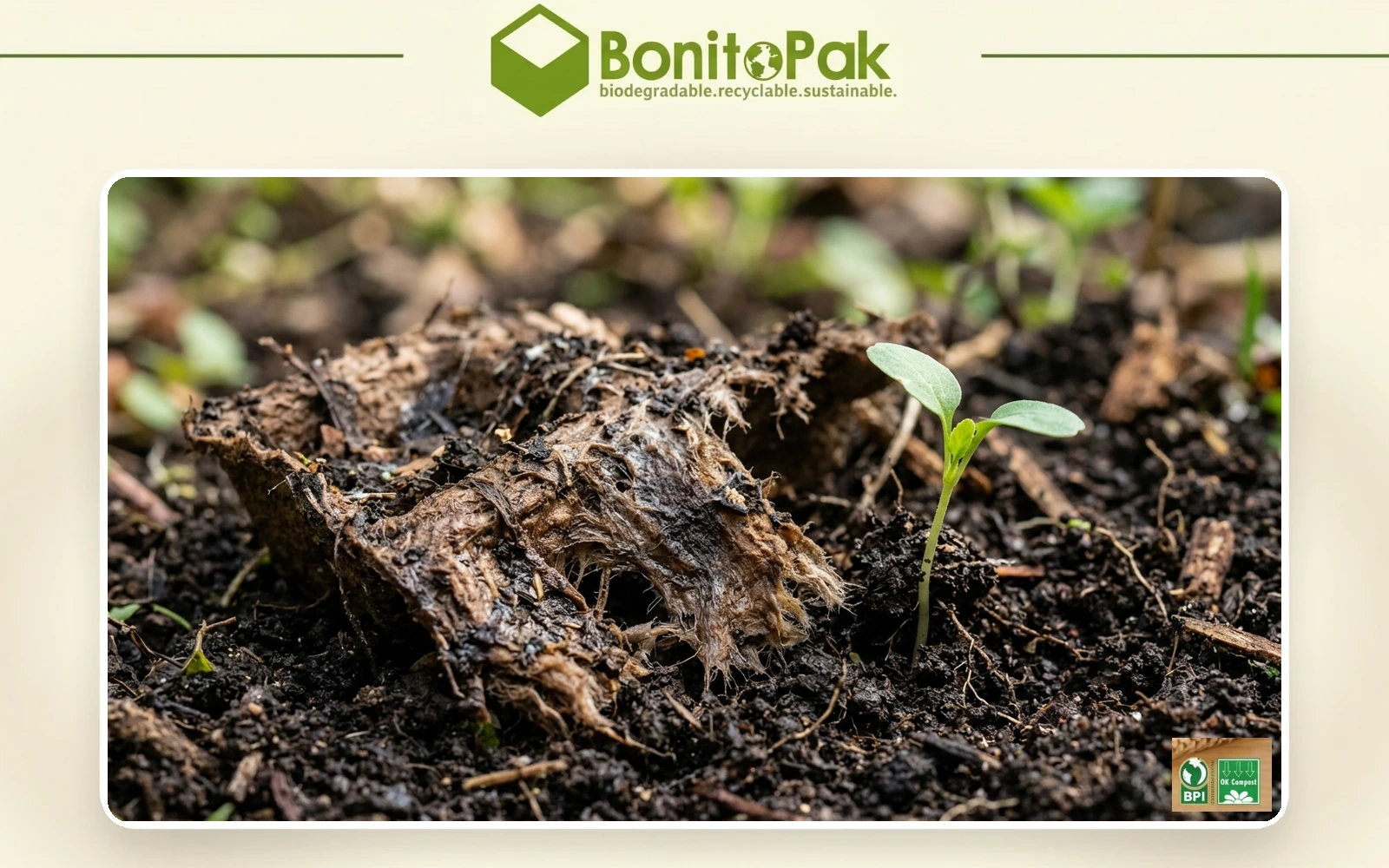
Grown rather than manufactured, from fungal mycelium bound to agricultural waste. Genuinely home compostable and a credible foam replacement for protective packaging.
Reality check: limited production capacity, higher cost, growth lead times, and unsuitable for food contact or moisture exposure. Strong for high-value protective applications, not for commodity packaging.
Seaweed and Algae Films
Compostable and in some grades edible. Early-stage, with limited barrier performance and very limited scale.
Molded Fiber Bottles
Worth flagging because it is moving faster than the rest. Dry moulded fibre bottle technology is now in commercial trials with major spirits brands, and paper bottle formats are in retail. This is the emerging material with the clearest near-term path, because it rides existing paper recycling infrastructure.
Compostable Packaging Materials That Market Well and Score Badly
Being direct about these is more useful than a longer list of good ones.
Oxo-degradable plastics. Conventional plastic with an additive that fragments it. Fragmentation is not biodegradation, and the result is microplastics. Multiple jurisdictions have restricted these.
Unqualified “biodegradable” plastic. The FTC Green Guides treat an unqualified degradable claim as requiring complete breakdown within roughly a year after customary disposal. Items headed for landfill will not do that, so the claim should not be made for them.
Plastic-lined paper. Sold as paper, behaves as a composite. It often fails both recycling and composting unless the facility can separate the layers.
Compostable packaging sold into markets with no composting. Not a material failure but a system mismatch, and the most common sustainability own goal in packaging. It is why compostable packaging materials need an access check before a certification check.
The Full Scorecard
|
Material |
Recycling access |
Composting access |
Fee exposure |
Performance |
|---|---|---|---|---|
|
Molded fiber |
Strong |
Good, facility-dependent |
Low |
Strong |
|
Corrugated and kraft |
Strongest |
Good |
Low |
Strong dry |
|
Bagasse |
Strong |
Good |
Low |
Strong |
|
Bamboo |
Strong |
Good |
Low |
Strong |
|
PLA |
Poor |
Industrial only |
Moderate to high |
Moderate |
|
PHA |
Poor |
Better, still limited |
Moderate |
Moderate |
|
rPET |
Good bottles, patchy trays |
None |
Moderate |
Excellent |
|
Recycled HDPE |
Good |
None |
Moderate |
Excellent |
|
Mycelium |
None |
Home compostable |
Low |
Protective only |
|
Seaweed film |
None |
Home compostable |
Low |
Limited |
How to Choose
- Map your markets first. Which states, provinces or countries, and what do their programs accept? This constrains everything after it.
- Default to the stream with infrastructure. Paper recycling reaches most households. Industrial composting reaches a small minority. That asymmetry should drive the decision more than any material’s theoretical profile.
- Check your EPR exposure in each jurisdiction, since fees are set by material category.
- Test performance properly before committing. A failed drop test costs more environmentally than any material choice saves.
- Match claims to standards. Biodegradable packaging materials need a named standard behind any claim: ASTM D6400 or D6868 for BPI, EN 13432 for OK Compost, AS 4736 or AS 5810 in Australia. Recyclable needs real local acceptance.
- Prefer boring and available over novel and unsupported, unless the application genuinely needs the novel material.
The Conclusion Most Guides Avoid
Among sustainable packaging materials, the best choice is usually not the most innovative one. It is the one that performs adequately and lands in a waste stream your customer can actually reach. For most packaging applications in most markets today, that means fiber.
That is not a claim that fiber is perfect. It absorbs moisture, it is opaque, and it cannot do what clear rigid plastic does. But it recycles through the one stream with genuine national infrastructure behind it, it composts where facilities accept it, and it sits in the lowest fee band as plastic rules tighten.
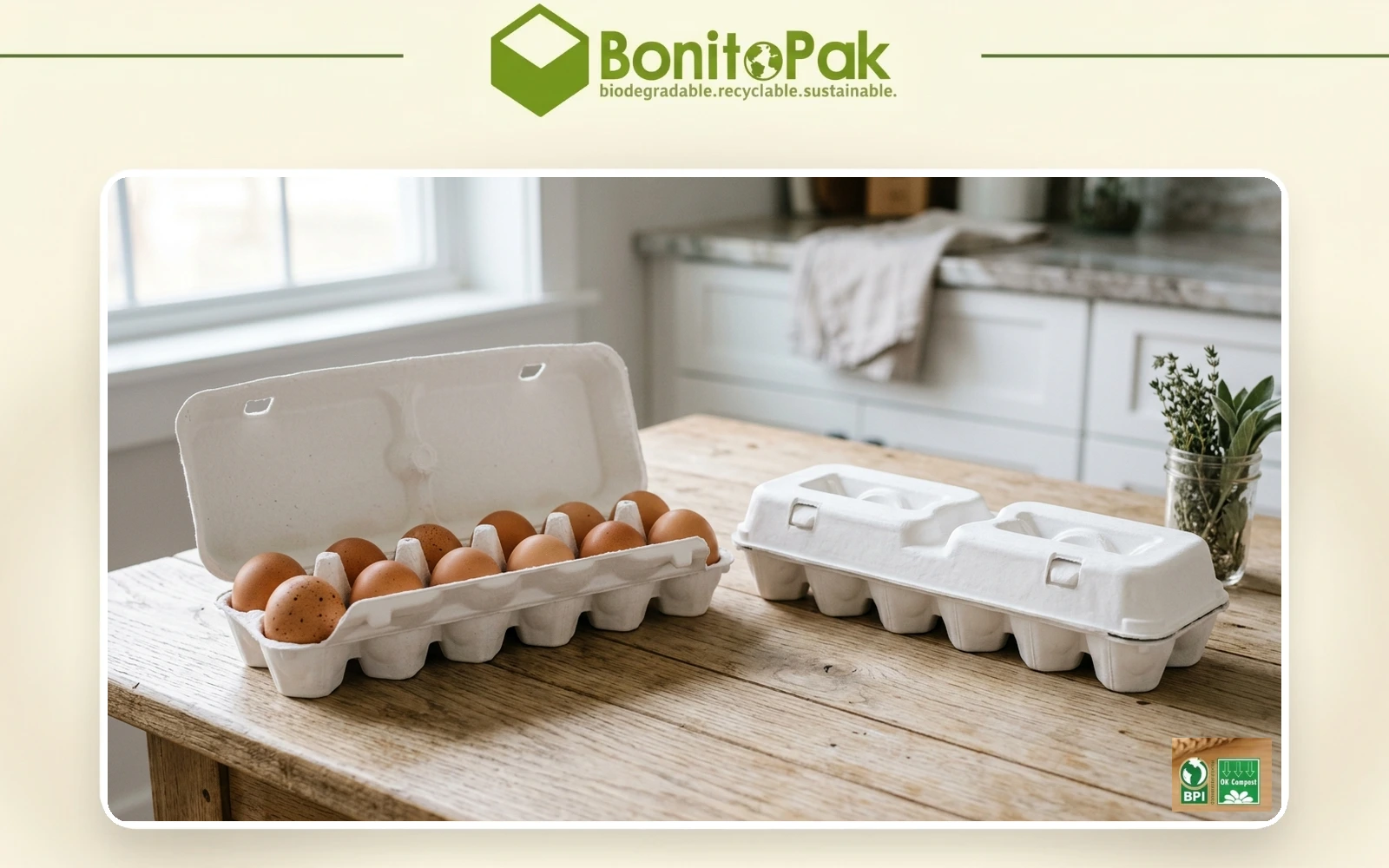
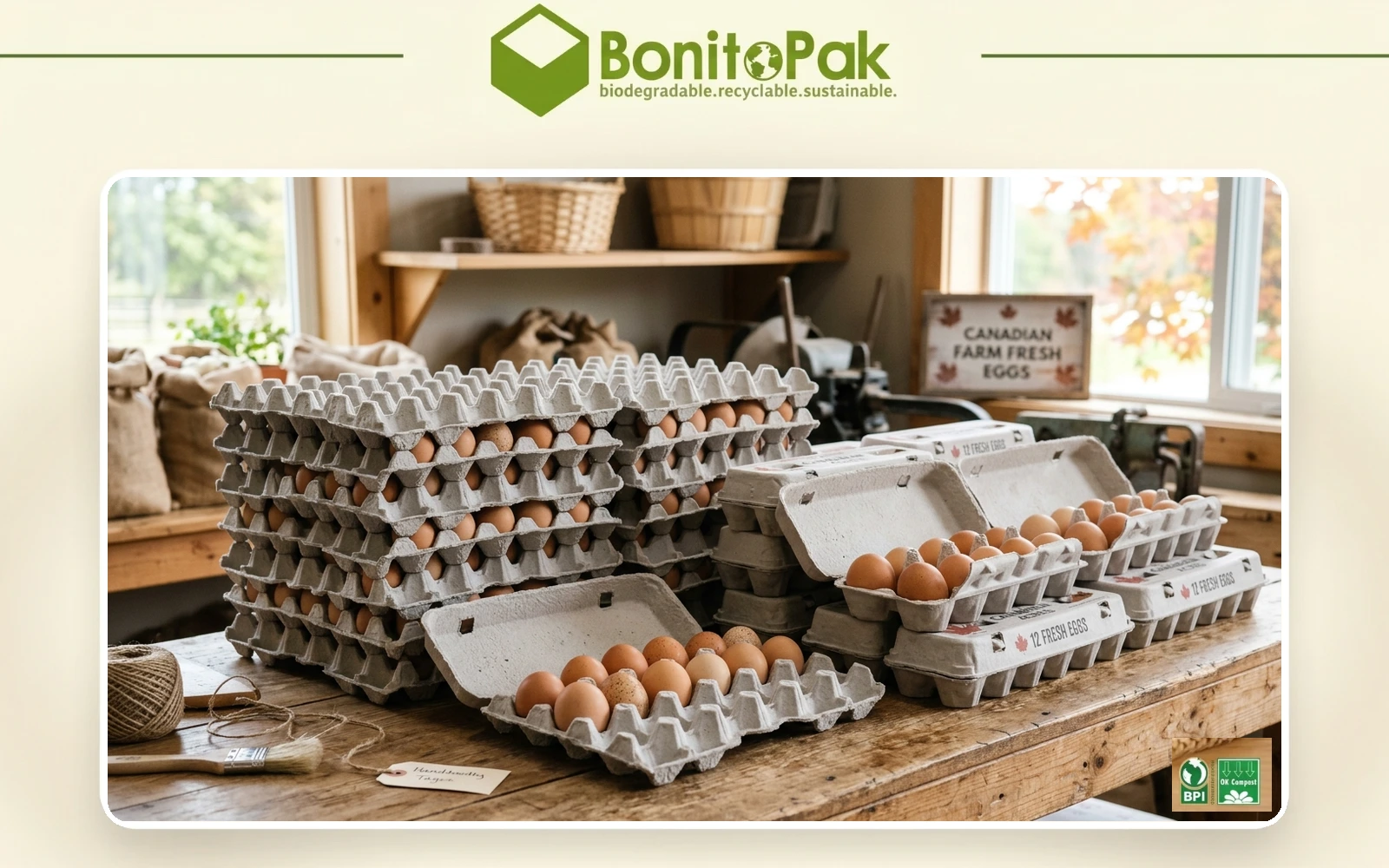
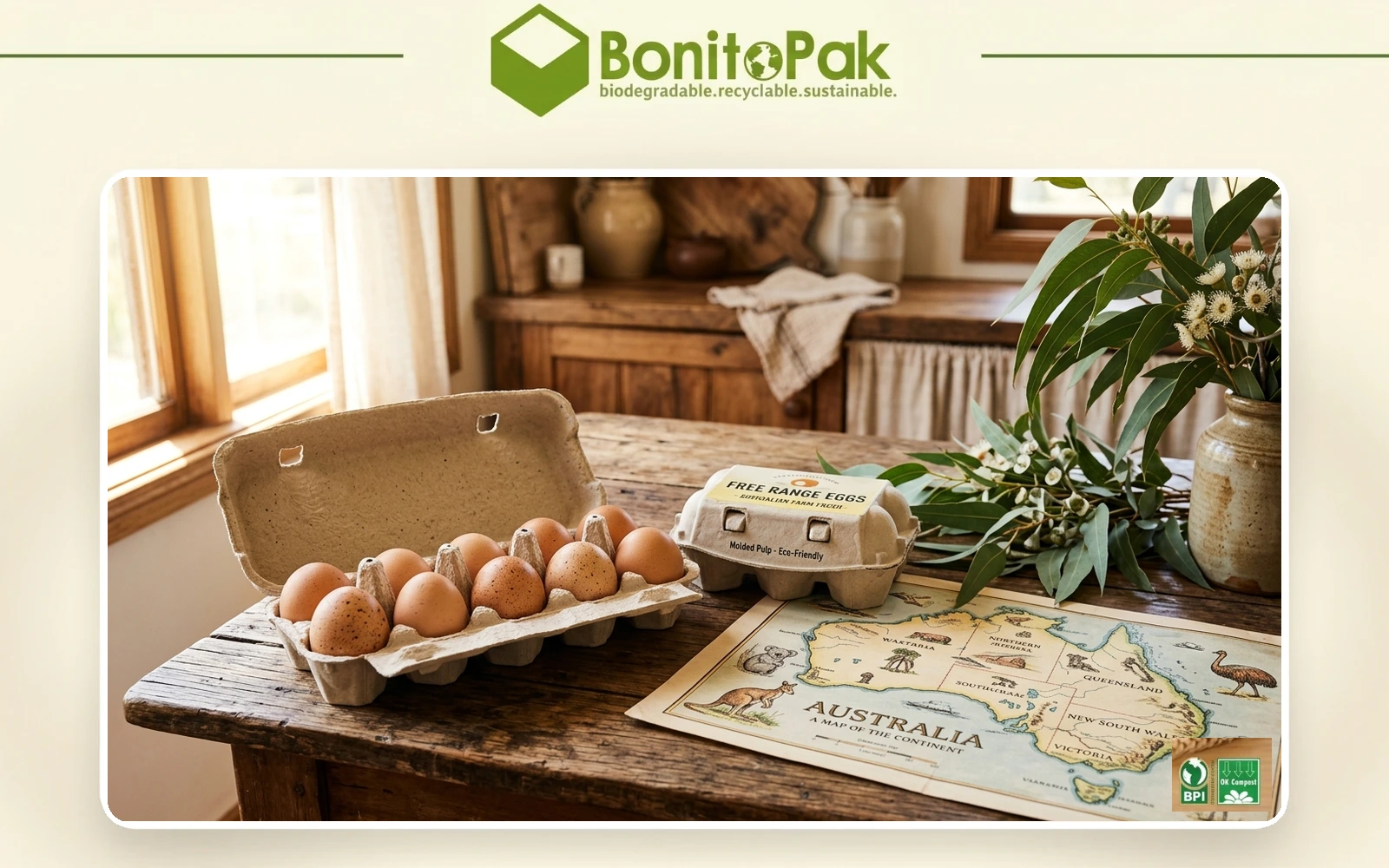
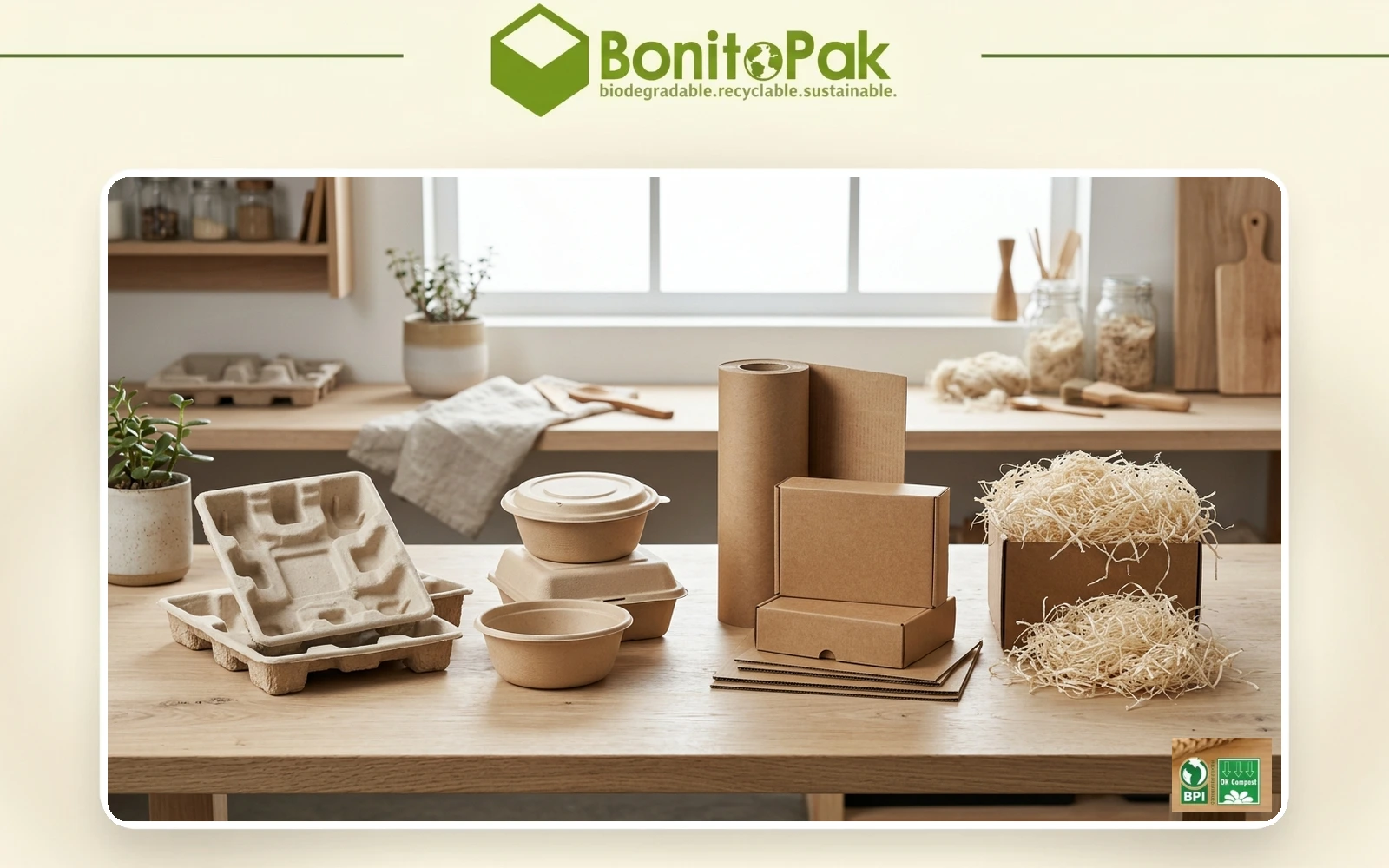
At BonitoPak we make molded fiber packaging from recycled paper, bagasse and bamboo, BPI and OK Compost certified, with molds cut per project from 1,000 pieces. Our materials page covers the fiber options, our molded pulp egg cartons and protective tray ranges show the formats, and our guide to switching from plastic or foam covers how to make the transition without disrupting your line. If fiber is wrong for your application we will tell you.
FAQs
Q: What are the most eco friendly packaging materials available now? A: For most applications, fiber-based materials: molded fiber, corrugated, kraft paper and bagasse. They score best on real recycling access, which reaches far more households than industrial composting does, and they carry the lowest producer fee exposure.
Q: Are biodegradable packaging materials better than recyclable ones? A: Usually not, because biodegradation needs facilities most customers cannot reach. A recyclable fiber pack entering an established paper stream typically produces a better real outcome than a compostable pack sent to landfill.
Q: Is PLA a good sustainable packaging material? A: Only in closed-loop settings with their own composting, such as stadiums or campuses. In general retail it is poorly recycled, contaminates PET streams, and its industrial composting advantage reaches a small minority of households.
Q: What compostable packaging materials actually get composted? A: Those collected by programs that accept them, which is the limiting factor rather than the material. Check acceptance in the specific markets you sell into, and ask suppliers which standard any claim is certified against.
Q: How do EPR fees affect material choice? A: Producer fees are set by material category and often adjusted for recyclability, so fiber generally sits in lower bands than plastic. Confirm obligations in each jurisdiction, since programs and fee schedules vary and have been changing.