By Leo Chan | Writer, BonitoPak | 20+ years in molded pulp packaging
Search this question and you will find the same answer repeated everywhere: two to six weeks. That figure is not wrong so much as incomplete to the point of being misleading. It describes paper in a warm, wet, oxygen-rich environment with active microbes, which is a compost pile or moist soil.
Most paper does not go to a compost pile. It goes to a landfill, and the peer-reviewed research on what happens there tells a very different story. Newspapers pulled from landfills after twenty years are still legible. One study found no significant paper decomposition over eight years. A Chicago landfill was still 32.7% paper after two decades.
This article gives the real numbers for each environment, explains the chemistry that produces the gap, and covers the distinction between decomposing and biodegrading that almost nobody addresses. If you make packaging decisions or write environmental claims, the difference matters.
Paper Decomposition by Environment
|
Where the paper goes |
Realistic timeframe |
What limits it |
|---|---|---|
|
Active compost pile, torn and damp |
Weeks to a few months |
Little. This is the ideal case |
|
Moist soil, buried |
Months |
Temperature and microbial activity |
|
Commercial composting facility |
Weeks, where accepted |
Facility acceptance, not chemistry |
|
Modern dry landfill |
Decades, often incomplete |
No oxygen, little moisture, lignin |
|
Open air, dry and exposed |
Years, mostly by physical breakdown |
Lack of moisture for microbes |
|
Water |
Weeks to months |
Fiber disperses before fully mineralizing |
Asked how long does paper take to decompose, the two to six week figure belongs in row one only. Quoting it without the environment attached is where most content goes wrong.
Decompose and Biodegrade Are Not Synonyms
These two words get used interchangeably and they describe different things. If you write packaging claims, the distinction has legal weight.
Decomposition is the broad physical and chemical breakdown of material. A paper bag torn apart by wind, rain and UV light has decomposed in a meaningful sense even though nothing living consumed it. The pieces are smaller. The material has not necessarily returned to the natural carbon cycle.
Biodegradation is specifically the process of microorganisms consuming the material and converting its carbon into carbon dioxide, methane, water and microbial biomass. It is measured, not assumed. Standards such as ASTM D6400 and EN 13432 define thresholds for how much carbon must convert, over what period, under specified conditions.
Why it matters commercially. The honest answer to is paper biodegradable depends on this distinction. The US Federal Trade Commission’s Green Guides treat an unqualified “degradable” or “biodegradable” claim as requiring proof that the entire item breaks down and returns to nature within roughly one year after customary disposal. Because items sent to landfills, incinerators or recycling facilities will not do that, the Guides advise against unqualified biodegradable claims for them.
So “this paper biodegrades” is a measurable claim with a standard behind it. “This paper decomposes” is vaguer and, for packaging labels, weaker ground.
What the Research Actually Found
This is where the honest answer to how long does paper take to biodegrade separates from the repeated folklore.
A review published in International Biodeterioration and Biodegradation examined paper degradation in landfill conditions. Its findings are worth stating precisely.
Carbon conversion is partial, not complete. Maximum carbon conversion for paper averaged around 26%, with the review’s abstract putting the ceiling at roughly 30%. In other words, in a landfill, around a quarter to a third of paper’s carbon converts to landfill gas. The rest stays put.
The timescale is decades, not weeks. Methane release from paper occurs gradually over approximately 5 to 40 years. Under the EMCON model, paper shows a 1.5 to 2 year lag before methane production begins, then a 10 to 20 year half-life.
Paper type changes the result dramatically. Under optimal laboratory conditions, roughly 40% of newsprint cellulose degraded. Computer paper reached 90% and Whatman filter paper 97%. In landfill carbon conversion terms, newsprint and insoluble-coated paper managed only 16 to 18%, against 32 to 38% for office paper and boxes.
Field evidence confirms it. Newspapers remain legible after more than twenty years in landfills. One study found no significant paper decomposition across eight years. A Chicago landfill still contained 32.7% paper after twenty years.
Why Landfills Preserve Paper
Four mechanisms explain the gap, and understanding them explains every other number in this article.
Lignin resists anaerobic breakdown. Lignin is the rigid polymer that stiffens plant cell walls. Newsprint contains roughly 20 to 27% lignin, and lignin is highly resistant to decomposition without oxygen. Chemical pulps with most lignin removed degrade far faster than mechanical pulps that retain it. This single variable explains most of the difference between newsprint and office paper.
Modern landfills are dry by design. Engineered landfills use liners and caps to keep water out, because leachate is a contamination risk. Microbes need moisture. The result is that refuse is substantially mummified rather than digested, which is an intentional outcome of good landfill engineering rather than a failure.
Ink can physically block microbes. Heavy inking interferes with bacterial adhesion to the fiber surface. Bacteria that cannot attach cannot consume.
Chemistry can inhibit the organisms. Sulfate deposits on paper can suppress methane-producing bacteria, slowing the process further.
There is a counterintuitive consequence here. Paper that does not degrade in a landfill also does not generate methane, and methane is a far more potent greenhouse gas than carbon dioxide over short timescales. Slow degradation in a landfill is not straightforwardly bad.
What Actually Changes the Speed
Six variables control the outcome. If you want paper to break down, these are the levers.
- Oxygen. Aerobic breakdown is dramatically faster than anaerobic. This is the single biggest factor and the main reason compost beats landfill.
- Moisture. Microbes need water. Dry paper in a dry place is stable for years.
- Temperature. Microbial activity rises with warmth. A hot compost pile outpaces a cold one substantially.
- Surface area. Torn paper exposes far more surface to microbes than a folded intact sheet. Tearing is the cheapest intervention available.
- Lignin content and pulp type. Mechanical pulp retains lignin and resists breakdown. Chemical pulp degrades faster.
- Coatings, inks and additives. Wax, plastic film and heavy ink all slow or prevent biodegradation. A plastic-lined paper cup is not paper, functionally.
Molded Fiber Packaging Specifically
Since this is a packaging question for most readers, here is where molded pulp sits.
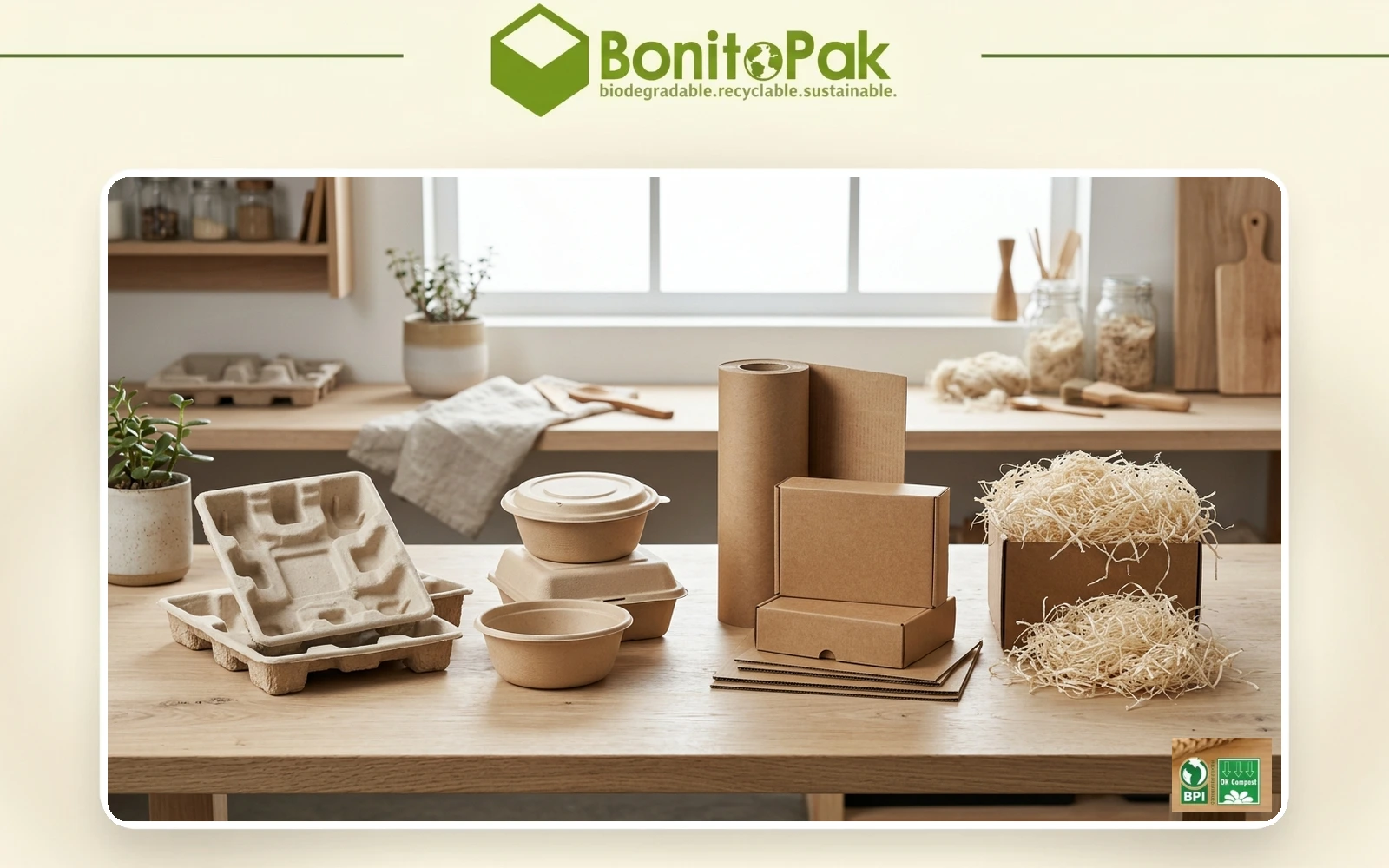
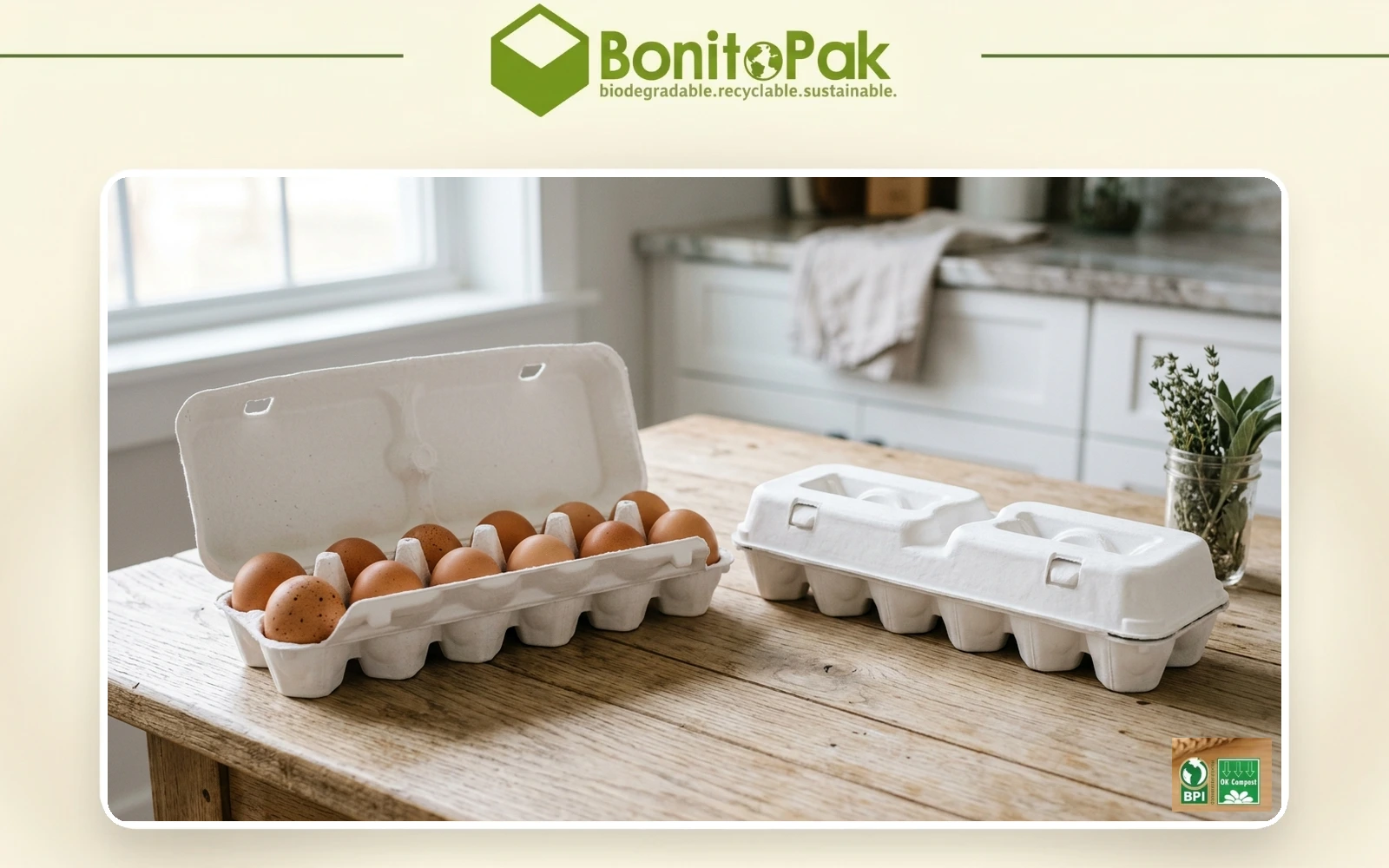
Plain molded fiber, the material in an egg carton or a protective tray, is essentially cellulose with no coating, no binder and no plastic layer. It holds together because the fibers lock as they dry. That makes it one of the simpler cases.
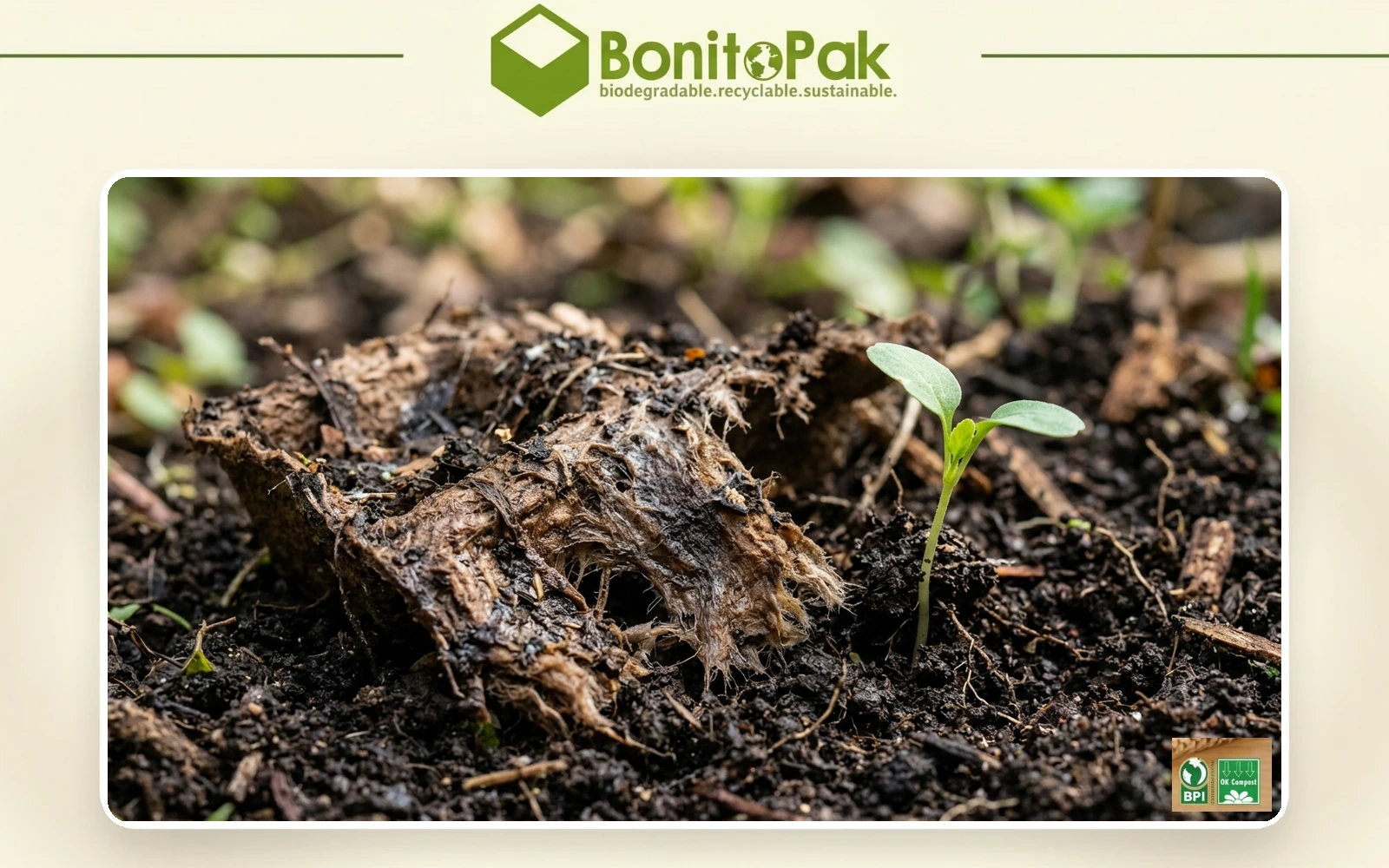
In a home compost pile, torn and dampened molded fiber behaves like the best case in the table above: weeks to a few months in an active pile. Tearing it and mixing it with wet food scraps rather than leaving a whole carton on a cold heap makes the difference. Our guide to whether egg cartons are recyclable or compostable covers the practical disposal routes.
In a landfill, it behaves like other uncoated paper: partial conversion over decades.
In recycling, which is the better destination for clean fiber, it does not decompose at all. It gets pulped and becomes new paper. AF&PA reported US paper recycling at 61% to 65% in 2025 and cardboard at 70% to 75%, with mills consuming 31.4 million tons of recovered paper. Keeping fiber in that loop is a better outcome than any decomposition timeline.
Worth noting on that data: AF&PA moved from precise figures to ranges a couple of years ago after critics questioned whether its stated rates were inflated. Ranges are the honest presentation and it is right to quote them as ranges.
Certified compostable products are a separate category with measured performance. BPI certification tests against ASTM D6400 or D6868 for commercial composting, and OK Compost uses EN 13432. These are not claims about speed in your garden; they are threshold tests under controlled conditions.
How to Make Paper Break Down Faster
If the goal is actual decomposition rather than a label claim:
- Tear it into pieces. More surface area, faster breakdown, no cost.
- Dampen it. Dry fiber in a dry pile barely moves.
- Mix it with nitrogen-rich material. Paper is a carbon source, a “brown.” It needs greens to balance it.
- Keep the pile active and turned. Oxygen and warmth are the two biggest levers.
- Remove any plastic, wax or foil layer first. Those do not belong in a compost pile and will leave fragments.
- Skip heavily inked or glossy stock for composting if you have a choice.
The Answer That Actually Helps
How long does paper take to biodegrade, and how long it takes to decompose, both depend almost entirely on where it ends up, and the honest range runs from a few weeks to several decades. In an active compost pile, weeks to months. In a modern engineered landfill, decades, with only a quarter to a third of the carbon ever converting.
If you are choosing packaging, the useful question is not the decomposition timeline at all. It is which disposal route your customer can actually reach. Paper recycling is available to most American households through kerbside collection. Industrial composting is available to far fewer. A material that recycles through an existing stream beats a material that composts in theory.
At BonitoPak we make molded pulp egg cartons and protective trays from recycled paper, sugarcane bagasse and bamboo fiber, with no coatings on plain formats, BPI and OK Compost certified. Our article on why pulp cartons are the eco-friendly choice covers the wider picture, and our materials page sets out the fiber options.
FAQs
Q: How long does paper take to decompose in a landfill? A: Decades, and incompletely. Research on landfill conditions found maximum carbon conversion averaging around 26%, with methane released over roughly 5 to 40 years. Newspapers have been found legible after more than twenty years.
Q: Is paper biodegradable? A: Yes, under the right conditions, but biodegradation is a measured process rather than an assumption. Uncoated paper biodegrades readily in warm, moist, oxygen-rich conditions. Coated, waxed or plastic-lined paper may not biodegrade meaningfully at all.
Q: Why do most articles say paper decomposes in two to six weeks? A: Because that figure describes an ideal aerobic environment such as an active compost pile. It is accurate there and misleading when quoted without the environment attached, since most paper goes to landfill or recycling instead.
Q: Does newspaper decompose more slowly than office paper? A: Considerably. Newsprint contains roughly 20 to 27% lignin, which resists anaerobic breakdown, and heavy inking can block bacterial adhesion. In landfill terms newsprint converts 16 to 18% of its carbon, against 32 to 38% for office paper.
Q: Is recycling or composting better for paper? A: Recycling, where the paper is clean, because it keeps the fiber in use for new products and is available to far more households. Composting is the better route for food-soiled fiber that recycling cannot accept.