Duck Egg Cartons

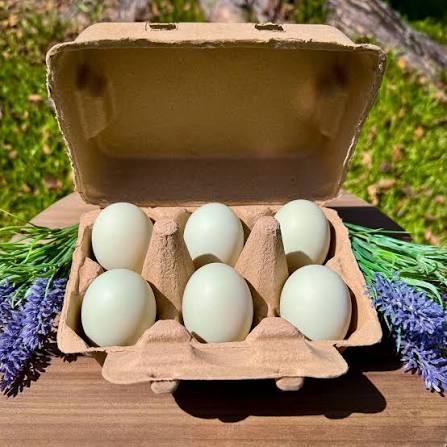
  • Cell bed cut to duck egg proportions, roughly 5 mm deeper and wider than a chicken cell
  • Available in 4, 6, and 12 cell layouts on a correspondingly larger footprint
  • Formed from 100% recycled paper pulp, biodegradable and home compostable
  • Lid clears the shell on Pekin, Khaki Campbell, Runner, and most Muscovy eggs
  • Taller clamshell profile stops the lid pressing on the pointed end
  • Natural pulp plus six stock colors; custom shade matching available
  • OEM and ODM sizing accepted; stock molds available without tooling charge

Public Mould

Packaging Solutions

3D Design

Customized Mould

Product Description

Specification Details
Brand Name BonitoPak
Model Number EC-D04 / EC-D06 / EC-D12
Product Name Duck Egg Cartons / Deep Cell Pulp Carton
Material Recycled paper pulp
Paper Type Post-consumer recycled paper
Technique Molded pulp forming (wet-pressed)
Cell Count 4, 6, or 12 cells
Egg Size Range Pekin, Khaki Campbell, Runner, most Muscovy
Cell Depth Approximately 50 mm, deeper than the chicken standard
Outer Dimensions 6 cell: 195 x 118 x 85 mm; 12 cell: 330 x 118 x 85 mm
Unit Weight 24 to 66 g depending on cell count
Color Natural pulp; six stock colors; custom color matching
Shape & Style Top-fold clamshell with front locking tab
Logo Printing Embossed, debossed, or flexographic print
Industrial Use Duck farms, specialty poultry, gourmet retail, farm direct
Application Retail duck egg packs, farm stand sales, hatching egg transport
Size OEM and custom dimensions accepted
Advantages Biodegradable, home compostable, nestable, plastic free
Packaging Bulk nested in export cartons; custom packing accepted
Custom Order Accepted
MOQ Confirm with sales; stock molds carry a lower minimum than custom tooling

Gallery of Duck Egg Cartons parts

This gallery showcases the exceptional quality and attention to detail we deliver in every project. From complex designs to flawless finishes, each image reflects our commitment to excellence in Duck Egg Cartons .

40%

Cost & Time Saved

Experience leading packaging solutions that optimize your costs and time, delivering efficient processes and maximizing your ROI.

50%

More sustainable

Achieve eco-friendly packaging with sustainable materials, reducing waste and promoting environmental responsibility across your product lines.

25%

Increase in Sales

Enhance your product’s shelf appeal with innovative designs that boost visibility and sales in both retail and online markets.

100%

More Reliable

Trust in BonitoPak’s commitment to quality, ensuring that every product meets our high standards with consistent, reliable service.

A duck egg is a different solid

The assumption that duck eggs are simply bigger chicken eggs is where most duck packaging goes wrong.

A Pekin duck egg weighs around 70 to 80 grams against roughly 57 for a large chicken egg. That weight difference is the part buyers notice. The shape difference is the part that breaks cartons.

Duck eggs are proportionally longer and more sharply pointed at the narrow end. Where a chicken egg is an oval that seats evenly into a conical cell, a duck egg sits lower at the point and higher at the broad end, which means it occupies more vertical space than its weight predicts. Drop one into a chicken cell rated for jumbo and the broad end still stands proud.

The shell is also thicker, around 0.4 mm against roughly 0.35 for chicken, with a tougher membrane underneath. Duck eggs survive handling that chips a chicken egg. What they do not survive is sustained lid pressure, because a thicker shell under constant point load cracks rather than flexes.

What we changed in the mold

Three dimensions, all of them in the same direction.

Cell depth increased to around 50 mm so the broad end seats below the lid line. Cell diameter widened to match the greater girth. And the clamshell profile itself is taller, which is why a duck carton looks visibly chunkier than a chicken carton of the same cell count.

The spacing between cells also opened slightly. Duck eggs sitting at chicken spacing touch at their widest point, and shell to shell contact in transit is what produces the hairline chips that show up as weeping eggs days later.

The Muscovy question

Muscovy eggs are the edge case worth naming honestly.

Most Muscovy eggs fit our standard duck mold. Some do not. Muscovy hens produce a noticeably variable egg, and birds at the larger end of the breed lay eggs that sit high even in a duck cell.

Producers running Muscovy exclusively should send us sample eggs before ordering. We will seat them in a production carton and tell you plainly whether the lid clears. If it does not, custom tooling is the honest answer rather than selling you a carton that almost fits.

Runner and Khaki Campbell eggs sit comfortably inside the standard mold. Pekin, which produces the majority of commercial duck eggs, is what the mold was dimensioned around.

Why duck producers pay more attention to packaging

Duck eggs sell at a premium, often two to three times the price of chicken eggs per unit in specialty retail. That changes the packaging calculation in two ways.

The cost of a better carton is a smaller fraction of the sale price, so there is room to specify properly rather than at the floor.

And the cost of a breakage is higher. A cracked duck egg loses more revenue than a cracked chicken egg, which means the deep cell that prevents it pays for itself across fewer saved eggs than the same logic would require in commodity chicken packing.

Duck buyers are also disproportionately baking customers, who buy for the higher fat and protein content in the yolk. They are repeat purchasers who notice when a producer’s eggs arrive intact every time.

Weight changes the handling math

A dozen duck eggs weighs close to 900 grams against roughly 680 for a dozen large chicken eggs. That extra third shows up in two places buyers do not anticipate.

Stacked on a pallet, a column of filled duck cartons loads the bottom carton considerably harder than the same column of chicken. Reduce stack height rather than assuming the carton compensates.

At the point of sale it matters too. A full dozen duck eggs is heavy enough that shoppers notice, which is part of why six count outsells twelve in almost every duck market we supply.

Counts that work for duck

Duck flocks are smaller than chicken flocks and lay less consistently, which pushes the count down.

Six is the most common retail format, and it is what most duck producers settle on. Four works for premium and gift sales, and crosses over with the molded pulp 4 egg carton which is already cut to a depth that accepts duck.

Twelve exists but moves slowly in most markets, because a dozen duck eggs is a serious purchase at duck pricing. Producers who do run twelves usually sell into restaurants rather than retail.

Producers running mixed flocks should read the molded pulp chicken egg carton page for the grade detail, and note that chicken eggs sit loose in a duck cell. Loose is safe, but a duck carton holding chicken eggs looks half empty, which is a presentation problem rather than a protection one.

For goose, turkey, and bantam, which need different geometry again, see molded pulp goose, turkey and bantam egg cartons. For color options across the range, start at molded pulp colored egg cartons.

A duck egg is a different solid

The assumption that duck eggs are simply bigger chicken eggs is where most duck packaging goes wrong.

A Pekin duck egg weighs around 70 to 80 grams against roughly 57 for a large chicken egg. That weight difference is the part buyers notice. The shape difference is the part that breaks cartons.

Duck eggs are proportionally longer and more sharply pointed at the narrow end. Where a chicken egg is an oval that seats evenly into a conical cell, a duck egg sits lower at the point and higher at the broad end, which means it occupies more vertical space than its weight predicts. Drop one into a chicken cell rated for jumbo and the broad end still stands proud.

The shell is also thicker, around 0.4 mm against roughly 0.35 for chicken, with a tougher membrane underneath. Duck eggs survive handling that chips a chicken egg. What they do not survive is sustained lid pressure, because a thicker shell under constant point load cracks rather than flexes.

What we changed in the mold

Three dimensions, all of them in the same direction.

Cell depth increased to around 50 mm so the broad end seats below the lid line. Cell diameter widened to match the greater girth. And the clamshell profile itself is taller, which is why a duck carton looks visibly chunkier than a chicken carton of the same cell count.

The spacing between cells also opened slightly. Duck eggs sitting at chicken spacing touch at their widest point, and shell to shell contact in transit is what produces the hairline chips that show up as weeping eggs days later.

The Muscovy question

Muscovy eggs are the edge case worth naming honestly.

Most Muscovy eggs fit our standard duck mold. Some do not. Muscovy hens produce a noticeably variable egg, and birds at the larger end of the breed lay eggs that sit high even in a duck cell.

Producers running Muscovy exclusively should send us sample eggs before ordering. We will seat them in a production carton and tell you plainly whether the lid clears. If it does not, custom tooling is the honest answer rather than selling you a carton that almost fits.

Runner and Khaki Campbell eggs sit comfortably inside the standard mold. Pekin, which produces the majority of commercial duck eggs, is what the mold was dimensioned around.

Why duck producers pay more attention to packaging

Duck eggs sell at a premium, often two to three times the price of chicken eggs per unit in specialty retail. That changes the packaging calculation in two ways.

The cost of a better carton is a smaller fraction of the sale price, so there is room to specify properly rather than at the floor.

And the cost of a breakage is higher. A cracked duck egg loses more revenue than a cracked chicken egg, which means the deep cell that prevents it pays for itself across fewer saved eggs than the same logic would require in commodity chicken packing.

Duck buyers are also disproportionately baking customers, who buy for the higher fat and protein content in the yolk. They are repeat purchasers who notice when a producer’s eggs arrive intact every time.

Weight changes the handling math

A dozen duck eggs weighs close to 900 grams against roughly 680 for a dozen large chicken eggs. That extra third shows up in two places buyers do not anticipate.

Stacked on a pallet, a column of filled duck cartons loads the bottom carton considerably harder than the same column of chicken. Reduce stack height rather than assuming the carton compensates.

At the point of sale it matters too. A full dozen duck eggs is heavy enough that shoppers notice, which is part of why six count outsells twelve in almost every duck market we supply.

Counts that work for duck

Duck flocks are smaller than chicken flocks and lay less consistently, which pushes the count down.

Six is the most common retail format, and it is what most duck producers settle on. Four works for premium and gift sales, and crosses over with the molded pulp 4 egg carton which is already cut to a depth that accepts duck.

Twelve exists but moves slowly in most markets, because a dozen duck eggs is a serious purchase at duck pricing. Producers who do run twelves usually sell into restaurants rather than retail.

Producers running mixed flocks should read the molded pulp chicken egg carton page for the grade detail, and note that chicken eggs sit loose in a duck cell. Loose is safe, but a duck carton holding chicken eggs looks half empty, which is a presentation problem rather than a protection one.

For goose, turkey, and bantam, which need different geometry again, see molded pulp goose, turkey and bantam egg cartons. For color options across the range, start at molded pulp colored egg cartons.

Materials for Duck Egg Cartons Parts

Leading companies and engineers rely on BonitoPak for rapid iterations and durable, high-quality parts. Whether it’s for prototyping or full-scale production, our wide range of materials ensures we meet the unique requirements of any Duck Egg Cartons project with precision and speed.

Compostable kraft paper is the strongest fiber we form. Made from virgin

Colored pulp is not a separate fiber. It is any of our

Bleached pulp is the material to specify when the part has to

Natural plant fiber covers the non-wood cellulose sources we blend outside the

Corrugated paper as a molded pulp material means recovered cardboard boxes repulped

Straw fiber is made from the stalks left after grain harvest, material

Custom Eco-Friendly Reliable

Custom, Eco-Friendly Packaging Excellence

Fully Customizable

Customize your packaging with tailored styles, sizes, colors, and finishes to meet specific needs.

Expert Support

Bonitopak provides expert design and logistics advice to maximize packaging efficiency and boost ROI.

Eco Solutions

Choose sustainable, eco-friendly packaging to reduce environmental impact and support your brand’s green goals.

Quality Assurance

Bonitopak guarantees top-quality service and product excellence with every packaging solution.

Frequently Asked Questions

Duck Egg Cartons

  • Can I use duck cartons for chicken eggs to simplify my stock?

    You can, and the eggs will be safe, since a smaller egg in a deeper cell is protected rather than at risk. What you lose is presentation, because chicken eggs sit low and the carton reads as underfilled. Producers running both birds usually find the appearance penalty outweighs the simplicity of one SKU.

  • Do duck eggs need more ventilation than chicken eggs in packaging?

    No, and pulp handles both identically. Duck eggs have a slightly less porous shell than chicken, which is part of why they keep marginally longer unwashed. What matters is that the packaging neither traps condensation nor dries the shell, and fiber does neither because it regulates moisture rather than sealing it.

  • How do I know whether my Muscovy eggs will fit before ordering?

    Send us a few eggs, or send accurate measurements of your largest regular egg at both length and maximum girth. Length alone is not enough, since girth is what decides whether the egg seats or perches. We seat samples in a production carton and give you a direct answer rather than an estimate.

  • Are duck egg cartons more expensive than chicken?

    Per carton, yes, because deeper and wider cells use more fiber and the larger footprint nests slightly less efficiently per container. Per egg sold, the difference is small against duck egg pricing. Buyers comparing the two on carton cost alone are measuring against the wrong denominator.

  • Will a duck carton work for shipping hatching eggs?

     Inside an outer box with void fill, yes, and the deep cell is an advantage because it immobilizes the egg. Movement and rotation damage the air cell, which kills hatch rate well before the shell is at risk. We make no hatch rate claims, since outcomes depend on transit time and handling far beyond the packaging.

Biodegradable Result

0 Days

7 Days

14 Days

30 Days

Specialist industries

Having produced millions of parts, BonitoPak holds deep knowledge in numerous applications. We excel particularly in industries requiring precise and intricate component fabrication. Trust us to deliver expertise and quality, no matter the complexity.

OEM and ODM Packaging Solutions

Bonitopak offers both custom (OEM) and pre-designed (ODM) packaging solutions. Whether you need fully tailored designs or ready-to-use packaging, we provide high-quality, efficient, and flexible options to meet your brand’s needs.

OEM Services

OEM packaging solutions allow you to create fully customized products designed and manufactured to meet your specific requirements. At Bonitopak, we offer comprehensive support throughout the design, prototyping, and manufacturing process, ensuring your packaging reflects your brand’s unique identity. Our precision manufacturing capabilities guarantee high-quality and consistent production, no matter the complexity of the design. With end-to-end service, we handle everything from concept to delivery, helping you streamline your packaging needs.

ODM Services

ODM packaging solutions offer pre-designed products that can be tailored to your brand’s requirements. With Bonitopak’s innovative design expertise and efficient production process, you can choose from a wide range of ready-to-use packaging options. We provide flexible customization, allowing you to add your branding and select from various finishes, colors, and sizes. This solution saves time and cost while ensuring high-quality packaging that meets your brand standards.
Ready to Elevate Your Project?

Bring Your Designs to Life with BonitoPak

Experience precision engineering with BonitoPak. From detailed prototypes to high-volume production, we’re here to turn your concepts into reality. Contact us today to discuss your project needs!

Our Product Categories

Discover Bonitopak’s diverse range of packaging solutions, including molded pulp trays, food packaging, custom designs, and sustainable options. Each category is crafted for durability, functionality, and environmental responsibility, tailored to meet your specific needs.

A duck egg is a different solid

The assumption that duck eggs are simply bigger chicken eggs is where most duck packaging goes wrong.

A Pekin duck egg weighs around 70 to 80 grams against roughly 57 for a large chicken egg. That weight difference is the part buyers notice. The shape difference is the part that breaks cartons.

Duck eggs are proportionally longer and more sharply pointed at the narrow end. Where a chicken egg is an oval that seats evenly into a conical cell, a duck egg sits lower at the point and higher at the broad end, which means it occupies more vertical space than its weight predicts. Drop one into a chicken cell rated for jumbo and the broad end still stands proud.

The shell is also thicker, around 0.4 mm against roughly 0.35 for chicken, with a tougher membrane underneath. Duck eggs survive handling that chips a chicken egg. What they do not survive is sustained lid pressure, because a thicker shell under constant point load cracks rather than flexes.

What we changed in the mold

Three dimensions, all of them in the same direction.

Cell depth increased to around 50 mm so the broad end seats below the lid line. Cell diameter widened to match the greater girth. And the clamshell profile itself is taller, which is why a duck carton looks visibly chunkier than a chicken carton of the same cell count.

The spacing between cells also opened slightly. Duck eggs sitting at chicken spacing touch at their widest point, and shell to shell contact in transit is what produces the hairline chips that show up as weeping eggs days later.

The Muscovy question

Muscovy eggs are the edge case worth naming honestly.

Most Muscovy eggs fit our standard duck mold. Some do not. Muscovy hens produce a noticeably variable egg, and birds at the larger end of the breed lay eggs that sit high even in a duck cell.

Producers running Muscovy exclusively should send us sample eggs before ordering. We will seat them in a production carton and tell you plainly whether the lid clears. If it does not, custom tooling is the honest answer rather than selling you a carton that almost fits.

Runner and Khaki Campbell eggs sit comfortably inside the standard mold. Pekin, which produces the majority of commercial duck eggs, is what the mold was dimensioned around.

Why duck producers pay more attention to packaging

Duck eggs sell at a premium, often two to three times the price of chicken eggs per unit in specialty retail. That changes the packaging calculation in two ways.

The cost of a better carton is a smaller fraction of the sale price, so there is room to specify properly rather than at the floor.

And the cost of a breakage is higher. A cracked duck egg loses more revenue than a cracked chicken egg, which means the deep cell that prevents it pays for itself across fewer saved eggs than the same logic would require in commodity chicken packing.

Duck buyers are also disproportionately baking customers, who buy for the higher fat and protein content in the yolk. They are repeat purchasers who notice when a producer’s eggs arrive intact every time.

Weight changes the handling math

A dozen duck eggs weighs close to 900 grams against roughly 680 for a dozen large chicken eggs. That extra third shows up in two places buyers do not anticipate.

Stacked on a pallet, a column of filled duck cartons loads the bottom carton considerably harder than the same column of chicken. Reduce stack height rather than assuming the carton compensates.

At the point of sale it matters too. A full dozen duck eggs is heavy enough that shoppers notice, which is part of why six count outsells twelve in almost every duck market we supply.

Counts that work for duck

Duck flocks are smaller than chicken flocks and lay less consistently, which pushes the count down.

Six is the most common retail format, and it is what most duck producers settle on. Four works for premium and gift sales, and crosses over with the molded pulp 4 egg carton which is already cut to a depth that accepts duck.

Twelve exists but moves slowly in most markets, because a dozen duck eggs is a serious purchase at duck pricing. Producers who do run twelves usually sell into restaurants rather than retail.

Producers running mixed flocks should read the molded pulp chicken egg carton page for the grade detail, and note that chicken eggs sit loose in a duck cell. Loose is safe, but a duck carton holding chicken eggs looks half empty, which is a presentation problem rather than a protection one.

For goose, turkey, and bantam, which need different geometry again, see molded pulp goose, turkey and bantam egg cartons. For color options across the range, start at molded pulp colored egg cartons.

A duck egg is a different solid

The assumption that duck eggs are simply bigger chicken eggs is where most duck packaging goes wrong.

A Pekin duck egg weighs around 70 to 80 grams against roughly 57 for a large chicken egg. That weight difference is the part buyers notice. The shape difference is the part that breaks cartons.

Duck eggs are proportionally longer and more sharply pointed at the narrow end. Where a chicken egg is an oval that seats evenly into a conical cell, a duck egg sits lower at the point and higher at the broad end, which means it occupies more vertical space than its weight predicts. Drop one into a chicken cell rated for jumbo and the broad end still stands proud.

The shell is also thicker, around 0.4 mm against roughly 0.35 for chicken, with a tougher membrane underneath. Duck eggs survive handling that chips a chicken egg. What they do not survive is sustained lid pressure, because a thicker shell under constant point load cracks rather than flexes.

What we changed in the mold

Three dimensions, all of them in the same direction.

Cell depth increased to around 50 mm so the broad end seats below the lid line. Cell diameter widened to match the greater girth. And the clamshell profile itself is taller, which is why a duck carton looks visibly chunkier than a chicken carton of the same cell count.

The spacing between cells also opened slightly. Duck eggs sitting at chicken spacing touch at their widest point, and shell to shell contact in transit is what produces the hairline chips that show up as weeping eggs days later.

The Muscovy question

Muscovy eggs are the edge case worth naming honestly.

Most Muscovy eggs fit our standard duck mold. Some do not. Muscovy hens produce a noticeably variable egg, and birds at the larger end of the breed lay eggs that sit high even in a duck cell.

Producers running Muscovy exclusively should send us sample eggs before ordering. We will seat them in a production carton and tell you plainly whether the lid clears. If it does not, custom tooling is the honest answer rather than selling you a carton that almost fits.

Runner and Khaki Campbell eggs sit comfortably inside the standard mold. Pekin, which produces the majority of commercial duck eggs, is what the mold was dimensioned around.

Why duck producers pay more attention to packaging

Duck eggs sell at a premium, often two to three times the price of chicken eggs per unit in specialty retail. That changes the packaging calculation in two ways.

The cost of a better carton is a smaller fraction of the sale price, so there is room to specify properly rather than at the floor.

And the cost of a breakage is higher. A cracked duck egg loses more revenue than a cracked chicken egg, which means the deep cell that prevents it pays for itself across fewer saved eggs than the same logic would require in commodity chicken packing.

Duck buyers are also disproportionately baking customers, who buy for the higher fat and protein content in the yolk. They are repeat purchasers who notice when a producer’s eggs arrive intact every time.

Weight changes the handling math

A dozen duck eggs weighs close to 900 grams against roughly 680 for a dozen large chicken eggs. That extra third shows up in two places buyers do not anticipate.

Stacked on a pallet, a column of filled duck cartons loads the bottom carton considerably harder than the same column of chicken. Reduce stack height rather than assuming the carton compensates.

At the point of sale it matters too. A full dozen duck eggs is heavy enough that shoppers notice, which is part of why six count outsells twelve in almost every duck market we supply.

Counts that work for duck

Duck flocks are smaller than chicken flocks and lay less consistently, which pushes the count down.

Six is the most common retail format, and it is what most duck producers settle on. Four works for premium and gift sales, and crosses over with the molded pulp 4 egg carton which is already cut to a depth that accepts duck.

Twelve exists but moves slowly in most markets, because a dozen duck eggs is a serious purchase at duck pricing. Producers who do run twelves usually sell into restaurants rather than retail.

Producers running mixed flocks should read the molded pulp chicken egg carton page for the grade detail, and note that chicken eggs sit loose in a duck cell. Loose is safe, but a duck carton holding chicken eggs looks half empty, which is a presentation problem rather than a protection one.

For goose, turkey, and bantam, which need different geometry again, see molded pulp goose, turkey and bantam egg cartons. For color options across the range, start at molded pulp colored egg cartons.

Related Articles and Insights

Stay informed with the latest updates on sustainable packaging trends, industry insights, and expert tips through our blog. Explore innovative ideas and solutions to enhance your packaging knowledge.

Canada has a smaller domestic moulded pulp sector than the United States, but it has

Australia has one domestic moulded fibre egg carton manufacturer. Huhtamaki Australia describes itself as the

British egg packaging is sold differently from the American market. Where US suppliers talk in

Frequently Asked Questions

Duck Egg Cartons

  • Can I use duck cartons for chicken eggs to simplify my stock?

    You can, and the eggs will be safe, since a smaller egg in a deeper cell is protected rather than at risk. What you lose is presentation, because chicken eggs sit low and the carton reads as underfilled. Producers running both birds usually find the appearance penalty outweighs the simplicity of one SKU.

  • Do duck eggs need more ventilation than chicken eggs in packaging?

    No, and pulp handles both identically. Duck eggs have a slightly less porous shell than chicken, which is part of why they keep marginally longer unwashed. What matters is that the packaging neither traps condensation nor dries the shell, and fiber does neither because it regulates moisture rather than sealing it.

  • How do I know whether my Muscovy eggs will fit before ordering?

    Send us a few eggs, or send accurate measurements of your largest regular egg at both length and maximum girth. Length alone is not enough, since girth is what decides whether the egg seats or perches. We seat samples in a production carton and give you a direct answer rather than an estimate.

  • Are duck egg cartons more expensive than chicken?

    Per carton, yes, because deeper and wider cells use more fiber and the larger footprint nests slightly less efficiently per container. Per egg sold, the difference is small against duck egg pricing. Buyers comparing the two on carton cost alone are measuring against the wrong denominator.

  • Will a duck carton work for shipping hatching eggs?

     Inside an outer box with void fill, yes, and the deep cell is an advantage because it immobilizes the egg. Movement and rotation damage the air cell, which kills hatch rate well before the shell is at risk. We make no hatch rate claims, since outcomes depend on transit time and handling far beyond the packaging.

Fill This Detailed Form