By Leo Chan, Senior Packaging Consultant · November 14, 2026
Molded pulp packaging is protective packaging made by shaping wet plant fiber in a mold, then pressing and drying it into a rigid form. It holds a product in place, absorbs shock and replaces foam or plastic inserts. Brands use it for electronics, cosmetics, wine, appliances, food and eggs.
The fiber comes from sugarcane bagasse, bamboo, wood pulp or recycled paper. Water is the main processing aid, and the finished part can go into paper recycling or a compost stream where those programs accept it. That end-of-life story is why buyers ask for it as a sustainable packaging choice. The fit and the protection are why they keep ordering it.
This guide covers what a buyer needs before ordering. It explains the main types, the fibers, how a factory makes the parts, where each type works, what drives cost, and how a custom project runs from drawing to production. The examples come from our molded pulp lines in Dongguan, China, where we design, tool and press packaging for brands in North America, Europe and Asia.
What Is Molded Pulp Packaging?
Molded pulp is a three-dimensional pack formed from a water and fiber slurry. A mesh mold pulls the fiber into shape under vacuum. The part is then dried in an oven or pressed dry between heated tools. The result is a tray, insert, clamshell, end cap or carton made almost entirely of cellulose fiber.
You will see several names for the same material. Molded fiber, moulded pulp packaging (the British spelling) and paper pulp packaging all describe it. Recycled paper suppliers tend to say molded paper pulp packaging, and bagasse or bamboo suppliers say fiber packaging. The process is the same family in every case.
The idea is older than most people think. Martin Keyes patented a molded pulp process in 1903, and the first big use was egg trays. Today the same principle produces smooth, thin cosmetic trays that look closer to plastic than to an egg flat. You can read more about the base material in our page on what molded pulp is.
Molded pulp, moulded pulp and molded fiber
Buyers in the UK, Europe and Australia search for moulded pulp and moulded fibre. Buyers in the US search for molded pulp and molded fiber. The products are identical.
If you source for both markets, use moulded pulp in UK specs and molded pulp in US specs. That way your team and your supplier read the drawing the same way.
Moulded pulp trays, moulded pulp inserts and moulded pulp egg trays are the same parts under the British spelling, and a UK drawing will call the tool a mould. Moulded pulp is the term to use in European tenders.
Molded pulp vs paperboard and corrugated
Paperboard and corrugated start as flat sheets that are cut and folded. Molded pulp starts as a liquid and takes the exact shape of the mold.
That difference matters for protection. A molded part can have a pocket that matches a phone, a bottle neck or a lipstick tube, so the product cannot slide. A folded insert can only approximate that shape.
What Are the Main Types of Molded Pulp?
There are four production types buyers meet most: wet pressed, dry pressed, transfer molded and thick wall. Wet pressed parts are thin and smooth for retail display. Dry pressed and transfer molded parts are thicker and cost less for shipping protection. Thick wall parts carry heavy industrial loads.
The names change between factories, which confuses buyers. The table further down compares them by finish, strength and cost. Here is what each one means in practice. Factory catalogs also list them as pulp molded trays.
Wet pressed molded pulp (thermoformed)
Wet pressing forms the part on a mesh mold, then moves the wet part into heated metal tools. Heat and pressure dry the part in the tool. The surface comes out smooth on the face side and dense through the wall. Edges are crisp, and fine details such as a logo or a thin rib hold their shape.
This is the type you see in phone boxes, earbud cases, skincare sets and premium gift boxes. It is also the type with the highest tooling and unit cost, because each part spends time in a heated press. Our wet pressing molded pulp trays page shows the range we run in bagasse, bamboo and wood pulp.
Dry pressed molded pulp
Dry pressing forms the part on a mold, then dries it in an oven without heated tooling. The surface has a softer paper texture and the wall is thicker. Detail is less sharp than wet pressing, but strength and cushioning are good, and the tooling is cheaper.
Dry pressed parts suit inner trays, shipping inserts and protective packs that sit inside a printed outer box. The customer never sees the tray, so the lower cost wins. See our dry pressing molded pulp trays for formats made from recycled corrugated and paper.
Transfer molded pulp
Transfer molding uses two molds. One forms the part, and the second takes it off and transfers it to drying. Both sides come out fairly smooth, and the walls are moderate in thickness. Egg cartons, cup carriers and medical trays are common transfer molded products.
Thick wall molded pulp
Thick wall parts use a single mold and a heavy fiber layer, then dry slowly. They are rough on both sides and very strong. Corner blocks for furniture, edge protectors and pallet trays are typical. Our industrial protective pulp packaging covers these heavy duty parts.
We break the four types down in more detail, with photos of each surface, in our guide to the 4 types of molded pulp.
Which Materials Are Used to Make Molded Pulp?
These raw materials go into almost every molded pulp product: sugarcane bagasse, bamboo, virgin wood pulp, recycled paper and straw. Bagasse and bamboo give a fine, smooth surface for retail packs. Recycled paper costs less and suits protective trays. Wood pulp gives the cleanest white color.
The right fiber depends on look, strength, food contact and budget. Each fiber has a trade off, and the cheapest choice is not always the right one.
Sugarcane bagasse. Bagasse is the fiber left after sugarcane is crushed for juice. It is an eco-friendly fiber because it reuses a by-product of the sugar industry and it forms a smooth, even surface that takes color well. It is our most requested fiber for cosmetic trays and food containers. Read more on our sugarcane fiber (bagasse) page.
Bamboo fiber. Bamboo has long fibers, so parts come out stiff and strong for their weight. It works well for electronics trays where the pocket must hold a heavy device without flexing.
Wood pulp. Virgin wood pulp gives the most consistent color and the brightest white after bleaching. Brands that want a clean, paper white tray choose it.
Recycled paper pulp. Recycled newsprint, office paper and corrugated give the lowest material cost. The color is gray or brown, and small specks are normal. It is the standard choice for dry pressed shipping trays, egg cartons and industrial parts.
Straw and other plant fibers. Wheat straw and other agricultural fibers go into food service lines such as plates and bowls. They perform close to bagasse but supply varies by region and season.
Color options
Natural fiber is unbleached. White fiber is bleached, and in our plant we use hydrogen peroxide (H2O2) for that step instead of chlorine. Black, gray, blue and orange come from color added to the pulp before forming, so the color runs through the whole wall instead of sitting on top.
We run six pulp systems (white, natural, black, orange, gray and blue) and match custom Pantone shades to within about 95% on request. For food contact parts we suggest white or natural fiber. See colored pulp for swatches.
How Is Molded Pulp Made in a Factory?
The manufacturing process for molded pulp runs in five stages. It pulps the fiber in water and forms the part on a mesh mold under vacuum. Then it dries or hot presses the part, trims the edges, and adds print or coating where the design needs it. Wet pressed parts dry inside heated tools. Dry pressed parts dry in an oven.
Each stage of the production process affects what the buyer receives, so it helps to know where problems start.
Pulping. Fiber bales or recycled paper go into a pulper with water and break down into a slurry. Additives go in here when the part needs water or oil resistance, or color. The fiber to water ratio sets how thick the wall will be.
Forming. A mold covered in fine mesh dips into the slurry or has slurry sprayed onto it. Vacuum pulls water through the mesh and leaves a layer of fiber on the mold surface. This is the moment the part takes its shape. A thin spot here becomes a weak spot later.
Drying or hot pressing. For dry pressed parts, the wet part goes into a drying line. For wet pressed parts, it goes between heated upper and lower tools that squeeze out the remaining water and set a smooth surface. Drying time depends on wall thickness, so deeper and thicker parts take longer and cost more.
Trimming. Formed parts come out with a rough edge. A die cutting machine trims them to final size. On our line, flat parts trim to a tolerance of plus or minus 0.5 mm. Parts with slopes or complex shapes need a punching mold instead of a flat cutter.
Finishing and quality control. Printing, embossing, foil, coatings or a laminated layer go on here when the design calls for them. Then the parts are inspected, counted, bagged and boxed. We check fit with the customer’s actual product during sampling, because a drawing alone does not show how a pocket grips.
The full engineering flow, from sample to production tooling, is on our design and tooling page.
Which Industries Use Molded Pulp Trays and Inserts?
Molded pulp is used wherever a product needs to be held still and cushioned: consumer electronics, cosmetics and beauty, wine and spirits, home appliances, industrial parts, food service and eggs. Wet pressed pulp leads in retail-facing packs. Dry pressed and thick wall pulp lead in shipping and industrial protection.
Here is how each industry uses it, and what to watch for.
Electronics. Phones, earbuds, chargers, cables and small devices sit in wet pressed trays with tight pockets. The tray replaces a plastic or EVA insert and still gives a premium feel. Pocket depth and draft angle matter here, because a device that sits too deep is hard to lift out. See our pulp trays for electronic products.
Cosmetics and beauty. Skincare bottles, lipsticks, compacts and gift sets use smooth bagasse or bamboo trays, mostly in black or white. Color matching to the brand palette is common. Our pulp trays for cosmetic and beauty products page shows the finishes.
Wine and spirits. Bottle shippers and gift trays hold the neck and the base so the bottle cannot knock against the box wall. These need deeper pockets and more fiber at the stress points. See molded pulp trays for wine bottles.
Home appliances. Hair dryers, kettles, small kitchen appliances and power tools use end caps and full trays in place of EPS foam. The parts must survive drop tests at the weight of the appliance. Our molded fiber trays for home appliances are built for that.
Industrial and protective. Corner protectors, edge guards, cradles and pallet trays protect furniture, glass, panels and auto parts. Thick wall and dry pressed parts dominate this group.
Food packaging. Plates, bowls, clamshells and containers use food grade bagasse, straw or bamboo. These lines need grease and water resistance and the right food contact paperwork. See molded fiber for food packaging.
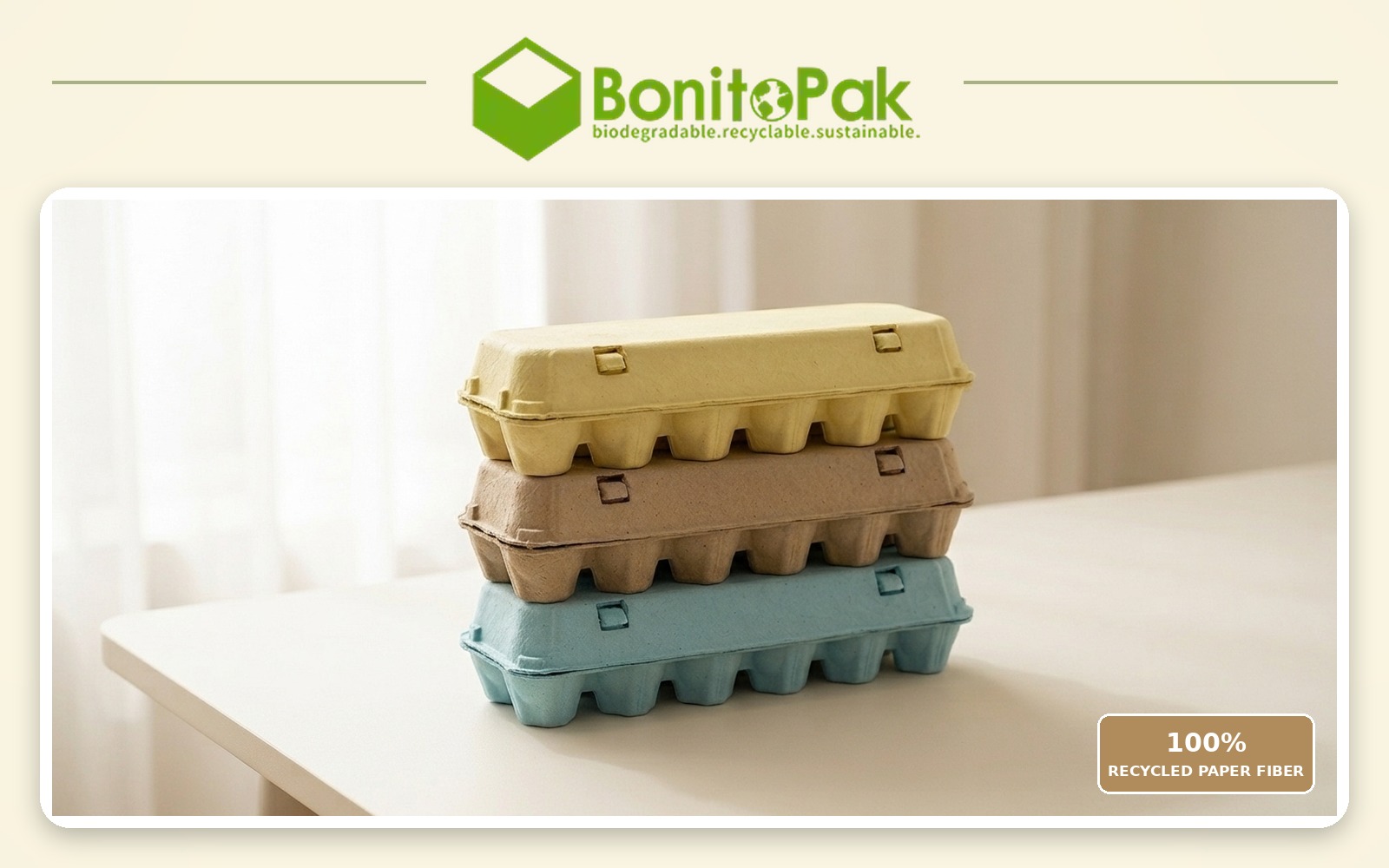
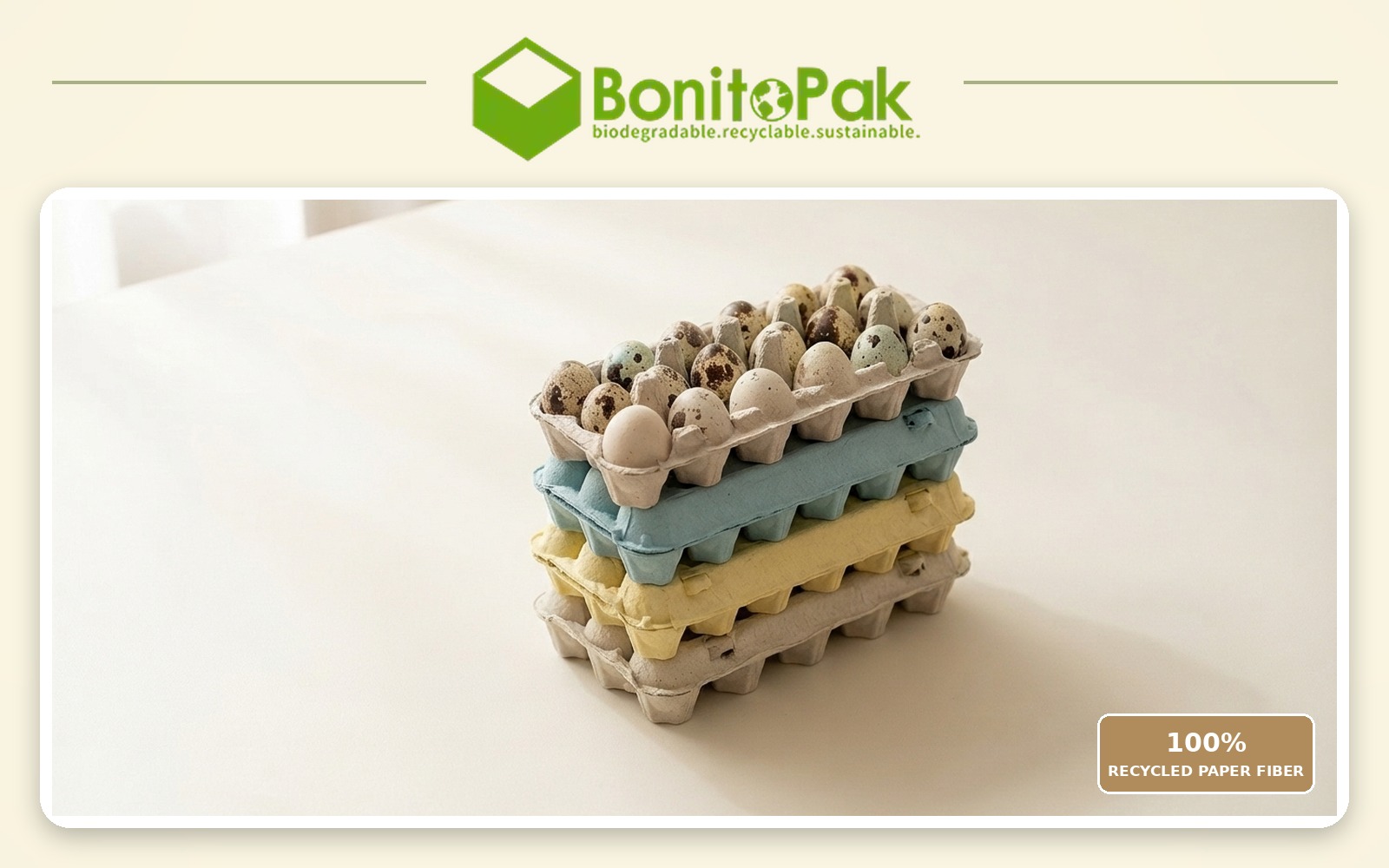
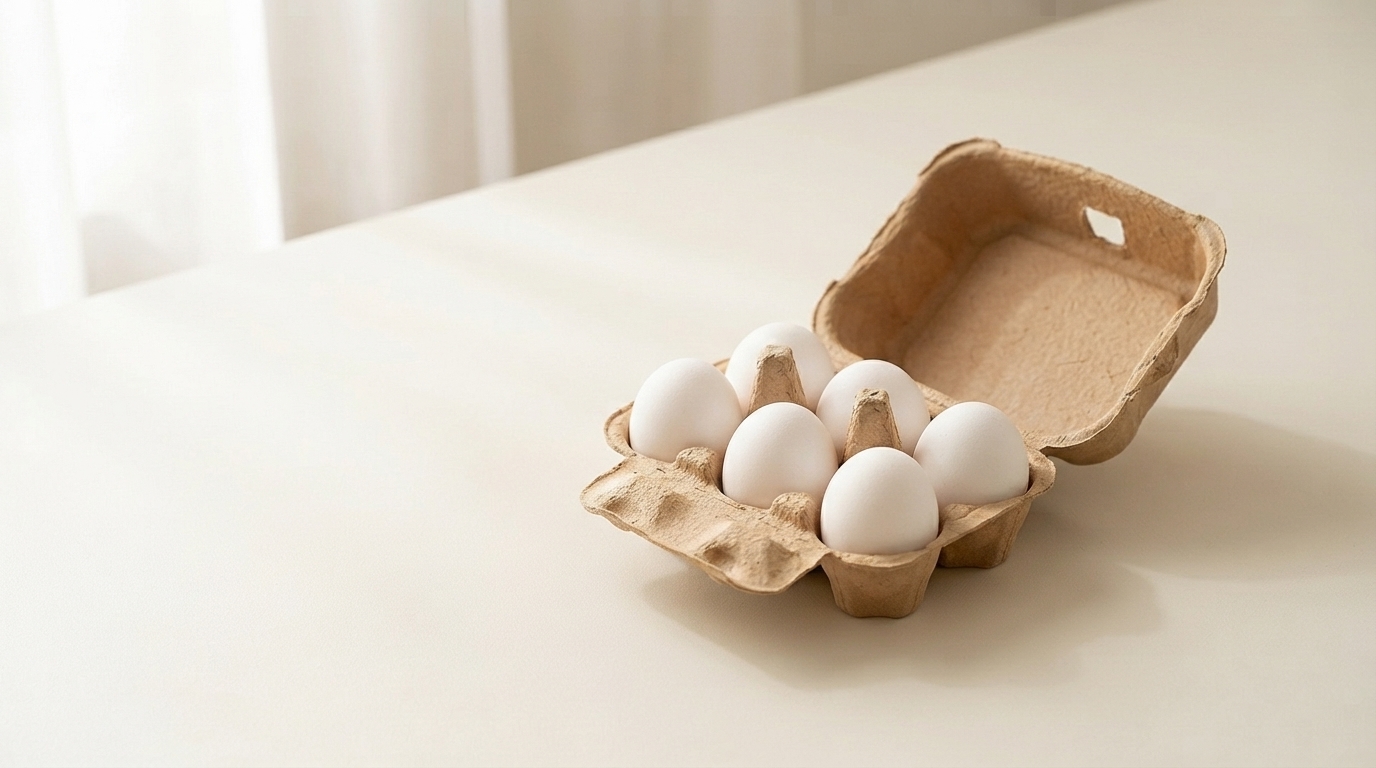
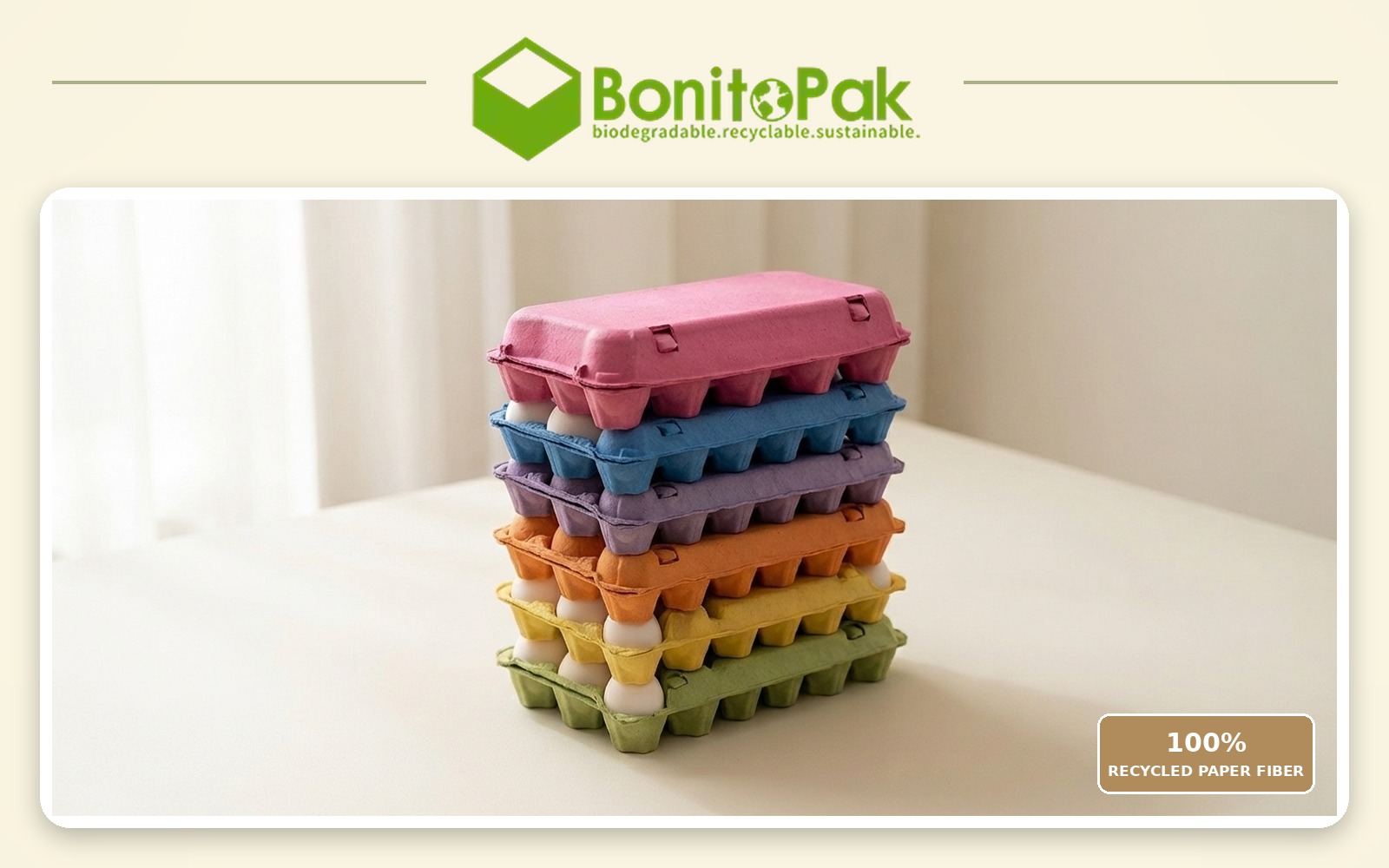
Eggs. Egg cartons and trays were the first big molded pulp product and are still one of the largest. Our molded pulp egg cartons come in counts from 4 to 20 cells.
What Molded Pulp Formats Can You Order?
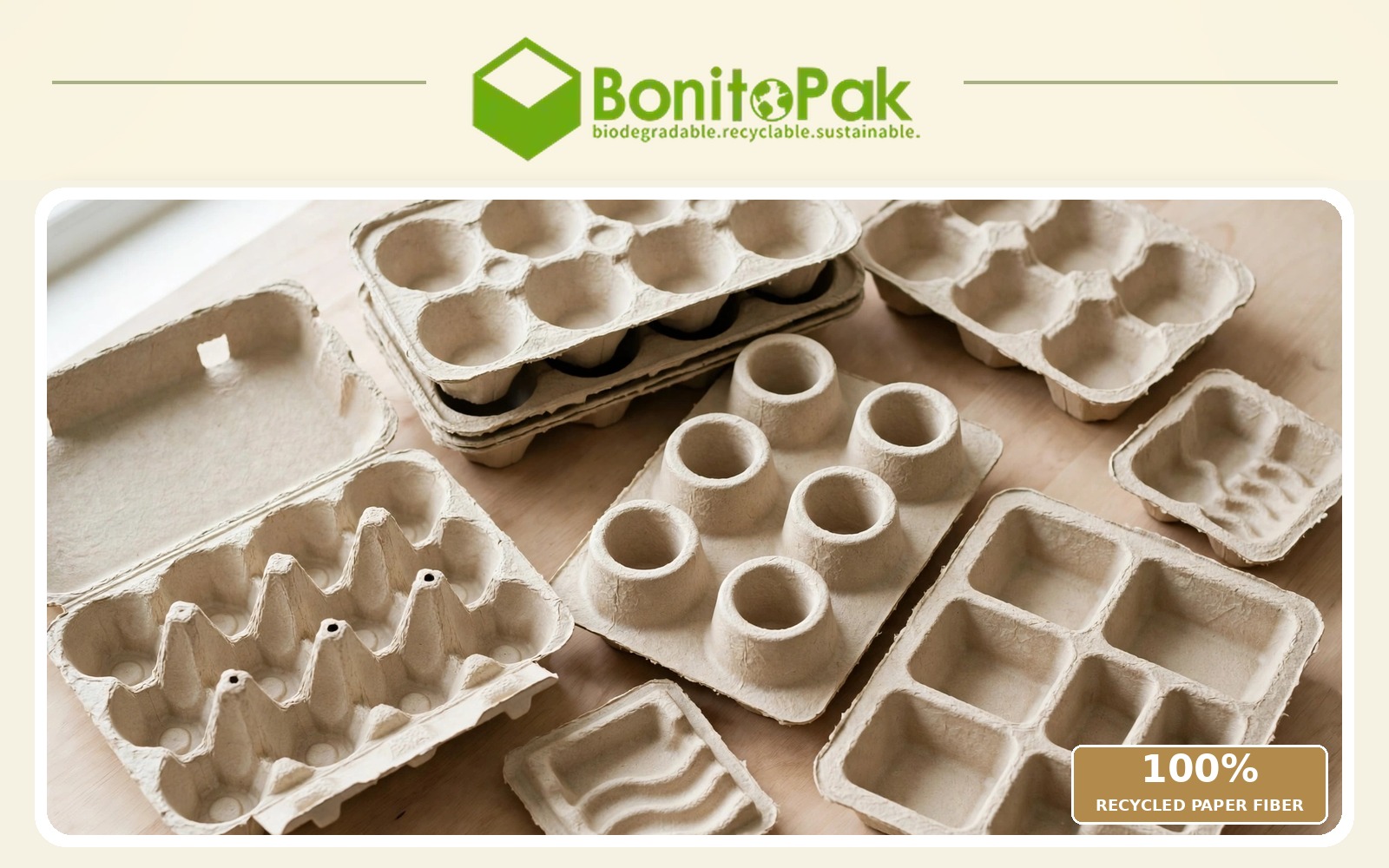
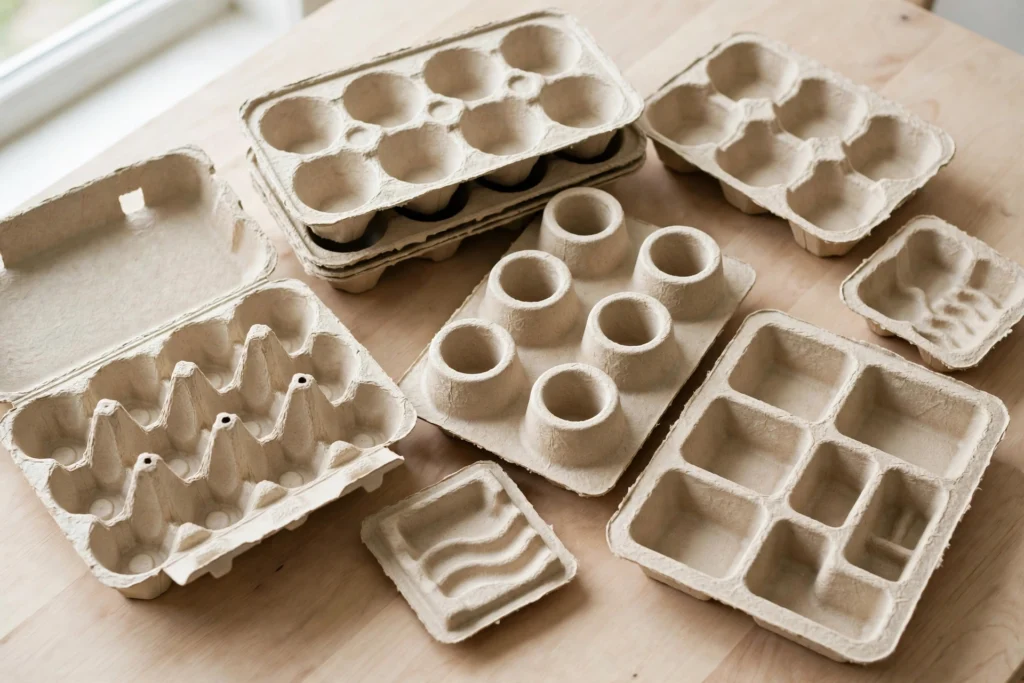
The common molded pulp formats are trays and inserts, clamshells, end caps and corner blocks, egg cartons and trays, cup and can carriers and food service tableware. The right format depends on whether the product needs a pocket, a lid or a protective block.
Knowing the format names helps when you write a brief or compare quotes.
Trays and inserts. A tray sits inside a printed box and holds the product in a pocket. An insert is the same part without the box. Our molded pulp trays page covers the standard tray range.
Clamshells. A clamshell is a tray and lid joined by a hinge, molded in one piece. It works for food trays and blister style packs.
End caps and corner blocks. These fit over the ends or corners of a large product, such as a monitor, an appliance or a glass panel. Thick wall or dry pressed pulp is used.
Egg cartons and trays. Cartons close with a lid and carry a label or print. Trays are open and stack for storage or for egg grading lines.
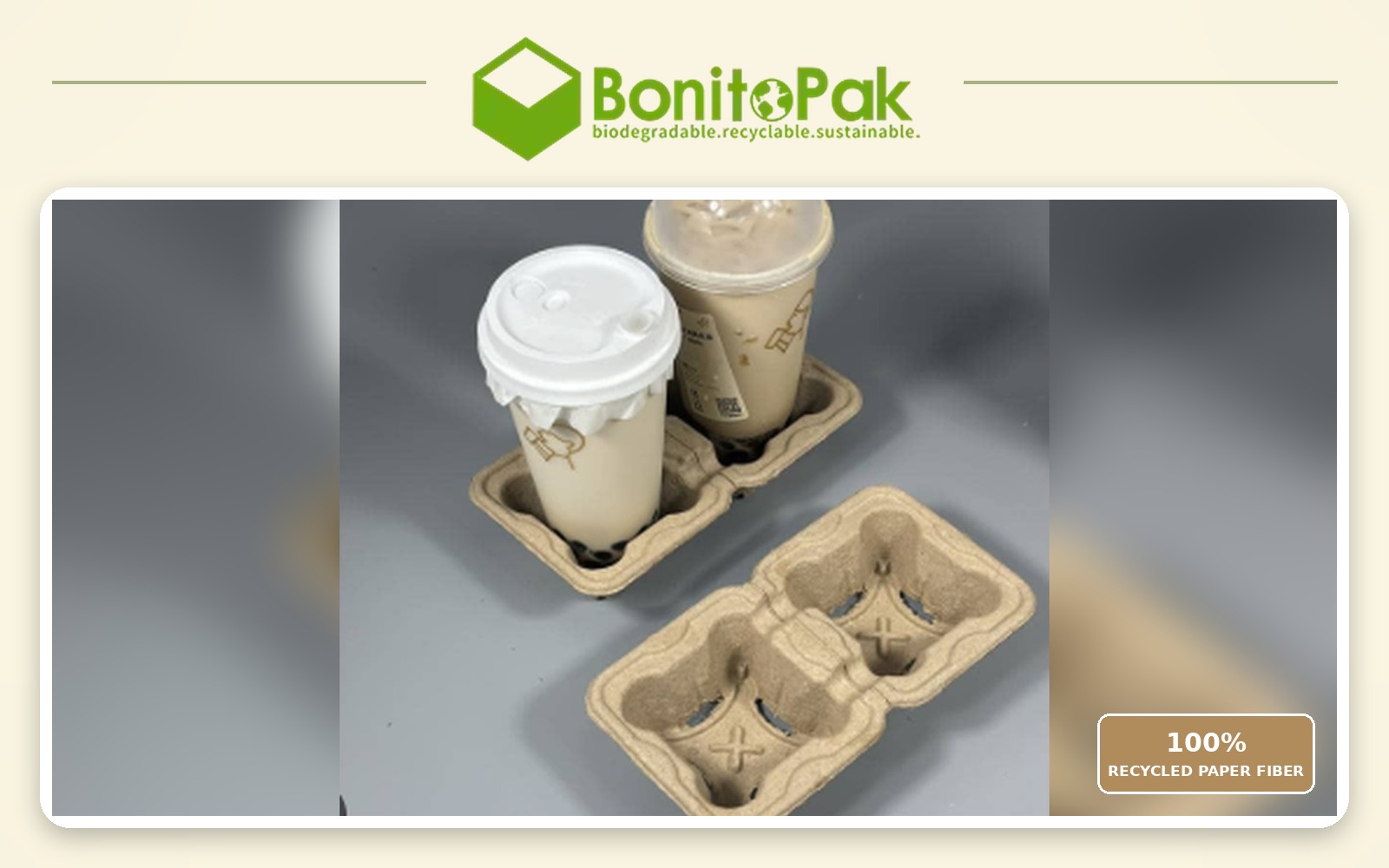
Cup and can carriers. Carriers hold two to four coffee cups, or four to six beverage cans, for takeout and retail.
Food service tableware. Plates, bowls, trays and containers made from bagasse or bamboo fiber. These are single use and food contact safe.
A lightweight molded pulp product can also be a full box. Molded pulp boxes with a molded lid suit gift sets, candles and premium electronics, where the box itself replaces both the insert and a rigid paperboard outer.
How Does Molded Pulp Compare With Plastic, EPS Foam and Corrugated?
Molded pulp beats EPS foam and plastic inserts on end-of-life options and custom fit, and it matches them on protection for most consumer goods. Foam still cushions better per gram for very heavy or very fragile items. Corrugated inserts cost less for simple shapes but cannot form exact pockets.
The table compares molded pulp with the other common molded packaging and insert materials on the points buyers ask about.
| Factor | Molded pulp | EPS foam | Plastic (PET, PVC) inserts | Corrugated inserts |
|---|---|---|---|---|
| Raw material | Plant fiber or recycled paper | Expanded polystyrene | Petroleum based plastic | Paperboard |
| Custom fit to product | Exact, molded pockets | Exact, molded pockets | Exact, thermoformed pockets | Approximate, folded shapes |
| Shock protection | Good for most consumer goods | Very good, light weight | Fair, can crack | Fair |
| Surface look | Smooth (wet pressed) or textured (dry pressed) | White, beaded | Clear or colored, glossy | Flat, printed |
| Curbside recycling in the US | Accepted with paper in most programs | Rarely accepted | Depends on resin and city | Widely accepted |
| Composting | Possible for certified, uncoated fiber parts | No | No | Possible if uncoated |
| Tooling cost | Medium to high | Medium | Low to medium | Low |
| Nesting for storage | Nests tightly | Bulky | Nests tightly | Ships flat |
Two points from this table deserve a plain answer.
First, molded pulp is not always the cheapest option per unit. A simple corrugated divider can cost less. Molded pulp wins when the product needs a precise pocket, a premium look, or a plastic free claim that retailers and customers check.
Second, foam is still the better cushion for a few heavy, high value items. For a large appliance or delicate lab equipment, we test molded pulp against the real drop height before recommending a switch. When the test fails, we add ribs, change the fiber or increase wall thickness rather than promise a result the part cannot deliver.
What Are the Benefits of Molded Pulp?
The main benefits of pulp molding are custom fit, solid shock protection, a plastic free material, light weight and nesting for cheap storage. The part can be recycled or composted where local programs accept it. The trade offs are tooling cost, longer sampling than corrugated, and lower water resistance unless an additive is used.
Here is how those benefits play out for a brand.
Fit to specific shapes. Custom molds form pockets around a product’s real shape, so nothing rattles. That reduces scuffs and returns on items with odd shapes, such as bottles with pumps or devices with cables.
A cleaner material story. Fiber replaces foam and plastic, which makes molded pulp an eco-friendly packaging solution that retailers and shoppers recognize. Natural fiber also looks environmentally friendly without extra print.
Lightweight packaging. A fiber tray weighs less than most plastic or wood inserts of the same size, which trims freight cost on every shipment.
Storage and handling. Trays nest inside each other before packing, so a pallet holds thousands of parts. Foam blocks take far more warehouse space.
Brand presence. Embossed logos, colored pulp and smooth wet pressed surfaces turn an inner tray into part of the unboxing.
The limits matter as much. Tooling must be paid before the first part ships. Sampling takes days, not hours. Plain fiber softens in water.
None of these rule molded pulp out, but each belongs in your budget and timeline. For a brand with sustainability targets, it is still the most practical packaging material to switch to for most retail inserts.
Is Molded Pulp Recyclable and Compostable?
Plain paper pulp packaging made only of fiber is recyclable with paper in most US curbside programs and can break down in composting. Coatings, plastic laminates, inks and additives change that. A compostable claim in the US should rest on third party certification to ASTM D6400 or D6868, such as BPI.
Buyers get into trouble with claims here, so precise wording matters.
Recycling. Uncoated molded fiber is paper fiber, so most programs let you recycle it with paper and cardboard. Acceptance still varies from city to city. If the part carries a plastic film, a heavy wax or a metal foil, recyclers can reject it.
Composting. Fiber breaks down in compost, but a claim on the box needs proof. In North America, BPI certification covers ASTM D6400 and D6868. In Europe, TUV Austria’s OK compost mark covers EN 13432. Certification looks at the whole part, including any oil or water resistant additive.
Environmental impact. Fiber packaging cuts plastic and foam from the waste stream, and recycled paper pulp keeps used fiber in a circular economy loop. The full environmental impact still depends on fiber source, drying energy and shipping distance. A life cycle assessment for your specific part gives a more honest answer than a general claim that fiber is always better.
Marketing claims. In the US, the Federal Trade Commission’s Green Guides for environmental marketing claims set the rules for words like recyclable, compostable and biodegradable. Unqualified claims need solid evidence, and ‘biodegradable’ on its own is risky. Ask your supplier for the certificate number and the exact product it covers before you print a logo.
BonitoPak’s food service line is listed with BPI and OK compost certification. Ask our team for the current certificate numbers for the product and fiber you plan to order. A certificate covers a defined material and thickness, not a whole factory.
How Does a Custom Molded Pulp Project Work?
A custom molded pulp packaging project runs in five steps. You share the product and brief, approve a 3D drawing, test a sample, approve production tooling, then run mass production. At BonitoPak, the drawing takes about 2 days and samples about 7 days after the drawing is approved.
Most delays come from a weak brief or a skipped sample, not from the factory. Here is the sequence we follow, with the timings published on our site.
- Brief and product samples. Send the product itself or an accurate 3D file, plus the outer box size. Add the target fiber, color, volume and destination market. Real products work best, since cables, caps and labels change the fit. We reply within 24 hours with options.
- 3D drawing. Our design team builds the tray in CAD and sends a drawing file to confirm in about 2 days. Check pocket depth, finger cutouts, draft angles and how the tray sits in the outer box.
- Sample tooling and samples. For new items we cut a single cavity sample mold first and make a small prototype run, usually about 10 pieces, ready in about 7 days. The sample mold cost is charged and not refunded, because it cannot run mass production. Small changes at this stage cost little.
- Production tooling. After the sample is approved, our in-house tooling team builds the multi cavity production mold. Our site lists production molds at about 8 days, depending on size and cavity count. We keep 65+ molds in house, which shortens sampling for similar shapes.
- Mass production and inspection. Parts are formed, pressed or dried, trimmed, inspected and packed. Lead time depends on volume, fiber and finish, so confirm it on the quote.
Our custom molded pulp packaging service covers each step, from the first drawing to repeat orders.
What commonly goes wrong in custom projects
Three mistakes cause most rework. The first is designing from a drawing of the product rather than the product itself, which misses a cable bend or a cap height. The second is skipping the sample to save a week, then finding at production that the pocket is too tight. The third is choosing wet pressing for a hidden inner tray, which pays for a premium surface nobody sees.
How Much Does Molded Pulp Packaging Cost?
Molded pulp cost has two parts: one-time tooling and a per-unit price. Tooling grows with part size, complexity and cavity count, and wet press tools cost more than dry press tools. Unit price falls as volume rises and depends on size, fiber, color, wall thickness and finish. BonitoPak’s MOQ starts at 1,000 pieces on most lines.
Price questions come first in almost every inquiry, so here is how the numbers behave.
Tooling. A sample mold is a small charge. A production mold costs more and is the main one-time cost. Wet press tooling needs heated matching tools, so it costs more than a dry press forming tool.
Tooling is spread across every part the mold makes. A project running hundreds of thousands of units barely notices it. A project of a few thousand units feels it on every piece.
Unit price. Size and depth drive fiber use and drying time. Colored and white fiber cost more than natural. Embossing is cut into the tool once, while printing costs on every run. Wet pressed parts cost more per piece than dry pressed parts of the same size.
MOQ. Our minimum order starts at 1,000 pieces on most lines, and a few products start at 5,000. MOQ reflects tooling economics more than machine capacity.
A quote without a drawing is a guess. For a real number, send the product size and your target volume. Our guide to molded pulp cost, tooling and MOQ walks through each line of a quote in more depth.
How Do You Design a Molded Pulp Insert That Protects?
Good molded pulp design starts with the product, not the box. Size each pocket to the real product with a small clearance and add draft angles so parts release from the mold. Put ribs where loads land and leave finger cutouts for removal. Then test the sample in the real outer box and drop it.
A few design rules save time and money.
Draft angles. Pocket walls need a slight taper so the part releases from the mold and so trays stack. Straight vertical walls tear during forming.
Ribs and bumpers. Instead of making the whole tray thicker, add ribs or small raised bumpers at the points that take the load. This keeps fiber use, and cost, down.
Finger cutouts. A device in a tight pocket needs a notch so the customer can lift it out. Brands forget this more than any other detail.
Nesting. Trays that nest stack tightly in a carton, which cuts freight cost before they are filled. Design the outer walls so one tray sits inside the next.
Branding. A debossed or embossed logo is formed into the tool and costs nothing extra per part after tooling. Printing adds a step on every run.
For deeper design guidance, read our molded pulp insert guide, which covers insert shapes for electronics and cosmetics.
How Do You Choose a Molded Pulp Manufacturer?
Choose a manufacturer that owns its tooling, runs the press type your part needs, shows certification for the exact material you will buy, and sends real samples before production. Ask about MOQ, sample lead time, tolerance and QC steps in writing. A low price without in-house tooling usually means delays later.
Molded pulp packaging manufacturers differ most in tooling, process range and paperwork. Use these questions when you compare suppliers.
Who makes the molds? In-house tooling means faster samples and easier changes. Outsourced tooling can add weeks to each revision.
Which processes do they run? A supplier with only dry press lines will push dry press parts, even when your product needs a smooth wet pressed tray. Ask to see both.
What certificates cover your part? Ask for the certificate number, the material and the thickness it covers. A factory certificate does not automatically cover your custom part.
How do samples work? Ask whether sampling uses a sample mold, the number of sample pieces you get and whether the sample cost is refundable.
What tolerance can they hold? Ask for trimming tolerance and how they check fit. On our die cut line it is plus or minus 0.5 mm for flat parts.
How fast do they reply? A supplier that takes a week to answer a drawing question will take longer to fix a production problem.
You can see how we answer each of these on our BonitoPak homepage, along with our full product range.
Getting Started With Your Molded Pulp Packaging Project
The fastest way to a working molded pulp pack is a clear brief and a real sample. Send us your product or its 3D file, the outer box size, your target fiber and color, your annual volume and the market you ship to. We reply within 24 hours with process and material options, then a drawing to approve in about 2 days.
If you are still comparing options, start with one product line rather than your whole range. Test the sample in your real shipping box, drop it from your carrier’s height, and check how it looks when a customer opens it. Then scale what works to the next product.
Request a quote for your molded pulp project, and our team will recommend the process, fiber and tooling plan that fits your product and budget.
Frequently Asked Questions
Q: Is molded pulp food safe?
A: Food grade molded pulp made from bagasse, bamboo or straw is used for plates, bowls, clamshells and takeout containers. Food safety depends on the fiber, any additives and the test reports for the exact product, not the material name alone. Ask your supplier for food contact test reports for the specific item and for the market where you plan to sell it.
Q: How strong are molded pulp trays?
A: Strength depends on the fiber, wall thickness, rib design and forming process. Wet pressed bamboo or bagasse trays hold small electronics and bottles well, and thick wall parts protect furniture, glass and auto parts. The only reliable proof is a drop test of the sample with your real product packed inside the real outer box at your carrier’s drop height.
Q: Can molded pulp be waterproof?
A: Plain fiber absorbs water, so an untreated tray softens when wet. Factories add water and oil resistant agents to the pulp for food containers, frozen goods and humid shipping routes. These additives can change composting and recycling claims, so ask how the additive is tested and certified before you print a compostable logo on your box.
Q: What is the difference between molded pulp and molded fiber?
A: They are two names for the same material family. Molded pulp is the common US term, molded fiber is used more by food service and industrial buyers, and moulded pulp or moulded fibre is the British spelling. All four describe a fiber slurry formed in a mold, then dried or pressed into a rigid part.
Q: How long does a custom molded pulp project take?
A: At BonitoPak, a 3D drawing takes about 2 days and samples about 7 days after the drawing is approved. Production molds take about 8 days after the sample is approved, depending on part size and cavity count. Mass production time depends on volume and finish, so confirm the full schedule on your quote before you book freight.
Q: What is the minimum order for custom molded pulp packaging?
A: BonitoPak’s MOQ starts at 1,000 pieces on most lines, with a few products at 5,000. MOQ exists because tooling and setup are fixed costs. A larger first order spreads those costs across more pieces, so the unit price falls. Our team will confirm the MOQ for your exact product and volume in your first order, when you ask for a quote.
Q: Does molded pulp cost more than plastic inserts?
A: Per unit, molded pulp can cost more than a thin plastic insert and less than a premium thermoformed tray, depending on size and finish. Brands accept the difference to meet retailer plastic reduction targets and to replace traditional plastic packaging their customers complain about. Ask for quotes in both materials at your real volume before you decide.