
Why Electronics Brands Are Moving Away From Foam
For decades, expanded polystyrene foam was the default protective packaging for consumer electronics. Lightweight, good shock absorption, inexpensive to produce.
Its end-of-life story is the problem. Foam does not biodegrade within any human timeline. It is not accepted in standard curbside recycling in most markets. It breaks into fragments that persist in soil and water as microplastics. A customer who buys a premium smartphone and receives it in foam has nowhere useful to put it after unboxing.
Apple has committed to eliminating plastic from its packaging. Samsung has moved substantial portions of its consumer electronics packaging to molded pulp. Sony has made similar commitments. EU PPWR regulations taking effect in 2025 and 2026 add compliance pressure on top of reputational pressure. The direction of travel is clear.
Does Molded Pulp Actually Protect Electronics?
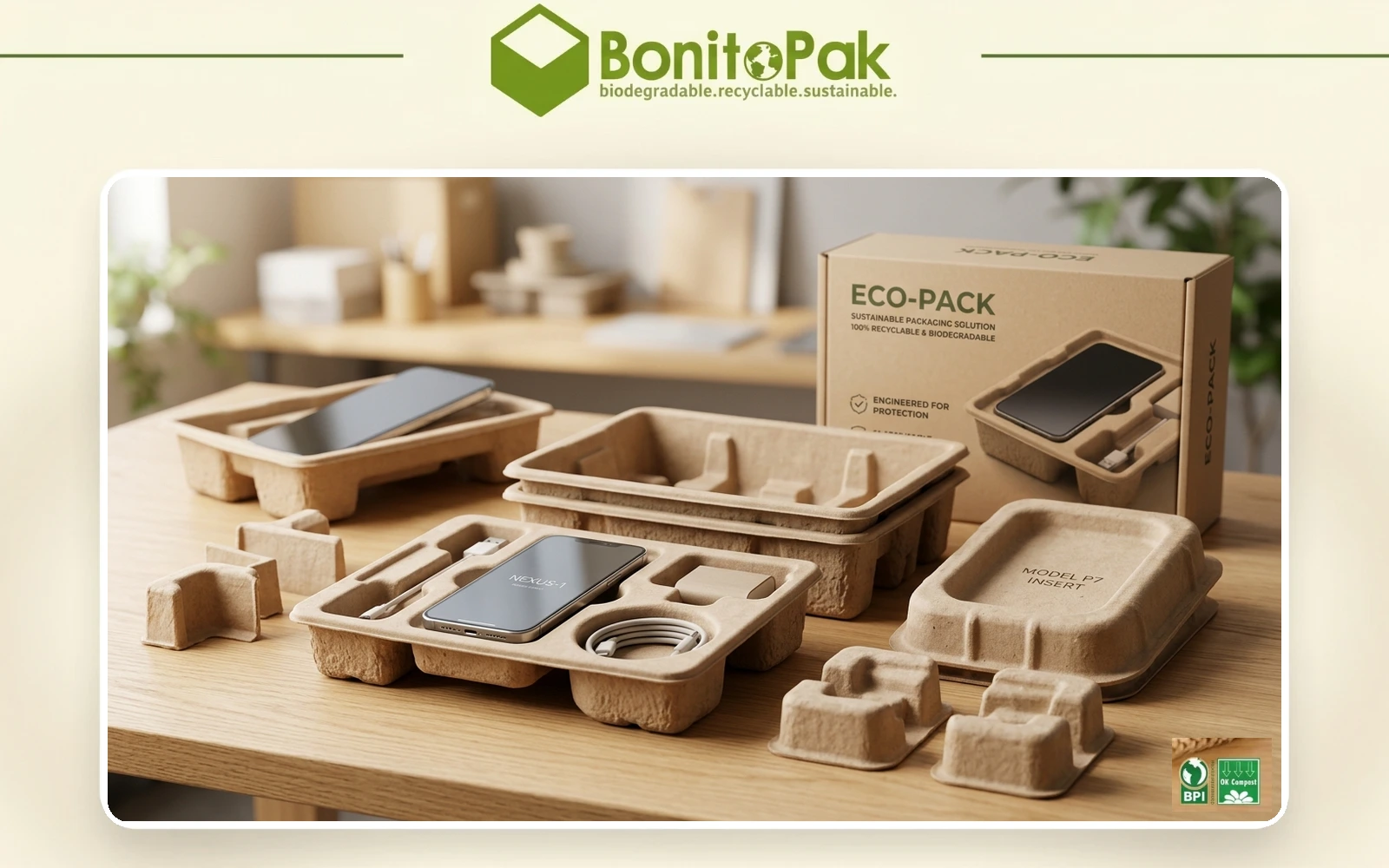
Yes, at the correct specification. Molded pulp absorbs shock through controlled deformation of the fiber wall. When an insert carrying a device experiences an impact, the cell walls compress and distribute energy across the fiber mass. The device experiences a lower peak acceleration than if it were in a rigid container.
Wet press molded pulp at 0.7 to 1.2mm wall density is the typical specification for premium consumer electronics packaging. The hot press stage densifies the fiber, giving the thinner wall its protective performance. For most consumer electronics applications, at the correct specification, molded pulp passes the same drop testing requirements as equivalent foam inserts.
Molded pulp vs foam vs plastic for electronics protection:
| Protection Factor | Wet Press Molded Pulp | EPS Foam | Plastic Insert (Thermoformed) |
| Shock absorption | Fiber deformation distributes impact load across wall mass | Compression and energy absorption through cell collapse | Rigid resistance, transmits impact to product |
| Drop test performance | Passes at correct wall specification | Passes at correct specification | Passes at correct specification |
| Vibration resistance | Good, fiber compliance reduces resonance | Excellent damping properties | Moderate |
| Surface contact | Fiber surface, gentle on finishes and coatings | Smooth, low friction | Smooth, rigid |
| Temperature range | -30 to 120 degrees C | Limited upper range, can off-gas at heat | Depends on plastic type used |
| End of life | Compostable, recyclable, no microplastics | Landfill, limited specialist recycling only | Recyclable in plastic stream if clean |
Electronics Products Using Molded Pulp Packaging
Smartphones and Mobile Accessories
Molded pulp inserts hold handsets upright in precise recesses with separate cells for cables, earbuds, and documentation. The insert positions everything correctly in the outer box during shipping and presents cleanly at unboxing.
Earbuds and Headphones
Shaped recesses hold earbuds in their case with slots for additional ear tips. One of the more technically demanding forms given the small radii and complex geometry involved.
Smartwatches and Wearables
Watch inserts hold the device face-up in a display-ready orientation. A strap slot or band recess keeps the strap positioned without creasing. The display-up presentation is part of the unboxing experience brands design intentionally.
Power Banks, Chargers, and Gaming Controllers
Heavier products at higher drop risk. Wall specification is typically thicker to handle the mass. Controllers use contoured recesses that hold complex exterior geometry without pressure points on any surface.
The Premium Unboxing Effect
Electronics brands figured out long ago that the unboxing experience is part of the product. Foam and plastic inserts were always the weak point in that experience. The outer box is premium. The insert is industrial. A quality mismatch the brand cannot control.
Black wet press molded pulp inserts close that gap. The smooth compressed fiber surface reads as deliberate. The dark color creates visual contrast with light-colored products. An embossed brand mark in the fiber adds identity without ink. A customer who opens a product box and lifts it from a black molded pulp insert with a clean embossed logo has a fundamentally different experience than one who peels product away from white foam.
Sustainability Credentials That Electronics Buyers Actually Need
Two credentials matter most in 2026: certification and supply chain transparency.
Certification means BPI under ASTM D6400 for North America and OK Compost under EN 13432 for Europe. Certificate numbers are publicly verifiable. A brand that claims certified compostable packaging can be fact-checked against the public registry in under a minute.
Supply chain transparency means being able to state where the fiber comes from, what the production process uses, and whether the facility can be audited. Sugarcane bagasse and recycled paper pulp are well-documented supply chains. Bonitopak’s Dongguan production has operated since 2016, serves brands across more than 50 countries, and can provide documentation supporting brand sustainability reporting on request.
How to Specify Molded Pulp Electronics Packaging
Start with your product files. 3D files in SolidWorks, Creo, IGS, or STEP format. Or physical product samples. Specify the packaging context: how the insert sits in the outer box, how many SKUs it holds, and what accessories are included. Specify the protection requirement: drop height, surface, and product weight. Specify the presentation requirement: orientation, color, emboss branding, lift point geometry.
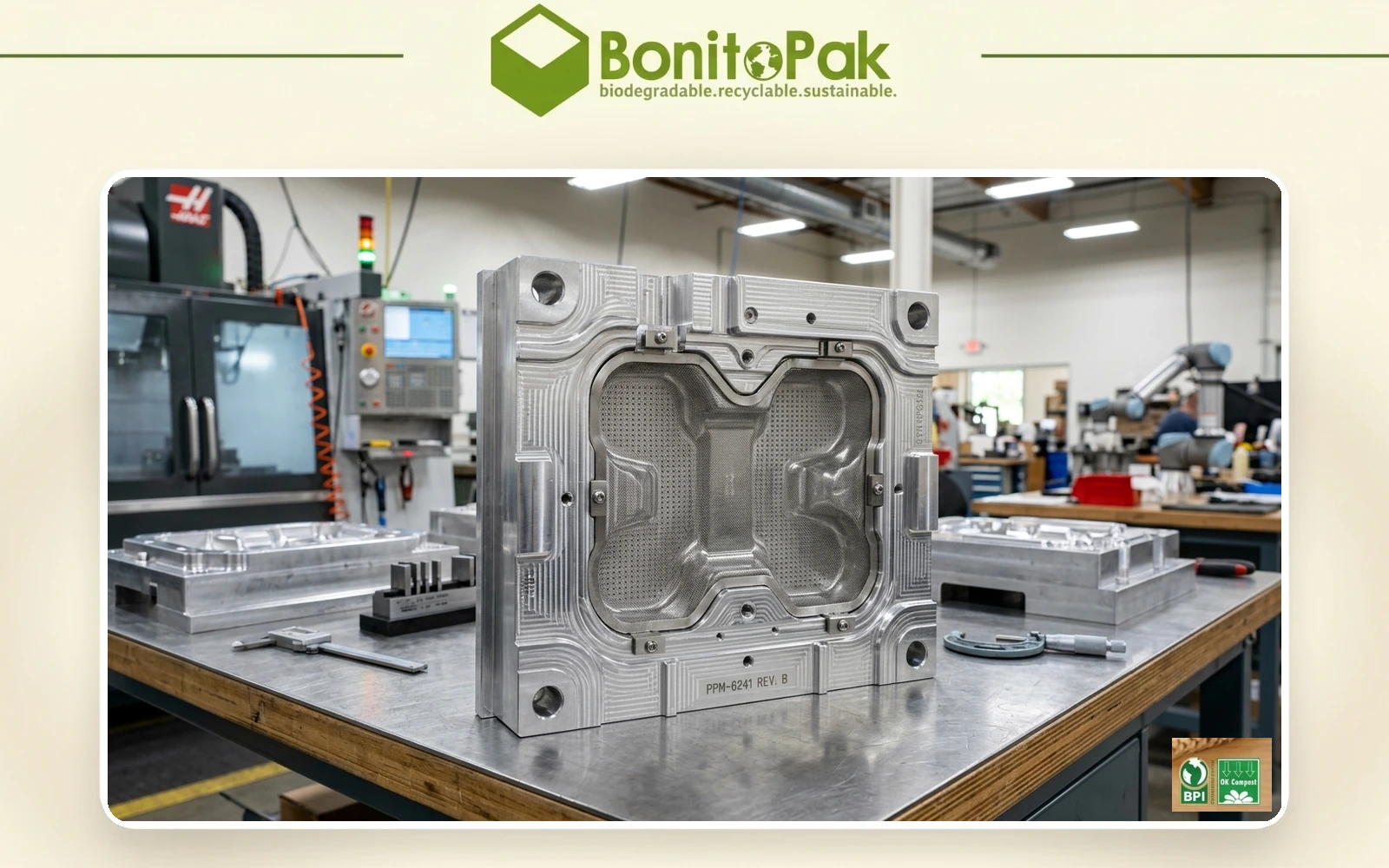
3D drawings in 2 days. Sample inserts in 7 days. Production tooling in 8 days after approval. MOQ from 1,000 pieces.
Frequently Asked Questions
Is molded pulp packaging strong enough to protect electronics?
Yes, at the correct specification. Wet press molded pulp at 0.7 to 1.2mm wall absorbs shock through controlled fiber deformation, distributing impact load across the wall mass rather than transmitting it to the device as a concentrated force. For most consumer electronics, this mechanism provides comparable drop and vibration protection to EPS foam at equivalent insert geometry. Protection is achieved through correct specification of wall thickness, recess depth, and clearance tolerances for the specific product weight and geometry.
What electronics products can use molded pulp packaging?
Molded pulp inserts are used for smartphones, earbuds, smartwatches, power banks, chargers, gaming controllers, laptops, tablets, cameras, wireless audio devices, and a wide range of consumer and commercial electronics accessories. Any product with a defined exterior geometry can have a custom insert designed around it using 3D files or physical samples. Products up to laptop and tablet size are regularly produced with this method.
How is molded pulp better than foam for electronics packaging?
Molded pulp composts at end of life, recycles in paper streams when clean, and biodegrades without leaving microplastic residue. Foam does none of these. On protective performance, both achieve comparable results at equivalent specification. On surface quality, wet press molded pulp produces a smooth premium surface that contributes to unboxing experience in a way foam cannot. On sustainability credentials, certified molded pulp with a verifiable BPI or OK Compost certificate satisfies brand commitments and EU PPWR requirements that foam cannot meet.
Can electronics molded pulp packaging be made in custom colors?
Yes. Bonitopak runs six in-pulp color systems: white, natural, black, orange, gray, and blue, all Pantone referenced with matching confirmed to better than 95% accuracy. Black is the most commonly specified for premium electronics inserts, creating visual contrast with light-colored devices and contributing to premium unboxing experience. Color is blended into the fiber slurry before forming so it runs through the full wall thickness and does not affect compostability.
What certifications do molded pulp electronics inserts carry?
Bonitopak’s food grade line holds BPI certification under ASTM D6400 for North America and OK Compost certification from TUV Austria under EN 13432 for Europe. Certification covers the finished insert as manufactured. Certificate numbers are publicly verifiable in the BPI registry and TUV Austria OK Compost database. For electronics brands making public sustainability commitments that will be audited by retailers and regulators, verifiable certificate numbers are the evidence standard that satisfies scrutiny.
How long does custom electronics molded pulp packaging take?
3D drawings return within 2 days of receiving your product files. Sample inserts with production-representative geometry are delivered in 7 days. Production mold is completed in 8 days after sample approval. Total tooling time from specification to production-ready mold is 15 to 17 working days, not including sample approval time. Production run lead time depends on order volume and shipping route. Inquiries receive a response within 24 hours.
Explore Custom Molded Pulp Electronics Packaging From Bonitopak
Bonitopak designs and manufactures custom molded pulp inserts for consumer electronics, accessories, and tech products. BPI and OK Compost certified. Six in-pulp colors, wet and dry press, emboss branding, Pantone matching. Dongguan production. Ships to more than 50 countries. MOQ from 1,000 pieces.
Contact Bonitopak to start your electronics packaging specification or explore the full sustainable packaging range.