 Skip to content
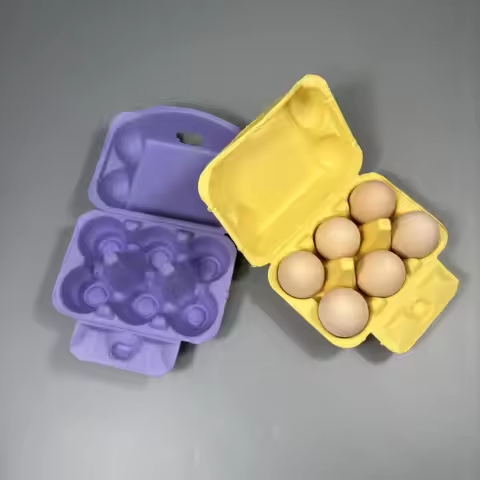
Most of the egg tray supply reaching USA poultry farms, distributors, and food brands is imported, not domestically molded which means the real question isn’t “is there a US supplier” but “which overseas manufacturer can you actually trust.” This guide covers what to check before importing molded pulp egg trays from a manufacturer like Bonitopak, based in Dongguan, China: materials, customization, sample timelines, and how to get a real MOQ.
Search “egg tray supplier in USA” and most of what you’ll find isn’t a domestic factory — it’s an importer, a distributor, or a China-based manufacturer like Bonitopak shipping directly to US buyers. That’s not a bait-and-switch; molded pulp egg tray manufacturing is concentrated overseas, and most “USA suppliers” are really sourcing the same way you could source directly.
For poultry farms, egg distributors, and food brands, that changes the real question. It’s not “who’s local,” it’s “which manufacturer can I trust to get color, cell count, and quality right, and actually ship on time.” This guide covers what to look for when sourcing egg trays for the USA market directly from a molded pulp manufacturer — materials, customization options, sample and mold lead times, and how MOQ actually gets set — using Bonitopak’s own process as the working example.
Why Most “Egg Tray Suppliers in the USA” Are Actually Importers
The majority of molded pulp egg trays sold in the USA are manufactured overseas, largely in China, and sold through importers, distributors, or direct from the manufacturer. Bonitopak, based in Dongguan, China, ships to buyers in more than 50 countries, including directly to USA-based businesses.
This isn’t unique to egg trays — most molded pulp packaging, from food containers to protective inserts, is manufactured in facilities with the fiber processing, mold tooling, and pressing lines to do it at scale, and that manufacturing base is concentrated in China. A “US supplier” you find online is very often reselling capacity from a factory like Bonitopak, sometimes with a markup and sometimes with less design flexibility than going direct.
That doesn’t mean going direct is automatically better for every buyer. A domestic distributor can offer smaller minimums, faster fulfillment from local stock, and a single point of contact if something goes wrong mid-shipment. But if you need a custom cell count, a specific color match, or better unit pricing at volume, sourcing directly from the manufacturer is usually where that flexibility actually lives.
Molded Pulp vs. Plastic and Foam Egg Trays
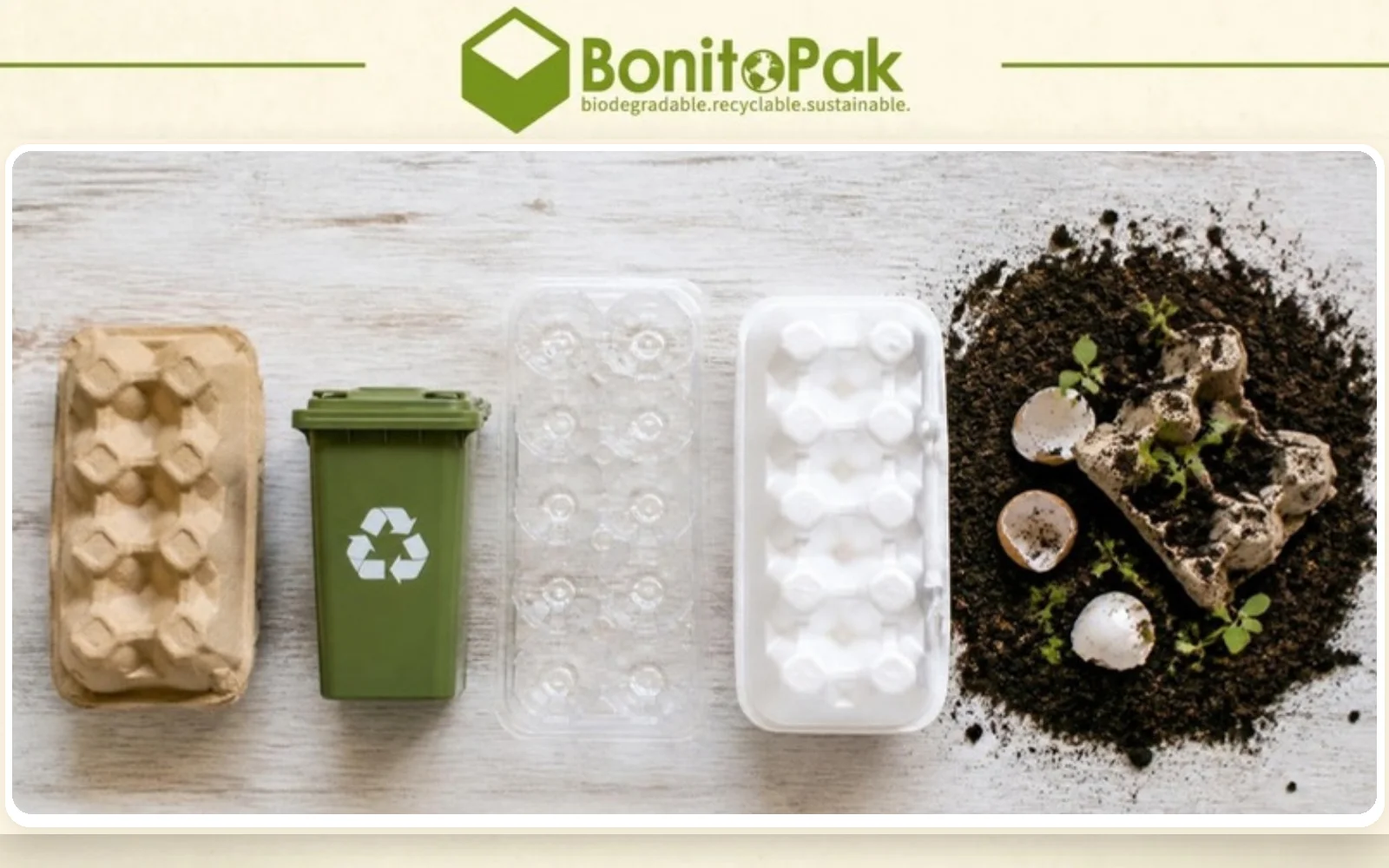
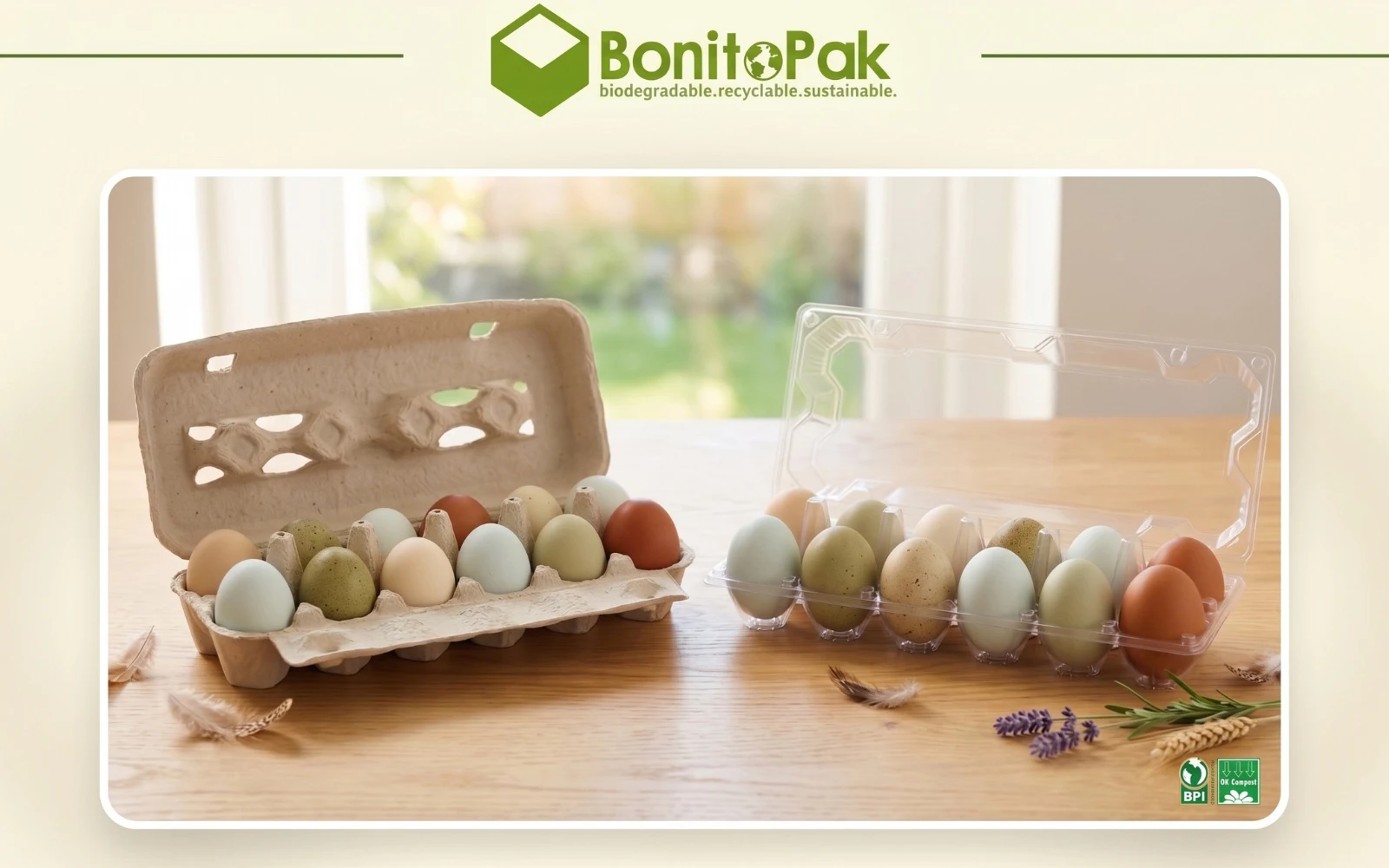
Molded pulp egg trays biodegrade within 90 days, compared to plastic and foam trays that persist in landfills for decades. USA buyers moving off plastic and foam packaging are the primary group searching for a molded pulp egg tray supplier in the first place.
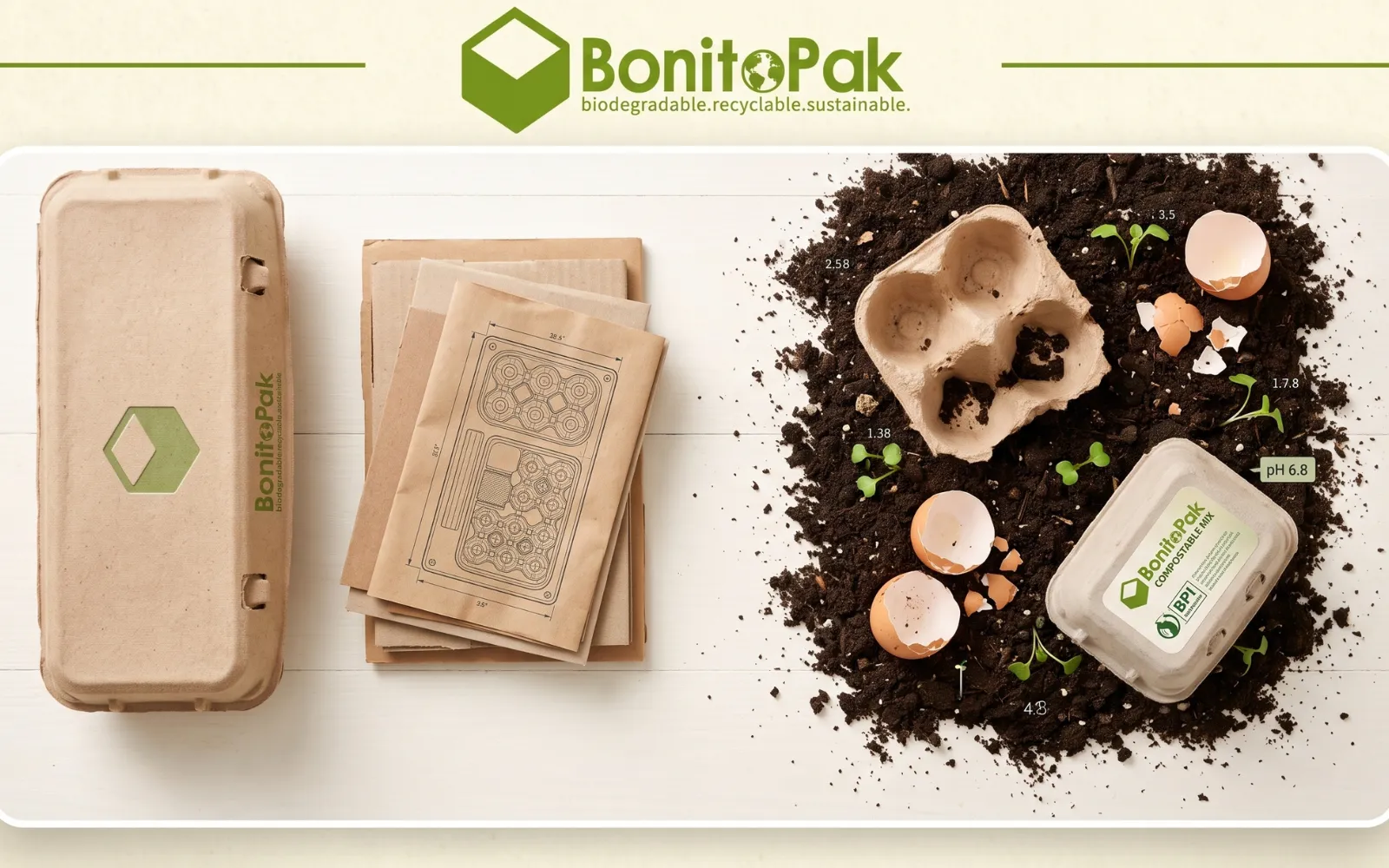
Plastic and foam egg trays are cheaper per unit in some cases, but they carry a growing cost most buyers didn’t have to account for a few years ago: retailer packaging mandates, state-level foam restrictions, and customer expectations that are shifting fast in grocery and food service. Molded pulp — made from sugarcane bagasse, bamboo fiber, wood pulp, or recycled paper — is compostable and biodegradable within 90 days, and it doesn’t require a plastics recycling stream that may not exist where your product ends up.
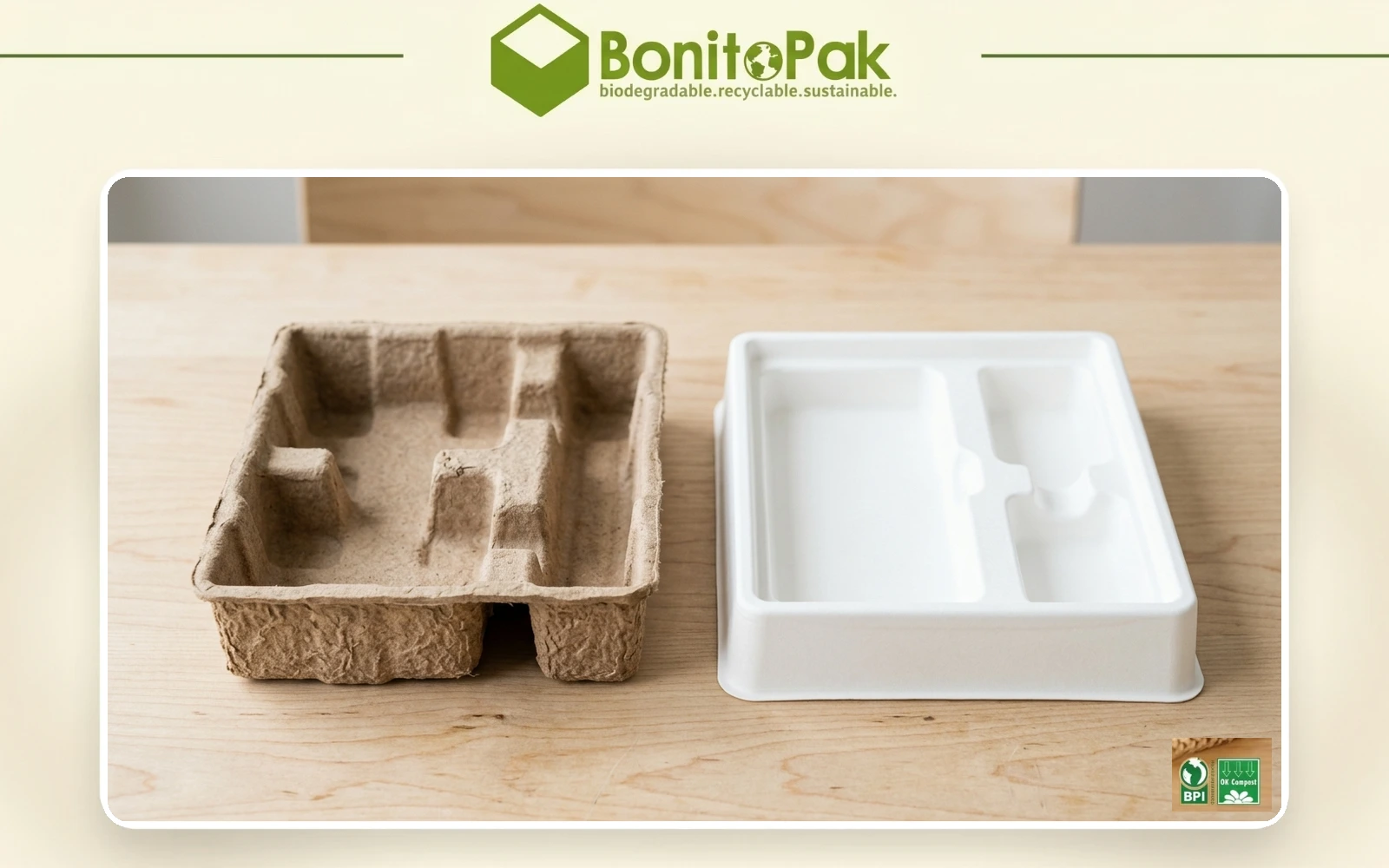
The tradeoff is largely aesthetic and structural, not material: pulp trays have a fiber texture rather than a smooth plastic finish, and wall thickness — 2.5–3.0mm for dry-pressed trays — is engineered to pass drop testing but behaves differently under load than rigid plastic. For most egg packaging use cases, that tradeoff is a non-issue.
What to Check Before You Commit to an Egg Tray Manufacturer
Before sending a deposit to any overseas manufacturer, a few things are worth confirming directly rather than assuming:
Response time.
If a sales inquiry takes a week to get a reply, a production issue will take longer. Bonitopak’s stated response time is within 24 hours.
Sample process.
A manufacturer should be able to get a physical sample in your hands, not just a rendering. Bonitopak’s sample timeline is 7 days from a confirmed design.
In-house vs. outsourced tooling.
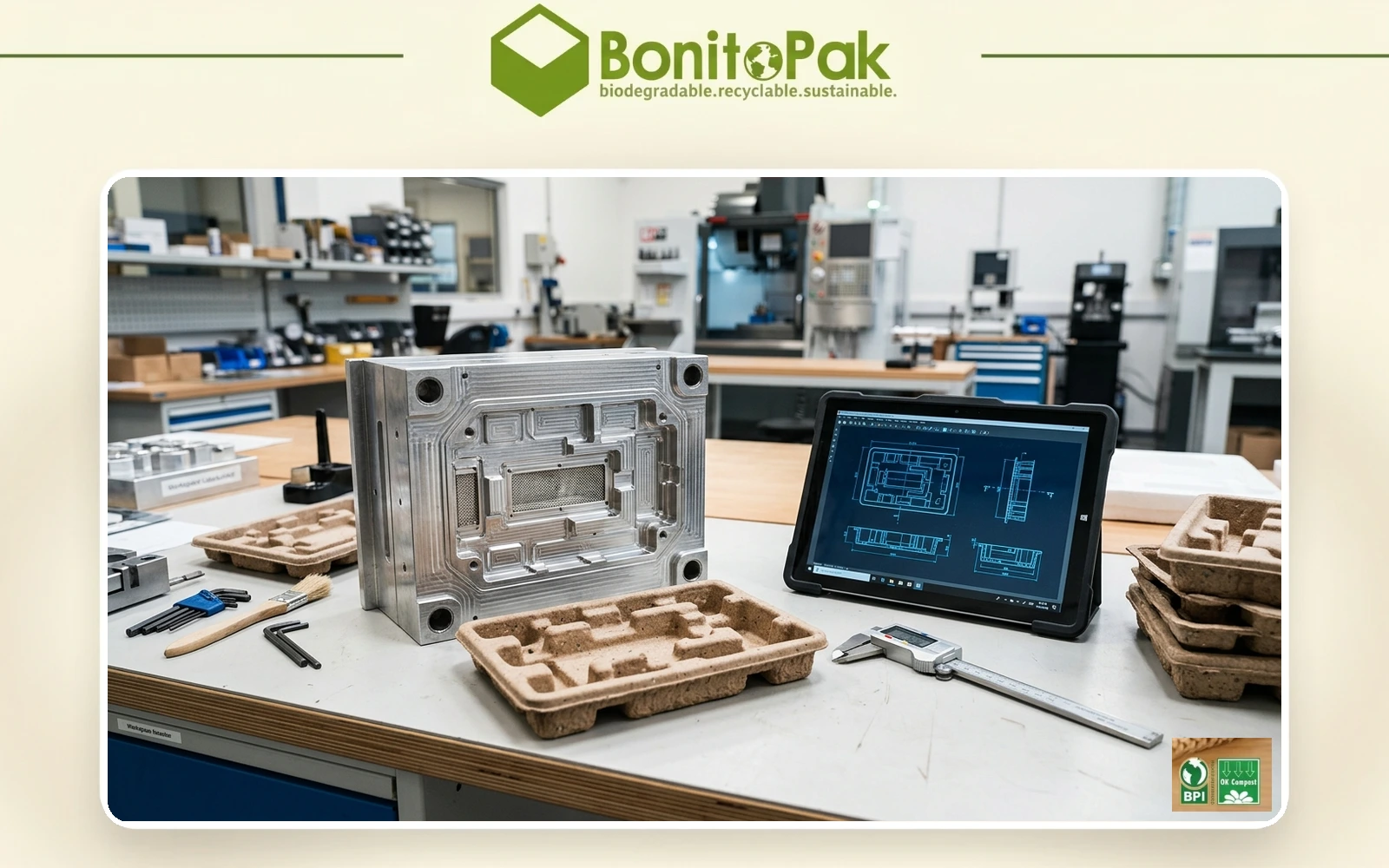
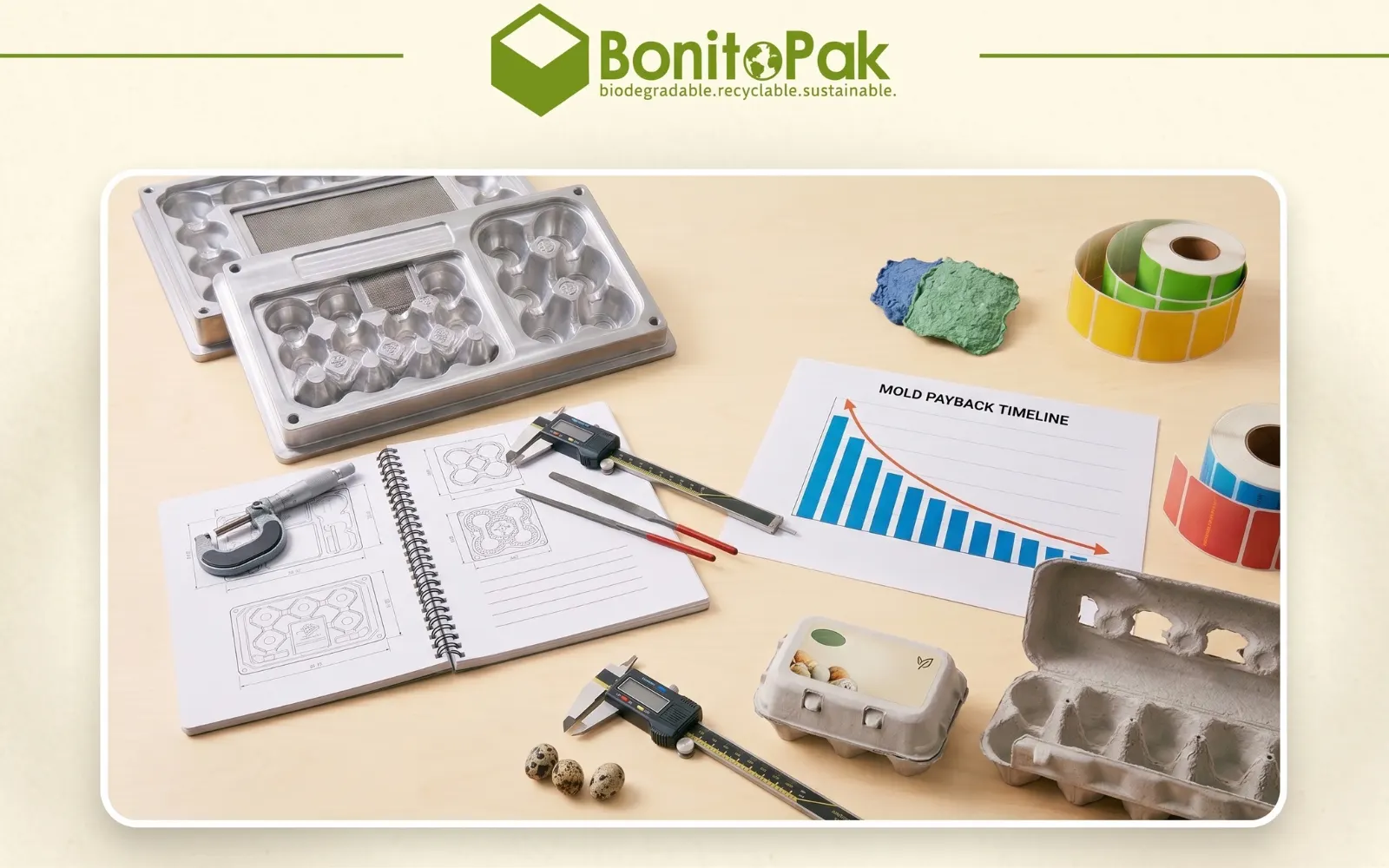
If a manufacturer designs and cuts molds in-house, changes are faster and cheaper. Bonitopak’s design team works in SolidWorks and Creo, accepting IGS and STEP files, and hands off directly to an in-house tooling team — no third-party mold shop in the loop.
Real numbers on MOQ and lead time.
These vary by design complexity and haven’t been published as flat figures by most manufacturers, Bonitopak included — get them in writing against your actual drawing before you commit, not off a general FAQ page.
Custom Egg Tray Options for USA Brands and Distributors
Bonitopak offers 6 color systems for egg trays — white, natural, black, orange, gray, and Pantone-matched blue — with custom color accuracy close to 95%, plus custom cell counts and branding through in-house mold tooling.
For egg cartons and trays specifically, color and cell count are the two customizations USA brands ask for most. White trays are bleached with hydrogen peroxide rather than chlorine-based bleach; natural trays are unbleached — both are the colors Bonitopak recommends when the tray is packaging food. Custom color matching runs close to 95% accuracy against a Pantone reference.
Cell count and dimensions are handled through the same mold design process used for any custom molded pulp product: a 3D drawing, a sample mold, then a production mold, running about two weeks end to end once a design is locked in. Confirm exact standard cell-count options (6, 12, 30-cell, etc.) directly with Bonitopak’s sales team when requesting a quote, since these aren’t published as a fixed catalog online.
Lead Times and the Realistic Timeline for Importing Egg Trays
Sourcing from an overseas manufacturer means planning around two timelines: the design/sample cycle and the shipping cycle. Bonitopak’s design and sample cycle is well-defined — 2 days for the initial 3D drawing, 7 days for a physical sample, 8 days for the production mold once the design is approved, so a custom egg tray design is roughly two weeks from first drawing to an approved production mold.
What happens after the mold is approved — full production run time, shipping method (sea, air, or express), port of origin, and transit time to a US port — depends on order volume and hasn’t been published as a fixed figure. Build your import timeline around a confirmed quote rather than an estimate, and ask specifically for a production-to-delivery timeline once your order size is set, not just a sample timeline.
MOQ and Getting a Quote
Minimum order quantities for custom egg trays are set by mold complexity and material, not a single number that applies across every design — which is normal for a manufacturer running custom tooling rather than off-the-shelf molds. The practical move is to send your design, or a reference sample, and ask for MOQ, unit pricing, and lead time together in one quote, rather than trying to reverse-engineer a number from a general FAQ page.
For most USA-based buyers evaluating a China-based manufacturer for the first time, that single quote request, with a real drawing attached, will tell you more about how the relationship will actually work than anything published on a website.
Conclusion
An “egg tray supplier in the USA” search usually leads back to the same place: a China-based manufacturer running the mold tooling and pressing lines that make custom egg trays possible in the first place. Bonitopak runs that process in-house at its Dongguan, China facility — sugarcane bagasse, bamboo, wood pulp, and recycled paper trays, biodegradable within 90 days, with a design-to-mold cycle of about two weeks and 6 color systems for brand matching.
If you’re sourcing for a poultry farm, distributor, or food brand, start with a design or reference sample. Request a quote from Bonitopak for MOQ, pricing, and lead time specific to your egg tray — or see the full spec sheet on the egg tray product page, and read more on what to check in any molded pulp packaging manufacturer before you commit.
Frequently Asked Questions
Is there a USA-based manufacturer for molded pulp egg trays?
Most molded pulp egg tray manufacturing is concentrated overseas, largely in China. Bonitopak, based in Dongguan, China, ships directly to USA buyers in the poultry, distribution, and food brand space rather than operating a domestic US factory.
What are molded pulp egg trays made of?
Bonitopak’s egg trays are made from sugarcane bagasse, bamboo fiber, and wood pulp (wet-pressed) or 100% recycled paper pulp (dry-pressed), and all are biodegradable and compostable within 90 days.
Can I get custom colors for egg trays?
Yes — Bonitopak offers 6 color systems (white, natural, black, orange, gray, and Pantone-matched blue) with custom color accuracy close to 95%.
How long does it take to get egg tray samples from an overseas manufacturer?
At Bonitopak, physical samples ship in 7 days once a design is confirmed, with the production mold ready in 8 days after that.
What’s the minimum order quantity for custom egg trays?
MOQ depends on mold complexity and design, so it’s quoted against your actual drawing rather than published as one fixed number — request a quote to get a figure specific to your order.
Do molded pulp egg trays pass drop testing?
Dry-pressed egg trays, built at a 2.5–3.0mm wall thickness, are engineered to pass standard drop testing.
How is Bonitopak different from a US-based egg tray distributor?
Bonitopak is the manufacturer, not a reseller — mold design, tooling, and both wet and dry pressing happen in-house at its Dongguan, China facility, which generally means more flexibility on custom cell counts, colors, and mold changes than buying through a distributor.

 English
  German
  Spanish
  French
  Russian
  Japanese
  Portuguese
  Arabic