 Skip to content
By Leo Chan | Writer, BonitoPak | 20+ years in molded pulp packaging
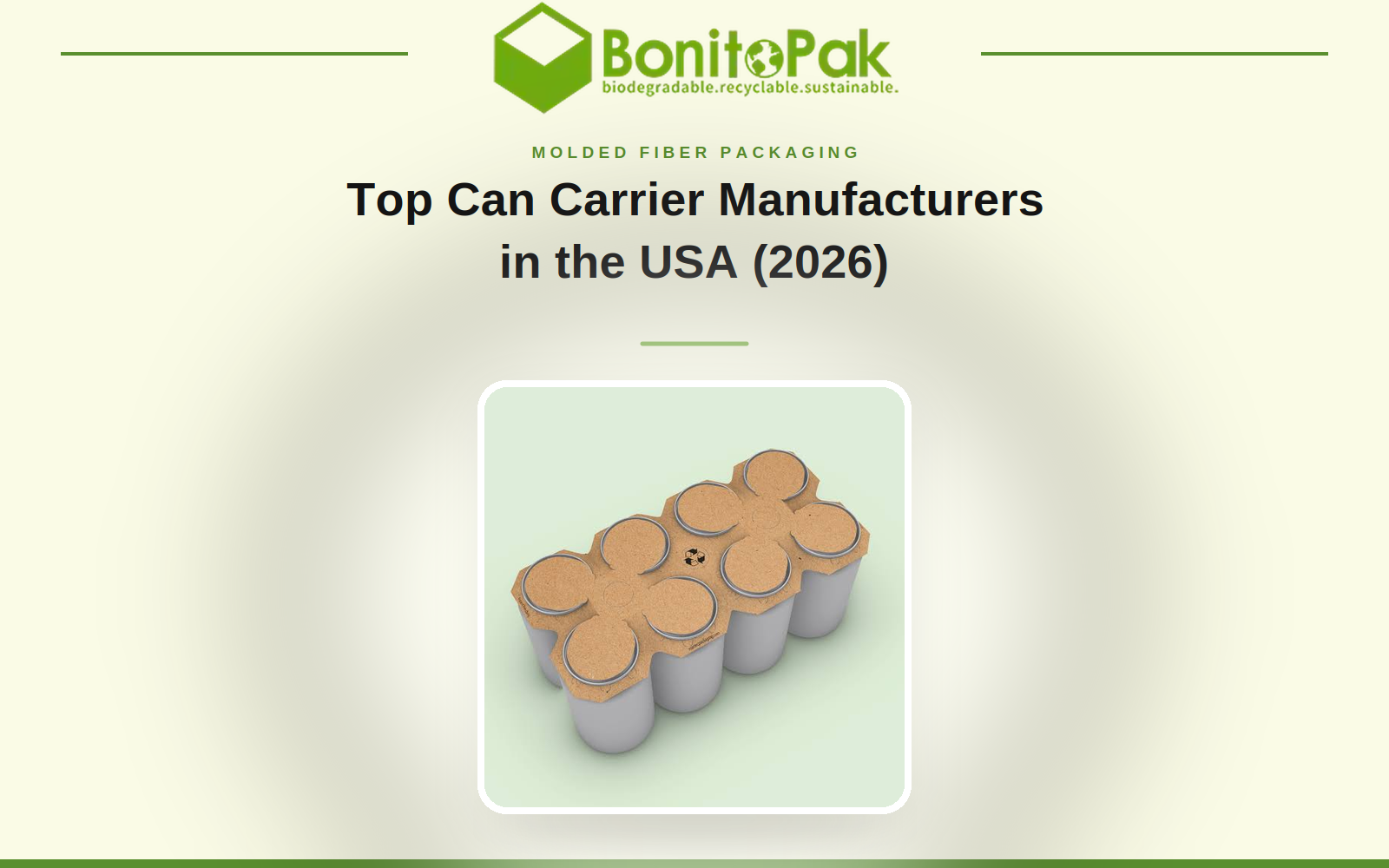
US can carrier supply divides by material: rigid recycled plastic handles led by PakTech, flexible plastic rings, paperboard clips and collars from large packaging groups, and a smaller molded fiber segment. Each has different economics, minimums and equipment requirements.
A disclosure first. BonitoPak manufactures molded fiber packaging in China and competes with part of this market. This is written as a market map rather than a ranking, because a ranking from a competitor is worth little.
The useful way to read can carrier manufacturers in the USA is by material rather than by company size, because material determines cost, equipment and end of life together.
Rigid Recycled Plastic Handles
PakTech
The dominant name in the US rigid handle segment and a genuinely American manufacturing story. Founded in 1991 in Eugene, Oregon as a plastic injection mold maker, the company was approached two years later by a local dairy wanting to sell two gallons of milk into a new club store without a cardboard box. Founder Jim Borg designed the first TwinPak carrier in response, and the business grew from there, as set out by Oregon Business and Industry.
Today it remains family owned, manufactures all handles and application machinery in Oregon, and reports over 250 local employees across two facilities. Handles are injection molded from 100 percent recycled HDPE, the same number 2 material used for milk jugs, and are themselves recyclable. It covers multipack configurations from one to twelve and builds its own automated in-line applicators, with company details published here.
| Detail | PakTech |
|---|---|
| Founded | 1991, Eugene, Oregon |
| Ownership | Family owned |
| Facilities | Eugene HQ plus Cottage Grove, Oregon, opened 2017 |
| Material | 100 percent recycled HDPE, number 2 |
| Range | Multipack handles for 1 to 12 configurations, plus applicators |
| Scale | Reported revenue around $75 million, 250+ local employees |
Published pricing runs roughly $96 per case of 510 units at low quantities down to about $87 at forty cases or more, which is $0.188 to $0.171 per unit. That narrow spread is worth noting: scale barely moves the price, because these are stock parts already produced at volume rather than a run commissioned for you. Buyers expecting the steep volume discounts common in custom manufacturing are often surprised by how flat the curve is here, and it changes the arithmetic of growing into a format.
Flexible Plastic Rings: Six Pack Ring Manufacturers
The original format and still the cheapest, at roughly five cents per pack, which is why it persists despite the pressure on it. Hi-Cone is the established name in this segment, producing low density polyethylene rings with recycled content. Grip-Pak and Craft-Pak also serve US producers, the latter with a narrower ring diameter.
Six pack ring manufacturers work in number 4 LDPE, which is thin flexible film. That is the hardest plastic category to collect, and most curbside programs exclude it. Store drop off streams exist but participation is low. This is the format under most regulatory pressure, and it is the reason most of the alternatives on this page exist.
Paperboard Multipack Carrier Suppliers
These multipack carrier suppliers are large diversified packaging groups rather than specialists, which changes the buying relationship considerably.
| Format | Supplier | Notable |
|---|---|---|
| KeelClip | Graphic Packaging International | Core formats 2×2 to 2×6, systems scale past 400 packs per minute |
| EnviroClip | Graphic Packaging International | Single ply, no adhesive or plastic lamination, 12oz and 16oz |
| CanCollar | Smurfit Westrock | No glue, relies on tooth geometry, automation to 240 cans per minute |
These are proven at high line speed and print well, which is why large beverage companies have adopted them internationally. The trade is that you are a small account to a very large supplier unless your volumes are substantial, and the equipment investment is real. For a producer running modest volumes, the responsiveness gap between a specialist and a multinational is often more decisive than any specification difference.
What to Verify Before Committing
Six checks that apply regardless of which beverage carrier company you approach.
- Confirm fit on your actual cans rather than nominal dimensions, since manufacturing tolerance between can suppliers is real and carriers are a close fit.
- Ask whether application is manual, semi automatic or requires dedicated equipment, and what that equipment costs.
- Ask for the recycled content percentage and whether the material is accepted curbside in your markets.
- Establish minimum order quantity and whether tooling is required for your can diameter.
- Ask how the carrier performs loaded and after refrigeration, since condensation on a full pack is the real test rather than a dry bench check.
- Check lead time on repeat orders, not just the first one, since stock availability varies seasonally.
Molded Fiber Carriers
The smallest US segment and the most fragmented. E6PR, originally developed as an eco six pack ring, offers formed fiber carriers in four and six count for both regular and sleek cans. World Centric supplies compostable fiber can rings. Neither operates at the manufacturing scale of the plastic or paperboard suppliers, and several products in this segment are produced overseas and distributed domestically, which is worth establishing rather than assuming when lead times matter.
Fiber carriers grip the can body rather than the rim, which spreads load over a larger contact area and suits heavier packs, but means separate tooling for each can diameter. We compare the two approaches in detail in our article on molded fiber versus paperboard can carriers.
Comparing Beverage Carrier Materials
| Material | Approx cost per pack | Line speed | Main constraint |
|---|---|---|---|
| Shrink film | About $0.03 | High | Worst disposal profile, needs store drop off |
| LDPE rings | About $0.05 | High | Film recycling only, under regulatory pressure |
| Rigid recycled HDPE | $0.17 to $0.19 | Manual to automated | Highest unit cost, remains plastic |
| Molded fiber | About $0.17 to $0.19 | Manual to mid speed | Tooling per can diameter, freight volume |
| Paperboard clip | Varies by format | Up to 400+ packs per minute | Equipment investment, coated grades |
Note that fiber is not the cheap option and never has been. Where it competes is on single material construction and end of life rather than on unit price, which we work through honestly in our guide to can carrier cost per unit.
Choosing Among US Can Carrier Suppliers
- Small volume, no equipment budget: rigid handles or fiber, both of which support manual application.
- Moderate volume, single can format: rigid handles or custom fiber, depending on whether plastic free matters.
- High line speed, large print requirement: paperboard clip systems from the large groups.
- Plastic free as a stated brand position: fiber, since rigid HDPE and LDPE both remain plastic.
- Multiple can diameters: favor top gripping formats, since body gripping needs a tool per diameter.
That last point catches people. A 202 end serves both 66mm standard and 57mm sleek bodies, so a carrier engaging the can top may span both formats while one engaging the body cannot. If your portfolio runs two or three diameters, that single fact can decide the supplier tier before any other consideration is reached.
What the Domestic Base Actually Looks Like
Two structural points are worth understanding before approaching anyone.
First, genuine US manufacturing in this category is concentrated. The rigid handle segment is dominated by one Oregon company that makes both the carriers and the machines that apply them, which is an unusual degree of vertical integration and a real advantage for buyers who want a single point of accountability.
Second, the paperboard segment is not a specialist market at all. It sits inside very large diversified packaging groups for whom can carriers are one product line among hundreds. That affects responsiveness, minimum volumes and how much design attention a smaller account receives, which is worth factoring in alongside the technical comparison.
The fiber segment falls between the two and is the least consolidated, which cuts both ways. There is more willingness to work on custom geometry, and less scale behind delivery commitments.
What We See From the Manufacturing Side
We produce molded fiber packaging in Chashan Town, Dongguan, so we sit in the smallest of the four segments described and outside the United States. A few honest observations.
Domestic supply wins on speed and simplicity
For a producer needing carriers next month in a standard format, a US supplier shipping stock from Oregon will serve you better than we will. No tooling, no ocean freight, no customs. That is not a close call and we say so to enquiries regularly.
Where custom fiber genuinely applies
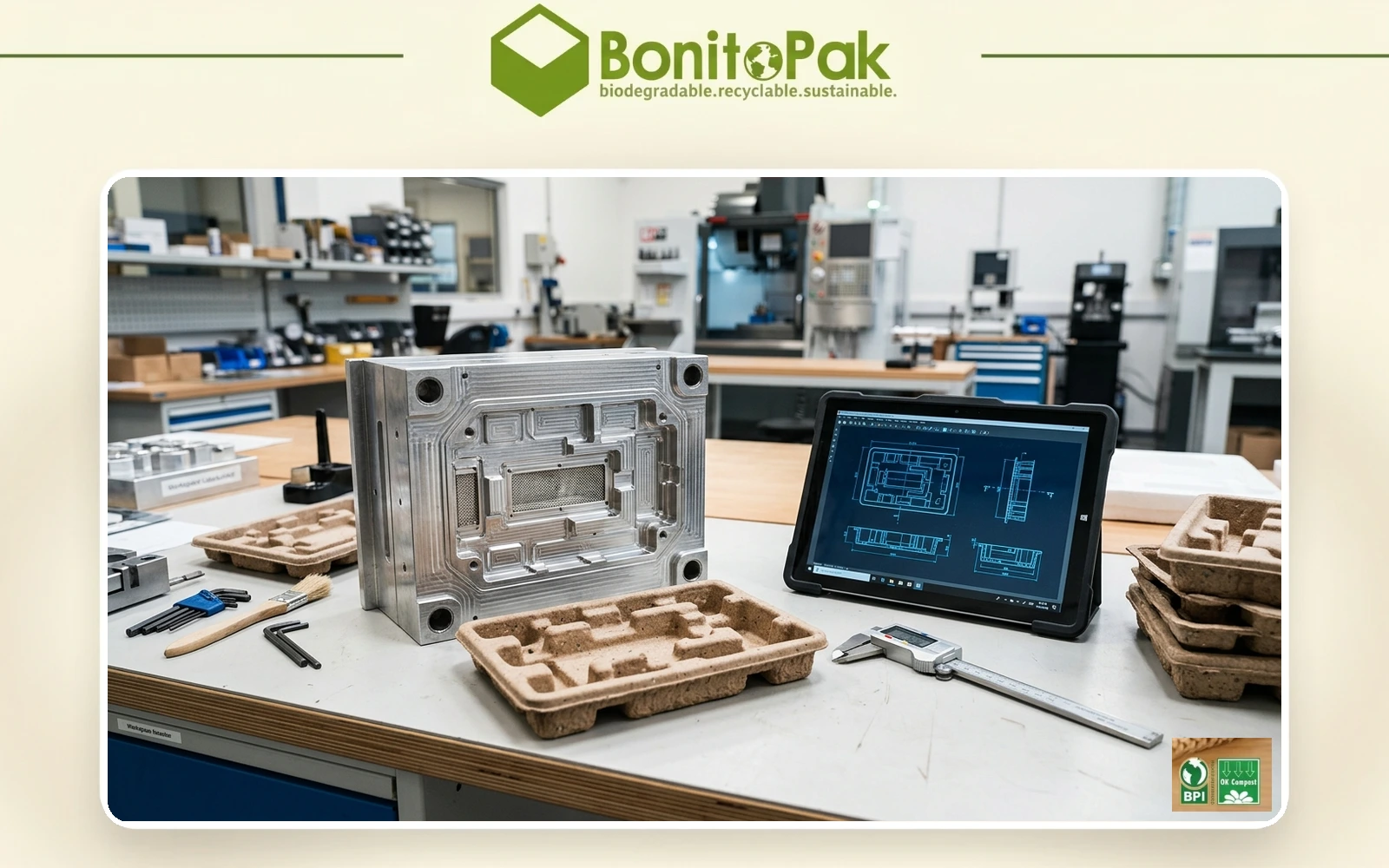
Geometry cut to your specific cans, colored or embossed carriers at volume, unusual counts, or a single material uncoated construction for a compostability route. Those require tooling rather than a catalog selection. Sample molds run in about seven days and production molds around eight days after geometry approval, with minimums from 1,000 pieces, and options are on our custom molded pulp packaging page.
A carrier is a structural part
Whichever supplier you use, the question that matters is how the carrier behaves loaded and wet. It holds full contents in tension from the rim while being carried one handed, which is closer to our industrial and protective pulp packaging work than to a tray. We specify wall thickness from roughly 0.8 to 3mm against loaded weight, using dry pressing for rigidity and wet pressing where surface finish matters.
Putting This Into Practice
Start from material rather than from a list of can carrier manufacturers in the USA, because material determines cost, equipment and disposal together and eliminates most of the market immediately. Then check line speed and equipment, since retrofitting a filling line is the most expensive variable in this comparison.
For most US producers below high speed, the practical shortlist is rigid recycled handles from a domestic supplier or custom fiber from a manufacturer, and the deciding question is whether plastic free is a stated brand position or merely a preference.
At BonitoPak we are the right answer for a narrow set of situations described here and the wrong one for plenty of others. Where we fit is custom geometry, colored or embossed fiber carriers and single material construction at volume.
Frequently Asked Questions
Q: Which US can carrier suppliers are largest?
A: By visibility in the rigid handle segment, PakTech, which reports roughly $75 million in revenue and operates two Oregon facilities. Paperboard clip systems are supplied by much larger diversified packaging groups.
Q: Can I buy carriers without buying an applicator?
A: Yes. Several suppliers offer manual application, which suits low volume production. Applicator equipment becomes worthwhile once labor per pack exceeds the amortized cost of the machine.
Q: Are any US made carriers compostable?
A: Fiber based options exist, though the segment is smaller than the plastic and paperboard ones. Compostability claims should be checked against certification of the finished part rather than the base material.
Q: Do these suppliers make carriers for sleek cans?
A: Most cover standard and sleek formats, though the mechanism differs. Top gripping designs often span both because a 202 end serves both bodies, while body gripping designs need separate tooling.
Q: What is the realistic minimum order?
A: Rigid carriers ship in cases of several hundred, so a small producer can start easily. Custom molded formats carry manufacturing minimums measured in thousands of pieces plus tooling.

 English
  German
  Spanish
  French
  Russian
  Japanese
  Portuguese
  Arabic