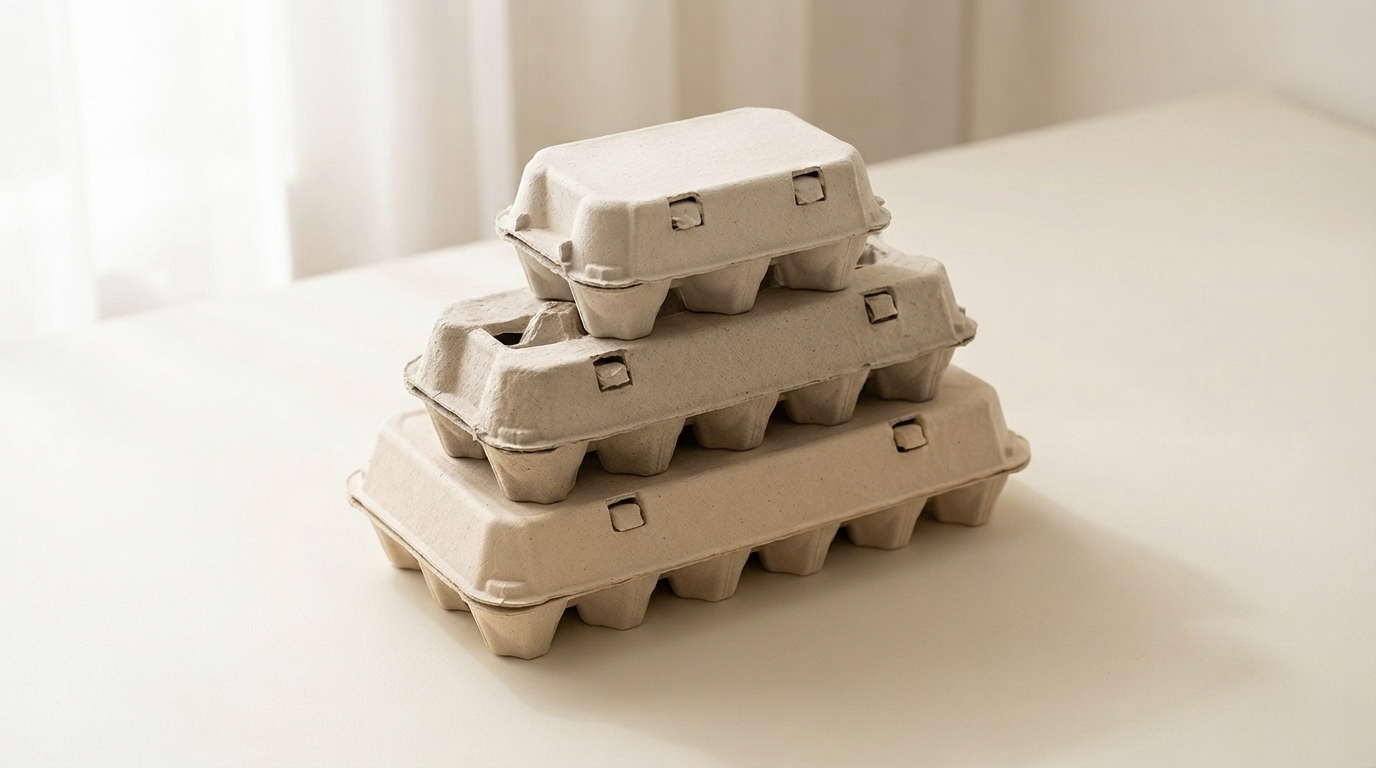
Goose, Turkey and Bantam Egg Cartons

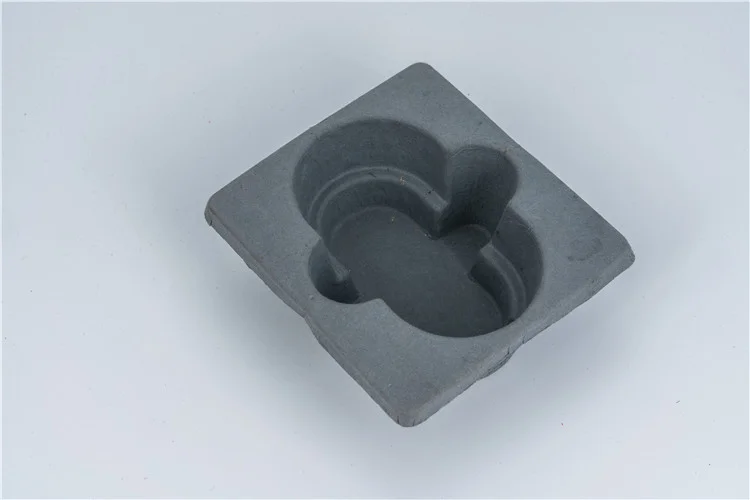
  • Three distinct cell geometries, one for each bird, not one compromise mold
  • Goose: deep wide cells for eggs up to 200 g, in 2, 4, and 6 counts
  • Turkey: intermediate cells between chicken jumbo and goose, in 6 and 12 counts
  • Bantam: shallow narrow cells for eggs around 30 g, in 6, 12, and 18 counts
  • Formed from 100% recycled paper pulp, biodegradable and home compostable
  • Low minimum orders, because specialty flocks produce specialty volumes
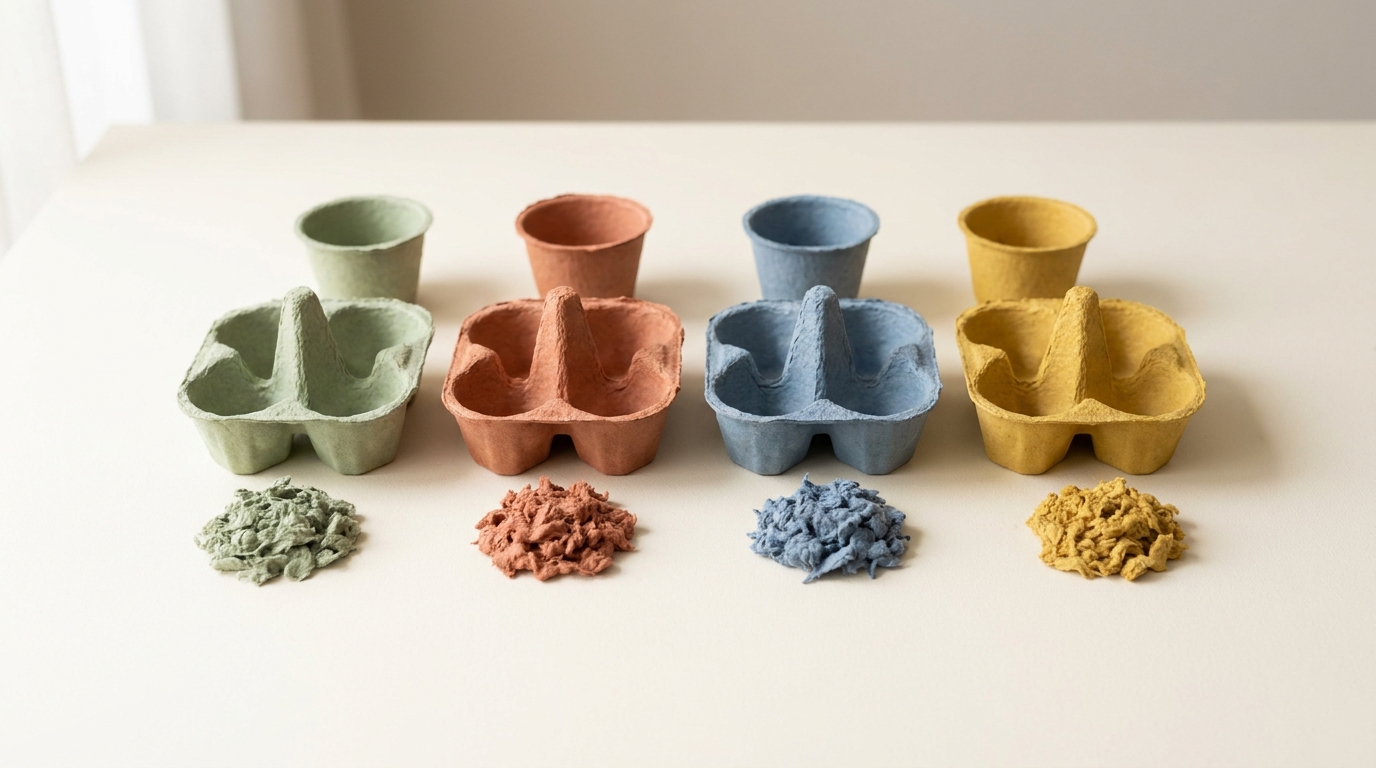
  • Natural pulp plus six stock colors; custom shade matching available

القالب العام

حلول التعبئة والتغليف

تصميم ثلاثي الأبعاد

قالب مخصص حسب الطلب

وصف المنتج

المواصفات التفاصيل
اسم العلامة التجارية بونيتوباك
رقم الموديل EC-GO / EC-TU / EC-BA series
اسم المنتج Goose, Turkey and Bantam Egg Cartons
المواد لب الورق المعاد تدويره
نوع الورق Post-consumer recycled paper
التقنية Molded pulp forming (wet-pressed)
Goose Cell Count 2, 4, or 6 cells
Goose Egg Range 140 to 200 g, Embden and Toulouse
Turkey Cell Count 6 or 12 cells
Turkey Egg Range 75 to 95 g
Bantam Cell Count 6, 12, or 18 cells
Bantam Egg Range 25 to 35 g, Silkie, Serama, Sebright
اللون Natural pulp; six stock colors; custom color matching
الشكل والأسلوب Top-fold clamshell with front locking tab
طباعة الشعار Embossed, debossed, or flexographic print
الاستخدام الصناعي Specialty poultry, heritage breeders, farm direct, gourmet retail
التطبيق Retail specialty egg packs, breeder sales, hatching egg transport
الحجم OEM and custom dimensions accepted
المزايا Biodegradable, home compostable, nestable, plastic free
التعبئة والتغليف Bulk nested in export cartons; custom packing accepted
طلب مخصص مقبولة
موك Low minimums on stock molds; confirm with sales

معرض الصور Goose, Turkey and Bantam Egg Cartons الأجزاء

يعرض هذا المعرض الجودة الاستثنائية والاهتمام بالتفاصيل التي نقدمها في كل مشروع. من التصاميم المعقدة إلى اللمسات النهائية الخالية من العيوب، تعكس كل صورة التزامنا بالتميز في Goose, Turkey and Bantam Egg Cartons .

40%

التكلفة والوقت الموفر

اختبر حلول التعبئة والتغليف الرائدة التي تعمل على تحسين التكاليف والوقت وتقديم عمليات فعالة وتعظيم العائد على الاستثمار.

50%

أكثر استدامة

حقق تغليفاً صديقاً للبيئة باستخدام مواد مستدامة، مما يقلل من النفايات ويعزز المسؤولية البيئية في جميع خطوط إنتاجك.

25%

الزيادة في المبيعات

عزز من جاذبية منتجاتك على الرفوف بتصميمات مبتكرة تعزز من ظهورها ومبيعاتها في أسواق التجزئة والأسواق الإلكترونية.

100%

أكثر موثوقية

ثق في التزام BonitoPak بالجودة، مما يضمن أن كل منتج يفي بمعاييرنا العالية مع خدمة متسقة وموثوقة.

Three birds, three problems, one page

These three are grouped because they share a commercial situation, not because they share a carton. Each needs its own mold, and the reasons are worth taking separately.

What they have in common is that they are produced by small flocks in quantities no large converter will tool for. That is why specialty keepers end up packing in whatever chicken carton fits least badly, and why it is worth stocking molds that actually fit.

Goose: the size problem

A goose egg from an Embden or Toulouse weighs between 140 and 200 grams. That is roughly three large chicken eggs in one shell.

No chicken carton holds one. The egg does not fit the cell at any depth, and attempts to pack geese in chicken cartons usually end with the eggs laid loose in the carton with the dividers crushed down, which protects nothing.

The goose mold uses cells roughly twice the diameter of a chicken cell and considerably deeper. The footprint is large enough that a six count goose carton approaches the size of an eighteen count chicken carton.

Counts run low because production is low. A goose lays seasonally, typically 20 to 50 eggs a year against 250 or more for a laying hen. Two and four count cartons are the realistic retail formats, and six is usually the maximum worth stocking.

Goose shells are thick and strong, so the protection requirement is lower than the size requirement. The mold exists because the egg needs somewhere to sit, not because it is fragile.

Turkey: the awkward middle

Turkey eggs sit between chicken jumbo and goose, around 75 to 95 grams, which puts them in the worst position of the three.

They are too large for a chicken carton, including a deep bed jumbo mold, where the lid closes on the shell. They are far too small for a goose cell, where they roll freely and knock against the walls.

The turkey mold is dimensioned specifically for that gap. Cells are deeper and wider than our deep bed chicken spec but well short of goose.

Turkey eggs also have a distinctly more pointed profile than chicken, with a noticeably tapered narrow end, which means they seat lower at the point. The cell profile accounts for that taper rather than assuming a chicken-shaped oval.

Most turkey egg demand is for hatching rather than eating, since turkey eggs are rarely sold as food at scale. Breeders shipping fertile eggs are the main buyers, and immobilization matters more to them than cushioning.

Bantam: the small end

Bantam eggs run around 25 to 35 grams, roughly half a standard chicken egg, from Silkie, Serama, Sebright and other true bantam breeds.

They face the same problem as quail, one step up. In a chicken cell a bantam egg sits at the bottom of a cup far wider than it is, with nothing holding it. It rolls, contacts its neighbors, and chips.

The bantam mold uses shallower, narrower cells that hold the egg at its widest point. Counts run higher than the other two because bantam hens lay reasonably well, so 12 and 18 counts are both practical.

Bantam eggs are sold mostly to specialty and novelty retail, and to breeders. Silkie eggs in particular carry a following in several Asian markets where they are valued above standard chicken eggs.

Seasonality changes how you should order

Goose and turkey both lay seasonally, concentrated in spring, against a laying hen that produces most of the year. That turns carton buying into an annual decision rather than a rolling one.

Producers in these categories should order their full season’s requirement ahead of the laying period rather than reordering through it, because a mid-season stockout cannot be solved quickly when production and sea freight both sit in the path. Bantams lay more evenly and do not carry the same constraint.

Why these molds are hard to find

Tooling economics. A mold costs the same to cut whether it will run ten thousand cartons or ten million, so converters tool for volume. Goose, turkey, and bantam together are a rounding error against commercial chicken production.

The result is a market served badly. Specialty keepers in these three categories are used to compromising, and a correctly sized carton is a genuine differentiator for a producer selling at a farmers market where every other stall is using repurposed packaging.

We hold stock molds for all three specifically so small flocks can order realistic quantities without funding tooling.

Related formats

Producers running quail should go to molded pulp quail egg cartons, which is a separate geometry again and not interchangeable with bantam despite the similar egg size.

Duck sits between turkey and chicken in most dimensions and has its own mold at molded pulp duck egg cartons.

Keepers running a standard flock alongside specialty birds should see the molded pulp chicken egg carton page for the grade and cell depth detail. For small gift and sampler counts across any bird, the molded pulp 4 egg carton is cut deep enough to take most specialty sizes below goose.

Three birds, three problems, one page

These three are grouped because they share a commercial situation, not because they share a carton. Each needs its own mold, and the reasons are worth taking separately.

What they have in common is that they are produced by small flocks in quantities no large converter will tool for. That is why specialty keepers end up packing in whatever chicken carton fits least badly, and why it is worth stocking molds that actually fit.

Goose: the size problem

A goose egg from an Embden or Toulouse weighs between 140 and 200 grams. That is roughly three large chicken eggs in one shell.

No chicken carton holds one. The egg does not fit the cell at any depth, and attempts to pack geese in chicken cartons usually end with the eggs laid loose in the carton with the dividers crushed down, which protects nothing.

The goose mold uses cells roughly twice the diameter of a chicken cell and considerably deeper. The footprint is large enough that a six count goose carton approaches the size of an eighteen count chicken carton.

Counts run low because production is low. A goose lays seasonally, typically 20 to 50 eggs a year against 250 or more for a laying hen. Two and four count cartons are the realistic retail formats, and six is usually the maximum worth stocking.

Goose shells are thick and strong, so the protection requirement is lower than the size requirement. The mold exists because the egg needs somewhere to sit, not because it is fragile.

Turkey: the awkward middle

Turkey eggs sit between chicken jumbo and goose, around 75 to 95 grams, which puts them in the worst position of the three.

They are too large for a chicken carton, including a deep bed jumbo mold, where the lid closes on the shell. They are far too small for a goose cell, where they roll freely and knock against the walls.

The turkey mold is dimensioned specifically for that gap. Cells are deeper and wider than our deep bed chicken spec but well short of goose.

Turkey eggs also have a distinctly more pointed profile than chicken, with a noticeably tapered narrow end, which means they seat lower at the point. The cell profile accounts for that taper rather than assuming a chicken-shaped oval.

Most turkey egg demand is for hatching rather than eating, since turkey eggs are rarely sold as food at scale. Breeders shipping fertile eggs are the main buyers, and immobilization matters more to them than cushioning.

Bantam: the small end

Bantam eggs run around 25 to 35 grams, roughly half a standard chicken egg, from Silkie, Serama, Sebright and other true bantam breeds.

They face the same problem as quail, one step up. In a chicken cell a bantam egg sits at the bottom of a cup far wider than it is, with nothing holding it. It rolls, contacts its neighbors, and chips.

The bantam mold uses shallower, narrower cells that hold the egg at its widest point. Counts run higher than the other two because bantam hens lay reasonably well, so 12 and 18 counts are both practical.

Bantam eggs are sold mostly to specialty and novelty retail, and to breeders. Silkie eggs in particular carry a following in several Asian markets where they are valued above standard chicken eggs.

Seasonality changes how you should order

Goose and turkey both lay seasonally, concentrated in spring, against a laying hen that produces most of the year. That turns carton buying into an annual decision rather than a rolling one.

Producers in these categories should order their full season’s requirement ahead of the laying period rather than reordering through it, because a mid-season stockout cannot be solved quickly when production and sea freight both sit in the path. Bantams lay more evenly and do not carry the same constraint.

Why these molds are hard to find

Tooling economics. A mold costs the same to cut whether it will run ten thousand cartons or ten million, so converters tool for volume. Goose, turkey, and bantam together are a rounding error against commercial chicken production.

The result is a market served badly. Specialty keepers in these three categories are used to compromising, and a correctly sized carton is a genuine differentiator for a producer selling at a farmers market where every other stall is using repurposed packaging.

We hold stock molds for all three specifically so small flocks can order realistic quantities without funding tooling.

Related formats

Producers running quail should go to molded pulp quail egg cartons, which is a separate geometry again and not interchangeable with bantam despite the similar egg size.

Duck sits between turkey and chicken in most dimensions and has its own mold at molded pulp duck egg cartons.

Keepers running a standard flock alongside specialty birds should see the molded pulp chicken egg carton page for the grade and cell depth detail. For small gift and sampler counts across any bird, the molded pulp 4 egg carton is cut deep enough to take most specialty sizes below goose.
مواد ل Goose, Turkey and Bantam Egg Cartons قطع الغيار

تعتمد الشركات الرائدة والمهندسون الرائدون على BonitoPak في التكرارات السريعة والأجزاء المتينة عالية الجودة. سواء كان ذلك للنماذج الأولية أو للإنتاج على نطاق واسع، فإن مجموعتنا الواسعة من المواد تضمن تلبية المتطلبات الفريدة لأي Goose, Turkey and Bantam Egg Cartons المشروع بدقة وسرعة.

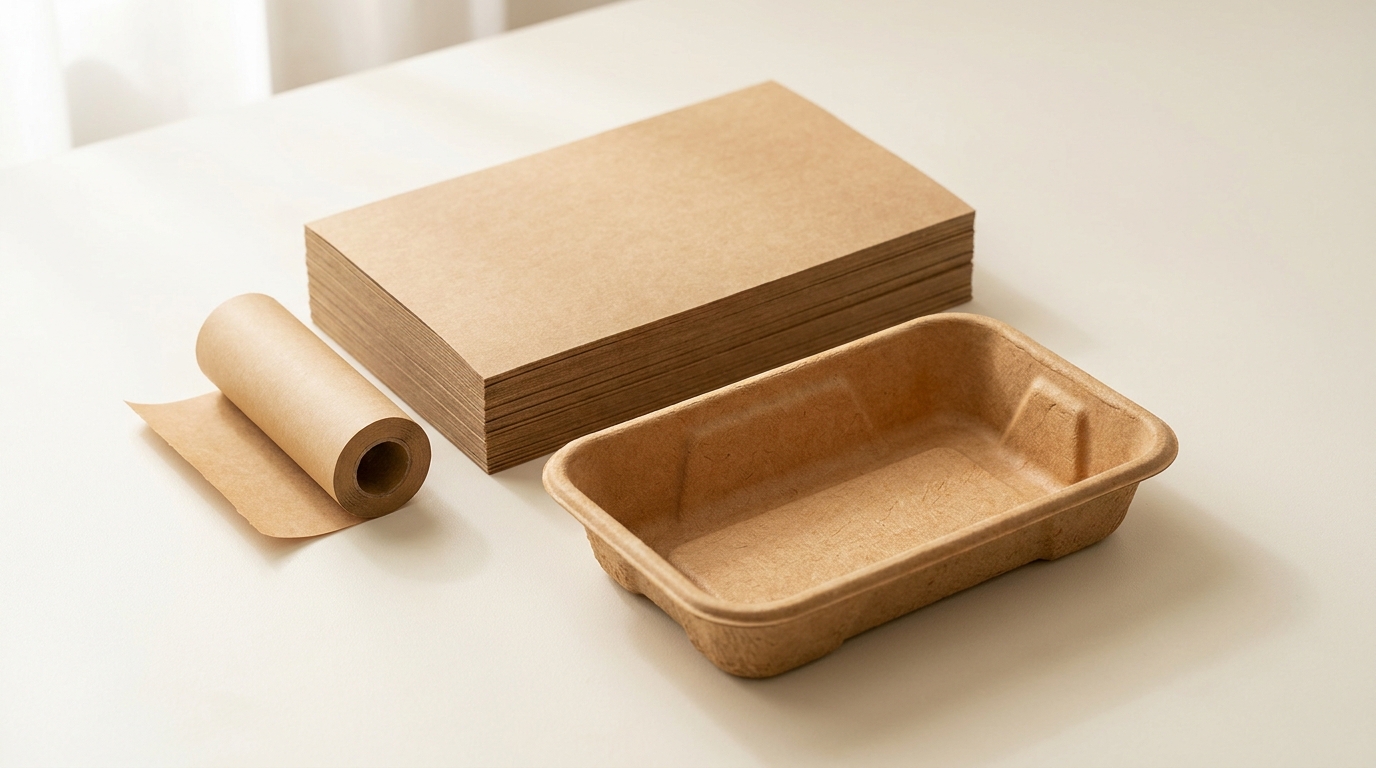
Compostable kraft paper is the strongest fiber we form. Made from virgin

Colored pulp is not a separate fiber. It is any of our

Bleached pulp is the material to specify when the part has to

Natural plant fiber covers the non-wood cellulose sources we blend outside the

Corrugated paper as a molded pulp material means recovered cardboard boxes repulped

Straw fiber is made from the stalks left after grain harvest, material

صديقة للبيئة وموثوقة ومخصصة وموثوقة

تعبئة وتغليف مخصص وصديق للبيئة بامتياز

قابل للتخصيص بالكامل

خصص عبواتك بأنماط وأحجام وألوان ولمسات نهائية مصممة خصيصًا لتلبية احتياجاتك الخاصة.

دعم الخبراء

تقدم بونيتوباك مشورة الخبراء في مجال التصميم والخدمات اللوجستية لزيادة كفاءة التعبئة والتغليف إلى أقصى حد وتعزيز العائد على الاستثمار.

الحلول البيئية

اختر عبوات مستدامة وصديقة للبيئة لتقليل الأثر البيئي ودعم أهداف علامتك التجارية الخضراء.

ضمان الجودة

تضمن بونيتوباك خدمة عالية الجودة ومنتجات متميزة مع كل حل من حلول التعبئة والتغليف.

الأسئلة المتكررة

Goose, Turkey and Bantam Egg Cartons

  • Do you make a combined carton for mixed specialty eggs?

    No, and we would advise against one. A carton with cells of several sizes wastes space on every cell that is not filled, and it only works if a producer reliably has one of each bird on hand at packing time, which almost nobody does. Separate cartons per bird is the practical answer.

  • Why do goose cartons cost more per egg than chicken cartons?

    Fiber quantity and freight. A goose cell uses several times the material of a chicken cell, and the larger footprint means far fewer cartons per container. Against goose egg pricing, which is substantially above chicken, the packaging cost per egg sold remains proportionate.

  • Are turkey eggs actually sold for eating?

    Rarely at commercial scale, and the economics explain why. A turkey hen lays far fewer eggs than a laying hen and the bird is worth more as meat, so the eggs are usually set for hatching rather than sold. Most of our turkey carton demand comes from breeders shipping fertile eggs.

  • How do I pack a flock that lays goose and chicken eggs together?

    Separately, and there is no way around it. The size gap is too large for any single mold to bridge without failing one bird or the other. Producers running both keep two carton lines, which is normal in mixed specialty operations and costs less than the breakage from compromising.

  • Can a bantam egg use a quail carton instead?

    No, and the mismatch runs the other way from what people expect. A bantam egg at 25 to 35 grams is two to three times the weight of a quail egg, so it will not seat in a quail cell at all. Bantam needs its own geometry, sitting between quail and standard chicken.

نتيجة قابلة للتحلل الحيوي

0 يوم

7 أيام

14 يوماً

30 يوماً

الصناعات المتخصصة

بعد إنتاج ملايين القطع، تمتلك BonitoPak معرفة عميقة في العديد من التطبيقات. نحن نتفوق بشكل خاص في الصناعات التي تتطلب تصنيع مكونات دقيقة ومعقدة. ثق بنا لتقديم الخبرة والجودة، بغض النظر عن مدى تعقيدها.

حلول التعبئة والتغليف OEM و ODM

تقدم بونيتوباك حلول تغليف مخصصة (OEM) ومصممة مسبقًا (ODM). سواء كنت بحاجة إلى تصميمات مصممة بالكامل أو عبوات جاهزة للاستخدام، فإننا نقدم خيارات عالية الجودة وفعالة ومرنة لتلبية احتياجات علامتك التجارية.

خدمات تصنيع المعدات الأصلية

تتيح لك حلول التعبئة والتغليف لمصنعي المعدات الأصلية إنشاء منتجات مخصصة بالكامل مصممة ومصنعة لتلبية متطلباتك الخاصة. نحن في بونيتوباك نقدم دعمًا شاملاً طوال عملية التصميم والنماذج الأولية والتصنيع، مما يضمن أن تعكس عبواتك الهوية الفريدة لعلامتك التجارية. تضمن قدراتنا التصنيعية الدقيقة إنتاجاً عالي الجودة ومتسقاً، بغض النظر عن مدى تعقيد التصميم. ومن خلال الخدمة المتكاملة، نتعامل مع كل شيء بدءاً من الفكرة وحتى التسليم، مما يساعدك على تبسيط احتياجاتك من التغليف.

خدمات ODM

تقدم حلول التعبئة والتغليف ODM منتجات مصممة مسبقًا يمكن تصميمها وفقًا لمتطلبات علامتك التجارية. بفضل خبرة بونيتوباك في التصميم المبتكر وعملية الإنتاج الفعالة، يمكنك الاختيار من بين مجموعة كبيرة من خيارات التغليف الجاهزة للاستخدام. نحن نوفر تخصيصاً مرناً، مما يسمح لك بإضافة علامتك التجارية والاختيار من بين مختلف التشطيبات والألوان والأحجام. يوفر هذا الحل الوقت والتكلفة مع ضمان تغليف عالي الجودة يلبي معايير علامتك التجارية.
هل أنت مستعد للارتقاء بمشروعك؟

اجعل تصميماتك تنبض بالحياة مع BonitoPak

اختبر الهندسة الدقيقة مع BonitoPak. من النماذج الأولية التفصيلية إلى الإنتاج بكميات كبيرة، نحن هنا لتحويل مفاهيمك إلى واقع ملموس. اتصل بنا اليوم لمناقشة احتياجات مشروعك!

فئات منتجاتنا

اكتشف مجموعة بونيتوباك المتنوعة من حلول التعبئة والتغليف، بما في ذلك صواني اللب المقولبة، وتغليف المواد الغذائية، والتصميمات المخصصة، والخيارات المستدامة. صُممت كل فئة من هذه الفئات من أجل المتانة والأداء الوظيفي والمسؤولية البيئية، وهي مصممة خصيصًا لتلبية احتياجاتك الخاصة.

Three birds, three problems, one page

These three are grouped because they share a commercial situation, not because they share a carton. Each needs its own mold, and the reasons are worth taking separately.

What they have in common is that they are produced by small flocks in quantities no large converter will tool for. That is why specialty keepers end up packing in whatever chicken carton fits least badly, and why it is worth stocking molds that actually fit.

Goose: the size problem

A goose egg from an Embden or Toulouse weighs between 140 and 200 grams. That is roughly three large chicken eggs in one shell.

No chicken carton holds one. The egg does not fit the cell at any depth, and attempts to pack geese in chicken cartons usually end with the eggs laid loose in the carton with the dividers crushed down, which protects nothing.

The goose mold uses cells roughly twice the diameter of a chicken cell and considerably deeper. The footprint is large enough that a six count goose carton approaches the size of an eighteen count chicken carton.

Counts run low because production is low. A goose lays seasonally, typically 20 to 50 eggs a year against 250 or more for a laying hen. Two and four count cartons are the realistic retail formats, and six is usually the maximum worth stocking.

Goose shells are thick and strong, so the protection requirement is lower than the size requirement. The mold exists because the egg needs somewhere to sit, not because it is fragile.

Turkey: the awkward middle

Turkey eggs sit between chicken jumbo and goose, around 75 to 95 grams, which puts them in the worst position of the three.

They are too large for a chicken carton, including a deep bed jumbo mold, where the lid closes on the shell. They are far too small for a goose cell, where they roll freely and knock against the walls.

The turkey mold is dimensioned specifically for that gap. Cells are deeper and wider than our deep bed chicken spec but well short of goose.

Turkey eggs also have a distinctly more pointed profile than chicken, with a noticeably tapered narrow end, which means they seat lower at the point. The cell profile accounts for that taper rather than assuming a chicken-shaped oval.

Most turkey egg demand is for hatching rather than eating, since turkey eggs are rarely sold as food at scale. Breeders shipping fertile eggs are the main buyers, and immobilization matters more to them than cushioning.

Bantam: the small end

Bantam eggs run around 25 to 35 grams, roughly half a standard chicken egg, from Silkie, Serama, Sebright and other true bantam breeds.

They face the same problem as quail, one step up. In a chicken cell a bantam egg sits at the bottom of a cup far wider than it is, with nothing holding it. It rolls, contacts its neighbors, and chips.

The bantam mold uses shallower, narrower cells that hold the egg at its widest point. Counts run higher than the other two because bantam hens lay reasonably well, so 12 and 18 counts are both practical.

Bantam eggs are sold mostly to specialty and novelty retail, and to breeders. Silkie eggs in particular carry a following in several Asian markets where they are valued above standard chicken eggs.

Seasonality changes how you should order

Goose and turkey both lay seasonally, concentrated in spring, against a laying hen that produces most of the year. That turns carton buying into an annual decision rather than a rolling one.

Producers in these categories should order their full season’s requirement ahead of the laying period rather than reordering through it, because a mid-season stockout cannot be solved quickly when production and sea freight both sit in the path. Bantams lay more evenly and do not carry the same constraint.

Why these molds are hard to find

Tooling economics. A mold costs the same to cut whether it will run ten thousand cartons or ten million, so converters tool for volume. Goose, turkey, and bantam together are a rounding error against commercial chicken production.

The result is a market served badly. Specialty keepers in these three categories are used to compromising, and a correctly sized carton is a genuine differentiator for a producer selling at a farmers market where every other stall is using repurposed packaging.

We hold stock molds for all three specifically so small flocks can order realistic quantities without funding tooling.

Related formats

Producers running quail should go to molded pulp quail egg cartons, which is a separate geometry again and not interchangeable with bantam despite the similar egg size.

Duck sits between turkey and chicken in most dimensions and has its own mold at molded pulp duck egg cartons.

Keepers running a standard flock alongside specialty birds should see the molded pulp chicken egg carton page for the grade and cell depth detail. For small gift and sampler counts across any bird, the molded pulp 4 egg carton is cut deep enough to take most specialty sizes below goose.
Three birds, three problems, one page

These three are grouped because they share a commercial situation, not because they share a carton. Each needs its own mold, and the reasons are worth taking separately.

What they have in common is that they are produced by small flocks in quantities no large converter will tool for. That is why specialty keepers end up packing in whatever chicken carton fits least badly, and why it is worth stocking molds that actually fit.

Goose: the size problem

A goose egg from an Embden or Toulouse weighs between 140 and 200 grams. That is roughly three large chicken eggs in one shell.

No chicken carton holds one. The egg does not fit the cell at any depth, and attempts to pack geese in chicken cartons usually end with the eggs laid loose in the carton with the dividers crushed down, which protects nothing.

The goose mold uses cells roughly twice the diameter of a chicken cell and considerably deeper. The footprint is large enough that a six count goose carton approaches the size of an eighteen count chicken carton.

Counts run low because production is low. A goose lays seasonally, typically 20 to 50 eggs a year against 250 or more for a laying hen. Two and four count cartons are the realistic retail formats, and six is usually the maximum worth stocking.

Goose shells are thick and strong, so the protection requirement is lower than the size requirement. The mold exists because the egg needs somewhere to sit, not because it is fragile.

Turkey: the awkward middle

Turkey eggs sit between chicken jumbo and goose, around 75 to 95 grams, which puts them in the worst position of the three.

They are too large for a chicken carton, including a deep bed jumbo mold, where the lid closes on the shell. They are far too small for a goose cell, where they roll freely and knock against the walls.

The turkey mold is dimensioned specifically for that gap. Cells are deeper and wider than our deep bed chicken spec but well short of goose.

Turkey eggs also have a distinctly more pointed profile than chicken, with a noticeably tapered narrow end, which means they seat lower at the point. The cell profile accounts for that taper rather than assuming a chicken-shaped oval.

Most turkey egg demand is for hatching rather than eating, since turkey eggs are rarely sold as food at scale. Breeders shipping fertile eggs are the main buyers, and immobilization matters more to them than cushioning.

Bantam: the small end

Bantam eggs run around 25 to 35 grams, roughly half a standard chicken egg, from Silkie, Serama, Sebright and other true bantam breeds.

They face the same problem as quail, one step up. In a chicken cell a bantam egg sits at the bottom of a cup far wider than it is, with nothing holding it. It rolls, contacts its neighbors, and chips.

The bantam mold uses shallower, narrower cells that hold the egg at its widest point. Counts run higher than the other two because bantam hens lay reasonably well, so 12 and 18 counts are both practical.

Bantam eggs are sold mostly to specialty and novelty retail, and to breeders. Silkie eggs in particular carry a following in several Asian markets where they are valued above standard chicken eggs.

Seasonality changes how you should order

Goose and turkey both lay seasonally, concentrated in spring, against a laying hen that produces most of the year. That turns carton buying into an annual decision rather than a rolling one.

Producers in these categories should order their full season’s requirement ahead of the laying period rather than reordering through it, because a mid-season stockout cannot be solved quickly when production and sea freight both sit in the path. Bantams lay more evenly and do not carry the same constraint.

Why these molds are hard to find

Tooling economics. A mold costs the same to cut whether it will run ten thousand cartons or ten million, so converters tool for volume. Goose, turkey, and bantam together are a rounding error against commercial chicken production.

The result is a market served badly. Specialty keepers in these three categories are used to compromising, and a correctly sized carton is a genuine differentiator for a producer selling at a farmers market where every other stall is using repurposed packaging.

We hold stock molds for all three specifically so small flocks can order realistic quantities without funding tooling.

Related formats

Producers running quail should go to molded pulp quail egg cartons, which is a separate geometry again and not interchangeable with bantam despite the similar egg size.

Duck sits between turkey and chicken in most dimensions and has its own mold at molded pulp duck egg cartons.

Keepers running a standard flock alongside specialty birds should see the molded pulp chicken egg carton page for the grade and cell depth detail. For small gift and sampler counts across any bird, the molded pulp 4 egg carton is cut deep enough to take most specialty sizes below goose.
مقالات ورؤى ذات صلة

ابق على اطلاع بآخر التحديثات حول اتجاهات التغليف المستدام ورؤى الصناعة ونصائح الخبراء من خلال مدونتنا. استكشف الأفكار والحلول المبتكرة لتعزيز معرفتك بالتعبئة والتغليف.

بقلم ليو تشان | كاتب في BonitoPak | أكثر من 20 عامًا من الخبرة في مجال التغليف المصنوع من اللب المقولب. الفودكا هي

بقلم ليو تشان | كاتب في BonitoPak | أكثر من 20 عامًا من الخبرة في مجال التغليف المصنوع من اللب المقولب تقريبًا كل

بقلم ليو تشان | كاتب في BonitoPak | أكثر من 20 عامًا من الخبرة في مجال التغليف المصنوع من اللب المقولب ابحث في هذا

الأسئلة المتكررة

Goose, Turkey and Bantam Egg Cartons

  • Do you make a combined carton for mixed specialty eggs?

    No, and we would advise against one. A carton with cells of several sizes wastes space on every cell that is not filled, and it only works if a producer reliably has one of each bird on hand at packing time, which almost nobody does. Separate cartons per bird is the practical answer.

  • Why do goose cartons cost more per egg than chicken cartons?

    Fiber quantity and freight. A goose cell uses several times the material of a chicken cell, and the larger footprint means far fewer cartons per container. Against goose egg pricing, which is substantially above chicken, the packaging cost per egg sold remains proportionate.

  • Are turkey eggs actually sold for eating?

    Rarely at commercial scale, and the economics explain why. A turkey hen lays far fewer eggs than a laying hen and the bird is worth more as meat, so the eggs are usually set for hatching rather than sold. Most of our turkey carton demand comes from breeders shipping fertile eggs.

  • How do I pack a flock that lays goose and chicken eggs together?

    Separately, and there is no way around it. The size gap is too large for any single mold to bridge without failing one bird or the other. Producers running both keep two carton lines, which is normal in mixed specialty operations and costs less than the breakage from compromising.

  • Can a bantam egg use a quail carton instead?

    No, and the mismatch runs the other way from what people expect. A bantam egg at 25 to 35 grams is two to three times the weight of a quail egg, so it will not seat in a quail cell at all. Bantam needs its own geometry, sitting between quail and standard chicken.

املأ هذا النموذج المفصل