 Skip to content
By Leo Chan | Writer, BonitoPak | 20+ years in molded pulp packaging
Published: 20 August 2026 | Last reviewed: 20 August 2026
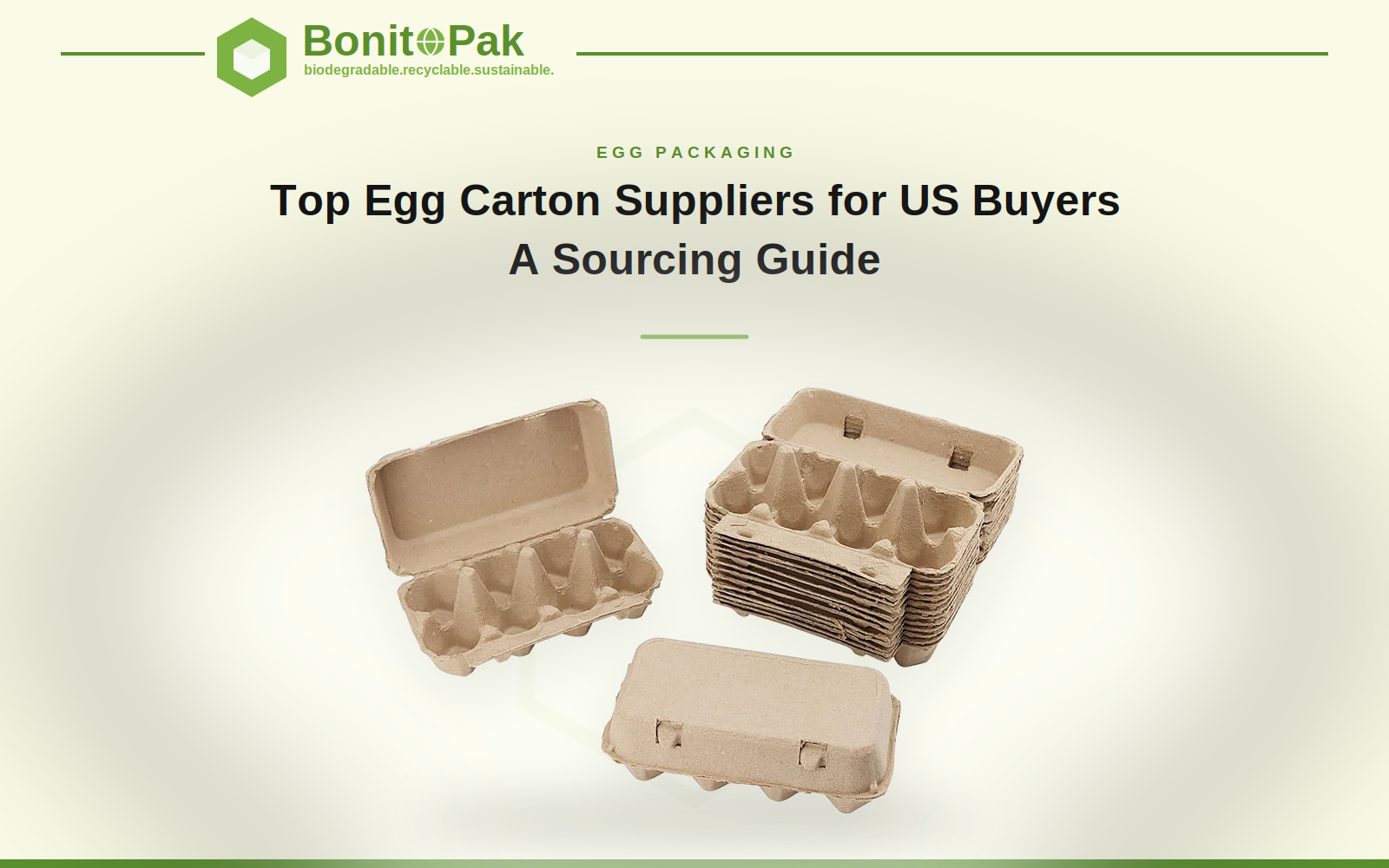
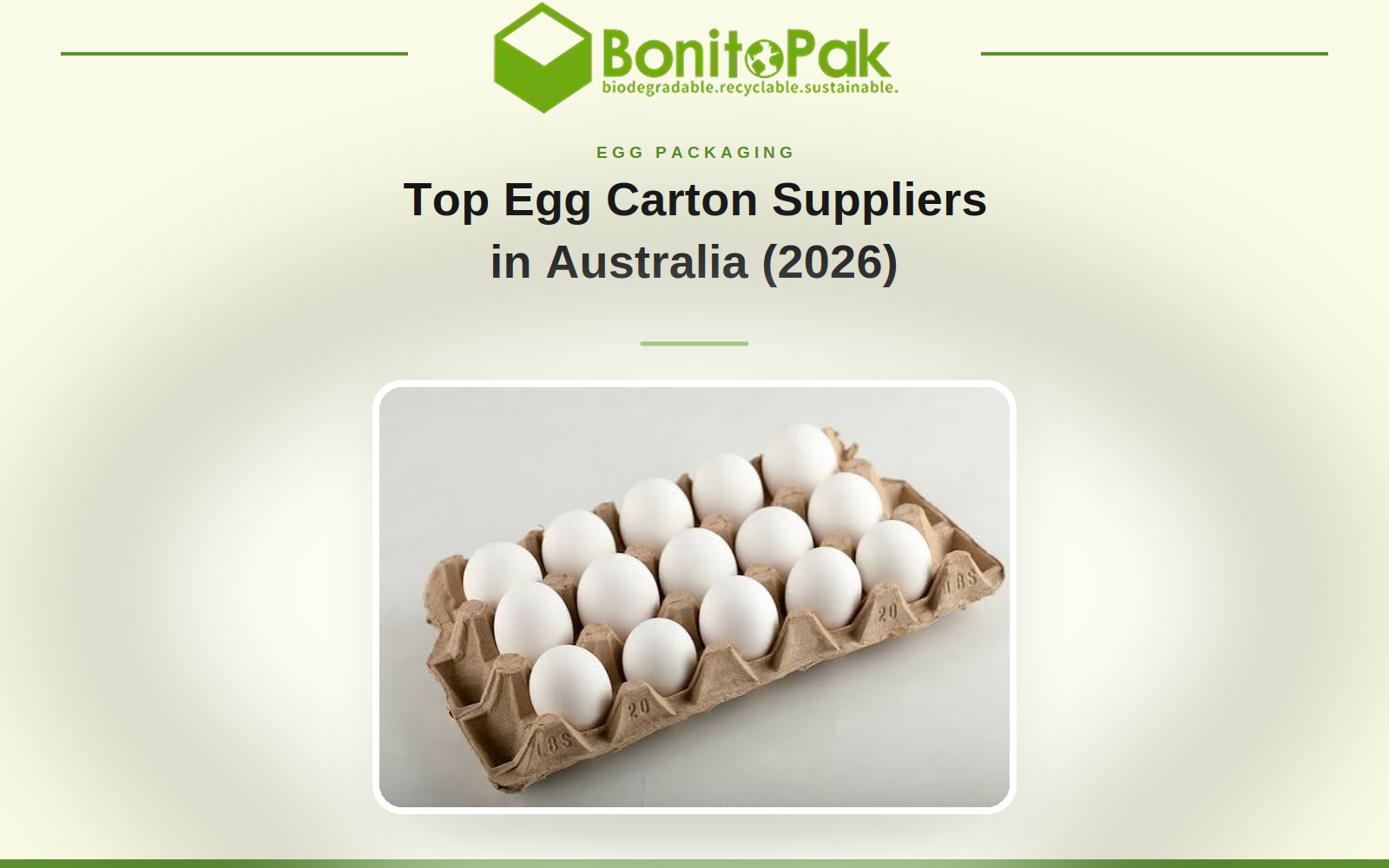
Egg carton suppliers serving US buyers fall into three groups: domestic stockists holding inventory, overseas OEM factories cutting tooling to order, and custom molded fiber engineering firms. Volume and whether you need custom geometry determine which group fits.
A disclosure before anything else. This guide is published by BonitoPak, which manufactures molded pulp egg packaging and therefore sits in one of the categories described below. It is written as a sourcing framework rather than a ranking, because a ranking produced by a participant is worth very little to a buyer.
What follows is how the market is actually structured, which type of supplier suits which situation, and what to verify before you place an order with any of them. If you are working out where to buy egg cartons in bulk, the category question comes before the company question.
Three Types of Egg Carton Suppliers
The distinction that matters is not who is largest. It is whether a supplier holds stock, cuts tooling, or engineers custom parts, because those are different businesses with different economics.
| Type | What they do | Best for | Typical constraint |
|---|---|---|---|
| Domestic stockist | Hold inventory of standard cartons and flats, ship quickly | Small farms, farmers markets, low volume | Limited to catalog sizes, higher per unit cost |
| Overseas OEM factory | Cut tooling and produce to your specification | Volume buyers, custom geometry, private label | Lead times, minimums, freight planning |
| Custom fiber engineering | Design and produce complex protective geometry | Non standard products, unusual protection needs | Project cost, usually not egg specific |
Domestic Stockists: Wholesale Egg Cartons From Inventory
A bulk egg cartons supplier in this group buys or manufactures standard formats, holds them in warehouses, and ships in bulk cases to farms and food businesses. They are the right answer for most small and mid sized operations.
Names that come up consistently in this segment for US buyers include EggCartons.com, which sells bulk cartons, trays and flats and states that its designs are developed exclusively for it; ePackageSupply, which supplies cartons and plastic flats in bulk cases nationwide; Falcon Packaging, which works with egg producers of varying sizes and operates warehousing in Pennsylvania serving the northeast; and Poultry Cartons, which focuses on bulk and colored carton options.
The advantages of buying wholesale egg cartons this way are speed and simplicity. Stock ships in days rather than months, minimum quantities are measured in cases rather than thousands of pieces, and there is no tooling conversation. You pay for that in per unit cost, since a distribution margin sits on top of manufacturing, and in flexibility, since you are choosing from a catalog.
Overseas OEM Egg Carton Manufacturers
Factories that cut molds and produce to a customer specification. This is where custom cell geometry, private label printing, unusual counts and specialty bird formats come from.
Egg carton manufacturers in this segment are largely concentrated in China, with additional capacity in India, Vietnam and elsewhere. Established exporters serving US buyers include Best Plus Pulp, which produces egg cartons in a range of counts and colors alongside other molded fiber products, and a number of factories positioning specifically around egg packaging for poultry farms and importers. BonitoPak, which publishes this guide, operates in this category from Chashan Town, Dongguan.
The economics invert relative to stockists. Per unit costs fall substantially at volume, and you get geometry that fits your actual eggs rather than a standard profile. Against that you carry tooling cost, longer lead times, ocean freight, duty, and the inventory needed to bridge a longer replenishment cycle.
Custom Molded Fiber Engineering
A third group specializes in engineered protective packaging rather than commodity formats. FiberCel is one example of a long established US operation in custom molded pulp, though this segment generally serves electronics, medical and industrial applications rather than egg packaging specifically.
For most egg buyers this group is not the answer. It becomes relevant if you are packing something genuinely unusual, or if protection requirements are severe enough to justify engineering rather than selecting a format.
Which Type Fits Your Situation
| If you are | Start with | Why |
|---|---|---|
| Selling at a farmers market | Domestic stockist | Volume too low to justify tooling or freight |
| Running a mid sized flock, standard grades | Domestic stockist | Catalog formats fit, speed matters more than unit price |
| Building a retail brand with printed cartons | Overseas OEM | Print and color economics improve sharply at volume |
| Packing duck, goose, quail or turkey eggs | Overseas OEM | Standard cells do not fit. Tooling is the only route |
| A distributor or co-packer | Overseas OEM | Blank cartons at volume, labeled per client |
| Packing something other than eggs | Custom fiber engineering | Protection requirement drives the design |
The Cost Comparison That Actually Decides It
Buyers usually compare quoted unit prices, which is the one figure that does not settle the question.
For domestic stock, the quoted price is close to the landed cost. Freight is short, there is no duty, and replenishment is fast enough that you can hold minimal inventory. What you see is roughly what you pay.
For overseas sourcing the quoted price is the starting point. Add tooling if your geometry is custom, ocean freight, duty, customs handling, and the working capital tied up in a longer replenishment cycle. A factory price that looks half the domestic figure can land closer than expected once those are counted, particularly at moderate volumes.
Two things swing it back. Tooling is a one time cost amortized across every future order, so it looks expensive on a first order and cheap by the third. And custom geometry has no domestic equivalent to compare against, since a stockist simply cannot supply a cell profile cut for your eggs. Where fit is the problem, the comparison is not price against price but a workable carton against one that does not fit.
What to Verify Before Ordering, From Anyone
These questions apply regardless of which category a supplier falls into, and the answers separate a serious quote from a price list.
- Cell geometry against your actual egg grade, not just the count. Specify the bird and the grade.
- Wall thickness and forming process, since wet pressed and dry pressed produce different sections and finishes.
- Whether flat areas for labels and date codes are formed into the mold.
- Minimum order quantity, tooling cost if applicable, and lead time from approval to delivery.
- Compliance documentation for your market, including any environmental certification you intend to reference.
- What happens if breakage exceeds an agreed rate, written into the contract rather than discussed afterwards.
Two of these deserve extra attention. Cell geometry is the most common source of fit problems, and the requirements change substantially for non chicken eggs, which we cover in our guide to duck, goose and turkey carton sizing. Label flats are the detail buyers most often discover too late, since regulatory text and date codes have to sit somewhere, as set out in our article on egg carton sizes and counts.
What This Guide Cannot Tell You
Being straightforward about the limits is more useful than pretending otherwise.
Company information available publicly is mostly self reported marketing. We have not audited any of the companies named here, tested their products against each other, or verified their capacity claims. Nobody publishing a supplier list has done that either, including the ones that present themselves as independent rankings.
There is also no single best supplier, because the categories serve genuinely different needs. A stockist that is perfect for a farm selling 200 dozen a week is the wrong choice for a producer running private label at volume, and the reverse is equally true.
The reliable approach is to shortlist by category, request samples from two or three, and evaluate them against your own eggs and your own handling before committing. Physical samples tell you more in a week than comparison articles do in a month.
What We See on Our Own Production Line
Speaking from the OEM side, a few patterns recur in enquiries that arrive from US buyers.
Buyers underestimate the tooling timeline
Sample molds run in about seven days and production molds follow around eight days after geometry approval, with minimums from 1,000 pieces. Add sampling iterations and ocean freight and a first order is a months long project, not a weeks long one. Buyers who start when they run low on stock have already missed the window. Our custom egg tray page sets out what is decided at each stage.
Count is specified, grade often is not
The single most common gap in an incoming specification is egg grade. A 12 count carton cut for large will not hold jumbo securely, and the fix after tooling is a new mold. Sending physical eggs alongside the specification resolves it faster than any drawing. Process choice follows from there, with our wet pressing line suiting retail facing finish and dry pressing suiting load bearing formats.
Switching supplier is not the same as switching format
Buyers moving between suppliers sometimes change count, material and supplier in one step, then cannot tell which change caused a new problem. Matching your existing specification with a new supplier first, then evaluating changes separately, is slower on paper and considerably faster in practice.
Putting This Into Practice
Work out which category you belong in before shortlisting egg carton suppliers. Volume and whether you need custom geometry answer that question, and it eliminates most of the market immediately, which is more useful than comparing everyone.
Then compare on total landed cost rather than unit price. For domestic stock, that is close to the quoted price. For overseas sourcing, add tooling, freight, duty and the working capital tied up in longer lead times. Those figures often change which option looks cheaper.
At BonitoPak we are one supplier among several serving this market, and we are the right choice for some situations and the wrong one for others. If your volume is low and your formats are standard, a domestic stockist will serve you better and faster. If you need geometry cut to your own eggs, printed or colored cartons at volume, or specialty bird formats, the OEM route is worth the longer timeline. Details of what we run are on our custom molded pulp packaging page.
About the Author
Leo Chan is the founder of BonitoPak and has spent more than 20 years in molded pulp packaging, working with over 500 brands moving from plastic and foam to fiber based formats. BonitoPak manufactures molded pulp packaging at its facility in Chashan Town, Dongguan, Guangdong, running both wet pressing and dry pressing lines across six pulp systems, with in house mold design and tooling. This guide is published by BonitoPak, which manufactures molded pulp egg packaging and is therefore one of the supplier types described. Company information about other suppliers is drawn from their own published materials and has not been independently verified.
Frequently Asked Questions
Q: Where to buy egg cartons in bulk: stockist or factory?
A: Roughly the point where a stockist’s per unit price times your annual volume exceeds tooling cost plus freight. For custom geometry that often arrives sooner than buyers expect, since stock cartons carry a distribution margin.
Q: Do I need my own tooling for standard sizes?
A: Usually not. Most factories hold molds for common chicken formats. Tooling is required for non standard cell geometry, unusual counts, or specialty bird sizes where no existing mold fits.
Q: How long does overseas sourcing actually take?
A: Budget several weeks for tooling and sampling, then production, then ocean freight. Plan a first order months ahead of when you need stock, and hold buffer inventory through the transition.
Q: Is a bulk egg cartons supplier in the US always pricier?
A: Not once freight, duty and inventory carrying costs are included. Domestic stockists win on small volumes and short lead times. Direct factories win on large volumes and custom specifications.
Q: What should I ask every supplier regardless of type?
A: Wall thickness, cell geometry against your egg grade, whether label flats are formed in, minimum order quantity, lead time, and what compliance documentation they can provide for your market.

 English
  German
  Spanish
  French
  Russian
  Japanese
  Portuguese
  Arabic