 Ir para o conteúdo

Introduction: Why Meal Bag Pulp Packaging Is Becoming a Global Manufacturing Opportunity
If you’re searching for meal bag pulp molding machine supply, you are most likely not looking for a simple machine brochure.
You are probably in one of these situations:
- You want to start a molded pulp meal bag production business
- You are expanding an eco-friendly packaging factory
- You need a reliable supplier for industrial pulp molding machinery
- You are responding to rising demand from food delivery brands and sustainable packaging buyers
The truth is, molded pulp meal bags are no longer a niche product. They are quickly becoming one of the most important packaging replacements for plastic carry bags, foam containers, and takeaway packaging trays.
But buying a pulp molding machine is not like buying a standard piece of equipment.
It is an entire production ecosystem: pulping, forming, molding, drying, trimming, stacking, and quality control.
In this guide, I’ll walk you through everything you need to understand about meal bag pulp molding machine supply, including what most suppliers don’t explain until after you’ve paid.
Understanding Meal Bag Pulp Molding Machines (What They Actually Do)
A meal bag pulp molding machine is designed to manufacture packaging products made from plant fiber pulp instead of plastic.
These machines shape wet pulp into durable meal-carry packaging such as:
- molded fiber meal bags
- takeaway food holders
- eco-friendly delivery trays
- compostable carry packaging
The raw materials typically include:
- sugarcane bagasse pulp
- polpa de papel reciclado
- bamboo fiber pulp
- agricultural waste fibers
Unlike plastic injection molding, pulp molding is a fiber-based forming process. The machine uses vacuum suction and molds to shape packaging, then removes moisture through drying and hot pressing.
This is why the supplier you choose matters so much: you are not buying only a machine, you are buying an integrated manufacturing system.
Why Demand for Meal Bag Pulp Packaging Is Growing So Fast
Meal bag molded pulp packaging is expanding globally for three major reasons.
First, governments are accelerating restrictions on plastic packaging. Many regions now ban EPS foam and single-use plastic food containers, forcing brands to adopt compostable alternatives.
Second, food delivery and takeaway services are growing every year. Restaurants, cloud kitchens, and meal kit companies need packaging that is lightweight, strong, heat-resistant, and sustainable.
Third, consumers increasingly associate packaging with brand responsibility. Food businesses know that eco-friendly packaging improves customer trust and market positioning.
This combination has created a major industrial opportunity for manufacturers investing in meal bag pulp molding production lines.
How Meal Bag Pulp Molding Production Works (Full Process Explained)
One of the biggest mistakes buyers make is assuming pulp molding is a “single machine purchase.”
In reality, meal bag pulp molding production happens through several connected stages.
Stage 1: Pulp Preparation System
Production begins with raw fiber materials being mixed with water inside a hydrapulper.
The goal is to create a consistent slurry with uniform fiber distribution. Poor pulp preparation leads to weak product strength, rough surfaces, and uneven thickness.
Factories producing premium meal bags often invest in refining systems that improve fiber bonding.
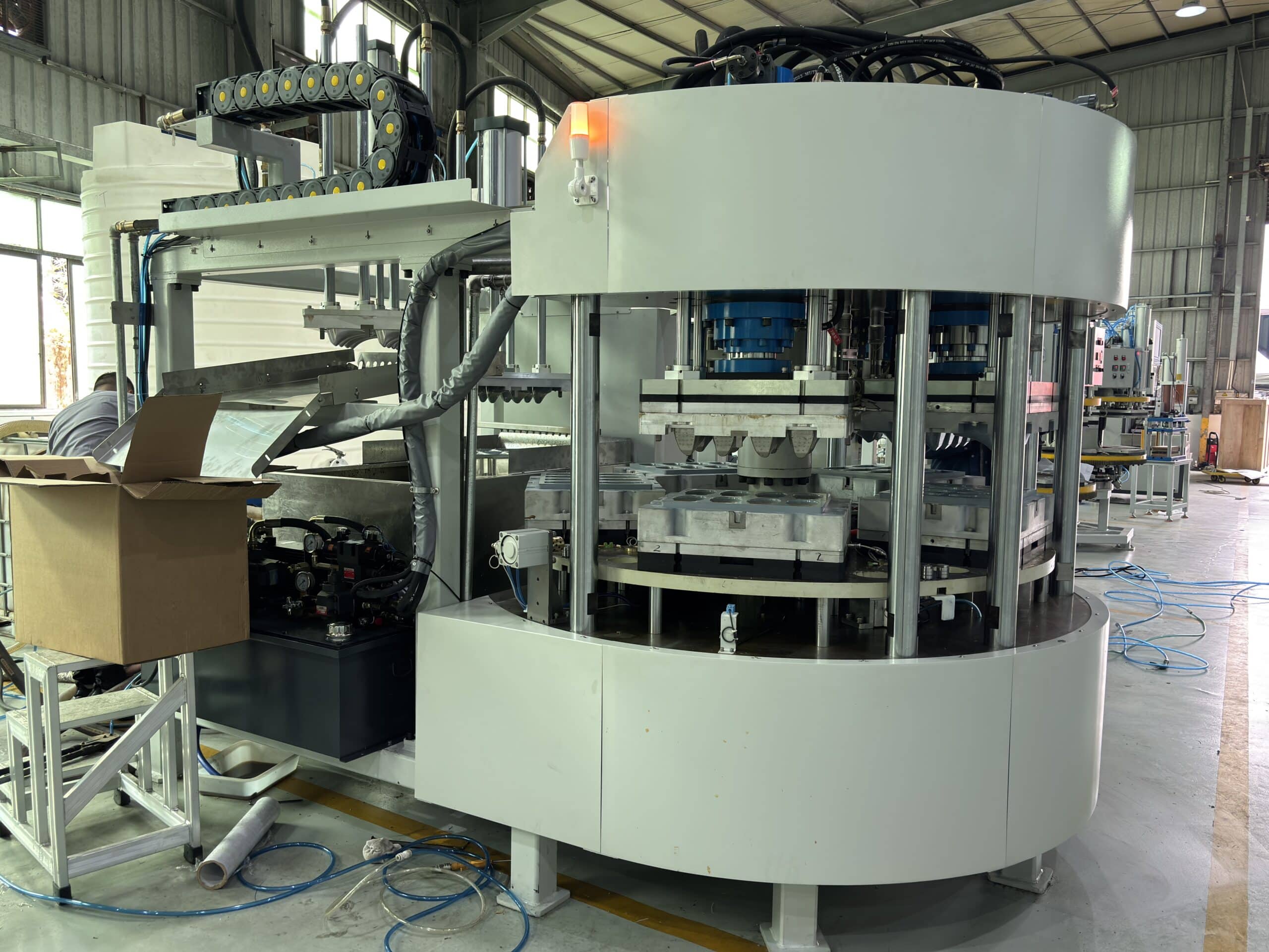
Stage 2: Vacuum Forming and Mold Shaping
Once pulp slurry is ready, it moves to the forming machine.
Here, vacuum suction pulls pulp fibers onto a mold shaped like the meal bag.
This step determines:
- product thickness
- shape precision
- edge smoothness
- strength consistency
This is also where mold quality becomes critical. Cheap molds deform quickly, leading to unstable product dimensions.
Stage 3: Pressing and Surface Finishing
Many advanced meal bag pulp products require hot pressing.
Hot press systems compress the molded fiber under heat, creating:
- smoother surfaces
- higher rigidity
- premium appearance
- improved stacking strength
Without pressing, meal bags may feel rough or fragile, which is unacceptable for high-end food brands.
Stage 4: Drying System (The Real Cost Driver)
Drying is the most underestimated part of pulp molding.
After forming, products still contain significant moisture. Industrial drying systems remove this moisture efficiently.
Drying options include:
- conveyor drying ovens
- multi-layer tunnel drying
- rotary drying chambers
Drying consumes the most energy, so suppliers who provide optimized drying solutions save buyers massive long-term operating costs.
Stage 5: Trimming, Stacking, and Packaging
Finally, products are trimmed, inspected, stacked, and packed.
High-output factories often integrate automatic stacking systems to reduce labor dependence.
Meal Bag Pulp Molding Machine Types (And Which One Fits Your Factory)
Different suppliers offer different automation levels. The right choice depends on your production scale and target customers.
Here is a clear comparison:
| Tipo de máquina | Melhor para | Daily Output Range | Necessidade de mão de obra | Nível de investimento |
|---|---|---|---|---|
| Semi-Automatic Forming Machine | Small startups | 500–2,000 pcs/day | Alta | Baixa |
| Rotary Drum Pulp Molding Machine | Medium factories | 5,000–15,000 pcs/day | Médio | Médio |
| Fully Automatic Production Line | Large industrial suppliers | 20,000–50,000 pcs/day | Baixa | Alta |
| Thermoformed High-End Line | Premium export packaging | 30,000+ pcs/day | Baixa | Muito alta |
A common industry insight:
Most buyers start too small or jump too big.
The best strategy is choosing a scalable line that can expand as demand grows.
What to Look for in Meal Bag Pulp Molding Machine Supply Partners
The keyword here is supply — because you are not just buying equipment, you are selecting a long-term production partner.
Mold Engineering Is the Supplier’s True Value
In pulp molding, molds are everything.
A supplier with strong mold engineering can deliver:
- precise product edges
- long mold lifespan
- consistent thickness
- customization for branding
Always ask whether molds are manufactured in-house or outsourced.
Complete Line Supply Matters More Than One Machine
A reliable meal bag pulp molding machine supplier should provide:
- pulping system
- forming machine
- drying system
- hot press unit
- trimming and stacking support
Suppliers who only sell “the forming machine” leave buyers struggling with integration problems later.
After-Sales Support Separates Real Manufacturers from Traders
A professional supplier should offer:
- installation guidance
- operator training
- spare parts supply
- remote troubleshooting
- maintenance planning
In my experience, factories lose months of production because of weak supplier support, not because of machine failure itself.
Cost Expectations and ROI Benchmarks
Machine investment depends on automation and capacity.
| Factory Scale | Estimated Investment Range |
|---|---|
| Entry-Level Line | $20,000 – $60,000 |
| Medium Automatic Line | $80,000 – $250,000 |
| Full Industrial Line | $300,000 – $900,000+ |
Most medium-scale factories achieve ROI within 12–24 months if demand contracts are stable.
Your profitability depends heavily on:
- drying efficiency
- mold durability
- labor automation
- raw material availability
Common Mistakes Buyers Make When Sourcing Meal Bag Pulp Molding Machines
One major mistake is choosing based on price alone.
Low-cost suppliers often cut corners in:
- vacuum pump quality
- mold material thickness
- drying system performance
- automation stability
Another mistake is ignoring drying energy costs.
Over five years, drying expenses often exceed the initial machine purchase cost.
Finally, many buyers fail to plan mold replacement and maintenance schedules, leading to unexpected downtime.
Advanced Strategies for Competitive Meal Bag Packaging Manufacturing
Once production is stable, leading factories focus on differentiation.
Premium buyers increasingly demand:
- thermoformed smooth finish
- embossed logos
- high stacking strength
- FDA and EU food-grade compliance
Factories that invest in higher-end finishing systems can sell meal bags at significantly higher margins.
Water recycling systems also matter, especially for export-focused sustainability buyers.
FAQ: Meal Bag Pulp Molding Machine Supply
What raw material is best for meal bag pulp molding?
Sugarcane bagasse is most widely used due to strength, cost efficiency, and compostability.
How long does installation take?
Most complete lines require 30–90 days depending on automation level.
Can these machines produce multiple products?
Yes. With mold changes, the same line can produce trays, clamshells, and meal bags.
What certifications matter for food packaging?
FDA food-contact compliance and EU packaging regulations are key for exports.
Conclusion: The Right Supplier Choice Determines Your Success
The meal bag molded pulp industry is growing fast, but success depends on choosing the right meal bag pulp molding machine supply partner, not just a cheap machine.
The best suppliers deliver:
- strong mold engineering
- complete production line integration
- drying efficiency
- reliable after-sales support
- scalable automation
If you invest wisely, molded pulp meal bag manufacturing can become one of the most profitable segments of sustainable packaging over the next decade.



 Portuguese
  English
  German
  Spanish
  French
  Russian
  Japanese
  Arabic