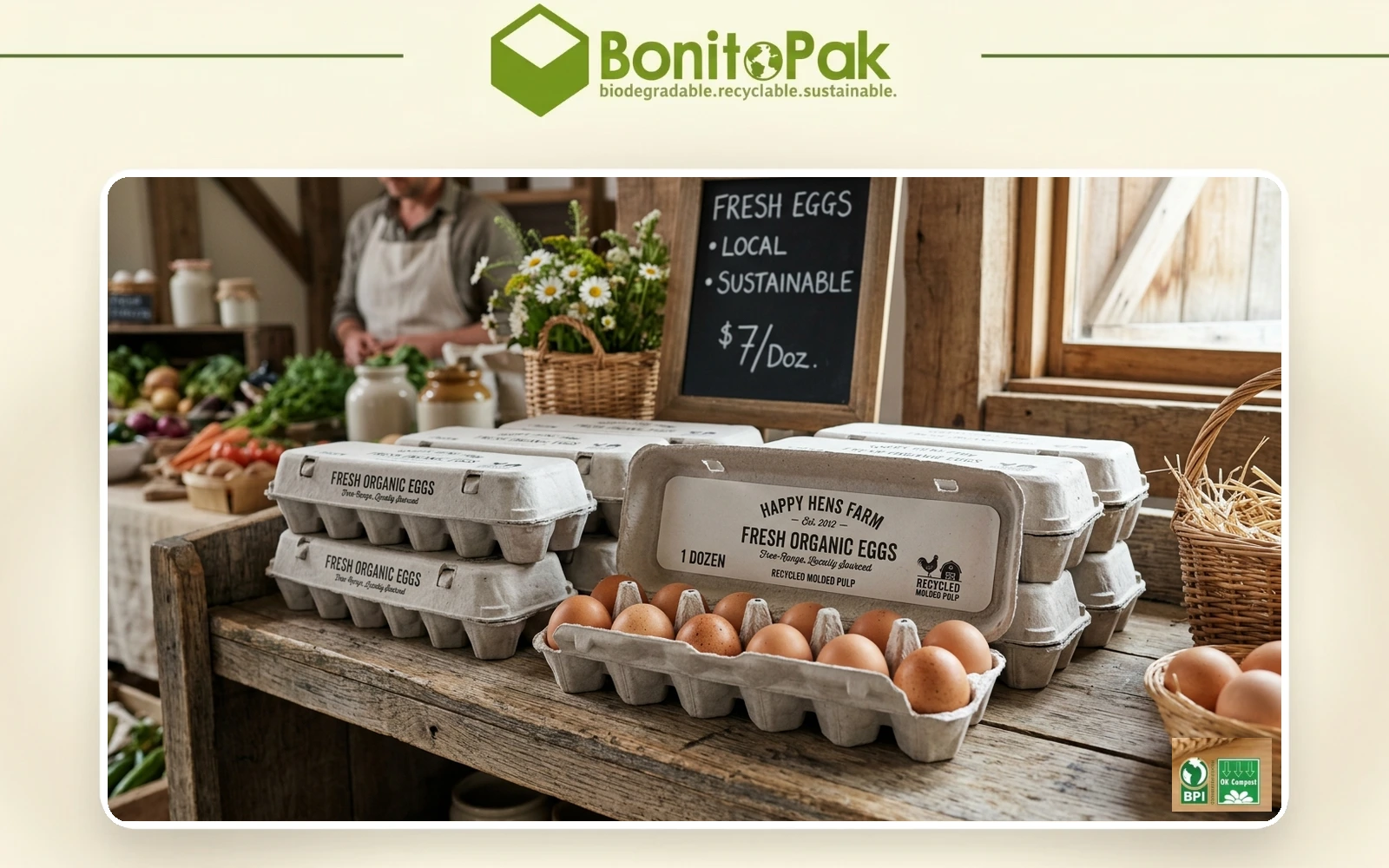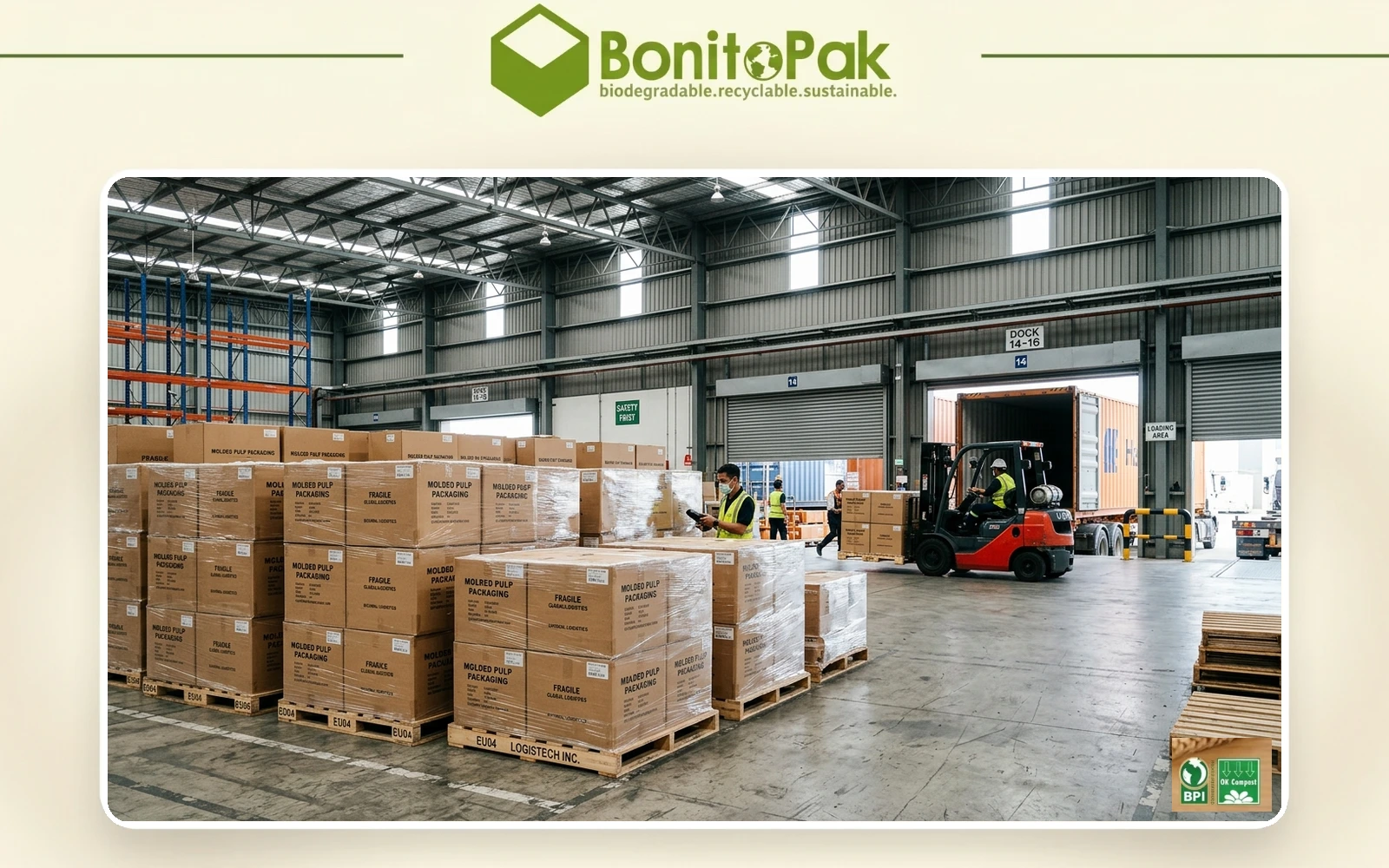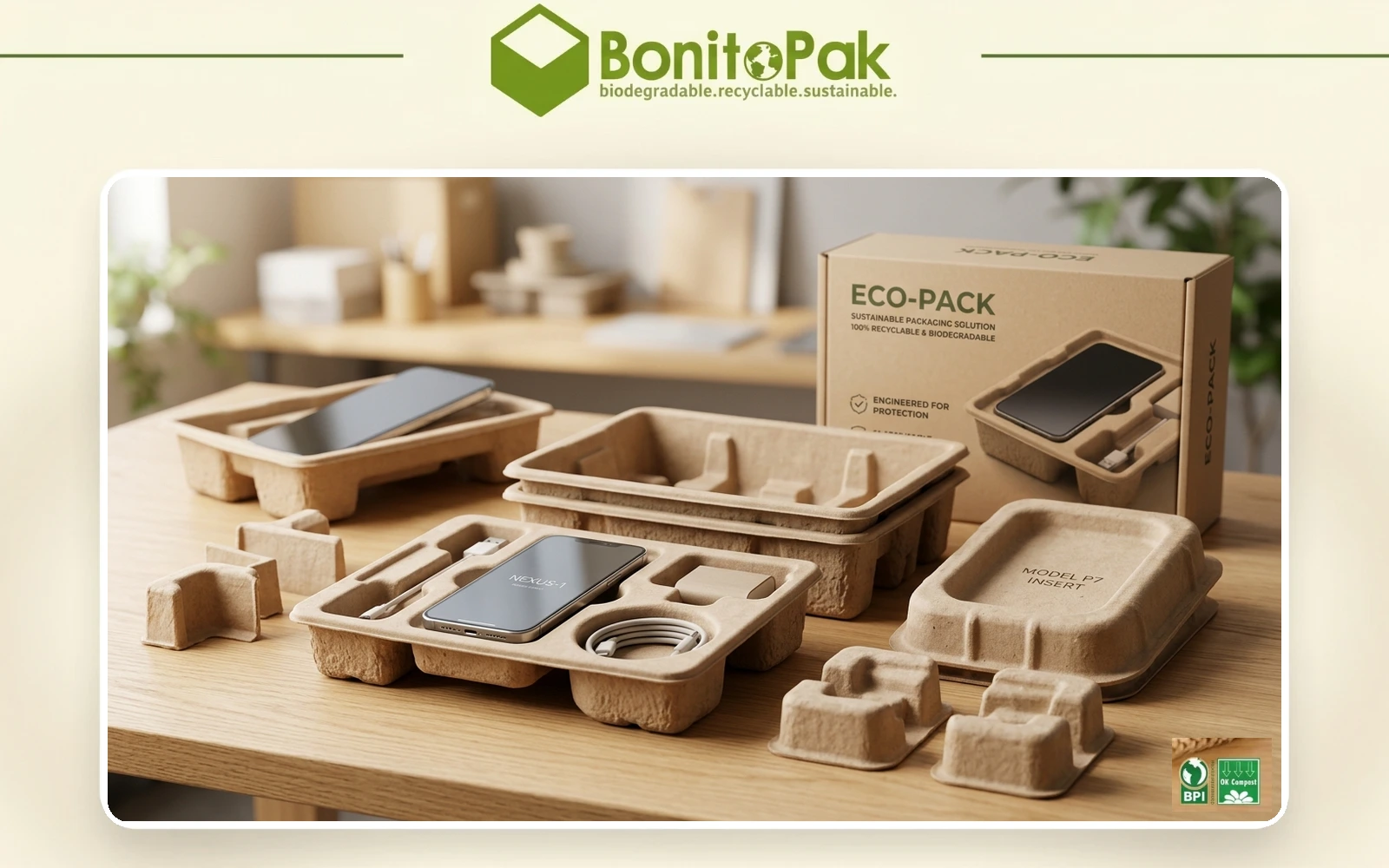

Egg trays are made through three core stages pulping, molding, and drying starting from recycled paper or plant fiber and ending in a rigid, biodegradable tray. This guide walks through each stage of the egg tray production process and explains what to actually look for when evaluating a manufacturer’s process, using Bonitopak’s dry-pressing production as the working example.
Most explanations of egg tray production are written for people buying the equipment to run a production line themselves. This one is written for the other, larger group: buyers sourcing finished egg trays who want to understand what’s actually happening before their order ships. Knowing the real process makes it easier to ask good questions of a manufacturer and to spot a supplier who can’t answer specifics about their own production.
This guide walks through the egg tray production process stage by stage, using Bonitopak’s dry-pressing line as the working example, and covers what each stage actually determines about the finished tray’s quality and durability.
The Three Core Stages of Egg Tray Production
Egg tray production runs through three core stages: pulping, molding, and drying. Pulping turns raw material into a workable slurry, molding shapes that slurry into the tray form under vacuum and pressure, and drying removes moisture until the tray is rigid enough to handle and ship.
Bonitopak’s egg trays are dry-pressed from 100% recycled paper pulp, at a 2.5–3.0mm wall thickness engineered to pass standard drop testing — a spec that’s set during the molding stage and locked in during drying. Each stage affects a different property of the finished tray, which is why understanding the process actually matters if you’re sourcing trays rather than just buying on price.
Stage 1: Pulping
Pulping breaks down raw fiber — recycled paper for dry-pressed trays, or sugarcane bagasse, bamboo, or wood pulp for wet-pressed trays — into a water-based slurry, screened and refined to remove impurities and produce a consistent texture. Moisture content during this stage directly affects how evenly the tray forms in the next stage.
This is also where material choice gets locked in. Bonitopak’s dry-pressed egg trays use 100% recycled paper pulp; wet-pressed trays elsewhere in Bonitopak’s line use sugarcane bagasse, bamboo fiber, or wood pulp instead. The pulping stage is identical in principle across both processes — break fiber down into a workable, evenly-refined slurry — but the raw material going in determines which pressing method comes next.
Stage 2: Molding
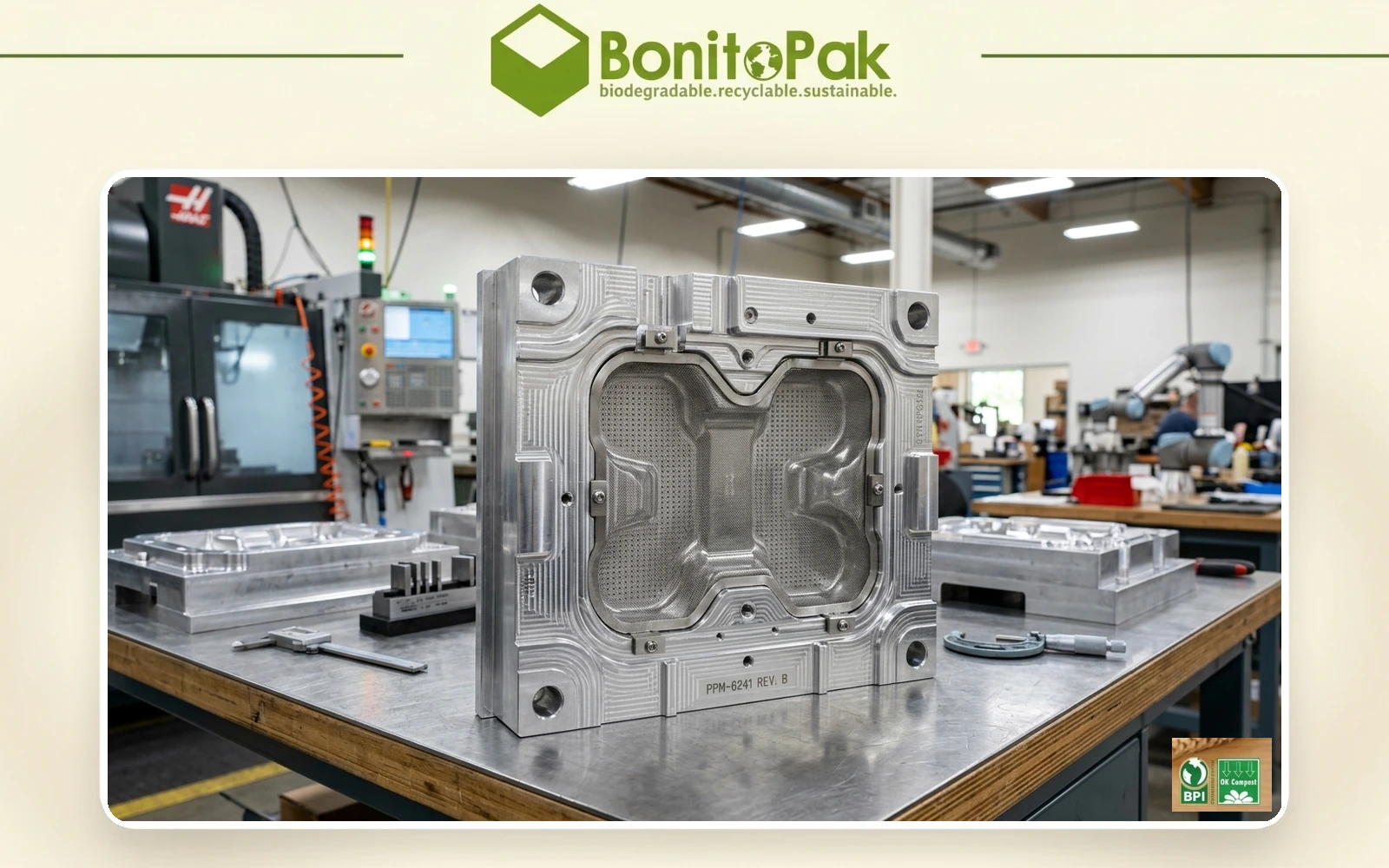
Molding shapes the pulp slurry into the tray form using a custom mold, with vacuum suction pulling the slurry into shape and pressure setting the wall thickness and structure. This is the stage where cell count, dimensions, and wall thickness — the specs that determine whether a tray holds 6, 12, or 30 eggs, and whether it survives a drop test — are actually set.
The mold itself is the single biggest factor in production quality at this stage, which is why mold design and tooling capability matters more than most buyers initially assume. Bonitopak designs and builds molds in-house — a 3D drawing (2 days, via SolidWorks or Creo) followed by a sample mold to test before committing to a production mold (ready in 8 days once the design is approved). A manufacturer that outsources tooling to a third-party mold shop adds both time and cost to this stage, and typically has less flexibility to fix a design issue quickly.
Stage 3: Drying
Drying removes remaining moisture from the molded tray until it’s rigid and structurally sound enough for handling, stacking, and transport. Under-dried trays are structurally weak and prone to warping or crushing in transit; properly dried trays hold their shape through stacking and shipping.
This stage is also where a dry-pressed tray’s drop-test performance actually gets confirmed — Bonitopak’s dry-pressed egg trays, at a 2.5–3.0mm wall thickness, are engineered to pass standard drop testing once fully dried. A manufacturer who can’t speak to their drying process specifically, or who rushes this stage to cut production time, is cutting the step most directly responsible for whether your trays survive a real shipment.
Where Quality Actually Gets Checked in the Process
Quality control happens at each of the three stages, not just as a final inspection step — checking pulp consistency during pulping, dimensional accuracy during molding, and moisture content during drying catches problems before they compound into a finished tray that fails in the field. A single final inspection, after all three stages are done, can catch a defective tray, but it can’t tell you which stage introduced the problem or whether the next batch will have the same issue.
Bonitopak runs 100% inspection before shipping, with random checks specifically after the thermoforming stage — a two-layer check that catches both individual defective units and systemic issues in a production run. That’s a meaningfully different quality claim than “we inspect our products,” because it specifies when in the process the checks happen and what they’re checking for.
Wet-Pressed vs. Dry-Pressed Egg Trays: Does the Process Change?
Most high-volume egg trays are dry-pressed, prioritizing cost efficiency and drop-test durability over surface finish, but the same three-stage pulping/molding/drying process applies whether a tray is wet-pressed or dry-pressed — what changes is the raw material and the finish of the molding stage. Wet pressing, which Bonitopak uses for trays needing a smoother surface, presses fiber into the mold while it’s still saturated rather than starting from a drier recycled stock.
For egg trays specifically, dry pressing is the more common choice industry-wide because egg cartons are a functional, high-volume product where per-unit cost and stacking efficiency matter more than a polished surface finish — nobody is evaluating an egg carton’s shelf appeal the way they’d evaluate a retail cosmetics box. That’s why Bonitopak’s dry-pressed line, at 100% recycled paper pulp, is the production path used for its egg tray line specifically, even though the company also runs wet-pressing for other product categories where finish quality matters more.
What This Means for Sourcing Egg Trays
Understanding the production process gives you better questions to ask a manufacturer than “how much per unit” alone — ask about mold turnaround, wall thickness, and drop-test performance specifically, since those map directly to the molding and drying stages that determine tray quality.
A few practical questions this process knowledge makes possible:
- What wall thickness do your dry-pressed trays run, and is it drop-test rated? (Bonitopak’s answer: 2.5–3.0mm, engineered to pass standard drop testing.)
- Is mold design and tooling done in-house, or outsourced? In-house tooling generally means faster turnaround and more flexibility to fix a design issue before it reaches production.
- What’s your actual sample lead time? Bonitopak’s is 7 days from a confirmed design, with the production mold ready in 8 days after that.
- What material is the tray actually made from? Recycled paper pulp (dry-pressed) and virgin fiber sources like bagasse or bamboo (wet-pressed) aren’t interchangeable — ask which one you’re getting and why it’s the right fit.
A manufacturer who answers these specifically, rather than in generalities, is one whose production process you can actually verify — which is the entire point of understanding how the trays get made in the first place.
Sustainability of the Egg Tray Production Process
Egg trays made from recycled paper pulp or renewable plant fiber biodegrade within 90 days, closing the loop on packaging material that would otherwise sit in a landfill. Bonitopak’s egg trays, made from 100% recycled paper pulp, fit this same 90-day biodegradation timeline that applies across its pulp product line.
The production process itself — pulping, molding, drying — doesn’t involve the petroleum-based inputs or persistent plastic waste associated with foam or plastic egg tray alternatives, which is a meaningful part of why molded pulp has become the default material for egg packaging at scale, well beyond its original reputation as the “cheap gray carton” option.
結論
The egg tray production process — pulping, molding, and drying — determines everything about the finished tray’s material, dimensions, and durability, and understanding it gives a buyer sourcing egg trays real leverage to ask specific, verifiable questions rather than relying on a supplier’s general claims. Bonitopak’s dry-pressed egg trays are made from 100% recycled paper pulp at a 2.5–3.0mm wall thickness engineered to pass standard drop testing, with in-house mold design keeping the path from drawing to finished tray to about two weeks.
See the full spec sheet on the 卵トレイの商品ページ, or if you’re sourcing specifically for the USA market, read what to check before importing egg trays from an overseas manufacturer. Request a quote from Bonitopak with your design or reference sample to see this process applied to your own order.
よくある質問
What are the main stages of egg tray production?
Egg tray production runs through three core stages: pulping (breaking raw fiber into a slurry), molding (shaping the slurry into the tray form under vacuum and pressure), and drying (removing moisture until the tray is rigid enough to handle and ship).
What material are egg trays made from?
Bonitopak’s egg trays are dry-pressed from 100% recycled paper pulp. Wet-pressed alternatives elsewhere in the product line use sugarcane bagasse, bamboo fiber, or wood pulp instead.
How thick are egg trays, and does it matter?
Bonitopak’s dry-pressed egg trays run at a 2.5–3.0mm wall thickness, engineered to pass standard drop testing — thickness set during the molding stage directly determines drop-test durability.
How long does it take to produce a custom egg tray mold?
At Bonitopak, the initial 3D drawing takes 2 days, a physical sample ships in 7 days, and the production mold is ready in 8 days once the design is approved.
Are egg trays made this way biodegradable?
Yes — Bonitopak’s recycled paper pulp egg trays biodegrade within 90 days, the same timeframe as the rest of its molded pulp product line.
Why does mold design matter in the egg tray production process?
The mold sets cell count, dimensions, and wall thickness during the molding stage — the specs that determine whether a tray holds the right number of eggs and survives shipping. In-house mold design and tooling generally means faster turnaround and more flexibility to fix issues before production.