Corrugated Paper

Corrugated paper as a molded pulp material means recovered cardboard boxes repulped into slurry and formed into new parts. The industry calls the input OCC, old corrugated containers, and it is one of the most efficiently collected waste streams in the world. The fiber arrives having already been through at least one use cycle, which makes it shorter than virgin kraft and considerably cheaper, with a brown tone and a coarse surface that suits protective packaging where appearance is not the point.

Why specify corrugated paper for molded parts

  • Genuine closed loop. Boxes become protective inserts that protect the next shipment. The circularity story here is concrete rather than abstract, which matters for buyers reporting against packaging targets.
  • Kraft heritage in the fiber. Corrugated board is made largely from kraft, so recovered OCC retains more fiber length than mixed office waste. It sits at the stronger end of recycled materials.
  • Low cost at volume. OCC is collected at scale and priced as a commodity, which makes it one of the two cheapest inputs in our range.
  • Well suited to thick wall forming. Coarse fiber and a rough surface are exactly what Type 1 thick wall parts need, where walls run 1.5 to 6 mm and surface quality is irrelevant.
  • Tolerates heavier wall sections. Parts that need bulk rather than finesse form predictably in OCC without the cost of pushing virgin fiber into a thick section.
  • Compostable and recyclable uncoated. Nothing is added that interferes with either route.

The fiber length question is the one to understand. Virgin softwood kraft runs 2.5 to 4.5 mm. Recovered OCC runs roughly 0.8 to 1.5 mm, because every repulping and refining cycle mechanically shortens fibers and reduces their ability to bond. The material is still useful for many cycles; it just moves down the strength ladder each time.

This is also why OCC fiber behaves differently from fresh kraft on the forming screen. It drains faster, forms a denser wall, and produces a rougher surface, all of which suit protective applications and work against fine-detail ones.

Specification table

Specification Details
Material Name Corrugated Paper
Material Type Repulped old corrugated containers (OCC)
Fiber Source Recovered corrugated board, kraft heritage
Average Fiber Length 0.8 to 1.5 mm
Recycled Content 100% post-consumer and post-industrial
Natural Color Brown, variable with input stream
Surface Finish Coarse, textured
Relative Strength Medium; strongest of the recycled inputs
Typical Wall Thickness 1.5 to 6.0 mm
Process Compatibility Thick wall, wet pressing, transfer molding
Molded Pulp Types Type 1, Type 2
Compostability Meets the chemistry basis for EN 13432 and ASTM D6400 uncoated
Recyclability Accepted in most paper streams uncoated
Food Contact Not recommended for direct contact; confirm for secondary use
Color Options Natural brown; dark pigments only
Relative Cost Low

Where corrugated paper is the right material

Thick wall protective parts. Edge protectors, corner guards, appliance cradles, machinery cushions, and pallet-level trays. These are Type 1 parts where wall thickness and bulk do the protecting and nobody is evaluating the finish.

Transit packaging that is discarded at receiving. If the part never reaches an end customer, every dollar spent on appearance is wasted. OCC does the job at the lowest viable cost.

Buyers with recycled content targets. A part at 100% post-consumer recycled fiber is straightforward to report against a packaging policy, and OCC is the easiest recycled stream to document.

Replacing expanded polystyrene in heavy goods packaging. Molded pulp has displaced more foam here than anywhere else, and OCC is usually the material doing it, because the comparison is on protection and cost rather than on looks.

Where corrugated paper is the wrong material: anything retail-facing, anything needing fine detail or a pale finish, and anything in direct food contact. For retail-facing parts see natural plant fiber or bleached pulp. For food contact see bleached pulp.

The closest comparison in our range is recycled paper pulp, which comes from mixed recovered paper rather than from corrugated specifically. OCC gives slightly more strength and a browner tone; mixed recycled gives a finer surface and better detail reproduction.

Frequently Asked Questions (FAQs)

What is OCC and why does the source matter?
OCC stands for old corrugated containers, the industry term for recovered cardboard boxes. The source matters because corrugated board is made largely from kraft fiber, so recovered OCC starts from a longer-fiber base than mixed office paper or newsprint does. That difference carries through repulping and is why OCC-based parts are stronger than parts from general mixed recycled stock.
Commonly cited figures run from five to seven cycles, with fibers shortening each time until they are too short to bond. Molded pulp is often the last useful application in that chain, because the forming process tolerates short fibers that paper machines cannot use. That is a genuine strength of the material rather than a compromise.
Yes, to a degree. The tone depends on the mix of recovered board in the incoming stream, which shifts seasonally and regionally. For protective parts this is irrelevant. For any part where appearance is specified, we either pigment to a dark shade that covers the variation or we recommend a different base material.
Not for direct food contact. Recovered fiber carries whatever was in the original packaging, including inks, adhesives, and residues, which is why most markets restrict recycled content for direct contact. It is routinely used for secondary packaging where a sealed product sits inside. For direct contact, specify bleached pulp.
Not reliably. Geometry carries more compression than thickness does in molded pulp, because ribs, cones, and curves transfer load through the structure while a flat thick wall simply resists bending. A well-ribbed 2 mm part frequently outperforms a flat 4 mm one and uses half the material. This is why we work the geometry at design stage rather than solving strength problems by adding thickness.
Material Name

Corrugated Paper

Material Type

Recycled paper material

Process Compatibility

Bonitopak Packaging Materials

Our packaging solutions are crafted from sustainable materials like sugarcane fiber, bamboo, and recycled paper pulp, offering eco-friendly, biodegradable options for a wide range of products.

Compostable kraft paper is the strongest fiber we form. Made from virgin

Colored pulp is not a separate fiber. It is any of our

Bleached pulp is the material to specify when the part has to

Natural plant fiber covers the non-wood cellulose sources we blend outside the

Corrugated paper as a molded pulp material means recovered cardboard boxes repulped

Straw fiber is made from the stalks left after grain harvest, material

Our Product Categories

Discover Bonitopak’s diverse range of packaging solutions, including molded pulp trays, food packaging, custom designs, and sustainable options. Each category is crafted for durability, functionality, and environmental responsibility, tailored to meet your specific needs.
Ready to Elevate Your Project?

Bring Your Designs to Life with BonitoPak

Experience precision engineering with BonitoPak. From detailed prototypes to high-volume production, we’re here to turn your concepts into reality. Contact us today to discuss your project needs!

Related Articles and Insights

Stay informed with the latest updates on sustainable packaging trends, industry insights, and expert tips through our blog. Explore innovative ideas and solutions to enhance your packaging knowledge.

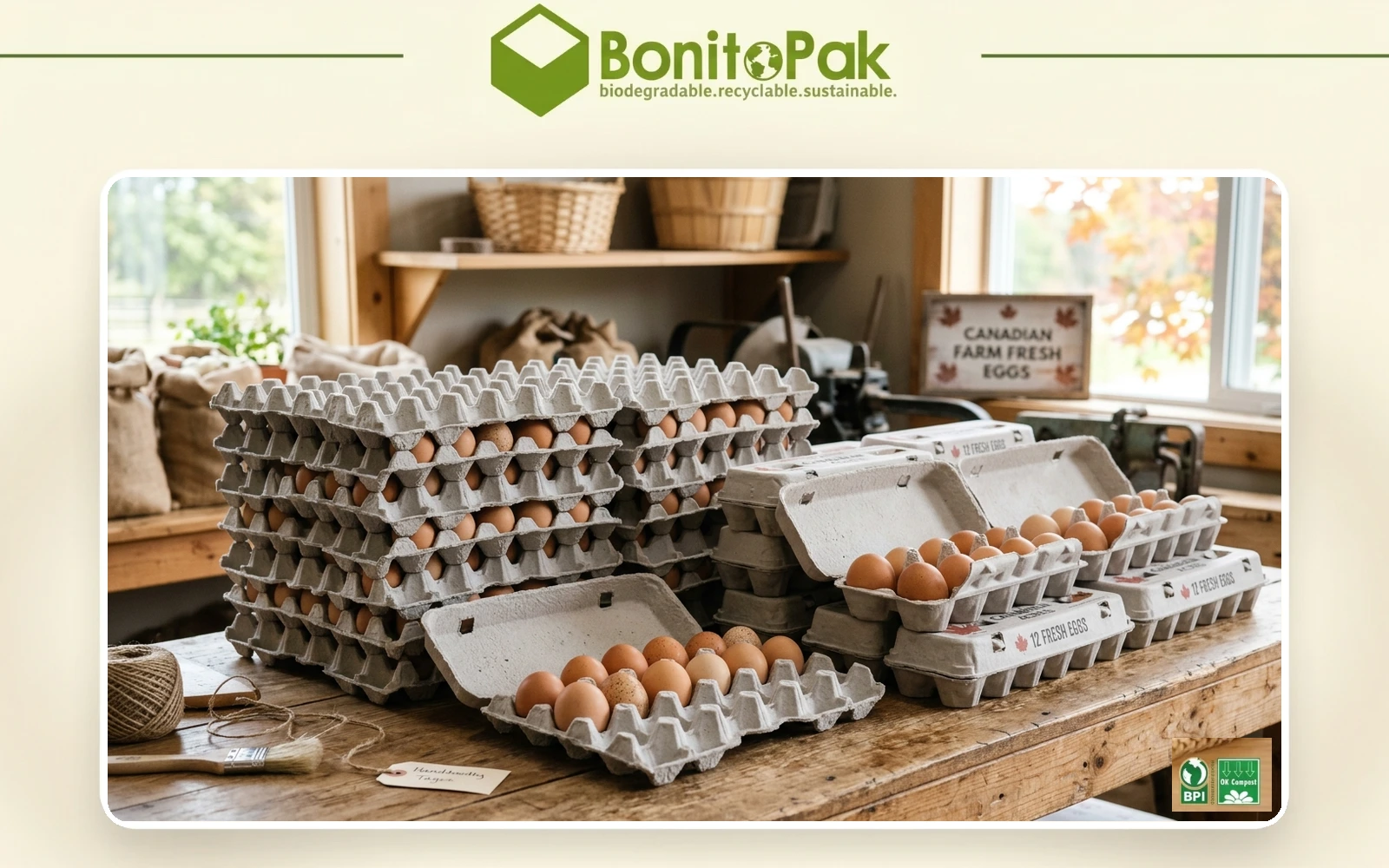
Canada has a smaller domestic moulded pulp sector than the United States, but it has

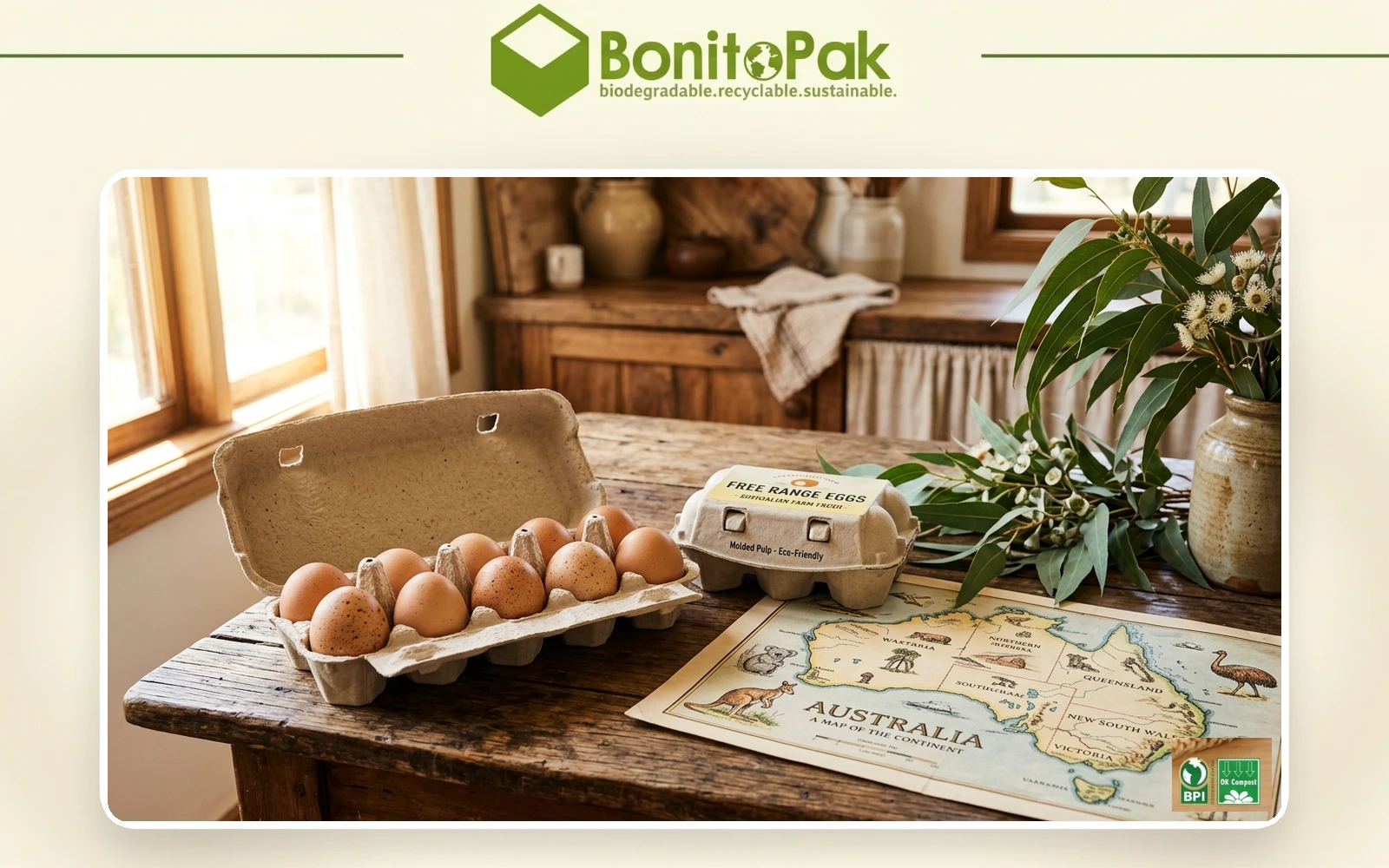
Australia has one domestic moulded fibre egg carton manufacturer. Huhtamaki Australia describes itself as the

British egg packaging is sold differently from the American market. Where US suppliers talk in

Fill This Detailed Form