By Leo Chan, Senior Packaging Consultant · November 14, 2026
Egg cartons are easy to throw away, and easy to get wrong. A paper pulp carton can go in home compost or a green bin. A foam or plastic carton cannot. This guide shows how to compost egg cartons, when to recycle them instead, and how to tell the three carton types apart before you choose.
Key takeaway: Tear paper pulp cartons into strips, wet them, and mix them with green material. Recycle clean, dry pulp cartons when composting is not an option. Put foam and plastic cartons in the trash unless your local program takes them.
Can You Compost Egg Cartons?
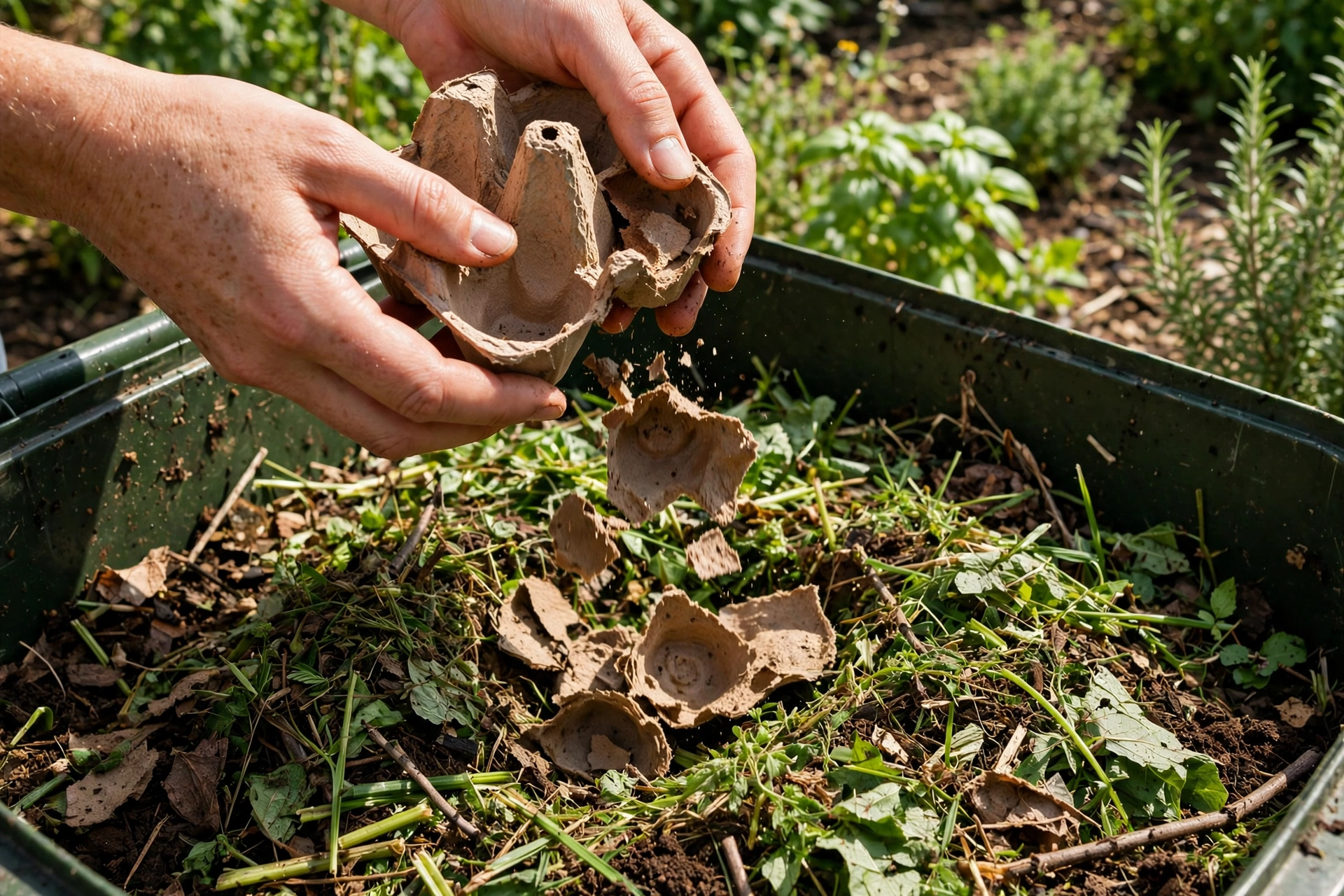
Yes, if they are made from paper pulp. Tear the carton into strips, wet them, and mix them with green material such as food scraps and grass clippings. The brown fiber balances the wet greens and keeps air moving through the pile.
Paper pulp cartons break down in a home compost bin in 1 to 3 months when they are torn small, kept damp, and mixed through the pile. They also break down in a municipal green bin. Check your local rules first, because some green bin programs do not accept food-soiled paper.
Foam and plastic cartons are not compostable. They do not break down in a compost pile, and they contaminate the finished compost. If you are unsure what your carton is made of, check the guide below before you compost it. For the full picture, see the article De qué están hechos los cartones de huevos.
Compost vs. Recycle: Which Carton Goes Where
Paper pulp cartons are both compostable and recyclable, so the condition of the carton decides. Compost the carton when it is soiled, torn, or damp. Recycle it when it is clean and dry.
Foam and clear plastic cartons are not compostable. Most curbside recycling programs also reject foam. Clear plastic cartons are accepted in some areas, but only when they are clean and the local program takes that plastic type. When in doubt, put foam and plastic cartons in the trash.
| Carton type | Home compost | Green bin | Reciclado |
| Pasta de papel | Yes, tear into strips | Yes, if your program accepts food-soiled paper | Yes, if clean and dry |
| Foam (polystyrene) | No | No | Usually no |
| Clear plastic (PET) | No | No | Only if clean and accepted locally |
| Plastic (other) | No | No | Check local rules |
For more on the differences between these materials, read cajas de huevos biodegradables.
How to tell what your carton is made of
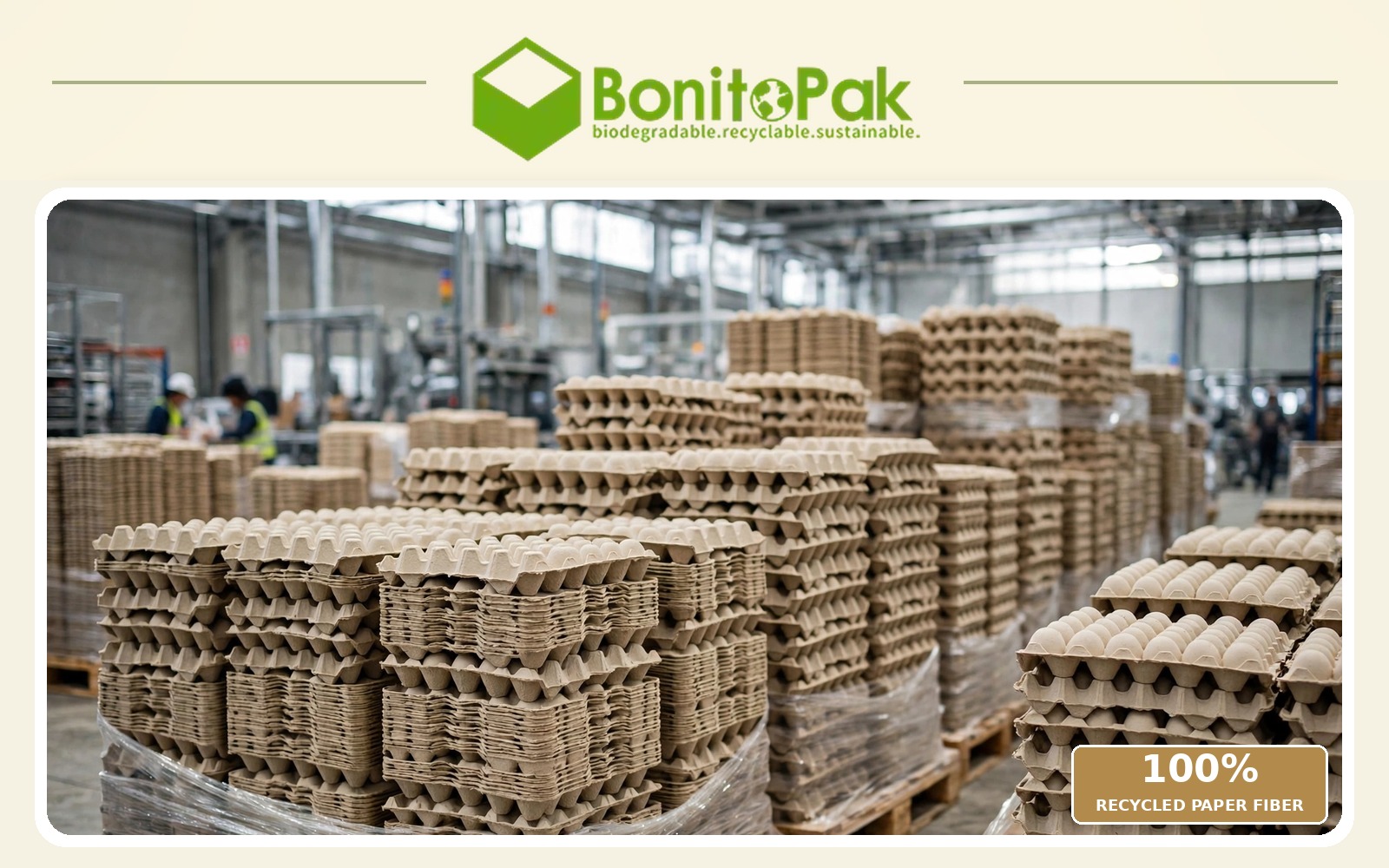
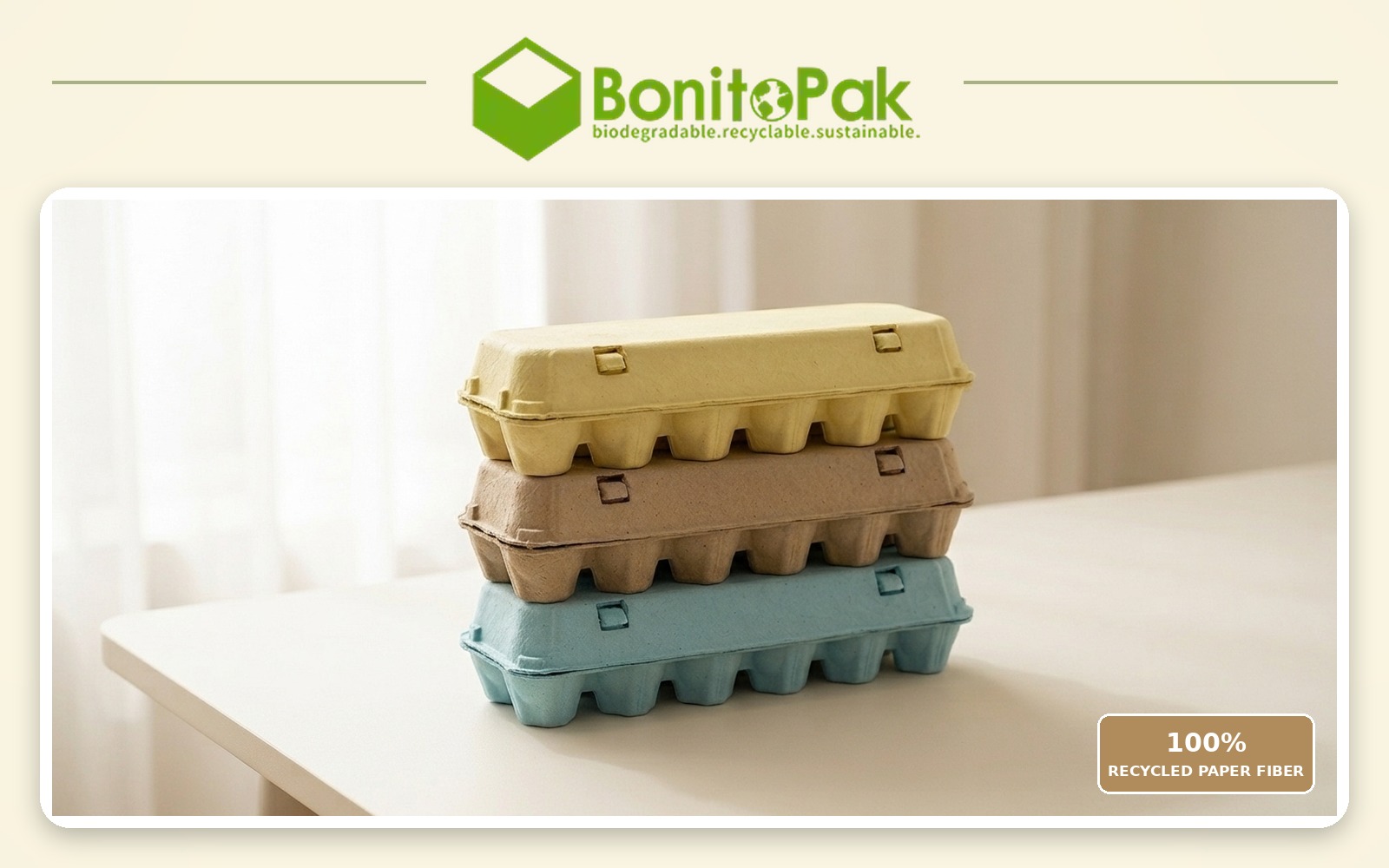
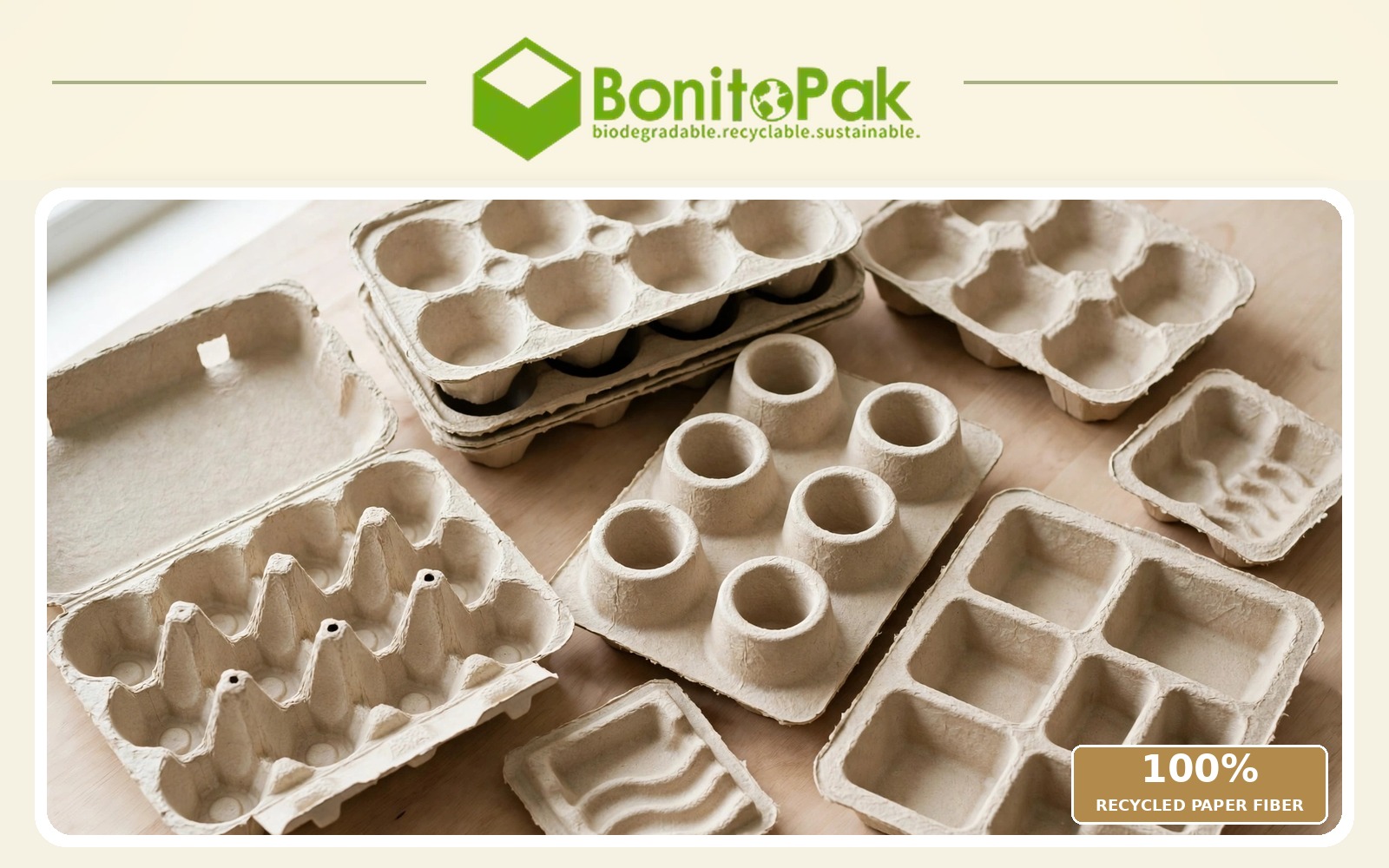
Paper pulp feels rough and fibrous, and it tears like cardboard. It is usually grey, brown, or dyed a solid color. Foam feels light and smooth, and it snaps or squeaks when you bend it. Clear plastic is smooth, rigid, and see-through. If the carton has a recycling code, check it against your local program.
>
How to Compost Egg Cartons at Home
Composting egg cartons at home is simple. Use this method for paper pulp cartons only.
- Tear the carton into strips. Smaller pieces break down faster and mix better with other material.
- Remove staples, plastic windows, and labels. Staples and plastic do not compost.
- Wet the strips. Damp fiber breaks down faster than dry fiber.
- Mix with green material. Add food scraps or grass clippings, and keep the pile damp but not soaking.
- Turn the pile every one to two weeks. Turning adds air and speeds up decomposition.
- Wait 1 to 3 months. The carton is ready when it has broken down into dark, crumbly compost.
Do not add cartons with a plastic coating or a waxy finish. They will not break down properly. The United States Environmental Protection Agency explains the basics of composting at home, including how to balance green and brown materials. For more on the full cycle, see the lifecycle of compostable egg cartons.
Can You Put Egg Cartons in the Green Bin?
Yes, if they are paper pulp cartons and your local green bin program accepts food-soiled paper. Put clean and dry pulp cartons in recycling when your area offers paper recycling, and put soiled or torn ones in the green bin when the program allows it.
Do not put foam or plastic cartons in the green bin. Green bins take food scraps, yard waste, and food-soiled paper only. A foam or plastic carton contaminates the load. Check your city or council website for a list of accepted items before you put any carton in the green bin.
Can You Compost Egg Cartons With Labels or Stamps?
Compost the pulp carton and remove plastic labels first. Paper labels and ink stamps printed on the carton can compost with it. Plastic labels, tape, and stickers must go in the trash.
Remove staples before composting, too. Staples do not break down in a compost pile. If the carton has a plastic window, cut it out and put it in the trash. For the rules on what egg brands must print on a carton lid, see Etiquetas y sellos para cajas de huevos.
Can You Recycle Egg Cartons?
Paper pulp cartons are recyclable when they are clean and dry. Put them in your paper recycling bin. If the carton is soiled with egg, grease, or food, compost it instead. Food residue contaminates paper recycling, so a dirty carton belongs in compost or the green bin.
Foam cartons are rarely recyclable. Most curbside programs do not take polystyrene foam. Some cities have foam drop-off points, but they are uncommon. Clear plastic cartons are accepted by some programs when they are clean. Check the recycling code on the carton and confirm it with your local program.
Why Foam and Plastic Cartons Do Not Compost
Foam and plastic are made from petroleum-based polymers. Microbes in a compost pile cannot break them down. Instead, the material breaks into smaller and smaller pieces that contaminate the soil.
Foam cartons are made from expanded polystyrene. They are light, insulating, and cheap, but they last for hundreds of years in a landfill. Plastic cartons are usually made from PET or other plastics. They can sometimes be recycled, but they never compost.
If your household still uses foam or plastic cartons, the best option is to switch to paper pulp cartons. Pulp cartons protect eggs, compost at home, and recycle when clean. They are the most practical choice for both the kitchen and the planet.
Can You Reuse Egg Cartons?
You can reuse a clean, dry paper pulp carton for storage or crafts, but never reuse a carton for food if it has held raw eggs or is stained or damaged. Egg residue can carry bacteria, and a soiled carton is not safe for storing food. For the full hygiene rules, read can you reuse egg cartons.
Foam and plastic cartons can be reused for storage, seed starting, or crafts. Wash them first with soap and water, and do not use them for food if they are cracked or stained. When a carton is no longer usable, recycle it if your program takes it. Otherwise, put it in the trash.
What Egg Brands Can Print on a Carton Lid
Paper pulp cartons give egg brands a printable surface for labels, stamps, and certifications. A clean lid carries the brand name, egg size, grade, and the packing date. Brands can also print nutrition facts, certifications, and handling instructions on the lid.
For egg brands that want a custom look, cajas de huevos de pulpa moldeada can be printed, colored, and embossed to match the brand. A clear and honest lid helps shoppers trust the eggs inside.
Ready to source compostable cartons for your brand? Contact BonitoPak for custom molded pulp egg cartons, or browse the full envases de pasta moldeada range. For design help, explore the servicio personalizado options.
Preguntas frecuentes
Can you compost egg cartons?
Yes, if they are paper pulp cartons. Tear them into pieces, wet them, and mix them with green material. Foam and plastic cartons are not compostable.
Are egg cartons compostable or recyclable?
Paper pulp cartons are both compostable and recyclable. Choose recycling when the carton is clean and dry, and composting when it is soiled or torn. Foam and plastic cartons are not compostable, and recycling depends on local rules.
Can you put egg cartons in the green bin?
Yes, if they are paper pulp cartons and your local green bin accepts food-soiled paper. Foam and plastic cartons go in the trash unless your local recycling program takes them.
Can you compost egg cartons with labels or stamps?
Compost the pulp carton and remove plastic labels first. Paper labels and ink stamps printed on the carton can compost with it.
Do I need to remove staples before composting egg cartons?
Yes. Remove staples and any plastic parts before composting. Staples do not break down in a compost pile.
Are colored egg cartons compostable?
Colored paper pulp cartons are compostable when the pigment is mixed into the fiber and there is no plastic coating. Check the carton for a plastic coating first.