Cajas de huevos negras

  • Deepest pigment load in the range, giving a true black rather than charcoal
  • Holds embossed and debossed detail more sharply than any other shade
  • Pigment blended into the slurry, so a scuffed edge shows black underneath
  • White, metallic, and foil print all read strongly against the base
  • Compostable and plastic free, with no surface coating
  • Most consistent shade we produce, since dark pigment covers base fiber variation
  • Disponible en todos los rangos de recuento celular, desde 4 hasta 20

Molde público

Soluciones de envasado

Diseño 3D

Molde a medida

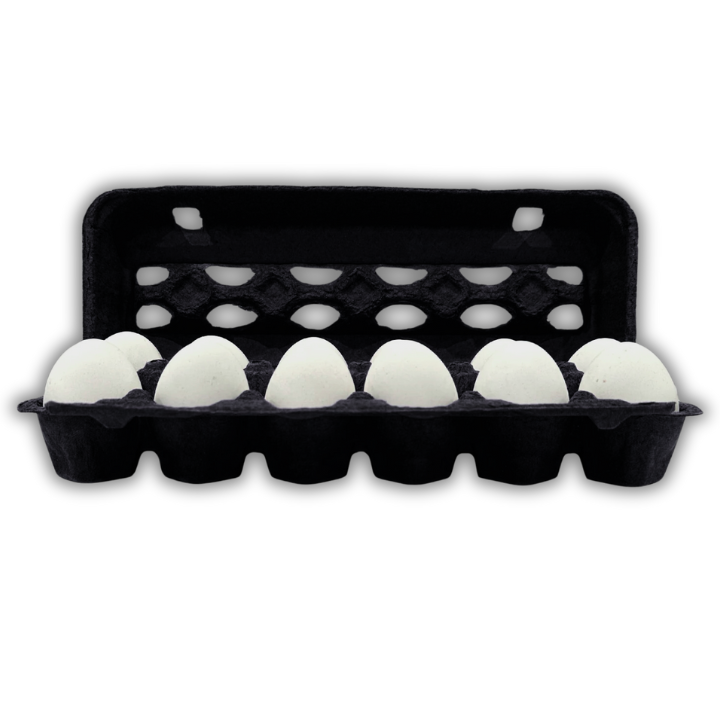
Cajas de huevos negras de pulpa moldeada que contienen huevos blancos, con la tapa abierta

Descripción del producto

Especificación Detalles
Marca BonitoPak
Número de modelo EC-BLK-C series
Nombre del producto Black Egg Cartons / Black Pigmented Pulp Cartons
Material Pasta de papel reciclada con pigmento mezclado en suspensión
Técnica Moldeado de pulpa (prensado en húmedo), pigmentación en la fase húmeda
Recuento celular 4, 6, 10, 12, 18, or 20 cells
Shade True black; charcoal available as a lighter alternative
Método del color El pigmento se mezcla en la pasta antes del moldeado, no se aplica como recubrimiento superficial
Emboss Performance Highest contrast in the range
Print Contrast Strong with white, metallic, and foil
Shade Consistency Highest in the range
Impresión de logotipos Impresión en relieve, en hueco o flexográfica
Uso industrial Premium farm brands, gift retail, hospitality, specialty grocery
Aplicación Premium egg lines, gift sets, high end retail positioning
Ventajas Biodegradable, compostable en casa, sin plástico, sin recubrimiento
Pedido a medida Aceptado
MOQ Confirm with sales; stock black carries a lower minimum than custom shades

Galería de Cajas de huevos negras piezas

Esta galería muestra la excepcional calidad y atención al detalle que ofrecemos en cada proyecto. Desde diseños complejos hasta acabados impecables, cada imagen refleja nuestro compromiso con la excelencia en Cajas de huevos negras .

40%

Ahorro de tiempo y dinero

Experimente soluciones de envasado líderes que optimizan sus costes y tiempo, proporcionando procesos eficientes y maximizando su ROI.

50%

Más sostenible

Consiga envases ecológicos con materiales sostenibles, reduciendo los residuos y fomentando la responsabilidad medioambiental en todas sus líneas de productos.

25%

Aumento de las ventas

Aumente el atractivo de su producto en las estanterías con diseños innovadores que impulsen la visibilidad y las ventas tanto en los mercados minoristas como en línea.

100%

Más fiable

Confíe en el compromiso de BonitoPak con la calidad, garantizando que cada producto cumple nuestros elevados estándares con un servicio constante y fiable.

Black is the easiest color we make

That sounds counterintuitive for the most dramatic shade in the range, but it follows directly from how pigmented pulp works.

Recycled fiber arrives gray-brown and varies batch to batch depending on the waste stream. Every pigment has to work against that moving base. Light tints show the variation, which is why pink is the hardest shade we produce.

Black overwhelms it. The pigment load is high enough that incoming fiber color has almost no influence on the finished shade. A grayer batch and a warmer batch produce the same black.

The practical consequence for buyers is consistency. Black reorders match the original more reliably than any other shade, which matters for a brand running the same carton across years rather than a single seasonal run.

Why embossing works best here

Embossed detail is read through shadow, not through color contrast. The mark is the same material as the carton around it, so what the eye picks up is the way light falls into and out of the raised or recessed area.

Shadow depth depends on how much tonal range the surface has. A pale surface reflects light into its own shadows and softens them. A dark surface absorbs that bounced light, so the shadow stays dark and the edge of the emboss stays sharp.

Black has more tonal depth than anything else we produce. An embossed logo on black reads clearly at a distance where the same logo on natural pulp is barely visible.

For a producer who wants permanent branding with no per unit print cost, black plus embossing is the strongest combination in the catalog.

Print behavior

Black is a limited print substrate with two very strong options.

White ink is the workhorse. Maximum contrast, clean reproduction, and it photographs well, which matters for producers selling through social channels where the pack appears in images.

Metallic and foil effects read dramatically on black in a way they do not on lighter pulp, where they compete with the base brightness. Gold and copper on black is a common specification for gift and premium lines.

What does not work is any dark ink, and any design relying on tonal gradation. Black is an absolute floor, so there is nothing below it to build shading against.

Colored inks other than white and metallic generally come out muddy, because ink sitting on a black absorbent surface loses most of its chroma. Designs needing color should specify a lighter carton.

Soil and scuff behavior

Dark packaging shows marks differently from pale packaging, and the difference is not what most buyers expect.

Black hides the gray scuffing that pale cartons pick up from handling and from sliding against each other in a case. A natural pulp carton that has moved through distribution often arrives looking handled. A black one does not.

What black does show is dust and dried moisture spotting, which sit lighter than the surface. Cartons stored in a dusty environment will need more care in presentation than natural pulp would. For refrigerated retail and indoor market selling this never arises, and the scuff advantage is what dominates.

Where black sells

Black carries specific associations in food retail that work for and against it.

It reads premium, which is why gift, hospitality, and high end specialty grocery are the natural channels. A black carton on a market table against a row of gray ones is an immediate signal of a producer who has made a decision.

It also reads as unusual for eggs specifically, since consumers associate egg packaging with natural fiber tones. That cuts both ways. For a premium line it is differentiation. For a mainstream line it can read as incongruous, and producers selling on value should not reach for it.

Black also conceals the eggs visually more than a pale carton does when the lid is open, which matters for producers whose shell color is part of the product. Blue and olive shells from Ameraucana and Olive Egger flocks pop against black. White eggs do too. Brown eggs sit flatter against it.

Combinación con el formato

Black works hardest on premium formats.

On molded pulp octagon egg cartons it produces the strongest premium presentation we can make in fiber, since an unusual shape and an unusual shade reinforce each other.

On a caja para 6 huevos de pulpa moldeada it suits a premium half dozen line sold alongside standard packaging.

On a caja de cartón moldeado para una docena de huevos it works as a permanent brand identity for producers positioning above the category.

For the full pigment detail, shade control, and how color is held across reorders, see cajas de huevos de pulpa moldeada de colores. For embossing and printing specifications, see cajas de huevos con impresión personalizada.

Black is the easiest color we make

That sounds counterintuitive for the most dramatic shade in the range, but it follows directly from how pigmented pulp works.

Recycled fiber arrives gray-brown and varies batch to batch depending on the waste stream. Every pigment has to work against that moving base. Light tints show the variation, which is why pink is the hardest shade we produce.

Black overwhelms it. The pigment load is high enough that incoming fiber color has almost no influence on the finished shade. A grayer batch and a warmer batch produce the same black.

The practical consequence for buyers is consistency. Black reorders match the original more reliably than any other shade, which matters for a brand running the same carton across years rather than a single seasonal run.

Why embossing works best here

Embossed detail is read through shadow, not through color contrast. The mark is the same material as the carton around it, so what the eye picks up is the way light falls into and out of the raised or recessed area.

Shadow depth depends on how much tonal range the surface has. A pale surface reflects light into its own shadows and softens them. A dark surface absorbs that bounced light, so the shadow stays dark and the edge of the emboss stays sharp.

Black has more tonal depth than anything else we produce. An embossed logo on black reads clearly at a distance where the same logo on natural pulp is barely visible.

For a producer who wants permanent branding with no per unit print cost, black plus embossing is the strongest combination in the catalog.

Print behavior

Black is a limited print substrate with two very strong options.

White ink is the workhorse. Maximum contrast, clean reproduction, and it photographs well, which matters for producers selling through social channels where the pack appears in images.

Metallic and foil effects read dramatically on black in a way they do not on lighter pulp, where they compete with the base brightness. Gold and copper on black is a common specification for gift and premium lines.

What does not work is any dark ink, and any design relying on tonal gradation. Black is an absolute floor, so there is nothing below it to build shading against.

Colored inks other than white and metallic generally come out muddy, because ink sitting on a black absorbent surface loses most of its chroma. Designs needing color should specify a lighter carton.

Soil and scuff behavior

Dark packaging shows marks differently from pale packaging, and the difference is not what most buyers expect.

Black hides the gray scuffing that pale cartons pick up from handling and from sliding against each other in a case. A natural pulp carton that has moved through distribution often arrives looking handled. A black one does not.

What black does show is dust and dried moisture spotting, which sit lighter than the surface. Cartons stored in a dusty environment will need more care in presentation than natural pulp would. For refrigerated retail and indoor market selling this never arises, and the scuff advantage is what dominates.

Where black sells

Black carries specific associations in food retail that work for and against it.

It reads premium, which is why gift, hospitality, and high end specialty grocery are the natural channels. A black carton on a market table against a row of gray ones is an immediate signal of a producer who has made a decision.

It also reads as unusual for eggs specifically, since consumers associate egg packaging with natural fiber tones. That cuts both ways. For a premium line it is differentiation. For a mainstream line it can read as incongruous, and producers selling on value should not reach for it.

Black also conceals the eggs visually more than a pale carton does when the lid is open, which matters for producers whose shell color is part of the product. Blue and olive shells from Ameraucana and Olive Egger flocks pop against black. White eggs do too. Brown eggs sit flatter against it.

Combinación con el formato

Black works hardest on premium formats.

On molded pulp octagon egg cartons it produces the strongest premium presentation we can make in fiber, since an unusual shape and an unusual shade reinforce each other.

On a caja para 6 huevos de pulpa moldeada it suits a premium half dozen line sold alongside standard packaging.

On a caja de cartón moldeado para una docena de huevos it works as a permanent brand identity for producers positioning above the category.

For the full pigment detail, shade control, and how color is held across reorders, see cajas de huevos de pulpa moldeada de colores. For embossing and printing specifications, see cajas de huevos con impresión personalizada.

Materiales para Cajas de huevos negras Piezas

Las principales empresas e ingenieros confían en BonitoPak para obtener iteraciones rápidas y piezas duraderas de alta calidad. Tanto si se trata de prototipos como de producción a gran escala, nuestra amplia gama de materiales garantiza que cumplimos los requisitos exclusivos de cualquier empresa. Cajas de huevos negras proyecto con precisión y rapidez.

El papel kraft compostable es la fibra más resistente que fabricamos. Está elaborado a partir de materia prima virgen

La pulpa de color no es una fibra independiente. Se trata de cualquiera de nuestras

La pasta blanqueada es el material que hay que especificar cuando la pieza tiene que

El término «fibra vegetal natural» engloba las fuentes de celulosa no madereras que incorporamos a nuestra mezcla, aparte de la

El papel ondulado, como material de pulpa moldeada, se refiere a las cajas de cartón recuperadas que se han vuelto a convertir en pulpa.

La fibra de paja se obtiene de los tallos que quedan tras la cosecha de cereales, un material

Personalizado Respetuoso con el medio ambiente Fiable

Excelencia en envases personalizados y ecológicos

Totalmente personalizable

Personalice sus envases con estilos, tamaños, colores y acabados a medida para satisfacer necesidades específicas.

Asistencia experta

Bonitopak ofrece asesoramiento experto en diseño y logística para maximizar la eficiencia de los envases y aumentar la rentabilidad de la inversión.

Soluciones ecológicas

Elija envases sostenibles y ecológicos para reducir el impacto ambiental y apoyar los objetivos ecológicos de su marca.

Garantía de calidad

Bonitopak garantiza un servicio de máxima calidad y la excelencia del producto con cada solución de envasado.

Preguntas frecuentes

Cajas de huevos negras

  • Will black pigment rub off onto eggshells?

    No. The pigment is bound within the fiber rather than applied to the surface, so there is nothing loose to transfer. Transfer onto eggs would indicate a surface coated carton with poor adhesion, which is one of the practical reasons we color at the wet end rather than coating afterward.

  • Does black cost more than your other stock colors?

    Slightly, because the pigment loading is higher by mass than for a light tint. That is partly offset by a lower rejection rate, since black does not fail shade checks the way pink and pastels do. Net difference against other stock colors is small.

  • Can you print a photograph in white on black?

    No, and not because of the color. Fiber texture breaks up continuous tone regardless of substrate, so photographic reproduction fails on pulp generally. A bold single color illustration in white on black reproduces well. A halftone image does not.

  • Will a black carton fade in sunlight?

    Less than any other shade we produce. Black pigment has more lightfastness headroom than light tints, because fading is a proportional loss and there is far more pigment present to lose. Cartons held in strong sun for months will dull toward charcoal, but the effect is slower and less visible than on pastels.

  • Does a black carton compost as readily as a natural one?

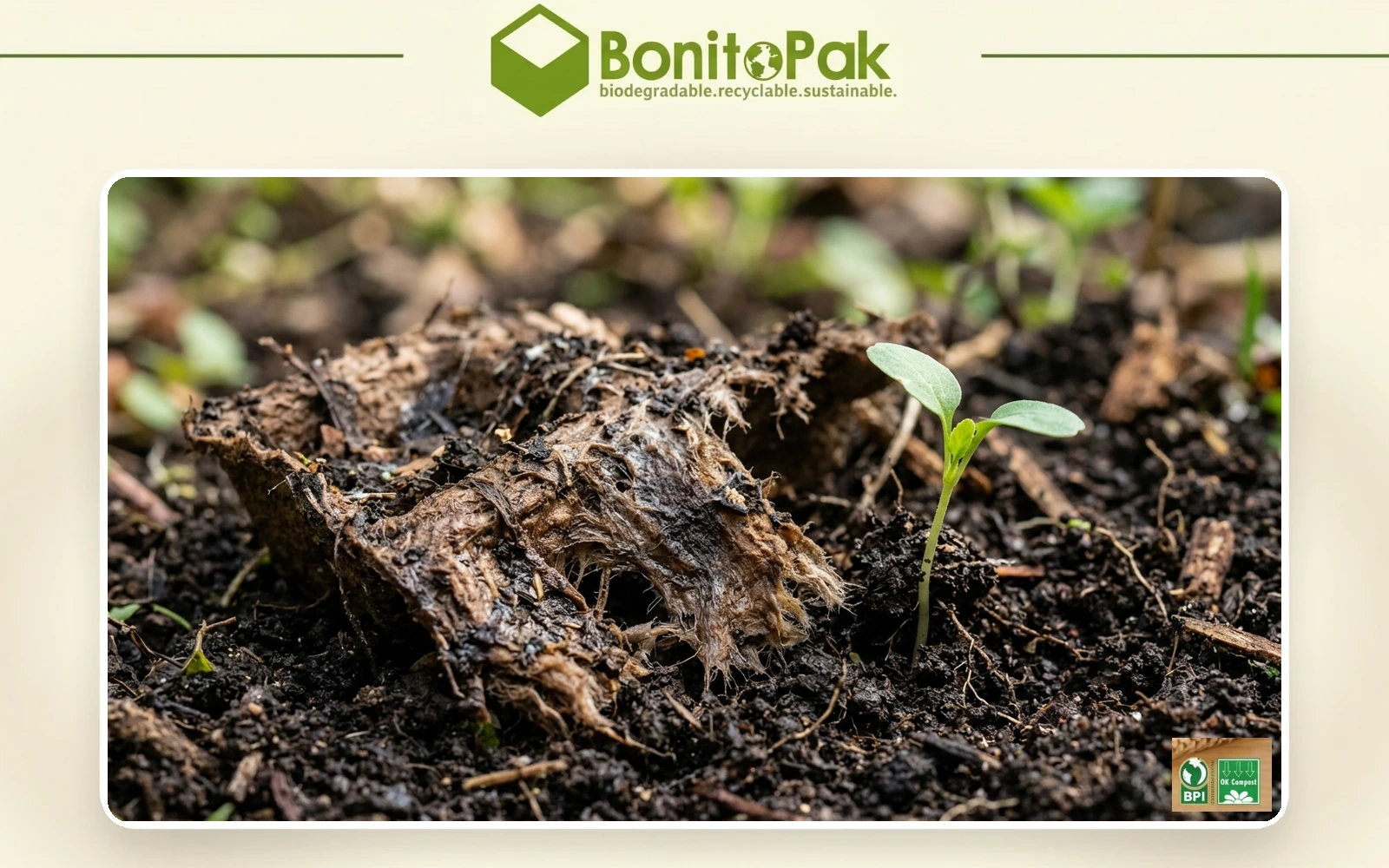
    Yes. The pigment is a very small fraction by mass and is selected for compostable packaging use, with no coating or film involved. Buyers sometimes assume heavy pigmentation means heavy additives, but the loading required to reach black in fiber is still minor against the mass of the fiber itself.

Biodegradable Resultado

0 días

7 días

14 días

30 días

Industrias especializadas

Tras haber fabricado millones de piezas, BonitoPak posee profundos conocimientos en numerosas aplicaciones. Destacamos especialmente en sectores que requieren la fabricación de componentes precisos e intrincados. Confíe en nuestra experiencia y calidad, sea cual sea la complejidad.

Soluciones de envasado OEM y ODM

Bonitopak ofrece soluciones de envasado personalizadas (OEM) y prediseñadas (ODM). Tanto si necesita diseños totalmente a medida como envases listos para usar, le ofrecemos opciones de alta calidad, eficientes y flexibles para satisfacer las necesidades de su marca.

Servicios OEM

Las soluciones de envasado OEM le permiten crear productos totalmente personalizados, diseñados y fabricados para satisfacer sus requisitos específicos. En Bonitopak, le ofrecemos un apoyo integral a lo largo de todo el proceso de diseño, creación de prototipos y fabricación, garantizando que su envase refleje la identidad única de su marca. Nuestra capacidad de fabricación de precisión garantiza una producción coherente y de alta calidad, independientemente de la complejidad del diseño. Con un servicio integral, nos encargamos de todo, desde el concepto hasta la entrega, ayudándole a racionalizar sus necesidades de envasado.

Servicios ODM

Las soluciones de envasado ODM ofrecen productos prediseñados que pueden adaptarse a los requisitos de su marca. Con la innovadora experiencia en diseño y el eficiente proceso de producción de Bonitopak, puede elegir entre una amplia gama de opciones de envases listos para usar. Ofrecemos una personalización flexible, que le permite añadir su marca y seleccionar entre varios acabados, colores y tamaños. Esta solución ahorra tiempo y costes, al tiempo que garantiza un envase de alta calidad que cumple los estándares de su marca.
¿Listo para elevar su proyecto?

Dé vida a sus diseños con BonitoPak

Experimente la ingeniería de precisión con BonitoPak. Desde prototipos detallados hasta la producción de grandes volúmenes, estamos aquí para convertir sus conceptos en realidad. Póngase en contacto con nosotros hoy mismo para hablar de las necesidades de su proyecto.

Nuestras categorías de productos

Descubra la variada gama de soluciones de envasado de Bonitopak, que incluye bandejas de pulpa moldeada, envases alimentarios, diseños personalizados y opciones sostenibles. Cada categoría está diseñada para ofrecer durabilidad, funcionalidad y responsabilidad medioambiental, y se adapta a sus necesidades específicas.

Black is the easiest color we make

That sounds counterintuitive for the most dramatic shade in the range, but it follows directly from how pigmented pulp works.

Recycled fiber arrives gray-brown and varies batch to batch depending on the waste stream. Every pigment has to work against that moving base. Light tints show the variation, which is why pink is the hardest shade we produce.

Black overwhelms it. The pigment load is high enough that incoming fiber color has almost no influence on the finished shade. A grayer batch and a warmer batch produce the same black.

The practical consequence for buyers is consistency. Black reorders match the original more reliably than any other shade, which matters for a brand running the same carton across years rather than a single seasonal run.

Why embossing works best here

Embossed detail is read through shadow, not through color contrast. The mark is the same material as the carton around it, so what the eye picks up is the way light falls into and out of the raised or recessed area.

Shadow depth depends on how much tonal range the surface has. A pale surface reflects light into its own shadows and softens them. A dark surface absorbs that bounced light, so the shadow stays dark and the edge of the emboss stays sharp.

Black has more tonal depth than anything else we produce. An embossed logo on black reads clearly at a distance where the same logo on natural pulp is barely visible.

For a producer who wants permanent branding with no per unit print cost, black plus embossing is the strongest combination in the catalog.

Print behavior

Black is a limited print substrate with two very strong options.

White ink is the workhorse. Maximum contrast, clean reproduction, and it photographs well, which matters for producers selling through social channels where the pack appears in images.

Metallic and foil effects read dramatically on black in a way they do not on lighter pulp, where they compete with the base brightness. Gold and copper on black is a common specification for gift and premium lines.

What does not work is any dark ink, and any design relying on tonal gradation. Black is an absolute floor, so there is nothing below it to build shading against.

Colored inks other than white and metallic generally come out muddy, because ink sitting on a black absorbent surface loses most of its chroma. Designs needing color should specify a lighter carton.

Soil and scuff behavior

Dark packaging shows marks differently from pale packaging, and the difference is not what most buyers expect.

Black hides the gray scuffing that pale cartons pick up from handling and from sliding against each other in a case. A natural pulp carton that has moved through distribution often arrives looking handled. A black one does not.

What black does show is dust and dried moisture spotting, which sit lighter than the surface. Cartons stored in a dusty environment will need more care in presentation than natural pulp would. For refrigerated retail and indoor market selling this never arises, and the scuff advantage is what dominates.

Where black sells

Black carries specific associations in food retail that work for and against it.

It reads premium, which is why gift, hospitality, and high end specialty grocery are the natural channels. A black carton on a market table against a row of gray ones is an immediate signal of a producer who has made a decision.

It also reads as unusual for eggs specifically, since consumers associate egg packaging with natural fiber tones. That cuts both ways. For a premium line it is differentiation. For a mainstream line it can read as incongruous, and producers selling on value should not reach for it.

Black also conceals the eggs visually more than a pale carton does when the lid is open, which matters for producers whose shell color is part of the product. Blue and olive shells from Ameraucana and Olive Egger flocks pop against black. White eggs do too. Brown eggs sit flatter against it.

Combinación con el formato

Black works hardest on premium formats.

On molded pulp octagon egg cartons it produces the strongest premium presentation we can make in fiber, since an unusual shape and an unusual shade reinforce each other.

On a caja para 6 huevos de pulpa moldeada it suits a premium half dozen line sold alongside standard packaging.

On a caja de cartón moldeado para una docena de huevos it works as a permanent brand identity for producers positioning above the category.

For the full pigment detail, shade control, and how color is held across reorders, see cajas de huevos de pulpa moldeada de colores. For embossing and printing specifications, see cajas de huevos con impresión personalizada.

Artículos relacionados

Manténgase informado con las últimas actualizaciones sobre tendencias en envases sostenibles, perspectivas del sector y consejos de expertos a través de nuestro blog. Explore ideas y soluciones innovadoras para mejorar sus conocimientos sobre envasado.

Por Leo Chan | Redactor, BonitoPak | Más de 20 años de experiencia en envases de pulpa moldeada. El vodka es

Por Leo Chan | Redactor, BonitoPak | Más de 20 años de experiencia en embalajes de pulpa moldeada. Casi todos los

Por Leo Chan | Redactor, BonitoPak | Más de 20 años de experiencia en embalajes de pulpa moldeada. Buscar esto

Preguntas frecuentes

Cajas de huevos negras

  • Will black pigment rub off onto eggshells?

    No. The pigment is bound within the fiber rather than applied to the surface, so there is nothing loose to transfer. Transfer onto eggs would indicate a surface coated carton with poor adhesion, which is one of the practical reasons we color at the wet end rather than coating afterward.

  • Does black cost more than your other stock colors?

    Slightly, because the pigment loading is higher by mass than for a light tint. That is partly offset by a lower rejection rate, since black does not fail shade checks the way pink and pastels do. Net difference against other stock colors is small.

  • Can you print a photograph in white on black?

    No, and not because of the color. Fiber texture breaks up continuous tone regardless of substrate, so photographic reproduction fails on pulp generally. A bold single color illustration in white on black reproduces well. A halftone image does not.

  • Will a black carton fade in sunlight?

    Less than any other shade we produce. Black pigment has more lightfastness headroom than light tints, because fading is a proportional loss and there is far more pigment present to lose. Cartons held in strong sun for months will dull toward charcoal, but the effect is slower and less visible than on pastels.

  • Does a black carton compost as readily as a natural one?

    Yes. The pigment is a very small fraction by mass and is selected for compostable packaging use, with no coating or film involved. Buyers sometimes assume heavy pigmentation means heavy additives, but the loading required to reach black in fiber is still minor against the mass of the fiber itself.

Rellene este formulario detallado