Eierkartons aus geformtem Zellstoff

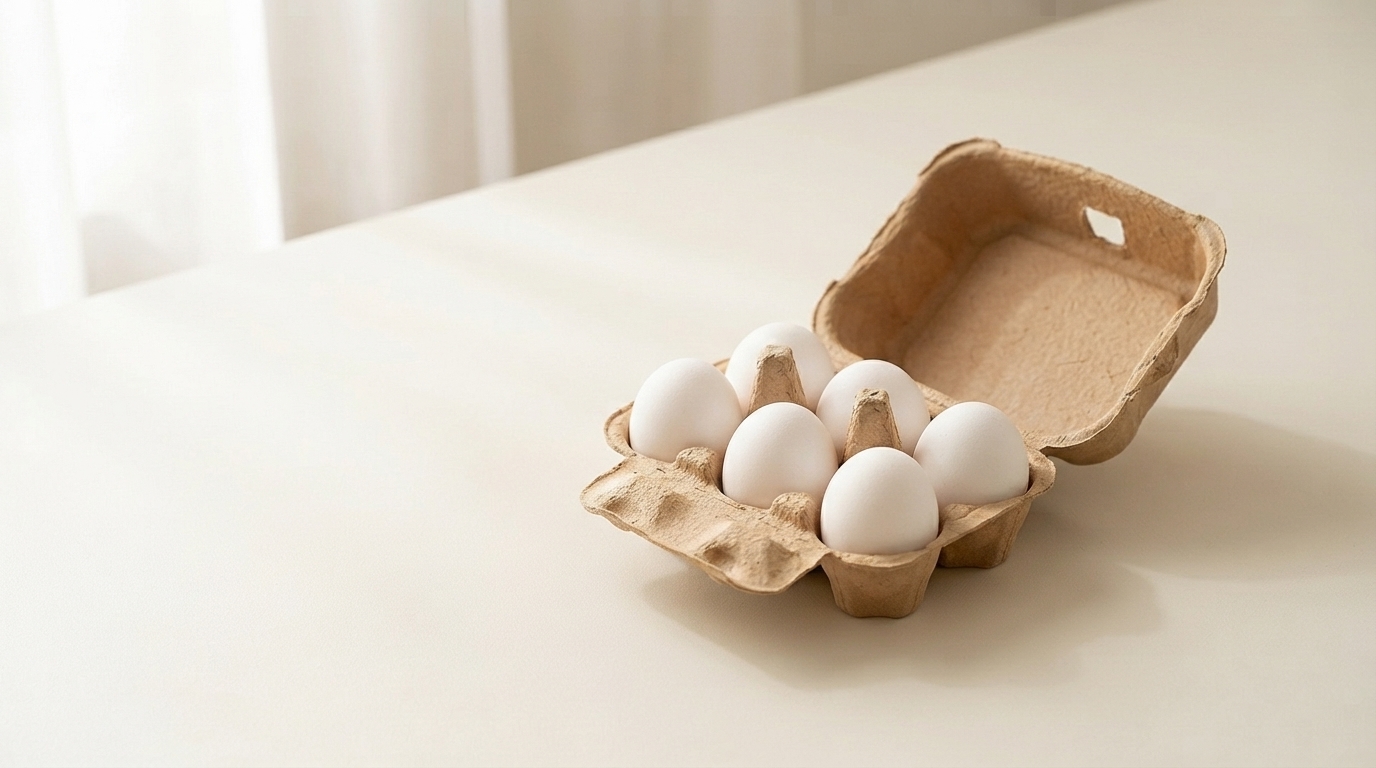
Every egg you sell arrives in something. Our Eierkartons aus geformtem Zellstoff are formed from 100% recycled paper fiber into cartons that protect the eggs, carry your brand, and break down in a home compost pile when the customer is finished with them. No plastic, no foam, no coating.

Here is what the range gives you:

  • Every count you need. Four, six, ten, twelve, eighteen, and twenty cell layouts running on molds we already own, so most orders skip the tooling charge entirely.
  • Cut for the bird, not just the count. Chicken cells shaped to the USDA weight grades and quail cells cut to true quail diameter, because a small egg in a large cup is an egg that chips.
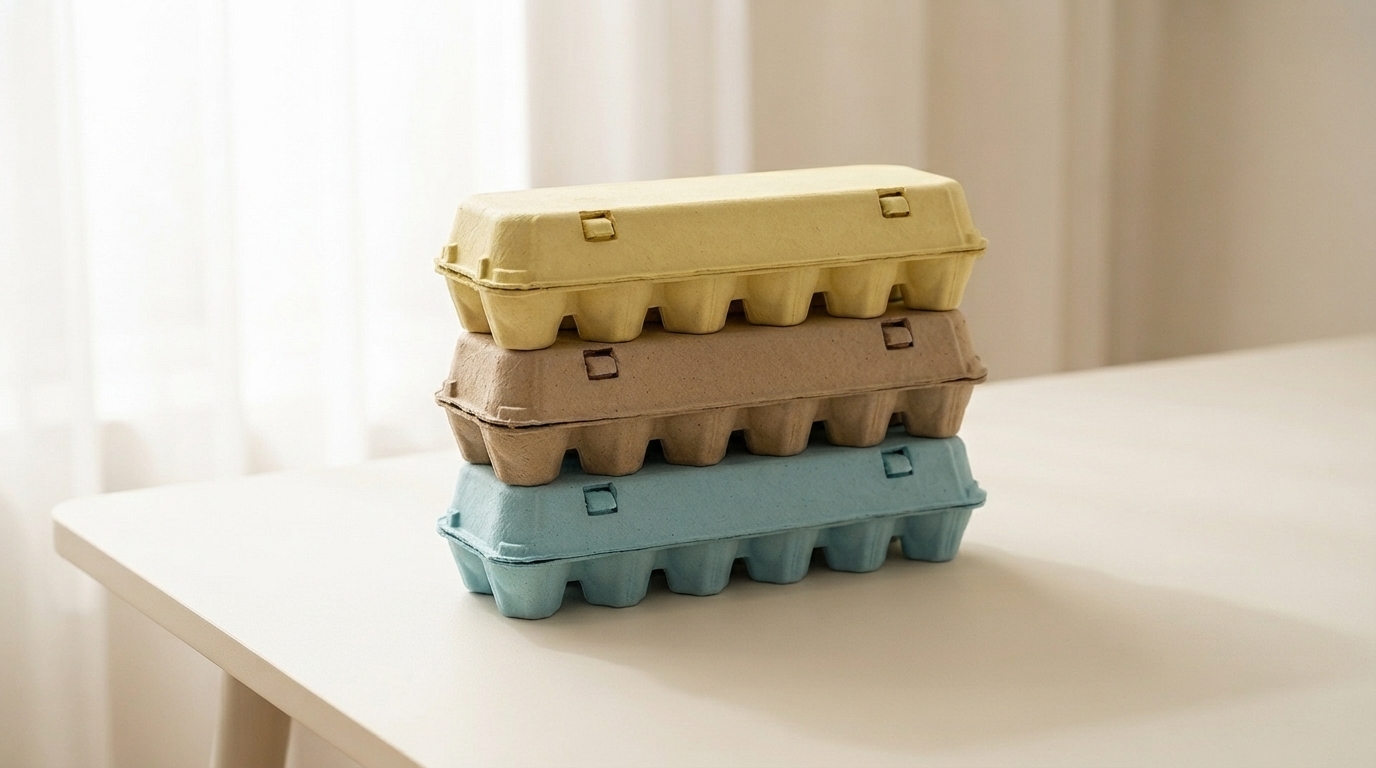
  • Color that runs through the fiber. Pigment blended into the pulp before forming, not sprayed on after. Scuff the carton and the color underneath is the same.
  • Your brand pressed into the mold. Embossed and debossed lids cost nothing per unit once the tool exists, and there is no ink to scuff or label to peel in a cold room.
  • Freight that works in your favor. Cartons nest flat, so a container carries far more units than the same order in rigid plastic clamshells.

Material :

Recyclingpapier
Verpackung:
Eierkarton
Prozess :
Nasspresse
Farbe :
Multicolor

Material :

Recyceltes Papier
Verpackung:
Eierkarton
Prozess :
Nasspresse
Farbe :
Natürlich

Material :

Recyclingpapier
Verpackung:
Quail Egg Carton
Prozess :
Nasspresse
Farbe :
Natürlich

Material :

Art des Materials
Verpackung:
Art der Verpackung
Prozess :
Prozess-Liste
Farbe :
Farbe Gray

Material :

Art des Materials
Verpackung:
Art der Verpackung
Prozess :
Prozess-Liste
Farbe :
Farbe Gray

Material :

Art des Materials
Verpackung:
Art der Verpackung
Prozess :
Prozess-Liste
Farbe :
Farbe Gray

Unsere Produktkategorien

Entdecken Sie das vielfältige Angebot an Verpackungslösungen von Bonitopak, darunter geformte Zellstoffschalen, Lebensmittelverpackungen, kundenspezifische Designs und nachhaltige Optionen. Jede Kategorie ist auf Langlebigkeit, Funktionalität und Umweltverträglichkeit ausgelegt und auf Ihre spezifischen Anforderungen zugeschnitten.

Two ways to color a pulp carton, and only one of them lasts

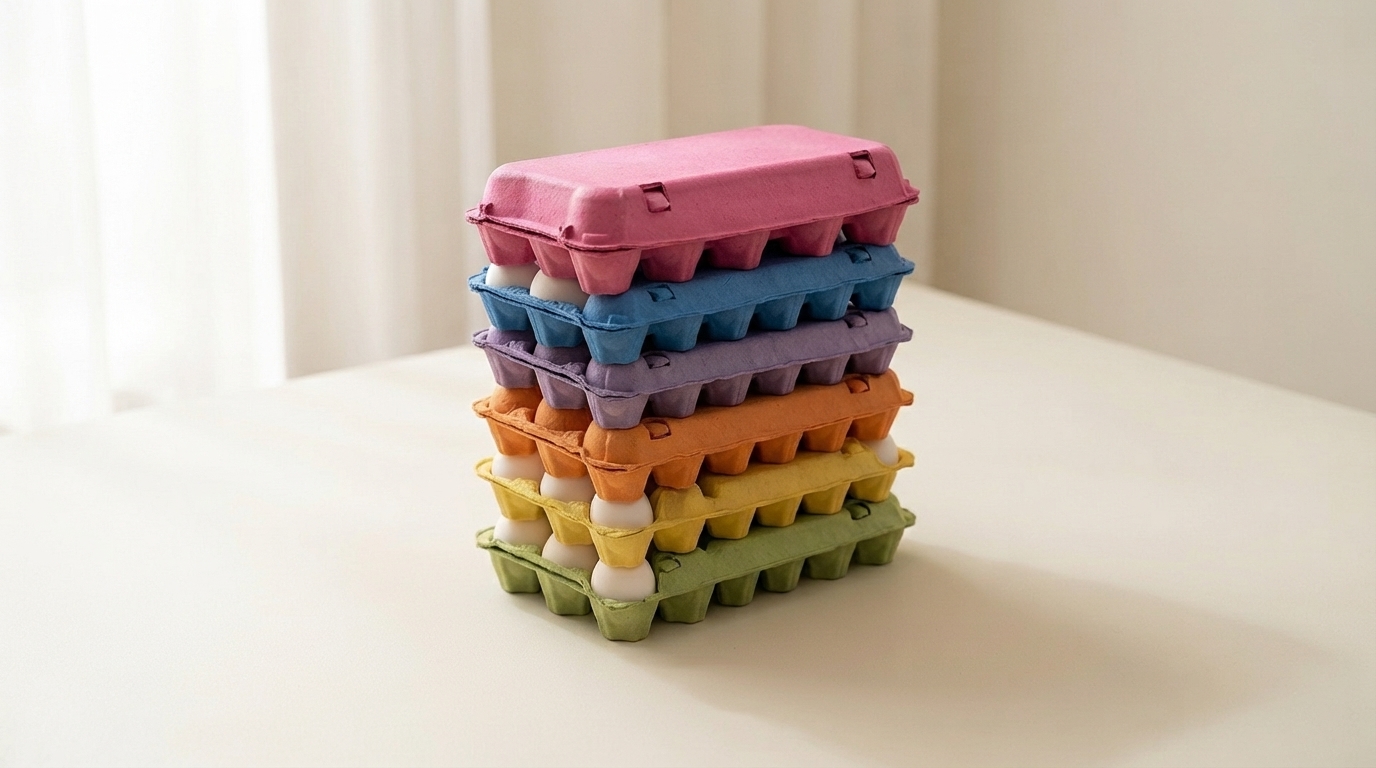
Colored egg cartons are produced by two very different methods, and the difference determines almost everything about how the finished carton performs.

Surface coating applies pigment after the carton is formed and dried, either by spray or by print. It is cheap, it allows fast color changes, and it produces bright results. It also sits on top of the fiber. Scuff a coated carton against a shelf edge and the natural pulp shows through. Coating also adds a layer that may not compost at the same rate as the fiber underneath, which undermines the reason most buyers chose pulp.

Wet end pigmentation blends the pigment into the pulp slurry before the mold ever touches it. The color is distributed through the fiber, so a torn edge shows the same shade as the face. Nothing can scuff off because there is no layer to remove.

Bonitopak colors at the wet end. That is why our colored cartons cost more than a coated equivalent and why they still look correct after a shipping cycle.

What pigment does to compostability

The concern buyers raise most often is whether color compromises the environmental claim. It is a fair question and the answer depends entirely on pigment selection.

Pigments intended for packaging that will compost have to break down without leaving heavy metals or persistent residue in the finished compost. That rules out several traditional colorant chemistries, particularly some historic reds and yellows. It leaves a narrower palette, which is one reason pulp color ranges are smaller than plastic ones.

Working inside that constraint, a pigmented pulp carton composts on essentially the same timeline as a natural one. The fiber is the same, the quantity of pigment is very small by mass, and there is no film or coating to interfere.

Buyers should ask any colored pulp supplier which pigment system they use and whether it is rated for compostable packaging. A supplier who cannot answer is probably surface coating.

Batch consistency is the real production challenge

Getting a color right once is straightforward. Getting the same color across a twelve month supply relationship is where suppliers separate.

Recycled pulp is not a consistent starting point. Incoming fiber varies in base color depending on the waste stream, seasonally and by supplier. A pigment dose that produces the target shade on a light batch will produce something darker on a gray one.

The control is measurement rather than recipe. Base pulp brightness is checked before dosing, the pigment quantity is adjusted against that reading, and formed samples are compared to a retained physical standard rather than to a color chip on a screen. Records for each batch let a repeat order be matched to the original rather than to the nominal specification.

Buyers running a branded line should request a retained sample at first production and reference it on every reorder. It is the only reliable way to hold a shade over time.

Where color earns its cost

Color adds cost. It is worth understanding where it pays that back.

At a farm stand or market table, a colored carton separates one producer from every other producer selling the same product in gray pulp. That visual difference does more work than any label, because it registers before the shopper is close enough to read anything.

In retail, color functions as a range signal. Producers commonly use different shades to distinguish free range from pasture raised, or standard from organic, which lets a shopper find their usual product without reading the pack.

In gift and seasonal channels, color is the product. Easter, holiday hampers, and branded corporate gifts are bought on appearance.

Where color rarely pays back is commodity commercial packing. If eggs are going through a grading station to a retailer who applies their own labeling, the carton is invisible and natural pulp is the right call.

Specifying color across a range

Buyers running several cell counts in one brand color need to plan for it, because each mold is a separate production run and shade drift between molds is a genuine risk.

The reliable approach is to run all molds in the same color from the same pigment batch where volumes allow, or to match every mold to one retained physical standard where they cannot. Ordering a dozen egg carton and a 6 egg carton in the same shade six months apart without a retained standard will usually produce a visible difference.

Buyers focused on a single shade should see pink egg cartons for the shade specific detail. Those pairing color with a distinctive shape should look at octagon egg cartons oder vintage egg cartons.
Colored egg cartons are produced by two very different methods, and the difference determines almost everything about how the finished carton performs.

Surface coating applies pigment after the carton is formed and dried, either by spray or by print. It is cheap, it allows fast color changes, and it produces bright results. It also sits on top of the fiber. Scuff a coated carton against a shelf edge and the natural pulp shows through. Coating also adds a layer that may not compost at the same rate as the fiber underneath, which undermines the reason most buyers chose pulp.

Wet end pigmentation blends the pigment into the pulp slurry before the mold ever touches it. The color is distributed through the fiber, so a torn edge shows the same shade as the face. Nothing can scuff off because there is no layer to remove.

Bonitopak colors at the wet end. That is why our colored cartons cost more than a coated equivalent and why they still look correct after a shipping cycle.

What pigment does to compostability

The concern buyers raise most often is whether color compromises the environmental claim. It is a fair question and the answer depends entirely on pigment selection.

Pigments intended for packaging that will compost have to break down without leaving heavy metals or persistent residue in the finished compost. That rules out several traditional colorant chemistries, particularly some historic reds and yellows. It leaves a narrower palette, which is one reason pulp color ranges are smaller than plastic ones.

Working inside that constraint, a pigmented pulp carton composts on essentially the same timeline as a natural one. The fiber is the same, the quantity of pigment is very small by mass, and there is no film or coating to interfere.

Buyers should ask any colored pulp supplier which pigment system they use and whether it is rated for compostable packaging. A supplier who cannot answer is probably surface coating.

Batch consistency is the real production challenge

Getting a color right once is straightforward. Getting the same color across a twelve month supply relationship is where suppliers separate.

Recycled pulp is not a consistent starting point. Incoming fiber varies in base color depending on the waste stream, seasonally and by supplier. A pigment dose that produces the target shade on a light batch will produce something darker on a gray one.

The control is measurement rather than recipe. Base pulp brightness is checked before dosing, the pigment quantity is adjusted against that reading, and formed samples are compared to a retained physical standard rather than to a color chip on a screen. Records for each batch let a repeat order be matched to the original rather than to the nominal specification.

Buyers running a branded line should request a retained sample at first production and reference it on every reorder. It is the only reliable way to hold a shade over time.

Where color earns its cost

Color adds cost. It is worth understanding where it pays that back.

At a farm stand or market table, a colored carton separates one producer from every other producer selling the same product in gray pulp. That visual difference does more work than any label, because it registers before the shopper is close enough to read anything.

In retail, color functions as a range signal. Producers commonly use different shades to distinguish free range from pasture raised, or standard from organic, which lets a shopper find their usual product without reading the pack.

In gift and seasonal channels, color is the product. Easter, holiday hampers, and branded corporate gifts are bought on appearance.

Where color rarely pays back is commodity commercial packing. If eggs are going through a grading station to a retailer who applies their own labeling, the carton is invisible and natural pulp is the right call.

Specifying color across a range

Buyers running several cell counts in one brand color need to plan for it, because each mold is a separate production run and shade drift between molds is a genuine risk.

The reliable approach is to run all molds in the same color from the same pigment batch where volumes allow, or to match every mold to one retained physical standard where they cannot. Ordering a dozen egg carton and a 6 egg carton in the same shade six months apart without a retained standard will usually produce a visible difference.

Buyers focused on a single shade should see pink egg cartons for the shade specific detail. Those pairing color with a distinctive shape should look at octagon egg cartons oder vintage egg cartons.
Two ways to color a pulp carton, and only one of them lasts

Colored egg cartons are produced by two very different methods, and the difference determines almost everything about how the finished carton performs.

Surface coating applies pigment after the carton is formed and dried, either by spray or by print. It is cheap, it allows fast color changes, and it produces bright results. It also sits on top of the fiber. Scuff a coated carton against a shelf edge and the natural pulp shows through. Coating also adds a layer that may not compost at the same rate as the fiber underneath, which undermines the reason most buyers chose pulp.

Wet end pigmentation blends the pigment into the pulp slurry before the mold ever touches it. The color is distributed through the fiber, so a torn edge shows the same shade as the face. Nothing can scuff off because there is no layer to remove.

Bonitopak colors at the wet end. That is why our colored cartons cost more than a coated equivalent and why they still look correct after a shipping cycle.

What pigment does to compostability

The concern buyers raise most often is whether color compromises the environmental claim. It is a fair question and the answer depends entirely on pigment selection.

Pigments intended for packaging that will compost have to break down without leaving heavy metals or persistent residue in the finished compost. That rules out several traditional colorant chemistries, particularly some historic reds and yellows. It leaves a narrower palette, which is one reason pulp color ranges are smaller than plastic ones.

Working inside that constraint, a pigmented pulp carton composts on essentially the same timeline as a natural one. The fiber is the same, the quantity of pigment is very small by mass, and there is no film or coating to interfere.

Buyers should ask any colored pulp supplier which pigment system they use and whether it is rated for compostable packaging. A supplier who cannot answer is probably surface coating.

Batch consistency is the real production challenge

Getting a color right once is straightforward. Getting the same color across a twelve month supply relationship is where suppliers separate.

Recycled pulp is not a consistent starting point. Incoming fiber varies in base color depending on the waste stream, seasonally and by supplier. A pigment dose that produces the target shade on a light batch will produce something darker on a gray one.

The control is measurement rather than recipe. Base pulp brightness is checked before dosing, the pigment quantity is adjusted against that reading, and formed samples are compared to a retained physical standard rather than to a color chip on a screen. Records for each batch let a repeat order be matched to the original rather than to the nominal specification.

Buyers running a branded line should request a retained sample at first production and reference it on every reorder. It is the only reliable way to hold a shade over time.

Where color earns its cost

Color adds cost. It is worth understanding where it pays that back.

At a farm stand or market table, a colored carton separates one producer from every other producer selling the same product in gray pulp. That visual difference does more work than any label, because it registers before the shopper is close enough to read anything.

In retail, color functions as a range signal. Producers commonly use different shades to distinguish free range from pasture raised, or standard from organic, which lets a shopper find their usual product without reading the pack.

In gift and seasonal channels, color is the product. Easter, holiday hampers, and branded corporate gifts are bought on appearance.

Where color rarely pays back is commodity commercial packing. If eggs are going through a grading station to a retailer who applies their own labeling, the carton is invisible and natural pulp is the right call.

Specifying color across a range

Buyers running several cell counts in one brand color need to plan for it, because each mold is a separate production run and shade drift between molds is a genuine risk.

The reliable approach is to run all molds in the same color from the same pigment batch where volumes allow, or to match every mold to one retained physical standard where they cannot. Ordering a dozen egg carton and a 6 egg carton in the same shade six months apart without a retained standard will usually produce a visible difference.

Buyers focused on a single shade should see pink egg cartons for the shade specific detail. Those pairing color with a distinctive shape should look at octagon egg cartons oder vintage egg cartons.
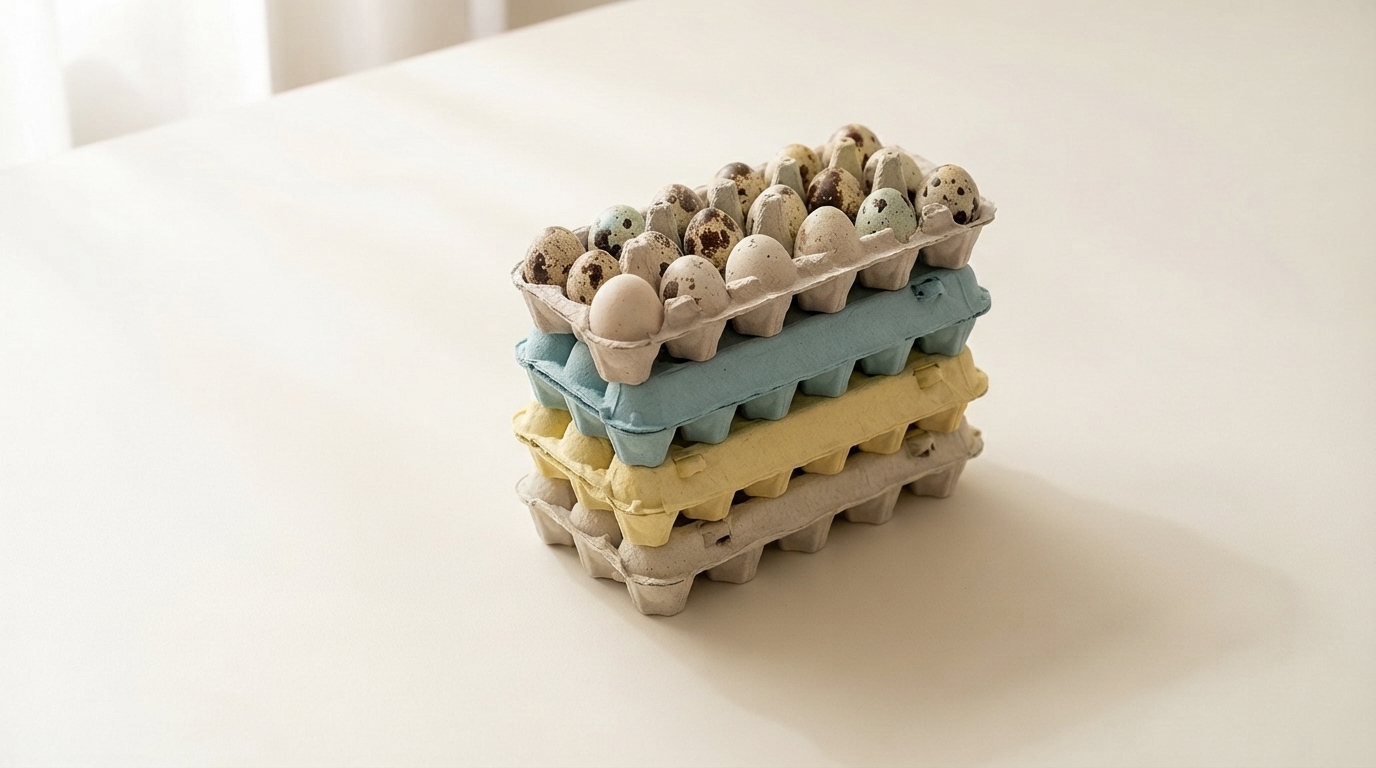
Colored egg cartons are produced by two very different methods, and the difference determines almost everything about how the finished carton performs.

Surface coating applies pigment after the carton is formed and dried, either by spray or by print. It is cheap, it allows fast color changes, and it produces bright results. It also sits on top of the fiber. Scuff a coated carton against a shelf edge and the natural pulp shows through. Coating also adds a layer that may not compost at the same rate as the fiber underneath, which undermines the reason most buyers chose pulp.

Wet end pigmentation blends the pigment into the pulp slurry before the mold ever touches it. The color is distributed through the fiber, so a torn edge shows the same shade as the face. Nothing can scuff off because there is no layer to remove.

Bonitopak colors at the wet end. That is why our colored cartons cost more than a coated equivalent and why they still look correct after a shipping cycle.

What pigment does to compostability

The concern buyers raise most often is whether color compromises the environmental claim. It is a fair question and the answer depends entirely on pigment selection.

Pigments intended for packaging that will compost have to break down without leaving heavy metals or persistent residue in the finished compost. That rules out several traditional colorant chemistries, particularly some historic reds and yellows. It leaves a narrower palette, which is one reason pulp color ranges are smaller than plastic ones.

Working inside that constraint, a pigmented pulp carton composts on essentially the same timeline as a natural one. The fiber is the same, the quantity of pigment is very small by mass, and there is no film or coating to interfere.

Buyers should ask any colored pulp supplier which pigment system they use and whether it is rated for compostable packaging. A supplier who cannot answer is probably surface coating.

Batch consistency is the real production challenge

Getting a color right once is straightforward. Getting the same color across a twelve month supply relationship is where suppliers separate.

Recycled pulp is not a consistent starting point. Incoming fiber varies in base color depending on the waste stream, seasonally and by supplier. A pigment dose that produces the target shade on a light batch will produce something darker on a gray one.

The control is measurement rather than recipe. Base pulp brightness is checked before dosing, the pigment quantity is adjusted against that reading, and formed samples are compared to a retained physical standard rather than to a color chip on a screen. Records for each batch let a repeat order be matched to the original rather than to the nominal specification.

Buyers running a branded line should request a retained sample at first production and reference it on every reorder. It is the only reliable way to hold a shade over time.

Where color earns its cost

Color adds cost. It is worth understanding where it pays that back.

At a farm stand or market table, a colored carton separates one producer from every other producer selling the same product in gray pulp. That visual difference does more work than any label, because it registers before the shopper is close enough to read anything.

In retail, color functions as a range signal. Producers commonly use different shades to distinguish free range from pasture raised, or standard from organic, which lets a shopper find their usual product without reading the pack.

In gift and seasonal channels, color is the product. Easter, holiday hampers, and branded corporate gifts are bought on appearance.

Where color rarely pays back is commodity commercial packing. If eggs are going through a grading station to a retailer who applies their own labeling, the carton is invisible and natural pulp is the right call.

Specifying color across a range

Buyers running several cell counts in one brand color need to plan for it, because each mold is a separate production run and shade drift between molds is a genuine risk.

The reliable approach is to run all molds in the same color from the same pigment batch where volumes allow, or to match every mold to one retained physical standard where they cannot. Ordering a dozen egg carton and a 6 egg carton in the same shade six months apart without a retained standard will usually produce a visible difference.

Buyers focused on a single shade should see pink egg cartons for the shade specific detail. Those pairing color with a distinctive shape should look at octagon egg cartons oder vintage egg cartons.

Branchenkenntnisse bei BonitoPak

Durch die Herstellung von Millionen von Teilen verfügt BonitoPak über umfassende Kenntnisse in zahlreichen Anwendungen. Wir zeichnen uns besonders in Branchen aus, die eine präzise und komplizierte Komponentenfertigung erfordern. Vertrauen Sie darauf, dass wir unabhängig von der Komplexität Fachwissen und Qualität liefern.
Sind Sie bereit, Ihr Projekt aufzuwerten?

Erwecken Sie Ihre Entwürfe mit BonitoPak zum Leben

Erleben Sie Präzisionstechnik mit BonitoPak. Von detaillierten Prototypen bis hin zur Großserienproduktion - wir sind da, um Ihre Konzepte in die Realität umzusetzen. Kontaktieren Sie uns noch heute, um Ihre Projektanforderungen zu besprechen!

Warum BonitoPak wählen?

Wir von Bonitopak bieten maßgeschneiderte, umweltfreundliche Verpackungslösungen mit fachkundiger Unterstützung, nachhaltigen Verfahren und garantierter Qualität. Unsere innovativen Designs und unsere effiziente Produktion sorgen dafür, dass Ihre Verpackungen auffallen und gleichzeitig die Umweltbelastung reduzieren.

Schnelle Lösungen

Wir reagieren innerhalb von 24 Stunden und bieten schnelle, klare Kommunikation, maßgeschneiderte Lösungen und effizienten Service, um Zeit und Kosten zu sparen.

Rasche Anpassungsfähigkeit

Unsere hauseigene Konstruktion, Entwicklung und Fertigung gewährleistet eine schnelle Werkzeugherstellung, wobei Muster innerhalb von 7 Tagen und Produktionsformen innerhalb von 8 Tagen fertiggestellt werden.

Experten-Innovatoren

Unsere erfahrenen F&E-Ingenieure zeichnen sich durch Design, Prototyping und Werkzeugbau aus und bieten komplette Verpackungslösungen mit Blister-, Blechdosen- und bedruckten Schachteln an.

Effiziente Optimierung

Geschulte Mitarbeiter führen 100%-Inspektionen, Stichproben und Qualitätskontrollen durch, um hohe Standards zu gewährleisten, Ausschuss zu reduzieren und Kosten zu sparen.

Prompte Lieferung

Wir sorgen für eine vernünftige Auftragsplanung und stimmen uns mit unseren Kunden ab, um Probleme umgehend zu lösen und die besten Lösungen zu gewährleisten.

Ausgezeichnete Unterstützung

Unser erfahrenes After-Sales-Team sorgt für eine reibungslose Kommunikation und löst Probleme mit Ersatz, Versand und Lieferung, mit dem Ziel, Reklamationen zu vermeiden.

Verwandte Artikel und Einblicke

Bleiben Sie auf dem Laufenden mit den neuesten Informationen über nachhaltige Verpackungstrends, Einblicke in die Branche und Expertentipps in unserem Blog. Entdecken Sie innovative Ideen und Lösungen, um Ihr Verpackungswissen zu erweitern.

Von Leo Chan | Autor, BonitoPak | Über 20 Jahre Erfahrung im Bereich Verpackungen aus Formzellstoff Wodka ist

Von Leo Chan | Autor, BonitoPak | Über 20 Jahre Erfahrung im Bereich Formzellstoffverpackungen Fast jede

Von Leo Chan | Autor, BonitoPak | Über 20 Jahre Erfahrung im Bereich Verpackungen aus Formzellstoff Hier suchen

Häufig gestellte Fragen

Eierkartons aus geformter, gefärbter Zellstoffmasse

  • Can I get a color card before ordering?

    Yes, and we recommend it. Screen renderings of pulp color are unreliable because fiber texture affects perceived shade. We send physical color chips of the six stock shades, and for custom work we produce a formed sample in the actual carton geometry, since a flat chip and a molded surface read differently.

  • Does the pigment transfer onto the eggshells?

    No. The pigment is bound within the fiber structure, not sitting loose on the surface, and dry pulp does not transfer color under normal handling. A carton that marks the eggs would indicate a surface coated product with poor adhesion, which is one of the practical arguments for wet end coloring.

  • Why do colored cartons cost more than natural?

    Three reasons. The pigment itself is an added material cost. Wet end color changes require the system to be flushed between shades, which is downtime. And colored runs cannot absorb variable incoming fiber the way natural production can, so more batches get rejected on shade. Stock colors cost less than custom because we run them continuously and avoid most of the changeover.

  • Can you match my exact brand color?

    We can get close, and we produce a physical match sample before any full run so you can approve or adjust. Exact matching to a printed Pantone reference is not achievable in pigmented fiber, because pulp scatters light differently than coated paper does. Brands with a strict color standard usually approve a designated pulp equivalent rather than insisting on the ink reference.

  • Will colored cartons fade in sunlight?

    Slowly, and mostly at a farm stand rather than in a cold case. Pulp pigments are less lightfast than printing inks because the palette is limited to compostable chemistries. Cartons held in direct sun for weeks will lighten, particularly in the blue and purple range. Retail cold cases and covered market stalls are not a problem.

Füllen Sie dieses detaillierte Formular aus