 Zum Inhalt wechseln
Introduction: Why the Beverage Industry Is Searching for Plastic Alternatives
Plastic bottles have dominated the beverage industry for decades because they are cheap, lightweight, and easy to mass produce. However, the environmental impact of plastic waste has forced both governments and global brands to rethink packaging strategies. As regulations tighten and consumer expectations shift toward sustainability, companies are actively exploring alternatives that can reduce reliance on fossil-fuel-based plastics.
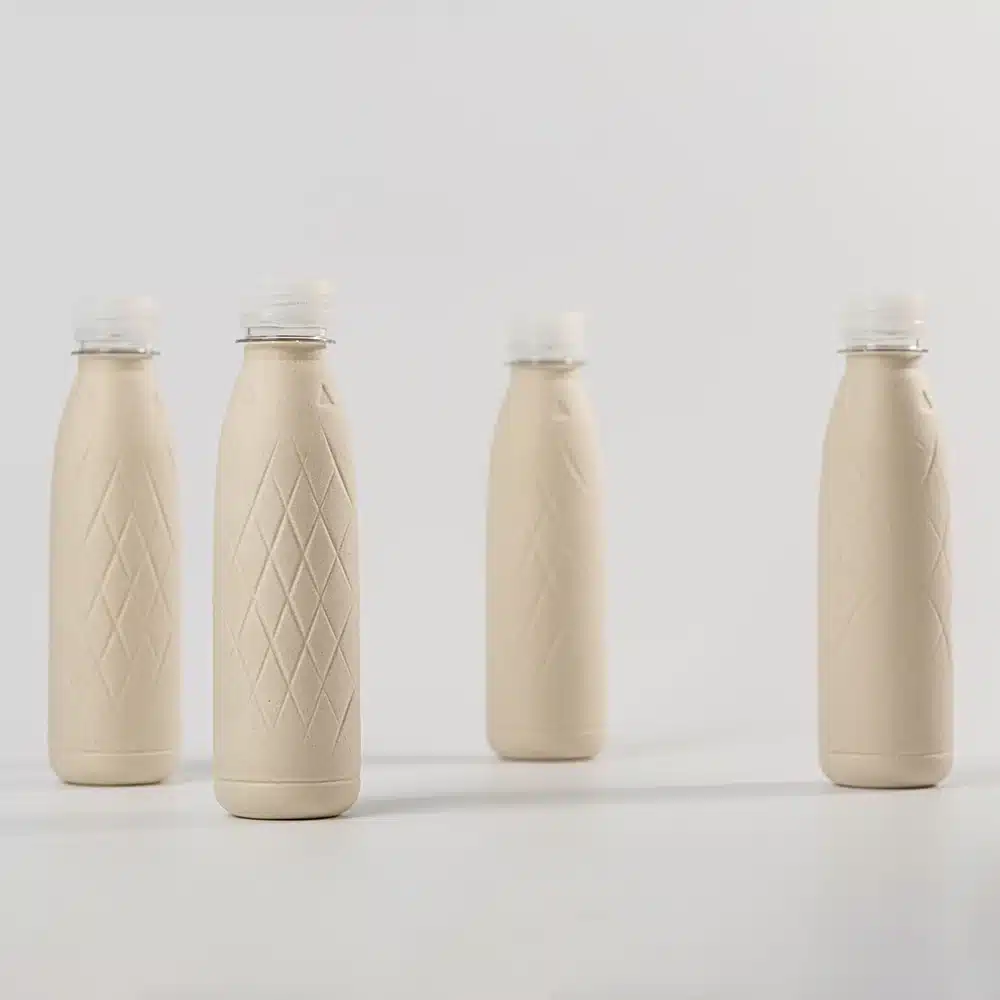
One of the most promising solutions emerging from this transition is Nachhaltige geformte Zellstoff-Wasser-Papierflaschen-Verpackung. Made primarily from renewable plant fibers such as recycled paper, bagasse, or bamboo pulp, these bottles offer a biodegradable and compostable alternative to traditional plastic containers. Unlike early paper bottle experiments that struggled with durability, modern molded pulp technology allows manufacturers to create containers that are strong, lightweight, and suitable for large-scale production.
The development of molded pulp water bottles reflects a broader transformation in packaging manufacturing. Sustainability is no longer just about replacing materials; it is about redesigning the entire production process to balance environmental responsibility with industrial efficiency.
What Sustainable Molded Pulp Water Paper Bottle Packaging Is
Sustainable molded pulp water paper bottle packaging refers to containers made from compressed plant fibers that are formed into bottle shapes using specialized molding technology. Instead of relying on petroleum-based plastics, the primary material comes from renewable fiber sources such as recycled paper pulp, agricultural waste fibers, or sugarcane bagasse.
During production, fiber pulp is mixed with water to create a slurry. This slurry is then formed into bottle shapes using precision molds and vacuum forming systems. After shaping, the bottles undergo pressing and drying processes to increase structural strength and remove excess moisture.
The result is a rigid, lightweight container made primarily from natural fiber. In some designs, a thin internal barrier layer is added to improve liquid resistance and extend shelf life. This barrier may be biodegradable or recyclable depending on the packaging design.
Because the outer structure is fiber-based, molded pulp bottles significantly reduce plastic usage while maintaining the durability required for beverage packaging.
How Molded Pulp Bottle Manufacturing Works
Producing molded pulp bottles requires specialized equipment that combines forming, pressing, and drying stages into a coordinated system. The manufacturing process typically begins with fiber preparation, where recycled paper or agricultural fibers are processed into pulp. The pulp is then mixed with water and additives to create a uniform slurry.
The slurry is deposited onto forming molds using vacuum suction, allowing fibers to settle evenly across the mold surface. Once the initial shape is formed, the wet preform is transferred to a heated press. The press stage compresses the fibers and improves surface smoothness while increasing structural integrity.
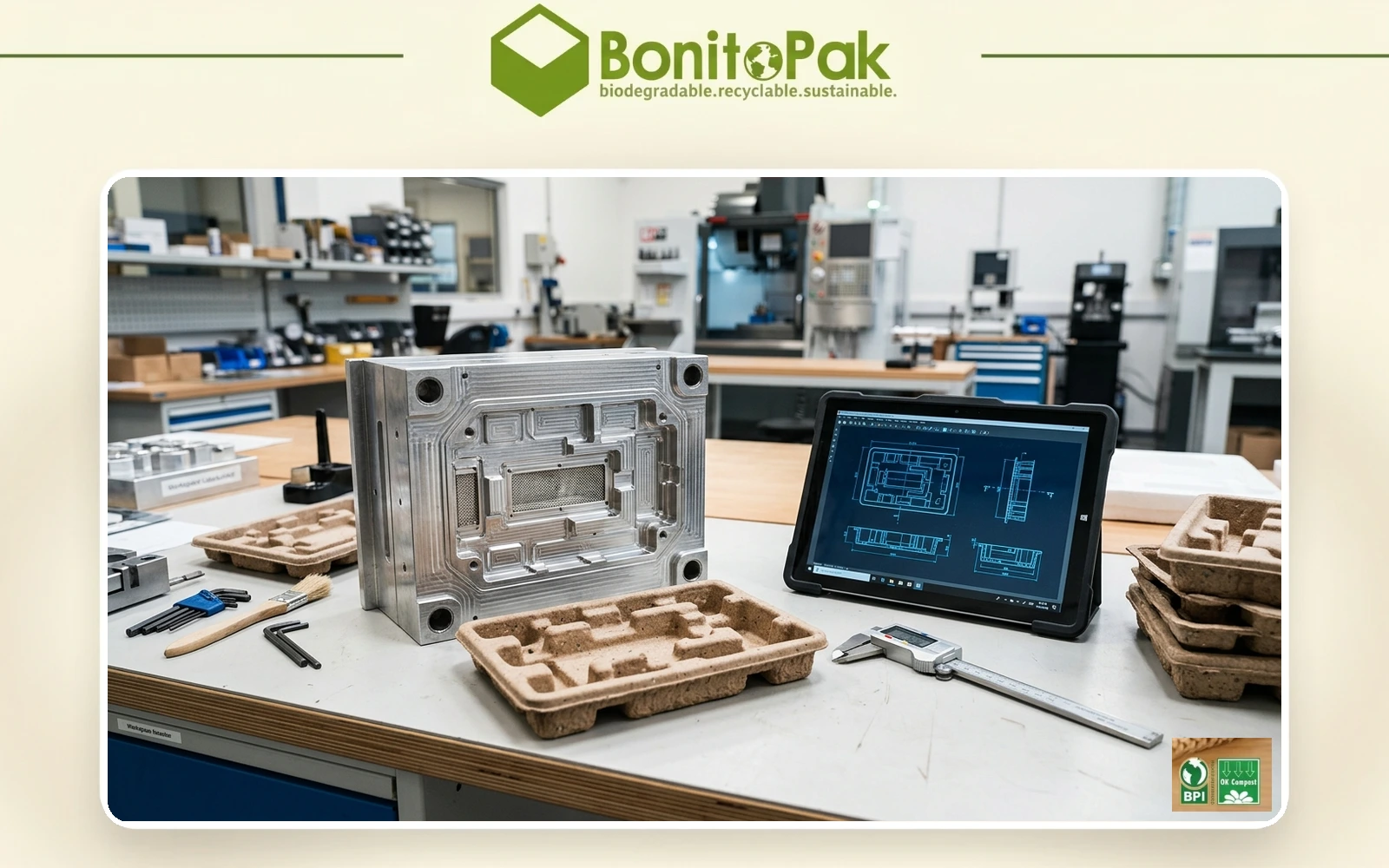
Advanced systems such as those used in molded fiber packaging lines — including technologies like Trockenpressen von Zellstoffschalen — apply similar principles of pressure, temperature control, and moisture management to produce durable packaging products.
After pressing, the bottles pass through controlled drying systems to remove remaining moisture. Trimming and finishing processes ensure consistent dimensions and surface quality. When necessary, an interior coating is applied to enhance liquid resistance for beverages.
Energy Profile of Molded Pulp Bottle Production
Energy consumption in molded pulp bottle manufacturing is influenced primarily by forming and drying stages. Because fiber products begin as wet pulp, removing moisture efficiently is critical to maintaining production efficiency.
A typical energy distribution in molded pulp bottle manufacturing may look like this:
| Systembereich | Primärenergie Art | Ungefährer Anteil an der Gesamtenergie |
| Pressing & Drying Section | Thermische | 45-55% |
| Vacuum Forming | Elektrizität | 20-25% |
| Zellstoffaufbereitung | Elektrizität | 10-15% |
| Beschneiden & Hilfsmittel | Elektrizität | 5-10% |
The drying stage remains the largest energy consumer. Optimizing moisture removal during forming and pressing significantly reduces thermal demand, improving overall production efficiency.
Manufacturers that design integrated production systems often achieve lower energy consumption per unit while maintaining consistent product quality.
Advantages of Molded Pulp Water Bottle Packaging
The growing interest in sustainable molded pulp water paper bottle packaging is driven by several important advantages compared with traditional plastic containers.
The most obvious benefit is environmental impact. Because molded pulp bottles are made primarily from renewable fibers, they can significantly reduce dependence on fossil-fuel-based plastics. Many designs are compostable or recyclable through existing paper recycling systems.
Another advantage is brand perception. Companies adopting fiber-based packaging often gain stronger sustainability positioning among environmentally conscious consumers. As public awareness of plastic pollution increases, brands that transition to alternative packaging solutions can strengthen their reputation and differentiate themselves in competitive markets.
Manufacturing flexibility is also improving. Modern molding technology allows for customized shapes, embossed branding, and structural reinforcement features. Discussions around customization in molded fiber packaging, such as those explored in articles like Sind geformte Zellstoffkisten für das Branding anpassbar?, show how fiber-based materials are evolving beyond simple protective packaging into sophisticated consumer-facing designs.
Challenges in Replacing Plastic Bottles
Despite their potential, molded pulp water bottles still face several technical challenges. The primary concern is liquid resistance. Paper fibers naturally absorb moisture, which means barrier layers or coatings are often required to prevent leakage and maintain product shelf life.
Another challenge is scaling production efficiently. Plastic bottle manufacturing has benefited from decades of optimization and massive production capacity. Fiber-based bottle manufacturing must continue improving cycle times and energy efficiency to compete with established plastic infrastructure.
Material supply consistency is also important. Because molded pulp relies on natural fibers, manufacturers must ensure stable raw material quality to maintain product consistency across large production volumes.
Unternehmen wie BonitoPak and other innovators in sustainable packaging are investing heavily in research and equipment development to overcome these barriers and accelerate the adoption of fiber-based containers.
The Future of Paper Water Bottle Packaging
The transition toward sustainable packaging is accelerating globally. Governments are introducing single-use plastic restrictions, and multinational beverage companies are committing to significant reductions in plastic packaging. These pressures are driving rapid innovation in molded fiber technology.
Paper water bottles represent one of the most visible examples of this shift. As production systems become more efficient and barrier technologies improve, molded pulp bottles are expected to expand beyond niche applications into mainstream beverage markets.
Continued advancements in mold design, fiber engineering, and automated production equipment will play a crucial role in making sustainable molded pulp water paper bottle packaging commercially viable at scale.
Conclusion: Fiber-Based Bottles Are a Major Step Toward Sustainable Packaging
Sustainable molded pulp water paper bottle packaging offers a compelling alternative to traditional plastic containers. By using renewable fiber materials and advanced molding technology, manufacturers can significantly reduce environmental impact while maintaining functional packaging performance.
While challenges remain in areas such as liquid barriers and large-scale production efficiency, rapid innovation is driving progress across the industry. Companies that invest early in fiber-based packaging technologies are positioning themselves to meet future sustainability standards and consumer expectations.
As environmental concerns continue to reshape packaging markets worldwide, molded pulp water bottles represent a promising direction for the next generation of beverage packaging.
Häufig gestellte Fragen
What is sustainable molded pulp water paper bottle packaging?
It is a type of beverage container made from compressed plant fibers such as recycled paper or bagasse, designed as an eco-friendly alternative to plastic bottles.
Are molded pulp water bottles biodegradable?
Most molded pulp bottles are biodegradable or compostable, depending on the internal coating used for liquid resistance.
How strong are paper water bottles compared to plastic?
Modern molded pulp bottles are engineered to provide structural strength and durability, although additional barrier layers are often required for liquid packaging.
Can molded pulp bottles be recycled?
In many cases, molded pulp bottles can be recycled with paper materials if the barrier coating is compatible with recycling systems.
Why are companies switching to fiber-based bottles?
Brands are adopting fiber packaging to reduce plastic waste, meet environmental regulations, and respond to growing consumer demand for sustainable products.

 German
  English
  Spanish
  French
  Russian
  Japanese
  Portuguese
  Arabic