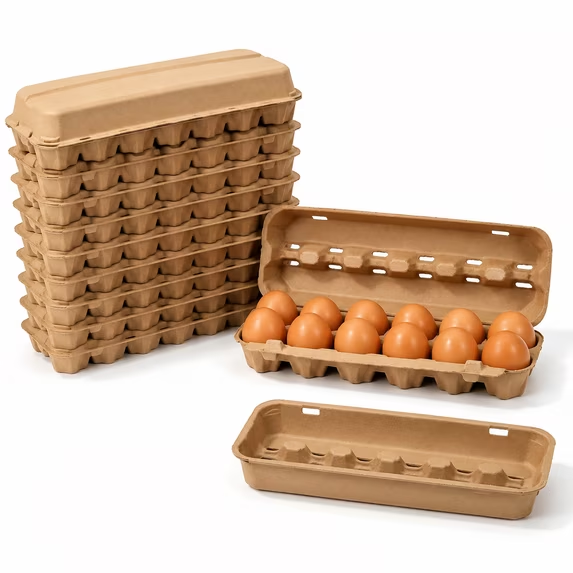
Plain Egg Cartons

  • No printing, no branding, no supplier marks anywhere on the carton
  • Available in every count from 4 through 20 cells
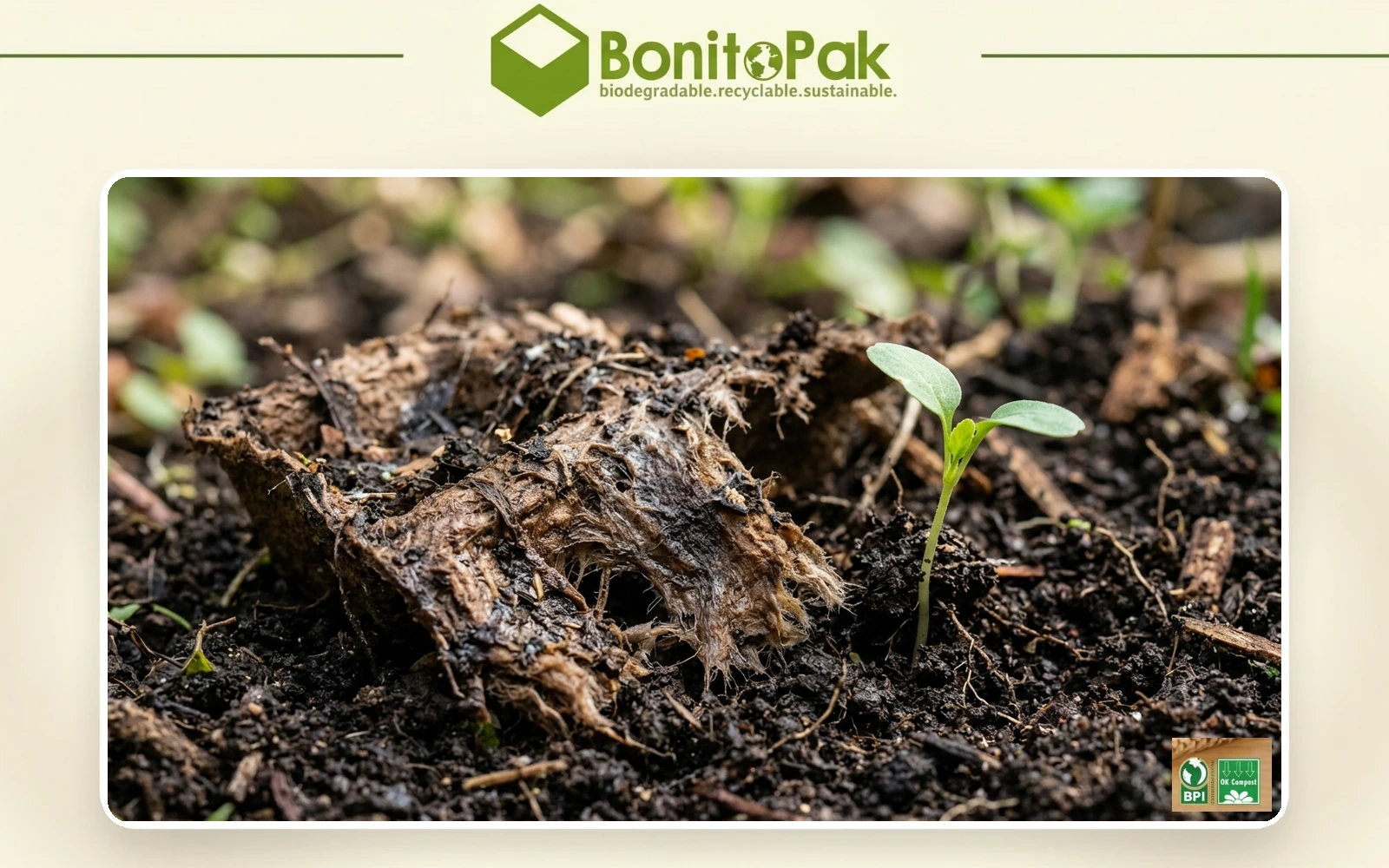
  • Formed from 100% recycled paper pulp, biodegradable and home compostable
  • Lid surface finished for label adhesion, so stickers hold through cold storage
  • Lowest cost per carton in the range, with no plate or tooling charges
  • Natural pulp plus six stock colors, all supplied unprinted
  • Shortest lead time we offer, since printing sits outside the production path

القالب العام

حلول التعبئة والتغليف

تصميم ثلاثي الأبعاد

قالب مخصص حسب الطلب

وصف المنتج

المواصفات التفاصيل
اسم العلامة التجارية بونيتوباك
رقم الموديل EC-BLK series
اسم المنتج Plain Egg Cartons / Blank Pulp Cartons
المواد لب الورق المعاد تدويره
نوع الورق Post-consumer recycled paper
التقنية Molded pulp forming (wet-pressed)
Cell Count 4, 6, 10, 12, 18, or 20 cells
الطباعة None; supplied completely blank
Supplier Marks None anywhere on the carton
Label Surface Finished for pressure sensitive label adhesion
اللون Natural pulp; six stock colors, all unprinted
الشكل والأسلوب Top-fold clamshell; flat top available
الاستخدام الصناعي Distributors, repackers, private label, farm direct sellers
التطبيق Own-label packing, resale, relabeling, bulk supply
الحجم OEM and custom dimensions accepted
المزايا Biodegradable, home compostable, lowest unit cost, shortest lead time
التعبئة والتغليف Bulk nested in export cartons; custom packing accepted
طلب مخصص مقبولة
موك Lowest in the range; confirm with sales

معرض الصور Plain Egg Cartons الأجزاء

يعرض هذا المعرض الجودة الاستثنائية والاهتمام بالتفاصيل التي نقدمها في كل مشروع. من التصاميم المعقدة إلى اللمسات النهائية الخالية من العيوب، تعكس كل صورة التزامنا بالتميز في Plain Egg Cartons .

40%

التكلفة والوقت الموفر

اختبر حلول التعبئة والتغليف الرائدة التي تعمل على تحسين التكاليف والوقت وتقديم عمليات فعالة وتعظيم العائد على الاستثمار.

50%

أكثر استدامة

حقق تغليفاً صديقاً للبيئة باستخدام مواد مستدامة، مما يقلل من النفايات ويعزز المسؤولية البيئية في جميع خطوط إنتاجك.

25%

الزيادة في المبيعات

عزز من جاذبية منتجاتك على الرفوف بتصميمات مبتكرة تعزز من ظهورها ومبيعاتها في أسواق التجزئة والأسواق الإلكترونية.

100%

أكثر موثوقية

ثق في التزام BonitoPak بالجودة، مما يضمن أن كل منتج يفي بمعاييرنا العالية مع خدمة متسقة وموثوقة.

Blank is a specification, not an absence

A plain carton sounds like a carton with something missing. In practice it is the format with the most specific requirement attached, because the surface has to accept something else.

If a carton is going to carry a pressure sensitive label, the lid surface has to be consistent enough for adhesive to bond across its full area. Molded pulp varies in surface density depending on how the fiber drained during forming, and a lid with uneven density will hold a label at one end and lift at the other.

We finish blank lids to a controlled surface density for this reason. It is the difference between a label that survives six weeks in a cold case and one that curls at the corner within a week.

Buyers who have had labels lift on pulp cartons before have usually bought a carton that was blank by omission rather than blank by specification.

Who buys blank, and what each group needs

Three groups, with genuinely different requirements.

Distributors and resellers buy blank because they supply many small producers who each want their own identity. The carton has to carry no supplier marks at all, including ours, because the distributor is the supplier as far as their customer is concerned. We do not put our name on these cartons anywhere.

Private label packers buy blank and apply a retailer’s printed label. Their requirement is dimensional consistency, since labels are applied by machine against a fixed registration point, and a carton that varies in height will label crooked.

Small farm sellers buy blank because they cannot reach printing minimums. They label by hand or stamp with a custom rubber stamp. Their requirement is simply low minimum order quantity, which blank cartons give them because there is no plate or mold cost to amortize.

Cost, and why blank is the cheapest route

Blank cartons carry the lowest unit cost in our range, and the reasons compound.

There is no plate charge, since nothing is printed. There is no mold tooling charge, since blanks run on stock molds. There is no print pass, which removes an entire operation from the production path. And blank runs can be scheduled flexibly against other production, because there is no color or artwork changeover to plan around.

That last point also makes blank the shortest lead time we offer. For a buyer whose constraint is timing rather than branding, blank plus a quickly printed label is almost always faster than a printed carton.

Labeling that actually holds

Four practical points from buyers who label blanks.

Paper labels outperform film on pulp. Film has less conformability and lifts at the edges where the lid surface is slightly textured. Uncoated paper labels bond better and look more appropriate on fiber.

Apply at room temperature, not in the cold room. Adhesive needs time to flow into the surface, and cold slows that to the point where the bond never fully forms.

Keep the label away from the hinge and the front tab. Both flex, and a label bridging a flex point peels from that edge first.

And size the label to the flat center panel rather than edge to edge. The lid curves slightly at its margins and a full-width label will tent at the corners.

Stamping as an alternative to labels

Small producers often skip labels entirely and use a custom rubber stamp with food safe ink. On natural pulp it works well, because the absorbent surface takes stamp ink cleanly without smearing, and the slightly irregular result reads as handmade rather than as a printing defect.

It is the cheapest branding route available, it needs no minimum order, and it suits farm stand selling where the handmade impression is an asset. It does not scale, since every carton is a manual operation, and it does not work on darker colored pulp where the ink has nothing to contrast against.

When blank stops being the right answer

Blank is the correct choice up to a point, and past that point it costs more than printing.

Labels have a per unit cost that never falls away, same as printing. Once annual volume is high enough, the accumulated label cost passes what embossing would have cost once in the mold. The crossover is usually lower than buyers expect, because labels also carry an application labor cost that printing does not.

Producers who find themselves hand-labeling thousands of cartons have usually passed that point already. Embossing is covered at custom printed egg cartons, and it costs nothing per unit once the tool exists.

Across the range

Blank is available in every count. The volume formats are the molded pulp dozen egg carton وـ molded pulp 18 egg carton, and both are commonly ordered blank for private label work.

Blank is also available in color, which buyers often miss. A colored blank gives shelf differentiation with no printing at all, and for small producers it is frequently the best value in the catalog. See molded pulp colored egg cartons.

For bulk ordering and pricing tiers, see wholesale egg cartons.

Blank is a specification, not an absence

A plain carton sounds like a carton with something missing. In practice it is the format with the most specific requirement attached, because the surface has to accept something else.

If a carton is going to carry a pressure sensitive label, the lid surface has to be consistent enough for adhesive to bond across its full area. Molded pulp varies in surface density depending on how the fiber drained during forming, and a lid with uneven density will hold a label at one end and lift at the other.

We finish blank lids to a controlled surface density for this reason. It is the difference between a label that survives six weeks in a cold case and one that curls at the corner within a week.

Buyers who have had labels lift on pulp cartons before have usually bought a carton that was blank by omission rather than blank by specification.

Who buys blank, and what each group needs

Three groups, with genuinely different requirements.

Distributors and resellers buy blank because they supply many small producers who each want their own identity. The carton has to carry no supplier marks at all, including ours, because the distributor is the supplier as far as their customer is concerned. We do not put our name on these cartons anywhere.

Private label packers buy blank and apply a retailer’s printed label. Their requirement is dimensional consistency, since labels are applied by machine against a fixed registration point, and a carton that varies in height will label crooked.

Small farm sellers buy blank because they cannot reach printing minimums. They label by hand or stamp with a custom rubber stamp. Their requirement is simply low minimum order quantity, which blank cartons give them because there is no plate or mold cost to amortize.

Cost, and why blank is the cheapest route

Blank cartons carry the lowest unit cost in our range, and the reasons compound.

There is no plate charge, since nothing is printed. There is no mold tooling charge, since blanks run on stock molds. There is no print pass, which removes an entire operation from the production path. And blank runs can be scheduled flexibly against other production, because there is no color or artwork changeover to plan around.

That last point also makes blank the shortest lead time we offer. For a buyer whose constraint is timing rather than branding, blank plus a quickly printed label is almost always faster than a printed carton.

Labeling that actually holds

Four practical points from buyers who label blanks.

Paper labels outperform film on pulp. Film has less conformability and lifts at the edges where the lid surface is slightly textured. Uncoated paper labels bond better and look more appropriate on fiber.

Apply at room temperature, not in the cold room. Adhesive needs time to flow into the surface, and cold slows that to the point where the bond never fully forms.

Keep the label away from the hinge and the front tab. Both flex, and a label bridging a flex point peels from that edge first.

And size the label to the flat center panel rather than edge to edge. The lid curves slightly at its margins and a full-width label will tent at the corners.

Stamping as an alternative to labels

Small producers often skip labels entirely and use a custom rubber stamp with food safe ink. On natural pulp it works well, because the absorbent surface takes stamp ink cleanly without smearing, and the slightly irregular result reads as handmade rather than as a printing defect.

It is the cheapest branding route available, it needs no minimum order, and it suits farm stand selling where the handmade impression is an asset. It does not scale, since every carton is a manual operation, and it does not work on darker colored pulp where the ink has nothing to contrast against.

When blank stops being the right answer

Blank is the correct choice up to a point, and past that point it costs more than printing.

Labels have a per unit cost that never falls away, same as printing. Once annual volume is high enough, the accumulated label cost passes what embossing would have cost once in the mold. The crossover is usually lower than buyers expect, because labels also carry an application labor cost that printing does not.

Producers who find themselves hand-labeling thousands of cartons have usually passed that point already. Embossing is covered at custom printed egg cartons, and it costs nothing per unit once the tool exists.

Across the range

Blank is available in every count. The volume formats are the molded pulp dozen egg carton وـ molded pulp 18 egg carton, and both are commonly ordered blank for private label work.

Blank is also available in color, which buyers often miss. A colored blank gives shelf differentiation with no printing at all, and for small producers it is frequently the best value in the catalog. See molded pulp colored egg cartons.

For bulk ordering and pricing tiers, see wholesale egg cartons.
مواد ل Plain Egg Cartons قطع الغيار

تعتمد الشركات الرائدة والمهندسون الرائدون على BonitoPak في التكرارات السريعة والأجزاء المتينة عالية الجودة. سواء كان ذلك للنماذج الأولية أو للإنتاج على نطاق واسع، فإن مجموعتنا الواسعة من المواد تضمن تلبية المتطلبات الفريدة لأي Plain Egg Cartons المشروع بدقة وسرعة.

Compostable kraft paper is the strongest fiber we form. Made from virgin

Colored pulp is not a separate fiber. It is any of our

Bleached pulp is the material to specify when the part has to

Natural plant fiber covers the non-wood cellulose sources we blend outside the

Corrugated paper as a molded pulp material means recovered cardboard boxes repulped

Straw fiber is made from the stalks left after grain harvest, material

صديقة للبيئة وموثوقة ومخصصة وموثوقة

تعبئة وتغليف مخصص وصديق للبيئة بامتياز

قابل للتخصيص بالكامل

خصص عبواتك بأنماط وأحجام وألوان ولمسات نهائية مصممة خصيصًا لتلبية احتياجاتك الخاصة.

دعم الخبراء

تقدم بونيتوباك مشورة الخبراء في مجال التصميم والخدمات اللوجستية لزيادة كفاءة التعبئة والتغليف إلى أقصى حد وتعزيز العائد على الاستثمار.

الحلول البيئية

اختر عبوات مستدامة وصديقة للبيئة لتقليل الأثر البيئي ودعم أهداف علامتك التجارية الخضراء.

ضمان الجودة

تضمن بونيتوباك خدمة عالية الجودة ومنتجات متميزة مع كل حل من حلول التعبئة والتغليف.

الأسئلة المتكررة

Plain Egg Cartons

  • Can I get blank cartons with a flat top for easier labeling?

    Yes, and it is worth specifying if labeling is the plan. A flat top gives a genuinely flat label area rather than a slightly domed one, which improves both application accuracy and adhesion at the label edges. The flat top profile is covered on the molded pulp vintage egg cartons الصفحة.

  • Is a blank carton lower quality than a printed one?

    No. It comes off the same mold, at the same fiber density, with the same top load performance. The only difference is that no print pass was applied. Buyers sometimes assume blank means seconds or overruns, and that is a different product category entirely which we do not sell.

  • Can I order blank cartons in small quantities for a trial?

    Blank carries our lowest minimum because there is no tooling or plate cost to recover. It is the right product for a first order while you test a format. We would rather supply a small blank run and have you come back than push a printed minimum onto a buyer who is still deciding.

  • What label adhesive works best on molded pulp?

     General purpose permanent acrylic adhesives on uncoated paper face stock perform well. Avoid removable adhesives, which never develop sufficient bond on a porous surface, and avoid film face stocks, which lift at the edges. Your label supplier will know these as standard options; the substrate to specify is uncoated paper.

  • Will your company name appear anywhere on a blank carton?

     No. Blank means blank, including no supplier identification, no mold numbers visible on the outer faces, and nothing on the base. Distributors reselling under their own name need that to be absolute, and we treat it as such rather than leaving a small mark somewhere.

نتيجة قابلة للتحلل الحيوي

0 يوم

7 أيام

14 يوماً

30 يوماً

الصناعات المتخصصة

بعد إنتاج ملايين القطع، تمتلك BonitoPak معرفة عميقة في العديد من التطبيقات. نحن نتفوق بشكل خاص في الصناعات التي تتطلب تصنيع مكونات دقيقة ومعقدة. ثق بنا لتقديم الخبرة والجودة، بغض النظر عن مدى تعقيدها.

حلول التعبئة والتغليف OEM و ODM

تقدم بونيتوباك حلول تغليف مخصصة (OEM) ومصممة مسبقًا (ODM). سواء كنت بحاجة إلى تصميمات مصممة بالكامل أو عبوات جاهزة للاستخدام، فإننا نقدم خيارات عالية الجودة وفعالة ومرنة لتلبية احتياجات علامتك التجارية.

خدمات تصنيع المعدات الأصلية

تتيح لك حلول التعبئة والتغليف لمصنعي المعدات الأصلية إنشاء منتجات مخصصة بالكامل مصممة ومصنعة لتلبية متطلباتك الخاصة. نحن في بونيتوباك نقدم دعمًا شاملاً طوال عملية التصميم والنماذج الأولية والتصنيع، مما يضمن أن تعكس عبواتك الهوية الفريدة لعلامتك التجارية. تضمن قدراتنا التصنيعية الدقيقة إنتاجاً عالي الجودة ومتسقاً، بغض النظر عن مدى تعقيد التصميم. ومن خلال الخدمة المتكاملة، نتعامل مع كل شيء بدءاً من الفكرة وحتى التسليم، مما يساعدك على تبسيط احتياجاتك من التغليف.

خدمات ODM

تقدم حلول التعبئة والتغليف ODM منتجات مصممة مسبقًا يمكن تصميمها وفقًا لمتطلبات علامتك التجارية. بفضل خبرة بونيتوباك في التصميم المبتكر وعملية الإنتاج الفعالة، يمكنك الاختيار من بين مجموعة كبيرة من خيارات التغليف الجاهزة للاستخدام. نحن نوفر تخصيصاً مرناً، مما يسمح لك بإضافة علامتك التجارية والاختيار من بين مختلف التشطيبات والألوان والأحجام. يوفر هذا الحل الوقت والتكلفة مع ضمان تغليف عالي الجودة يلبي معايير علامتك التجارية.
هل أنت مستعد للارتقاء بمشروعك؟

اجعل تصميماتك تنبض بالحياة مع BonitoPak

اختبر الهندسة الدقيقة مع BonitoPak. من النماذج الأولية التفصيلية إلى الإنتاج بكميات كبيرة، نحن هنا لتحويل مفاهيمك إلى واقع ملموس. اتصل بنا اليوم لمناقشة احتياجات مشروعك!

فئات منتجاتنا

اكتشف مجموعة بونيتوباك المتنوعة من حلول التعبئة والتغليف، بما في ذلك صواني اللب المقولبة، وتغليف المواد الغذائية، والتصميمات المخصصة، والخيارات المستدامة. صُممت كل فئة من هذه الفئات من أجل المتانة والأداء الوظيفي والمسؤولية البيئية، وهي مصممة خصيصًا لتلبية احتياجاتك الخاصة.

Blank is a specification, not an absence

A plain carton sounds like a carton with something missing. In practice it is the format with the most specific requirement attached, because the surface has to accept something else.

If a carton is going to carry a pressure sensitive label, the lid surface has to be consistent enough for adhesive to bond across its full area. Molded pulp varies in surface density depending on how the fiber drained during forming, and a lid with uneven density will hold a label at one end and lift at the other.

We finish blank lids to a controlled surface density for this reason. It is the difference between a label that survives six weeks in a cold case and one that curls at the corner within a week.

Buyers who have had labels lift on pulp cartons before have usually bought a carton that was blank by omission rather than blank by specification.

Who buys blank, and what each group needs

Three groups, with genuinely different requirements.

Distributors and resellers buy blank because they supply many small producers who each want their own identity. The carton has to carry no supplier marks at all, including ours, because the distributor is the supplier as far as their customer is concerned. We do not put our name on these cartons anywhere.

Private label packers buy blank and apply a retailer’s printed label. Their requirement is dimensional consistency, since labels are applied by machine against a fixed registration point, and a carton that varies in height will label crooked.

Small farm sellers buy blank because they cannot reach printing minimums. They label by hand or stamp with a custom rubber stamp. Their requirement is simply low minimum order quantity, which blank cartons give them because there is no plate or mold cost to amortize.

Cost, and why blank is the cheapest route

Blank cartons carry the lowest unit cost in our range, and the reasons compound.

There is no plate charge, since nothing is printed. There is no mold tooling charge, since blanks run on stock molds. There is no print pass, which removes an entire operation from the production path. And blank runs can be scheduled flexibly against other production, because there is no color or artwork changeover to plan around.

That last point also makes blank the shortest lead time we offer. For a buyer whose constraint is timing rather than branding, blank plus a quickly printed label is almost always faster than a printed carton.

Labeling that actually holds

Four practical points from buyers who label blanks.

Paper labels outperform film on pulp. Film has less conformability and lifts at the edges where the lid surface is slightly textured. Uncoated paper labels bond better and look more appropriate on fiber.

Apply at room temperature, not in the cold room. Adhesive needs time to flow into the surface, and cold slows that to the point where the bond never fully forms.

Keep the label away from the hinge and the front tab. Both flex, and a label bridging a flex point peels from that edge first.

And size the label to the flat center panel rather than edge to edge. The lid curves slightly at its margins and a full-width label will tent at the corners.

Stamping as an alternative to labels

Small producers often skip labels entirely and use a custom rubber stamp with food safe ink. On natural pulp it works well, because the absorbent surface takes stamp ink cleanly without smearing, and the slightly irregular result reads as handmade rather than as a printing defect.

It is the cheapest branding route available, it needs no minimum order, and it suits farm stand selling where the handmade impression is an asset. It does not scale, since every carton is a manual operation, and it does not work on darker colored pulp where the ink has nothing to contrast against.

When blank stops being the right answer

Blank is the correct choice up to a point, and past that point it costs more than printing.

Labels have a per unit cost that never falls away, same as printing. Once annual volume is high enough, the accumulated label cost passes what embossing would have cost once in the mold. The crossover is usually lower than buyers expect, because labels also carry an application labor cost that printing does not.

Producers who find themselves hand-labeling thousands of cartons have usually passed that point already. Embossing is covered at custom printed egg cartons, and it costs nothing per unit once the tool exists.

Across the range

Blank is available in every count. The volume formats are the molded pulp dozen egg carton وـ molded pulp 18 egg carton, and both are commonly ordered blank for private label work.

Blank is also available in color, which buyers often miss. A colored blank gives shelf differentiation with no printing at all, and for small producers it is frequently the best value in the catalog. See molded pulp colored egg cartons.

For bulk ordering and pricing tiers, see wholesale egg cartons.

مقالات ورؤى ذات صلة

ابق على اطلاع بآخر التحديثات حول اتجاهات التغليف المستدام ورؤى الصناعة ونصائح الخبراء من خلال مدونتنا. استكشف الأفكار والحلول المبتكرة لتعزيز معرفتك بالتعبئة والتغليف.

بقلم ليو تشان | كاتب في BonitoPak | أكثر من 20 عامًا من الخبرة في مجال التغليف المصنوع من اللب المقولب. الفودكا هي

بقلم ليو تشان | كاتب في BonitoPak | أكثر من 20 عامًا من الخبرة في مجال التغليف المصنوع من اللب المقولب تقريبًا كل

بقلم ليو تشان | كاتب في BonitoPak | أكثر من 20 عامًا من الخبرة في مجال التغليف المصنوع من اللب المقولب ابحث في هذا

الأسئلة المتكررة

Plain Egg Cartons

  • Can I get blank cartons with a flat top for easier labeling?

    Yes, and it is worth specifying if labeling is the plan. A flat top gives a genuinely flat label area rather than a slightly domed one, which improves both application accuracy and adhesion at the label edges. The flat top profile is covered on the molded pulp vintage egg cartons الصفحة.

  • Is a blank carton lower quality than a printed one?

    No. It comes off the same mold, at the same fiber density, with the same top load performance. The only difference is that no print pass was applied. Buyers sometimes assume blank means seconds or overruns, and that is a different product category entirely which we do not sell.

  • Can I order blank cartons in small quantities for a trial?

    Blank carries our lowest minimum because there is no tooling or plate cost to recover. It is the right product for a first order while you test a format. We would rather supply a small blank run and have you come back than push a printed minimum onto a buyer who is still deciding.

  • What label adhesive works best on molded pulp?

     General purpose permanent acrylic adhesives on uncoated paper face stock perform well. Avoid removable adhesives, which never develop sufficient bond on a porous surface, and avoid film face stocks, which lift at the edges. Your label supplier will know these as standard options; the substrate to specify is uncoated paper.

  • Will your company name appear anywhere on a blank carton?

     No. Blank means blank, including no supplier identification, no mold numbers visible on the outer faces, and nothing on the base. Distributors reselling under their own name need that to be absolute, and we treat it as such rather than leaving a small mark somewhere.

املأ هذا النموذج المفصل