Cajas de huevos sin imprimir

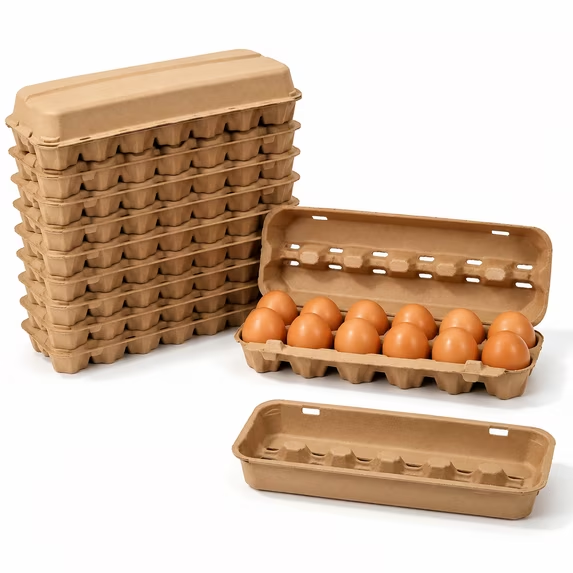
  • No printing, no branding, no supplier marks anywhere on the carton
  • Available in every count from 4 through 20 cells
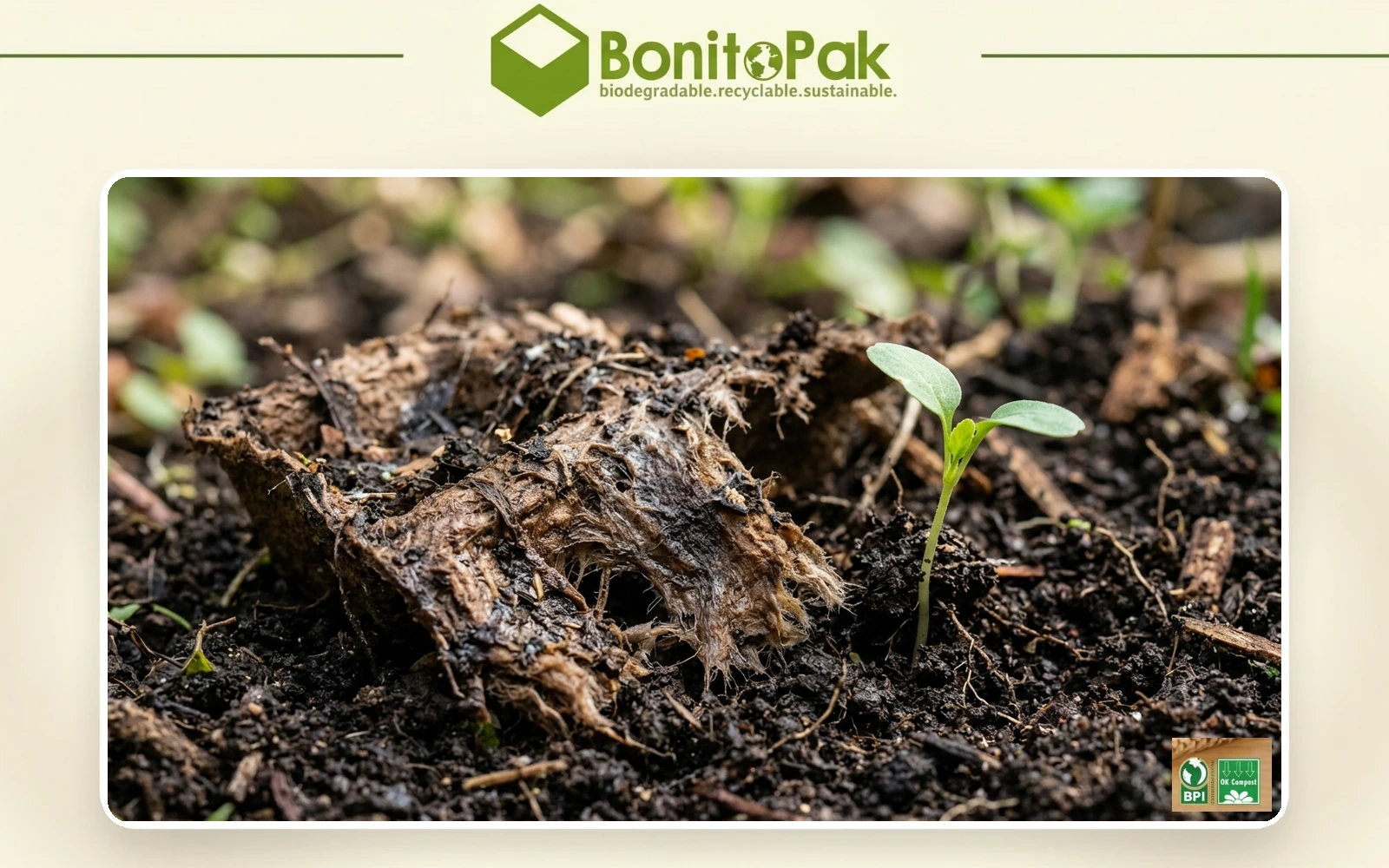
  • Fabricado con pasta de papel reciclada 100%, biodegradable y compostable en casa
  • Lid surface finished for label adhesion, so stickers hold through cold storage
  • Lowest cost per carton in the range, with no plate or tooling charges
  • Natural pulp plus six stock colors, all supplied unprinted
  • Shortest lead time we offer, since printing sits outside the production path

Molde público

Soluciones de envasado

Diseño 3D

Molde a medida

Descripción del producto

Especificación Detalles
Marca BonitoPak
Número de modelo EC-BLK series
Nombre del producto Plain Egg Cartons / Blank Pulp Cartons
Material Pasta de papel reciclada
Tipo de papel Papel reciclado postconsumo
Técnica Fabricación de pulpa moldeada (prensada en húmedo)
Recuento celular 4, 6, 10, 12, 18, or 20 cells
Impresión None; supplied completely blank
Supplier Marks None anywhere on the carton
Label Surface Finished for pressure sensitive label adhesion
Color Natural pulp; six stock colors, all unprinted
Forma y estilo Top-fold clamshell; flat top available
Uso industrial Distributors, repackers, private label, farm direct sellers
Aplicación Own-label packing, resale, relabeling, bulk supply
Talla Se aceptan dimensiones OEM y a medida
Ventajas Biodegradable, home compostable, lowest unit cost, shortest lead time
Embalaje A granel, empaquetado en cajas de cartón para exportación; se aceptan embalajes a medida
Pedido a medida Aceptado
MOQ Lowest in the range; confirm with sales

Galería de Cajas de huevos sin imprimir piezas

Esta galería muestra la excepcional calidad y atención al detalle que ofrecemos en cada proyecto. Desde diseños complejos hasta acabados impecables, cada imagen refleja nuestro compromiso con la excelencia en Cajas de huevos sin imprimir .

40%

Ahorro de tiempo y dinero

Experimente soluciones de envasado líderes que optimizan sus costes y tiempo, proporcionando procesos eficientes y maximizando su ROI.

50%

Más sostenible

Consiga envases ecológicos con materiales sostenibles, reduciendo los residuos y fomentando la responsabilidad medioambiental en todas sus líneas de productos.

25%

Aumento de las ventas

Aumente el atractivo de su producto en las estanterías con diseños innovadores que impulsen la visibilidad y las ventas tanto en los mercados minoristas como en línea.

100%

Más fiable

Confíe en el compromiso de BonitoPak con la calidad, garantizando que cada producto cumple nuestros elevados estándares con un servicio constante y fiable.

Blank is a specification, not an absence

A plain carton sounds like a carton with something missing. In practice it is the format with the most specific requirement attached, because the surface has to accept something else.

If a carton is going to carry a pressure sensitive label, the lid surface has to be consistent enough for adhesive to bond across its full area. Molded pulp varies in surface density depending on how the fiber drained during forming, and a lid with uneven density will hold a label at one end and lift at the other.

We finish blank lids to a controlled surface density for this reason. It is the difference between a label that survives six weeks in a cold case and one that curls at the corner within a week.

Buyers who have had labels lift on pulp cartons before have usually bought a carton that was blank by omission rather than blank by specification.

Who buys blank, and what each group needs

Three groups, with genuinely different requirements.

Distributors and resellers buy blank because they supply many small producers who each want their own identity. The carton has to carry no supplier marks at all, including ours, because the distributor is the supplier as far as their customer is concerned. We do not put our name on these cartons anywhere.

Private label packers buy blank and apply a retailer’s printed label. Their requirement is dimensional consistency, since labels are applied by machine against a fixed registration point, and a carton that varies in height will label crooked.

Small farm sellers buy blank because they cannot reach printing minimums. They label by hand or stamp with a custom rubber stamp. Their requirement is simply low minimum order quantity, which blank cartons give them because there is no plate or mold cost to amortize.

Cost, and why blank is the cheapest route

Blank cartons carry the lowest unit cost in our range, and the reasons compound.

There is no plate charge, since nothing is printed. There is no mold tooling charge, since blanks run on stock molds. There is no print pass, which removes an entire operation from the production path. And blank runs can be scheduled flexibly against other production, because there is no color or artwork changeover to plan around.

That last point also makes blank the shortest lead time we offer. For a buyer whose constraint is timing rather than branding, blank plus a quickly printed label is almost always faster than a printed carton.

Labeling that actually holds

Four practical points from buyers who label blanks.

Paper labels outperform film on pulp. Film has less conformability and lifts at the edges where the lid surface is slightly textured. Uncoated paper labels bond better and look more appropriate on fiber.

Apply at room temperature, not in the cold room. Adhesive needs time to flow into the surface, and cold slows that to the point where the bond never fully forms.

Keep the label away from the hinge and the front tab. Both flex, and a label bridging a flex point peels from that edge first.

And size the label to the flat center panel rather than edge to edge. The lid curves slightly at its margins and a full-width label will tent at the corners.

Stamping as an alternative to labels

Small producers often skip labels entirely and use a custom rubber stamp with food safe ink. On natural pulp it works well, because the absorbent surface takes stamp ink cleanly without smearing, and the slightly irregular result reads as handmade rather than as a printing defect.

It is the cheapest branding route available, it needs no minimum order, and it suits farm stand selling where the handmade impression is an asset. It does not scale, since every carton is a manual operation, and it does not work on darker colored pulp where the ink has nothing to contrast against.

When blank stops being the right answer

Blank is the correct choice up to a point, and past that point it costs more than printing.

Labels have a per unit cost that never falls away, same as printing. Once annual volume is high enough, the accumulated label cost passes what embossing would have cost once in the mold. The crossover is usually lower than buyers expect, because labels also carry an application labor cost that printing does not.

Producers who find themselves hand-labeling thousands of cartons have usually passed that point already. Embossing is covered at cajas de huevos con impresión personalizada, and it costs nothing per unit once the tool exists.

Across the range

Blank is available in every count. The volume formats are the caja de cartón moldeado para una docena de huevos and the molded pulp 18 egg carton, and both are commonly ordered blank for private label work.

Blank is also available in color, which buyers often miss. A colored blank gives shelf differentiation with no printing at all, and for small producers it is frequently the best value in the catalog. See cajas de huevos de pulpa moldeada de colores.

For bulk ordering and pricing tiers, see wholesale egg cartons.

Blank is a specification, not an absence

A plain carton sounds like a carton with something missing. In practice it is the format with the most specific requirement attached, because the surface has to accept something else.

If a carton is going to carry a pressure sensitive label, the lid surface has to be consistent enough for adhesive to bond across its full area. Molded pulp varies in surface density depending on how the fiber drained during forming, and a lid with uneven density will hold a label at one end and lift at the other.

We finish blank lids to a controlled surface density for this reason. It is the difference between a label that survives six weeks in a cold case and one that curls at the corner within a week.

Buyers who have had labels lift on pulp cartons before have usually bought a carton that was blank by omission rather than blank by specification.

Who buys blank, and what each group needs

Three groups, with genuinely different requirements.

Distributors and resellers buy blank because they supply many small producers who each want their own identity. The carton has to carry no supplier marks at all, including ours, because the distributor is the supplier as far as their customer is concerned. We do not put our name on these cartons anywhere.

Private label packers buy blank and apply a retailer’s printed label. Their requirement is dimensional consistency, since labels are applied by machine against a fixed registration point, and a carton that varies in height will label crooked.

Small farm sellers buy blank because they cannot reach printing minimums. They label by hand or stamp with a custom rubber stamp. Their requirement is simply low minimum order quantity, which blank cartons give them because there is no plate or mold cost to amortize.

Cost, and why blank is the cheapest route

Blank cartons carry the lowest unit cost in our range, and the reasons compound.

There is no plate charge, since nothing is printed. There is no mold tooling charge, since blanks run on stock molds. There is no print pass, which removes an entire operation from the production path. And blank runs can be scheduled flexibly against other production, because there is no color or artwork changeover to plan around.

That last point also makes blank the shortest lead time we offer. For a buyer whose constraint is timing rather than branding, blank plus a quickly printed label is almost always faster than a printed carton.

Labeling that actually holds

Four practical points from buyers who label blanks.

Paper labels outperform film on pulp. Film has less conformability and lifts at the edges where the lid surface is slightly textured. Uncoated paper labels bond better and look more appropriate on fiber.

Apply at room temperature, not in the cold room. Adhesive needs time to flow into the surface, and cold slows that to the point where the bond never fully forms.

Keep the label away from the hinge and the front tab. Both flex, and a label bridging a flex point peels from that edge first.

And size the label to the flat center panel rather than edge to edge. The lid curves slightly at its margins and a full-width label will tent at the corners.

Stamping as an alternative to labels

Small producers often skip labels entirely and use a custom rubber stamp with food safe ink. On natural pulp it works well, because the absorbent surface takes stamp ink cleanly without smearing, and the slightly irregular result reads as handmade rather than as a printing defect.

It is the cheapest branding route available, it needs no minimum order, and it suits farm stand selling where the handmade impression is an asset. It does not scale, since every carton is a manual operation, and it does not work on darker colored pulp where the ink has nothing to contrast against.

When blank stops being the right answer

Blank is the correct choice up to a point, and past that point it costs more than printing.

Labels have a per unit cost that never falls away, same as printing. Once annual volume is high enough, the accumulated label cost passes what embossing would have cost once in the mold. The crossover is usually lower than buyers expect, because labels also carry an application labor cost that printing does not.

Producers who find themselves hand-labeling thousands of cartons have usually passed that point already. Embossing is covered at cajas de huevos con impresión personalizada, and it costs nothing per unit once the tool exists.

Across the range

Blank is available in every count. The volume formats are the caja de cartón moldeado para una docena de huevos and the molded pulp 18 egg carton, and both are commonly ordered blank for private label work.

Blank is also available in color, which buyers often miss. A colored blank gives shelf differentiation with no printing at all, and for small producers it is frequently the best value in the catalog. See cajas de huevos de pulpa moldeada de colores.

For bulk ordering and pricing tiers, see wholesale egg cartons.
Materiales para Cajas de huevos sin imprimir Piezas

Las principales empresas e ingenieros confían en BonitoPak para obtener iteraciones rápidas y piezas duraderas de alta calidad. Tanto si se trata de prototipos como de producción a gran escala, nuestra amplia gama de materiales garantiza que cumplimos los requisitos exclusivos de cualquier empresa. Cajas de huevos sin imprimir proyecto con precisión y rapidez.

El papel kraft compostable es la fibra más resistente que fabricamos. Está elaborado a partir de materia prima virgen

La pulpa de color no es una fibra independiente. Se trata de cualquiera de nuestras

La pasta blanqueada es el material que hay que especificar cuando la pieza tiene que

El término «fibra vegetal natural» engloba las fuentes de celulosa no madereras que incorporamos a nuestra mezcla, aparte de la

El papel ondulado, como material de pulpa moldeada, se refiere a las cajas de cartón recuperadas que se han vuelto a convertir en pulpa.

La fibra de paja se obtiene de los tallos que quedan tras la cosecha de cereales, un material

Personalizado Respetuoso con el medio ambiente Fiable

Excelencia en envases personalizados y ecológicos

Totalmente personalizable

Personalice sus envases con estilos, tamaños, colores y acabados a medida para satisfacer necesidades específicas.

Asistencia experta

Bonitopak ofrece asesoramiento experto en diseño y logística para maximizar la eficiencia de los envases y aumentar la rentabilidad de la inversión.

Soluciones ecológicas

Elija envases sostenibles y ecológicos para reducir el impacto ambiental y apoyar los objetivos ecológicos de su marca.

Garantía de calidad

Bonitopak garantiza un servicio de máxima calidad y la excelencia del producto con cada solución de envasado.

Preguntas frecuentes

Cajas de huevos sin imprimir

  • Can I get blank cartons with a flat top for easier labeling?

    Yes, and it is worth specifying if labeling is the plan. A flat top gives a genuinely flat label area rather than a slightly domed one, which improves both application accuracy and adhesion at the label edges. The flat top profile is covered on the cajas de huevos vintage de pulpa moldeada página.

  • Is a blank carton lower quality than a printed one?

    No. It comes off the same mold, at the same fiber density, with the same top load performance. The only difference is that no print pass was applied. Buyers sometimes assume blank means seconds or overruns, and that is a different product category entirely which we do not sell.

  • Can I order blank cartons in small quantities for a trial?

    Blank carries our lowest minimum because there is no tooling or plate cost to recover. It is the right product for a first order while you test a format. We would rather supply a small blank run and have you come back than push a printed minimum onto a buyer who is still deciding.

  • What label adhesive works best on molded pulp?

     General purpose permanent acrylic adhesives on uncoated paper face stock perform well. Avoid removable adhesives, which never develop sufficient bond on a porous surface, and avoid film face stocks, which lift at the edges. Your label supplier will know these as standard options; the substrate to specify is uncoated paper.

  • Will your company name appear anywhere on a blank carton?

     No. Blank means blank, including no supplier identification, no mold numbers visible on the outer faces, and nothing on the base. Distributors reselling under their own name need that to be absolute, and we treat it as such rather than leaving a small mark somewhere.

Biodegradable Resultado

0 días

7 días

14 días

30 días

Industrias especializadas

Tras haber fabricado millones de piezas, BonitoPak posee profundos conocimientos en numerosas aplicaciones. Destacamos especialmente en sectores que requieren la fabricación de componentes precisos e intrincados. Confíe en nuestra experiencia y calidad, sea cual sea la complejidad.

Soluciones de envasado OEM y ODM

Bonitopak ofrece soluciones de envasado personalizadas (OEM) y prediseñadas (ODM). Tanto si necesita diseños totalmente a medida como envases listos para usar, le ofrecemos opciones de alta calidad, eficientes y flexibles para satisfacer las necesidades de su marca.

Servicios OEM

Las soluciones de envasado OEM le permiten crear productos totalmente personalizados, diseñados y fabricados para satisfacer sus requisitos específicos. En Bonitopak, le ofrecemos un apoyo integral a lo largo de todo el proceso de diseño, creación de prototipos y fabricación, garantizando que su envase refleje la identidad única de su marca. Nuestra capacidad de fabricación de precisión garantiza una producción coherente y de alta calidad, independientemente de la complejidad del diseño. Con un servicio integral, nos encargamos de todo, desde el concepto hasta la entrega, ayudándole a racionalizar sus necesidades de envasado.

Servicios ODM

Las soluciones de envasado ODM ofrecen productos prediseñados que pueden adaptarse a los requisitos de su marca. Con la innovadora experiencia en diseño y el eficiente proceso de producción de Bonitopak, puede elegir entre una amplia gama de opciones de envases listos para usar. Ofrecemos una personalización flexible, que le permite añadir su marca y seleccionar entre varios acabados, colores y tamaños. Esta solución ahorra tiempo y costes, al tiempo que garantiza un envase de alta calidad que cumple los estándares de su marca.
¿Listo para elevar su proyecto?

Dé vida a sus diseños con BonitoPak

Experimente la ingeniería de precisión con BonitoPak. Desde prototipos detallados hasta la producción de grandes volúmenes, estamos aquí para convertir sus conceptos en realidad. Póngase en contacto con nosotros hoy mismo para hablar de las necesidades de su proyecto.

Nuestras categorías de productos

Descubra la variada gama de soluciones de envasado de Bonitopak, que incluye bandejas de pulpa moldeada, envases alimentarios, diseños personalizados y opciones sostenibles. Cada categoría está diseñada para ofrecer durabilidad, funcionalidad y responsabilidad medioambiental, y se adapta a sus necesidades específicas.

Blank is a specification, not an absence

A plain carton sounds like a carton with something missing. In practice it is the format with the most specific requirement attached, because the surface has to accept something else.

If a carton is going to carry a pressure sensitive label, the lid surface has to be consistent enough for adhesive to bond across its full area. Molded pulp varies in surface density depending on how the fiber drained during forming, and a lid with uneven density will hold a label at one end and lift at the other.

We finish blank lids to a controlled surface density for this reason. It is the difference between a label that survives six weeks in a cold case and one that curls at the corner within a week.

Buyers who have had labels lift on pulp cartons before have usually bought a carton that was blank by omission rather than blank by specification.

Who buys blank, and what each group needs

Three groups, with genuinely different requirements.

Distributors and resellers buy blank because they supply many small producers who each want their own identity. The carton has to carry no supplier marks at all, including ours, because the distributor is the supplier as far as their customer is concerned. We do not put our name on these cartons anywhere.

Private label packers buy blank and apply a retailer’s printed label. Their requirement is dimensional consistency, since labels are applied by machine against a fixed registration point, and a carton that varies in height will label crooked.

Small farm sellers buy blank because they cannot reach printing minimums. They label by hand or stamp with a custom rubber stamp. Their requirement is simply low minimum order quantity, which blank cartons give them because there is no plate or mold cost to amortize.

Cost, and why blank is the cheapest route

Blank cartons carry the lowest unit cost in our range, and the reasons compound.

There is no plate charge, since nothing is printed. There is no mold tooling charge, since blanks run on stock molds. There is no print pass, which removes an entire operation from the production path. And blank runs can be scheduled flexibly against other production, because there is no color or artwork changeover to plan around.

That last point also makes blank the shortest lead time we offer. For a buyer whose constraint is timing rather than branding, blank plus a quickly printed label is almost always faster than a printed carton.

Labeling that actually holds

Four practical points from buyers who label blanks.

Paper labels outperform film on pulp. Film has less conformability and lifts at the edges where the lid surface is slightly textured. Uncoated paper labels bond better and look more appropriate on fiber.

Apply at room temperature, not in the cold room. Adhesive needs time to flow into the surface, and cold slows that to the point where the bond never fully forms.

Keep the label away from the hinge and the front tab. Both flex, and a label bridging a flex point peels from that edge first.

And size the label to the flat center panel rather than edge to edge. The lid curves slightly at its margins and a full-width label will tent at the corners.

Stamping as an alternative to labels

Small producers often skip labels entirely and use a custom rubber stamp with food safe ink. On natural pulp it works well, because the absorbent surface takes stamp ink cleanly without smearing, and the slightly irregular result reads as handmade rather than as a printing defect.

It is the cheapest branding route available, it needs no minimum order, and it suits farm stand selling where the handmade impression is an asset. It does not scale, since every carton is a manual operation, and it does not work on darker colored pulp where the ink has nothing to contrast against.

When blank stops being the right answer

Blank is the correct choice up to a point, and past that point it costs more than printing.

Labels have a per unit cost that never falls away, same as printing. Once annual volume is high enough, the accumulated label cost passes what embossing would have cost once in the mold. The crossover is usually lower than buyers expect, because labels also carry an application labor cost that printing does not.

Producers who find themselves hand-labeling thousands of cartons have usually passed that point already. Embossing is covered at cajas de huevos con impresión personalizada, and it costs nothing per unit once the tool exists.

Across the range

Blank is available in every count. The volume formats are the caja de cartón moldeado para una docena de huevos and the molded pulp 18 egg carton, and both are commonly ordered blank for private label work.

Blank is also available in color, which buyers often miss. A colored blank gives shelf differentiation with no printing at all, and for small producers it is frequently the best value in the catalog. See cajas de huevos de pulpa moldeada de colores.

For bulk ordering and pricing tiers, see wholesale egg cartons.

Artículos relacionados

Manténgase informado con las últimas actualizaciones sobre tendencias en envases sostenibles, perspectivas del sector y consejos de expertos a través de nuestro blog. Explore ideas y soluciones innovadoras para mejorar sus conocimientos sobre envasado.

Por Leo Chan | Redactor, BonitoPak | Más de 20 años de experiencia en envases de pulpa moldeada. El vodka es

Por Leo Chan | Redactor, BonitoPak | Más de 20 años de experiencia en embalajes de pulpa moldeada. Casi todos los

Por Leo Chan | Redactor, BonitoPak | Más de 20 años de experiencia en embalajes de pulpa moldeada. Buscar esto

Preguntas frecuentes

Cajas de huevos sin imprimir

  • Can I get blank cartons with a flat top for easier labeling?

    Yes, and it is worth specifying if labeling is the plan. A flat top gives a genuinely flat label area rather than a slightly domed one, which improves both application accuracy and adhesion at the label edges. The flat top profile is covered on the cajas de huevos vintage de pulpa moldeada página.

  • Is a blank carton lower quality than a printed one?

    No. It comes off the same mold, at the same fiber density, with the same top load performance. The only difference is that no print pass was applied. Buyers sometimes assume blank means seconds or overruns, and that is a different product category entirely which we do not sell.

  • Can I order blank cartons in small quantities for a trial?

    Blank carries our lowest minimum because there is no tooling or plate cost to recover. It is the right product for a first order while you test a format. We would rather supply a small blank run and have you come back than push a printed minimum onto a buyer who is still deciding.

  • What label adhesive works best on molded pulp?

     General purpose permanent acrylic adhesives on uncoated paper face stock perform well. Avoid removable adhesives, which never develop sufficient bond on a porous surface, and avoid film face stocks, which lift at the edges. Your label supplier will know these as standard options; the substrate to specify is uncoated paper.

  • Will your company name appear anywhere on a blank carton?

     No. Blank means blank, including no supplier identification, no mold numbers visible on the outer faces, and nothing on the base. Distributors reselling under their own name need that to be absolute, and we treat it as such rather than leaving a small mark somewhere.

Rellene este formulario detallado