Compostable Kraft Paper

Compostable kraft paper is the strongest fiber we form. Made from virgin softwood by the kraft process, it carries the longest fibers in our material range at 2.5 to 4.5 mm, which build a bonded network that resists tearing and carries compression better than any recycled or agricultural alternative. The unbleached brown color is the natural lignin residue, not a dye, and it composts without any decolorizing step.

Why specify compostable kraft paper

  • Longest fiber in the range. At 2.5 to 4.5 mm, softwood kraft fibers bridge across many neighbors and transfer load through the network rather than through the wall thickness alone.
  • Highest tear and burst resistance. The same fiber length that carries compression also resists the propagation of a tear once one starts, which matters for parts handled repeatedly.
  • No bleaching chemistry. The brown color is residual lignin left in place. Skipping the bleaching stage removes a chemical process step and the effluent that goes with it.
  • Compostable without qualification. Uncoated kraft is cellulose and lignin, both of which break down in a composting environment. Nothing in the material works against EN 13432 or ASTM D6400 chemistry requirements.
  • Takes embossing cleanly. Long fiber holds a formed edge, so embossed detail stays sharper than it does in short-fiber furnishes.
  • Blends well as a strength carrier. Most production furnishes use kraft as a proportion rather than at 100%, adding structure to a short-fiber base that handles detail and finish.

The kraft process itself is why this fiber performs. Wood chips are cooked in sodium hydroxide and sodium sulfide, which dissolves lignin and separates fibers while leaving the cellulose chains largely intact. Mechanical pulping, by contrast, grinds the wood and shortens fibers in the process. The kraft route costs more and yields less pulp per tonne of wood, and it produces a fiber that nothing else matches on strength.

The trade is appearance and cost. Kraft is brown, and it will not reach a white or pale finish without bleaching, which is a different material. It also sits at the top of our price range because virgin fiber competes against every other use for the same wood.

Specification table

Specification Details
Material Name Compostable Kraft Paper
Material Type Virgin softwood kraft fiber, unbleached
Fiber Source Softwood, typically pine and spruce
Average Fiber Length 2.5 to 4.5 mm
Pulping Method Kraft (sulfate) chemical process
Natural Color Brown, from residual lignin
Relative Tensile Strength Highest in the BonitoPak range
Relative Tear Resistance Highest in the BonitoPak range
Surface Finish Textured, matte
Typical Wall Thickness 1.5 to 6.0 mm depending on type
Process Compatibility Wet pressing, dry pressing, thick wall, transfer molding
Molded Pulp Types Type 1, Type 2, Type 4
Compostability Meets the chemistry basis for EN 13432 and ASTM D6400 uncoated
Recyclability Accepted in most paper streams uncoated
Food Contact Confirm against FDA 21 CFR 176.170 or EU 10/2011 for your market
Color Options Natural brown; pigmented variants available
Relative Cost High
Certification FSC or PEFC chain of custody available on request

Where compostable kraft paper is the right call

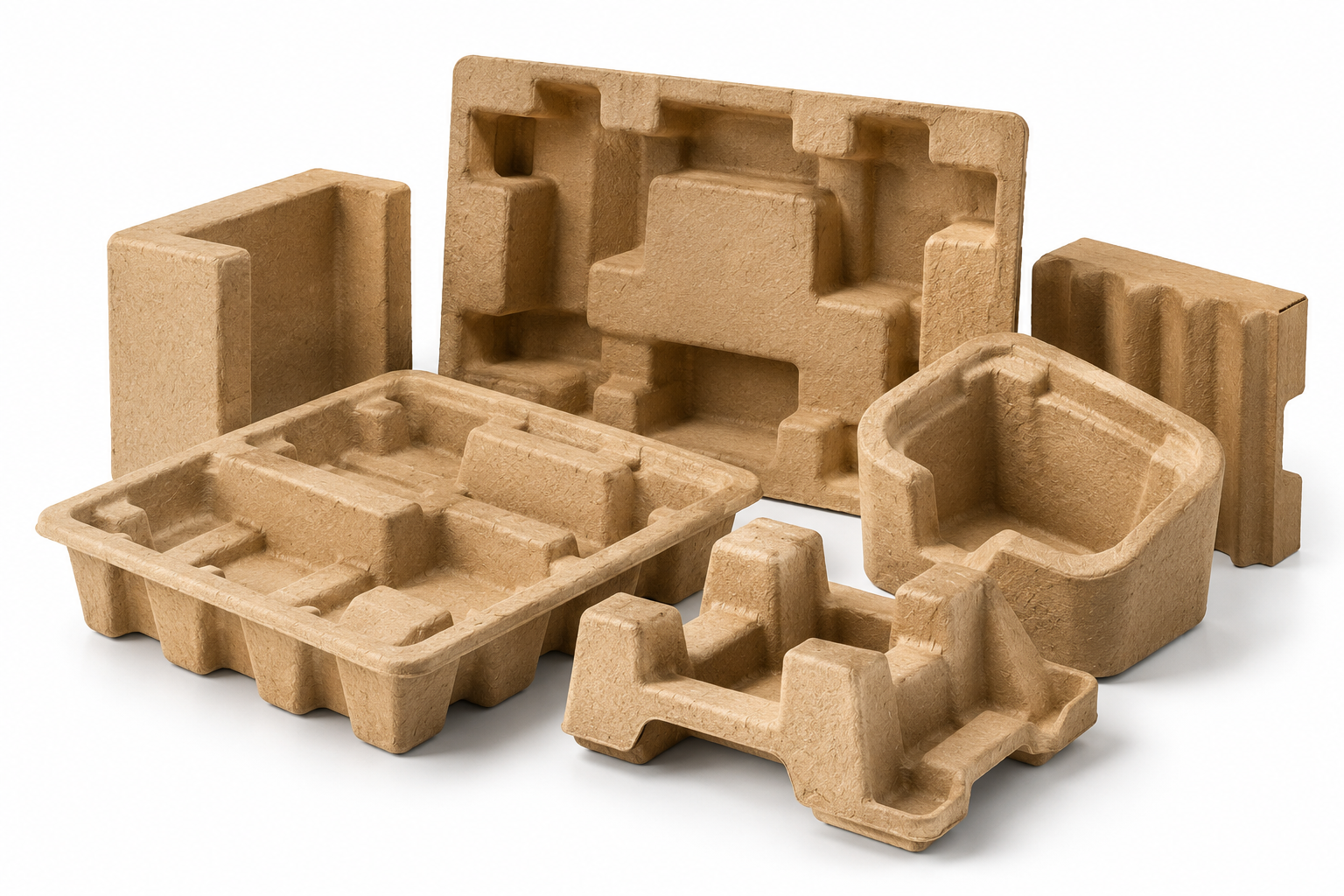
Load-bearing protective packaging. Edge protectors, corner guards, appliance cradles, and pallet-level trays all carry real compression, and this is the fiber that handles it without going to a thicker wall. Using kraft rather than recycled fiber often lets a part run thinner, which recovers part of the cost difference in material saved.

Parts handled repeatedly. Returnable transit packaging and any part that gets opened, closed, and moved many times benefits from tear resistance. A short-fiber part that develops a small tear will propagate it quickly. Kraft resists that.

Where brown is the point. Unbleached kraft reads as natural and unprocessed, which is exactly the signal many sustainable brands want. It is one of the rare cases where the cheapest processing route produces the most desirable appearance.

As a strength component in a blend. This is the most common use. A furnish combining kraft with a short-fiber base gets structural performance from the kraft and surface quality and detail from the short fiber, at a cost between the two.

Where kraft is the wrong call: any part that needs a white or pale finish, any part where cost is the binding constraint, and any fine-detail Type 3 part where long fibers bridge over mold detail rather than flowing into it. For those, see bleached pulp, recycled paper pulp, and wood pulp respectively.

The closest alternative on strength is bamboo fiber, which gives up some tensile performance and gains a considerably faster renewal cycle. Buyers choosing between the two are usually weighing maximum strength against sustainability narrative.

Frequently Asked Questions (FAQs)

Is compostable kraft paper the same as the kraft paper used for shopping bags?
Same fiber and same pulping process, different form. Bag kraft is a flat sheet made on a paper machine. In molded pulp, the kraft fiber is repulped into slurry and vacuum formed into a three-dimensional part. The fiber properties carry across, which is why molded kraft parts share the strength characteristics people associate with kraft bags.
The brown is residual lignin, the natural polymer that binds fibers in wood and which the kraft process removes only partially. Lightening it requires bleaching, which is a separate chemical stage and produces a different material. You can shift the appearance by blending kraft with a paler fiber, which lightens the tone without a bleaching step, though it also dilutes the strength advantage.
Somewhat, yes. Lignin is more resistant to microbial breakdown than cellulose, so a kraft part will generally take longer to disappear in a compost pile than a bleached or recycled part of the same thickness. It still falls within the timeframes that EN 13432 and ASTM D6400 define, and the practical difference matters more in a home pile than in a commercial facility.
Yes, with the understanding that the brown base limits the palette. Dark inks read well, white ink works for reverse-out designs, and light colors print muted because the base tone shows through. Embossing often outperforms printing on kraft, since the long fiber holds a formed edge sharply and the result needs no ink at all.
It depends which measure you weigh. Virgin kraft from certified forests carries a higher carbon and land footprint than recovered fiber, and it produces a stronger part that can be made thinner and can survive more use cycles. Recycled fiber diverts waste and uses less energy but yields shorter fibers nearing the end of their life. Neither is simply better; the honest answer is that kraft is the right choice when strength requirements make it the lightest viable part.
Material Name

Compostable Kraft Paper

Material Type

Biodegradable paper material

Process Compatibility

Bonitopak Packaging Materials

Our packaging solutions are crafted from sustainable materials like sugarcane fiber, bamboo, and recycled paper pulp, offering eco-friendly, biodegradable options for a wide range of products.

Compostable kraft paper is the strongest fiber we form. Made from virgin

Colored pulp is not a separate fiber. It is any of our

Bleached pulp is the material to specify when the part has to

Natural plant fiber covers the non-wood cellulose sources we blend outside the

Corrugated paper as a molded pulp material means recovered cardboard boxes repulped

Straw fiber is made from the stalks left after grain harvest, material

Our Product Categories

Discover Bonitopak’s diverse range of packaging solutions, including molded pulp trays, food packaging, custom designs, and sustainable options. Each category is crafted for durability, functionality, and environmental responsibility, tailored to meet your specific needs.
Ready to Elevate Your Project?

Bring Your Designs to Life with BonitoPak

Experience precision engineering with BonitoPak. From detailed prototypes to high-volume production, we’re here to turn your concepts into reality. Contact us today to discuss your project needs!

Related Articles and Insights

Stay informed with the latest updates on sustainable packaging trends, industry insights, and expert tips through our blog. Explore innovative ideas and solutions to enhance your packaging knowledge.

Canada has a smaller domestic moulded pulp sector than the United States, but it has

Australia has one domestic moulded fibre egg carton manufacturer. Huhtamaki Australia describes itself as the

British egg packaging is sold differently from the American market. Where US suppliers talk in

Fill This Detailed Form