 Skip to content
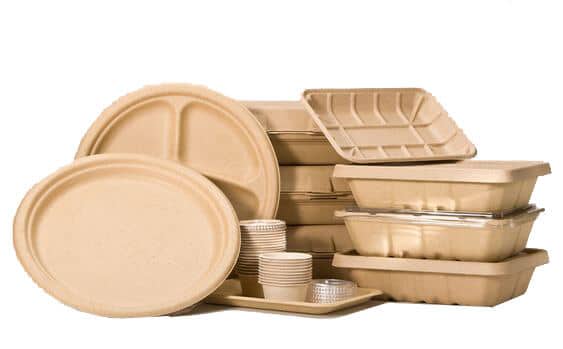
A molded pulp packaging manufacturer turns natural fibers sugarcane bagasse, bamboo, wood pulp, or recycled paper into custom trays, inserts, and food containers through wet pressing or dry pressing. This guide covers how the process actually works, what materials and certifications are worth checking, and what a real mold design and sampling timeline looks like, using Bonitopak’s own production process in Dongguan, China as the working example.
If you’ve searched for a molded pulp packaging manufacturer, you’re probably past the “what is molded pulp” stage and into evaluating who can actually build it. That’s a fair place to start, because not every company that lists molded pulp on a product page owns a mold shop, runs its own pressing lines, or can turn a 3D drawing into a working sample in under two weeks.
Molded pulp packaging — trays, inserts, clamshells, and food containers pressed from natural fiber — is manufactured two ways: wet pressing and dry pressing. Which one a manufacturer uses, and how well they explain the difference, tells you a lot about how the rest of the relationship will go. This guide breaks down what a molded pulp packaging manufacturer actually does, the materials and certifications worth checking, and what a real mold design and sampling process looks like — using Bonitopak’s own production line in Dongguan, China, as the working example throughout.
What Does a Molded Pulp Packaging Manufacturer Actually Do?
A molded pulp packaging manufacturer takes raw plant fiber — sugarcane bagasse, bamboo, wood pulp, or recycled paper — mixes it into a slurry, and presses it into shape using a custom mold. Bonitopak runs this process in-house, from 3D mold design through wet or dry pressing to finished, ready-to-ship packaging.
The job splits into two halves: material processing and mold tooling. On the material side, fiber is pulped, screened, and formed into sheets or shapes under pressure. On the tooling side, a manufacturer needs the capability to design and cut a custom mold — the metal negative that gives the tray its shape — before any packaging can be pressed at all.
Bonitopak keeps both halves in-house: an in-house design team drafts the 3D mold drawing in SolidWorks or Creo, accepting IGS and STEP files, and an in-house tooling team builds the physical mold. That matters because manufacturers who outsource tooling to a third-party mold shop add a step, and a markup, between your drawing and your first sample. When tooling stays in-house, mold changes are faster and cheaper to make.
Wet Pressing vs. Dry Pressing: How the Process Changes the Product
Wet pressing forms pulp into a mold while it’s still saturated, producing a smoother surface finish suited to electronics, cosmetics, and retail packaging. Dry pressing uses 100% recycled corrugated or paper stock at a 2.5–3.0mm wall thickness, built to pass standard drop testing for general protective packaging.
Both processes start with pulped fiber, but the method shows up in the finished tray. Wet pressing — Bonitopak’s process for trays used in electronics, cosmetics, wine bottle packaging, and colored trays — presses the fiber while it’s still wet, which gives a smoother surface and lets it hold finer detail, useful when packaging sits inside a retail box a customer will actually see.
Dry pressing works from recycled corrugated and paper stock instead of virgin fiber, and is built for function over finish: general-purpose protective trays and industrial packaging, at a 2.5–3.0mm wall thickness engineered to pass standard drop testing. It also stacks more efficiently — Bonitopak’s dry-pressed trays save up to 20% in stacking space.
A manufacturer that can only run one process will steer every quote toward it, whether or not it’s the right fit for your product. Ask which process they’re actually recommending for your use case, and why.
What Materials Do Molded Pulp Manufacturers Use?
Bonitopak’s molded pulp packaging is made from sugarcane bagasse, bamboo fiber, and wood pulp for wet-pressed trays, and 100% recycled paper pulp for dry-pressed trays — all biodegradable and compostable, breaking down within 90 days.
Material choice affects cost, texture, and the sustainability story, so it’s worth knowing what’s actually in the tray you’re ordering:
- Sugarcane bagasse — a sugar-processing byproduct, wet-pressed, common for retail-facing trays
- Bamboo fiber — wet-pressed, fast-renewing source
- Wood pulp — wet-pressed, also the base for Bonitopak’s colored tray line
- Recycled paper pulp and recycled corrugated pulp — dry-pressed, made from 100% recycled stock
Color isn’t limited to natural pulp tones either. Bonitopak runs 6 color systems — white, natural, black, orange, gray, and a Pantone-matched blue — with custom color accuracy close to 95%. White trays are bleached with hydrogen peroxide rather than chlorine-based bleach; natural trays are unbleached. If the tray will touch food, white and natural are the two colors Bonitopak recommends.
How to Evaluate a Molded Pulp Packaging Manufacturer Before You Commit
Once you’re past “do they make what I need,” the real evaluation is about process control. A few things worth checking before you send a deposit:
Does the mold design and tooling happen in-house?
If a manufacturer subcontracts tooling, expect longer timelines and less flexibility on last-minute changes. Bonitopak’s design and tooling teams sit under one roof, which is why a 3D drawing turns into a sample mold in a matter of days rather than weeks.
How fast can you actually get a sample?
Ask for a real number, not “it depends.” Bonitopak’s stated timeline is 2 days for the initial 3D drawing, 7 days for a physical sample, and 8 days for the production mold — a total design-to-mold window of under two weeks.
What certifications back up the sustainability claims?
“Biodegradable” and “eco-friendly” get printed on a lot of packaging pages with nothing behind them. Bonitopak’s food packaging line carries BPI and OK Compost certification; all Bonitopak pulp products are biodegradable and compostable within 90 days, whether or not the specific SKU carries a food-packaging certification.
Can they quote a real MOQ and lead time for your specific design?
Custom mold MOQs and full production lead times vary by product and complexity — a manufacturer worth working with will give you a straight number once they see your drawing, not a vague range on a landing page.
The Custom Mold Design and Sampling Process, Step by Step
Bonitopak’s mold development runs in four stages:
- Assessment and Analysis (2 days) — send a sample or reference drawing, and Bonitopak’s design team produces a 3D drawing in SolidWorks or Creo, delivered as IGS or STEP files.
- Design Concepts — you get the drawing files with full specs for a packaging assembly review, so you can confirm fit before any tooling is cut.
- Prototype and Test — a sample mold is built first, with room for small modifications before the design is locked, and the physical sample ships in 7 days.
- Tooling and Manufacture — once the design is approved, Bonitopak’s in-house tooling team builds the production mold, ready in 8 days from approval.
The sequence matters: a sample mold before a production mold means a design mistake gets caught and fixed cheaply, instead of showing up in a full production run. A manufacturer that skips straight from drawing to production tooling is cutting a step that exists specifically to protect your budget.
Certifications and Sustainability Claims Worth Checking
Look for named certifications, not just the word “sustainable.” Bonitopak’s food packaging line is BPI certified and OK Compost certified, and all Bonitopak pulp products biodegrade within 90 days — figures a manufacturer should be able to state specifically, not vaguely.
BPI (Biodegradable Products Institute) and OK Compost are third-party certification programs, not marketing terms a manufacturer assigns to itself. If a supplier claims a certification, ask which product lines it actually covers — certifications are often scoped to specific SKUs, like food containers, rather than a manufacturer’s entire catalog, and a reputable manufacturer will tell you that distinction upfront rather than let the certification badge do all the talking.
Beyond formal certification, ask what’s actually true about the material: is it biodegradable, and in how many days? Is it compostable in a home compost bin or only in an industrial facility? Bonitopak’s pulp products biodegrade within 90 days — a specific, checkable number, which is the kind of detail that separates a real sustainability claim from a marketing one.
Conclusion
A molded pulp packaging manufacturer is only as good as the parts of the process you can’t see on their homepage: who owns the mold tooling, how fast a real sample actually ships, and whether their sustainability claims point to a named certification or just a color scheme. Bonitopak keeps mold design, tooling, and both wet and dry pressing in-house at its Dongguan, China facility, with a design-to-mold timeline of about two weeks and materials — bagasse, bamboo, wood pulp, and recycled paper — that biodegrade within 90 days.
If you’re evaluating manufacturers for a specific product, start with a drawing or sample and ask for a real sample lead time and MOQ, not a range. Request a quote from Bonitopak’s packaging team to get both — or see how this process plays out on a specific product on the egg tray page, or read how it applies to sourcing egg trays as a USA buyer.
Frequently Asked Questions
What’s the difference between wet-pressed and dry-pressed molded pulp packaging?
Wet pressing forms the tray while the fiber slurry is still wet, giving a smoother, more finished surface used for electronics, cosmetics, and retail packaging. Dry pressing uses 100% recycled paper/corrugated stock at a 2.5–3.0mm wall thickness, built for drop-tested protective packaging rather than shelf appearance.
What materials do molded pulp packaging manufacturers typically use?
Common materials include sugarcane bagasse, bamboo fiber, and wood pulp for wet-pressed trays, and recycled paper pulp for dry-pressed trays. Bonitopak uses all four, and every finished product biodegrades within 90 days.
How long does it take to get a custom mold made?
At Bonitopak, the 3D drawing takes 2 days, the physical sample ships in 7 days, and the production mold is ready in 8 days — a design-to-mold window of under two weeks.
Are molded pulp packaging manufacturers’ sustainability claims certified?
Only if they name a specific certification body. Bonitopak’s food packaging line carries BPI and OK Compost certification; ask any manufacturer which certifications apply to which product lines rather than assuming a blanket claim covers everything they sell.
What’s the minimum order quantity for custom molded pulp packaging?
MOQ depends on the mold’s complexity and the product line, so a manufacturer should quote it against your actual drawing rather than publish one flat number. Request a quote once you have a design in hand.
Can a molded pulp packaging manufacturer match my brand colors?
Bonitopak works across 6 color systems — white, natural, black, orange, gray, and Pantone-matched blue — with custom color accuracy close to 95%.
Where is Bonitopak’s molded pulp packaging manufactured?
Bonitopak manufactures at its facility in Dongguan City, Guangdong, China, running both wet-pressing and dry-pressing lines in-house.
Do I need a new mold for every packaging design?
For a fully custom shape or cell count, yes — but Bonitopak’s in-house tooling team keeps the design-to-mold cycle to about 8 days once your drawing is approved, so a new mold doesn’t mean a long wait.

 English
  German
  Spanish
  French
  Russian
  Japanese
  Portuguese
  Arabic