 コンテンツにスキップ

Introduction: Why Pulp Moulding Machines Are Transforming Packaging
Across the world, industries are rapidly moving away from single-use plastics and toward sustainable packaging materials. Governments are introducing stricter regulations on plastic waste, while consumers are increasingly demanding environmentally responsible products. In response to these pressures, many manufacturers are turning to pulp moulding machines to produce fiber-based packaging solutions.
Pulp moulding machines are designed to transform recycled paper, agricultural fibers, or other natural materials into durable molded products such as food containers, trays, protective packaging inserts, and industrial components. These machines form the backbone of modern molded fiber manufacturing, enabling companies to produce eco-friendly packaging at large scale while maintaining product quality and consistency.
As sustainable materials gain importance in global supply chains, pulp moulding machines are becoming essential equipment for packaging manufacturers seeking to replace plastic with renewable alternatives.
What Pulp Moulding Machines Actually Do
Pulp moulding machines convert fiber pulp slurry into solid products using a combination of vacuum forming, pressing, and drying processes. The raw material typically begins as recycled paper pulp, bamboo pulp, bagasse fiber, or other plant-based fibers that are mixed with water to form a slurry.
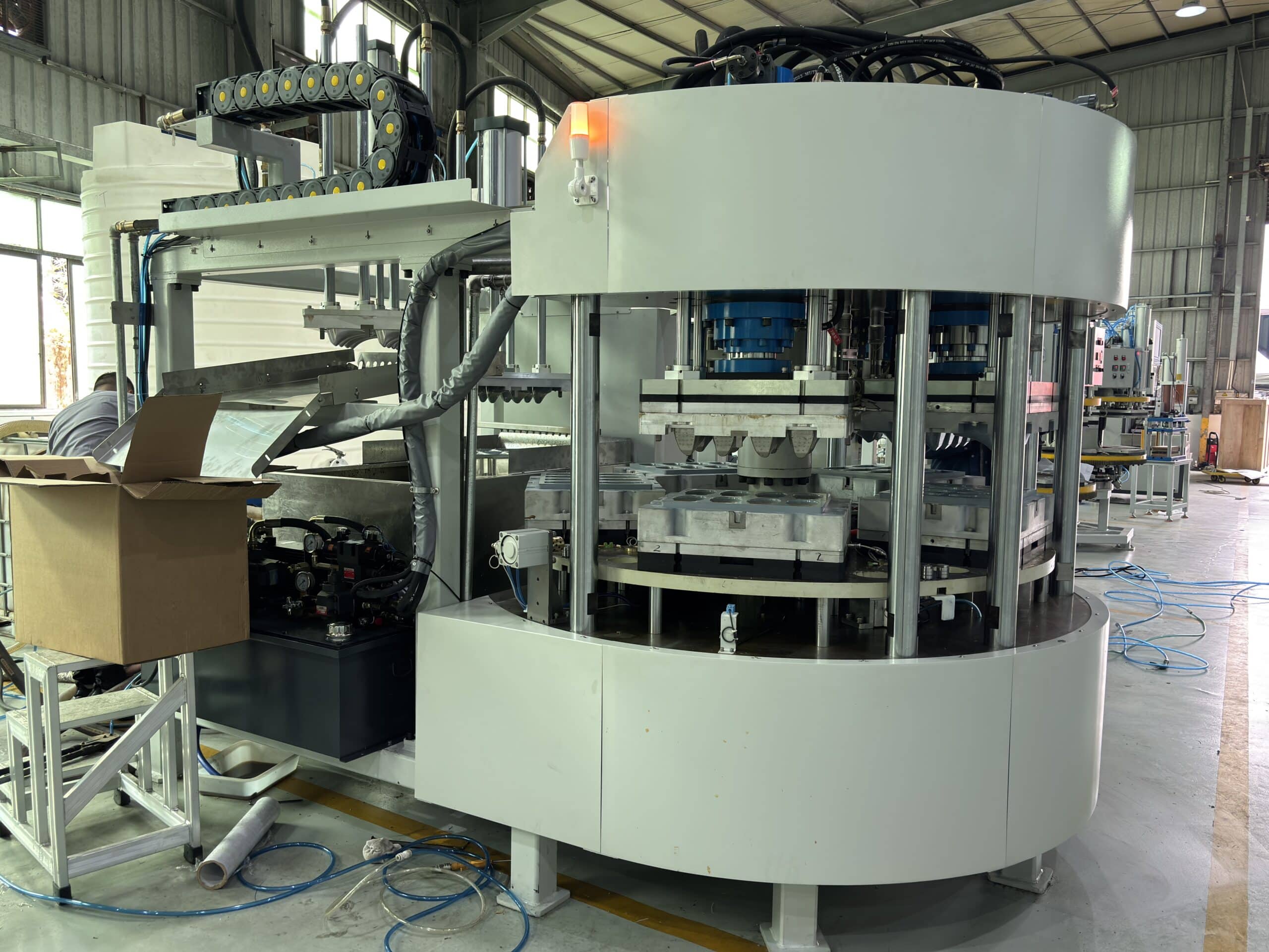
During production, the slurry is transferred to forming molds. Vacuum suction pulls water through the mold while fibers accumulate across the mold surface, gradually forming the shape of the product. Once the wet fiber layer reaches the desired thickness, the partially formed product is transferred to a pressing stage where heat and pressure increase density and improve structural strength.
The final stage of the process involves drying and finishing. Excess moisture is removed, and products are trimmed or refined to meet dimensional requirements. The result is a strong, lightweight packaging product made from renewable fiber materials.
This forming and pressing process is widely used in molded fiber packaging systems, including advanced production technologies such as ドライプレス成形パルプトレイ, where precision molds and controlled pressure improve surface finish and product durability.
Types of Products Produced by Pulp Moulding Machines
Pulp moulding machines are capable of producing a wide variety of fiber-based products used across multiple industries. The most common applications include food service packaging, electronics protection inserts, industrial packaging trays, and eco-friendly containers.
Food packaging products such as takeaway containers, bowls, and clamshell boxes are among the fastest-growing molded fiber applications. As restaurants and food delivery services move toward compostable packaging, pulp moulding machines allow manufacturers to produce containers that are biodegradable and safe for food contact.
Electronics packaging is another major application. Molded fiber inserts provide shock absorption and product protection for items such as laptops, smartphones, and household appliances. Because these inserts are made from recycled fiber, they offer an environmentally responsible alternative to foam packaging.
Industrial packaging products such as egg cartons, fruit trays, and protective transport packaging are also commonly produced using pulp moulding technology.
Energy Consumption in Pulp Moulding Production
Although pulp moulding machines produce environmentally friendly products, the manufacturing process itself still requires careful energy management. The largest energy demand typically occurs during the drying stage, where moisture must be removed from molded fiber products.
Energy distribution in a typical pulp moulding production system may resemble the following:
| System Area | Primary Energy Type | Approximate Share of Total Energy |
|---|---|---|
| Drying Section | Thermal | 45–55% |
| Vacuum Forming | Electricity | 20–25% |
| Pressing Systems | Electricity | 10–15% |
| Auxiliary Equipment | Electricity | 5–10% |
Because drying consumes the most energy, manufacturers often focus on optimizing moisture removal during the forming and pressing stages. Efficient mold design and proper vacuum calibration reduce the amount of water remaining in the product before drying, lowering overall energy consumption.
Companies specializing in sustainable packaging manufacturing, including integrated systems developed by ボニートパック, emphasize the importance of designing pulp moulding systems that balance productivity with energy efficiency.
Standard vs Advanced Pulp Moulding Machines
Not all pulp moulding machines offer the same level of performance. Traditional molded pulp systems are often designed for simple packaging products such as egg cartons or protective inserts. While these machines can be cost-effective, they may struggle to achieve the surface finish and structural consistency required for modern consumer packaging.
| Metric | Standard Pulp Moulding Machine | Advanced Pulp Moulding Machine |
|---|---|---|
| Surface Finish Quality | 中程度 | 高い |
| Production Automation | 限定 | Advanced |
| Product Design Complexity | Basic | Complex Shapes Possible |
| Production Stability | 中程度 | 強い |
| Rejection Rate | より高い | より低い |
Advanced pulp moulding machines incorporate improved mold design, better vacuum systems, and automated temperature control to produce higher-quality packaging products. These machines are increasingly used in industries where packaging aesthetics and precision are important.
As the molded fiber packaging industry evolves, manufacturers are investing in advanced systems capable of producing smooth, branded, and consumer-facing packaging designs.
カスタマイズとデザインの柔軟性
One of the major advantages of pulp moulding machines is their ability to support customized packaging designs. Because molds determine the final product shape, manufacturers can create packaging tailored to specific product requirements.
Custom molded fiber packaging can include embossed logos, reinforced structural areas, and precisely shaped product cavities. This level of customization allows brands to create packaging that protects products while also enhancing brand identity.
Discussions around customization in molded fiber packaging — such as those explored in articles like パルプ成型箱はカスタマイズ可能か? — highlight how design flexibility is helping molded fiber packaging move beyond simple protective trays into premium consumer packaging.
Challenges in Pulp Moulding Manufacturing
While pulp moulding machines offer many advantages, the technology also presents several challenges that manufacturers must manage. Moisture control remains one of the most important factors affecting product quality. Inconsistent drying can lead to product deformation or structural weakness.
Another challenge is cycle time optimization. Molded fiber production requires multiple stages, including forming, pressing, and drying, which can limit production speed compared to plastic injection molding. Manufacturers must carefully balance production efficiency with product quality.
Raw material consistency is also important. Because molded fiber products rely on recycled or agricultural fibers, variations in fiber quality can influence product performance. Proper pulp preparation and quality control are essential for maintaining consistent results.
Conclusion: Pulp Moulding Machines Power the Future of Sustainable Packaging
Pulp moulding machines play a critical role in the transition toward sustainable packaging. By transforming recycled and renewable fibers into durable molded products, these machines allow manufacturers to reduce plastic waste while meeting the growing demand for environmentally responsible packaging solutions.
As technology continues to improve, modern pulp moulding systems are becoming more efficient, more automated, and capable of producing increasingly sophisticated packaging designs. Manufacturers investing in advanced pulp moulding machines are positioning themselves to participate in one of the fastest-growing segments of the global packaging industry.
In the long term, the shift toward fiber-based packaging will continue to accelerate. Companies that understand the capabilities and potential of pulp moulding machines will be better prepared to lead this transformation.
よくある質問
What are pulp moulding machines used for?
Pulp moulding machines are used to produce molded fiber products such as food containers, packaging trays, and protective inserts from recycled or plant-based fibers.
Are molded pulp products environmentally friendly?
Yes. Molded pulp products are typically biodegradable, recyclable, and made from renewable or recycled fiber materials.
What materials are used in pulp moulding machines?
Common materials include recycled paper pulp, bamboo fiber, bagasse, and other agricultural fibers.
Are pulp moulding machines suitable for food packaging?
Yes. Many pulp moulding machines are designed to produce food-grade packaging products such as takeaway containers and compostable trays.
Can pulp moulding machines produce custom packaging designs?
Yes. Custom molds allow manufacturers to create packaging shapes tailored to specific products, including branding and structural features.




 Japanese
  English
  German
  Spanish
  French
  Russian
  Portuguese
  Arabic