 コンテンツにスキップ
レオ・チャン著 | BonitoPak ライター | 成形パルプ製包装分野で20年以上の経験
Eggs cracking in egg trays is almost never bad luck. It’s usually a fit problem, a handling problem, or a vibration problem, and each one leaves a different pattern on the shell. Once you know which pattern you’re looking at, the fix is usually cheap.
This guide covers where breakage actually happens in the chain, how to read the cracks you’re seeing, and what a tray can and can’t do about it.
Where Breakage Really Happens
Egg breakage in transit is much easier to cut once you know which stage of the chain is producing it. Research on commercial egg chains is useful here, because it shows that transport is rarely the only villain.
A study published in Poultry Science tracked breakage through four production chains and found that a sizable share of damage occurs at the point of lay, with housing system making a large difference. Grading and packing produced the next largest share, from about 1.50% to 2.65%. Breakage attributed to transportation ranged from about 0.16% to 2.65%.
Two things follow from that. First, if your cracked eggs are appearing at the customer end, the damage may have started before the truck. Second, transport breakage varies by a factor of more than ten between operations, which means it’s controllable.
Six Causes of Egg Breakage in Transit
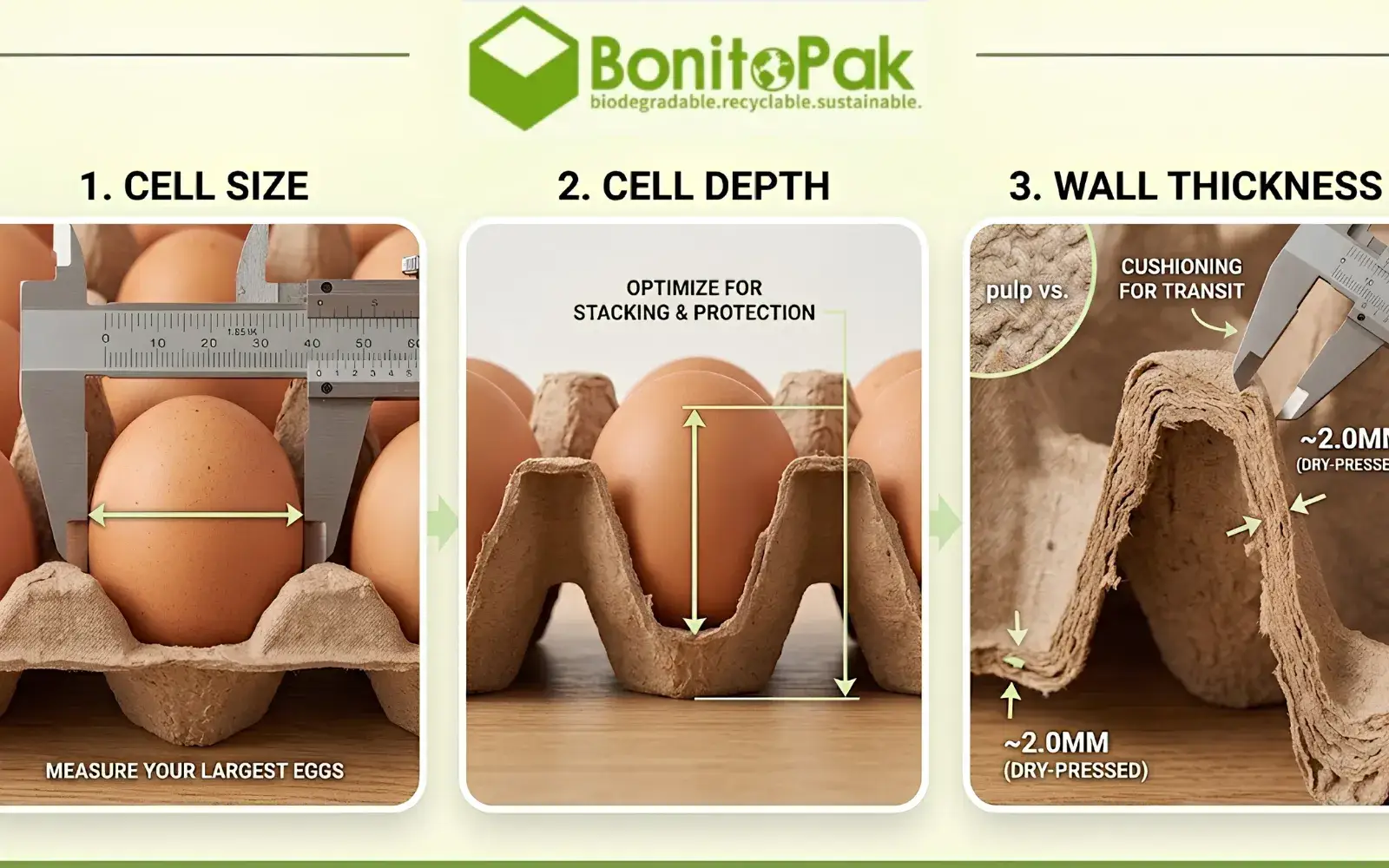
1. Cell Fit
A cell that’s too tight presses on the shell under load. A cell that’s too loose lets eggs rock, and rocking turns into abrasion and then into cracks. Egg grade sets the cell size you need, so pairing a count with a grade matters more than most buyers realize. Our guide to 卵パックのサイズと入数 covers how those two pair up, and specialty eggs need their own geometry, as our quail carton cell size article shows.
2. Handling Drops
Cases get placed, and sometimes they get dropped. A short drop from knee height can crack eggs several layers down. Sliding cases across a truck bed or floor sends a jolt through the whole stack.
3. Vibration on the Road
Continuous vibration is the quiet one. Nothing visibly happens, and then a percentage of shells arrive cracked. A 1999 Poultry Science study subjected packed eggs to controlled vibration and found breakage rising with time under vibration, with nearly 55% of damage occurring at the bottom section of the shell rather than the side or top. That’s a seating and support issue, not an impact issue.
4. Secondary Packaging
The case matters as much as the carton. In that same study, cartons packed in 15-dozen corrugated boxes had significantly lower breakage than the same cartons packed in plastic crates. The box damps movement. A rigid crate passes vibration straight through.
5. Stacking and Load Pattern
Too many layers, uneven pallet patterns, unsecured loads, and heavy pallets riding high all raise breakage. Load shifting on a corner does more damage than a bad road surface.
6. Shell Strength Itself
No tray fixes a weak shell. Shell strength varies with flock age, nutrition, heat stress, and housing system. Older hens lay larger eggs with thinner shells, which is why breakage often creeps up late in a laying cycle without anything else changing.
Read the Crack Before You Change Anything
The location and shape of the crack tells you where to look.
| What you see | Most likely cause | Where to look first |
| Cracks at the bottom of the shell | Vibration, poor seating | Cell depth and cone shape |
| Cracks on the side of the shell | Cells too tight, or eggs contacting each other | Cell width against your actual eggs |
| Star-shaped cracks | Impact, usually a drop | Handling at loading and unloading |
| Hairline cracks with no pattern | Handling at grading and packing | Upstream, before the truck |
| Crushed top row | Stack height, or weight on the top layer | Pallet pattern and case strength |
| Cracks in one part of the pallet only | Load shifting or a specific handling point | Securing and forklift practice |
Count the cracked eggs and note their position in the case for a week. That single habit tells you more than any supplier conversation.
Which Tray Actually Reduces Cracking
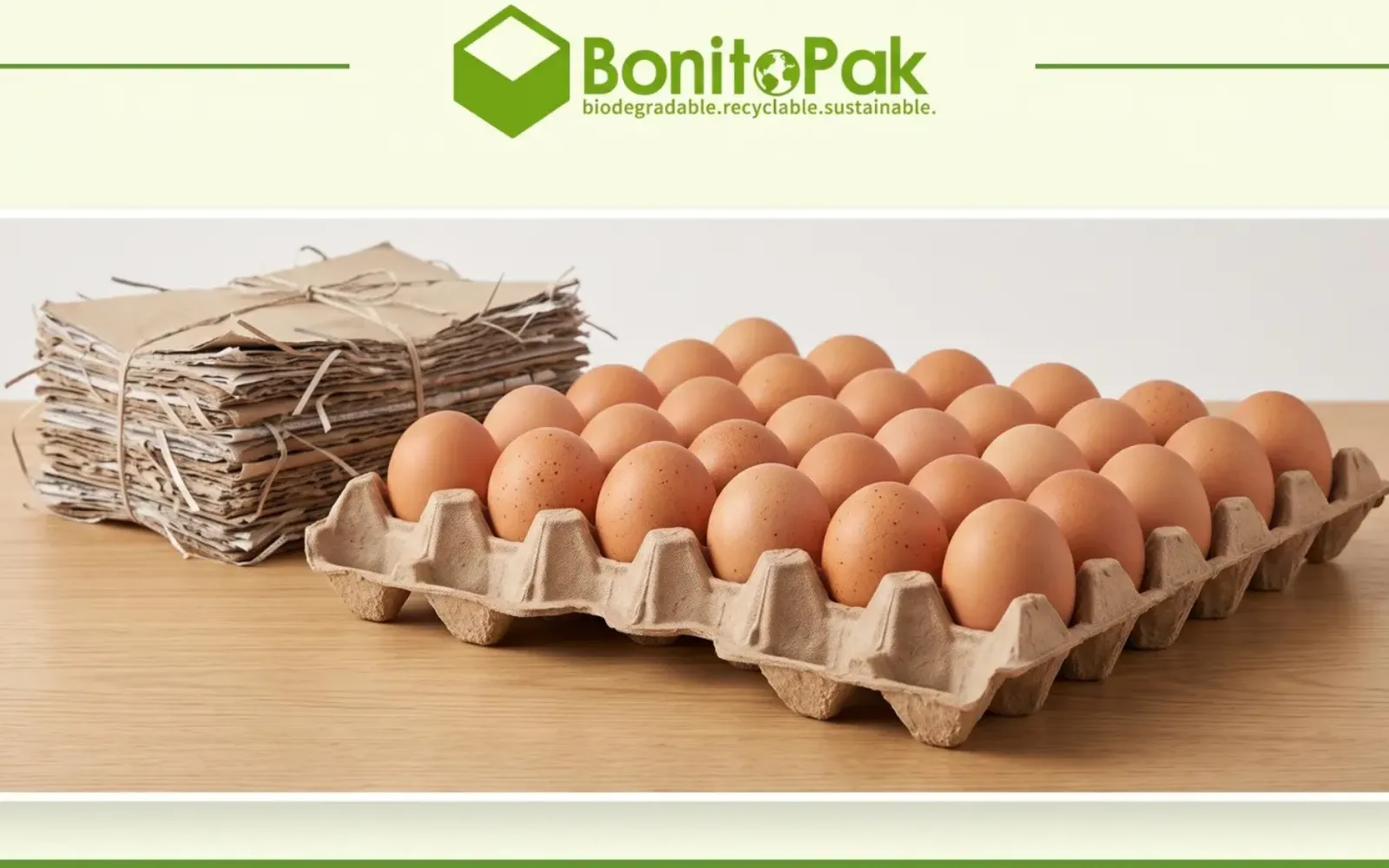
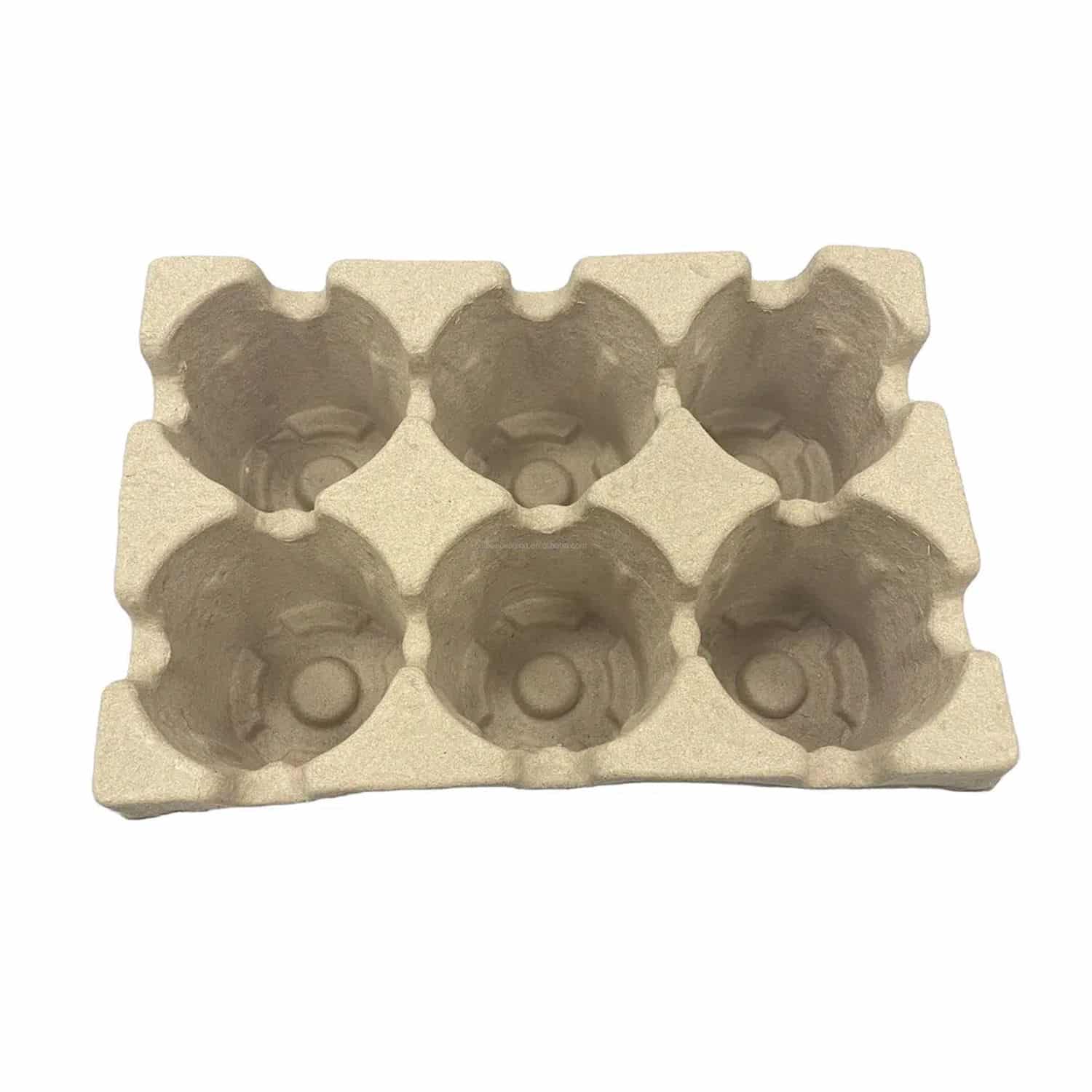
Trays do three jobs: they separate eggs, they support the shell, and they absorb energy. Fiber does all three well, which is why molded pulp has stayed the standard for a century.
Cushioning. Fiber walls compress slightly and recover, absorbing energy that would otherwise pass into the shell. Rigid materials transmit more of it.
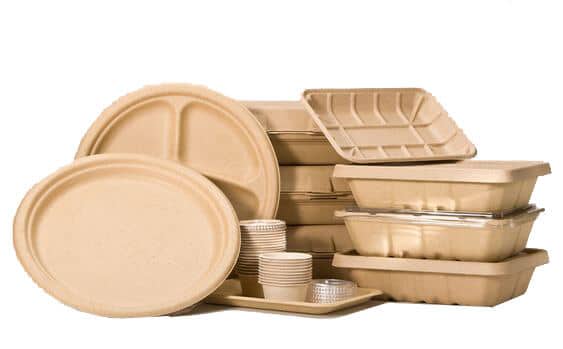
Wall thickness. Dry-pressed trays run thicker walls, roughly 1.5 to 3.0 mm, and that bulk is what does the cushioning. Thin, smooth, wet-pressed walls look better on a retail shelf but give less. Our guide to the 4種類の成型パルプ explains the difference.
Fit. The best material in the world won’t help if the cell is the wrong size, so fit comes before material.
Research supports the fiber choice. The 1999 vibration study found that molded pulp cartons caused significantly less shell damage than expanded polystyrene foam cartons when both were packed in plastic crates. A 2024 study of road transport in Chemical Engineering Transactions compared paper and plastic trays and found better outcomes for eggs carried on paper trays, with hatchability significantly higher than on plastic trays.
Protective egg trays are not a single product, though. A 30-cell flat protects differently from a closed 12-count carton, and a closed carton adds a lid that keeps eggs from touching the tray above.
Fixes Beyond the Tray
Changing the tray alone rarely solves the problem. These usually matter as much:
- Match the case to the carton. Corrugated boxes damp vibration better than rigid crates in stacked transport.
- Cut stack height or add a divider layer if the top rows are crushing.
- Secure the load with straps or load bars so pallets cannot shift.
- Train the handling. Cases get placed, not tossed, pushed, or slid.
- Put heavy pallets low and centered over the axle to reduce vibration transfer.
- Watch temperature and condensation. Shell eggs held for retail must stay at 45°F or below, and moving cold eggs into warm air creates surface moisture that makes cartons soft and handling slippery.
- Check your graders. If cracks are appearing before the truck, the truck isn’t the problem.
A Five-Step Diagnostic
- Count and map. For one week, record how many eggs crack, where they sat in the case, and where the crack appears on the shell.
- Measure your eggs against your cells. Take the widest eggs from a normal week and check them in the tray. Look for rocking and for contact under gentle pressure.
- Audit handling. Watch one full load out and one full load in. Most operations find at least one drop point nobody knew about.
- Test the secondary pack. Run identical cartons in corrugated boxes and in crates over the same route, and compare.
- Run a controlled test. Same route, same day, same eggs, one variable changed. Then repeat before you commit to a new format.
Anyone can guess at cracked eggs during shipping. Only a controlled comparison tells you which change earned the improvement.
Cutting Your Breakage Rate
Most operations chasing cracked eggs are fighting several small problems at once, not one big one. Fix the cell fit first, because it costs nothing at the specification stage and everything after tooling is cut. Then work outward through the case, the stack, and the handling.
If eggs keep cracking in egg trays after all of that, the shell itself and your upstream grading deserve a look before you change supplier again. The most protective egg trays are simply the ones cut to the eggs you actually pack.
で ボニートパック, we cut cell geometry to your eggs rather than to a catalog. Our 成形パルプ製の卵パック そして custom egg trays run from 1,000 pieces, with drop testing before the production mold is cut and checks at every stage of our 品質保証 process. Send us a dozen of your eggs and we’ll spec the cell around them.
よくあるご質問
Q: What is a normal egg breakage rate in transit?
Published research on commercial chains puts transport breakage at roughly 0.16% to 2.65%, depending on the operation. A rate near the high end signals a fixable problem in fit, handling, or secondary packaging rather than bad luck.
Q: Why do eggs crack at the bottom of the shell?
Vibration testing found around 55% of damage occurring at the bottom of the shell. That points to how the egg sits in the cell, so check cell depth, cone shape, and whether eggs are seating fully before you blame the road.
Q: Do molded fiber trays protect better than foam or plastic?
Testing suggests fiber performs well. Molded pulp cartons caused less damage than foam cartons in plastic crates during vibration testing, and paper trays outperformed plastic trays in a road transport study. Fit still matters more than material.
Q: Can the shipping box cause cracked eggs during shipping?
Yes. In vibration testing, cartons packed in corrugated boxes had significantly lower breakage than the same cartons in rigid plastic crates. The box absorbs movement that a stiff crate passes straight through to the eggs.
Q: Will a custom tray stop eggs cracking in egg trays completely?
No packaging eliminates breakage. A cell cut to your actual eggs removes rocking and pressure points, which usually produces the biggest single improvement, but handling, stacking, and shell quality all still need attention.

 Japanese
  English
  German
  Spanish
  French
  Russian
  Portuguese
  Arabic